WRLD

Search

#iRozhlas
Markéta Chaloupská 14h
Czech investigative journalist

The author of the article stated that the organizers in Letná reported the highest attendance since 1989 and expressed gratitude. He added that the event was followed live by Radiožurnál and iROZHLAS. https://t.co/I6mVOhK0Fd #Letná #Česko #historie #CZ (translated)

2353
M
Martin Kopecký 4d

"This novel did not include a transitional provision that would address the suspensive effect in ongoing court disputes," described the weakness of the amendment to iRozhlas professor of administrative law and lawyer Martin Kopecký. #sankce #Rusko #Zorikov (translated)

2695

The article stated that according to the director of the Czech branch of Transparency International, David Kotor, the revocation of the security clearance for the head of the Office for the Protection of Competition, Petr Mlsna, represents another serious signal questioning his credibility. iROZHLAS also reported on Kotor's statement. https://t.co/ItidbuQXzX #bezpečnost #transparentnost #důvěryhodnost #CZ (translated)

2702
Markéta Chaloupská 7d
Czech investigative journalist

On Radiožurnál and iROZHLAS, a series about the children of Ukrainian soldiers has begun according to the post. Its author stated that some of the children are orphaned, and others slept in the hallway every night in fear that a drone would crash into their apartment. She added that even the translator cried during the filming. The post mentioned Veronika Hlaváč as the author of the series. https://t.co/DkvY1UMRQM #Ukrajina #válečnétragédie #děti #UA (translated)

3402
Markéta Chaloupská 7d
Czech investigative journalist

The author of the post pointed out the stories of Ukrainian children, which he said were chilling, and referred to a report by Radiožurnál and iROZHLAS. He wrote that twelve-year-old Evelina recounted in Veronika Hlaváčová's report how her father, a soldier, was hit by a Russian tank, and stated that she wished she could turn back time. https://t.co/DkvY1UMk1e #Ukrajina #Děti #Válka #UA #RU (translated)

3404
Markéta Chaloupská 2w
Czech investigative journalist

The author of the article stated that Samuel Kocanda became the head of the cave administration's secretariat at the age of 17, at a time when his father became the secretary of state. He added that Kocanda is now facing charges of rape, fraud, and drug distribution, which, according to him, were reported by Radiožurnál and iROZHLAS.cz. https://t.co/eJrmKYs4lW #SamuelKocanda #skandál #českápolitika #CZ (translated)

3889
Jan Kaliba 2w
Czech journalist

The author stated that half an hour before the end of voting in Texas, a line was still stretching to the forest in Tarrant County. He claimed that Republican officials in the county had canceled nearly a third of the polling places. He referred to iROZHLAS.cz and Radiožurnál. https://t.co/Z1OjDW2QLq #volby #Texas #demokracie #US (translated)

2980
Radiožurnál 2w

Today, there is a strike by workers of Czech Radio, which will affect the broadcast of popular programs. #stávka #ČeskýRozhlas #iRozhlas (translated)

radiozurnal.rozhlas.cz
Dnes probíhá stávka pracovníků Českého rozhlasu
2868
J
Jiri Lobkowicz 2w
Czech aristocrat, politician and entrepreneur

The author of the contribution pointed out that the findings in the new Concept of the Construction of the Army of the Czech Republic 2040 should, according to him, put an end to everyday political disputes. Referring to passages published by the iROZHLAS server, he stated that the Czech Republic is not meeting 70 percent of its goals. https://t.co/AbF2Fm9C1R #Armáda #ČeskáRepublika #Bezpečnost #CZ (translated)

3446
Jan Kaliba 3w
Czech journalist

The author compared the effects of summer heat in the Czech Republic to floods that would kill hundreds of people, and wrote that heat-related deaths remained "invisible." According to a study he referenced, 700 excess deaths were recorded in the summer, of which more than 400 he claimed were related to climate change, particularly due to coal, oil, and gas combustion. The contribution was labeled by Radiožurnál, ČRo Plus, and iROZHLAS. https://t.co/jb6NUexpsj #klima #povodně #zdraví #CZ (translated)

3479
Markéta Chaloupská 4w
Czech investigative journalist

The author of the post stated that Minister Klempíř extraordinarily included independent theater artists in the inspection plan for 2026 two weeks ago and sent an inspection to them. According to the post, the theater artists had previously criticized his recent actions; the inspection allegedly had nothing to do with the criticism. https://t.co/urbPUdMrpn #divadlo #kultura #kontrola (translated)

2553
Jan Kaliba 4w
Czech journalist

The author of the post stated that 600,000 voters had fallen out of the Texas registration system. According to him, the system was managed by state authorities and the matter was being addressed in court, with elections in Texas scheduled to start on Monday. He referred to the situation as one of the reasons why many Americans did not trust the elections, and wrote that he discussed it with Jana Cigler as part of Across the Atlantic. He also mentioned Radiožurnál, ČRo Plus, and iROZHLAS in the post. https://t.co/eZtS9IiURv #Volby #Texas #VolebníPodvody #US #CZ (translated)

3960
Jan Kaliba Oct 15
Czech journalist

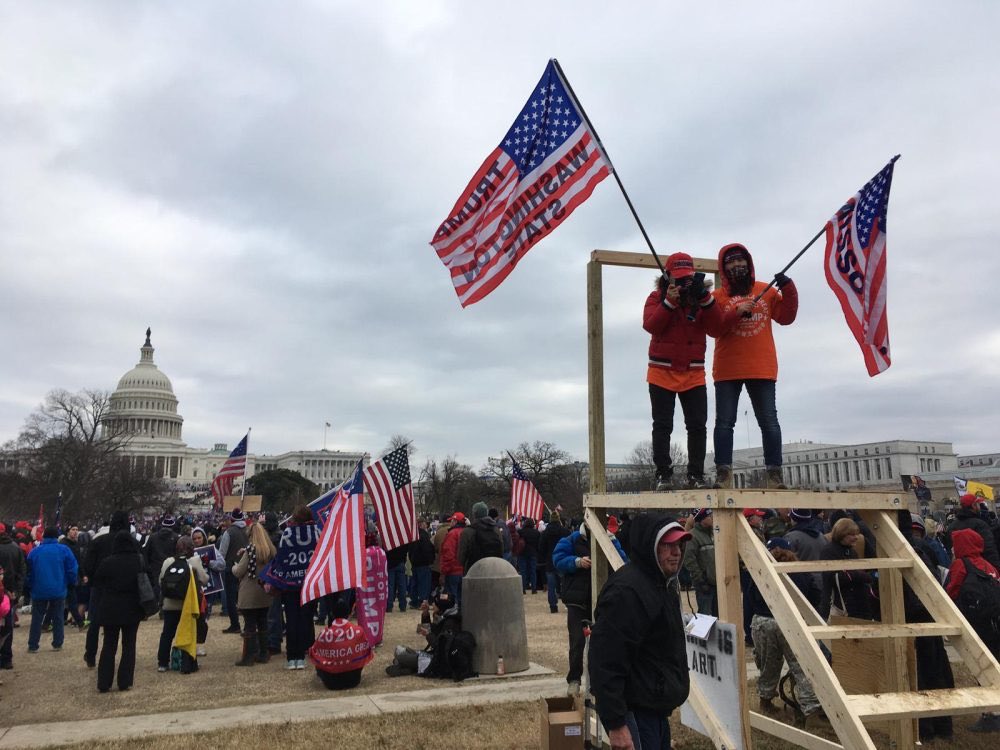
The author of the article wrote that the elections in the USA began at a time when Americans doubted their fairness and security. He reminded that the last similar situation ended with gallows in front of the Capitol and calls to hang alleged traitors. According to him, he spoke about what could happen this year with Jana Ciglerová in the new episode of the show Across the Atlantic, which he referred to along with ČRo Plus, iROZHLAS, and Radiožurnál. https://t.co/ekhVS5zLWD #volby #demokracie #USA #US #CZ (translated)

2797
Radiožurnál Oct 10

During the 2026 elections, Czech Radio iRozhlas is securing updates on the election results, with some senator positions being defended and speculation about a new mayor of Brno from the ranks of the People's Party and Mayors. #Volby2026 #Brno #Senát (translated)

radiozurnal.rozhlas.cz
Sledujeme průběžné výsledky voleb: Kdo bude primátor Brna? A jak dopadne Ostrava?
3037
Marie Bastlová Oct 9
Czech editor and presenter

It is clear that he already has experience, he knows better what he wants and how to achieve it, he has coalition partners who do not pose a great challenge for him, or at least he gets his way very easily. In practice, he governs as if he did not even have coalition partners. According to analysts, this is why Babiš is stronger as Prime Minister today than he was in his previous government term: "It is clear that he already has experience, he knows better what he wants and how to achieve it, he has coalition partners who do not pose a great challenge for him, or at least he gets his way very easily. In practice, he governs as if he did not even have coalition partners," says Marie Bastlová, one of the most prominent Czech political podcast hosts, to the iRozhlas portal, who continues: "He doesn't hesitate with various democratic procedures in this country, he acts rhetorically and speaks in a way that, in my opinion, we could not even have imagined during the time of his previous government." #Babiš #Csehország #politika (translated)

Hiába orbánosodik Babiš, Fico útját követheti
444.hu
3038
Markéta Chaloupská Oct 8
Czech investigative journalist

The author of the contribution stated that former CEO Otakar Smolík received, in addition to a salary of 200,000 crowns per month from the loss-making insurance company, also 35 million crowns in bonuses and severance pay. He referred to Radiožurnál and iROZHLAS. https://t.co/wSP6AqooEl #pojišťovnictví #ekonomika #korupce #CZ (translated)

3040
Denik P - Paukner Media Oct 6

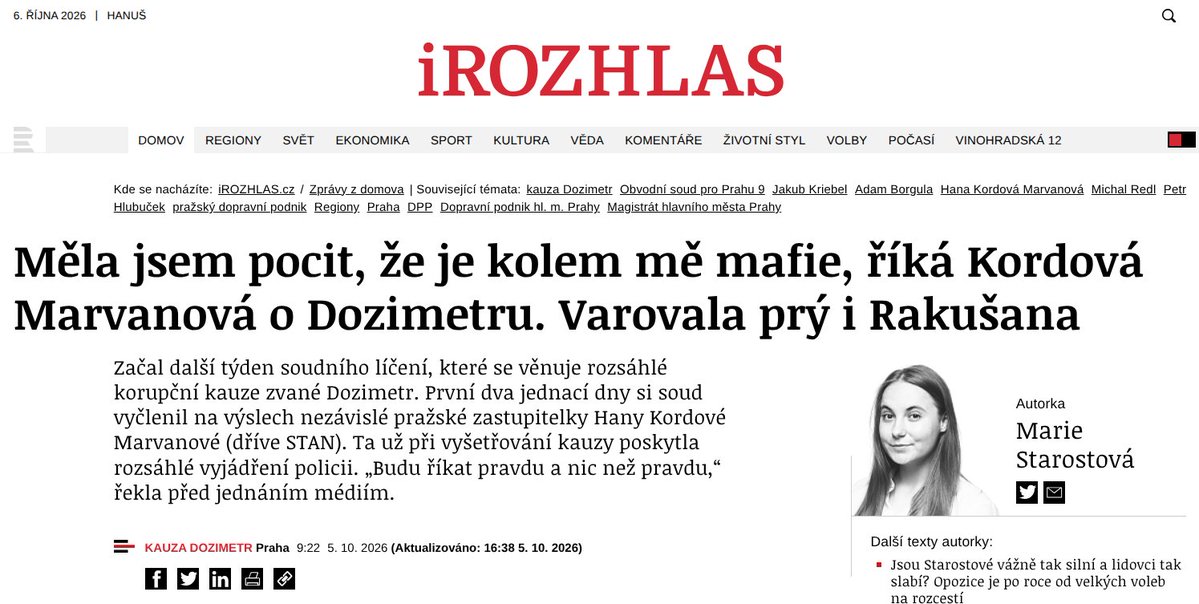
P – Paukner Media claimed that the media paid more attention to the accident of Filip Turek than to the testimony of Hana Marvanová in the Dozimetr case. According to him, Marvanová spoke in court about practices that she had warned Vítem Rakušan about back in 2022. The author also recalled her concerns about Stanislav Polčák and the connections between Polčák and Petr Gazdík with the Redl family, including consultations and the selection of people for state enterprises. The post stated that Polčák went on vacation with Redl and that Redl's father is currently facing trial for embezzlement in Prague. The author also wrote that investigative files had not been provided to the parliamentary committee, so according to him, it was unclear to what extent the STAN movement collaborated with individuals referred to by Marvanová as "the boys from Zlín." Regarding Turek, the author noted that the police dismissed his accident because, according to their conclusion, no crime occurred, and the prosecutor did not appeal against it. He criticized Seznam Zprávy for repeatedly changing the headlines about whether Turek met the criteria for a crime, asserting that all its elements had to be fulfilled according to valid law. According to the author, the case was also reported by Czech Television, Forum24, Novinky, and Deník N, while apart from iRozhlas and ČTK, other media did not focus on Marvanová's testimony. The author suggested that the attention given to Turek was intended to overshadow the Dozimetr case and linked the media events to Jan Dobrovský, whom he called the largest sponsor of STAN. He also announced that he wanted to publish materials from the so-called "Paukner archive." #mafie #Praha #politika (translated)

3511
ČT24 Oct 4

ČT24 reported that the state prosecution has halted the criminal prosecution of a man who served in the Ukrainian army without permission in 2022. According to the iRozhlas server, this was the first such decision. The then-president Miloš Zeman prohibited the man from joining the defense of Kyiv, and the police proposed his indictment for unauthorized service in foreign armed forces. According to ČT24, the state prosecutor stated that it did not make sense to punish a person for helping in the defense of Ukraine, in which he risked his life. #ukrajina #obranakrajiny #právo (translated)

12063
Krzysztof Graj Sep 20

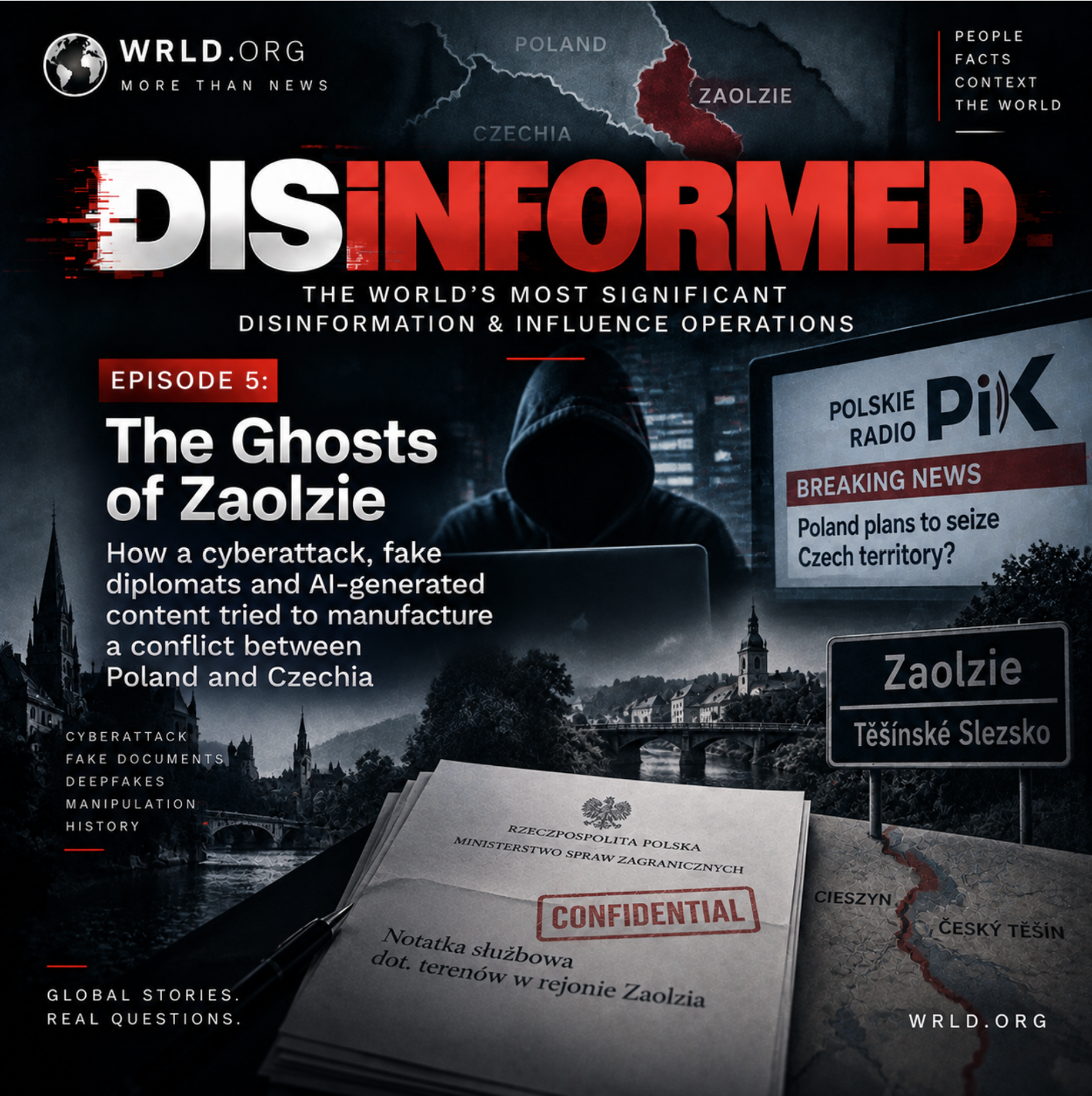
The Ghosts of Zaolzie – how a cyberattack tried to manufacture a conflict between Poland and Czechia At around 5pm on 16 August 2026, an alarming article appeared on the website of Radio PiK, a genuine Polish regional broadcaster. Its headline claimed that Poland was preparing to seize Czech territory and that the Czech Foreign Ministry had received a document outlining Warsaw's demands. Radio PiK had published no such story. An attacker had compromised an employee's credentials, gained access to the station's content management system and replaced a legitimate article with fabricated material. The newsroom quickly removed it and informed the authorities. But the intrusion was only one element of a much larger operation. Investigators subsequently uncovered forged diplomatic documents, accounts impersonating Polish and Czech officials, a cloned Czech news site, AI-generated material, a fictitious local activist and advertising for a demonstration that apparently did not exist. Together, these elements attempted to manufacture the appearance of a new territorial conflict between Poland and Czechia over Zaolzie. A false crisis built around a real territorial issue The operation worked because it did not start entirely with fiction. Poland and Czechia do have an unresolved technical issue concerning approximately 368.44 hectares of territory, originating in post-war changes to the Polish-Czechoslovak border. It is commonly described as the Czech “territorial debt” to Poland. But this is not a Polish claim to Zaolzie and there is no evidence that Warsaw is seeking to annex Czech territory. The operation fused this real issue with a much more powerful historical memory. Zaolzie – the part of Cieszyn Silesia west of the Olza River – was disputed by Poland and Czechoslovakia after the First World War. In 1938, during the crisis created by the Munich Agreement, Poland seized the territory from Czechoslovakia. The manipulation therefore followed a simple logic: a real territorial debt became an alleged Polish territorial demand, which was then transformed into a supposed attempt to reclaim Zaolzie. Fake accounts impersonating Poland's Deputy Foreign Minister Artur Harazim and Czech ambassador Břetislav Dančák helped reinforce the story. Fabricated diplomatic documents circulated alongside them. One early version referred incorrectly to 638.44 hectares; the fake Harazim account then “corrected” the number to the genuine figure of 368.44 hectares. It was an effective form of reverse fact-checking: correcting one false detail could make the larger fabrication appear authentic. Fake media – and one real newsroom The operators also created a website designed to resemble Czech public broadcaster iRozhlas. It published material supporting the same narrative, including claims that Czech residents near the border were becoming concerned about Polish intentions. The result was a manufactured information loop. Forged documents could support fake media reports; impersonated officials could comment on those reports; social-media accounts could then cite both as confirmation. But the Radio PiK hack added something much more valuable: the credibility of a real media organisation. Instead of merely cloning a newsroom, the attackers briefly inserted their fabrication into an authentic one. A familiar domain, logo and established broadcaster could therefore appear to confirm a story manufactured elsewhere. The cyberattack was not simply an accompanying technical incident. It was part of the information operation itself – a way of manufacturing credibility for false information. From a synthetic activist to a real demonstration The operation then attempted to move from the digital world into the physical one. A Facebook account under the name “Adam Sikora” promoted a demonstration in the Czech border city of Třinec under slogans including “Cieszyn Silesia is Czech” and “Here we live, here we stay”. Paid Facebook advertising was reportedly used to promote the event. Yet Třinec authorities said no demonstration had been properly notified. Promotional material used the logo of the Czech KOVO trade union, which denied any involvement. Investigators also identified indications that Sikora's profile photograph and other imagery were AI-generated. The persona even advertised a supposed house for sale in the border region, reinforcing the impression that frightened residents wanted to leave because of Polish territorial ambitions. The property could not be verified and its images also showed signs of artificial generation. This reveals the architecture of the operation: forged document → fake official → cloned media → compromised real media → synthetic local activist → advertised protest → appearance of social tension. The final stage is particularly significant. Had real people attended the demonstration, photographs of an authentic crowd could potentially have been presented as evidence that Czech citizens genuinely feared Polish territorial ambitions. A fabricated online conflict could therefore have begun generating real-world evidence of its own existence. Why Zaolzie? Historical grievances are valuable material for influence operations because the underlying facts are real. Poland and Czechoslovakia genuinely disputed Cieszyn Silesia. Poland genuinely occupied Zaolzie in 1938. A Polish minority genuinely lives in Czechia. And the 368.44-hectare territorial issue genuinely exists. The operator did not need to invent that history. It only needed to suggest that the history was repeating itself. PISM assessed that the operation sought to revive the image of Poland as a revisionist state willing to challenge European borders. Such a narrative could serve a broader purpose: damaging Polish-Czech relations, weakening confidence between NATO and EU allies and portraying Central Europe as a region where historical territorial conflicts remain unresolved. Russia is the leading attribution – but not a proven one The attribution requires more caution than the mechanics of the operation. PISM assessed Russia as the most likely perpetrator, while NASK identified similarities between the campaign and previously observed Russian influence methods. Russian-linked information infrastructure had also shown earlier interest in the Polish-Czech territorial issue. The techniques are familiar: cloned media, forged documents, impersonated officials, synthetic identities, historical grievances and the combination of cyber intrusion with information manipulation. But these indicators are not the same as definitive attribution. As of mid-September 2026, no publicly disclosed forensic evidence had conclusively connected the Radio PiK compromise, fake domains, accounts and financing to a specific Russian intelligence service, government organisation or contractor. Russia can therefore reasonably be described as the leading analytical attribution, but claims that the operation was definitively conducted by the GRU or another named Russian structure go beyond the publicly available evidence. The operation failed. The model remains important The campaign did not create a Polish-Czech diplomatic crisis. Both governments rejected the narrative, the fictitious protest was exposed, journalists reconstructed much of the operation and Radio PiK detected the intrusion quickly. Its observable impact appears to have been limited. But Zaolzie illustrates a broader evolution in information warfare. Modern operations do not have to rely on a single viral fake. They can construct an entire artificial information environment in which different elements appear to confirm one another. A forged document creates the claim. A fake diplomat authenticates it. A cloned newsroom reports it. A hacked real newsroom lends it credibility. An AI-generated citizen reacts to it. Advertising creates the appearance of a grassroots movement. And if real people eventually respond, fiction begins producing genuine events. The objective is no longer simply to persuade people that something happened. It is to create the conditions in which something real starts happening because enough people believed that it did. Sources: Polish Institute of International Affairs (PISM) https://pism.pl/publikacje/dezinformacja-o-relacjach-polsko-czeskich Euronews Polska — Radio PiK cyberattack https://pl.euronews.com/2026/08/20/polska-planuje-zajecie-terytorium-czech-wlamali-sie-na-strone-radia-i-opublikowali-falszyw Demagog https://demagog.org.pl/na-biezaco/skoordynowana-operacja-uderza-w-polsko-czeskie-relacje-czy-stoi-za-nia-rosja/ Robert Lansing Institute https://lansinginstitute.org/2026/08/27/zaolzie-as-an-instrument-of-influence-an-attempt-to-revive-a-polish-czech-territorial-conflict/ Institute for European Security Studies (IESS) https://www.iess.org.ua/analytics/ghosts-of-zaolzie iDNES.cz https://www.idnes.cz/ostrava/zpravy/tesinsko-kampan-lzi-demonstrace-trinec-primatorka-palkovska.A260826_963356_ostrava-zpravy_jog Radio Zachód / PAP https://zachod.pl/1539751/niedzielny-atak-hakerski-na-radio-pik-redaktor-naczelny-podjelismy-niezwloczne-dzialania/ Euronews — territorial debt / NASK assessment https://de.euronews.com/my-europe/2026/08/21/polen-plant-besetzung-tschechischen-gebiets-fake-news TVP World https://tvpworld.com/95036191/-warsaw-warns-against-division-amid-czech-border-disinformation Keywords: #DISINFORMED #Episode5 #GhostsOfZaolzie #Zaolzie #Poland #Czechia #CieszynSilesia #Disinformation #InformationWarfare #InfluenceOperations #ForeignInterference #FIMI #Cyberattack #CyberSecurity #HybridWarfare #FakeNews #MediaImpersonation #FakeMedia #ForgedDocuments #DigitalImpersonation #ArtificialIntelligence #AI #Deepfakes #SyntheticMedia #Astroturfing #RussianInfluence #Propaganda #OSINT #NATO #CentralEurope #MediaManipulation #WRLD

1295
Markéta Chaloupská Sep 18
Czech investigative journalist

Miliony na akce s politiky i pro dodavatele. Z nadačního fondu Pojišťivny VZP šly miliony spolku, který vznikl měsíc předtím a stojí za ním expolitik ODS. Na @Radiozurnal1 @iROZHLAScz od @KristynaPF https://t.co/Y4MLIkMngi #politiká #transparentnost #financování