BETA nonprofit public democratic european moderated

Search

#skills

President @vonderleyen was very clear at today's #SOTEU: protecting our borders and fighting illegal migration also means working with our Mediterranean partners to create opportunities. The new Mediterranean Youth Skills and Jobs Initiative goes exactly in this direction - https://t.co/RkrTpa4GAk #SOTEU #Migration #MediterraneanYouth #MT #IT #ES #GR #FR


O

🚨 Confiance, anxiété, coopération : ce que PISA 2025 révèle sur nos ados 📒 Coopération, confiance en soi, curiosité… Ce que PISA nous apprend des compétences sociales et émotionnelles des élèves ✍️ Marie Duru-Bellat (professeure des universités émérite en sociologie, Centre de recherche sur les inégalités sociales – CRIS, Sciences Po) et Sophie Morlaix (professeure en sciences de l'éducation, directrice de l'IREDU, Université Bourgogne Europe) Capsules Audio de Pratiques en Santé 🎙️🎥 https://www.youtube.com/watch?v=OMBnDvWW0sw 🔍 💡 Compétences psychosociales : PISA confirme leur poids sur les apprentissages des ados — mais jamais isolément du climat de classe et du milieu social. Un rappel utile avant de bâtir une action CPS Analyse de Pratiques en Santé et lien vers la source ℹ️➕ https://www.pratiquesensante.com/blog/pratiques-15/cooperation-confiance-en-soi-curiosite-ce-que-pisa-nous-apprend-des-competences-sociales-et-emotionnelles-des-eleves-6189 📌 le texte outille votre argumentaire sur les compétences psychosociales (CPS) sans le survendre. Données PISA à l'appui, il montre que la confiance en soi, l'anxiété ou la coopération pèsent sur les parcours des jeunes — mais que ces leviers n'agissent qu'insérés dans un climat de classe, un milieu social et des politiques éducatives. Utile pour asseoir la légitimité d'une action CPS auprès des jeunes, tout en évitant le raccourci « une compétence = un résultat ». Un garde-fou méthodologique face aux promesses simplistes. 🇬🇧: Cooperation, self-confidence, curiosity… What PISA teaches us about students' social and emotional skills - https://www.pratiquesensante.com/en/blog/practices-15/cooperation-confiance-en-soi-curiosite-ce-que-pisa-nous-apprend-des-competences-sociales-et-emotionnelles-des-eleves-6189 #️⃣ #pratiquesensante #CompétencesPsychosociales #PromotionSanté #PISA #RéussiteÉducative #BienÊtreDesJeunes #ÉquitéScolaire #CPS

Décryptage PISA 2025

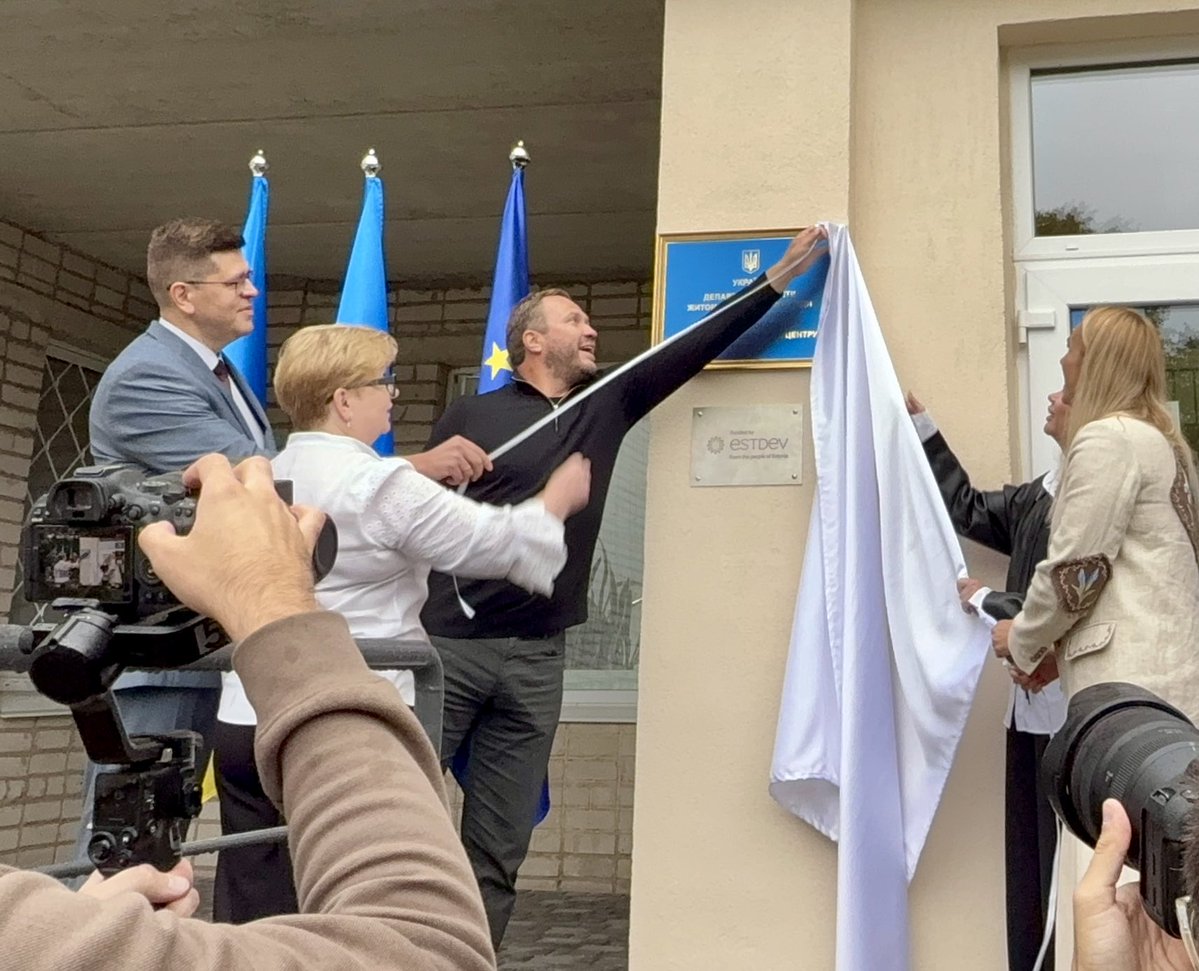
Investing in education is one of the strongest ways to lay the foundations for Ukraine’s future. Today in Zhytomyr, we opened EDUHUB, created by @ESTDEVEstonia with the support of our partners to help early childhood educators develop their skills and give children the best https://t.co/aaiE66olmw #InvestInEducation #UkraineFuture #EDUHUB #UA #EE

Gunhild Carling (born 7 May 1975) is a Swedish jazz musician and multi-instrumentalist. She plays the trombone, trumpet and many other instruments. Carling became known for her performance at Allsång på Skansen on 20 July 2010. The same year, she became an expert commentator for Dansbandskampen at SVT. Gunhild plays trombone, bagpipes, trumpet, recorder, string instruments (such as banjo, ukulele and harp), and will often showcase all of her skills in one song, sometimes casually breaking into a tap dance or singing. https://hvdommelen.nl/jazz/Carling.html

Ik zou politiek gewoon helemaal anders aanpakken. Om de vier jaar een nieuwe batch. Mensen uit de echte wereld, met ervaring en skills. Mensen die weten hoe een bedrijf draait, wat een loon kost, hoe een ziekenhuis, school, werf of administratie écht werkt. Die doen vier jaar politiek in combinatie met hun job en daarna is het aan iemand anders zoals in Zwitserland. Geen tijd om zich vast te vreten in dat wereldje, vriendjes overal binnen te loodsen en van het ene postje naar het andere te rollen. Gewoon uw kennis inzetten, uw werk doen en weer weg. Politiek zou geen carrière mogen zijn. En al helemaal geen systeem waarin dezelfde club jarenlang onze tijd en ons geld zit te verdoen. #Politiek #Verandering #Ervaringsdeskundigen

AI will multiply the skills of attackers and defenders by orders of magnitude, but the basic principle remains the same: there is more money to be made by building and maintaining than by destroying, and the way to defeat a bad guy with AI is to deploy ten good guys with AI. #AI #CyberSecurity #DefenseStrategies #Nospecificcountrycodesarementionedinthetweet.

Today, the OECD published the PISA global study that evaluates 15-year-old students’ abilities in reading, mathematics, and science to solve real-world problems. For us, this year's results send a clear signal: too many young Europeans are falling behind in essential skills. We https://t.co/68yZtDLSbl #PISA2023 #Education #SkillsGap #EU

A strong country starts with strong education. #OECDPISA 2025 results ranked Estonian students 1st in Europe. In today’s world of rapid change and growing security challenges, strong education matters more than ever. It builds critical thinking, resilience and the skills we #EducationMatters #PISA2025 #Estonia #EE

RTÉ News: Ireland's 15-year-olds rank first for reading in EU - study A good omen for our future in which skills in language & science are likely to be the key to success. https://t.co/X3aeP5Of1r #Ireland #ReadingSkills #EducationSuccess #IE #EU

GioPi 1w

Κάτι μου λέει ότι ο Γιώργος Μπαρτζώκας θα είναι πολύ ευχαριστημένος από τα passing skills του Mbaye Ndiaye... #paobc https://t.co/AJvBUIAqIo #μπάσκετ #Ολυμπιακός #Ντιάνει

Freeman of the City of London: An Ordinary Honour for All, an Honorary One for Few SOURCE: https://www.linkedin.com/pulse/freeman-city-london-ordinary-honour-all-honorary-one-sardella-ph-d--m1alf/ Abstract The Freedom of the City of London is an institution of mediaeval origin, attested as far back as 1237, originally conceived to afford freeborn citizens protection from feudal obligations, the right to trade, and the ownership of property within the bounds of the Square Mile — the territory of the City of London proper. Having evolved progressively from a concrete economic privilege into a civic and symbolic distinction, it has preserved its relevance over the centuries through successive legislative reforms — most notably the extension of eligibility to all nationalities in 1996 — and today records approximately 1,800 to 2,000 new admissions annually. The present article examines the historical and juridical evolution of the title, sets out the several routes of access provided by current regulation (by servitude through apprenticeship, by patrimony, by redemption through direct nomination, by presentation through the Livery Companies, and by registration on the electoral roll), and analyses the contemporary profile of the Freemen in the light of recent admissions of prominent figures from the worlds of finance, culture, sport, and public life. Contrary to the elitist image surrounding many British honours, the ordinary Freedom proves accessible to any person whatsoever, regardless of nationality or financial standing, upon the satisfaction of minimal requirements and the payment of an administrative fee of £180–185. The article concludes by reflecting upon the contemporary significance of the institution: not in the residual privileges, now largely ceremonial, but in its identity-forming, civic-participatory function and its connection to the long history of the oldest and most venerable city in Europe. Keywords: Freedom of the City of London; Livery Companies; City of London Corporation; British honours; urban civic identity. Contenuto dell’articolo Introduction Amongst the historic honours of Britain, few institutions evoke an imaginative world as rich as the Freedom of the City of London. Cited in films, novels, and articles on manners and custom with tones of exclusivity and mystery, it is frequently associated with figures of the very highest standing: sovereigns, heads of state, military commanders returning from the wars. Yet, upon closer and more methodical scrutiny, a markedly different picture emerges: that of a title which, in its ordinary and non-honorary dimension, is today accessible to a considerable number of persons each year, without the requirement of extraordinary merit or elevated financial means. The present contribution aims to examine the institution in its twofold aspect, historical and contemporary, with the object of dispelling the most prevalent misconception: that which confounds the ordinary Freedom with the Honorary Freedom — the latter genuinely rare and reserved for figures of international standing. This article traces the mediaeval origins and legislative evolution (§ 2), sets out the current routes of access (§ 3), discusses requirements, costs, and procedure (§ 4), analyses the contemporary composition of the body of Freemen (§ 5), examines rights, privileges, and obligations (§ 6), reviews the most distinguished recipients of recent decades (§ 7), and concludes with some reflections upon the contemporary significance of the institution (§ 8). Origins and Historical Development of the Institution The Freedom of the City of London is attested from 1237, during the reign of Henry III, as a form of civic status designating individuals not subject to a feudal lord, and therefore entitled to the protections guaranteed by the City's charters. In this original sense, the term freeman denoted the free man in the fullest sense of the word: one who might trade freely within the perimeter of the Square Mile, hold property, and join the trade guilds without external interference. The practical privileges were of concrete scope and directly functional to the mediaeval economy: exemption from certain tolls, including the celebrated right to drive flocks of sheep across London Bridge without payment — a concession rooted in the wool trade that dominated the English economy — protection against arbitrary arrest beyond the jurisdiction of the City, and access to the markets regulated by the guilds. As confirmed by the subsequent reissues of Magna Carta by Henry III in 1225, such liberties were intrinsically bound to the self-governance of the City, which defended them against royal and baronial interference. The progressive codification of the institution took place through royal ordinances from the fourteenth century onwards. In 1319, Edward II issued constitutions restricting access to the Freedom to members of the trade guilds, prohibiting the admission of unaffiliated outsiders, and thereby formalising servitude through apprenticeship as the principal route for new entrants, whilst the patrimonial route ensured continuity for established families. Subsequent monarchs, from Edward III onwards, repeatedly confirmed the civic liberties through charters granted often in exchange for financial loans, consolidating the City's autonomy and its role as creditor to the Crown. In the nineteenth century, with industrialisation and the demographic expansion of London, corporate control over trade proved increasingly unenforceable. The Municipal Corporations Act of 1835 extended eligibility to any person living, working in, or having a significant connection with London, partially detaching the title from corporate membership and progressively transforming it into an honorary distinction of a civic character. During the twentieth century, further reforms rendered access more inclusive. Women, already admitted informally as widows by inheritance in earlier periods but formally excluded from the standard routes, saw their right to ordinary admission recognised — Angela Burdett-Coutts having already received the Honorary Freedom in 1872, and Florence Nightingale in 1908 — while formal equality was consolidated in the twentieth century. Finally, in 1996, the requirement of British or Commonwealth citizenship was abolished, opening the title to any nationality whatsoever. Routes of Access: The Current Regulatory Framework The current regulations, administered by the Court of the Lord Chamberlain of the City of London Corporation, provide for five principal modes of access to the Freedom of the City of London, each reflecting different historical ties between the individual and the City's institutions. By servitude confers the title upon the completion of a formal apprenticeship under the Custom of London, traditionally of seven years' duration, under a master freeman of a Livery Company. This route, the oldest and of the greatest historical significance, verifies merit through practical competence and loyalty to the guild. Completing apprentices are admitted without the need for approval by the Court of Common Council, provided they have been registered on the City's electoral roll for at least one year, and in such cases no financial contribution is required. By patrimony confers automatic eligibility upon the children of Freemen, provided the parent held the title at the time of the candidate's birth and appropriate documentation is furnished. Historically restricted to sons, it was extended to daughters by the Municipal Corporations Act of 1835. The candidate must have attained the age of eighteen, must not be an undischarged bankrupt, and must not have relevant unspent criminal convictions. By redemption constitutes the route open to any person whatsoever. The candidate submits an application to the Court of the Lord Chamberlain, supported by two sponsors — Common Councillors, Aldermen, or Liverymen of at least one year's standing who attest to their reputation — and the matter is examined by the Freedom Applications Sub-Committee and approved by the Court of Common Council. The administrative fee (the Freedom Fine) amounts to £180 following the tariff revision of 1 April 2024 (£185 in the case of direct nomination). For candidates registered on the Ward List, the City's electoral roll, the procedure is free of charge. By presentation through a Livery Company is the route most frequently taken in contemporary practice. The candidate first becomes a member of their relevant guild, following a procedure that varies amongst each of the 113 Livery Companies currently active, and subsequently submits an online application to the Court of the Lord Chamberlain for admission to the Freedom of the City, with approval in the vast majority of cases being a matter of routine. Requirements, Costs, and Procedure The requirements for access to the ordinary Freedom are of a simplicity that may well surprise, given the aura of exclusivity surrounding the title. The candidate must have attained the age of eighteen, must not be an undischarged bankrupt, and must not have unspent criminal convictions within the meaning of the Rehabilitation of Offenders Act of 1974. No requirement of nationality, residence, educational attainment, or financial standing is imposed. The documentation required is of a standard biographical character: a full birth certificate, a marriage certificate or name-change document where applicable, and, where admission is by presentation, the certificate of membership issued by the relevant Livery Company. The application is submitted online through the City of London Corporation's portal. The admission ceremony is held at the Guildhall in London, in the Court Room of the Lord Chamberlain, on every working day between 10.30 and 12.00, and between 14.00 and 15.30. The newly admitted Freeman is invited to read aloud the Declaration of a Freeman and to sign the Admissions' Book, receiving upon its conclusion a calligraphed certificate on vellum and a copy of the Rules for the Conduct of Life — the eighteenth-century document of moral guidance that enjoins the holder to lead a life of rectitude, compassion, and social engagement. For those unable to attend in person, the City Corporation has retained the option of conducting the ceremony virtually, a facility introduced during the pandemic and subsequently preserved. The Contemporary Composition of the Body of Freemen One significant empirical datum serves to diminish the elitist dimension of the title: between 1,800 and 2,000 new persons are admitted each year, within a body that counts over 300,000 documented admissions across the centuries. As the City of London Corporation itself observes, contemporary Freemen comprise 'a broad cross-section of the population', encompassing professionals, students, craftspeople, entrepreneurs, military personnel, and foreign nationals. The growing contribution of university students, frequently presented in groups by their academic institutions, and of international professionals, has further broadened the demographic base. The group ceremony of 2024, in which 40 individuals drawn from fields ranging from science and medicine to entrepreneurship and diversity initiatives received the title simultaneously, is illustrative of this openness. A fundamental distinction must, however, be emphasised. The Honorary Freedom of the City of London constitutes an entirely separate institution of radically different scope. Granted by the Court of Common Council by special resolution, it is reserved for figures of exceptional international stature — typically fewer than a dozen conferred annually — and represents, in the words of the City Corporation itself, the highest honour it is able to bestow. It is this Freedom that has been enjoyed by Winston Churchill, Her Majesty Queen Elizabeth II, and, more recently, the television presenter Rachel Riley (October 2025), in recognition of her commitment to Holocaust education and the combating of antisemitism. The confusion between the two forms is the principal source of the distorted public perception of the institution. The Contemporary Significance: Between Identity and Participation While the great majority of the practical privileges once associated with the condition of Freeman have today disappeared or been reduced to solemn ceremonial form, what persists is the powerful symbolic and identity-forming value of the title. The ceremony retains elements of ritual solemnity — the reading of the Declaration, the signing of the historic Admission Register, the receipt of the calligraphed certificate on vellum — which inscribe the new Freeman within a chain of continuity of nearly eight centuries, linking diverse figures through a shared bond with the history of the Square Mile. This venerable London institution also performs a cohesive function within the ecosystem of the City and the Livery Companies. The 113 active guilds collectively disbursed over £81 million in charitable activities in 2024, through programmes of vocational training, scholarships, and technical apprenticeships that preserve specialist skills in economically significant sectors. Being a Freeman constitutes a formal prerequisite for advancement to Liveryman, and therefore for the exercise of voting rights in the governance of the City: a vestige of corporate democracy which, however distant from the models of universal suffrage, retains its own institutional logic within the unique legal architecture of the London Square Mile. Critics of a progressive persuasion have observed that the system favours established networks and access by hereditary or professional routes, potentially excluding broader strata of the London population, with the pool of living Freemen well below one per cent of the nine million residents of Greater London. Nevertheless, the data on recent admissions — encompassing recognition spanning African entrepreneurship, community sport, broadcasting, and medicine — suggest a trajectory of progressive opening which, whilst falling short of full demographic representativeness, attests to the institutional will to maintain the institution as a living tradition rather than an exclusive relic. Conclusions The foregoing analysis permits the formulation of several concluding observations. The Freedom of the City — the ordinary Freedom — is today an honour accessible to a far wider audience than the collective imagination suggests. The admission requirements are minimal, the costs modest, the procedures relatively streamlined and open to any nationality. The persistent confusion with the Honorary Freedom, reserved for figures of exceptional international eminence, is the principal source of a distorted perception that merits correction. The contemporary value of the title resides not in the residual privileges, now largely solemn and ceremonial, but in three complementary dimensions: the identity-forming, which connects the holder to nearly eight centuries of institutional history; the civic-participatory, which through access to the Livery Companies and the City's electoral system inserts the Freeman into genuinely operative networks; and the communitarian, which through the mechanisms of honorary recognition celebrates contributions of an ever more varied scope and provenance. In this respect, the Freedom represents an instructive case study in how historic institutions may reinvent themselves without losing authenticity, preserving their significance through inclusion rather than exclusion. References and Sources: City of London Corporation. (2024). Freedom of the City of London. https://www.cityoflondon.gov.uk/about-us/law-historic-governance/freedom-of-the-city Guild of Freemen of the City of London. (2025). Freedom of the City. https://www.guild-freemen-london.co.uk/freedom-of-the-city Livery Committee. (2025). Freedom of the City. https://liverycommittee.org/about/membership-freedom-and-livery-clothing/freedom-of-the-city/ Municipal Corporations Act 1835. UK Parliament. Rehabilitation of Offenders Act 1974. UK Parliament. Grokipedia. (2025). Freedom of the City of London. https://grokipedia.com/page/Freedom_of_the_City_of_London City Solicitors' Educational Trust. (2025). Applying for the Freedom of the City of London. LondradaVivere.com. (2025). La 'Freedom of the City of London': un'antica libertà ancora viva. City of London Corporation. (2023). Livery Companies: Charitable Activities Report 2024. ONS / City of London Corporation. (2023). Financial Services Contribution to UK GDP.

Freeman of the City of London: An Ordinary Honour for All, an Honorary One for Few

That is how Global Gateway works: public investment that makes transformational projects possible where the markets will not step in alone. This investment will strengthen forest management, support resilient agro-forestry and build skills in the sector. Protecting forests is https://t.co/oGGHpXdHOb #GlobalGateway #SustainableInvesting #ForestryManagement #Therearenospecificcountrymentionsinthetweetprovided.Therefore #theresponseis:

On continue le OneBlade Squad Up avec la phase Skillset ! Rendez-vous dès 17h sur la chaîne de Nikof, avec Philips France https://t.co/QfJy10U6fw #OneBlade #Skillset #Philips

yo viendo las publicaciones que hacen de como les encantó ver mis inexistentes skills de how to fish https://t.co/auErrd6ENv #fishing #skills #funny

Online violence against girls and young women must not be normalized. @UNESCO is working to make digital spaces safer through #MediaAndInfoLiteracy, helping learners develop the skills to navigate technology safely and responsibly. Safe education must include safe online spaces. #OnlineSafety #GirlsRights #DigitalLiteracy #Thetweetdoesnotmentionanyspecificcountries.Therefore #therearenocountrycodestoreturn.

There we announced new Global Gateway investments. Two of them stand out. ➡️ RISED, a €269 million Team Europe programme: the electricity grid, 2,500 km of fibre and the Ashegoda wind farm. ➡️ A €150 million Digital Economy Package: infrastructure, digital skills, and reform. #GlobalGateway #Investments #DigitalEconomy #Thetweetdoesnotmentionanyspecificcountriesthatcanbeidentifiedbytheircountrycodes.Therefore #therearenocountrycodestoreturn.

Ahoj investoři, moje vyjádření. Tohle bude dlouhé, ale za to od srdce a bez AI🙏 Já jsem celoživotní optimista. Držet při zemi se mě snaží okolí celý můj život. “Tohle nedokážeš, na tohle ty nemáš, tady je malá pravděpodobnost, že se ti to povede, to nemá cenu ani zkoušet..” Věřím, že spousta z vás může mít podobné ambice v životě a moc dobře vím, jak je těžké s tímto okolním tlakem bojovat, proto bych vám rád napsal pár slov. Z dat, že většina investorů neporazí index, neplyne, že se o to nemá smysl pokoušet. Je to něco jako říkat, že nemá smysl trénovat jako profesionální fotbalista, protože jen malému procentu se to nakonec povede. Ano, šance je malá. Nicméně neúspěšný fotbalista stále získal kondici, disciplínu a spoustu přátel. Stejně ale tak investorovi zůstane hlubší pochopení byznysů, účetnictví, valuací, příležitostí, rizik, práce s pravděpodobností. Takové skills nemá kde kdo a rozhodně jsou plus do života za všech okolností. I podobně smýšlející přátele si najdete v investování taky. Aktivní investování ještě k tomu není buď úspěch nebo 0. I neúspěšný aktivní investor (který se tomu opravdu věnuje naplno, ne gambler) si kromě vybudovaných skills, pravděpodobně vybudoval i nějaký kapitál, jen možná pomaleji než index. Nicméně při úspěchu, byť jen to malé procento nad indexem může během desetiletí vytvořit šílený rozdíl.  Pár příkladů, neukamenujte mě zas, teoretické příklady jen pro pochopení toho rozdílu (zaokrouhleno): 1 milion, 30 let, 7% = 8M 1 milion, 30 let, 10% = 17M 1 milion, 30 let, 11% = 23M 1 milion, 30 let, 12% = 30M 1 milion, 30 let, 15% = 66M Nejsem ale naivní a platí to i dolů. Je potřeba k tomu přistupovat zodpovědně a vědět, jaká rizika člověk podstupuje. Já to mám například tak, že kdybych dlouhodobě za indexem zaostával a měl bych jasná data, že po letech učení, vzdělávání, hodin a hodin denně sledování informací, stejně zaostávám za indexem, kapitál okamžitě přesunu do indexu. Bez výmluv. To je ostatně i hlavní message, kterou jsem prezentoval ve svých prvních investičních videích již v roce 2020. Pokud nechceš studovat firmy, nemáš na to čas, nebaví tě to, není lepší vehicle než index. Nejen, že pravděpodobně poskytne slušný výnos, ale ano, pravděpodobně porazíte i spoustu fondů a aktivních investorů zcela bez práce. K tomu opravdu nepotřebujete nic a nikoho, ani banky, ani fondy, ani poradce, ani dokonce AI diplomku od expertů, že trhy a akcie kolísají, děkujeme za obohacení, to jsme opravdu jako investoři nevěděli. Prostě 30+ let DCA do indexu a zdar. Úspěch sice není zaručen ani tady, ale pravděpodobnosti vypadají už mnohem lépe. Já osobně se o ten nadvýnos budu snažit dále, protože to prostě miluju a jsem ponořen v informacích, co mě posouvají dál, hodiny denně. A nerozmluví mi to ani historická statistika, ani nikdo jiný. Ono se totiž ne nadarmo říká, že cizí ambice nejvíc dráždí ty, kteří se té své už dávno vzdali. Často vám ji nerozmlouvají proto, že je nereálná, ale proto, že by vám i mohla vyjít. Tak se nenechte od nikoho rozhodit, ať už si můj příběh aplikujete na jakékoli vlastní cíle v životě. Vy si svoji prací můžete naklonit i svoje vlastní odds. Nebojte se mít velké cíle, protože ještě jedna věc je na ambici fakt super. I když ji nedosáhnete, často díky své pilné práci a skills, které jste se na té cestě naučili, budete mnohem dál než ti, kteří v životě mnoho ze strachu z neúspěchu nezkouší. Nadprůměrný úspěch má téměř vždy malé procento pravděpodobnosti. To je fakt. Kdyby to mělo být statistické rozhodnutí, tak byste neměli zkoušet téměř nic velkého. Ale mnoho lidí vám už neřekne, že ta samotná životní cesta mít ambice a jít si za svými i málo pravděpodobnými cíli je vlastně strašně super a naplňující. Tak hodně štěstí všem, ať už chcete dosáhnout v životě čehokoliv 🙏 #investování #motivace #úspěch

TV21 Biography by Andy Kellman The new wave band TV21 formed in the late '70s, comprising drummer Colin Maclean, guitarist Ally Palmer, bassist Neil Baldwin, and vocalist/guitarist Norman Rodger. The band took their name from Thunderbirds creator Gerry Anderson's fanzine. After releasing their first two singles on Powerbeat in early 1980, they recorded a session for John Peel's BBC radio program. Another pair of singles followed for the Demon label in 1981. Maclean split and was replaced by Ali Patterson, a former member of the Rezillos. Deram snapped the group up and issued A Thin Red Line in late 1981, the band's only long-player. Renowned producer and musician Ian Broudie (Original Mirrors, the Lightning Seeds), who had produced one of the group's earlier singles, loaned his skills to one of the songs on the record. Yet another single followed in early 1982, and the group's potential hit a peak when they opened a series of shows for the Rolling Stones as they toured Scotland. However, TV21 felt they had reached an impasse musically and opted to break up by the middle of the year. https://hvdommelen.nl/t/TV21.html

Οι κορυφαίες αμυντικές επιδόσεις και κυρίως το versatility του Σενεγαλέζου, ο οποίος μπορεί να μαρκάρει κυριολεκτικά όλες τις θέσεις (2.04 με άνοιγμα χεριών 2.15) είναι το διαβατήριο του για τον Ολυμπιακό. Με την διαφαινόμενη απόκτηση του είναι ξεκάθαρη η πρόθεση του Γιώργου Μπαρτζώκα να δώσει ισορροπία (επιθετικό ταλέντο / αμυντικά skills) στο ρόστερ, με έναν παίκτη που πιστεύεται ότι έχει μεγάλο potential, είναι ευφυής στην αντίληψη του παιχνιδιού και ιδανικός για τον -όπως και να το κάνουμε- περιορισμένο ρόλο του μπακ απ του MVP Σάσα Βεζένκοφ. Η μη αξιοπιστία του στο μακρινό σουτ δεν αποτελεί τροχοπέδη, καθώς ζητούμενο για τον Coach B στην παρούσα φάση είναι προτιστως τα αμυντικά φίλτρα, η αθλητικότητα και το fit. Αλλωστε η ομάδα της νέας σεζόν θα παρουσιαστεί με σημαντικές διαφορές και μια από αυτές είναι και η μετατόπιση επιθετικού ταλέντου προς τους γκαρντ. Επιπλέον Όπως είχαμε επισημάνει από καιρό, ο Ολυμπιακός ήταν πολύ πιθανό να κινηθεί για 4 προς 5 και όχι 4 προς 3 που πίστευαν οι περισσότεροι. Και ένας από τους λόγους ήταν ότι θα ήθελε να έχει τρίτο παίκτη να ακουμπάει στη θέση του σεντερ στις ελληνικές διοργανώσεις, στις οποίες λόγω περιορισμών, ενα από τα 5αρια του θα μένει λογικά εκτος 12αδας. #Ολυμπιακός #Basketball #Αθλητισμός

According to the report "2026 Cybersecurity skills gap," as many as 60% of IT leaders have difficulty finding cybersecurity specialists with experience in the field of AI. Moreover, as many as 50% of organizations worldwide believe that their management "fully understands" the issue of the shortage. (translated)