WRLD

Search

#soa
HotNews.ro 2d

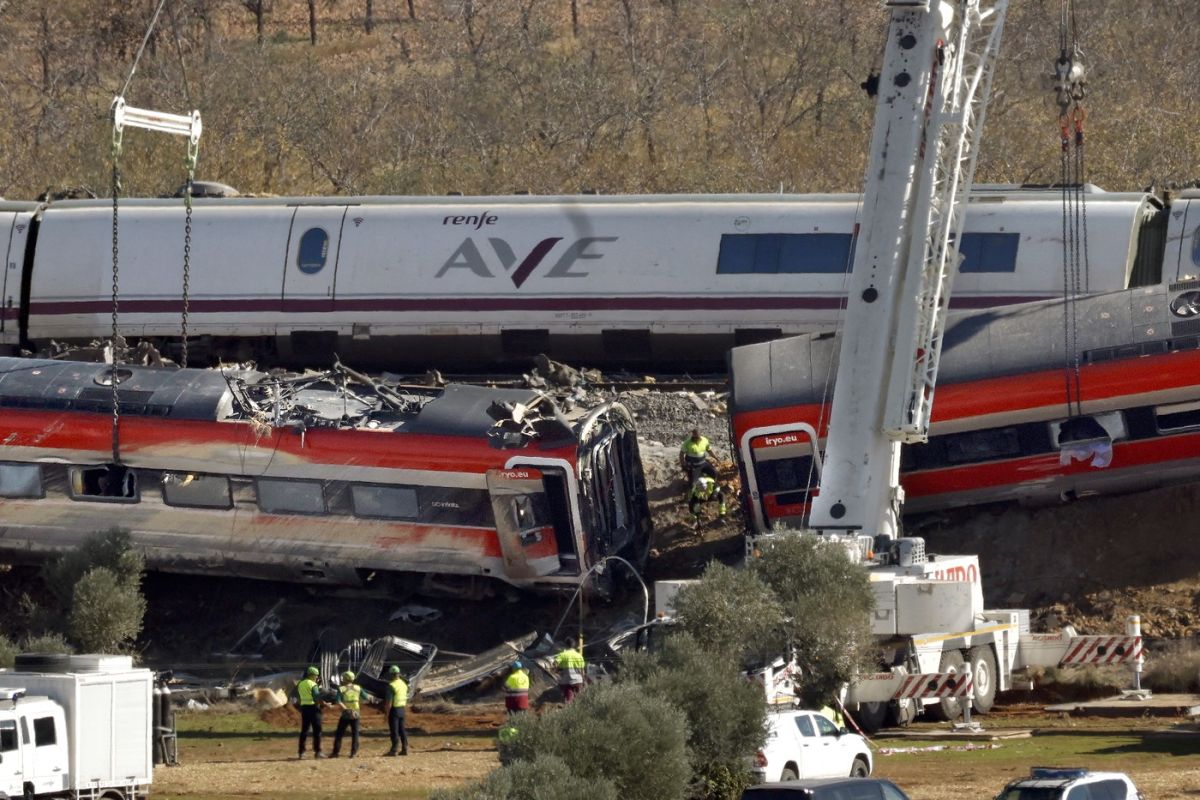
Dozens of relatives of the passengers from the two trains involved in the accident in Toledo continue to await news about the fate of their loved ones, two days after the tragedy, as authorities have confirmed the death of 69 people, while 70 are reported missing. #AccidentFeroviar #Toledo #Victime (translated)
hotnews.ro
Zeci de rude ale pasagerilor din cele două trenuri implicate în accidentul din Toledo încă așteaptă vești, la două zile după tragedie: „Orele care trec ne omoară”
2435
Jornal Expresso 2d

The article discusses the divergence of opinions between Hugo Soares, who believes that the lives of the Portuguese have improved, and the voters of the AD, who have an opposing view. #JavaScript #AdBlocker #WebDevelopment (translated)

expresso.pt
A vida dos portugueses “está muito melhor”? Hugo Soares acha que sim, os eleitores da AD acham que não
2666
Christophe Barraud🛢🐳 2d

The author shared a Bloomberg headline saying Amazon shares had fallen as spending increased and its online business slowed. https://t.co/TqxBuVaHPM https://t.co/IawnPbS057 #Amazon #Finanzas #Mercados #US

2888
Observador 3d

The spokesperson for the PSP, Sérgio Soares, stated that despite the pressure surrounding the demonstrations, the police hope that the action during the protest of police and military personnel of the GNR in Lisbon will occur peacefully, without the need to resort to force. #PSP #Manifestações #DireitosHumanos (translated)

observador.pt
PSP Manifestações. "Tentámos durante horas a via do diálogo"
2788
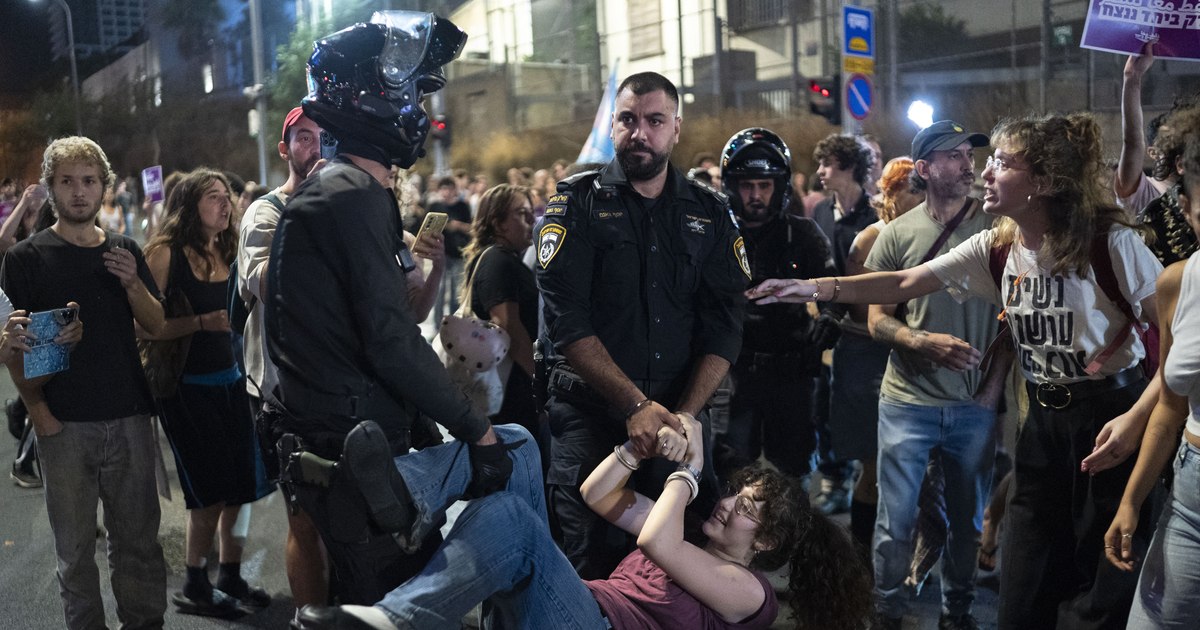
adevarul.ro 3d

Israel enters a new period of political uncertainty after the legislative elections, in which the fate of Benjamin Netanyahu depends on forming a controversial alliance with the Arab parties, in a context where neither he nor the opposition has obtained the necessary majority. #Israel #Netanyahu #Politică (translated)

adevarul.ro
Impas politic după alegerile din Israel. Soarta lui Netanyahu depinde de o alianță controversată
3132
Observador 3d

Hugo Soares, from the PSD, criticized the Socialist Party for blocking discussions on the Rent Law, while José Luís Carneiro, from the PS, defended that the party takes responsibility amidst political attacks during the budget debate, with the government seeking to control the specialized phase of opposing initiatives. #Governo #LeiDasRendas #Orçamento2027 (translated)

observador.pt
As notícias das 4h
2910
Observador 3d

Hugo Soares, parliamentary leader of the PSD, accuses the Socialist Party of blocking negotiations on the Rent Law, while José Luís Carneiro defends the PS's responsibility amid political attacks in the budget debate, highlighting the government's fragility. #LeiDasRendas #PartidoSocialista #Orçamento2027 (translated)

observador.pt
As notícias das 3h
2911
Mediafax.ro 4d

The Bucharest Court of Appeal is set to decide today the fate of Călin Georgescu, determining whether he will remain in preventive detention or will be placed under judicial control, following the appeal of DIICOT prosecutors. #CălinGeorgescu #arestopreventiv #DIICOT (translated)

www.mediafax.ro
Curtea de Apel București decide azi soarta lui Călin Georgescu. Rămâne în arest preventiv sau pleacă acasă?
2922
rsvp 4d

Irish households have been warned of potential energy price hikes in the near future due to soaring wholesale energy prices, which have tripled compared to previous years. #EnergyPrices #Ireland #CostOfLiving

www.rsvplive.ie
Irish households warned of fresh round of energy price hikes on the way
2922
HotNews.ro 5d

The polls have closed in Israel after parliamentary elections with a record voter turnout, and now the results are awaited that could determine the fate of Prime Minister Benjamin Netanyahu in the context of a complicated political situation. #AlegeriIsrael2026 #BenjaminNetanyahu #Knesset (translated)

hotnews.ro
Urnele s-au închis în Israel. Așteptare febrilă în toată lumea privind rezultatul unor alegeri cu mare putere de simbol, decisive pentru Netanyahu
3266
Observador 5d

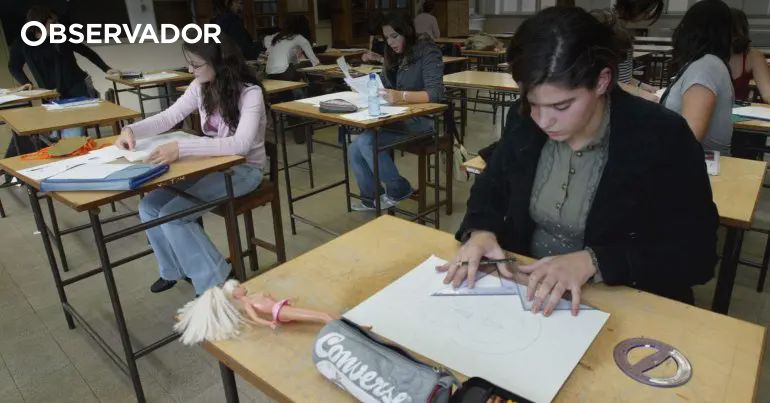
Students from the Soares dos Reis Artistic School in Porto blocked the school in protest against the lack of conditions, demanding free materials, the end of national exams, and better facilities. #EducaçãoArtística #ProtestoEstudantil #SoaresDosReis (translated)

observador.pt
Alunos bloqueiam Escola Soares dos Reis em protesto
2706
Jornal Expresso 5d

Students from Soares dos Reis School protest by blocking the institution due to the lack of adequate conditions and the scarcity of teachers. #JavaScript #AdBlocker #WebAccessibility (translated)

expresso.pt
Alunos bloqueiam Escola Soares dos Reis em protesto por falta de condições e de professores
2594
Simon Marks 5d

Back in the US after a long break in the UK, I am suffering from total sticker shock after visiting a couple of DC supermarkets. I have never seen prices like it. Inflation numbers here are going to soar & are not yet telling the full story. The difference between late May & today is staggering.

1808

The author stated, with regret, that the current president did not have even a third of the courage, political ability, strength, and intelligence of Mário Soares, and said that he was a disappointment. #Política #MárioSoares #Desilusão #PT (translated)

3400
G
Gelu 7d

Don't change the time! Change the schedule, not the time! The biological rhythm is regulated by the Sun, not the clock. Time is not a work schedule that we can shift at will. Time is the measure by which we organize our lives, and nature has its own rhythm. The Earth does not change its rotation twice a year. The sun does not rise earlier because we decided to move the clock forward. Animals, birds, insects, and plants follow their biological rhythms related to light, darkness, and the natural succession of seasons. Humans are part of this nature. Our bodies have their own biological clock, fundamentally influenced by light. And when we officially move the clocks by one hour, we are not changing the course of nature, but rather asking humans to abruptly adapt to an administrative convention. Why do this every spring and reverse it every autumn? Is it natural to change the time or to adapt our schedules? Let's consider the majority of people: workers, farmers, students, teachers, parents, retirees, people who must adhere to a schedule set by others. They cannot always modify their schedules at will. They need to wake up at a certain hour, get to work, take a child to school, or comply with the public transport timetable. In contrast, there are people and organizations that have the opportunity to adapt their schedules based on the season, natural light, or the needs of their activities. If, for some people, changing their schedule is feasible, why impose the time change on everyone? Let's take a hypothetical example: if 10% of people have the freedom to adapt their schedule, is it fair to change the time for all those who do not have this freedom? Would it not be more logical to change the schedule where needed, rather than change the time by which the entire society organizes itself? Stores can modify their opening hours. Factories can adapt their shifts. Institutions can adjust their schedules, and schools and public transport can analyze timetables according to local conditions and people's needs. We do not all have to operate on the same schedule to live by the same time. Nature does not need our approval to follow its rhythm. In spring, the days lengthen. In autumn, the days shorten. This is the natural rhythm of the Earth, which we can observe without moving even a single clock hand. If we want to start activities earlier in summer, we can start sooner. If winter requires a different schedule, we can adapt it. But why change the official time, get used to a new convention, and then revert to the old one? Would it not be simpler to keep the same time all year round and organize our activities according to the season? I do not claim that all living beings measure time in hours and minutes. I assert something more important: their biological rhythms are linked to the natural cycle of light and darkness, not to the numbers we display on the clock. And humans should take this truth into account when organizing their lives. The economy must serve people, not people be permanently forced to adapt to the economy. One argument presented in favor of changing the time is the more efficient use of natural light or the reduction of energy consumption. But the actual effects depend on the country, season, population habits, and how energy is used. If we want to save energy, let's examine actual consumption. If we want more light during activities, let's adapt the schedules. If we want to improve work organization, let's change the timetables where possible. There is no need to change the time for the whole society to achieve flexibility in certain areas. The schedule is a tool we can adapt. The time should be a stable reference. We cannot stop the seasons. We cannot modify the Earth's rotation. We cannot ask nature to adapt to our clock. But we can organize our lives more wisely. Instead of moving the clock hands twice a year, we can learn to adapt our schedules to the reality around us. Instead of changing the time for everyone, we can allow each field to find the appropriate schedule, within the bounds of the law and with respect for people's rights. Let's keep the time stable and make the schedules flexible! Let's leave time in peace. Twice a year, millions of people are forced to change their clocks, schedules, and biological rhythms to adapt to an administrative decision. It is said that changing the time brings economic or energy benefits. However, in modern society, these advantages are increasingly contested, while the disadvantages are felt by nearly the entire population. People, animals, and plants do not live by the clock on the wall, but by the natural rhythms of the Earth. The human body is regulated by the alternation of light and darkness. When we artificially move the time forward or back, we disturb this balance. Many people sleep worse, feel more tired, and need days or weeks to readjust. Living beings do not change their schedules twice a year. Birds do not migrate by the clock, cows do not produce milk according to the official hour, and dogs do not understand why their owner takes them for a walk an hour earlier. Nature follows the sun, not administrative decisions. There is also a principle issue. For a relatively small percentage of people and activities that would benefit from more light in the evening, the schedule of the entire society is modified. About 90% of people are forced to adapt, even though they did not ask for this and do not gain direct advantages. It would be more logical for the sectors that need a different schedule to adapt it themselves. Stores can open earlier or later. Factories can modify their work shifts. Schools, institutions, and companies can adjust their schedules as needed. It is much easier for certain organizations to change the schedule in a targeted manner than to change the official time for the entire population. Moreover, modern technology has greatly diminished the argument for saving energy. Lighting now represents a smaller proportion of total consumption, while air conditioning, computers, and other equipment operate regardless of time changes. The time should serve people, not people be obliged to serve the time. A modern society can function efficiently without moving the clock hands twice a year. Stability, health, and respect for natural rhythms are stronger arguments than the tradition of a measure introduced in another era. Therefore, the most rational solution is to keep the same time throughout the year and adapt schedules where necessary, rather than changing the lifestyle rhythm of an entire population. Why should we keep the same time all year? Changing the time twice a year represents an artificial intervention in the natural rhythm of society. Although it was introduced with the intention of saving energy, numerous modern studies show that the benefits are minimal, while the social, medical, and economic costs are significant. 1. The biological rhythm is regulated by the Sun, not the clock. The human body operates according to an internal biological clock, synchronized with the natural alternation of day and night. Research in chronobiology shows that artificial changes in time disrupt sleep, concentration, and metabolism. In the days following the switch to summer time: - sleep disorders increase; - more traffic accidents occur; - productivity at work decreases; - there is an increase in the risk of heart attacks and other cardiovascular problems. In practice, millions of people are forced to suffer a slight "jet lag" without having traveled anywhere. 2. Nature does not change the time. Animals and plants regulate their activity according to light. Birds, insects, domesticated and wild animals do not change their schedules just because the government decides to move the clock forward by one hour. Farmers often observe that cows continue to adhere to their biological schedule regardless of the change in official time. The same happens with many other living beings. In reality, we are changing the clock display, not the position of the Sun in the sky. 3. Economic benefits are diminishing. Changing the time was introduced in an era when lighting consumed a significant proportion of the energy used by the population. Today: - lighting is much more energy-efficient; - the main consumption comes from air conditioning, heating, servers, computers, and appliances; - estimated savings are very low or even nonexistent in many states. In contrast, the economic costs are real: - employee productivity decreases after the time change; - absenteeism increases; - additional costs associated with accidents and medical problems arise; - computer and logistics systems need to be periodically adjusted. 4. It is unfair to change the schedule of all for the needs of a minority. If certain economic sectors find it useful to start activities earlier in summer, they can adapt their schedules. For example: - stores can operate from 07:00 to 21:00 instead of 08:00 to 22:00; - factories can alter shifts; - public institutions can temporarily adjust working hours; - schools and companies can decide locally what schedule is optimal. It is much simpler for 10% of organizations to change their schedule than for 100% of the population to change their biological clock. 5. Stability means efficiency. Transport, information systems, international economic activities, and public services function more smoothly when the official time remains constant. One hour throughout the year: - reduces scheduling errors; - simplifies transport and communications; - eliminates confusion regarding timetables; - provides predictability for citizens and companies. Conclusion The sun does not change its time. The Earth does not change its time. Nature does not change its time. Only humans move the clock hands and then endure the consequences of this decision. Instead of modifying the schedule of an entire society twice a year, it is more logical to keep the same time constantly and allow those fields that need a different schedule to adapt their programs individually. This way, natural biological rhythms are respected, economic costs are reduced, and the comfort of the majority of the population is increased. A modern society needs flexibility in scheduling, not the constant change of the clock. (translated)

908
Observador 7d

In the article "The North is Not for Everyone," Nuno Mota Soares argues that healthcare management in northern Portugal is characterized by efficiency and problem anticipation, contrasting with bureaucracy and service closures in Lisbon, highlighting the need to value local skills and decisions instead of relying on centralized directives. #Porto #Saúde #GestãoHospitalar (translated)

observador.pt
O Norte não é para todos
3067
Tuomas Malinen 1w

The author called an unspecified statement a blatant lie, citing Brent crude prices near $117 and the UK Maritime Trade Operations’ report that most Iranian strikes on tankers in the Persian Gulf were going unreported. They insulted Scott Bessent and said they could not wait for him to leave. #Ölpreise #PersischerGolf #Lüge #IR #UK

3413
Jon Cooper 1w

Trump is panicking—and tonight he’s running to deep-red Fort Myers to try to save Republicans with just 11 days left. But the more he makes these midterms about himself, the more Dems are fired up. His Iran war sent gas prices soaring. The average family has paid $4,200+ more since he took office.

2507
Jornal Expresso 1w

The president of IHRU generated divisions in the PSD after being criticized by a minister and defended by Hugo Soares regarding his statements. #JavaScript #AdBlocker #WebDevelopment (translated)

expresso.pt
Presidente do IHRU divide PSD: Ministro condena declarações, Hugo Soares não
2736
Jacques Attali 1w

The author wrote that fear influenced voting more than hope, and that politicians focused on polls were rarely inclined to take the courageous course. They added that the outcome had not yet been decided, comparing the uncertainty to a high kick in rugby, when it was unclear who would jump for the ball.

2965