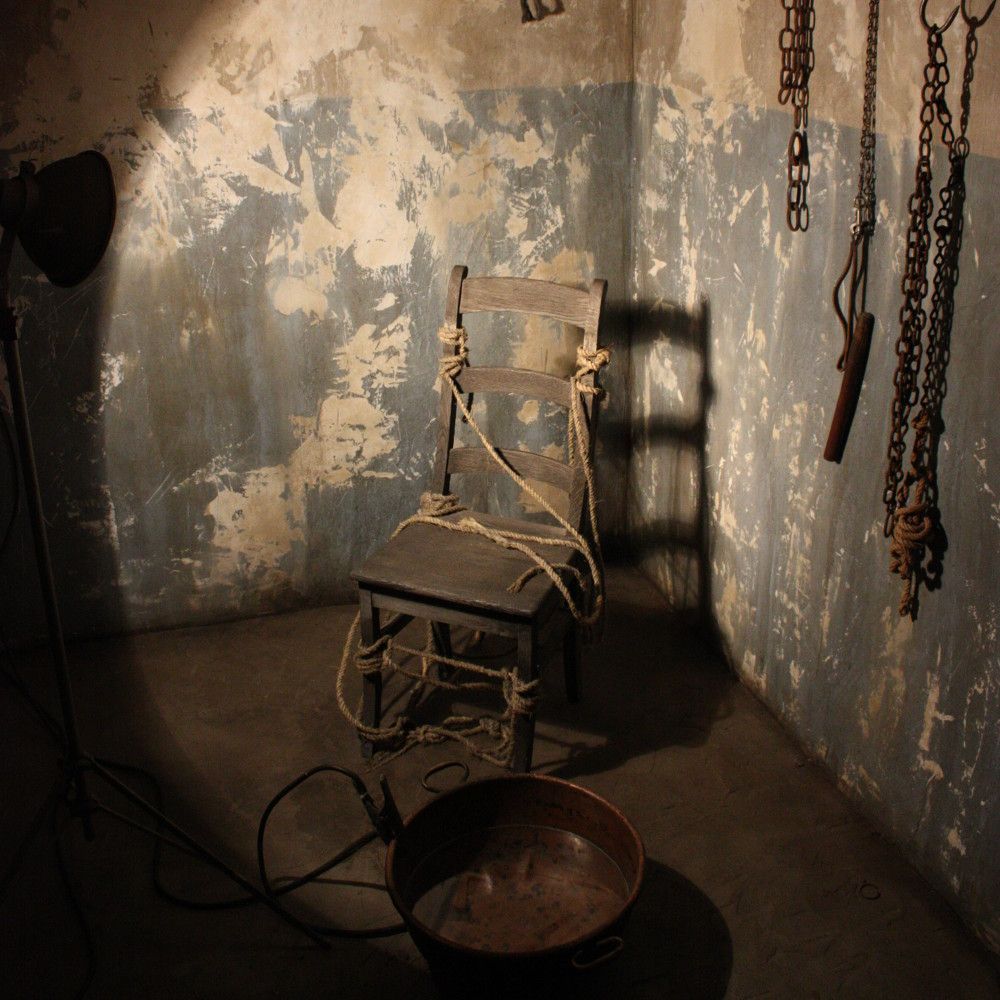
Cassiopeia referred to the statements made by Anna Bikont, who — as she quoted — claimed that before the war there was not such murderous anti-Semitism as after it, when at least 1,080 Jews died and three pogroms occurred: in Rzeszów, Kraków, and Kielce. She addressed Dominika Wielowieyska asking her to inquire with her colleague from "Gazeta Wyborcza" about the roles of the individuals she mentioned in the structures of the MBP, UB, the Main Military Information Office, and KBW. Among them, she pointed out Stefan Kuhl, Józef Goldberg (Różański), Anatol Fejgin, Izydor Kurc (Czaplicki), Maks Lifsches (Lityński), Józef Feldman, Mojżesz Bobrowicki (Mietkowski), Dawid Szwarc (Hübner), Adam Umer (Humera), Izaak Fleischfarb (Światło), Leon Ajzef (Andrzejewski), Jan Wołkow, Julia Brystiger, Eliasz Koton, Józef Jungman (Jurkowski), Feliks Rosenbaum, and Bolesław Heller (Halewski). Cassiopeia also asked why — as she wrote — thousands of Polish patriots died in prisons and camps, whose commanders or chiefs were supposed to be Salomon Morel, Kopel Klejman, Saul Wajntraub, Oskar Rozenberg, Sewer Rosen, Mosiek Flaum, Beniamin Glatter, Efroim Klitenik, and Henryk Markowicz. She separately described the punitive-investigative prison No. III in Warsaw, referred to as "Toledo." She claimed that about 1,000 people died there a martyr's death, and to this day, 30 of them have been found. According to her account, Kopel Klejman, whom she also referred to as Kazimierz Szymonowicz, son of Joel and Rachel, managed the prison, tortured, and murdered the inmates. Cassiopeia wrote that he built a bunker there where he hung victims on hooks, and his favorite methods of killing were shooting in the nape of the neck and hanging convicts from trees. She added that children were also tortured there. According to her cited account, when a 13-year-old boy asked for a priest before his death, Klejman responded with a vulgar insult, said he would be the priest himself, and ordered him to be shot. Cassiopeia also claimed that the bodies of victims were mixed with garbage and buried in lime pits, and that insurgents from WiN attempted several times to kill Klejman; he was said to have been wounded in one of the attacks. According to her entry, the MBP then transferred him to Rawicz, and later to Goleniów. She wrote that in the 1960s he worked at NBP, and later at the Institute of Nuclear Research of the Polish Academy of Sciences. She added that it is unknown what happened to him: some said it was suicide, others claimed it was poisoning, and still others said they saw him in the 1980s. Finally, Cassiopeia wrote that she learned that the most important politicians in Poland do not support "the lady from history" nor share her lessons because they are afraid for their mortgages. She asked her followers if they were also afraid. #historia #Polska #antysemityzm (translated)