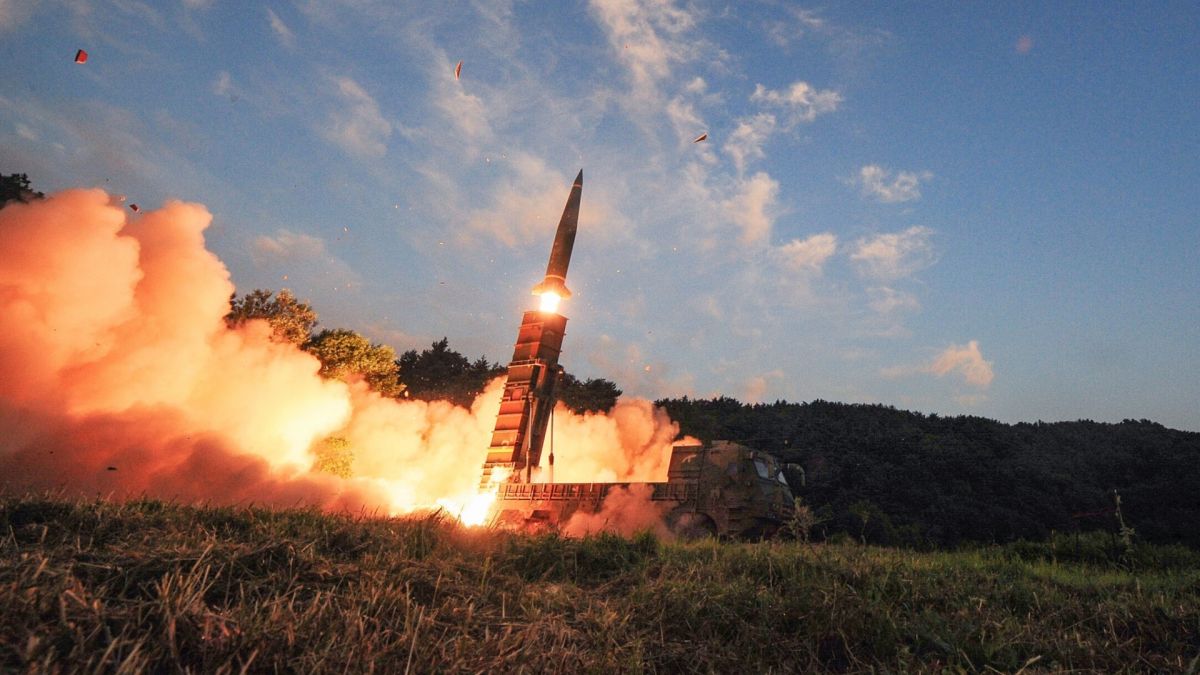
| JULY 2026 | The Guard State How the largest Arab nation became a security contractor at the gates of its own people By Adham Hasanin Egyptian journalist and political writer, based in the Netherlands In June 2025, hundreds of activists from forty countries landed at Cairo airport. Doctors from France, lawyers from Australia, students from the United States, pensioners from the Netherlands. They carried no weapons and no banned slogans; they carried backpacks, walking shoes, and a single intention: to march from Arish to the Rafah crossing — entirely on Egyptian soil — to demand that food be allowed through to a people starving behind the gate. Not one of them reached Rafah. More than two hundred were detained before the march could begin. Around five hundred foreign nationals were deported from airports, hotels, and checkpoints. Passports were confiscated, activists were pulled out of downtown Cairo cafés, and the Global March to Gaza was cancelled on 16 June without taking its first step. And the world watched. This was no secret operation in a dark basement; it happened in the open, documented by the deportees’ own phone cameras, carried by every international news agency. The world watched an Arab state arrest Europeans, Americans, and Africans for wanting to walk towards Palestine. A state guarding the gate of a siege — from the side that was supposed to be the side of rescue. Hold that image, because it is the key to everything that follows. This was not an aberration in Egyptian policy, nor an isolated security decision. It is the function — the complete function around which the Egyptian state has been redefined over the past decade, and which it is time to call by its proper name: the Guard State. I. The Name — What Do We Mean by the Guard State? Political economy has long described states that live off the rent of their location rather than the production of their people. But what has crystallised in Egypt over the past decade goes beyond traditional geographic rent — the Suez Canal, say — into something far graver: the conversion of sovereignty itself into a commodity for hire. The Guard State does not sell its location; it sells its function. It collects its wages not for what it produces, but for what it prevents: it prevents the refugee from reaching Europe, the activist from reaching Gaza, its own people from reaching politics, and the resistance’s weapons from reaching their destination. Four gates, guarded by a single machine, whose wages are paid in loans, deposits, and perpetually renewed rescue packages. This is not a rhetorical metaphor; it is an economic structure with numbers attached. When the Egyptian economy collapsed in 2024, it was rescued not by productive reform but by a single deal whose subject was location: Ras el-Hekma — thirty-five billion dollars for a stretch of coastline. And whenever negotiations with the IMF stall, the tranches are unlocked by explicit European pressure whose subject is migration: nine billion euros from the European Union in the 2024 “Strategic Partnership,” whose own documents place “migration management” at its core. Europe does not pay Egypt to prosper. It pays Egypt to guard. Thus the model is complete: income in exchange for prevention, external legitimacy in exchange for guarding, and international silence about domestic tyranny in exchange for keeping the gates controlled. To see how the model works on the ground, consider the bloodiest gate of all: the gate of Gaza. II. The Gaza Gate — The Guard Who Is Himself Searched The first paradox must be nailed down with facts: Egypt is not a sovereign guard of its own crossing; it is a searched guard. Egyptian relief trucks — ninety-two thousand food parcels in a single convoy this month — are subject to Israeli inspection before entering the Strip: from Egyptian soil, through a crossing that bears an Egyptian name. The state that guards the gate does not hold its key. It owns the threshold, but not the door. Then the October 2025 truce added a new layer to the function. Under the fifteen-point roadmap sponsored by the international envoy together with the “guarantor states” — Egypt foremost among them — Cairo is to train the civilian police force that will replace Hamas in administering the Strip, under the slogan of “one authority, one law, one weapon.” Let us call things by their names: the state that could not — or would not — deliver a loaf of bread without Israeli permission is now qualifying to graduate the security apparatus that will oversee the disarming of the resistance. From guarding the siege to administering what comes after the siege — a promotion within the same project. And meanwhile, what is happening behind the guarded gate? Since the truce, more than one thousand one hundred Palestinians have been killed by Israeli fire — the latest, just two days ago, a ten-year-old boy named Motaz Abu Shaar, carried to his grave in Khan Younis by his mother, Warda. A United Nations commission of inquiry has concluded that Israel is “deliberately targeting children in an ongoing genocide.” This is what the guarantors’ official language calls a “ceasefire.” What meaning is left in the word “guarantor”? A guarantor that the gate stays firmly shut — however high the dead pile up behind it. III. The Mediterranean Gate — The Guard Europe Pays For The second gate faces north. Since 2016, Cairo has boasted — through its officials at every European forum — that “not a single irregular migration boat has departed from Egyptian shores.” This is very nearly true. But the forbidden question is: at what political price has this “efficiency” become an instrument of mutual blackmail? Europe — which condemns Egypt’s human rights record in its parliamentary resolutions — is the same Europe that signed the nine-billion-euro partnership, and the same Europe that stays silent about sixty thousand political prisoners because the alternative, in its calculations, is boats that never stop. And Cairo understands the game and has mastered it: whenever human rights pressure intensifies, the official discourse turns up the volume on “Egypt hosts millions of refugees” and “the last line of defence.” The result is a perfect structure of mutual blackmail: Europe buys its conscience’s silence, the regime sells its location, and the people — Egyptian and refugee alike — are the commodity in the transaction. The democracies that lecture on values are financing the guard who keeps the victims from knocking on their doors. This is not passing hypocrisy; it is a structural partnership in the Guard State model — one that makes Brussels and Berlin shareholders in everything this state produces, from domestic repression to external siege. IV. The Interior Gate — Guarding the People Against Politics But the most dangerous gate is not on any border; it is inside. The Guard State cannot perform its external function unless it first guards an internal gate: the people’s gate to politics. The function requires a people that does not ask: why are we guarding the siege of our brothers? Why are our trucks searched on our own soil? Why are guests deported for coming to walk in peace? To guarantee the question is never asked, the largest silencing machine in the country’s history was built: sixty thousand prisoners of opinion, a press ranked 166th out of 180 worldwide, and a state security case number waiting for anyone who writes. I write these lines from experience, not from reading reports. When I continued writing from my Dutch exile, the machine reached me across continents: accounts shut down by coordinated mass-reporting campaigns, documented threats, a family harassed inside Egypt as leverage — and my name entered into Case 1282 of 2024, not for any act I committed, but for opinions written from free European soil. This is not a personal complaint; it is a job description: the Guard State guards even beyond its borders, because the free word — wherever it is written — threatens the entire contract of guardianship. The logic is perfectly self-consistent: a regime that sells “stability” abroad cannot tolerate a voice revealing that the stability on offer is the stillness of graveyards. This is why the arrest of the foreign activists in June 2025 was inevitable, not incidental: a peaceful march reaching Rafah would have revealed, before the world’s cameras, that the gate opens when it is wanted open — and that the one keeping it shut is a partner, not a mediator. V. What Has Egypt Lost? — The Guard’s Bill An apologist might argue: what is the harm? A state monetising its location as Norway monetises its oil. The answer lies in the essential difference: Norway sells a resource; Egypt leases its will. And the difference between the two is the difference between trade and bondage. Let us tally what Egypt has paid for this model, in bare facts. It lost its water sovereignty: the Renaissance Dam was completed and filled without the state — owner of “the largest defence headquarters in the world” — daring anything beyond statements of concern; for the guard does not make trouble for the international order that employs him. It lost its regional standing: in the Iran–America war halted just weeks ago, Cairo was neither party nor mediator nor even consultant — Pakistan brokered the deal, while Egypt absorbed the economic shrapnel of Hormuz’s closure like a bystander caught in a battle whose parties it does not know. It lost its place in the conscience of its nation: the state that liberated its land in 1973 and led the Arab world for a century has become, in the eyes of the Arab street from the Atlantic to the Gulf, the gatekeeper of the siege. This loss, specifically, no loan or deposit can repay — because it is the only capital that cannot be printed. And it lost — here is the crux — the very national security in whose name the guarding is justified. The model proved its fragility at the moment of testing: when Israel feared an Iranian response last year, it cut off Egypt’s gas by unilateral decision within hours. The guard who believed himself a partner discovered he was merely a hireling whose wages stop the moment danger arrives. VI. The Alternative Is Not a Slogan — It Is the Recovery of the Original Function I will not close with an essay on “the solution lies in Arab unity”; worn-out words kill more surely than silence. The alternative is specific, and it begins with redefining the function. The state is not a guard; the state is the agent of its people’s will. Every foreign policy not derived from that will is — by definition — functional servitude, however it is wrapped in the language of wisdom and moderation. And the Egyptian will is known and needs no referendum: no people in this region accepts that its country serve as warden of the siege of Gaza, or as Europe’s border post. Practically, the recovery begins with three measurable steps. Open the Rafah crossing fully and sovereignly, by purely Egyptian decision — that alone would overturn the equation of the siege. Break the negotiating bondage by linking any cooperation on migration to concrete European positions on Palestine, not statements of concern. And open the interior gate — release the prisoners and lift the hand from the written word — because a state that fears an article will never dare face an occupier. I know the current regime will do none of this; guarding is its founding contract and its financial artery. But this article is not written for the regime. It is written for memory, and for the generation that will inherit the gates — so that it knows that what is presented to it today as “the fate of geography” is no fate at all. It is an employment contract, signed by a regime without a mandate from its people. And contracts, however long they run, end when one of their parties does. And the world — I return to where I began — is a witness that requires no further proof. It watched the deportees at Cairo airport; it watched the searched trucks; it watched Warda Abu Shaar carry her son to his grave behind a firmly guarded gate. The question is no longer: what is happening? The only question left is: who dares to name it? This article is a naming. Adham Hasanin is an Egyptian journalist and political writer based in the Netherlands, covering Arab and European political affairs.
On a popular Polish television channel devoted to news and current affairs, I presented my blueprint for reconstructing the Constitutional Tribunal, an institution currently mired in a deep crisis. In essence, I propose that the newly elected judges—who have been prevented from #Konstytucja #Polska #SądWyższy #PL
During my visit to Sydney, I met with Australian Assistant Minister for Foreign Affairs Matt Thistlethwaite @MThistlethwaite, at the Department of Foreign Affairs of Australia. We discussed the current international and regional security challenges, as well as the importance of #Sydney #ForeignAffairs #InternationalRelations #AU
We broke this story in April, and I pushed the Canadian authorities to say whether they'd attend. The key meeting had just been hosted in Ottawa by Global Affairs Canada. Now it's decision time. Will Canada attend Trump's anti-antifa summit? https://t.co/3ChLxdosQf #Canada #TrumpSummit #Antifa #CA
Big thanks to @bmeinl, Minister of Foreign Affairs, for hosting us today. Together we also discussed how Europe can further strengthen its strategic international partnerships in a tougher world and pursue its main priorities, from securing supply chains to addressing irregular https://t.co/VQf4BENAGz #ForeignAffairs #EUPartnerships #GlobalStrategicGoals #EU
The Italian Ministry of Foreign Affairs has honoured Pecco Bagnaia, Marco Bezzecchi, Valentino Rossi, Giacomo Agostini and Max Biaggi as Italy's Ambassadors of Sports Diplomacy 👏 #MotoGP https://t.co/yUbjV5MH7G #SportsDiplomacy #MotoGP #Italy
Today in Bruxelles addressing the General Affairs Council 🇪🇺 on the plan One Europe One Market. Creating ONE Market instead of the present 27 in energy, connectivity, and finance is the key to be competitive with 🇨🇳 and 🇺🇸. @delorsinstitute @iespega @ieuniversity @AgenziaAREL https://t.co/jb4ros9Uex #OneEurope #OneMarket #EUcompetitiveness #EU #CN #US
🇪🇺 Foreign Affairs Council in Brussels, first one under the Irish🇮🇪 presidency. I wish you the best of luck @HMcEntee @thomasbyrneTD🍀🍀 On the agenda: 🛑 Russian aggression against Ukraine 🛑 Middle East 🛑 Black Sea https://t.co/JpAjp32KJI #EU #ForeignAffairs #Ireland #EU #IE #RU #UA
At the Foreign Affairs Council in Brussels today: •Black Sea: Pushing for the EU Maritime Security Hub in Constanța-Varna. Romania, Bulgaria, and Türkiye are extending MCM Black Sea demining efforts to cover critical energy infrastructure and undersea cables. [1] •Ukraine: https://t.co/p9XoQSaFMB #BlackSea #MaritimeSecurity #Ukraine #RO #BG #TR #UA
At the Foreign Affairs Council in Brussels today: •Black Sea: Pushing for the EU Maritime Security Hub in Constanța-Varna. Romania, Bulgaria, and Türkiye are extending MCM Black Sea demining efforts to cover critical energy infrastructure and undersea cables. [1] •Ukraine: https://t.co/5ts66NDfDz #BlackSea #MaritimeSecurity #Ukraine #RO #BG #TR #UA
Συναντήθηκα σήμερα με τον @pierremoscovici, παλαιό φίλο, με τον οποίο συμπορευτήκαμε στην πιο δύσκολη περίοδο της Ευρώπης: Εγώ ως Πρωθυπουργός και εκείνος ως Ευρωπαίος Επίτροπος Οικονομικών. Μιλήσαμε για την σημερινή δύσκολη κατάσταση στην οποία βρίσκεται η Ευρωπαϊκή Ένωση, με την υπαρξιακή της κρίση να είναι πιο έντονη από ποτέ. Συζήτησα επίσης με τον Pierre τους λόγους που μας οδήγησαν στην ίδρυση της ΕΛ.Α.Σ., προκειμένου να προχωρήσουμε σε μια ριζική πολιτική αλλαγή στην Ελλάδα και να διεκδικήσουμε την ζωή που μας αξίζει. Μιλήσαμε τέλος και για την κατάσταση στην οποία βρίσκονται οι προοδευτικές δυνάμεις σήμερα στην Ευρώπη, εν μέσω της ραγδαίας ανόδου της Ακροδεξιάς. Επανέλαβα την πάγια θέση μου ότι όλες οι προοδευτικες δυνάμεις, θα πρέπει να το μεταφράσουν με σαφή προγραμματικό λόγο, με ουσιαστικές προτάσεις που θα ενισχύουν την κοινωνική συνοχή και θα βελτιώνουν τη ζωή των πολιτών, παίρνοντας διαζύγιο από τις νεοφιλελεύθερες πολιτικές που υιοθέτησαν τα τελευταία χρόνια. Σε διαφορετική περίπτωση, η επέλαση της Ακροδεξιάς στην Ευρώπη δεν θα είναι απλώς ένα πυροτέχνημα αλλά θα μετατραπεί σε μια νέα - ζοφερή - κανονικότητα. - I met today with @pierremoscovici, a long-time friend with whom I worked closely during the most difficult period in Europe's recent history: Me as the Prime Minister of Greece, and he as the European Commissioner for Economic and Financial Affairs. We discussed the challenging situation the European Union is facing today, with its existential crisis being more acute than ever. I also spoke with Pierre about the reasons that led us to establish ELAS, with the aim of bringing a necessary political change in Greece and delivering a better life; a life that the Greek citizens deserve. Finally, we exchanged views on the current state of affairs of the progressive forces across Europe during the rapid rise of the far right. I reiterated my longstanding position that all progressive forces must articulate a clear, programmatic vision, backed by substantive policy proposals that strengthen social cohesion and improve people's lives, while breaking decisively with the neoliberal policies they have embraced in recent years. Otherwise, the advance of the far right in Europe will not prove to be a passing phenomenon; instead it will become a new—and deeply troubling—normalcy. #Ευρώπη #ΠροοδευτικέςΔυνάμεις #Ακροδεξιά
Welcome back to POLYPHONY, an independent publication from Sweden exploring world affairs, global cultures, literature, art, and history. We look beyond headlines to examine the deeper currents shaping our changing world through rigorous analysis and storytelling. This week’s POLYPHONY Notes explore a world of opposing currents: Europe’s evolving security role, intensifying conflicts, global power competition, and the strategic shifts reshaping an uncertain world. Explore “World affairs | This week” and our latest literary memoir, “The weight of a single word: Woman.” Read, share, subscribe and contribute to POLYPHONY. https://polyphony26.substack.com/p/world-affairs-this-week

Frederic #Massara nuovo Chief Football Officer della #Juventus ⚪️⚫️ Giorgio #Chiellini assume il ruolo di Chief Club Affairs Officer 🆕 @junews24com https://t.co/qdYS7O3YFD #Juventus #Calcio #Football
Il nuovo organigramma societario della #Juventus: - Giovanni #Carnevali, Amministratore Delegato e Direttore Generale - Frederic #Massara, Chief Football Officer (gestione e sviluppo squadra maschile) - Marco #Ottolini, direttore sportivo - Giorgio #Chiellini, Chief Club Affairs Officer (relazioni con istituzioni e organizzazioni sportive) #Juventus #Calcio #Sport
Dialogue and diplomacy are essential to building lasting peace and stability. In Doha today, I met with Qatar’s Prime Minister and Minister of Foreign Affairs, Mohammed bin Abdulrahman Al Thani, to discuss the challenges facing the Middle East and ongoing efforts to secure peace #Peace #Diplomacy #MiddleEast #QA
Good discussion today with India's External Affairs Minister Dr. S. Jaishankar on deepening Ireland-India ties, expanding trade and investment, and advancing the EU-India Free Trade Agreement. Strong partnerships are more important than ever in today's world. #IrelandIndia #TradeRelations #EUIndiaFTA #IN #IE #EU
I discussed with the Iranian Minister of Foreign Affairs, H.E. Abbas Araghchi, on the current situation in the Middle East, the Memorandum of Understanding recently signed with the US and Romania’s approach in line with international law. Reiterated RO’s lasting commitment for https://t.co/hHGXStLruR #MiddleEast #InternationalLaw #Diplomacy #IR #US #RO