BETA nonprofit public democratic european moderated

Search

#Algorithme

The author criticized the ban on mobile phones in class. He recalled that the measure had previously been presented as a way to protect children from bullying and toxic algorithms, and deemed it infantilizing, describing it as a condition for the return of students to high schools. #éducation #harcèlement #lycée #FR (translated)

The author indicated that he had submitted a bill a few months earlier aimed at abolishing Parcoursup, believing that the platform subjected children's futures to an algorithm. He expressed support for selection, which he deemed essential, while asserting that the fate of young people should not be left to chance. https://t.co/3uc5ih5mGF #Éducation #ParcoursSup #Loi #FR (translated)

The author asked if an emergency meeting had been held that evening at the Élysée. To resolve it, he proposed that the Prime Minister put an end to Parcoursup, believing that the future of young people should not be decided by an algorithm and that a human exchange was necessary. He also requested that no positions be cut. https://t.co/egPuOjg3dP #Éducation #Politique #Crise #FR (translated)

The article explores how algorithms influence the perception and understanding of the student movement, enclosing everyone in a bubble of personalized information. #Algorithmes #BulleInformationnelle #VisionDuMonde (translated)

« Chacun est enfermé dans sa bulle » : comment les algorithmes façonnent la vision du mouvement lycéen

Pope Leo XIV believed that in the era of artificial intelligence, it was urgent to distinguish human art from creations generated by machines. He affirmed that an ontological difference, even before being aesthetic, separated the two, with algorithms producing works through statistical calculation from millions of images created by others. According to him, they lacked the human spark. He added that the Church wished to renew its alliance with artists and cultural institutions in order to preserve the human aspect. #IntelligenceArtificielle #ArtHumain #Culture (translated)

BFMTV 1w

A new artificial intelligence algorithm is capable of setting the optimal price for a Big Mac, even proposing astonishing prices, such as 18 dollars in some cases. #IA #BigMac #prix (translated)

Quand l'IA décide du prix de votre Big Mac

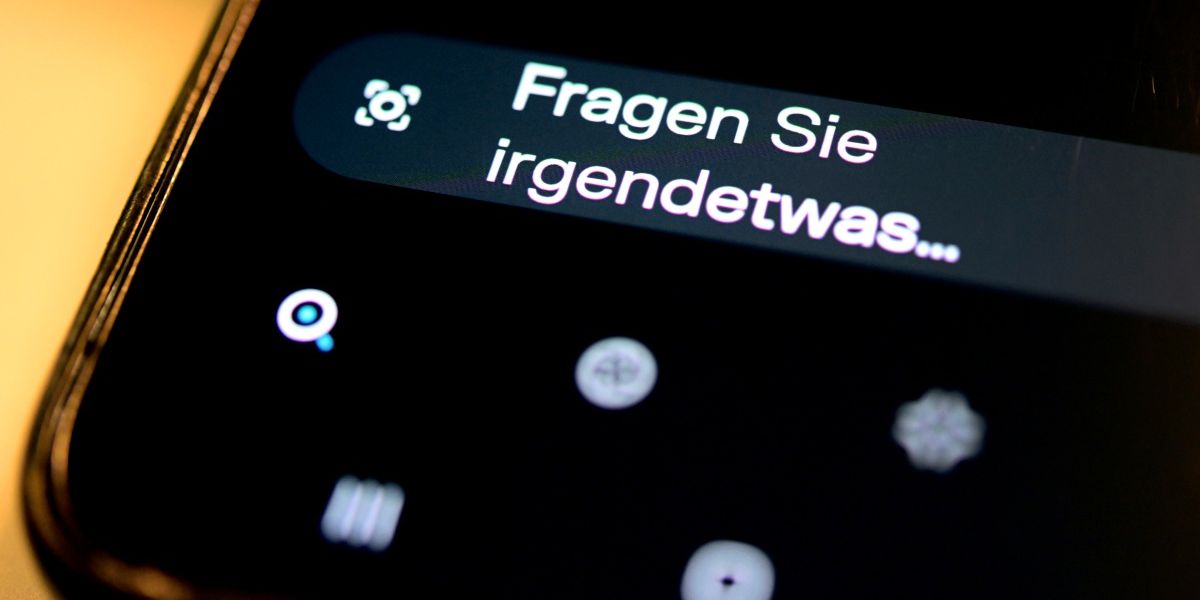
🔔 Activate notifications from @AlertesInfos so you don't miss anything about the mobilization and anger of high school students in France. Even if you are subscribed, our posts may not all appear in your feed. The algorithm of X is currently working like this, especially when we post a lot of information in a row. #Education #Mobilisation #ColèreLycéenne (translated)

2

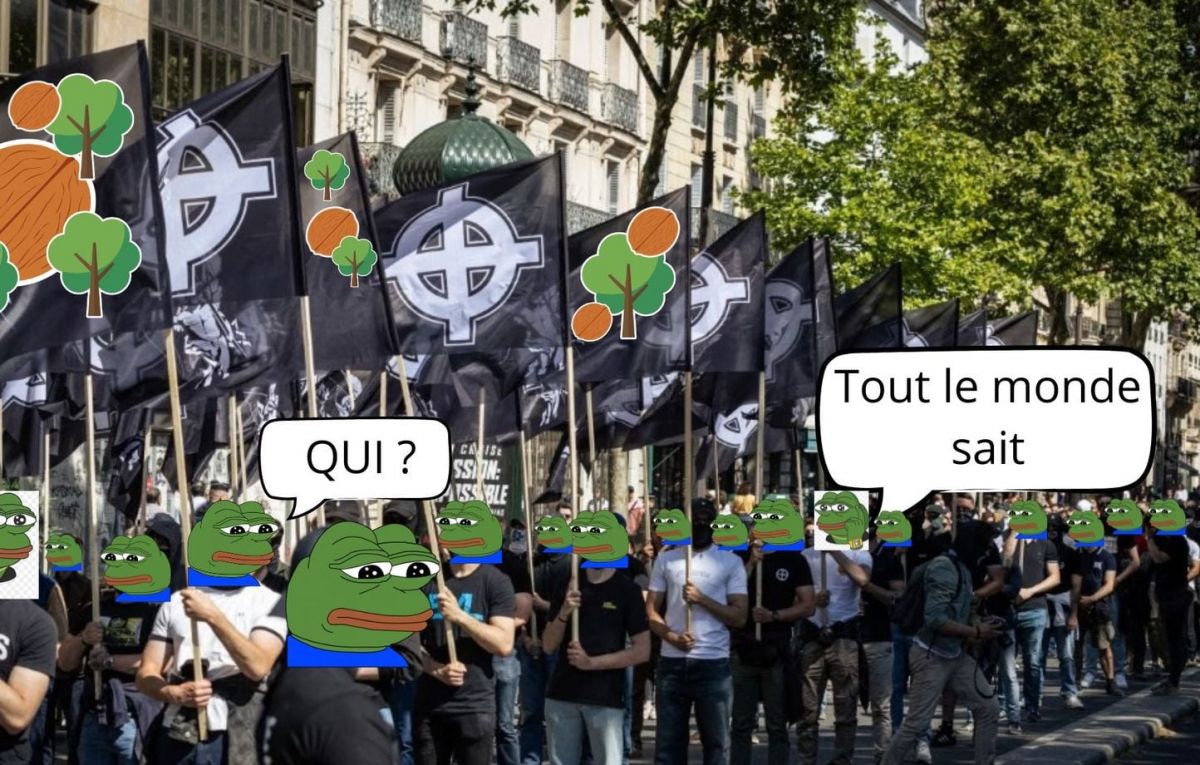
La fachosphère utilise un vocabulaire codé sur les réseaux sociaux pour diffuser ses idées racistes et antisémites, contournant ainsi la censure algorithmique dans un contexte électoral où l'extrême droite est en pleine ascension. #Fachosphère #DiscoursDeHaine #Algorithmes

« Arbres », « Noix », « Qui ? »… Comment la fachosphère contourne la censure en ligne avec à un vocabulaire codé
D

Forschende arbeiten daran, KI-Systeme fairer zu gestalten, indem sie Algorithmen entwickeln, die unterschiedliche Interessen berücksichtigen und systematische Benachteiligungen verringern. #KünstlicheIntelligenz #Fairness #Demokratisierung

Gemeinsame Kontrolle soll KI-Systeme demokratischer machen
BFMTV 3w

Epsilon, un nouveau réseau social européen qui sera lancé le 28 septembre, se veut une alternative souveraine et éthique aux plateformes existantes, sans algorithmes manipulateurs et en respectant les règles européennes de protection des données. #RéseauxSociaux #EconomieNumérique #UnionEuropéenne

"Les réseaux sociaux devraient servir les gens, pas les exploiter": Epsilon promet un réseau social européen souverain et sans algorithme "manipulateur", il sera lancé le 28 septembre
D

Eine Untersuchung von Algorithm Watch zeigt, dass Googles KI-Übersichten zu Wahlen oft undurchsichtig sind und Kandidierende häufig in einem positiven Licht dargestellt werden, obwohl Google ursprünglich keine KI-Zusammenfassungen zu politischen Themen anbieten wollte. #KünstlicheIntelligenz #Wahlen #Algorithmen

Wann Googles KI-Übersichten welche Informationen zu Wahlen ausspucken, ist undurchsichtig
Kurier 3w

Philosophin Lisz Hirn argumentiert in ihrem neuen Buch, dass trotz einer gesellschaftlichen Abkehr von traditionellen Autoritäten diese weiterhin notwendig sind, um Orientierung und Freiheit zu ermöglichen, während sie darauf hinweist, dass moderne Technologien und Algorithmen oft unbemerkte Autoritäten im Leben der Menschen einnehmen. #Autorität #Emanzipation #Gesellschaft

Lisz Hirn: „Wir kommen Autoritäten nicht aus“
Bild 3w

Nach dem tragischen Tod einer Minderjährigen durch eine gefährliche TikTok-Challenge plant die australische Regierung, gefährlichen Social-Media-Algorithmen mit einem neuen Gesetz entgegenzutreten, um die Entscheidungsfreiheit der Nutzer zu fördern und das Suchtpotenzial zu reduzieren. #TikTok #Algorithmus #Jugendschutz

Nach tödlichen TikTok-Challenges - Australien kämpft gegen gefährliche Algorithmen

Mali – a war where some of the people fighting do not exist In Mali's war, an apparently simple question is becoming increasingly difficult to answer: who exactly is speaking to us? A real person? A rebel organisation? A Russian influence operation? A supporter of the military junta? Or somebody who has never existed at all? In September 2026, the Dakar-based Timbuktu Institute published Des algorithmes en guerre, a report examining the use of generative artificial intelligence by actors involved in the Malian conflict. Its researchers describe the country as a potential laboratory for AI-assisted information warfare. Separatist networks are deploying synthetic fighters on TikTok. Jihadist propagandists are experimenting with AI-generated imagery. Pro-government accounts are producing large quantities of content celebrating the Malian armed forces. Russia, meanwhile, operates the most developed influence infrastructure of all: pseudo-media outlets, inauthentic accounts, AI-generated text, images and video, and systems designed to artificially amplify their visibility. Artificial intelligence did not create Mali's conflict. The war has been under way since 2012, and its participants have always fought with propaganda as well as weapons. What AI has changed is the economics of that struggle. A new “witness”, commentator, fighter, poster or video can now be produced in minutes. For audiences watching from a phone, distinguishing between genuine documentation, propaganda and material created entirely by an algorithm is becoming progressively harder. Azzghim – the fighter who cannot be killed or interrogated The most striking case documented by the Timbuktu Institute involves accounts associated with supporters of the Azawad Liberation Front, or FLA, a Tuareg separatist movement fighting the authorities in Bamako. A figure called “Azzghim” appeared on TikTok. He looks like a Tuareg fighter and regularly features in videos attacking Mali's government and Russia's Africa Corps, commenting on the conflict and promoting the cause of Azawad. There is one problem: Azzghim does not exist. Analysis of the videos identified anomalies characteristic of generative AI, including unnatural body movements, visual inconsistencies, irregular colouring and problems with audio synchronisation. According to the Timbuktu Institute, Azzghim is a synthetic character being used as the digital face of a political narrative. The propaganda advantages are considerable. An organisation no longer needs to expose a real spokesman. A synthetic personality can be designed to look exactly as its creators require, speak the appropriate language and appeal to a particular audience. Different characters could potentially be created for younger viewers, traditional communities or different ethnic and social groups. There is another advantage: a synthetic spokesman cannot be arrested, identified or interrogated. Researchers also identified accounts amplifying the material. At the time of the study, TikTok account @tawri.n.azawad had around 207,000 followers and was almost entirely devoted to publishing or repackaging content involving Azzghim. Another account, @asnan831, used a similar synthetic teenage character. An important distinction is necessary. Researchers describe these profiles as belonging to supporters or individuals associated with the FLA. The available evidence does not establish that every account is part of an operation centrally directed by the Front's leadership. The information effect, however, remains significant: a digital community can be constructed around the Azawad cause in which some of the apparent participants may not be real people at all. The jihadists are learning too The picture is different for Jama'at Nusrat al-Islam wal-Muslimin, or JNIM, the al-Qaeda-affiliated coalition that has become one of the most powerful armed groups in the Sahel. Its confirmed use of generative AI remains considerably less sophisticated. In June 2026, JNIM's Az-Zallaqa media apparatus published AI-generated posters promoting material about previous attacks. The images showed fighters in combat but contained familiar generative artefacts: buildings and vegetation merging unnaturally, blurred details and unnaturally smooth surfaces. More important than JNIM's current capabilities is what AI could add to an already sophisticated propaganda apparatus. The organisation already tailors communications to different audiences. UN reporting has documented its use of media channels for broader propaganda while other outlets increasingly distribute material in local languages, including Bambara. Generative AI could dramatically reduce the cost of this strategy, translating material into Fulfulde, Hausa, Zarma or Tamasheq, generating synthetic dubbing and producing multiple versions of the same message. The Timbuktu Institute also considers the future possibility of AI chatbots being used to personalise recruitment. That should not be presented as a capability JNIM has already demonstrated. At present, it is a risk scenario rather than a confirmed operation. Russia has the most sophisticated machine At the other end of the spectrum lies Russia's influence ecosystem. Here, AI is not an isolated experiment but another component of an infrastructure previously developed by Wagner-linked networks, Russian media operations and influence organisations operating across Africa. After Wagner's withdrawal from Mali in 2025, its military role was taken over by the Russian state-controlled Africa Corps. The information infrastructure evolved alongside it. Of particular importance is African Initiative, which presents itself as a news agency but has been identified by France's VIGINUM, the UK's Foreign, Commonwealth & Development Office and the European External Action Service as an important component of Russia's newer influence architecture in Africa. One of the most interesting elements of this ecosystem is a network researchers call AI-Freak. The operation uses generative AI to produce text, images and videos, places them on fake or apparently independent news websites and distributes them through inauthentic accounts. This is supplemented by so-called Black Hat SEO – techniques intended to artificially increase the visibility of content in search engines. Elements of this infrastructure have previously been identified by Meta and OpenAI. In 2024, OpenAI disrupted Russian accounts using ChatGPT to generate articles and comments in English, French and Russian. Some of the French-language content targeted audiences in West Africa. In a later iteration of the operation, AI models were also used to draft scripts for short videos praising the Russian Africa Corps, translate them into French and generate descriptions optimised for social media. This illustrates an important difference between the Russian approach and Azzghim. The separatist ecosystem uses AI primarily to manufacture convincing digital personalities. The Russian model increasingly resembles an industrial production line: text, image, video, pseudo-news website, distribution account, search optimisation and additional channels amplifying the narrative. The objective is not merely to convince someone of a single claim. It is to occupy as much of the information environment as possible with narratives advantageous to Moscow: Russia as an effective security partner, the West as a neo-colonial aggressor, France as a source of instability and Russian forces as defenders of African sovereignty. Yet VIGINUM also warns against equating technological sophistication with actual impact. Some Russian influence channels still attract relatively small audiences. A sophisticated operation is not automatically a successful one. The junta is building its own digital reality Mali's military authorities operate within the same contested information environment. Since breaking with France and moving closer to Moscow, Bamako has increasingly restricted independent media space while promoting a narrative built around restored sovereignty, military success and the benefits of its Russian partnership. The Timbuktu Institute highlights the TikTok account @6tm_officiel. At the time of the study, it had more than 436,000 followers and published substantial amounts of AI-generated material presenting Mali's armed forces, the FAMa, and the Africa Corps in a favourable light. One video concerning the battle for Kidal accumulated around 4.7 million views. Again, attribution requires care. Researchers describe the account as being operated by an individual based in Bamako; they do not provide evidence that it is officially managed by the Malian government. It is better understood as part of a wider pro-government information ecosystem in which the boundaries between state communications, supporters and co-ordinated propaganda can be difficult to establish. The Africa Center for Strategic Studies has previously identified the military regimes in Mali and Burkina Faso as important sources of disinformation campaigns in West Africa. Recurring narratives target France, the United Nations, ECOWAS, human-rights organisations and independent media, while presenting criticism of the authorities as part of a foreign conspiracy. Generative AI allows such narratives to be produced faster, more cheaply and in far more variations. Everyone is fighting over a different version of the same war What makes Mali particularly revealing is that multiple actors are using similar technology for very different objectives. FLA-linked networks need digital faces capable of humanising the Azawad cause and attacking Russia's presence. JNIM needs propaganda material and increasingly localised communications. The pro-government ecosystem seeks to portray Mali's armed forces as victorious and reinforce the junta's legitimacy. Russia possesses the broadest infrastructure, in which AI is merely one component of a larger system involving media outlets, websites, local partners, social-media profiles and technical amplification. The result is a war taking place simultaneously in two realities. In the first, soldiers and civilians are killed, towns change hands and the army, separatists and jihadists fight for territory. In the second, every side is trying to determine what the first reality will look like on a smartphone screen. Generative AI does not need to create a perfect deepfake to be effective. It merely needs to increase the number of competing versions of events until an ordinary viewer can no longer easily determine which one deserves to be trusted. That is why Mali matters. It is not showing us the future of information warfare. It is showing us its present. One TikTok video may feature a real soldier. Another may feature a propagandist. A third may feature a fighter who has never existed. And all three can tell completely different stories about the same war. Sources Timbuktu Institute – Des algorithmes en guerre: Comment l'IA générative rebat les cartes du conflit malien https://timbuktu-institute.org/index.php/toutes-l-actualites/item/1731-rapport-des-algorithmes-en-guerre-comment-l-ia-generative-rebat-les-cartes-du-conflit-malien AfricaNews/AFP – “Mali's information war is increasingly being shaped by AI” https://www.africanews.com/2026/09/09/malis-information-war-is-increasingly-being-shaped-by-ai/ OpenAI – research on Russia-origin influence activity and Operation Stop News https://openai.com/index/disrupting-malicious-uses-of-ai-stop-news-2024/ VIGINUM / FCDO / EEAS – technical report on African Initiative and the AI-Freak network https://www.sgdsn.gouv.fr/files/files/Publications/20250612_TLP-CLEAR_VIGINUM_FCDO_EEAS_Technical_Report_African_Initiative_EN.pdf Africa Center for Strategic Studies – Mapping a Surge of Disinformation in Africa https://africacenter.org/spotlight/mapping-a-surge-of-disinformation-in-africa/ Timbuktu Institute – analysis of AI use by JNIM https://timbuktu-institute.org/index.php/toutes-l-actualites/item/1735-artificial-intelligence-a-new-propaganda-lever-for-jnim-in-mali?print=1&tmpl=component #Disinformation #Mali #Sahel #Africa #ArtificialIntelligence #AI #GenerativeAI #AIPropaganda #InformationWarfare #InfluenceOperations #Propaganda #Deepfakes #SyntheticMedia #Azawad #FLA #JNIM #AfricaCorps #Russia #RussianInfluence #TikTok #DigitalWarfare #MediaManipulation #WRLD

Rapport - DES ALGORITHMES EN GUERRE : Comment l'IA générative rebat les cartes du conflit malien

Wir müssen umsichtig regulieren. Ich glaube aber auch, dass wir bestimmte Möglichkeiten haben, um in die Kontrolle von Algorithmen reinzugehen oder Haftungsfragen auszulösen.

Nach OpenAI-Warnung: Forderungen nach Regulierung und "guter" KI
www.tagesschau.de

Guter regionaler Journalismus ist für die Demokratie überlebenswichtig, aber in Zeiten von identitäts- und empörungsgetriebenen Algorithmen schwer zu finanzieren. Umso schöner ist der Erfolg des Podcasts „2,1 Millionen“ von @Volksstimme und @mzwebde, der es in die #Journalismus #Demokratie #Podcast #DE

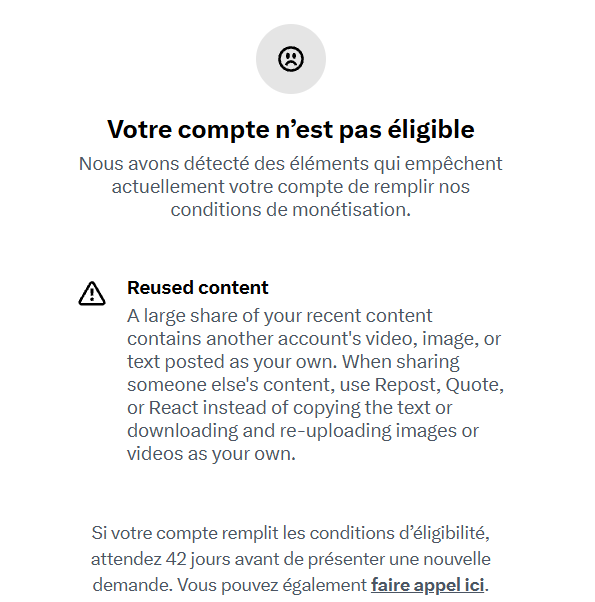
⛔️ ALERTE / 𝕏 refuse de monétiser French Carcan : la veille et l’écriture traitées comme du contenu volé ✅ 𝕏 vient de juger @FrenchCarcan inéligible à la rémunération. Motif : "reused content". Traduction : trop de vidéos, images ou textes d’autres comptes. Ce que 𝕏 ne voit pas 👉 French Carcan n’est pas une ferme à extraits. C’est l’un des rares comptes à aller chercher ce que personne ne regarde : colloques, universités d’été, audiences, meetings, conférences, podcasts, plateaux oubliés dès le générique. Le travail commence avant la vidéo. Il faut trouver la séquence, la tenir jusqu’au bout, en extraire la substantifique moelle, puis en livrer l'analyse. Pas une légende de trois mots. Une analyse. Une écriture. Une ligne : satire, info, culture, à vue. Le clip n’est pas le produit. Le produit, c’est le regard posé dessus. 🚫 La règle et le piège : Depuis septembre, X paie l’"originalité" et exclut le réupload. Sur le papier, le commentaire compte. Dans les faits, l’algorithme voit d’abord l’image et le son d’un tiers. Un extrait d’université d’été monté, titré, pensé et écrit tombe dans le même sac qu’un vol de vidéo sans une phrase. Résultat : on punit un compte qui dépiaute ce que personne n'a l'abnégation de visionner, parce qu’il n’a pas filmé le plateau. Près de 49 000 abonnés. Un rythme quotidien. Environ 1 000 euros de pub par mois avant le basculement. Sans souscriptions et sans cagnotte, ce rythme casse. 🗣️ @elonmusk & @XFrance : Il faut que la plateforme apprenne à lire autre chose qu’une empreinte vidéo. En attendant, le compte tient par ceux qui le lisent. Souscription. Cagnotte. Rien d’autre. Sans quoi, l'aventure devra prendre fin. 🔗 LE LIEN DE LA CAGNOTTE : https://t.co/DX8tqYyH9h #FrenchCarcan #Monétisation #ContentCreators

Frankreich hat einen überarbeiteten Gesetzesvorschlag zur Einführung eines Social-Media-Verbots für Kinder und Jugendliche unter 15 Jahren vorgelegt, der sich auf Kriterien statt auf spezifische Plattformen konzentriert, um unter anderem süchtig machende Algorithmen und den ständigen Kontakt zu Fremden zu regulieren. #SocialMediaVerbot #KinderUndJugendliche #Frankreich

Social-Media-Verbot: Frankreich überarbeitete Gesetz

mes tweets un peu techniques sont pas super evidents à comprendre pour tout le monde alors je vais tenter de vulgariser au mieux pour expliquer toute la comedie qui se joue autour de l’IA en ce moment sachez déjà que nous assistons probablement à la + grande manipulation tech de notre epoque car quand je vois les dirigeants des plus grands labos de la silicon valley reclamer soudainement une pause et demander des exemptions aux lois antitrust au nom de la securitée globale je pense que nous devons regarder exactement la où ils veulent detourner notre attention mettez vous en tête que ce spectacle pseudo ethique masque une panique financière tres concrete face aux miliards engloutis dans des supercalculateurs dont les rendements sessoufflent combinee à la terreur dexposer ces pertes dans leurs prochaines formulaires d’IPO (entrée en bourse) puis je trouve que la methode brille par son cynisme sils estiment sincerement que leurs modeles non publies representent un danger ce duopole (Anthropic /openAI) possede deja toute la latitude pour freiner ses propres deploiements sans demander la permission a quiconque au lieu de cela ils nomment leurs propres organismes dévaluation soi disant independants comme METR en y placant leurs anciens employes et investisseurs & réclament une exemption antitrust officielle pour s’entendre sur le rythme de l’innovation en cherchent à substituer un tampon bureaucratique à leur responsabilite civile réelle comprenez que leur demarche vise avant tout a imposer leurs propres controleurs à des concurrents qui ne sont meme pas à la frontiere technologique… perso je pense que le calcul geopolitique qui se cache derriere ce recit s’avère tout aussi bancal car prétendre limiter le progrès aux seules nations alignées sous couvert de coordination entre democraties pour maintenir une avance artificielle relève de l’illusion pure dites vous que pendant que la silicon valley redige des chartes morales pour preserver ses rentes, verrouiller le marche americain et criminaliser la concurence exterieure, les laboratoires chinois optimisent leurs algorithmes tirent parti dune energie abordable et distribuent la puissance de calcul a une fraction du cout occidental, les batisseurs a lautre bout du monde avancent et construisent pendant que les geants americains debattent dun cartel sur mesure de même je pense que l’erreur fondamentale de ces acteurs reside dans la confusion entre la fin de leur monopole et la fin de la civilisation sachez que de l’invention de l’imprimerie au deploiement de la cryptographie moderne les pouvoirs centraux ont toujours qualifie la democratisation des outils de la pensée de menace pour lordre public le problème pour eux cnest que l’intelligence artificielle depasse la notion d’actif prive enfermé dans des coffres forts d’entreprise, elle simpose comme une propriete fondamentale de la matière et du calcul & vouloir rationner le code par decret administratif revient à tenter de breveter les lois de la physique je pense que l’avenir appartiendra inévitablement aux protocoles ouverts au calcul souverain et à l’inférence locale car la veritable resilience d’une societe emerge directement dun systeme immunitaire décentralisé ou des millions dutilisateurs inspectent, eprouvent et ameliorent la technologie en temps reel loin de la stérilité des laboratoires ultra centralisés les institutions qui tentent deriger des murs autour du savoir finissent par isoler leur propre fragilite pendant que le reste du monde batit le siecle sur des fondations libres #IA #Technologie #Innovation

D

Der Artikel beschreibt, wie digitale Populismus-Modelle, angeführt von Figuren wie Donald Trump, Empörung als Geschäftsmodell nutzen und dabei die politische Landschaft beeinflussen, während soziale Medien eine zentrale Rolle bei der Mobilisierung von Menschen außerhalb traditioneller Politik spielen. #Medienkompetenz #Populismus #Algorithmen

Wut verkauft sich besser als Wahrheit