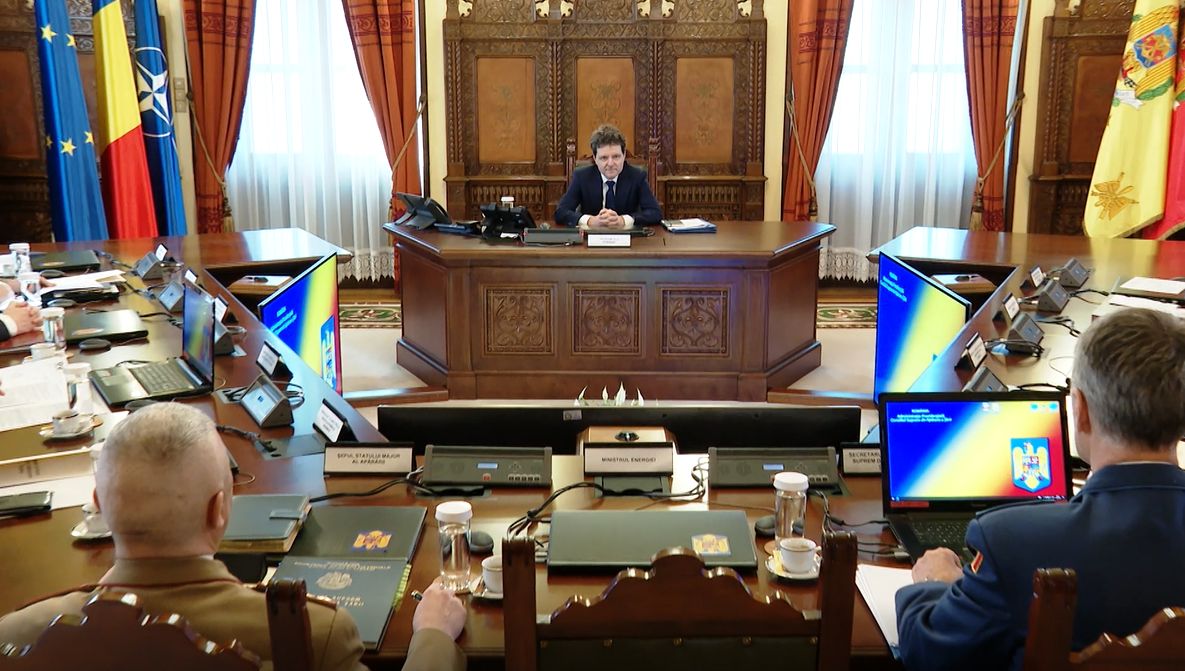
Non ho ben capito: il sindaco @matteolepore sta suggerendo che Bologna sia ostaggio degli antagonisti dei centri sociali? https://t.co/sq5L4glHVK #Bologna #politica #centrisociali
mah... on one hand, it's not clear why to put handcuffs on someone not strong you have to hold them down for minutes on the ground... on the other hand, there were 3 or 4 nurses and a couple of residents around, just a few meters away, and no one was concerned that he might die just because in (translated)
As #AI transforms justice systems, judicial capacity is key to protecting human rights and the rule of law. Proud to see @UNESCO and #Tanzania’s Institute of Judicial Administration develop a national curriculum on AI & the Rule of Law, with EU support. https://t.co/G8Hu0k4Tjc https://t.co/HmW2XH3iuD #AI #HumanRights #RuleOfLaw #TZ #EU
Poliția financiară italiană a confiscat 770 kg de cocaină extra pură în portul Vado Ligure, ascunsă între cutiile cu banane dintr-un container provenind din Ecuador, valoarea estimată a acestei capturi fiind de aproximativ 250 de milioane de euro. #italia #droguri #cocaina

L'ex segretario alla Difesa degli Stati Uniti, Pete Hegseth, ha annunciato che tutte le truppe saranno sottoposte a screening per il testosterone e, in caso di deficit, avranno accesso a una terapia sostitutiva al fine di mantenere alte le capacità di combattimento, sollevando interrogativi sulla deriva militarista e reazionaria della cultura contemporanea. #Testosterone #Militarismo #Politica

Sono stati recuperati i corpi di 27 persone morte nel naufragio del traghetto MV Barima in Guyana, mentre circa 80 persone risultano ancora disperse e 69 sono state salvate, con indagini in corso sulle cause dell'incidente e il capitano risultato positivo alla cannabis. #Guyana #naufragio #traghetto

Ministrul polonez al Apărării, Władysław Kosiniak-Kamysz, a avertizat că Rusia, după capturarea unui număr semnificativ de drone ucrainene, ar putea folosi aceste echipamente pentru a desfășura operațiuni sub steag fals și a intensifica provocările în Polonia și statele baltice, subliniind necesitatea pregătirii pentru o escaladare a conflictului. #RăzboiÎnUcraina #Polonia #DronăUcrainene

O NAMJOON VAI PARTICIPAR DE UM PODCAST NO DIA 22 DE JULHO COM A BELLA FREUD! “(…) Sua abordagem flexível e filosófica à música e capacidade de ultrapassar limites criativos com colaborações de ponta levou-o a trabalhar com uma gama diversificada de artistas, incluindo Erykah Badu, Anderson Paak, Lil Nas X, Mahalia e muito mais. Neste episódio de Neurose da Moda, Bella Freud e RM discutem a Síndrome de Stendhal, Rick Owens e o manto da liderança” Bella Freud é designer de moda britânica (& podcaster) filha do artista germano-britânico Lucien Freud, bisneta de Sigmund Freud, pai da psicanálise moderna. #Namjoon #Podcast #Moda
Extreme Capitalism and AI won't create The Good Future (Geoffrey Hinton) - Gerd Leonhard https://t.co/OPV1NspG8x #ExtremeCapitalism #AI #GoodFuture #Nospecificcountriesarementionedinthetweet.
🚨 TRANSFERT ANNULÉ POUR ARMANDO OBISPO 🇨🇼 AU RC LENS ! ❌❤️💛 Le transfert du défenseur capote à la toute dernière minute sur d'ultimes détails. (@Soccernews_nl) https://t.co/dTQAVfOJGY #Transfert #RCLens #Football
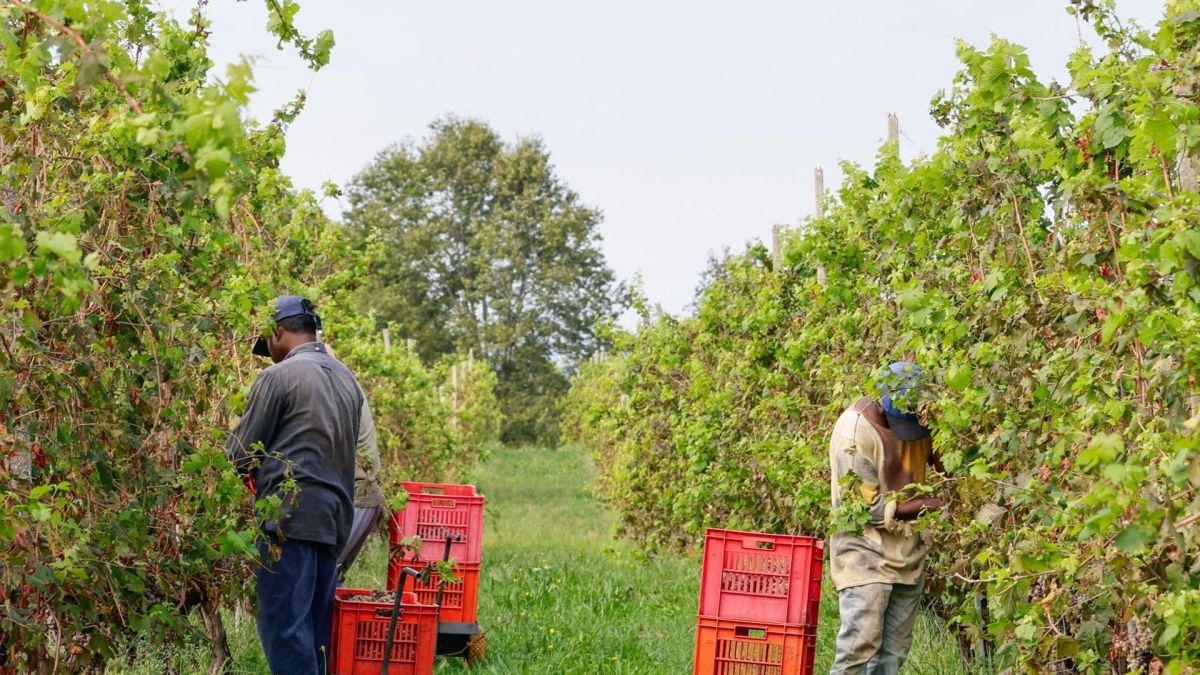
Dva podnikatelé byli zatčeni v Casertanu za nelegální zprostředkování a zhoršené vykořisťování pracovní síly, jelikož nuceně zaměstnávali převážně indické migranty na 14hodinové směny za 3 eura na hodinu, přičemž porušovali bezpečnostní normy a pracovního práva. #Caporalato #Caserta #Braccianti

12 litri pe minut. Atât. Peste pragul ăsta, apa din fântâna noastră nu mai e liberă prin lege. Iar o pompă de pe eMAG, cu livrare mâine, scoate 50. „Apele Române" spun „debit prelevat". Legea scrie „capacitate a instalației". Nu e același lucru. Am pus comunicatul lângă textul legii. Frază cu frază. 👇 #bobbyd #romania #romaniavanduta #romaniateiubesc #romaniataramea #romania #apele #legislatie
🚨🚨 OFFICIEL ! LASSINE SINAYOKO 🇲🇱 AU PARIS FC !!! 🤯💙🖤 L'attaquant malien quitte l'AJ Auxerre et s'engage avec le club de la capitale jusqu'en 2029. MONTANT : 8/10 MILLIONS D'EUROS 🤑🤑 📸@ParisFC https://t.co/bib6KJxALu #ParisFC #Transfert #Football
L'Europe rassemblée est en capacité de parler avec les pays continents, je pense à la Russie, à la Chine ou aux États-Unis
Face à la crise du dépérissement forestier en France, le Conservatoire d'espaces naturels d'Auvergne lance un projet inédit appelé Alti’Chênes, visant à étudier la capacité des chênes à s'adapter en étant plantés au-dessus de 1 000 mètres d'altitude sur plusieurs sites expérimentaux. #Forêts #RéchauffementClimatique #Conservation

| JULY 2026 | The Guard State How the largest Arab nation became a security contractor at the gates of its own people By Adham Hasanin Egyptian journalist and political writer, based in the Netherlands In June 2025, hundreds of activists from forty countries landed at Cairo airport. Doctors from France, lawyers from Australia, students from the United States, pensioners from the Netherlands. They carried no weapons and no banned slogans; they carried backpacks, walking shoes, and a single intention: to march from Arish to the Rafah crossing — entirely on Egyptian soil — to demand that food be allowed through to a people starving behind the gate. Not one of them reached Rafah. More than two hundred were detained before the march could begin. Around five hundred foreign nationals were deported from airports, hotels, and checkpoints. Passports were confiscated, activists were pulled out of downtown Cairo cafés, and the Global March to Gaza was cancelled on 16 June without taking its first step. And the world watched. This was no secret operation in a dark basement; it happened in the open, documented by the deportees’ own phone cameras, carried by every international news agency. The world watched an Arab state arrest Europeans, Americans, and Africans for wanting to walk towards Palestine. A state guarding the gate of a siege — from the side that was supposed to be the side of rescue. Hold that image, because it is the key to everything that follows. This was not an aberration in Egyptian policy, nor an isolated security decision. It is the function — the complete function around which the Egyptian state has been redefined over the past decade, and which it is time to call by its proper name: the Guard State. I. The Name — What Do We Mean by the Guard State? Political economy has long described states that live off the rent of their location rather than the production of their people. But what has crystallised in Egypt over the past decade goes beyond traditional geographic rent — the Suez Canal, say — into something far graver: the conversion of sovereignty itself into a commodity for hire. The Guard State does not sell its location; it sells its function. It collects its wages not for what it produces, but for what it prevents: it prevents the refugee from reaching Europe, the activist from reaching Gaza, its own people from reaching politics, and the resistance’s weapons from reaching their destination. Four gates, guarded by a single machine, whose wages are paid in loans, deposits, and perpetually renewed rescue packages. This is not a rhetorical metaphor; it is an economic structure with numbers attached. When the Egyptian economy collapsed in 2024, it was rescued not by productive reform but by a single deal whose subject was location: Ras el-Hekma — thirty-five billion dollars for a stretch of coastline. And whenever negotiations with the IMF stall, the tranches are unlocked by explicit European pressure whose subject is migration: nine billion euros from the European Union in the 2024 “Strategic Partnership,” whose own documents place “migration management” at its core. Europe does not pay Egypt to prosper. It pays Egypt to guard. Thus the model is complete: income in exchange for prevention, external legitimacy in exchange for guarding, and international silence about domestic tyranny in exchange for keeping the gates controlled. To see how the model works on the ground, consider the bloodiest gate of all: the gate of Gaza. II. The Gaza Gate — The Guard Who Is Himself Searched The first paradox must be nailed down with facts: Egypt is not a sovereign guard of its own crossing; it is a searched guard. Egyptian relief trucks — ninety-two thousand food parcels in a single convoy this month — are subject to Israeli inspection before entering the Strip: from Egyptian soil, through a crossing that bears an Egyptian name. The state that guards the gate does not hold its key. It owns the threshold, but not the door. Then the October 2025 truce added a new layer to the function. Under the fifteen-point roadmap sponsored by the international envoy together with the “guarantor states” — Egypt foremost among them — Cairo is to train the civilian police force that will replace Hamas in administering the Strip, under the slogan of “one authority, one law, one weapon.” Let us call things by their names: the state that could not — or would not — deliver a loaf of bread without Israeli permission is now qualifying to graduate the security apparatus that will oversee the disarming of the resistance. From guarding the siege to administering what comes after the siege — a promotion within the same project. And meanwhile, what is happening behind the guarded gate? Since the truce, more than one thousand one hundred Palestinians have been killed by Israeli fire — the latest, just two days ago, a ten-year-old boy named Motaz Abu Shaar, carried to his grave in Khan Younis by his mother, Warda. A United Nations commission of inquiry has concluded that Israel is “deliberately targeting children in an ongoing genocide.” This is what the guarantors’ official language calls a “ceasefire.” What meaning is left in the word “guarantor”? A guarantor that the gate stays firmly shut — however high the dead pile up behind it. III. The Mediterranean Gate — The Guard Europe Pays For The second gate faces north. Since 2016, Cairo has boasted — through its officials at every European forum — that “not a single irregular migration boat has departed from Egyptian shores.” This is very nearly true. But the forbidden question is: at what political price has this “efficiency” become an instrument of mutual blackmail? Europe — which condemns Egypt’s human rights record in its parliamentary resolutions — is the same Europe that signed the nine-billion-euro partnership, and the same Europe that stays silent about sixty thousand political prisoners because the alternative, in its calculations, is boats that never stop. And Cairo understands the game and has mastered it: whenever human rights pressure intensifies, the official discourse turns up the volume on “Egypt hosts millions of refugees” and “the last line of defence.” The result is a perfect structure of mutual blackmail: Europe buys its conscience’s silence, the regime sells its location, and the people — Egyptian and refugee alike — are the commodity in the transaction. The democracies that lecture on values are financing the guard who keeps the victims from knocking on their doors. This is not passing hypocrisy; it is a structural partnership in the Guard State model — one that makes Brussels and Berlin shareholders in everything this state produces, from domestic repression to external siege. IV. The Interior Gate — Guarding the People Against Politics But the most dangerous gate is not on any border; it is inside. The Guard State cannot perform its external function unless it first guards an internal gate: the people’s gate to politics. The function requires a people that does not ask: why are we guarding the siege of our brothers? Why are our trucks searched on our own soil? Why are guests deported for coming to walk in peace? To guarantee the question is never asked, the largest silencing machine in the country’s history was built: sixty thousand prisoners of opinion, a press ranked 166th out of 180 worldwide, and a state security case number waiting for anyone who writes. I write these lines from experience, not from reading reports. When I continued writing from my Dutch exile, the machine reached me across continents: accounts shut down by coordinated mass-reporting campaigns, documented threats, a family harassed inside Egypt as leverage — and my name entered into Case 1282 of 2024, not for any act I committed, but for opinions written from free European soil. This is not a personal complaint; it is a job description: the Guard State guards even beyond its borders, because the free word — wherever it is written — threatens the entire contract of guardianship. The logic is perfectly self-consistent: a regime that sells “stability” abroad cannot tolerate a voice revealing that the stability on offer is the stillness of graveyards. This is why the arrest of the foreign activists in June 2025 was inevitable, not incidental: a peaceful march reaching Rafah would have revealed, before the world’s cameras, that the gate opens when it is wanted open — and that the one keeping it shut is a partner, not a mediator. V. What Has Egypt Lost? — The Guard’s Bill An apologist might argue: what is the harm? A state monetising its location as Norway monetises its oil. The answer lies in the essential difference: Norway sells a resource; Egypt leases its will. And the difference between the two is the difference between trade and bondage. Let us tally what Egypt has paid for this model, in bare facts. It lost its water sovereignty: the Renaissance Dam was completed and filled without the state — owner of “the largest defence headquarters in the world” — daring anything beyond statements of concern; for the guard does not make trouble for the international order that employs him. It lost its regional standing: in the Iran–America war halted just weeks ago, Cairo was neither party nor mediator nor even consultant — Pakistan brokered the deal, while Egypt absorbed the economic shrapnel of Hormuz’s closure like a bystander caught in a battle whose parties it does not know. It lost its place in the conscience of its nation: the state that liberated its land in 1973 and led the Arab world for a century has become, in the eyes of the Arab street from the Atlantic to the Gulf, the gatekeeper of the siege. This loss, specifically, no loan or deposit can repay — because it is the only capital that cannot be printed. And it lost — here is the crux — the very national security in whose name the guarding is justified. The model proved its fragility at the moment of testing: when Israel feared an Iranian response last year, it cut off Egypt’s gas by unilateral decision within hours. The guard who believed himself a partner discovered he was merely a hireling whose wages stop the moment danger arrives. VI. The Alternative Is Not a Slogan — It Is the Recovery of the Original Function I will not close with an essay on “the solution lies in Arab unity”; worn-out words kill more surely than silence. The alternative is specific, and it begins with redefining the function. The state is not a guard; the state is the agent of its people’s will. Every foreign policy not derived from that will is — by definition — functional servitude, however it is wrapped in the language of wisdom and moderation. And the Egyptian will is known and needs no referendum: no people in this region accepts that its country serve as warden of the siege of Gaza, or as Europe’s border post. Practically, the recovery begins with three measurable steps. Open the Rafah crossing fully and sovereignly, by purely Egyptian decision — that alone would overturn the equation of the siege. Break the negotiating bondage by linking any cooperation on migration to concrete European positions on Palestine, not statements of concern. And open the interior gate — release the prisoners and lift the hand from the written word — because a state that fears an article will never dare face an occupier. I know the current regime will do none of this; guarding is its founding contract and its financial artery. But this article is not written for the regime. It is written for memory, and for the generation that will inherit the gates — so that it knows that what is presented to it today as “the fate of geography” is no fate at all. It is an employment contract, signed by a regime without a mandate from its people. And contracts, however long they run, end when one of their parties does. And the world — I return to where I began — is a witness that requires no further proof. It watched the deportees at Cairo airport; it watched the searched trucks; it watched Warda Abu Shaar carry her son to his grave behind a firmly guarded gate. The question is no longer: what is happening? The only question left is: who dares to name it? This article is a naming. Adham Hasanin is an Egyptian journalist and political writer based in the Netherlands, covering Arab and European political affairs.
El amigo de Zapatero llega a la Audiencia Nacional. Si es capaz de aportar pruebas de lo que ha dicho, Zapatero podría ingresar en prisión en los próximos días. En Moncloa se ha activado el pánico absoluto. https://t.co/C8oUWBnErK #Zapatero #Justicia #Política
Dans une chronique, Frédéric Oudéa souligne que malgré l'existence de capitaux suffisants en Europe, la fragmentation du système bancaire, accentuée par un protectionnisme national post-2008, entrave la mobilisation de ces ressources nécessaires pour financer les transitions numérique et écologique, et appelle à la création de champions financiers européens pour surmonter ces défis. #BanqueEuropéenne #Financement #SouverainetéÉconomique

Barella: "Chivu ci sta chiedendo di migliorarci ancora di più rispetto all’anno scorso. Vogliamo riprendere come abbiamo finito, quindi giocando il nostro miglior calcio. È un ritiro intenso. C’è chi lo vive meglio, chi si stanca un po’ di più, chi ha bisogno di più tempo per trovare la condizione perfetta. A me chiede di dare una mano alla squadra e ora che manca Lauti, che avevo sentito prima della finale, anche di farmi sentire di più, di fare un po’ il capitano. Dal primo giorno che il mister è arrivato mi ha sempre dato fiducia e trattato in una maniera incredibile" (Gazzetta dello Sport) #Calcio #Sport #Leadership