WRLD

Search

#MAPPA
Luciano Magaldi Sardella (PhD) 5d

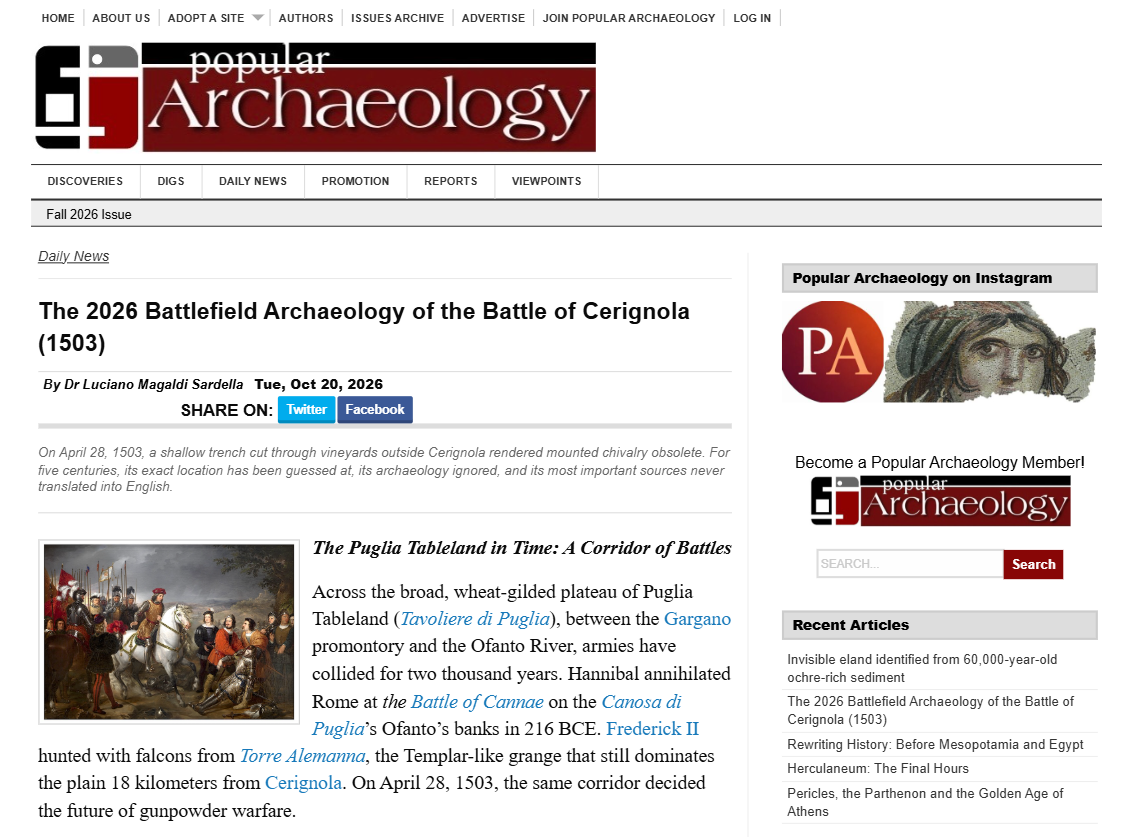
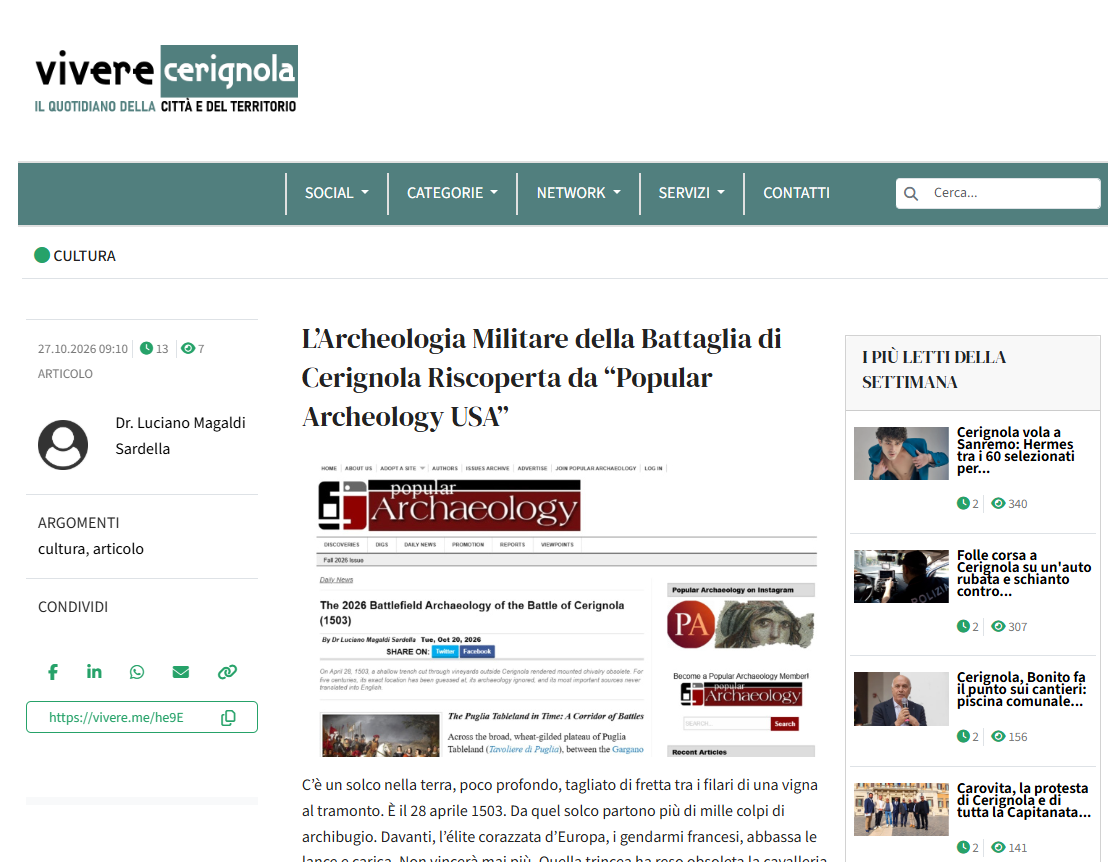
LIVING CERIGNOLA: THE MILITARY ARCHAEOLOGY OF THE BATTLE OF CERIGNOLA ARRIVES ON "POPULAR ARCHAEOLOGY USA" CERIGNOLA (FG) - The Battle of Cerignola on April 28, 1503, returns to the center of international debate. The prestigious American magazine Popular Archaeology has dedicated an extensive in-depth article to the battle that changed European military history: the first in which over 1,000 Spanish arquebusiers under Gonzalo Fernández de Córdoba, sheltered behind a trench reinforced with vineyard posts, stopped the charge of the elite heavy cavalry of the Duke of Nemours. A trench that, in fact, rendered cavalry obsolete and inaugurated the era of infantry armed with fire, determining control of the Mediterranean for the next 160 years. The article highlights the decades-long microhistorical research work of the Torre Alemanna Study and Research Center in Cerignola led by Dr. Matteo Stuppiello: from the letter of Consalvo de Cordoba to the Kings of Spain (April 29, 1503), to the graffiti of 1503 in the Church of Santa Maria delle Grazie, to the land registries of the State Archive of Naples that explain the agrarian origin of that trench. A battlefield still lacking a map and protection, but scientifically rediscoverable thanks to technologies such as LiDAR ISPRA, magnetometry, and ground-penetrating radar. An important recognition for Cerignola, for the Tavoliere, and for all historical research in Puglia, which today deserves a systematic project for the archaeology of battlefields. (translated)

451
Lorenzo Pregliasco 6d

The post indicated the Northeast and the South, described as the most populous areas of Brazil, as decisive for Lula's victory. https://t.co/WfOQWVX8O4 #Lula #Brasile #Elezioni #BR (translated)

3167
Luciano Magaldi Sardella (PhD) 7d

THE "BATTLE OF CERIGNOLA (1503)" ON "POPULAR ARCHAEOLOGY USA" (by LUCIANO MAGALDI SARDELLA) SOURCE 1: https://popular-archaeology.com/author/sardella/ SOURCE 2: https://popular-archaeology.com/article/the-2026-battlefield-archaeology-of-the-battle-of-cerignola-1503/ -------------------------------------------------------------------- CERIGNOLA (FG) — On April 28, 1503, at sunset, a shallow trench cut between the vineyards outside Cerignola rendered heavy cavalry obsolete. For five centuries, its exact location has only been conjectured, its archaeology ignored, its most important sources never translated into English. We are on the Tavoliere of Puglia, a corridor of battles for two thousand years: from Cannae in 216 BC to the falcon hunt of Frederick II from Torre Alemanna. Cerignola, at that time, was not a city but a rural village of 350 families at 120 meters above sea level, custodian of the Mena della Dogana delle Pecore, the great pastoral system of transhumance that financed the Kingdom of Naples. Its possession was fiercely contested. Facing each other were two worlds. Louis d’Armagnac, Duke of Nemours, Viceroy of Naples for Louis XII, in his thirties, splendidly armored, confident of victory. On the other side was Gonzalo Fernández de Córdoba, the Gran Capitán, who on April 27-28 marched from Barletta with about 9,000 exhausted men and decided to settle on a low ridge. He deepened what was already there: not an invention, but an agricultural ditch. The French gendarmes, the last heirs of the medieval knight, lowered their lances and never reached the line. From behind a parapet reinforced with vine stakes, over 1,000 Spanish arquebusiers opened fire. Nemours fell, almost certainly the first European army commander to die from a portable firearm. With him, the charge of cavalry as a dominant tactic died. And here is the scandal denounced by the article: no cartographer of the 17th-18th centuries ever mapped the battlefield. No monument commemorates it. It is not protected as a cultural landscape under the Code of Cultural Heritage. Every deep plowing of the Tavoliere, standard practice since the Bourbon reforms, destroys an archaeology never recorded. Yet the perimeter can be reconstructed. By cross-referencing the 16th-century descriptions of "vine-covered slopes fifteen miles north of the Ofanto" with the Via Traiana, the engagement area is a rectangle of 3-4 square kilometers northeast of the current settlement. With the 1m LiDAR DTM from ISPRA, it could reveal anomalous linear depressions, and the lower filling of a ditch 2-3 meters deep, under the plowed layer, is still readable with magnetometry and ground radar. Why did we arrive late? Not for lack of sources, but for lack of translation. The Municipality of Cerignola and the Torre Alemanna Research and Study Center of Prof. Matteo Stuppiello, who in 1978 obtained the first monumental protection for Torre Alemanna, have digitized a corpus that has never entered Anglophone historiography. Here are the 3 pillars: 1. The letter that still smells of gunpowder. The “Letter from Consalvo de Córdoba to the Spanish royals dated April 29, 1503,” edited by Stuppiello in 2003 and updated to 2025 on comune.cerignola.fg.it/biblioteche-digitali. A handwritten page written in Cerignola the day after the battle, “rich in flashes, twilight lights, and gunfire.” Not a polished chronicle like that of Giovio, but a field dispatch: the fatigue of the night march, the decision to entrench upon arrival, the recovery and honorable burial of Nemours, the intact capture of the French artillery. 2. The graffiti, a monument inside the monument. In the 14th-century church of Santa Maria delle Grazie, known as the Incoronatella, on the Via Trinitapoli Vecchia, where tradition holds that the body of Nemours was brought. On the triumphal arch, a 1503 graffiti gives, in almost notarized form, the date, sixth indiction, Friday at the hour XXIII-XXIIII. It was indeed Friday, as confirmed by the perpetual calendar of Cappelli. Decoded in 1995 by Prof. Francesco Magistrale, Latin paleographer at the University of Bari, in *The Battle of Cerignola (1993)* and in the municipal monograph *S.M. delle Grazie (1999)*. Today it is fading due to humidity and neglect. 3. The land registry that explains the ditch. The Survey of 1672 preserved at the State Archive of Naples, Pignatelli Aragona Cortes fund, Scanzia 63, fasc.1: “At the time of the battle, thick vineyards covered the hill reaching to the plain, and were distinctly separated from the rest of the countryside by a not very deep ditch.” Córdoba did not improvise; he adapted. This is confirmed by the catasti of the Giustiniani: 277 households in 1532, 699 in 1595. The landscape of 1503 was intensely horticultural, not the deeply plowed monoculture of today. In addition to these, there is the first monograph by Vincenzo Buonassisi, *The Battle of Cerignola* (1908, died in Via Fanfulla 10 on June 27, 1928), and the first modern military analysis by Piero Pieri, “Consalvo de Córdoba and the Battle of Cerignola,” Archivio Storico Pugliese 1952, which 30 years before the Anglophone rediscovery of the “pike-and-shot” defined Cerignola as an engineered killing ground. While Cerignola forgot, others remembered. The “Regimiento de Infantería Cerinola n.42”, later “Fuerteventura n.56”, carried the name of Cerignola until the 20th century. The coat of arms, described in *Heraldica e Historiales del Ejercito, Tomo V” (Madrid, 1981): silver field, dying white swan entangled in a hedge, golden wall crown, with the scroll “Cerignola.” Dossier officially transmitted on April 30, 1986, prot. 4565/509, from the Servicio Histórico Militar of Madrid to the Torre Alemanna Center thanks to Col. Alessio Antonutti and Gen. José Cifuentes. And in Amsterdam, at the Rijksmuseum, the anonymous bronze commemorative medal: Hercules with lion skin and club and Janus with the keys next to an eagle-armed coat of arms, legend “Consalvus Agidarius… Janum clausit,” on the reverse a battle scene “Consalvi Agidari Victoria de Gallis ad Cannas,” an artist's mistake that confuses Cerignola with Cannae. It belonged to Mrs. J.M. van Gelder-Nijhoff, donated in 1885. The author's conclusion is clear: Gonzalo's ditch is the most consequential earthwork in European military history. It inaugurates the infantry armed with firearm and conditions the Mediterranean for 160 years. It may still be there, filled, plowed, invisible to the naked eye but accessible to a magnetometer. It is not a matter of medieval archaeology but of the will to protect. (translated)
680
Il Messaggero 1w

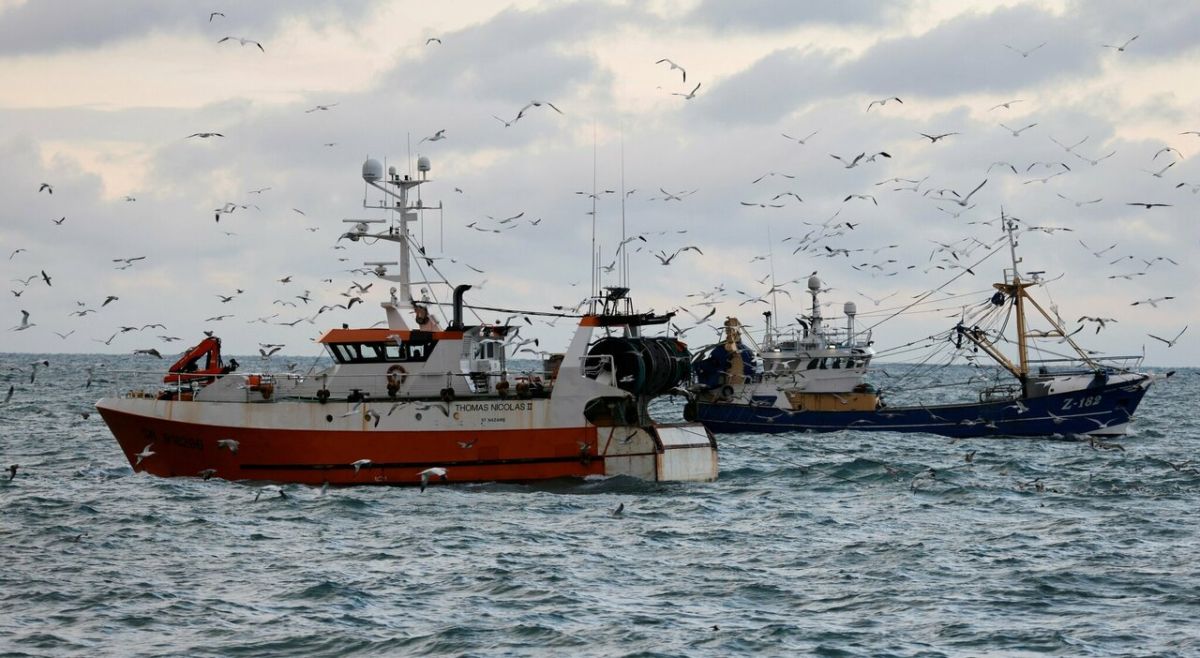
An investigation by the Telegraph has revealed that over five hundred trawlers, some of which are Russian, are operating at low speeds near critical underwater cables between Europe and the United States, suggesting potential espionage and mapping activities for future sabotage. #Russia #CaviSottomarini #Spionaggio (translated)

www.ilmessaggero.it
Russia, il mistero dei viaggi dei pescherecci a strascico per spiare i cavi sottomarini critici tra Europa e Usa. «A bordo mai visto un pesce»
2848
Il Fatto Quotidiano 1w

The historical globe of Eisenhower, desired by Pete Hegseth for his office at the Pentagon, was damaged during transport due to a loss of control by the staff of the Secretary of Defense. #Eisenhower #Pentagono #Storia (translated)
www.ilfattoquotidiano.it
“Hanno perso il controllo e lo hanno lasciato cadere, si è rotto vicino all’Antartide”: danneggiato il mappamondo di Eisenhower che Pete Hegseth voleva nel suo ufficio
2507
Marco M.M. 1w

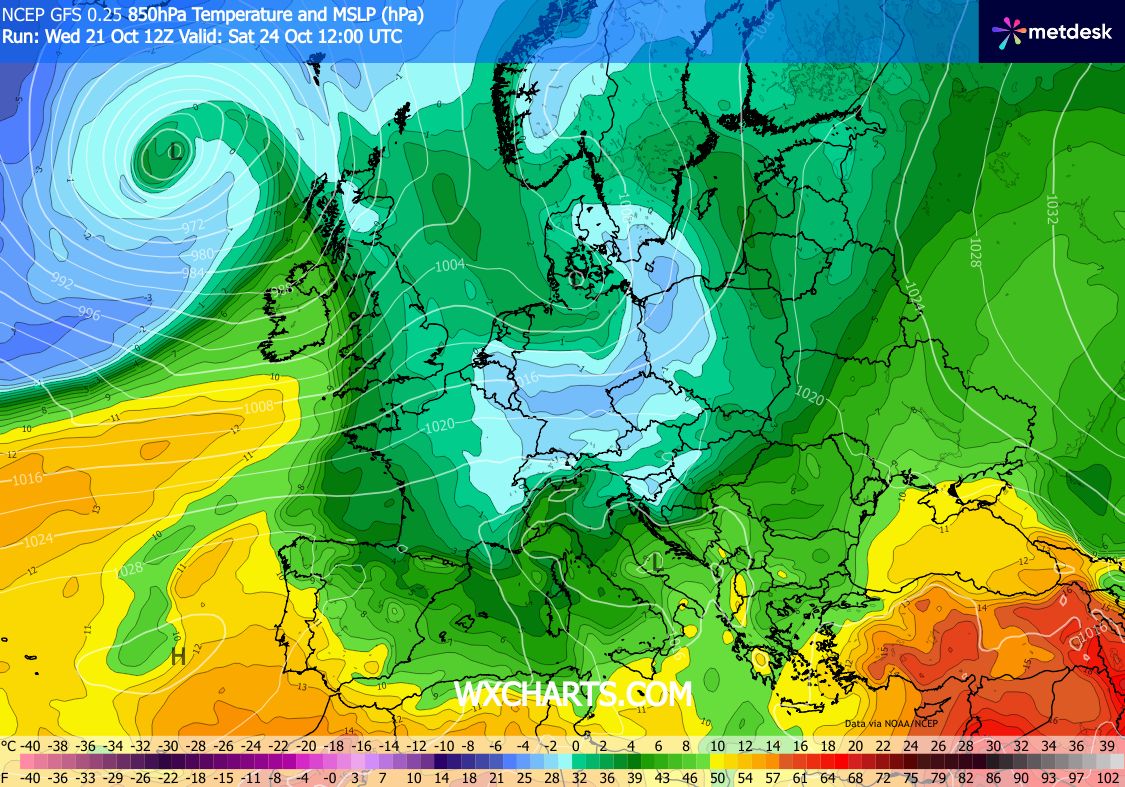
Marco M.M. wrote that, after many weeks, the blue coloring would return to interest the Peninsula. He explained that on the map he indicated the isotherm of 0 °C at 850 hPa, at about 1,500 meters in altitude, and predicted a further drop in temperatures over the weekend, accompanied by moderate instability. According to his forecasts, there would be snowfall above 1,300 meters in the central-eastern Alps and the first snow would arrive above 1,800-2,000 meters in the central-southern Apennines. He also indicated minimum temperatures near or below zero in many pre-Alpine and Alpine areas already from 500-600 meters, and in the central Apennine areas above 1,000-1,200 meters. For the period from Friday, October 23 to the early hours of Monday, October 26, he anticipated weather similar to that of the first decade of November. #MeteoItalia #Neve #Inverno (translated)

2857
jacopo iacoboni 2w

Jacopo Iacoboni wrote that Rybar, a Russian blogger who he believed had close ties to Russian intelligence and the military establishment, had recently been arrested in Montenegro and was immediately extradited to Russia. He added that the blogger was accurately and enthusiastically mapping the violence and chaos in Europe. https://t.co/hu0jedAoGr #Russia #Europa #Violenza (translated)

2983
Cartoons On The Moon 2w

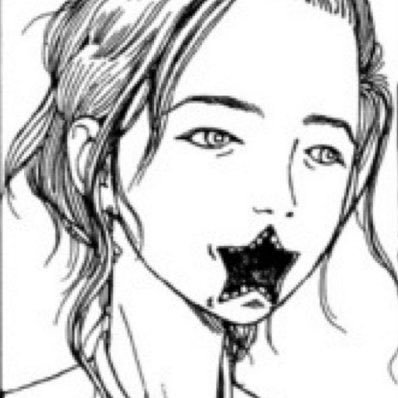
Cartoons On The Moon wrote that Tom Cruise had visited MAPPA Studios and that, after being delighted, he planned to return to see his artists draw "like humans." He also noted that Cruise was not in favor of artificial intelligence. https://t.co/FrmlJqibXH #TomCruise #MAPPA #Animación (translated)

3229
Il Fatto Quotidiano 3w

A study published in Nature Cities mapped subsidence in 465 metropolitan areas across 107 countries, revealing serious issues in Asia and Latin America, while cities like New York, London, and Naples show remarkable soil stability. #Subsidenza #CittàInSprofondamento #RicercaScientifica (translated)

www.ilfattoquotidiano.it
Le città che sprofondano, su Nature la mappa globale. Dove il suolo cede e perché New York, Londra e Napoli fanno eccezione
3461
L
lastampa.it 3w

In Vasto, the world map of animal migrations was presented, an innovative project that will collect thousands of routes and aims to harmonize regulations on migratory paths, identify risks for species, and geolocalize hospitable territories. #MigrazioniAnimali #AtlanteGlobale #ConservazioneNaturale (translated)

www.lastampa.it
Dall’Alaska alla Cina senza mai fermarsi: nasce la mappa mondiale degli animali in viaggio
3354
Ultimora.net - POLITICS 3w

Ultimora.net - POLITICS reported that President Donald Trump had called the absence of Little Italy from a map of New York released by local authorities shameful and had threatened to cut funding to the city if it was not changed. During the Columbus Day celebrations at the White House, Trump argued that those who were hostile to the United States wanted to erase the Italian community. #Trump #ColumbusDay #LittleItaly (translated)

3012
ANSA.it 3w

During the Columbus Day celebrations at the White House, Donald Trump praised Luciano Pavarotti and other Italian-American talents, lamenting the absence of Little Italy on the map of New York. #ColumbusDay #ItaloAmericani #DonaldTrump (translated)

www.ansa.it
Trump celebra il Columbus Day: 'Pavarotti una star. L'Italia ci ha dato grandi talenti, da Stallone a Sinatra'
2780
Mario Sechi 3w

The author shared an article that described a power struggle and a crime map of Rome, from the center to the outskirts, evoking scenarios that went beyond fiction. https://t.co/k3FqMjJ8TL #Roma #crimine #guerra #IT (translated)

3476
Sabrina F. 3w

Sabrina F. described people over fifty as the last generation raised without the internet, social networks, and digital devices, arguing that they developed independence from a young age. She recalled that at seven they had house keys, at nine they cooked for their younger siblings, and by ten they could take care of themselves. According to Sabrina F., they spent their days outdoors, often with scraped knees, and learned to handle practical matters. She also mentioned memories of the radio, black-and-white television, record players, and cassettes, as well as car trips made with a map and a packed lunch. She claimed that this generation held more vivid memories and greater trust in their instincts. #GenerazioneSopravvissuta #Memorie #CrescitaFelice (translated)

3362
Giuliano Duchessa 4w

Giuliano Duchessa wrote that a bug in the "wet race" map had caused problems for the cars in wet conditions at the first start of the Malaysian Grand Prix, and that Tombazis had confirmed it. https://t.co/EZqRFcfQff #F1 #GPdiMalesia #Auto (translated)

13019
Antonino Rendina 4w

Antonino Rendina had mocked electric F1, claiming it was so fake that it seemed to be hit by a video game bug. He added the phrase "wonderful engines and where to find them" and compared the episode to Bottas' mapping, which, according to him, read the curves poorly and caused him to end up crashing into something. The post was accompanied by the hashtag #BahrainGP. #BahrainGP #F1 #Motori #Sport (translated)

23019
Mario Sechi Sep 30

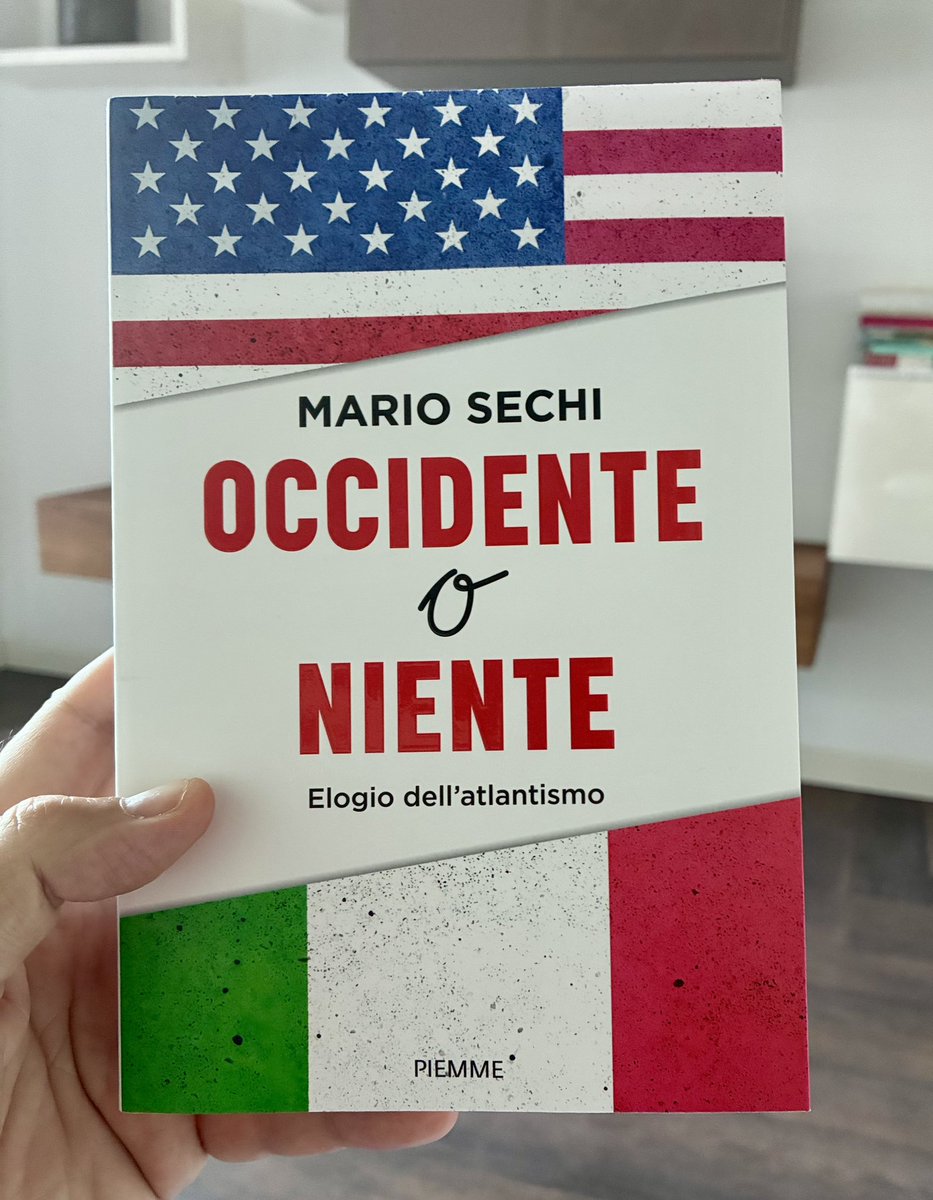
I flussi di petrolio nello Stretto di Hormuz sono in aumento, l’Iran sta cedendo, il domino energetico nel Golfo e la nuova mappa del potere nelle pagine di “Occidente o niente” https://t.co/Wxh0SFRkXE https://t.co/ksgWT1uUBP #Petrolio #Energia #GolfoPersico #IR

ANSA.it Sep 29

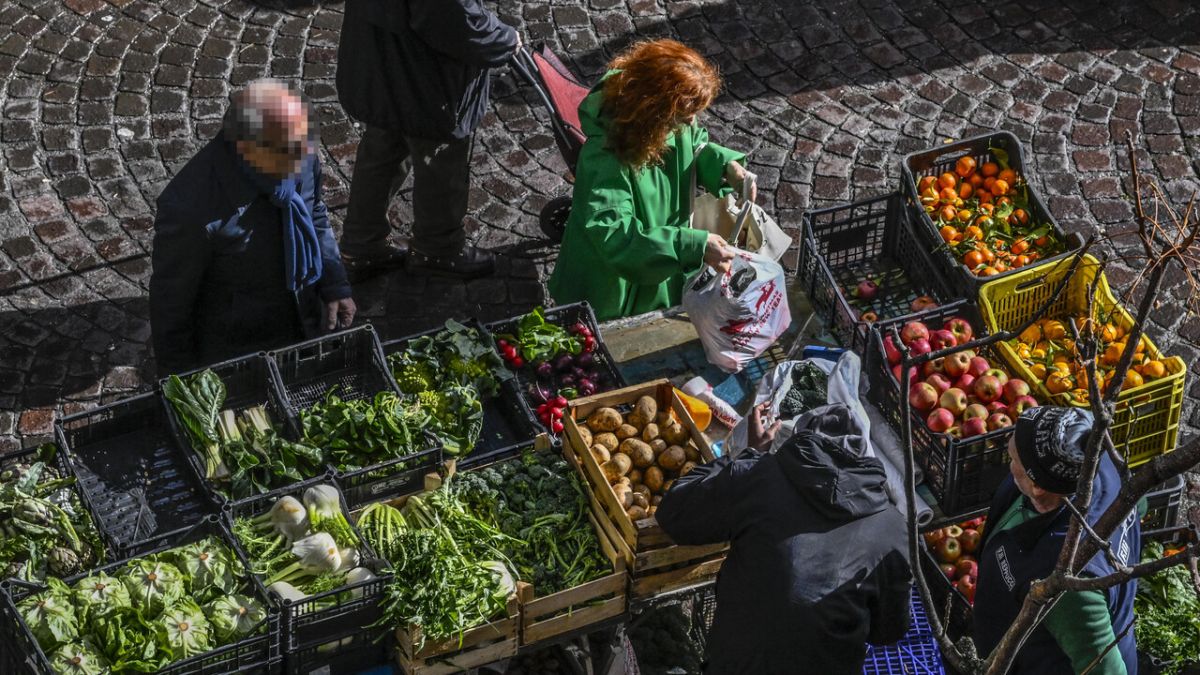
La settima Giornata Internazionale della consapevolezza delle perdite e degli sprechi alimentari, che si celebra il 29 settembre 2026, mira a mappare lo spreco alimentare a partire dalle case italiane, presentando buone pratiche e premiando iniziative sostenibili in vari settori. #SprecoZero #GiornataInternazionale #Sostenibilità

www.ansa.it
La settima Giornata contro lo spreco alimentare, la sfida parte da casa
1749
Ledarsidorna.se Sep 24

Jag har haft mitt fokus på vad som hänt @vansterpartiet i Borlänge, @peterwennblad har beskrivit oegentligheterna i det svenska valet på Järvafältet. Imorgon beskriver jag vad som händer när somalisk parlamentarism och det svenska valsystemet möts. Då uppstår både friktion och synergieffekter. Särskilt i små partier. Fortfarande i Borlänge. Men en del av mitt överskottsmaterial är relaterat till Peter Wennblads artikel. Och imorgon kommer ni kunna mappa in hur dessa passar in i @SvDledare artiklar. Här de skärmavbildningar som relaterar till Peter Wennblads artiklar. Och förstärker bilden. Imorgon har ni historien som knyter ihop det. Kl 06:00 på en ledarsida nära dig. #svpol #Borlänge #valsystem #parlamentarism

12737
ANSA.it Sep 24

La più grande mappa genetica del cervello, creata da nove studi pubblicati su riviste del gruppo Nature, offre nuovi indizi sui meccanismi dell'invecchiamento e delle malattie cerebrali, rivelando vie molecolari comuni e specificità cellulari, per favorire lo sviluppo di terapie mirate. #Invecchiamento #MalattieCerebrali #Genetica

www.ansa.it
Dalla più grande mappa del cervello indizi sull'invecchiamento
1987