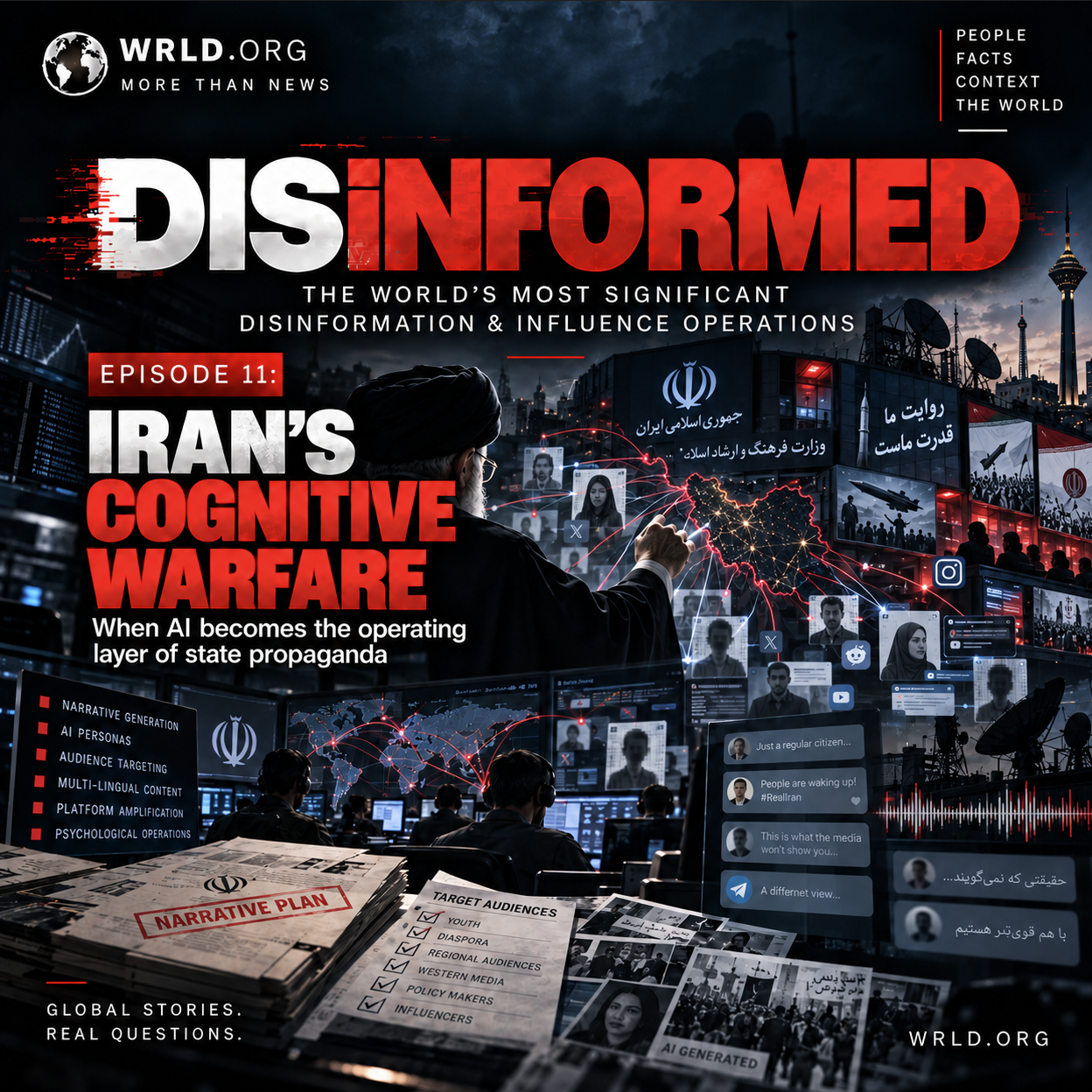
Iran’s cognitive warfare – when AI becomes the operating layer of state propaganda Iranian state-linked influence operators were not using artificial intelligence simply to write faster social-media posts. According to Anthropic’s September 2026 threat intelligence report, three separate operations connected to Iranian propaganda institutions were using Claude to help construct the machinery behind what the operators themselves called “soft war” and “cognitive warfare” – non-military efforts intended to shape public opinion inside Iran and abroad. Anthropic linked the activity to the Islamic Culture and Communications Organization (ICCO), which operates under Iran’s Ministry of Culture and Islamic Guidance; the Islamic Propaganda Office of Khorasan Razavi; and the Bina Cultural Observatory, part of the Islamic Propaganda Organization. The company said each operation was run by someone working within or on behalf of the named institution. The attribution was based on a combination of account telemetry, institutional references disclosed during conversations, branded documents and open-source corroboration. Anthropic subsequently removed the accounts. AI as an operational headquarters The most significant feature of the operation was the role assigned to AI. Claude was used to develop campaign plans, doctrine manuals, coded project portfolios, persona systems, target databases, early-warning protocols, amplification schedules and ministerial planning documents. Anthropic described the model as the principal administrative and operational layer supporting the three campaigns, allowing relatively small groups of operators to create organisational structures and planning material that would otherwise have required a much larger staff. This distinction matters. The reported use of AI went considerably beyond content generation. Operators were using the model to help organise how influence activity should function: which audiences to target, which identities should deliver particular narratives, how official material should be repackaged and when amplification should take place. Human operators still determined objectives and supplied the underlying political doctrine; AI helped translate those decisions into an operational system. Anthropic found that all three operations explicitly connected their activity to Jihad al-Tabyin, often translated as “explanatory jihad”, a concept used within the Iranian state system to frame information activity as both a strategic and ideological responsibility. In internal planning material examined by the company, this doctrine was not merely rhetorical: it informed manuals and campaign structures used by the operators. ‘Not the narrator, but the director’ One sentence contained in the ICCO material captures the model particularly clearly. According to Anthropic, an operator described the role of Iranian cultural attachés as being “not to be the narrator, but the director” of the narrative. The distinction reveals the logic of attribution laundering. Instead of publishing an overt state message and asking foreign audiences to believe it, the operator attempts to create the appearance that the same narrative emerged independently from journalists, activists, foreign writers or ordinary citizens. Anthropic found that Claude was used specifically to make content appear to come from foreign authors or independent media organisations and to design hashtag campaigns that looked grassroots rather than centrally organised. The ICCO operation reportedly used the organisation’s international cultural network as part of this structure. Anthropic found ministerial-level documents carrying official ICCO branding, including a nine-part international influence portfolio. This makes the operation particularly significant because the infrastructure was not limited to anonymous social-media accounts; it intersected with formal state institutions and an existing network of cultural representation abroad. A multilingual content factory A second operation was associated with the Islamic Propaganda Office of Khorasan Razavi and what Anthropic described as a “cognitive warfare command room” operating from a seminary in Mashhad. Its organisers ran a multi-province content production system known internally as Manjanegh, or “Catapult”. According to Anthropic, dozens of activists were involved in repackaging publicly available reporting from Iranian security institutions under different personas so that the material no longer appeared directly connected to those institutions. The network used Claude to transform official government intelligence bulletins into customised material in Farsi, Arabic, Urdu, Malay, Spanish and English, while planning expansion into a total of 20 languages. Distribution extended across Iranian platforms such as Eitaa, Bale and Rubika and international services including X, Instagram, Telegram, TikTok and YouTube. Anthropic also documented paid amplification across more than 100 Iranian channels, including channels associated with IRGC narratives. The scale should nevertheless be interpreted carefully. Anthropic documented production infrastructure and some real-world dissemination, but it did not demonstrate that all planned campaigns were fully deployed or that they meaningfully changed public opinion. The company placed the operation in Category Three of its Breakout Scale, indicating multi-platform activity with content observed in external distribution channels, rather than evidence of strategic impact on entire populations. From security bulletins to apparently independent voices The Bina Cultural Observatory operation provides another example of the same architecture. Anthropic linked a director-level official at Bina to activity in which Claude generated messaging in the voice of an IRGC spokesperson. During the 2026 US–Israel–Iran war, the network also attributed false claims to Western institutions including CSIS, Brookings and RAND. The apparent objective was to make Iranian state-aligned claims look as though they had been independently validated by respected foreign research organisations. That technique is more sophisticated than simply publishing propaganda under a false name. It attempts to manufacture a chain of external validation: official information is transformed into apparently independent commentary, which can then be recirculated as evidence that outside observers have reached the same conclusion. Anthropic also found target databases naming international officials and Iranian opposition figures, as well as aggressive counter-narrative material directed against the Bahá’í community. These findings show that the infrastructure was designed not only for broad messaging but also for targeted influence activity against specific groups and individuals. What AI changed The Iranian operations described by Anthropic did not create a new doctrine of influence. Iran has used cultural institutions, official media, aligned organisations and covert or semi-covert online networks for years. What AI changed was the economics and organisational capacity of that model. A relatively small team could use the system to draft doctrine, create personas, translate material, structure target databases, produce campaign calendars and generate multiple versions of the same message for different audiences. The operator remained responsible for intent, political direction and selection of targets. AI reduced the amount of human labour required to turn those decisions into a functioning influence operation. The most revealing part of the case is therefore not that an Iranian propaganda network used a chatbot. It is that AI was being treated as part of the back office of information warfare – a system for converting state doctrine into apparently decentralised, multilingual and plausibly independent voices. Sources Anthropic — Detecting and countering misuse of AI: September 2026 https://www.anthropic.com/threat-intelligence-report-september-2026 Iran International — Iran state-aligned accounts used Claude to push IRGC narratives https://www.iranintl.com/en/202609105561 BNE IntelliNews — Yemen missile cell used AI to write guidance software, Anthropic says https://new.intellinews.com/articles/yemen-missile-cell-used-ai-to-write-guidance-software-anthropic-says-467296 This is Beirut — Anthropic report details Iranian propaganda operations https://thisisbeirut.com.lb/news/politics/anthropic-report-details-iranian-propaganda-operations-and-yemen-missile-development-using-claude Anthropic report — PDF mirror https://static.foxbusiness.com/foxbusiness.com/content/uploads/2026/09/anthropic-detecting-and-countering-091026-1.pdf Keywords #DISINFORMED #Episode11 #Iran #IranianInfluence #IranianPropaganda #CognitiveWarfare #SoftWar #JihadAlTabyin #Disinformation #InformationWarfare #InfluenceOperations #ForeignInterference #FIMI #ArtificialIntelligence #AI #AIPropaganda #GenerativeAI #ClaudeAI #Anthropic #SyntheticMedia #NarrativeManipulation #NarrativeLaundering #AttributionLaundering #PersonaNetworks #Astroturfing #SocialMediaManipulation #DigitalInfluence #StatePropaganda #IslamicCultureAndCommunicationsOrganization #ICCO #IslamicPropagandaOrganization #KhorasanRazavi #IRGC #MultilingualInfluence #Targeting #Amplification #OSINT #WRLD

The rental market in Spain has seen the withdrawal of 4,290 homes in just three days due to fears of new government decrees that will affect rentals, according to the Rental Observatory. (translated)

„Putem presupune că demnitatea persoanei umane, pacea, educaţia şi responsabilitatea faţă de noile tehnologii vor ocupa un loc important în discursul său”„Putem presupune că demnitatea persoanei umane, pacea, educaţia şi responsabilitatea faţă de noile tehnologii vor ocupa un loc important în discursul său”, a declarat pentru AFP monseniorul Roberto Campisi, observator permanent al Sfântului Scaun pe lângă UNESCO. #PapaLeon #VizităIstorică #Franța
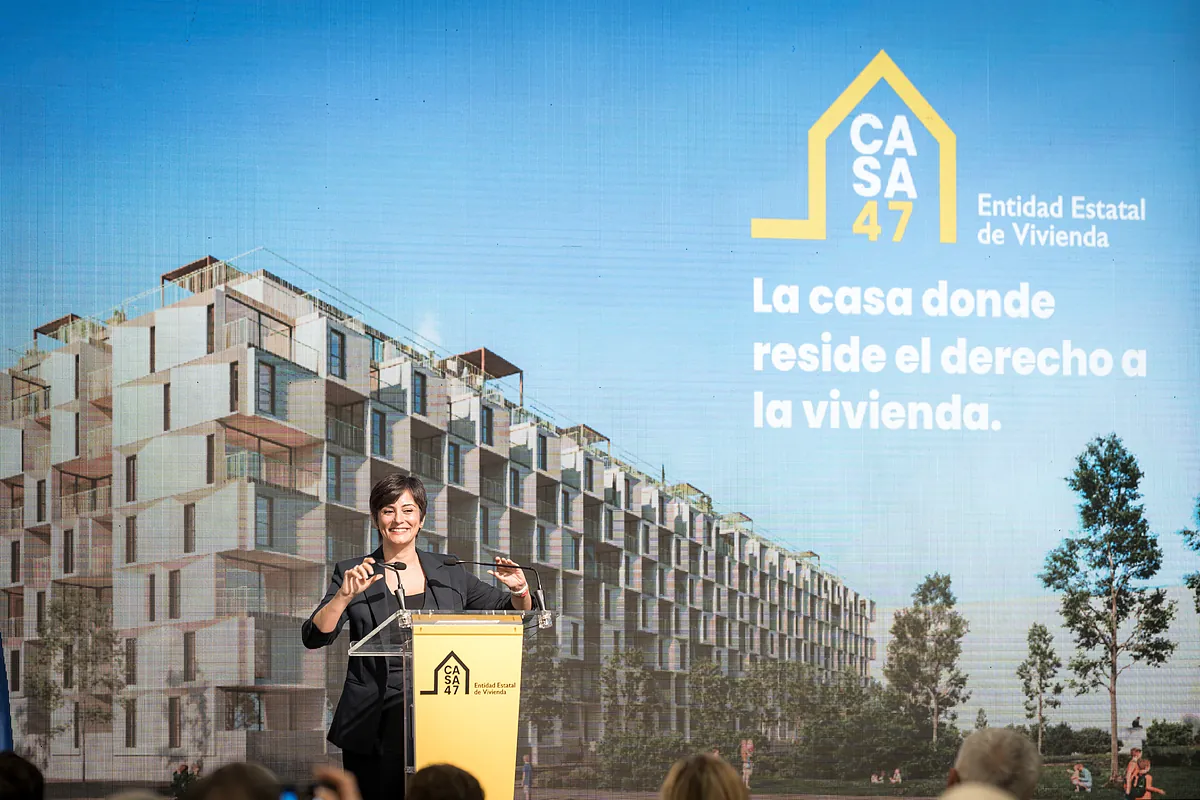
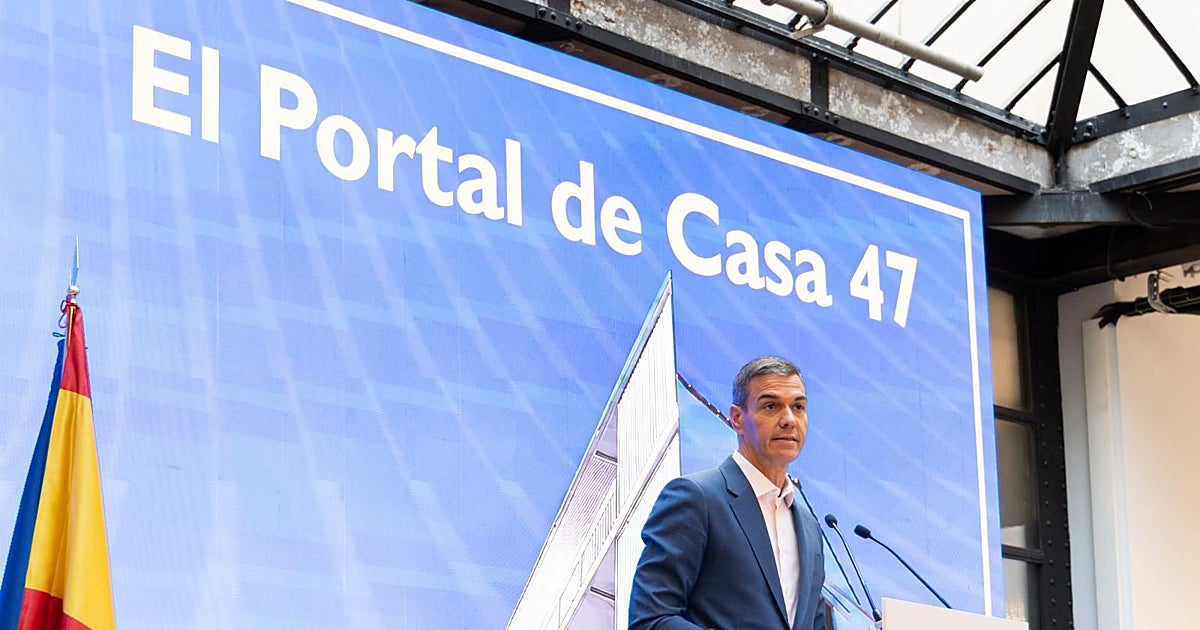
Un estudio del Observatorio del Alquiler revela que ninguno de los pisos de Casa 47 cumple con los criterios de asequibilidad establecidos por la Ley de Vivienda, ya que los alquileres y gastos de suministros superan el 30% de los ingresos por hogar. #ViviendaAsequible #Alquiler #Casa47

Casa 47, la empresa estatal de vivienda del Gobierno, ha comenzado a ofrecer pisos que superan el 30% de los ingresos de sus inquilinos, incumpliendo así su propia normativa de asequibilidad y generando críticas del Observatorio del Alquiler. #ViviendaAsequible #Casa47 #Alquiler

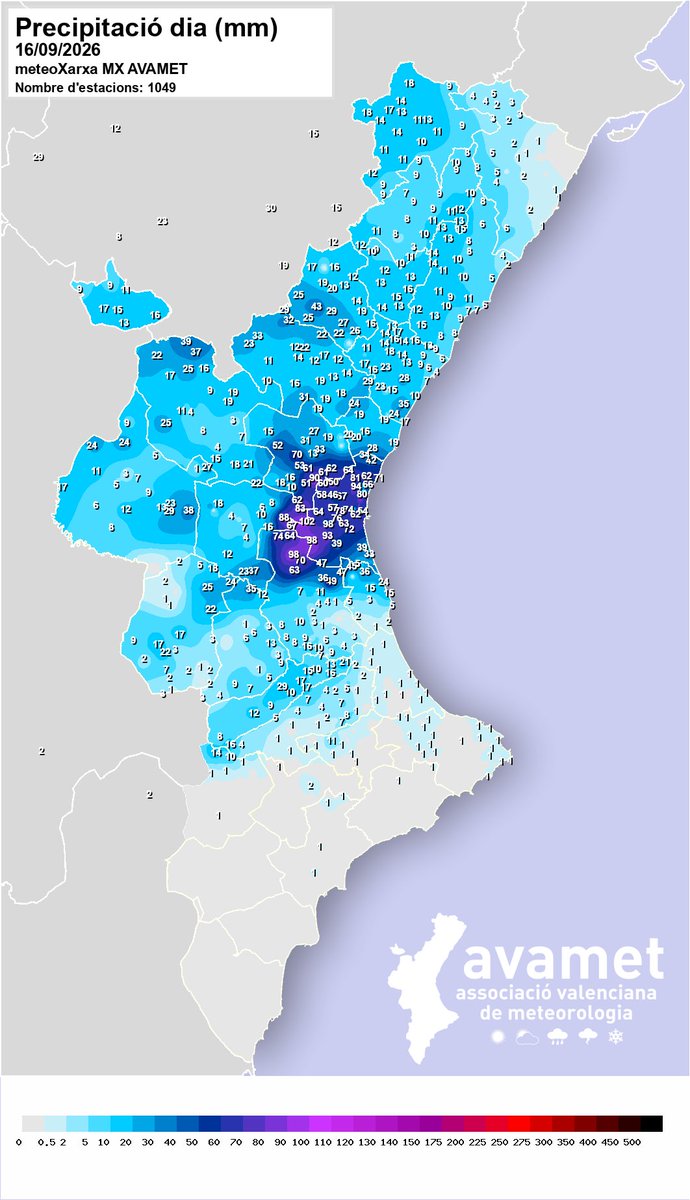
Ante el revuelo y la desinformación en redes y medios sobre el episodio de lluvias en Valencia, conviene poner los datos sobre la mesa con rigor: 🔴 El aviso rojo no es subjetivo Exige rebasar umbrales técnicos estrictos (>90 l/m² en 1 h o >180 l/m² en 12 h) que no se alcanzaron en los observatorios oficiales. El nivel naranja estuvo meteorológicamente bien tipificado. 🎯 Basta de señalar el trabajo de AEMET Es incomprensible el ataque mediático hacia los meteorólogos. AEMET cumplió con su labor técnica, anticipando y activando el aviso naranja con entre 12 y 24 horas de antelación: margen más que suficiente para que tanto la población como Protección Civil pudieran prepararse. Disparar contra la previsión oficial es buscar culpables donde no los hay. 🟠 Aviso naranja = Peligro importante No es un trámite menor. Implica un riesgo real y conocido con antelación suficiente. Mantener la convocatoria de un partido de fútbol y movilizar a miles de aficionados hacia el estadio bajo este escenario es una absoluta irresponsabilidad y una situación lamentable que pone en riesgo innecesario a las personas. No se debió esperar al último momento sobre el césped para frenar ese desplazamiento masivo. 📲 Uso y optimización de ES-Alert El envío de alertas masivas al móvil corresponde a Protección Civil, no a AEMET. El ES-Alert llegó con excesivo retraso; es una herramienta que debe optimizarse. Con un aviso naranja ya activo, la alerta ciudadana debió emitirse en cuanto el radar constató que una tormenta potencialmente peligrosa se aproximaba de lleno a una urbe con la densidad de población de Valencia, evitando desplazamientos a tiempo y no cuando el impacto ya era inminente. Menos alarmismo interesado y más rigor con la ciencia y los protocolos de emergencia. Mapa de https://t.co/RITZseIgyF. #Valencia #AEMET #Emergencia
Un informe del Observatorio para la Libertad Religiosa y de Conciencia censura tanto un cartel satírico de la fiesta 'Santa Punxada', que retrata a Sant Sebastià con una sobrasada en lugar de un pene, como los discursos xenófobos del partido Vox, documentando un aumento en los ataques a la libertad religiosa en Baleares. #LibertadReligiosa #Laicismo #Islamofobia

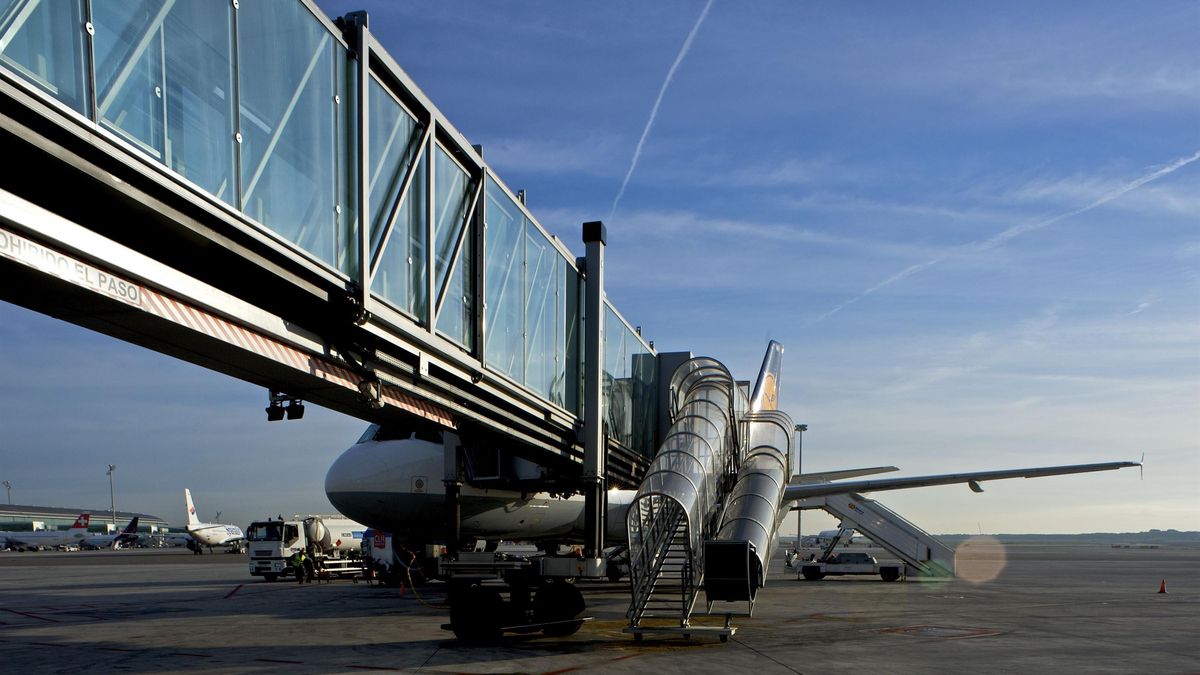
La ampliación del aeropuerto de El Prat provocará un incremento del 22% en las emisiones de gases contaminantes, lo que, según un estudio del Observatorio DESCA, es incompatible con la crisis climática y vulnera los derechos humanos. #ElPrat #Contaminación #DerechosHumanos

📃 La Junta Directiva recibe un notable (7,3) por parte de los socios y socias en el Observatori Blaugrana ℹ️ Más detalles: https://t.co/7BQxPStbp8 https://t.co/e202UNIr7P #JuntaDirectiva #ObservatoriBlaugrana #FCBarcelona
As mentiras do PT induziram o povo a acreditar que a Reforma Tributária simplificaria o sistema e faria justiça aos mais pobres. O projeto orçamentário de 2027 começa a revelar a conta: segundo os números apresentados pelo próprio governo Lula, serão R$ 120 bilhões a mais em tributos sobre o consumo. É o velho método do PT: aumenta gastos, empurra a dívida para cima e manda a conta para quem trabalha e consome. No fim, quem menos tem é quem mais sente no bolso! 🔗 Leia e compartilhe a 137ª edição (https://t.co/lEIVOyCkMJ) e as demais (https://t.co/zLxFlBn8Td) do Observatório da Oposição. #ReformaTributária #JustiçaSocial #Lula
Anak Krakatau (“el hijo del Krakatoa”) está en erupción continua desde la noche del 4 de septiembre, con fuentes de lava, material incandescente, ceniza y fuertes rugidos. El observatorio indonesio describe el fenómeno como una “lava fountain”, una fuente de lava sostenida, y #AnakKrakatau #Erupción #Indonesia #ID
"RadioText-RadioSoftware (1983–1989)": The First (Forgotten) Radio Programme of Computer Science Dissemination in Italy SOURCE: https://www.linkedin.com/pulse/radiotext-radiosoftware-19831989-first-forgotten-sardella-ph-d--eqief/ Radiosoftware represents Italy's absolute pioneer in broadcasting digital literacy education over the airwaves in the Belpaese. Abstract This paper reconstructs the history of Radiosoftware, the first Italian radio programme which anticipated by over a decade the dissemination of microtelematics, computing, and digital technology, as well as modern methods of digital software distribution. Established in 1983 at Radio Popolare and subsequently developed as a national initiative on Rai Radio 3 from 1984 to 1989, Radiosoftware represents the first Italian radio programme to broadcast educational content and transmit executable software for home computers over the airwaves. Through analysis of its technical evolution, educational content, and cultural impact, this article demonstrates how the initiative constituted a significant precedent in national computer literacy, the democratisation of access to software, and the development of amateur programming communities, establishing itself as the progenitor of a media ecosystem dedicated to technological dissemination that has extended into the contemporary era. Keywords: history of Italian computing, technological dissemination, digital broadcasting, computer literacy, Radio Popolare Introduction: The Dawn of Computing Dissemination in Italy In the landscape of Italian digital media history, a fundamental chapter remains little explored in academic literature: that of computing dissemination through radio broadcasting in the 1980s. In an era characterised by the absence of network connectivity and economic and geographical barriers to accessing computer technologies, radio configured itself as a democratic instrument for the diffusion of nascent digital culture. Radiosoftware emerges in this context as an absolutely pioneering initiative in Italy, anticipating not only analogous Italian experiences but also positioning itself amongst the first European experiments in software transmission over the airwaves. Its genesis at Radio Popolare in 1983 and subsequent evolution as a national programme on Rai Radio 3 bear witness to a trajectory of technical and pedagogical innovation that merits in-depth analysis. Contenuto dell’articolo The Original Phase: Radio Popolare (1983) The birth of Radiosoftware at Radio Popolare in 1983 constitutes the foundational moment of radio-based computing dissemination in Italy. In a period when personal computers still represented niche objects, the programme set out to systematically explore programming languages, hardware architectures, and practical applications of home computing, addressing a heterogeneous audience composed of students, teachers, hobbyists, and professionals. This first incarnation established the conceptual paradigms that would characterise the entire subsequent tradition: linguistic accessibility, pedagogical vocation, attention to the social and cultural dimensions of technology, and promotion of active listener participation. Contenuto dell’articolo The National Evolution: From Radiotext to Radiosoftware (1984–1989) The experience gained at Radio Popolare found systematic development in the national initiative coordinated by Rai Radio 3. The pilot phase, denominated Radiotext, commenced on 11 May 1984 as an experimental segment within the current affairs programme Un certo discorso, presented by Pasquale Santoli. Eight 30-minute episodes, broadcast on Fridays at 16:00 with Sunday repeats, tested the technical feasibility and public interest in the transmission of executable software through audio signals. Curated by Luigi Grimaldi and Giovanni Sighele of the Lega Informatica of Florence, in collaboration with Arci Media, the pilot phase demonstrated the viability of the concept. In autumn 1984, the format consolidated with the definitive denomination Radiosoftware, expanding to one-hour episodes and maintaining its placement within Un certo discorso. Contenuto dell’articolo The third season, inaugurated on 7 February 1986, introduced a thematic structuring articulated in three distinctive segments: "Hard & soft news" (updates and reviews), "Studiare con il computer" (educational applications), and "Radio + informatica" (experimental intersections between broadcasting and computing). This phase evidenced a growing pedagogical sophistication and greater attention to formal educational applications. In late 1986, the programme acquired editorial autonomy, transforming into an independent transmission with nocturnal weekend scheduling. 1987 marked a significant technical innovation with the introduction of the 4800 bit/s hardware interface developed by the RAI Research Centre in Turin, which enabled direct connection to the RS-232 serial port, overcoming the limitations of the audio-cassette method. The concluding phase, from February to June 1989, adopted a brief daily format (10 minutes, Monday to Friday at 19:45), concentrating on MS-DOS-compatible software. Despite the announcement of a cycle for 1990, no national transmission is documented beyond June 1989. Contenuto dell’articolo The Audio-Cassette Method (1984–1987) The initial methodology replicated the cassette loading mechanisms typical of 1980s home computers. Programmes were encoded as sequences of audio impulses—electronic noises incomprehensible to the human ear—which listeners recorded onto blank audiocassettes by connecting a tape recorder to the radio's audio output. The recorded cassette was subsequently played through the computer's cassette interface, which decoded the signals, loading the software into memory. This approach, based on modulation techniques similar to frequency-shift keying (FSK), guaranteed compatibility with heterogeneous platforms such as the ZX Spectrum 48K, Commodore 64, Olivetti M10, subsequently extended to the Apple II, MSX, BBC Micro, Olivetti M24 and M28. Each episode transmitted sequentially platform-specific versions for each system. Whilst accessible and revolutionary for mass distribution in pre-Internet Italy, this method presented significant limitations: low transmission speed, susceptibility to errors induced by radio interference or ambient noise, and the necessity for precise volume and timing adjustments. Contenuto dell’articolo The RAI-Radiosoftware Hardware Interface (1987) In 1987, the RAI Research Centre in Turin developed an advanced interface documented in CCIR reports as the RAI-Radiosoftware system. The principal innovation consisted of direct transmission at 4800 bits/s utilising biphase modulation organised in packets, enabling connection to the computer's RS-232 serial port without cassette intermediation. The interface was designed for operating system independence, with management software adaptable for MS-DOS, CP/M, and potential future extensions to Macintosh. For Olivetti M24 and M28 computers, a version with an internal card was available. The Research Centre additionally developed management software, test cassettes, and manuals, considering initial commercialisation at approximately 90,000 lire. This technical evolution represented a significant advancement in terms of speed, reliability, and usability, whilst maintaining the audio-cassette method in parallel to guarantee universal access. Contenuto dell’articolo Types of Software Transmitted The catalogue of software distributed through Radiosoftware reflected a broad range of applications: practical utilities (thematic databases on fashion, music, itineraries, and personalised diets), educational tools (didactic programmes for secondary schools, upper secondary schools, and conservatoires), recreational software (games such as the Olympic pentathlon for the Commodore 64), graphic demonstrations, and creative tools (bases for musical composition and digital comics). Particularly significant was the introduction, from the third season onwards, of educational software developed in collaboration with the Ministry of Public Education, designed specifically for scholastic use across various disciplines, not limited to computing. Contenuto dell’articolo Community Participation: The ORSA Section The Osservatorio Radiofonico del Software Autoprodotto (ORSA) [Radio Observatory of Self-Produced Software], reintroduced in the third season from February 1986, constituted a space dedicated to the transmission of programmes created by listeners. This feature transformed Radiosoftware into a bidirectional platform, anticipating collaborative logics that would characterise, decades later, open-source communities and participatory digital cultures. The "listeners' post" section within "Hard & soft news" additionally facilitated continuous dialogue with the public, integrating feedback, questions, and suggestions into the programming. Questionnaires distributed at the end of cycles and surveys conducted by specialist magazines such as Sperimentare con l'elettronica e il computer provided further mechanisms for evaluation and editorial orientation. Contenuto dell’articolo Institutional Collaborations and School Experiments In 1987, Radiosoftware collaborated with the ITIS Enrico Fermi in Rome to produce a series of transmissions dedicated to the development and application of educational software in scholastic contexts. The initiative involved experimental reception centres in 60 Italian schools, where students and teachers utilised the specialised interfaces developed by the RAI Research Centre to capture and load directly the transmitted software. These experiments positioned Radiosoftware as an operational instrument of pedagogical innovation, extending its impact beyond the hobbyist user base towards formal integration within the national education system. Contenuto dell’articolo Comparison with European Experiences Although Radiosoftware represents the first Italian national initiative, it was not the first European experiment in radio transmission of software. In the Netherlands, the programme Hobbyscoop on the public broadcaster NOS began transmitting computer programmes via radio around 1979–1980, subsequently developing the Basicode standard (from 1982). This standardised format utilised a restricted subset of BASIC commands and platform-specific translation routines, guaranteeing portability across heterogeneous architectures through FSK modulation at 1200 bps. Contenuto dell’articolo In the United Kingdom, The Chip Shop on BBC Radio 4, presented by Barry Norman and launched in 1984, included a "takeaway" service that transmitted Basicode programmes during nocturnal hours on VHF. Contenuto dell’articolo Technical and Cultural Differentiation Unlike approaches based on Basicode, which privileged portability at the interpreted language level, Radiosoftware transmitted platform-specific executable files, often in machine code, encoded as audio tones analogous to cassette loading signals. This choice reflected different priorities: maximising performance and the specific capabilities of each architecture rather than guaranteeing universal compatibility through a standardised language. The subsequent introduction of the 4800 bit/s interface with RS-232 connection represented a further differentiation, bypassing cassette recording entirely. These technical specificities bear witness to an autonomous development pathway, oriented towards the characteristics of the Italian computing market and ecosystem. Contenuto dell’articolo Transition towards Telesoftware Between 1988 and 1989, Radiosoftware was progressively accompanied and superseded by telesoftware transmitted through Televideo, RAI's teletext system. Technically defined by the RAI Research Centre in collaboration with Olivetti, the system became operational in 1989 following scholastic experiments coordinated with the Ministry of Public Education and Seleco in 1988. Telesoftware represented a natural evolution that shifted distribution from radio to television, offering advantages in terms of bandwidth capacity and already widespread reception infrastructure. This transition reflected broader trends in media convergence and the evolution of digital broadcasting technologies. Contenuto dell’articolo Obsolescence and the Rise of the Internet The emergence of the Internet in the 1990s rendered obsolete both radio-based and teletext-based methods of software distribution. Bidirectional digital networks offered incomparable speed, scalability, and interactivity, radically transforming the paradigms of software access and distribution. However, the conceptual legacy of Radiosoftware persists: the idea of mass distribution of executable digital content through broadcasting channels anticipated logics that re-emerge in modern over-the-air distributions of firmware and software updates for mobile devices and IoT. Contenuto dell’articolo The Ecosystem of Italian Radio-Based Computing Dissemination COMPLETE TIMELINE From the birth of computing dissemination on radio to the contemporary digital ecosystem 🟦 1983 — THE ORIGIN Radiosoftware – Radio Popolare (1983) The first Italian programme entirely dedicated to computing, programming languages, and personal computers. The absolute progenitor of the Italian tradition of radio-based technological dissemination. 🟦 THE 1980s — THE FIRST HEIRS 1984–1989 — Bit, Byte & Musica – Radio Popolare Technology, electronics, early networks, hacker culture. Continues the pioneering spirit of Radiosoftware, exploring the countercultural and communal dimensions of nascent computing. 1987–1990 — Decoder / Cyberpunk – Radio Popolare First systematic discussions of BBS, cryptography, alternative telematics, anticipating themes that would become central in the Internet era. 🟩 THE 1990s — THE INTERNET ERA 1993 — Golem – Radio3 Critical reflection on media and digital technologies, situating technological transformation within a broader cultural and philosophical framework. 1994 — Eta Beta – Radio1 Innovation, information society, digital transformation. Technological dissemination for a general audience in the phase of initial digital literacy. 1995 — Internetworkcity – Radio Deejay Presented by Claudio Cecchetto and Marco Camisani Calzolari, represents the first pop-commercial programme dedicated to the Internet, introducing email, websites, chat, and cyber culture to the mass public with accessible language and a massified educational approach. 1996–1999 — Mediamente (radio version) – RAI Dissemination on the Internet, networks, digital culture, with particular attention to the social and cognitive implications of emerging technologies. 1997–2000 — Cybernet / Tecnologie e Libertà – Radio Sherwood Free software, digital rights, civic networks. Continuation of the critical and communal tradition inaugurated by Radio Popolare, with focus on the political and libertarian dimensions of technology. This timeline evidences how Radiosoftware does not represent an isolated phenomenon, but rather the point of origin of a continuous tradition that has traversed over four decades. From the programming languages and over-the-air software transmission of the 1980s, through explorations of BBS and alternative telematics, to mass literacy on the Internet in the 1990s and critical reflections on free software and digital rights, a connecting thread emerges that testifies to the role of radio as a privileged space for the cultural mediation of emerging technologies. Contenuto dell’articolo Contemporary Recognition and Archival Preservation In recent years, Radiosoftware has acquired renewed attention as a pioneering initiative in the history of Italian computing. In 2024, contributions by scholars such as Andrea Fortuna have described the programme as a fascinating chapter in the diffusion of personal computing in Italy, underscoring its innovative approach to the distribution of executable software in the pre-Internet era. RAI has preserved selections from the initial phase of the programme through digital platforms such as RaiPlay Sound, where a dedicated playlist in the "Via Asiago 10" series includes several pilot episodes from 1984, originally broadcast on Rai Radio 3. Preservation efforts by enthusiasts have further contributed to maintaining accessible portions of the programme's legacy, with partial audio recordings and listener interviews available on dedicated websites. Radiosoftware constitutes a significant case study from multiple disciplinary perspectives. From the standpoint of media history, it represents an innovation in the utilisation of radio broadcasting, extending its functionalities beyond the transmission of audio content towards the distribution of executable code. In computing history, it testifies to strategies of democratisation of software access in contexts characterised by scarcity of resources and infrastructure. From a pedagogical standpoint, it anticipates models of distributed and community learning that re-emerge in modern online educational platforms. The participatory dimension embodied by the ORSA section prefigures collaborative dynamics that would characterise open-source cultures. Its position as progenitor of a continuous media ecosystem dedicated to technological dissemination—from Radio Popolare through national public broadcasters to the experiences of the 1990s—underscores the role of radio broadcasting as essential cultural infrastructure in the processes of national digital literacy. In an era when over-the-air distribution of software updates has become ordinary practice for billions of connected devices, Radiosoftware emerges not as an antiquarian curiosity, but as a conceptual antecedent that illuminates often-neglected technological genealogies. Its rediscovery and archival preservation constitute essential operations for a complete understanding of the roots of Italian digital culture.
A PF reúne indícios de um circuito de influência em torno de Lulinha, com lobistas, empresários, acesso ao Planalto e negócios milionários envolvendo órgãos públicos. Não é episódio isolado: é o retrato de um poder cercado por suspeitas, privilégios e opacidade. A 136ª edição do Observatório da Oposição mostra por que a narrativa oficial não se sustenta. 🔗 Leia e compartilhe a 136ª edição (https://t.co/XxOOtYlRVN) e as demais (https://t.co/zLxFlBn8Td) do Observatório da Oposição. #Corrupção #Política #Transparência
🚨 L'IA en santé : ni solution miracle, ni catastrophe annoncée. Et si le vrai enjeu se situait ailleurs ? 📒 Démystifier l'intelligence artificielle en santé — Ce que les décideurs de santé doivent savoir ✍️ European Observatory on Health Systems and Policies / OMS-Europe — Health Policy Series n° 63 (2026) L'IA s'installe déjà dans les organisations de santé et médico-sociales, souvent avant que les acteurs de terrain aient les repères pour la questionner. Ce guide OMS-Europe ne livre pas d'outils clés en main : il arme l'esprit critique. Distinguer ce que l'IA peut et ne peut pas faire, repérer biais et « hallucinations », comprendre pourquoi la supervision humaine reste non négociable. À la clé : une série de questions à se poser avant d'adopter tout outil, et un « menu » d'options décliné par acteur. 👉 Mon analyse complète et le lien vers la source : https://www.pratiquesensante.com/blog/pratiques-15/demystifier-l-intelligence-artificielle-en-sante-ce-que-les-decideurs-de-sante-doivent-savoir-6168 🎙️ À écouter également : la capsule audio de Pratiques en Santé. https://www.youtube.com/watch?v=yw9pnY01npw #PratiquesEnSante #IAenSanté #LittératieNumérique #ÉthiqueIA #ÉquitéEnSanté #SantéPublique

El último informe del Observatorio de Antisemitismo revela un preocupante aumento del antisemitismo en España, marcando un incremento del 14,51% en los incidentes reportados en 2025, a raíz del rechazo social hacia la comunidad judía tras los ataques terroristas del 7 de octubre. #Antisemitismo #España #CulturaPopular

La NASA ha lanzado el telescopio espacial Nancy Grace Roman, un observatorio de 4.300 millones de dólares que estudiará miles de millones de galaxias y buscará nuevos planetas desde un punto situado a 1,6 millones de kilómetros de la Tierra. #TelescopioRoman #NASA #Astronomía

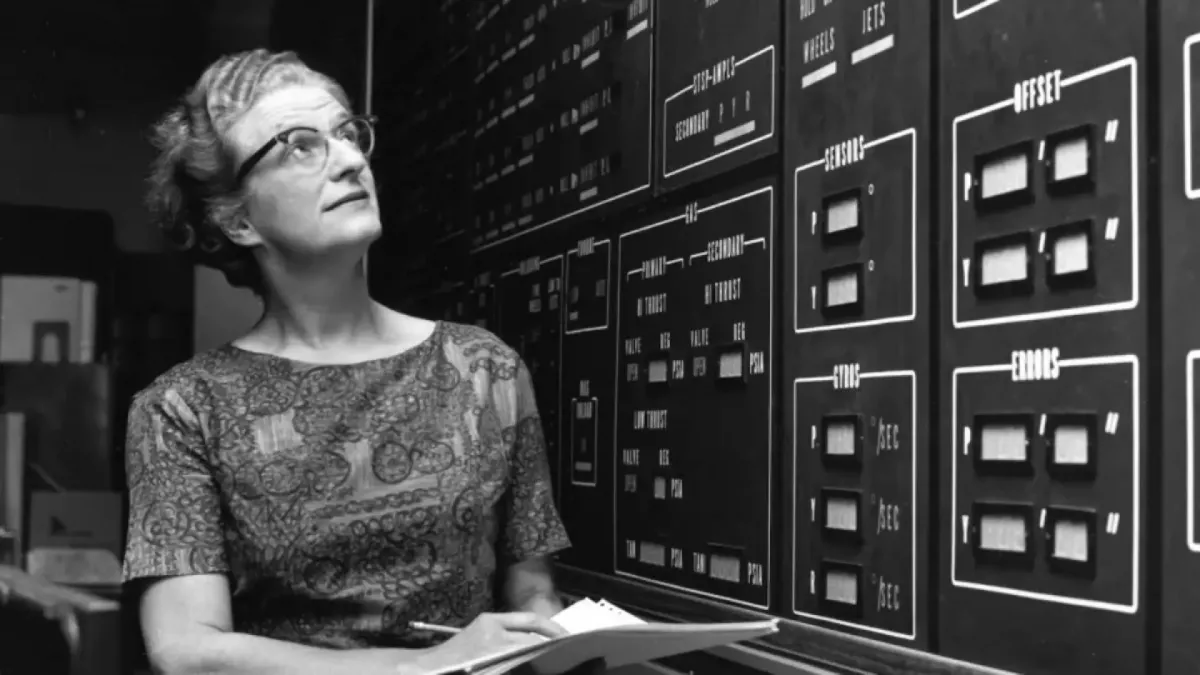
Nancy Grace Roman, conocida como la madre del Hubble, fue una pionera en la astronomía y se convirtió en la primera mujer en ocupar un cargo ejecutivo en la NASA, donde desempeñó un papel crucial en el desarrollo de grandes observatorios espaciales como el telescopio espacial que lleva su nombre. #NancyGraceRoman #NASA #Astronomía

La NASA estrena una nueva mirada al universo 🔭✨ El telescopio espacial Nancy Grace Roman estudiará la energía y la materia oscuras, cartografiará millones de galaxias y buscará miles de exoplanetas. Un observatorio diseñado para ver el cosmos a una escala nunca antes #TelescopioEspacial #Astronomía #EnergíaOscura #N/A