WRLD

Search

#Réflexe
NRC 2d

In a sharp opinion piece, Shervin Nekuee argues that the current conservative politics in the Netherlands, through symbolic destruction and reactionary reflexes, undermines social cohesion and thereby dangerously neglects the inclusion of diverse lifestyles in society. #MaatschappelijkeCohesie #Diversiteit #Politiek (translated)

www.nrc.nl
We hebben maatschappelijke cohesie nodig, maar de politiek kiest voor symbolische afbraak

2447
Erik Tegnér 3d

Erik Tegnér condemned what he described as a lynching by the AFP, the press, and the high judicial institutions regarding Youssef Badr, which he attributed to a corporatist reflex. He announced that he would quickly refute in a video the lies of Badr, whom he accused of deliberately lying, as well as those of his friends. #Justice #Médias #Démocratie (translated)

3125
Jean Marc Morandini 4d

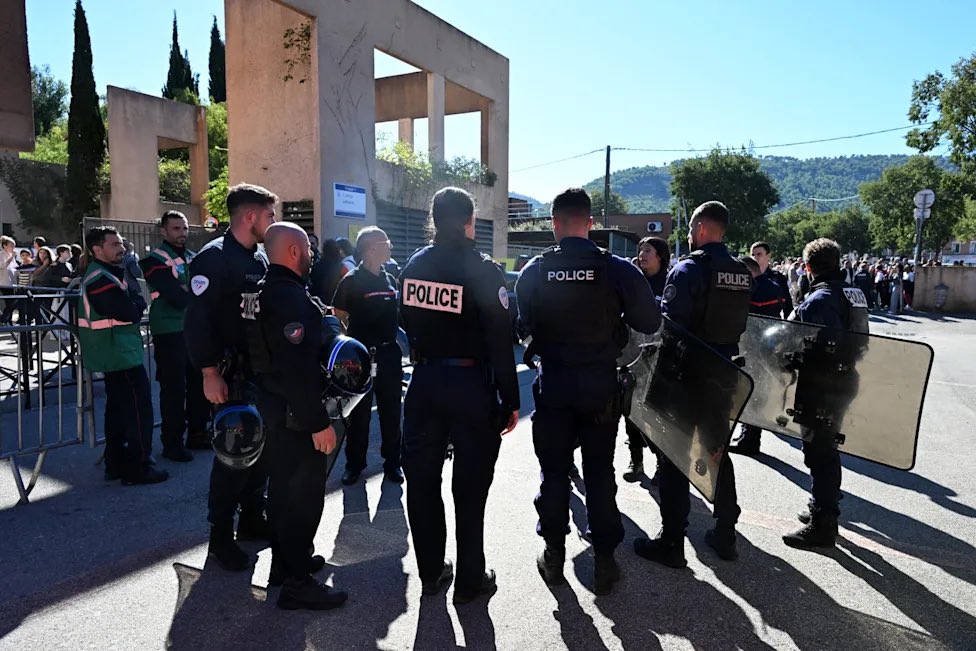
The actor Omar Sy described the authorities' response to the mobilization of high school students as "pitiful." He believed they were trying to prevent young people from expressing themselves or to strike them. #omarsy #lycéens #lycée https://t.co/vPudiKnmff #OmarSy #Lycéens #Mobilisation #FR (translated)

2918
SHADES 4d

SHADES wrote that Omar Sy had denounced the repression of mobilizations and the lack of listening to young people. According to SHADES, he had deemed it shameful that they were prevented from expressing themselves, subjected to violence or pitted against each other in what he described as childish confrontations. #LibertéDExpression #SolidaritéJeunes #JusticeSociale (translated)

3143
Pavel Polák 5d

The author of the article contemplated why Germany so wrongly estimated Putin's Russia. He stated that coping with this mistake will occupy the country for a long time, and mentioned possible causes such as historical guilt, naivety, calculation, greed, and the attempt to perceive Russia more favorably. He added that Germany may continue to be mistaken about Russia, and wrote that he dedicated this topic to Reporter_CZ. #Německo #Putin #historie #DE #RU (translated)

3157
Bally Bagayoko 6d

Bally Bagayoko wished a speedy recovery to the principal and the teacher injured by shotgun fire at a college in Aubagne. He expressed his support for the students, staff, and families affected, as well as for the young minor involved and his family, and commended the intervention of those present and the emergency services. He believed that the age of the adolescent called for an inquiry, without prejudging the causes, into what factors of suffering, harassment, isolation, or violence could have contributed to the tragedy. He also mentioned the role of social media and the dissemination of violent images, calling for greater accountability from platforms, better regulation of such content, and enhanced education on media literacy. Bagayoko, however, emphasized that screens could not be the sole explanation. He advocated for better consideration of the mental health of young people, the fight against bullying, more resources for educational teams and the professionals involved, as well as preventing minors from accessing weapons. He warned against calls to immediately toughen the juvenile justice system and to challenge the principles of the 1945 ordinance. According to him, the response should take into account the age, maturity, and background of the young person, and should combine sanction, education, support, and prevention. He added that acknowledging potential suffering in the adolescent did not equate to excusing the actions or forgetting the victims. Bagayoko finally called for the protection of victims and the educational community while seeking to prevent further incidents. He believed that no child should be left alone in the face of their distress and called for schools and society to be spaces of protection. #Éducation #Prévention #Violence (translated)

3391
German Swinger 1w

German Swinger thanked Matthieu for his vigilance, believing that he had kept his reflexes from his time as a policeman. He added that his powers of observation may have attracted the attention of the DGSI at the time. #Sécurité #Vigilance #Observation (translated)

3184
Mehdii Dz 🇩🇿🇫🇷🌟🌟 2w

Mehdii Dz wrote that the colleague from AlertesInfos had the reflex to raise his shield to conceal the action from the camera. #Humour #Caméra #SituationCocasse (translated)

2745
Wolfgang Kubicki 2w

Wolfgang Kubicki wrote that the day provides an opportunity to think about how societal division can be prevented. He regarded polarization and accusations of fascism against the CDU as dangerous. In his assessment, a constitutional crisis in Saxony-Anhalt, should the factions block each other on candidates, would not have been a good alternative. Everyone is called upon to deal with the election results maturely. This also applies to the AfD and the new parliamentary president, who has announced an impartial conduct of office, Kubicki wrote. This already arises from constitutional law and practice; the president will be judged accordingly, if necessary, in court. Kubicki accused the SPD of slipping into reflexes from the 2025 federal election campaign. In the end, this only benefits the political fringes, as it did before. #Gesellschaft #Politik #Wahlen (translated)

3320
O
Oberlé Daniel 2w

Sextortion: a 100% digital national campaign on TikTok and Snapchat to help 11-17 year olds recognize blackmail, not feel guilty, and not stay alone. Fight against sextortion: launch of the awareness campaign Campaign supported by the Independent Commission on Incest and Sexual Violence Against Children (CIIVISE) Audio Capsules on Health Practices Definition, methods of operation, protective reflexes, criminal offenses, and the role of 3018: official guidelines for talking about it with young people. Health Practices Analysis and link to the source The dossier page provides a definition of sextortion, describes its methods of operation, and lists reflexes that, according to the text, "must be conveyed to young people." It introduces 3018 and the criminal offenses at stake. The press release outlines the campaign messages: the victim is not responsible, and they should not remain alone. The two pages thus provide common guidelines for addressing the topic with young people and their surroundings. Fight against sextortion: launch of the awareness campaign - https://www.pratiquesensante.com/en/blog/practices-15/fight-against-sextortion-launch-of-the-awareness-campaign-6235 #pratiquesensante #Sextorsion #ViolencesSexuelles #ProtectionDeLEnfance #CyberViolences #3018 #ÉducationAuNumérique #PréventionJeunesse (translated)

www.youtube.com
Sextorsion : une campagne nationale 100 % digitale sur TikTok et Snapchat
917
Daniel Schatz 2w

Daniel Schatz wrote that the culture sections of several of Sweden's largest newspapers, according to him, had abandoned their mission to review literature, art, and social phenomena from multiple perspectives. He claimed that they instead often functioned as ideological campaign platforms with a leftist bias, where the same political reflexes recurred regardless of the subject. According to Schatz, cultural journalism that turned into leftist activism risked damaging the newspapers' credibility. #kulturjournalistik #mediekritik #yttrandefrihet (translated)

12186
M8 Brawks 🇭🇹 2w

In an advertising publication, M8 Brawks stated that M8 had chosen Fyzio supplements to support its players, believing that routine, sleep, and nutrition also contributed to performance. He specified that he particularly appreciated the products aimed at stress, sleep, and concentration, and wrote that the details could make the difference at the highest level. #Nutrition #Performance #BienÊtre (translated)

28170
David Marcus 2w

The author said they saw signs of what they called Europe’s protectionist reflexes and argued that the US and China had already won the race for frontier models. They urged Europe to accept this and reform the GDPR, AI Act and Digital Market Act, claiming the rules as they stood would prevent Europeans from getting early access to the best AI tools. #Europa #InteligenciaArtificial #MercadoDigital #EU #US #CN

ThinkerView 2w

High school students, young generations, spread this. You are worth more than the actions that turn against you. Burning and throwing stones is not a strategy: it is a costly, predictable reflex that provides the opponent with exactly the images and excuses they need. The inefficiency is total here. If the goal is truly to have an impact, the method is the opposite. Remain still, lying down, silent, like inert bodies. Passive, calm, and collective obstruction is much more embarrassing than a confrontation that one already knows how to handle. It deprives the power of its usual narrative and places the cost of disorder on its side. Be legendary! We love you! https://t.co/QQyclCW27r https://t.co/QQyclCW27r #Lycéens #JeunesGénérations #ChangementSocial (translated)

19711
Régis de Castelnau 3w

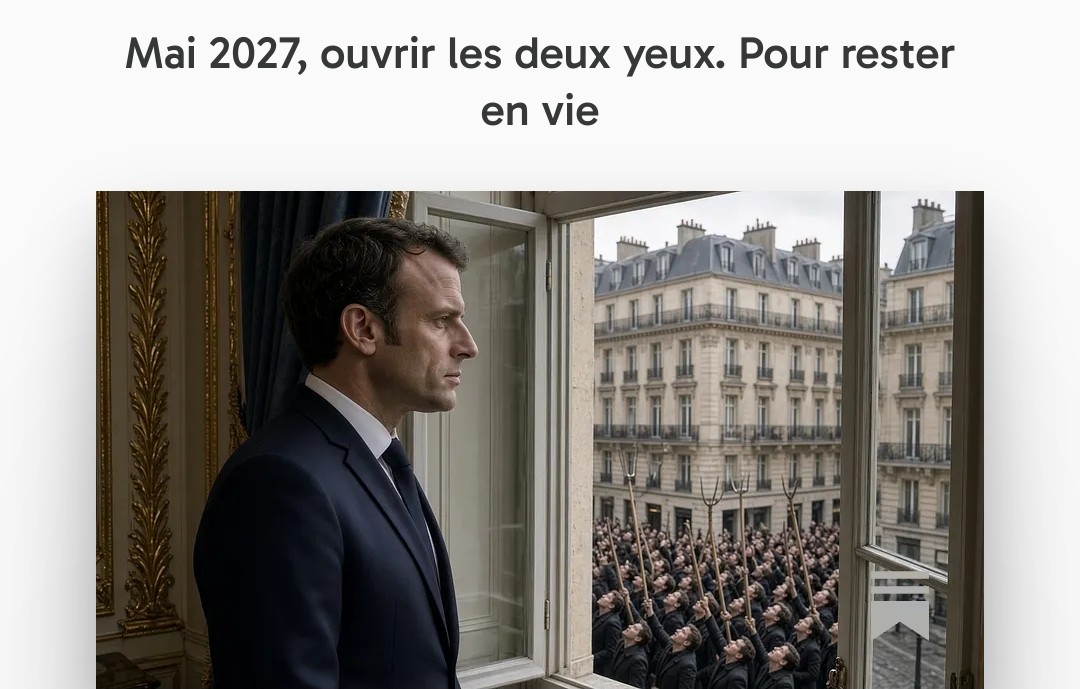
Le « système macron », pour survivre et masquer son bilan, cherche fébrilement sa parade : soutenu par une presse complètement dévoyée, il remplace l’antisoviétisme d’hier par une russophobie obsessionnelle et pavlovienne. Chaque contestation sociale, chaque critique de la gouvernance est désormais accusée de collusion avec un ennemi extérieur, agitant un épouvantail géopolitique inventé, pour étouffer toute contestation d’un ordre honni. Ce sont les réflexes des classes recroquevillées sur leurs privilèges, qui veulent à tout prix poursuivre leur pillage. LIRE SUR SUBSTACK https://t.co/o6lPPdqS57 #Macron #Russophobie #Presse

13538
O
Oberlé Daniel 3w

🚨 6 signaux pour repérer une fake news santé en quelques secondes 📒 Fake news en santé : un atelier pour apprendre à reconnaître les fausses informations ✍️ Inserm (Institut national de la santé et de la recherche médicale) — juillet 2026. Capsules Audio de Pratiques en Santé 🎙️🎥 https://www.youtube.com/watch?v=3Dpt82bmU1k 🔍💡 Infox santé et adolescents : un atelier Inserm de 1 h ou 2 h, avec 4 réflexes de vérification, un radar à 6 signaux d'alerte et 12 cas réels à analyser en équipe. Analyse de Pratiques en Santé et lien vers la source ℹ️➕ https://www.pratiquesensante.com/blog/pratiques-15/fake-news-en-sante-un-atelier-pour-apprendre-a-reconnaitre-les-fausses-informations-6218 📌 Cet atelier clé en main aide à travailler l'esprit critique en santé avec des adolescents, sans faire la morale. Le guide donne le déroulé minuté, des phrases d'animation, les corrigés et 12 cas tirés des réseaux sociaux (détox, peptides, pilule, HPV, santé mentale sur TikTok…). Il peut servir tel quel en classe, ou être adapté pour une séance d'éducation pour la santé, un accueil jeunes ou la formation d'une équipe. La grille des 6 signaux d'alerte « BAUMEC » se réutilise facilement dans d'autres actions de prévention. 🇬🇧: Fake news in health: a workshop to learn how to recognise false information - https://www.pratiquesensante.com/en/blog/practices-15/fake-news-en-sante-un-atelier-pour-apprendre-a-reconnaitre-les-fausses-informations-6218 #️⃣ #pratiquesensante #FakeNewsSanté #EspritCritique #LittératieSanté #Infodémie #PréventionJeunes #EMI #ÉducationPourLaSanté

www.youtube.com
Kit Inserm Anti Infox - 6 signaux pour repérer une fake news santé en quelques secondes
927
Seznam Zprávy 3w

Film V srdci divočiny od Davida Ayera sleduje válečného veterána Jamese Belmonta a jeho ovčáka Odina, kteří bojují s přírodou a svými traumaty v malebné, avšak kýčovité přírodě, kde se snaží přežít po letecké havárii, ale zůstávají zaklezlí ve stereotypních karikaturách bez hloubky a skutečné reflexe. #Veterán #Psychohologie #Film

www.seznamzpravy.cz
Recenze: V srdci divočiny. Brad Pitt a jeho ovčák bojují s přírodou i scénářem
1507
Juliette Briens 3w

Sérieusement est-ce qu’on peut arrêter deux secondes ? Le sujet n’est absolument pas l’IA. Thélyson Orélien est un faussaire qui a profité des privilèges que lui octroyait l’élite bien-pensante depuis 15 ans grâce à ses origines, son histoire et le sujet de ses textes. Après avoir passé sa carrière à voler des textes et des prix, ceci largement avant l’apparition des IA (puisqu’il plagiait déjà des auteurs en 2012), son premier réflexe, une fois démasqué, aura été d’accuser le public français de racisme. Le sujet n’est pas l’IA mais l’effondrement moral et intellectuel de ceux qui prétendent faire autorité en matière de culture. Ils ne sont que des pantins matés par la pression sociale. L’IA, elle, n’a fait que démasquer un menteur qui sévissait en toute impunité depuis le début de sa carrière. Sans elle, ce cirque aurait continué pour toujours. #Culture #Plagiat #Éthique

22142
P
Patrice CUDICIO 4w

The Return to Feudalism in 21st Century Garb A simple observer's viewpoint, with no claim to hold any absolute truth. The Veneer Cracks There is something strangely archaic about the world unfolding before our eyes, despite its satellites, artificial intelligence, and promises of infinite progress. Here and there, we witness heads of state behaving like feudal lords of another age, patiently nibbling away at the neighboring territory, redrawing borders through force rather than law, as if governing a nation mattered less than expanding one's fiefdom. No names need be mentioned here: current events provide plenty of illustration, and each reader will recognize, according to their own geography and moment of reading, the faces that embody this observation. But this return to the archaic is not confined to grand geopolitical stages. It also permeates the most ordinary daily life—that of social media, where anyone can pour out venom against another without filter, without form, and often without the slightest argument. The verbal jousting of yesteryear, with its codes, its rhetoric, its tacit limits, has given way to raw invective, snap judgment, instant condemnation. We no longer debate: we execute, verbally—and sometimes it doesn't stop at words. The Vanished Inhibition What strikes one, in this dual observation—macro-political and micro-social—is the lifting of an inhibition we thought firmly anchored. Centuries of cultural construction, education, philosophy, sometimes religion, had patiently shaped mechanisms of restraint: politeness as social ritual, argumentation as a mode of resolving disagreement, respect for one's opponent as the very foundation of democratic debate. This civilizational veneer, however fragile it always was, seemed to hold. Today it is cracking, and the question—which for me remains a simple hypothesis, not a certainty—is why. A convenient explanation would blame social media: anonymity, the distance of the screen, the instantaneousness of publication would favor verbal acting-out without the usual mediation of reflection. This is probably true, but likely insufficient. For technology here is only an accelerant, an amplifier—not necessarily a root cause. A Poorly Formatted Neocortex? The more unsettling hypothesis—and I frame it explicitly as hypothesis, not scientifically established fact—is that of a failure in the formation of moral judgment and tolerance toward otherness. The human brain possesses the neural structures enabling empathy, the distancing of impulsive reaction, the acceptance of difference—but these capacities are not innate in their full exercise: they must be built, educated, cultivated, like a muscle that needs patient training from childhood onward. If this education in otherness, nuance, and tolerance of disagreement erodes—for multiple and undoubtedly complex reasons that are not mine to settle here—then older reflexes resurface: instinctive distrust of the stranger outside the clan, the law of the strongest, the logic of territorial or symbolic predation. The other ceases to be a possible interlocutor and becomes once again a potential threat, unless they belong to my tribe, my clan, my party, my digital bubble. Two Scales, One Logic What is striking, in this deliberately provocative reading, is the structural similarity between these two scales. The leader who invades a neighbor in the name of a rediscovered greatness or a reinvented historical right, and the anonymous internet user who insults a stranger in the name of an unnegotiable conviction, may obey the same underlying grammar: that of territory to defend, clan to protect, the other to subdue or exclude rather than understand. The form has changed—satellites instead of horses, tweets instead of heralds—but the substance, in this reading that remains mine alone and commits no one else, seems strangely identical to that of feudal rivalries: the absence of a recognized third party, of an accepted common rule, of a respected arbitrating authority. Everyone becomes judge and party, lord of their own digital or territorial fiefdom. A Civilization on a Knife's Edge Norbert Elias, in his Civilizing Process, showed how Western societies had historically built, with remarkable slowness, an increasing control over impulses and direct violence, in favor of more sublimated forms of social regulation. What we may be observing today—and I stress again the conditional—is a form of regression in this process, or at least a fragilization of the veneer it had patiently laid down. Should we see this as an effect of great technological accelerations, which shake up our cognitive rhythms without leaving education time to adapt? A deeper crisis of the institutions tasked with transmitting these values of tolerance—school, family, religion, the rule of law? Or simply a cyclical movement of human history, where phases of policed civilization alternate with darker backlashes? I have no certain answer, and I would be wary of anyone claiming to hold one. In Conclusion, a Shared Concern This text is only a viewpoint, necessarily partial and subjective, on a world that sometimes seems to replay ancient logics in new clothing. Perhaps I am wrong to perceive a continuity between the feudal lord and the contemporary dictator, between the anonymous online insult and the absence of education in nuance. Perhaps these phenomena are unrelated, or too complex to be thus summarized. But if this reading, even partially, hits the mark, then the question that arises is less one of technological regulation—though necessary—than the far more arduous question of how to rebuild, generation after generation, this capacity to accept the other in their difference, to debate without destroying, to coexist without necessarily dominating. This undertaking, if it exists, will not be resolved by an algorithm nor by an international treaty. It plays out, patiently, in the most elementary education—the one that teaches a child that the other is not a threat, but a possibility. Bibliography Elias, N. (1939). Über den Prozess der Zivilisation [The Civilizing Process]. Oxford: Blackwell (Eng. trans. 1978-1982). Lorenz, K. (1963). Das sogenannte Böse [On Aggression]. London: Methuen (Eng. trans. 1966). Arendt, H. (1970). On Violence. New York: Harcourt, Brace & World. Han, B.-C. (2013). Im Schwarm [In the Swarm: Digital Prospects]. Cambridge, MA: MIT Press (Eng. trans. 2017).

696
Xavier Bertrand 4w

On veut être souverain, oui ou non ? L’État est propriétaire de la @SNCF et détient près de 30 % d’Eutelsat. Il faut arrêter de gesticuler et de faire les yeux doux à @ElonMusk. Quand la SNCF choisit une solution satellitaire, le réflexe doit être européen : @Eutelsat. #Souveraineté #Eutelsat #SNCF #FR #EU

116