BETA nonprofit public democratic european moderated

Search

#reporting

We have virtually unlimited amounts of ammunition and are stockpiling and preparing for any contingency that could happen; reporting otherwise is fake news.

Iran war has led to US munitions shortfalls, Pentagon inspector confirms
www.bbc.co.uk
I say the news reporting on the shortages is not true.

Iran war has led to US munitions shortfalls, Pentagon inspector confirms
www.bbc.co.uk
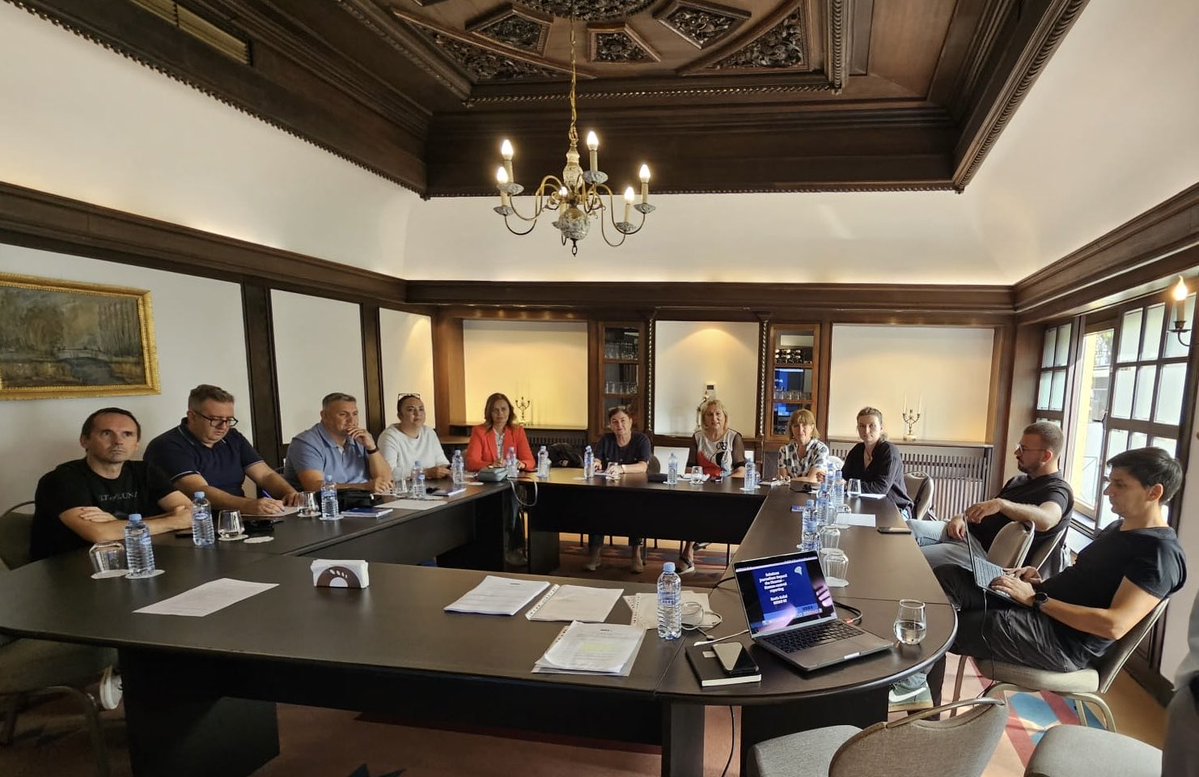
Free and independent media are vital to democracy. In crises, they provide lifesaving information. On #DemocracyDay, see how @UNESCO supported media in Montenegro and North Macedonia to support their disaster preparedness and climate reporting: https://t.co/UwCtVvpeqU https://t.co/Mbs9lNGdDX #FreePress #MediaFreedom #DemocracyDay #ME #MK

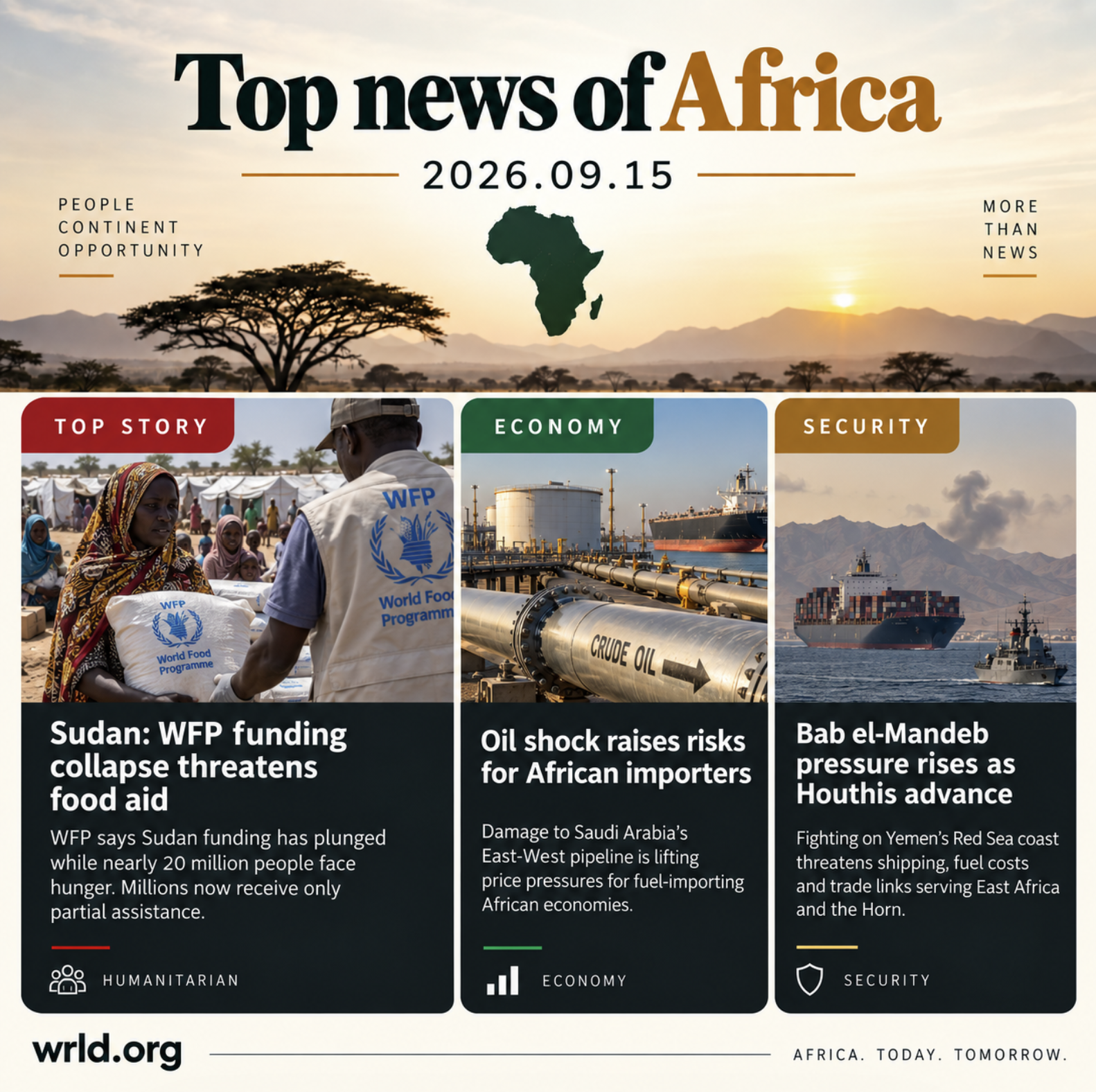
AFRICA DAILY REPORT — 15 SEPTEMBER 2026 Coverage: key developments identified in the latest 24-hour news cycle 1. SUDAN — WFP funding collapse threatens food aid Importance: 10/10 — CRITICAL The World Food Programme says its Sudan budget has fallen to roughly $206 million this year from $645 million last year, while nearly 20 million people face hunger. WFP says it needs almost $300 million more to sustain current operations. Funding constraints have forced the agency to concentrate assistance on about five million of the most vulnerable people, with roughly four million currently receiving partial rations. The funding shock risks deepening what is already one of the world's largest humanitarian emergencies. Source: Reuters, 14 Sep 2026 https://www.reuters.com/world/africa/world-food-programme-funding-sudan-plummets-more-go-hungry-head-says-2026-09-14/ 2. RED SEA / HORN OF AFRICA — Houthi advances increase pressure around Bab el-Mandeb Importance: 9.5/10 — CRITICAL Fighting in Yemen is intensifying along the Red Sea coast, with Houthi territorial gains creating additional risk around the Bab el-Mandeb shipping corridor. More than 82,000 people have reportedly been displaced since early September, and over 2,000 have crossed to Djibouti. For Africa, the significance extends beyond the humanitarian impact: disruption around Bab el-Mandeb threatens trade, fuel costs and shipping links serving East Africa, the Horn and the Suez route. Sources: Reuters/AP, 14 Sep 2026 https://www.reuters.com/world/middle-east/yemens-displaced-long-loved-ones-stability-houthis-advance-2026-09-14/ https://apnews.com/article/90dc86201ef51410ebcdd913837d741d 3. GLOBAL ENERGY / AFRICA — Saudi pipeline damage raises oil-price risk for African importers Importance: 9/10 — VERY HIGH Saudi Arabia's strategically important East-West oil pipeline is expected to remain largely out of service for three to five weeks after a drone attack. Oil prices rose as markets assessed the disruption alongside instability around Gulf and Red Sea routes. The consequences are especially important for oil-importing African economies, where higher crude prices can quickly feed into fuel costs, inflation, currencies and transport prices. Source: AP, 14 Sep 2026 https://apnews.com/article/8c18d82c109a8ea91347ce53c0096c53 4. SOUTH AFRICA — Rand falls sharply as oil prices surge Importance: 8.5/10 — VERY HIGH The South African rand fell around 1.1% against the dollar during Monday trading as rising oil prices increased pressure on Africa's most industrialised economy. South Africa is a major net oil importer and therefore particularly exposed to the current energy shock. The JSE Top-40 also weakened, while government bond yields moved higher. The development illustrates how the Middle East/Red Sea crisis is transmitting directly into African financial markets. Source: Reuters, 14 Sep 2026 5. DR CONGO — Ebola outbreak remains a continental-level health emergency Importance: 10/10 — CRITICAL The Ebola epidemic remains one of Africa's most serious current risks. The outbreak has spread to seven Congolese provinces, including Sud-Ubangi in western DRC, raising concern about further cross-border transmission toward the Republic of Congo and Central African Republic. Latest reported figures exceed 7,000 cases and 3,300 deaths. Conflict, displacement, health-worker strikes and population movement continue to obstruct containment. Sources: AP / public-health reporting, latest updates through 14 Sep 2026 https://apnews.com/article/58a2b25c752eaa8344ff16564a8e3547 6. EASTERN DR CONGO — Bukavu mourns 27 students killed in school fires Importance: 8/10 — HIGH Hundreds gathered in Bukavu for a mass funeral after fires at two neighbouring schools killed 27 students. The tragedy is particularly significant because it occurred in an already severely stressed city: Bukavu is controlled by the M23/AFC movement and local medical capacity is simultaneously under pressure from conflict and the Ebola epidemic. The disaster highlights the fragility of civilian infrastructure in eastern Congo. Source: AP, 14 Sep 2026 https://apnews.com/article/fd1aea4738a9a686fc6f0d45997a2be3 7. SOUTH AFRICA — Major road disaster kills at least 21 people in Western Cape Importance: 7.5/10 — HIGH At least 21 people were killed in a multi-vehicle collision on the N1 between Prince Albert and Leeu-Gamka in Western Cape. Two minibus taxis collided head-on before an SUV struck the wreckage. Together with another fatal accident near Ermelo, at least 29 people died on South African roads over the weekend, renewing scrutiny of road and minibus-taxi safety. Source: AP, 14 Sep 2026 https://apnews.com/article/9ae8e6beeb75cc307be24e15e9ec1fad 8. SUDAN — International leverage constrained as humanitarian needs rise Importance: 8.5/10 — VERY HIGH The widening humanitarian funding gap comes as diplomatic pressure on Sudan's belligerents remains limited. The UN Security Council recently extended the Darfur arms embargo only temporarily while members continue debating a U.S. proposal for a nationwide ban. Russia and China have raised objections to expanding the restrictions. The combination of weak humanitarian financing and diplomatic deadlock increases the risk of further deterioration. Sources: Reuters/AP https://apnews.com/article/fde2c6880c80343bebffb83c243fd3f4 9. UGANDA / SOUTH SUDAN — Climate stress is fuelling violence against traditional rainmakers Importance: 6.5/10 — SIGNIFICANT AP reports growing violence against traditional rainmakers in parts of Uganda and South Sudan as increasingly erratic rainfall damages subsistence agriculture. Farmers facing droughts, floods and crop losses have sometimes blamed spiritual practitioners for failed rains. The story is locally focused but illustrates a broader African security issue: climate disruption increasingly interacts with poverty, social tension and traditional belief systems. Source: AP, 15 Sep 2026 https://apnews.com/article/6080fa9dbc838ba75b9bab29cfd48fc9 10. AFRICA'S ECONOMIC OUTLOOK — Oil shock becomes the key near-term macro risk Importance: 8/10 — HIGH The combination of damaged Saudi export infrastructure, instability around Bab el-Mandeb and elevated crude prices is becoming an important macroeconomic risk for African oil-importing states. South Africa's currency reaction is an early indicator. If elevated prices persist, Kenya, Ethiopia, Morocco, Senegal and other net importers could face renewed inflation and balance-of-payments pressure, while African oil exporters could receive a revenue boost. This is a cross-cutting issue to watch closely over the coming days. Sources: Reuters/AP, 14 Sep 2026 TODAY'S ASSESSMENT The three developments with the greatest strategic significance are: (1) the sharp deterioration in humanitarian financing for Sudan; (2) the continuing Ebola emergency in DR Congo; and (3) the expanding Red Sea/Middle East energy shock, which is increasingly transmitting into African currencies, inflation and trade risks. #Africa #AfricaNews #TopNewsOfAfrica #Sudan #SudanCrisis #HumanitarianCrisis #WFP #WorldFoodProgramme #FoodSecurity #HungerCrisis #HumanitarianAid #RedSea #HornOfAfrica #BabElMandeb #Houthis #MaritimeSecurity #Shipping #GlobalTrade #EnergySecurity #OilPrices #OilMarket #AfricanEconomies #AfricanMarkets #EconomicRisk #Geopolitics #MiddleEast #EastAfrica #GlobalSouth #AfricaToday #wrldorg

The Marsalek chats are a warning to Austria: Russian influence operations are not some distant abstract threat — they have been planned for Vienna. According to DER STANDARD’s reporting, Jan Marsalek and his network discussed creating fake “Azov” structures, placing https://t.co/W7csIl0LeI #Marsalek #RussianInfluence #Austria #AT #RU

Everywhere, media is involved in the same trick when covering women's rights. Partial reporting, lying by omission etc. It's the @jonronson approach. #WomensRights #MediaBias #Journalism #Therearenospecificcountriesmentionedinthetweetprovided.Therefore #thereturnis:

The Vindication of the “GIO Festival”: “BroadwayWorld” Celebrates Marina and the Umberto Giordano Theatre of Foggia SOURCE: https://www.linkedin.com/pulse/vindication-gio-festival-broadwayworld-celebrates-sardella-ph-d--8zzce/ SOURCE: https://www.letteremeridiane.org/2026/08/la-rivincita-del-gio-festival-broadwayworld-celebra-marina-e-foggia/ The GIO Festival has been, to put it mildly, overlooked by Rai3 Puglia and several regional outlets. Yet the festival dedicated to Umberto Giordano — promoted by the Chamber of Commerce of Foggia together with the Municipality and the Province, and supported by the Apulia Region and the Fondazione Monti Uniti — has achieved a remarkable vindication, landing on the homepage of BroadwayWorld thanks to the world première of the opera Marina, staged on 5 June at the Umberto Giordano Theatre in Foggia. This is no small feat, considering that BroadwayWorld is among the most influential American platforms devoted to theatre and the performing arts. The transatlantic debut of the opera by Foggia’s great composer did not escape the attention of Luciano Magaldi Sardella, who submitted to the editorial board of Lettere Meridiane an in‑depth and compelling contribution, reproduced below. In the article, the author masterfully reconstructs the extraordinary story of Giordano’s first opera, composed in 1888 and left without a staged production for 138 years, until its historic performance on 5 June at the Giordano Theatre. Above all, he recounts how the inaugural edition of the GIO Festival has restored Foggia to the centre of the international operatic stage, through the rediscovery and valorisation of Marina, the involvement of major musical institutions, and the attention of the American press. It is a stimulating reflection on the cultural and identity‑driven renaissance of a city that, for far too long, bore Giordano’s name on the façade of its theatre without managing to turn it into a lever of international visibility. (g.i.) + + + + + There are moments in the life of a city when past and future clasp hands upon the stage of the present. Foggia experienced one of these moments on the evening of 5 June 2026, when the curtain of the Umberto Giordano Theatre rose upon Marina, an opera composed in 1888 by a young man of twenty‑one — Umberto Giordano — then a student at the San Pietro a Majella Conservatoire in Naples. After one hundred and thirty‑eight years of silence, that score finally found its first scenic breath in the world. “It is not an ordinary event. It is a turning point. A void filled. A story rewritten.” Umberto Giordano, one of the most celebrated verismo composers of the fin‑de‑siècle — born in Foggia, author of masterpieces such as Andrea Chénier, Fedora, Siberia — had remained, until now, the only great Italian opera composer without a festival entirely dedicated to his oeuvre. A paradox that weighed like a historical injustice upon a city that bears his name engraved on the pediment of its most beautiful theatre. This is the extraordinary journey of Marina, Giordano’s first opera, which after 138 years of oblivion received its world première in scenic form on 5 June 2026 at the Umberto Giordano Theatre in Foggia, as the opening event of the GIO Festival — the inaugural edition of the Giordano International Opera Festival. The manuscript, preserved in the Frederick R. Koch Collection at Yale University’s Beinecke Rare Book and Manuscript Library, has travelled an astonishing path: from the elite libraries of America’s East Coast to the beating heart of the Daunia. On the night of 5 June 2026, at the Umberto Giordano Theatre, that silence was finally broken. The GIO Festival was conceived in Foggia as an ambitious cultural project promoted by the Chamber of Commerce, the Municipality, and the Province, with the support of the Apulia Region, aiming to transform the artistic legacy of the verismo composer into a driver of territorial development and cultural tourism. Under the artistic direction of conductor Gianna Fratta and violinist Dino De Palma, the event at last fills a historical void. Its model is explicit and ambitious: a project inspired by the great festivals dedicated to Italian composers — such as the Verdi Festival, the Puccini Festival, the Rossini Opera Festival — while maintaining a strong territorial and participatory dimension. In other words, Foggia formally claims its seat at the table of the greats. And it does so with the credentials required: an unrepeatable world scenic première (parallel to the concert première at Milan’s Teatro Dal Verme, recorded by the prestigious opera label Decca Classics), a high‑quality operatic production, and the support of leading cultural institutions (Teatro dell’Opera di Milano, Fondazione Teatro Petruzzelli of Bari). The festival benefitted from the collaboration of the Orchestra of the Conservatoire and the Chorus of the Fondazione Teatro Petruzzelli of Bari, the Umberto Giordano Conservatoire of Foggia, the Fondazione Monti Uniti, and the Fondazione Apulia Felix. A network of excellence that lent the event national resonance and stature. The Umberto Giordano Theatre is a nineteenth‑century jewel of rare beauty — the oldest functioning horseshoe‑shaped historic theatre in Apulia. Yet for decades it lived in a state of semi‑clandestine cultural marginality, relegated to the periphery of the operatic routes that matter, hindered by long interruptions in its use from 2007 to 2014, including recent fire‑safety compliance requirements. Some referred to it, with a mixture of condescension and provincial resignation, as a “provincial theatre”, destined merely to bear Giordano’s name. That label is now destined to fall. It is precisely in Foggia that this youthful gem received its first scenic staging, placing the city on the international map of opera. A positioning without precedent in the city’s recent history. The Giordano Theatre recorded a full house for the historic première of Marina, welcoming hundreds of spectators, while many more followed the performance from outside via a large screen installed for the occasion. The production met expectations with full artistic dignity: the staging transposed the narrative to the First World War, heightening the opera’s dramatic and realist character. On the podium, the Symphony Orchestra of the Umberto Giordano Conservatoire conducted by Matteo Dal Maso. Sets and costumes by Alfredo Troisi; lighting by Massimo Russo. An ensemble of talents worthy of the name the theatre proudly bears. The definitive seal of this moment’s historical significance arrived from across the Atlantic. BroadwayWorld, the world’s most influential outlet for live performance criticism and reporting — with over 5.5 million monthly views — dedicated exclusive coverage to the event, publishing a complete photographic gallery of the world scenic première curated by Chloe Rabinowitz and a substantial critical review by Rachel Stone. The American article emphasised the historical value of the undertaking and the bond between the composer and his native city, highlighting the musical quality of the score, deemed surprisingly mature for the composer’s age. For the first time, the Umberto Giordano Theatre appeared on the New York‑based site alongside institutions such as the Los Angeles Opera House, Houston Opera, and BBC Classical Music at the Royal Opera House. It is its natural place. It should have been there decades ago. Until now, the world knew Giordano through his Milanese triumphs, not through the youthful opera written between Foggia and the Naples Conservatoire — the lost (and later rediscovered) Marina of 1888. Let us be clear: this is no minor detail. BroadwayWorld does not grant exclusive galleries to provincial theatres. It does so for events that shift the coordinates of musical and theatrical history within the circuits that matter. This time, those coordinates shifted to Foggia thanks to the GIO Festival, in the name of Umberto Giordano. For the record — and for those who may not yet know — the GIO Festival is a new and ambitious biennial event conceived by the Chamber of Commerce of Foggia, with the aim of celebrating the genius of Umberto Giordano and transforming it into a powerful engine of development for the entire Capitanata. Biennial means continuity, planning, vision. It means that Foggia does not intend to be a meteor in the operatic firmament, but a stable and recognisable presence within the international festival circuit. Andrea Chénier, Siberia, and Fedora had already carried Giordano’s name to the Metropolitan Opera House in New York for more than a century, where his works are still performed to great acclaim. Now Foggia itself — not merely its scattered operatic legacy — claims its rightful “place in the sun”. The composer whom his city struggled to recognise in life, and whose name it preserves on its theatre, its square, and its conservatoire, may finally become the lever of an unprecedented cultural, economic, and identity‑driven renaissance. The GIO Festival 2026 is not, one hopes, a point of arrival. It should be the first chapter of a new story for Foggia, for the Capitanata, and for the cultural South of Italy. The Umberto Giordano Theatre is no longer merely an architectural jewel to be preserved: it has now become a place of creation and inspiration, capable of attracting international press attention and hosting events that enter the annals of world opera. To those who still whisper that Foggia is a provincial city, the answer is now written upon the world’s stages: on the evening of 5 June 2026, the periphery became the centre.

The Vindication of the “GIO Festival”: “BroadwayWorld” Celebrates Marina and the Umberto Giordano Theatre of Foggia

Notre classe politique n'a toujours rien compris à la mutation que connaît notre rapport au travail. Le gouvernement veut durcir les règles sur les arrêts maladie. J'approuve. Mais est-ce que cela va régler le problème de fond ? Non. Parce que derrière l'absentéisme, il y a une question beaucoup plus profonde, civilisationnelle même : pourquoi le travail est-il désormais considéré, en particulier chez les jeunes, comme un sacrifice alors qu'il devrait être émancipateur ? Il faut dire que dans beaucoup d'entreprises (et je ne parle même pas des administrations !), on a multiplié les strates de procédures, de reporting, de fonctions support et d'intermédiation managériale. Au point que le salarié ne voit plus à quoi sert son travail, pour qui il travaille, ni quelle part de la valeur il crée. Ajoutez à ça cette maladie très française qui consiste à dénigrer sans cesse le travail, à le présenter comme une contrainte dont il faudrait se libérer (réduction du temps de travail, âge légal de départ à la retraite, pénibilité...), et vous comprenez pourquoi nous faisons fausse route. Car le vrai sujet n'est pas seulement de travailler plus ou moins. Le vrai sujet n'est pas de savoir quelle mesure comptable réglera le problème. Le vrai sujet, c'est de redonner du sens, de la responsabilité et de la fierté au travail. Et par-dessus tout de réconcilier la France avec l'idée même de travail. Et nous allons devoir le faire vite. Parce que l'IA va bouleverser les métiers, les organisations, le management et jusqu'à notre définition même du travail. Invité hier soir par David Pujadas sur LCI, j'ai voulu dire les choses. #Travail #Politique #Emploi

I want to prevent a race into unmonitorability kicked off by confused reporting. The depth of the computation graph for our present frontier models, including Astra, is within a factor of two of GPT-4. OpenAI has worked to preserve and utilize chain-of-thought monitoring since #Astra #GPT4 #AITransparency #Nospecificcountrycodesarementionedinthetweet.

Reporting on Germany blaming Russia for the August 4th drone attack at Leipzig airport. Germany’s interior minister saying he believes Germany is under sustained hybrid attack. Russia’s FM spokeswoman Maria Zakharova accusing Germany of manufacturing a “pretext” and “stoking” the https://t.co/L1uuhU8Wmt #Germany #Russia #DroneAttack #DE #RU

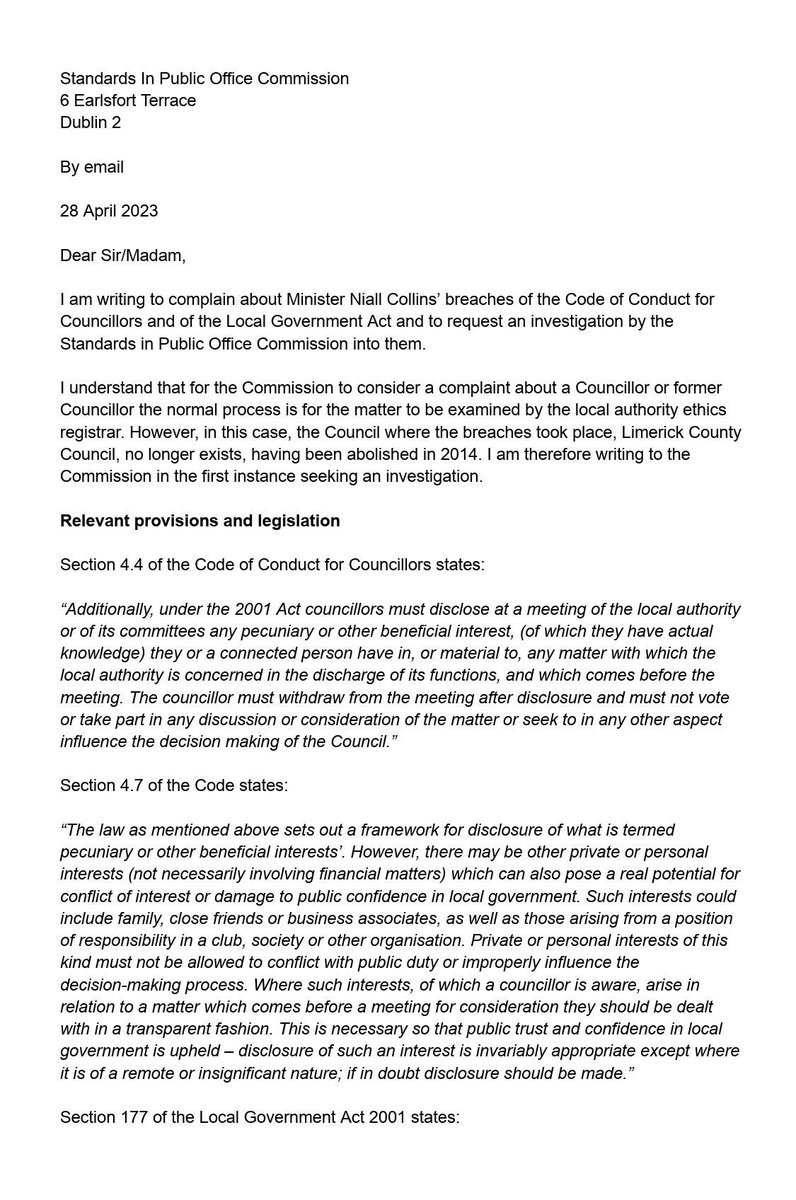
More than three years after I complained to SIPO about Niall Collins, they have finally said they will start an inquiry. Because of reporting by the Ditch, we know that as a Councillor he voted to sell land to his wife without declaring his interest. Here is my complaint. https://t.co/hbR8g6NtgR #NiallCollins #SIPO #CorruptionInquiry #IE

EPP — HOW MUCH LONGER WILL YOU ALLOW SNS TO DRAG YOUR NAME THROUGH THE MUD? 🇪🇺🇷🇸 In Užice, independent reporting described men associated with the SNS rally attacking citizens, while Ratko Mladić imagery was openly displayed. Ratko Mladić is not a “patriotic hero.” He is a https://t.co/qZfmXGR9fo #EPP #SNS #RatkoMladic #EU #RS

H

The Great Feminization, Measured Seventy-two percent of men under thirty hold a positive view of women; among women under thirty, 50% (a 22-point gap). Among women under twenty-five, the share is 35% (a 37-point gap). Where the manosphere and “toxic masculinity” dominate headlines, the data points elsewhere: young women increasingly sort men into the enemy column. The class divide is sharp. Among working-class young women, 61% view men positively; among professional-class women, 36%—a 25-point gap tied to exposure to universities, HR departments, media organizations, and NGOs. The pattern runs through institutional conditioning. Helen Andrews argued this in 2020: between 2015 and 2020 many Western institutions became majority-female, including the New York Times newsroom (2018), law schools (2016), medical schools and the college-educated workforce (2019). Affirmative-action mandates, discrimination settlements, and diversity requirements helped drive the shift. As institutions changed, so did missions: justice increasingly focused on protecting “oppressed” minorities; newsrooms shifted from reporting toward narrative enforcement; universities moved from arguing to “safe spaces.” The result is a “daycare governance model”: infants to be protected (the oppressed), caregivers to provide protection (the allies), and predators to be removed (the dissenters). Research shows the same frame in speech: FIRE’s 2026 college speech rankings found women less tolerant than men across ideologies, including less tolerance for their allies. A woman entering kindergarten in 2005 has spent twenty years inside this system—she didn’t invent it, she inherited it. The 35% figure suggests sorting into victim, ally, and predator, with no grey zones. Working-class women, less conditioned by these pipelines, still view men positively (61–36). None of this is entirely new; Gustave Le Bon described the mechanism in 1895.

H

What Chairman Mao and Dolores Umbridge Have in Common In Harry Potter, Dolores Umbridge is a more realistic villain than Voldemort: she gains power through titles, loyalty, conformity, and paperwork, not competence. She weakens Defense Against the Dark Arts by replacing practical preparation with Ministry-approved theory—her real talent is playing the institutional game. This echoes Hannah Arendt’s “banality of evil,” where ordinary people advance by obeying and enforcing a system. When loyalty matters more than ability, institutions start selecting for mediocrity. The parallel with Maoist China is stark. During the Cultural Revolution, Zhang Tiesheng was celebrated for submitting a blank exam and attacking “bookworms.” Despite poor results, political loyalty earned him a seat in the National People’s Congress. Mao’s promotion rule was effectively “red and expert”: political reliability outweighed competence. The consequences were catastrophic. Honest reporting was punished, so officials produced what Mao wanted to hear. False harvest data drove unrealistic targets and helped fuel the Great Leap Forward famine, which killed tens of millions. Education was politicized too: the Gaokao was abolished in 1966, and when admissions resumed, scores were replaced by class background, manual labor experience, and Party recommendations; the national exam returned only in 1977. Totalitarian systems don’t just remove capable people—they select for those politically reliable and morally compliant. Mediocrity shields leaders from rivals; reduced conscience makes coercion easier. Psychologist Andrew Lobaczewski called this pathocracy: rule by the pathological disordered, where normal institutions lose their ability to distinguish honest from manipulative. The system keeps its name and stated purpose while serving something else. The lesson: tyranny doesn’t require everyone to become evil. It requires enough people to stop recognizing the pathological. Once that moral filter disappears, institutions become vulnerable to exploitation—how psychopaths take over a society.

H

The Tolerance That Censors Institutions preach tolerance, yet disagreement is increasingly punished. As protected classes expand, demands for compliance, surveillance, and reporting grow. A tolerance-saturated society becomes hostile to dissent. Many call it hypocrisy, but the contradiction may be strategy. In 1965, Herbert Marcuse’s *Repressive Tolerance* argued that liberal “equal hearing” can perpetuate oppression. “Liberating tolerance,” he claimed, must discriminate: intolerance toward the Right, tolerance toward the Left. Why? Classical Marxism expected industrial workers to revolt from misery. Instead, comfort increased and revolution stalled. The Frankfurt School offered a remedy: capitalism colonized consciousness, creating “false consciousness.” If factory revolt won’t start, revolution must begin in the formation of minds—culture, education, psychology, entertainment. If so, neutrality becomes the enemy. Free debate spreads the system’s ideas. Elections let prisoners choose their preferred warden. Liberal freedoms act as “steam valves,” releasing pressure to prevent revolt. Tolerance becomes directional: oppressive ideas are suppressed; liberating ideas are amplified. Censorship and punishment are reframed as freedom’s highest expression. Marcuse also recognized liberal resistance to censorship and proposed “emergency” suspensions when oppression is deemed urgent—a logic echoed when speech is treated as harm and coercion as protection. The unsettling possibility is that nothing is malfunctioning: tolerance may function as a weapon. The final stage requires no visible censor—the individual internalizes it, policing their own thoughts.

Extreme weather in the Pacific makes accurate information a matter of survival. 📻🌀 @UNESCO is helping newsrooms in Papua New Guinea, Samoa and Vanuatu strengthen disaster resilience and climate reporting. See the impact: https://t.co/sx7fmM877c https://t.co/pEIp9sPd5o #ExtremeWeather #DisasterResilience #ClimateReporting #PG #WS #VU

This confirms the thread underpinning much of our detailed reporting from both sides of the border and both sides of the talks, out in @nytimes today with @AnaSwanson, on how the talks fell apart. https://t.co/8ESQfafrWh #TradeTalks #USCanada #NYTimes #US #MX

Dear Mrs President Nataša Pirc Musar, @nmusar Slovenia deserves clarity. Europe deserves transparency. @JJansaSDS Recent reporting has raised legitimate questions about your past travel to Russia, your private and business relationships involving Russian-linked individuals, and https://t.co/1u3ddw2A4C #Slovenia #Transparency #Russia #SI #RU