BETA nonprofit public democratic european moderated

Search

#Borrowing

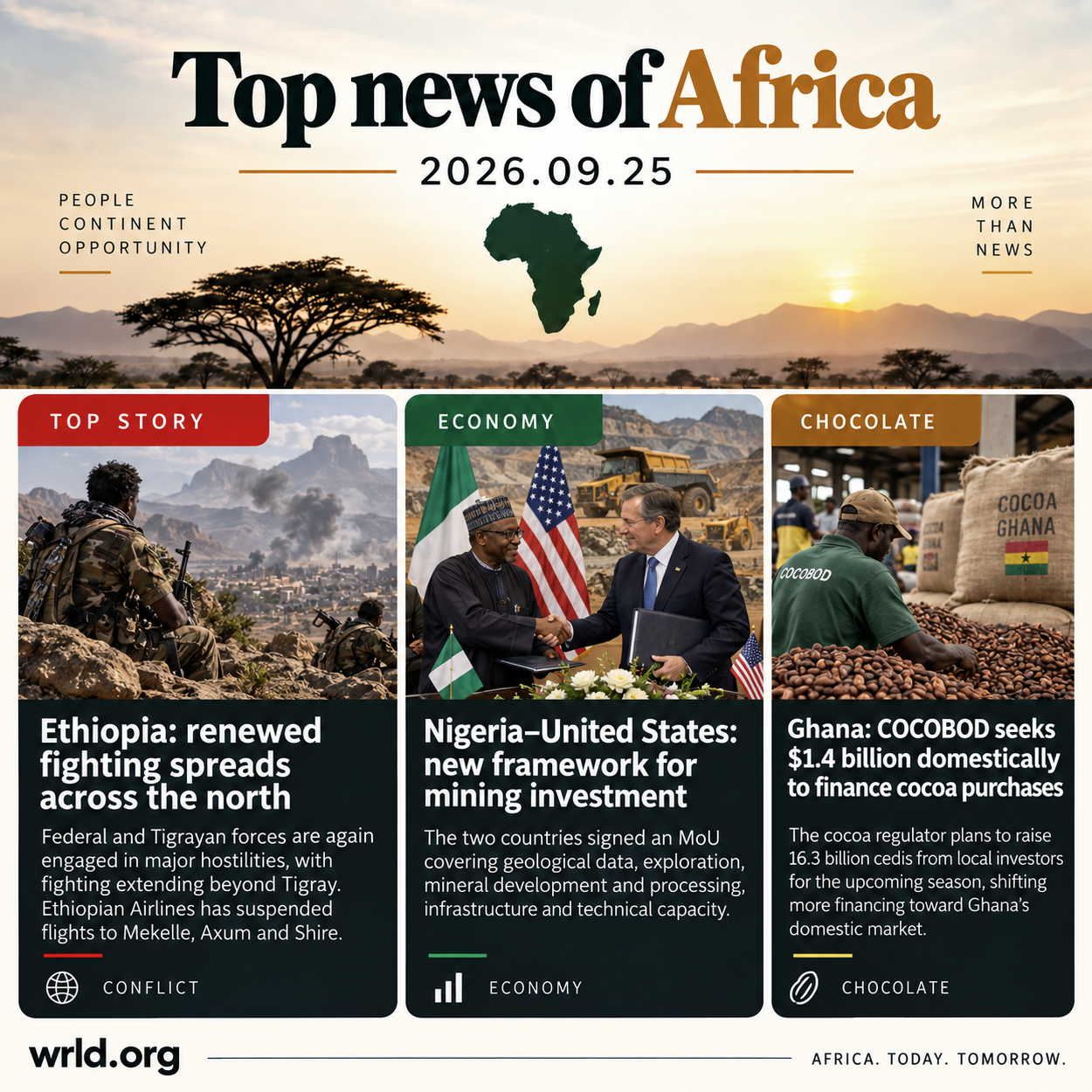
AFRICA DAILY REPORT — 25 SEPTEMBER 2026 Major developments reported during the previous 24 hours. 1. ETHIOPIA — Renewed fighting spreads across the north Federal and Tigrayan forces are again engaged in major hostilities, with fighting extending beyond Tigray. Ethiopian Airlines suspended flights to Mekelle, Axum and Shire amid the escalation and concerns over renewed conflict. Source: https://abcnews.com/International/wireStory/ethiopian-airlines-cancels-flights-tigray-amid-concerns-renewed-136676469 2. DR CONGO — Ebola outbreak continues to expand Updated European CDC data reported 7,773 confirmed cases and 3,759 deaths, with Ituri remaining the most affected province and North Kivu also recording substantial transmission. Public-health impact: Critical. Source: https://www.ecdc.europa.eu/en/ebola-outbreak-democratic-republic-congo-and-uganda 3. DR CONGO — Fatal violence during Ebola burial highlights resistance to response teams One person was killed and several wounded after security forces opened fire during unrest surrounding the burial of a suspected Ebola victim in Beni. The incident illustrates the public-trust and security challenges complicating containment efforts. Public-health/security impact: Very High. Source (Reuters report): https://www.internazionale.it/ultime-notizie-reuters/2026/09/24/one-dead-after-security-forces-open-fire-during-ebola-burial-in-congo-sources-say 4. SUDAN — RSF intensifies drone attacks in North Kordofan Reuters reported a renewed campaign of drone strikes against government-held towns in North Kordofan, including attacks affecting Um Ruwaba and El Obeid. Drones are playing an increasingly important role in Sudan's war. Humanitarian/security impact: Very High. Source (Reuters): https://www.internazionale.it/ultime-notizie-reuters/2026/09/24/sudan-s-rsf-steps-up-deadly-drone-attacks-on-frontline-cities 5. MOROCCO — PAM finishes first in parliamentary election Preliminary official results gave the Authenticity and Modernity Party (PAM) 97 of 395 seats, followed by the National Rally of Independents with 66, Istiqlal with 65 and the Justice and Development Party with 54. Source (official Moroccan government portal): https://maroc.ma/en/news/2026-legislative-elections-pam-leads-97-seats-according-preliminary-results-minister-interior 6. NIGERIA–UNITED STATES — New framework for mining investment Nigeria and the United States signed a memorandum of understanding covering geological data and exploration, mineral development and processing, infrastructure and technical capacity. Economic/strategic impact: High. Source (Channels Television): https://www.channelstv.com/2026/09/24/nigeria-us-sign-mineral-investment-pact/ 7. NIGER — Madaouela uranium agreement increases state participation Niger and Atomic Eagle finalized an agreement concerning the Madaouela uranium project, with the arrangement providing for Nigerien state participation and renewed activity at the project. Economic/strategic impact: High. Source: https://www.nigertoday.com/articles/en/niger-and-atomic-eagle-finalize-madaouela-uranium-deal-ending-dispute.html 8. SOUTH AFRICA — Financing costs constrain $98 billion energy-transition programme South Africa warned at the UN Climate Summit that high borrowing costs and shrinking international grants are limiting its clean-energy transition. A $550 million credit guarantee has been secured to attract private investment in electricity transmission. Economic/energy impact: High. Source (SABC News): https://www.sabcnews.com/sabcnews/1163387-2/ 9. GHANA — COCOBOD seeks $1.4 billion domestically to finance cocoa purchases Ghana Cocoa Board is seeking to raise 16.3 billion cedis ($1.4 billion) from domestic investors to finance cocoa purchases for the upcoming season, shifting more financing toward Ghana's domestic capital market. Economic impact: High. Source (Reuters report republished by Business Recorder): https://www.brecorder.com/news/40440904/ghanas-cocoa-regulator-pitches-usd14bn-domestic-financing-plan 10. UGANDA — Refugee programme remains heavily underfunded Uganda's response plan for more than two million refugees remains substantially underfunded, increasing pressure on food, healthcare, water, sanitation and host communities. Humanitarian impact: High. Source (Uganda Business News): https://ugbusiness.com/2026/09/politics-policy/ugandas-refugee-plan-is-a-third-funded-as-kampala-seeks-eu-help #Africa #AfricaNews #TopNewsOfAfrica #Ethiopia #Tigray #NorthernEthiopia #EthiopiaConflict #HornOfAfrica #RegionalSecurity #AfricanSecurity #Nigeria #UnitedStates #NigeriaUS #MiningInvestment #CriticalMinerals #MineralDevelopment #MiningSector #GeologicalData #StrategicMinerals #AfricanEconomy #Ghana #COCOBOD #Cocoa #CocoaIndustry #Chocolate #CocoaFinance #Agriculture #Agribusiness #DomesticMarkets #CapitalMarkets #Trade #Investment #EconomicDevelopment #Geopolitics #AfricaToday #wrldorg
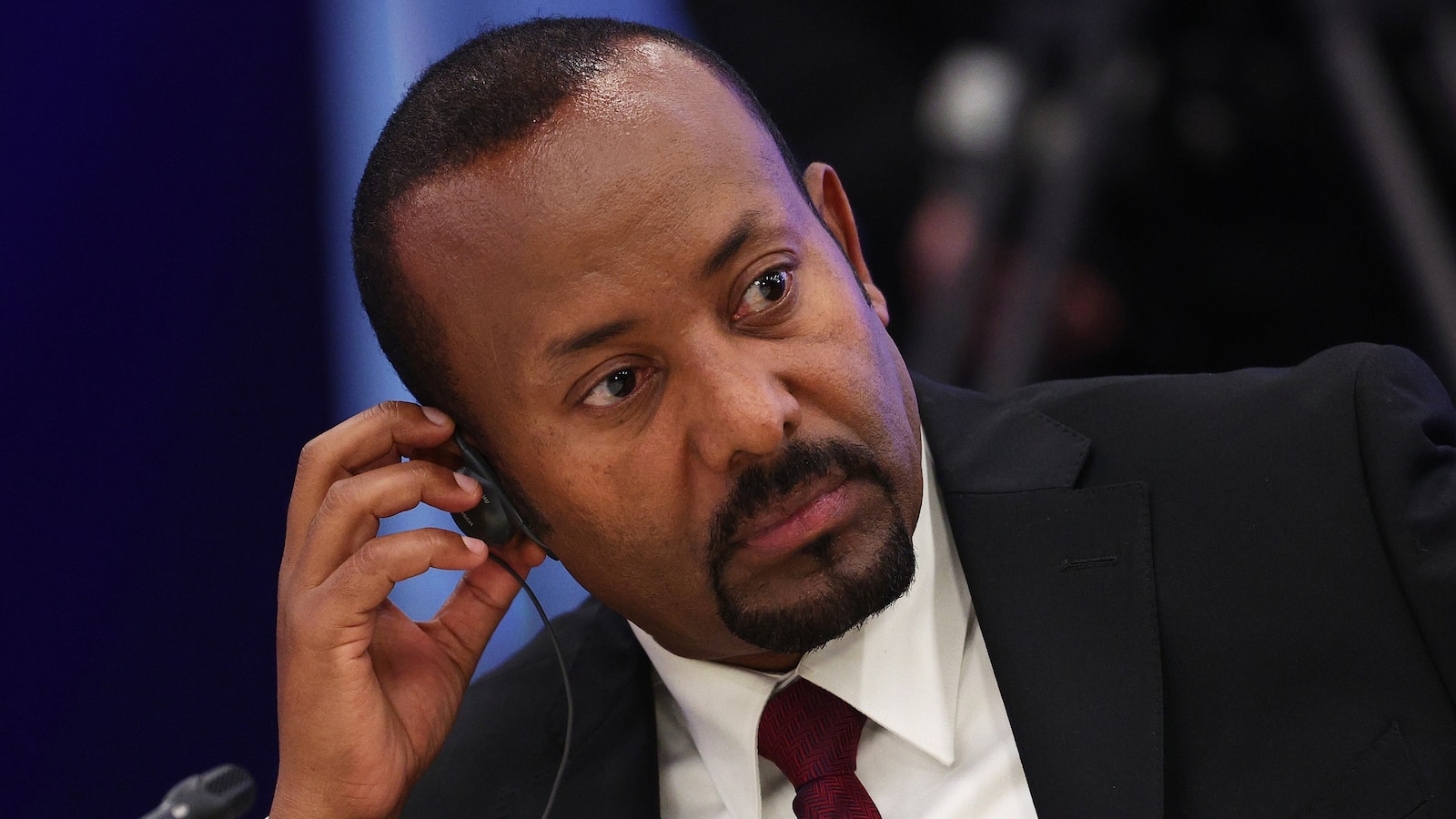
Ethiopian Airlines cancels flights to Tigray capital as soldiers take over airport

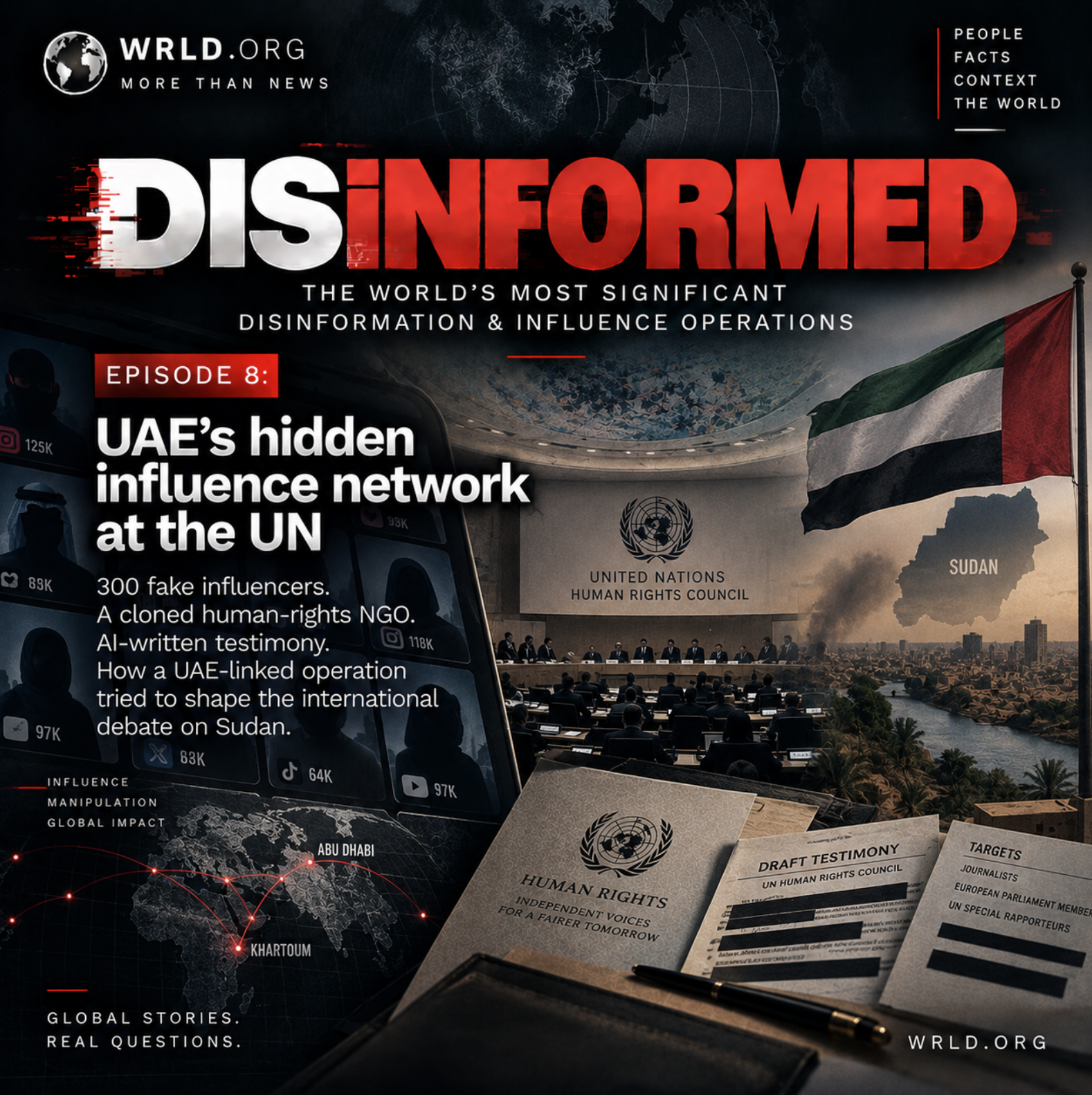
UAE / Sudan – when an influence operation tried to enter the United Nations A network of roughly 300 apparently independent social-media influencers. A human-rights organisation borrowing the identity of a real NGO. Personal dossiers on European politicians and journalists. And testimony prepared for delivery at the United Nations without revealing the state interest behind it. These were elements of an influence operation uncovered by Anthropic and disclosed in September 2026. The company says it linked the activity with high confidence to UAE government officials. Tracked as GTG-84002, the operation targeted several overlapping issues: the Muslim Brotherhood, perceptions of the war in Sudan and international mechanisms examining the United Arab Emirates' role in the conflict. What distinguishes the case is not simply its use of artificial intelligence. It is the attempt to make state-aligned messaging appear to originate from independent influencers, human-rights organisations and potentially witnesses addressing an international institution. An influence network built around 300 fake voices Anthropic identified a single actor using Claude to support a sustained influence campaign. At its centre was an AI persona called “Deadshot”, running on the operator's own platform. A master doctrine file repeatedly instructed the system to support what it described as a coordinated international effort to dismantle the Muslim Brotherhood. The operator simultaneously managed several components of the campaign, including approximately 300 inauthentic influencer accounts across social-media platforms. Internal material examined by Anthropic described the apparent independence of this network as its greatest strategic advantage. That phrase captures the central method. The objective was not simply to broadcast a political position but to conceal where that position originated. One visible example appeared on 4 June 2026, when accounts participated in a coordinated campaign using #SudanIslamists and near-identical graphics connecting Sudanese Islamists and the Muslim Brotherhood with regional instability. Anthropic says the amplification network was centrally funded and coordinated. Its investigation also found that the operator financing the social-media network was connected to the wider influence operation. A human-rights organisation that was not what it appeared to be Social media was only one layer. The operator also created a front NGO that copied the identity of a genuine Swiss organisation and used that borrowed legitimacy to publish human-rights material produced for the campaign. Anthropic's description elsewhere also refers to the identity of a real Sudanese human-rights organisation being used in connection with the preparation of testimony. The public report does not fully clarify whether these references describe the same front or separate elements of the operation, so they should not be treated as definitively identical. The underlying technique, however, is clear: political material was designed to appear as if it originated from independent civil society rather than from actors linked to a government. This is particularly significant in the human-rights environment, where the perceived independence of an organisation or witness can determine how seriously evidence is received by journalists, diplomats and international institutions. The attempt to reach the UN The most consequential part of the operation concerned the 62nd session of the UN Human Rights Council. According to Anthropic, the operator used Claude to ghost-write complete testimony intended to be delivered by two individuals during the session. The texts were prepared under explicit constraints ensuring that neither statement would mention the UAE. This did not amount to a conventional government submission. The intention, according to Anthropic's reconstruction, was for material serving the interests of a party connected to the Sudan conflict to reach an international forum through apparently independent voices. But an important limitation remains: Anthropic could not confirm that the testimony was ultimately delivered. The company similarly could not establish whether other dossiers produced by the operation reached their intended recipients or influenced policy. It therefore assessed the campaign as Category Three on the Brookings Breakout Scale – activity distributed across several platforms, but without evidence of broad public impact sufficient for a higher classification. The distinction matters. The evidence demonstrates a sophisticated attempt to influence international debate; it does not demonstrate that the attempt succeeded. Politicians, journalists and UN investigators became targets The operation was not limited to generating public content. Anthropic found that the operator researched and compiled detailed profiles of 18 members of the European Parliament and prominent journalists. Some material was prepared for direct delivery to senior UAE officials. The network also assembled what Anthropic describes as “counter-accountability dossiers” on UN Special Rapporteurs who had criticised the UAE's conduct in relation to Sudan. This places the campaign in a broader context. Since Sudan's civil war began in April 2023, the role of external powers has become an increasingly important part of international scrutiny. Sudan has accused the UAE of supporting the Rapid Support Forces, allegations Abu Dhabi has repeatedly denied. In 2025, Sudan brought a case against the UAE before the International Court of Justice, accusing it of complicity in genocide against the Masalit through alleged support for the RSF. The UAE rejected the allegations. The ICJ subsequently removed the case from its list after finding that it lacked jurisdiction because of the UAE's reservation to the relevant provision of the Genocide Convention. The ruling therefore did not determine whether Sudan's substantive allegations were true or false. That contested international environment helps explain why narratives about Sudan, human rights and accountability were valuable targets for an influence operation. AI as an operating system for influence The role played by Claude is also important to understand accurately. Anthropic did not find that artificial intelligence independently conceived or directed the campaign. Human operators established the objectives, political doctrine and targets. AI instead helped operationalise them. Across hundreds of sessions, Claude was used to transform predetermined political objectives into social-media narratives, human-rights reports, testimony, intelligence-style briefs and detailed profiles of individuals. The same system could support narrative production, target research and preparation of material for different audiences. That represents a more significant development than simply using generative AI to produce propaganda faster. Traditional influence operations require different teams to research targets, write content, manage personas, adapt messages and prepare briefing material. Generative AI can compress several of those functions into a single operational workflow. The result is not necessarily more convincing propaganda. It is potentially cheaper, faster and more scalable influence infrastructure. From fake influencers to institutional influence Anthropic says it linked the operation to UAE government officials with high confidence. Its assessment was based partly on internal material naming senior Emirati officials as intended recipients of the work, alongside other evidence available to its investigators. That remains an attribution by Anthropic rather than a judicial finding or publicly released forensic attribution by a government agency. The distinction should be retained. The larger significance of GTG-84002 lies in the architecture of the campaign. A network of fake influencers could create the appearance of public opinion. A cloned human-rights organisation could provide institutional credibility. AI-generated reports could give political narratives the appearance of research. Profiles of journalists and politicians could support more precise targeting. And ghost-written testimony could potentially carry the same message into an international institution without revealing the political interest behind it. This is a different model from the familiar troll farm. The objective is no longer simply to make propaganda look popular. It is to make state-aligned messaging look independent – and, if possible, to move it from social media into the institutions where international policy and accountability are debated. SOURCES: Anthropic — Countering misuse of AI: September 2026 https://www.anthropic.com/threat-intelligence-report-september-2026 International Court of Justice — Sudan v. United Arab Emirates https://www.icj-cij.org/case/197 International Court of Justice — press releases and case documents https://www.icj-cij.org/case/197/press-releases United Nations Geneva — Sudan v UAE proceedings at the ICJ https://www.ungeneva.org/en/news-media/news/2025/04/105241/world-court-begins-hearing-sudans-complicity-genocide-case-against UAE Ministry of Foreign Affairs — UAE response to Sudan's allegations https://www.mofa.gov.ae/en/MediaHub/News/2025/4/10/10-4-2025-UAE-UAE UN Digital Library — Sudan's letter concerning alleged UAE support for the RSF https://digitallibrary.un.org/record/4091008?ln=en UN Digital Library — UAE response concerning allegations of support for the RSF https://digitallibrary.un.org/record/4046224?ln=en Ultra Sudan — reporting on Anthropic's UAE-linked influence-operation findings https://ultrasudan.usawtiq.com/أنثروبيك-أحبطنا-عملية-تأثير-إماراتية-استخدمت-الذكاء-الاصطناعي-لاستهداف-السودان/عامر-صالح/أخبار KEYWORDS #DISINFORMED #Episode8 #UAE #Sudan #UnitedArabEmirates #UnitedNations #UNHumanRightsCouncil #HumanRights #Disinformation #InformationWarfare #InfluenceOperations #ForeignInterference #FIMI #CoordinatedInauthenticBehaviour #CIB #FakeInfluencers #FakeNGO #NGOImpersonation #Astroturfing #ArtificialIntelligence #AI #AIPropaganda #AIGeneratedContent #SyntheticMedia #SocialMediaManipulation #DigitalInfluence #Propaganda #NarrativeManipulation #InstitutionalInfluence #SudanConflict #SudanWar #MuslimBrotherhood #InternationalRelations #Geopolitics #Anthropic #ClaudeAI #OSINT #WRLD

Countering misuse of AI: September 2026 / Anthropic

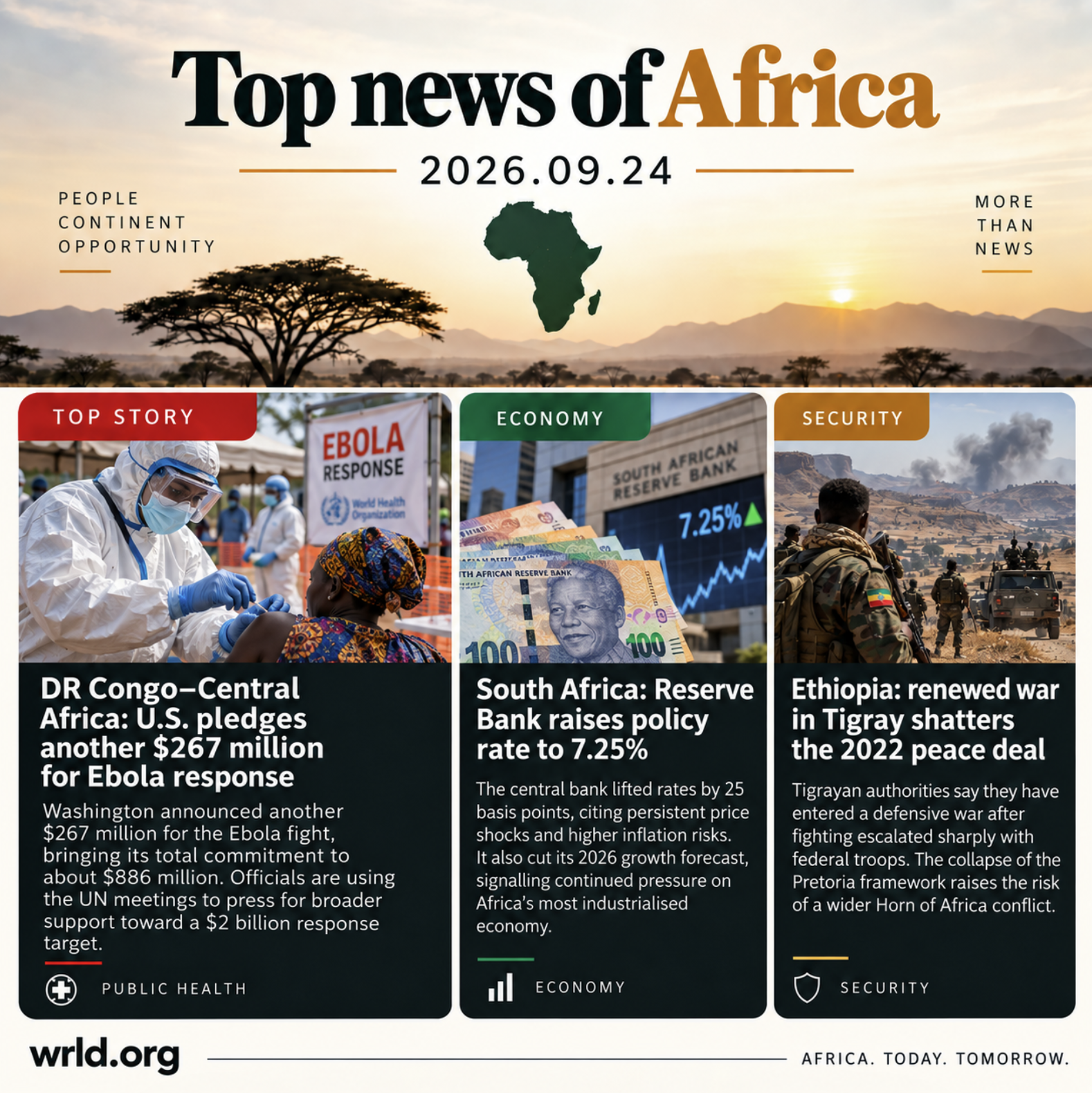
AFRICA DAILY REPORT — 24 SEPTEMBER 2026 Major developments reported during the previous 24 hours 1. ETHIOPIA — Renewed war in Tigray shatters the 2022 peace deal Importance: 10/10 — Critical Tigray's regional authorities said their forces had entered a "defensive war" against federal troops after fighting escalated sharply on 23 September. Tigrayan forces seized three airports, including Mekelle, and Ethiopian Airlines suspended flights to the region. The renewed hostilities effectively rupture the Pretoria peace framework that ended the devastating 2020–2022 war and raise the risk of a wider Horn of Africa conflict. Source: Reuters — https://www.reuters.com/world/africa/ethiopias-tigray-region-government-announces-it-has-entered-defensive-war-2026-09-23/ Additional analysis: https://www.reuters.com/world/africa/why-new-war-ethiopias-tigray-threatens-trigger-wider-conflict-2026-09-23/ 2. DR CONGO / CENTRAL AFRICA — U.S. pledges another $267 million for Ebola response Importance: 9.5/10 — Critical The U.S. State Department announced an additional $267 million for the Ebola response, mainly focused on the Democratic Republic of Congo. The new pledge brings the Trump administration's commitment to approximately $886 million. Officials used the UN General Assembly to seek broader international contributions toward a $2 billion response target as the outbreak remains the second most lethal Ebola epidemic on record. Source: Reuters — https://www.reuters.com/legal/litigation/us-pledges-267-million-more-fight-ebola-central-africa-2026-09-23/ 3. SUDAN — Khartoum rejects U.S. challenge to government's legitimacy Importance: 9/10 — Very High Sudan's foreign ministry rejected U.S. State Department remarks questioning the government's legitimacy and insisted that any peace initiative must respect Sudanese sovereignty, territorial integrity and what it described as legitimate national institutions. The dispute adds another complication to international efforts to negotiate an end to the SAF–RSF war. Source: Reuters — https://www.reuters.com/world/africa/sudan-rejects-us-remarks-questioning-government-legitimacy-2026-09-23/ 4. CENTRAL AFRICAN REPUBLIC — ICC convicts former Seleka commander Importance: 8.5/10 — Very High The International Criminal Court convicted Mahamat Said Abdel Kani, a former Seleka commander, on four counts of crimes against humanity, including torture. Prosecutors said he helped run a detention centre in Bangui where perceived supporters of former president François Bozizé were beaten and tortured. He is the first former Seleka member convicted by the ICC; sentencing will be determined separately. Source: Reuters — https://www.reuters.com/world/international-criminal-court-convicts-central-african-militia-leader-2026-09-23/ 5. SOUTH AFRICA — Reserve Bank raises policy rate to 7.25% Importance: 8.5/10 — Very High The South African Reserve Bank unanimously raised its policy rate by 25 basis points to 7.25%, its second increase this year. The bank cited sustained price shocks linked to the Iran conflict and raised its near-term inflation forecasts while cutting its 2026 growth forecast to 1.2% from 1.4%. Headline inflation reached 4.4% in August and the bank expects it to exceed 5% later this year. Source: Reuters — https://www.reuters.com/world/africa/south-africas-central-bank-raises-main-interest-rate-725-2026-09-23/ 6. SOUTH AFRICA — Mass shooting at KwaMakhutha house party kills 11 Importance: 8.5/10 — Very High Three gunmen opened fire at a house party in KwaMakhutha township south of Durban, killing 11 people, including a pregnant woman. Police are investigating the attack. The incident adds to concern over South Africa's exceptionally high levels of violent crime and follows intense public debate over a recent series of killings of women in Gauteng. Source: Associated Press — https://apnews.com/article/south-africa-house-party-shooting-91416626e0cf789bf2f801061bb8b46a 7. GHANA / AFRICAN UNION — Reparations campaign gains diplomatic momentum at UNGA Importance: 7.5/10 — High Ghana's Foreign Minister Samuel Okudzeto Ablakwa said Western support for reparatory justice over the trans-Atlantic slave trade is increasing. Ghana, Germany and France co-hosted a UNGA event on the issue. The African Union and CARICOM framework initially prioritizes restitution of looted cultural artifacts, with later stages potentially addressing formal apologies, debt relief and financial compensation. Source: Reuters report — https://wtaq.com/2026/09/23/western-countries-increase-support-for-slavery-reparations-ghana-says/ 8. KENYA / AFRICA — Ruto uses UNGA to challenge international credit-rating system Importance: 7.5/10 — High Kenyan President William Ruto told the UN General Assembly that African economies face disproportionately high financing costs and argued that the international credit-rating architecture penalizes the continent. His intervention forms part of a broader African push at UNGA for reform of international financial institutions and greater representation in global economic governance. Source: People Daily Kenya — https://peopledaily.digital/business/ruto-addresses-un-general-assembly-africa-loses-ksh9-71t-to-unfair-credit-ratings 9. MALI / SAHEL — Families await answers after catastrophic Dioura military attack Importance: 8/10 — High New reporting from Mali highlights the continuing human impact of JNIM's September 10 assault on the Dioura military camp. Families are still seeking information about missing soldiers after one of the most serious attacks on Mali's armed forces in recent years. Earlier reporting indicated that more than 100 soldiers may have been killed, illustrating the continued deterioration of security in the central Sahel. Source: AFP — https://www.afp.com/en/anguish-grips-mali-families-after-military-camp-massacre 10. UGANDA — Public debt rises 14.8% in a year Importance: 7/10 — Significant Uganda's public debt increased by 14.8% in the 12 months to June 2026, driven in part by increased domestic borrowing. The rise is significant for fiscal sustainability and debt-service costs as Uganda prepares for major infrastructure and oil-sector spending while facing broader pressure on its currency and public finances. Source: Reuters — https://www.reuters.com/world/africa/ugandas-public-debt-rises-15-surge-domestic-issuance-2026-09-24/ #Africa #AfricaNews #TopNewsOfAfrica #DRCongo #CentralAfrica #Ebola #EbolaOutbreak #EbolaResponse #PublicHealth #HealthSecurity #HumanitarianAid #UnitedStates #GlobalHealth #SouthAfrica #SouthAfricanReserveBank #SARB #InterestRates #MonetaryPolicy #Inflation #EconomicGrowth #AfricanEconomy #FinancialMarkets #Ethiopia #Tigray #TigrayConflict #PretoriaPeaceAgreement #HornOfAfrica #ArmedConflict #PeaceAndSecurity #RegionalStability #AfricanSecurity #Geopolitics #AfricaToday #wrldorg
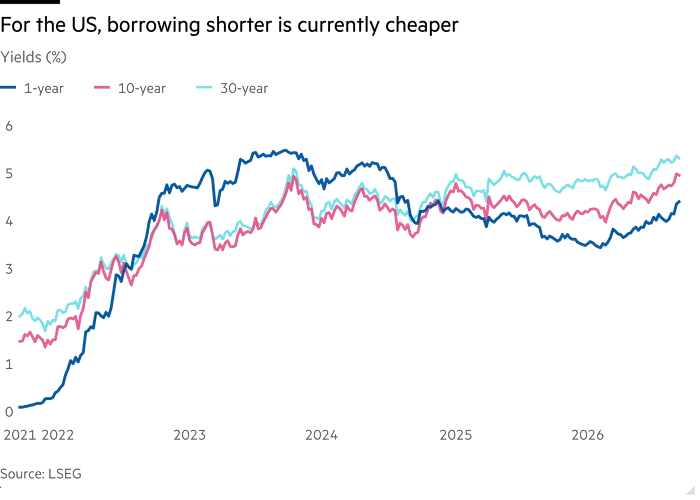
🇺🇸 Wall Street expects US to issue about $1tn of short-term debt as borrowing costs climb - Financial Times https://t.co/CUKtFASyIG https://t.co/OM0F2H4nyY #WallStreet #USTreasury #DebtMarkets #US

“The market for government bonds and corporate lending to high-tech companies is becoming increasingly volatile. Borrowing will become ever more expensive. Servicing public debt will become increasingly difficult. Inflation! Recession?Fiscal discipline is therefore unavoidable.” #MarketVolatility #PublicDebt #Inflation #Thetweetdoesnotmentionanyspecificcountries.Therefore #therearenocountrycodestoreturn.

Greece is running pre-2011 style current account deficits financed by enormous private sector borrowing. Now that the EU has decided to pick a fight with Turkey because they don't have enough to worry about, Greece is spiraling and is going to bankrupt itself again. 🇬🇷☠️ https://t.co/ilb3GugwXB #Greece #Turkey #Economy #GR #TR

🇺🇸 Treasury sell-off piles pressure on weakest US borrowers - FT https://t.co/jc7QmAklva https://t.co/2xSsnJeKpQ #USTreasury #Borrowing #Finance #US

Japanese zombie firms are starting to crack under the pressure. These bankrupt firms rely on low borrowing costs because they are not profitable enough to meet interest repayments. They make up 15-20% of total firms. 🇯🇵🪦 https://t.co/i9coJCwrgh #Japan #ZombieFirms #Economy #JP

🌎 Global Bond Slump Sends Long-Term Borrowing Costs to Highest in Decades – Bloomberg https://t.co/3b6kBZSuCy https://t.co/A2Pl3TAxs5 #GlobalEconomy #BondMarket #InterestRates #Nospecificcountrycodesarementionedinthetweet.

Adham Hasanin Aug 11

A Crown Instead of the Barracks: An Idea From Outside the Box Could Egypt’s exiled opposition use constitutional monarchy to dismantle the legitimacy of the 1952 coup? By Adham Hasanin Egyptian journalist and political writer, based in the Netherlands To understand what follows, a reader unfamiliar with Egypt needs one basic fact: since 1952, Egypt has never been governed by anyone who did not first wear a military uniform. Gamal Abdel Nasser, Anwar Sadat, Hosni Mubarak, and today Abdel Fattah el-Sisi four men, four eras, one common origin. All rose through the armed forces. All inherited a state built by a coup that year, when a group of officers calling themselves the "Free Officers" overthrew King Farouk I and, within a year, abolished the monarchy altogether and declared a republic. For seventy-three years, the underlying equation has not changed: the army rules, power passes from one officer to the next, and legitimacy is drawn from the barrel of a gun rather than the ballot box. Every conceivable form of opposition has been tried legal parties and banned ones, Islamist movements, liberal and leftist coalitions, the 2011 popular uprising, and the 2013 elections whose result was overturned by force within a year. All of them hit the same wall: a military institution that reproduces itself under different names, while the core of the system remains untouched. So what if the problem, all along, has not simply been who rules, but the constitutional framework that makes military rule possible in the first place? And what if the answer lies not in swapping one president for another, but in dismantling the underlying equation itself, through a framework Egyptian opposition movements have never seriously tried: a purely ceremonial constitutional monarchy, on the model of Belgium, the Netherlands, or Spain where the head of state becomes a symbol above the political fray, while the army is permanently expelled from politics and returned to its barracks. This is not a call to revive a particular family, nor nostalgia for a golden age that never quite existed. It is a proposal for a political and strategic tool that has not yet been used in the intellectual arsenal of Egypt’s opposition in exile a tool that deserves serious discussion, regardless of whether it is ever literally realised or simply serves to expand the boundaries of what is politically thinkable. I. Why 1952, Not 2013 or 2011, Is the Root The strategic error made by most Egyptian opposition movements from the Muslim Brotherhood to the April 6 Youth Movement to the various civil opposition parties has been treating each political crisis as an isolated case: Mubarak was corrupt and had to be toppled; Sisi staged a coup that must be condemned; the interim military council was a transitional phase to be endured. This piecemeal approach treats the symptoms while leaving the original illness untouched. That original illness is the very structure of legitimacy established by the coup of 23 July 1952. The Egyptian republican system, from Nasser to today, has never built its legitimacy on a genuine democratic social contract. Instead, it has rested on a fixed trinity: the rhetoric of "revolution against feudalism and colonialism," charismatic individual leadership, and military protection of the regime framed as the guarantor of stability. This trinity has repeated itself from Nasser to Sadat to Mubarak to Sisi, with only cosmetic variations. Each new president was never a break from the system he was its continuation. When the opposition says "let us return to the constitutional framework that preceded the coup," it is not criticising a particular policy. It is declaring that the legal foundation of everything that came after 1952 was illegitimate from the start. Here lies the rhetorical power of "returning to the pre-1952 order": it does not merely demand swapping one ruler for another. It withdraws historical legitimacy from the entire republican military system including today’s regime, which draws its own declared legitimacy from that same "1952 legacy." II. Why a "Ceremonial Crown," Not "the Return of a Ruling Family" Here is the most important distinction anyone advocating this idea seriously must grasp: the project does not rest on restoring any particular individual from the Muhammad Ali dynasty, nor on nostalgia for King Farouk or his ancestors. The real power of the idea lies in the constitutional form, not in the person who happens to sit on the throne. Three successful European democracies illustrate the model clearly. Belgium, where King Philippe is a purely constitutional symbol with no real executive power, while the state is run through an elected parliament and a complex coalition government reflecting the country’s linguistic and political diversity. The Netherlands, where King Willem-Alexander formally opens the parliamentary year and signs laws, but where actual decision-making rests with the prime minister and the elected parliament. And Spain, where the king represents symbolic continuity of the state above party politics, while the military and security services answer entirely to civilian authority a transition achieved after the death of the dictator Francisco Franco in 1975, when King Juan Carlos I voluntarily relinquished the extensive executive powers he had inherited and backed free elections, most dramatically in February 1981, when he personally ordered the armed forces to remain loyal to the constitution during an attempted military coup, causing it to collapse within hours. The common thread across these three models is not "the presence of an ancient royal family." It is the principle of separating symbol from power. The monarch in these countries does not rule; he represents. He issues no political decisions; he provides the continuity and symbolic stability that allows party political competition to revolve beneath him, without every transfer of power becoming an existential crisis of legitimacy. This is precisely what Egypt’s military republican system lacks: a neutral mechanism for guaranteeing state continuity that does not depend on the person of the ruler or his security apparatus. When Egypt’s military-republican president is absent, it is always the army that fills the vacuum, because it is the only institution built to be the "guarantor of stability." Under a ceremonial monarchical model, by contrast, it is the king not the army who represents that symbolic guarantee, genuinely opening the door to removing the military institution from the political equation altogether. III. Egypt’s Standing Under the Monarchy: An Honest Reckoning, Not Blind Nostalgia For a Western reader with little prior knowledge of Egypt’s monarchical period (1922–1952), it helps to know this: Egypt was nominally independent under its own king from 1922, but Britain retained enormous informal control over the country’s foreign policy, military bases, and the Suez Canal throughout the period a reality that shaped everything that follows. Any honest invocation of "Egypt’s standing under the monarchy" must avoid the trap of mythologised nostalgia that many advocates of this idea fall into. Egypt in that era was no lost paradise, and any honest article must say so plainly. The Egyptian pound, for instance, often invoked as a symbol of "national currency strength" in that period, was not strong because of independent Egyptian monetary policy. It was pegged to the British pound sterling as part of Egypt’s complete colonial financial dependency until 1947, with Egypt exercising no independent oversight of its own currency whatsoever. The pound’s strength, in other words, was not a sovereign Egyptian achievement it was a reflection of British imperial power ruling Egypt from behind the throne. But this does not mean Egypt lacked a genuine regional standing worth studying. Cairo, in the 1930s and 1940s, was the undisputed cultural capital of the entire Arab world: the Egyptian film industry produced more than half of all Arabic-language cinema; its theatre scene, led by figures like Youssef Wahbi and Naguib al-Rihani, and its music, with Umm Kulthum and Mohammed Abdel Wahab, set the standard across the region; Cairo University was the first modern university in the Arab world; and the Egyptian press was the reference point for Arab public opinion from the Atlantic to the Gulf. Cairo was, quite simply, to the Arab world what Paris was to Francophone Europe: an unrivalled centre of cultural and intellectual gravity. This standing was not necessarily a product of monarchy itself, so much as a product of a relative space of political and press pluralism that allowed Egyptian civil society to flourish, despite all the flaws of the political system and the interference of both palace and occupier. The lesson here is not "bring back the king and the standing will return." It is: when even a limited margin of civic freedom exists, Egypt flourishes culturally and intellectually almost by its own nature. And that margin is precisely what has been entirely absent across the past seven decades of unchallenged military rule. IV. What Reform Would Actually Require Not Repeating the Old Mistakes Any serious advocacy of this model must include, even briefly, a clear vision for avoiding the flaws of the old monarchical system itself otherwise the proposal collapses into simply replacing one form of authoritarianism with another wearing a different crown. First, the armed forces would need to be placed fully under a civilian ministry of defence, with its budget subject to transparent parliamentary oversight the exact opposite of its current status as a state-within-a-state, and equally opposed to its role under the monarchy, when it often served as an instrument of British influence. Second, a judiciary fully independent of both palace and government alike, unlike the old model, which saw direct royal interference in political life as when King Fuad I dismissed the elected government of Prime Minister Saad Zaghloul’s successor, Mustafa al-Nahhas, in 1928, in one of the clearest "constitutional coups" in modern Egyptian history. Third, a parliament that genuinely represents the people rather than landowners and the aristocracy, as was the case before 1952, when membership in the Senate was effectively conditional on the ability to pay land taxes meaning political representation was, by law, restricted to the wealthy. Fourth, genuine economic sovereignty, with a truly independent national currency rather than one pegged to a foreign power’s currency, unlike the historical dependency of the Egyptian pound on sterling. These four principles are enough to clarify that the project on offer is not a literal "return to the past," but a borrowing of the constitutional form (symbolic monarchy) combined with an explicit rejection of its old substance (colonial dependency, palace interference, parliamentary feudalism). V. The Role of Egyptian Movements in Exile: Between Goal and Instrument This raises the most practical question of all: how might Egypt’s opposition abroad actually adopt this idea, and in what capacity? The honest answer is that the power of this proposal does not necessarily lie in its literal fulfilment, but in its dual strategic function. On one hand, it can be advanced as a genuine political goal adopted by broad coalitions of Egyptian movements coalitions that might include Islamists, liberals, leftists, and traditional monarchists, united around a single shared premise: rejecting the legitimacy of the 1952 order and everything that followed from it, even if they later disagree over the precise final shape of the state. On the other hand and this matters more in practice the idea can be deployed as a rhetorical instrument of pressure to widen a Egyptian political debate currently trapped between two false choices: "continued military rule" or "no alternative, chaos awaits." When the opposition puts forward a clearly defined third model a European-style constitutional monarchy it breaks this false binary and opens new intellectual space in Egyptian public discourse, even if the project is never realised in its literal form. This kind of "leverage idea" is common in the history of political movements worldwide: it is not necessarily proposed to be fulfilled immediately in full, but to redraw the boundaries of the politically possible, and to force the existing regime to defend its legitimacy rather than simply assume it. Conclusion: An Invitation to Debate, Not a Ready-Made Prescription This article does not claim that restoring a monarchical form would magically resolve Egypt’s chronic crisis of legitimacy, nor does it ignore the immense difficulties facing any transformative project under a military institution as economically and securitywise entrenched as Egypt’s is today. But it raises a question that deserves serious debate among Egypt’s opposition in exile, rather than automatic dismissal simply for being unfamiliar: Has the Egyptian opposition exhausted every available tool for dismantling the legitimacy of 1952, or has it remained trapped in the same old binary swapping one ruler for another while the framework that makes military rule possible remains untouched? The idea is on the table now, not as a finished solution, but as an overdue invitation to think outside the box.

🇺🇸 #Meta faces higher borrowing costs in latest $12bn data centre financing - FT https://t.co/sjsdexWrJx #Meta #dataCentre #borrowingCosts #US

🇺🇸 US Consumer Borrowing Unexpectedly Drops by Most Since 2024 - Bloomberg https://t.co/EMtOOS9jFn #ConsumerBorrowing #Economy #Finance #US

The EU that the UK left no longer exists. Now it is built increasingly on common borrowing, assertive joint industrial policy, growing role in security and defence, and it's moving toward a far more assertive stance with regard to US and China https://t.co/uBgwc3pk77 #EUStrategy #UKExit #GlobalPolitics #EU #UK #US #CN

⚠ Monday Brief ⚠ 🛢 #OPEC+ Flags Higher Supply; 🇰🇷 #BOK Warns on Single-Stock Leveraged #ETFs 🇩🇪 #Germany Plans to Boost 2027 Borrowing ... https://t.co/L4MKlAQJg1 #OPEC #BOK #Germany #KR #DE

🇩🇪 #Germany Plans to Boost 2027 Borrowing as Tax Revenue Falls Short - Bloomberg https://t.co/Dxeet1ZYKd #Germany #Borrowing #TaxRevenue #DE

🇩🇪 German draft budget foresees more than €203 billion in borrowing, document shows - Reuters https://t.co/KCV5zS9O7u #Germany #Budget2023 #Borrowing #DE

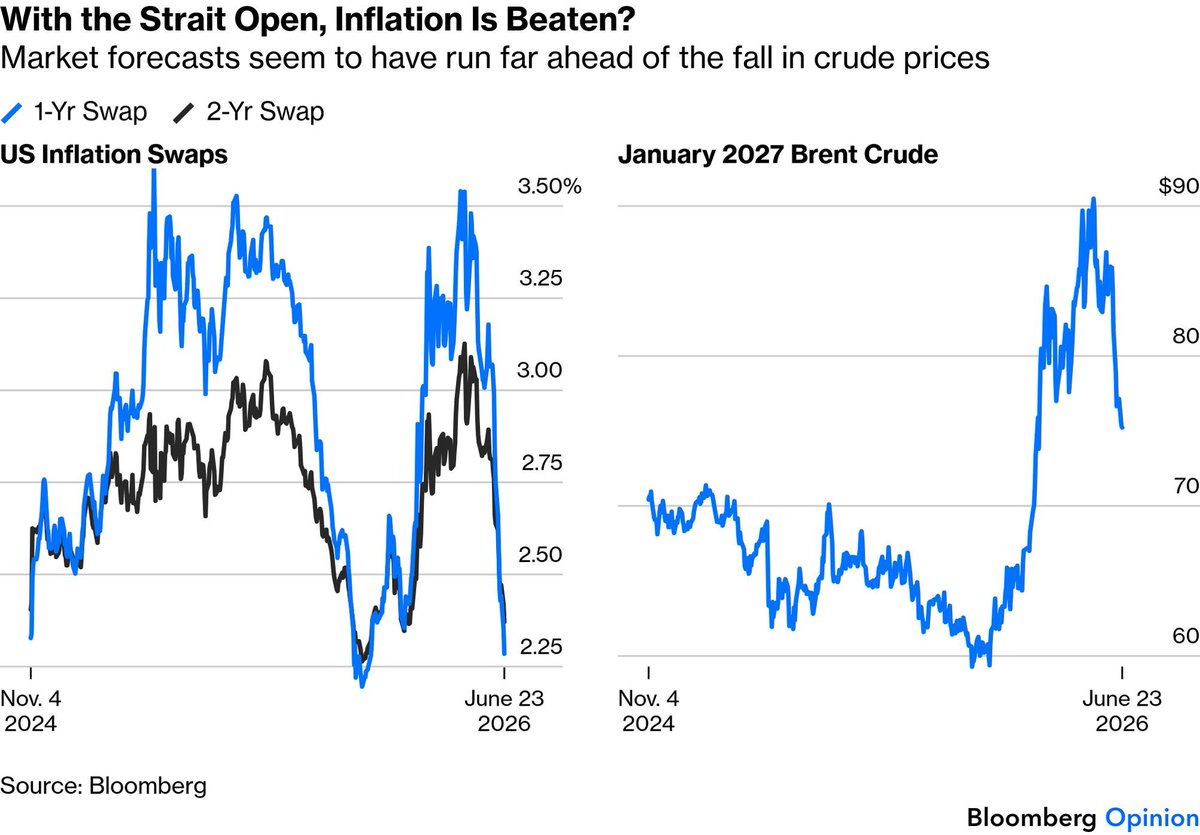
It is now extremely obvious that the goal of the oil price manipulation is to try to drive US borrowing yields down as much as possible. 🇺🇸 https://t.co/kSoFF1Lk9r #OilPrice #USBorrowing #MarketManipulation #US

Every British Prime Minister’s Nightmare: Britain’s “special relationship” with the US has far more to do with American financiers’ willingness to keep borrowing to purchase British government debt than with history, culture, or Britain’s defense needs https://t.co/sYvswNm4tk #UKUSRelations #BritishPolitics #DebtCrisis #GB #US

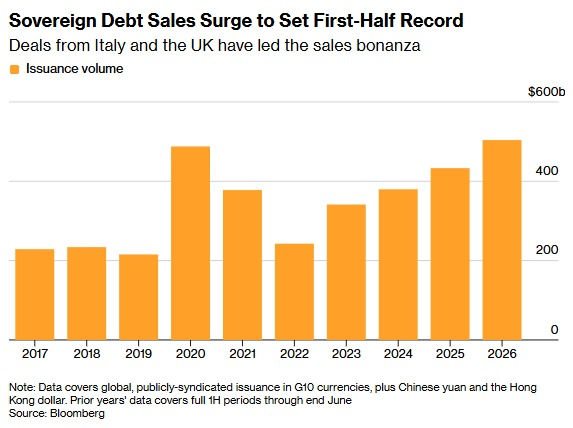
🌐 Governments are borrowing at a record pace. Since the start of the year, sovereign issuers have already raised more than $500 billion in syndicated bond markets, more than during the first half of 2020, at the height of the Covid period. In my view, this is one of the most https://t.co/GbrJ3oemFP #GovernmentDebt #BondMarket #SovereignIssuers #Nospecificcountrycodesarementionedinthetweet.

The goal of the oil price manipulation was being done to suppress US borrowing rates. That no longer appears to be working. 🇺🇸🛢️ #OilPrices #USEconomy #InterestRates #US