BETA nonprofit public democratic european moderated

Search

#Currency

The notion that Russia must hit military and logistics targets in European nations to win the war is gaining currency in Moscow, said Hanna Notte, Eurasia director at the James Martin Center for Nonproliferation Studies and author of a recent book on Russia’s foreign and security #Russia #MilitaryStrategy #EuropeanSecurity #RU #EU

H

Compassion as a Weapon Western civilization is increasingly trapped in a culture of entitlement, where victimhood can become a route to status, privilege, and power. Some elite universities report unusually high disability registrations—e.g., 20%+ at Brown and Harvard and around 40% at Stanford—far above community colleges. Whatever the causes, it raises a troubling question: when systems meant to protect the truly vulnerable become incentives, what happens to everyone else? Rob Henderson describes how accommodations can turn into “status games.” Extra time, special housing, and exemptions can make diagnosis feel like the logical choice, and the lesson travels outward: tomorrow’s leaders in journalism, HR, law, academia, and politics may learn that displaying weakness is rewarded. Research links habitual victimhood displays with traits associated with the Dark Triad (narcissism, Machiavellianism, psychopathy). That doesn’t mean genuine victims are manipulative—it means rewarding victimhood gives manipulators an incentive to enter. In the “virtue game,” grievance becomes currency. Pity can also function as covert power: the weak person gains leverage, while the giver gains moral superiority. When compassion is treated like a currency, it can become a mutually reinforcing racket. The danger isn’t helping the weak. It’s teaching that appearing weak is the surest way to gain power.

H

The Victimhood Economy: Why Young People Prefer Socialism Western civilization is increasingly shaped by entitlement and a culture that rewards displays of victimhood. At elite universities, disability claims have risen: 18% of male and 22% of female undergraduates report a disability, and 54% of non-binary students, with higher rates at some wealthy schools than at community colleges. The issue isn’t genuine disability; it’s what happens when accommodations become status and advantage. Extra time, separate housing, and exemptions can turn diagnosis into leverage. When weakness is rewarded, some will learn to perform it. This matters because today’s students become tomorrow’s institutional elites. If grievance produces rewards, the lesson may spread into journalism, government, HR, academia, and business, letting beneficiaries inherit the power to expand the system. Research on victimhood signaling raises uncomfortable questions: people who habitually emphasize victim status, on average, show higher narcissism, Machiavellianism, and psychopathy—not to say genuinely suffering people are manipulative, but that systems rewarding victimhood create incentives for manipulators to exploit the category. Rob Henderson describes this as a status game: in elite institutions, grievance can become the currency of virtue signaling. For some, the rational strategy is to manufacture grievance and convert it into status. Nietzsche similarly argued that displays of helplessness can become covert power, while pity can create moral superiority for the caregiver. The danger isn’t compassion; it’s a culture that turns suffering into currency and teaches ambitious people that the easiest route to power is to claim they are powerless.

🇯🇵 #BOJ Should Raise Rates at Every Meeting, Ex-Currency Chief Says - Bloomberg https://t.co/b3NbkuNdgf #Japan #InterestRates #Economy #JP

🇯🇵 The yen has just highlighted the limits of FX intervention: the US and Japan massively supported the currency at the end of July, yet less than two weeks later USD/JPY is already back close to 160. 💹 The mechanism is almost perverse. Investors borrow yen at a very low cost, https://t.co/1KavHJmvFd #Yen #Forex #USDJPY #JP #US

As the USD global system goes into meltdown the Europeans hop on the currency multipolarity train. It is the end of the beginning, folks. Strap in. 🎢 https://t.co/rC9I9CjUGe #CurrencyMultipolarity #USDEconomy #GlobalFinance #EU #US

A Crown Instead of the Barracks: An Idea From Outside the Box Could Egypt’s exiled opposition use constitutional monarchy to dismantle the legitimacy of the 1952 coup? By Adham Hasanin Egyptian journalist and political writer, based in the Netherlands To understand what follows, a reader unfamiliar with Egypt needs one basic fact: since 1952, Egypt has never been governed by anyone who did not first wear a military uniform. Gamal Abdel Nasser, Anwar Sadat, Hosni Mubarak, and today Abdel Fattah el-Sisi four men, four eras, one common origin. All rose through the armed forces. All inherited a state built by a coup that year, when a group of officers calling themselves the "Free Officers" overthrew King Farouk I and, within a year, abolished the monarchy altogether and declared a republic. For seventy-three years, the underlying equation has not changed: the army rules, power passes from one officer to the next, and legitimacy is drawn from the barrel of a gun rather than the ballot box. Every conceivable form of opposition has been tried legal parties and banned ones, Islamist movements, liberal and leftist coalitions, the 2011 popular uprising, and the 2013 elections whose result was overturned by force within a year. All of them hit the same wall: a military institution that reproduces itself under different names, while the core of the system remains untouched. So what if the problem, all along, has not simply been who rules, but the constitutional framework that makes military rule possible in the first place? And what if the answer lies not in swapping one president for another, but in dismantling the underlying equation itself, through a framework Egyptian opposition movements have never seriously tried: a purely ceremonial constitutional monarchy, on the model of Belgium, the Netherlands, or Spain where the head of state becomes a symbol above the political fray, while the army is permanently expelled from politics and returned to its barracks. This is not a call to revive a particular family, nor nostalgia for a golden age that never quite existed. It is a proposal for a political and strategic tool that has not yet been used in the intellectual arsenal of Egypt’s opposition in exile a tool that deserves serious discussion, regardless of whether it is ever literally realised or simply serves to expand the boundaries of what is politically thinkable. I. Why 1952, Not 2013 or 2011, Is the Root The strategic error made by most Egyptian opposition movements from the Muslim Brotherhood to the April 6 Youth Movement to the various civil opposition parties has been treating each political crisis as an isolated case: Mubarak was corrupt and had to be toppled; Sisi staged a coup that must be condemned; the interim military council was a transitional phase to be endured. This piecemeal approach treats the symptoms while leaving the original illness untouched. That original illness is the very structure of legitimacy established by the coup of 23 July 1952. The Egyptian republican system, from Nasser to today, has never built its legitimacy on a genuine democratic social contract. Instead, it has rested on a fixed trinity: the rhetoric of "revolution against feudalism and colonialism," charismatic individual leadership, and military protection of the regime framed as the guarantor of stability. This trinity has repeated itself from Nasser to Sadat to Mubarak to Sisi, with only cosmetic variations. Each new president was never a break from the system he was its continuation. When the opposition says "let us return to the constitutional framework that preceded the coup," it is not criticising a particular policy. It is declaring that the legal foundation of everything that came after 1952 was illegitimate from the start. Here lies the rhetorical power of "returning to the pre-1952 order": it does not merely demand swapping one ruler for another. It withdraws historical legitimacy from the entire republican military system including today’s regime, which draws its own declared legitimacy from that same "1952 legacy." II. Why a "Ceremonial Crown," Not "the Return of a Ruling Family" Here is the most important distinction anyone advocating this idea seriously must grasp: the project does not rest on restoring any particular individual from the Muhammad Ali dynasty, nor on nostalgia for King Farouk or his ancestors. The real power of the idea lies in the constitutional form, not in the person who happens to sit on the throne. Three successful European democracies illustrate the model clearly. Belgium, where King Philippe is a purely constitutional symbol with no real executive power, while the state is run through an elected parliament and a complex coalition government reflecting the country’s linguistic and political diversity. The Netherlands, where King Willem-Alexander formally opens the parliamentary year and signs laws, but where actual decision-making rests with the prime minister and the elected parliament. And Spain, where the king represents symbolic continuity of the state above party politics, while the military and security services answer entirely to civilian authority a transition achieved after the death of the dictator Francisco Franco in 1975, when King Juan Carlos I voluntarily relinquished the extensive executive powers he had inherited and backed free elections, most dramatically in February 1981, when he personally ordered the armed forces to remain loyal to the constitution during an attempted military coup, causing it to collapse within hours. The common thread across these three models is not "the presence of an ancient royal family." It is the principle of separating symbol from power. The monarch in these countries does not rule; he represents. He issues no political decisions; he provides the continuity and symbolic stability that allows party political competition to revolve beneath him, without every transfer of power becoming an existential crisis of legitimacy. This is precisely what Egypt’s military republican system lacks: a neutral mechanism for guaranteeing state continuity that does not depend on the person of the ruler or his security apparatus. When Egypt’s military-republican president is absent, it is always the army that fills the vacuum, because it is the only institution built to be the "guarantor of stability." Under a ceremonial monarchical model, by contrast, it is the king not the army who represents that symbolic guarantee, genuinely opening the door to removing the military institution from the political equation altogether. III. Egypt’s Standing Under the Monarchy: An Honest Reckoning, Not Blind Nostalgia For a Western reader with little prior knowledge of Egypt’s monarchical period (1922–1952), it helps to know this: Egypt was nominally independent under its own king from 1922, but Britain retained enormous informal control over the country’s foreign policy, military bases, and the Suez Canal throughout the period a reality that shaped everything that follows. Any honest invocation of "Egypt’s standing under the monarchy" must avoid the trap of mythologised nostalgia that many advocates of this idea fall into. Egypt in that era was no lost paradise, and any honest article must say so plainly. The Egyptian pound, for instance, often invoked as a symbol of "national currency strength" in that period, was not strong because of independent Egyptian monetary policy. It was pegged to the British pound sterling as part of Egypt’s complete colonial financial dependency until 1947, with Egypt exercising no independent oversight of its own currency whatsoever. The pound’s strength, in other words, was not a sovereign Egyptian achievement it was a reflection of British imperial power ruling Egypt from behind the throne. But this does not mean Egypt lacked a genuine regional standing worth studying. Cairo, in the 1930s and 1940s, was the undisputed cultural capital of the entire Arab world: the Egyptian film industry produced more than half of all Arabic-language cinema; its theatre scene, led by figures like Youssef Wahbi and Naguib al-Rihani, and its music, with Umm Kulthum and Mohammed Abdel Wahab, set the standard across the region; Cairo University was the first modern university in the Arab world; and the Egyptian press was the reference point for Arab public opinion from the Atlantic to the Gulf. Cairo was, quite simply, to the Arab world what Paris was to Francophone Europe: an unrivalled centre of cultural and intellectual gravity. This standing was not necessarily a product of monarchy itself, so much as a product of a relative space of political and press pluralism that allowed Egyptian civil society to flourish, despite all the flaws of the political system and the interference of both palace and occupier. The lesson here is not "bring back the king and the standing will return." It is: when even a limited margin of civic freedom exists, Egypt flourishes culturally and intellectually almost by its own nature. And that margin is precisely what has been entirely absent across the past seven decades of unchallenged military rule. IV. What Reform Would Actually Require Not Repeating the Old Mistakes Any serious advocacy of this model must include, even briefly, a clear vision for avoiding the flaws of the old monarchical system itself otherwise the proposal collapses into simply replacing one form of authoritarianism with another wearing a different crown. First, the armed forces would need to be placed fully under a civilian ministry of defence, with its budget subject to transparent parliamentary oversight the exact opposite of its current status as a state-within-a-state, and equally opposed to its role under the monarchy, when it often served as an instrument of British influence. Second, a judiciary fully independent of both palace and government alike, unlike the old model, which saw direct royal interference in political life as when King Fuad I dismissed the elected government of Prime Minister Saad Zaghloul’s successor, Mustafa al-Nahhas, in 1928, in one of the clearest "constitutional coups" in modern Egyptian history. Third, a parliament that genuinely represents the people rather than landowners and the aristocracy, as was the case before 1952, when membership in the Senate was effectively conditional on the ability to pay land taxes meaning political representation was, by law, restricted to the wealthy. Fourth, genuine economic sovereignty, with a truly independent national currency rather than one pegged to a foreign power’s currency, unlike the historical dependency of the Egyptian pound on sterling. These four principles are enough to clarify that the project on offer is not a literal "return to the past," but a borrowing of the constitutional form (symbolic monarchy) combined with an explicit rejection of its old substance (colonial dependency, palace interference, parliamentary feudalism). V. The Role of Egyptian Movements in Exile: Between Goal and Instrument This raises the most practical question of all: how might Egypt’s opposition abroad actually adopt this idea, and in what capacity? The honest answer is that the power of this proposal does not necessarily lie in its literal fulfilment, but in its dual strategic function. On one hand, it can be advanced as a genuine political goal adopted by broad coalitions of Egyptian movements coalitions that might include Islamists, liberals, leftists, and traditional monarchists, united around a single shared premise: rejecting the legitimacy of the 1952 order and everything that followed from it, even if they later disagree over the precise final shape of the state. On the other hand and this matters more in practice the idea can be deployed as a rhetorical instrument of pressure to widen a Egyptian political debate currently trapped between two false choices: "continued military rule" or "no alternative, chaos awaits." When the opposition puts forward a clearly defined third model a European-style constitutional monarchy it breaks this false binary and opens new intellectual space in Egyptian public discourse, even if the project is never realised in its literal form. This kind of "leverage idea" is common in the history of political movements worldwide: it is not necessarily proposed to be fulfilled immediately in full, but to redraw the boundaries of the politically possible, and to force the existing regime to defend its legitimacy rather than simply assume it. Conclusion: An Invitation to Debate, Not a Ready-Made Prescription This article does not claim that restoring a monarchical form would magically resolve Egypt’s chronic crisis of legitimacy, nor does it ignore the immense difficulties facing any transformative project under a military institution as economically and securitywise entrenched as Egypt’s is today. But it raises a question that deserves serious debate among Egypt’s opposition in exile, rather than automatic dismissal simply for being unfamiliar: Has the Egyptian opposition exhausted every available tool for dismantling the legitimacy of 1952, or has it remained trapped in the same old binary swapping one ruler for another while the framework that makes military rule possible remains untouched? The idea is on the table now, not as a finished solution, but as an overdue invitation to think outside the box.

The US dollar could lose its reserve currency status in 2.5 years. (translated)

This account has been hacked! @mini_razdan10 !!!! Dont go on any link asking you to vote for them! Next step will be Crypto Currency posts and I will be blocked. #Hacked #CryptoScam #SecurityAlert #Nospecificcountrycodesarementionedinthetweet.

In other words, first the US engaged in secret currency manipulation and then blames the victim for saying anything about it. #CurrencyManipulation #USPolicy #EconomicJustice #US

For example, the military bases the US has scattered all over the world are required for the reserve currency. They naturally may also have more sinister purposes, but reserve currency is one of the main reasons behind the now-failing military hegemony. #ReserveCurrency #MilitaryHegemony #USMilitary #US

Trust determines the strength of a currency. With a single-county-currency, this arises from trust in the economy and the government. With a reserve currency, from the military and financial empire supporting it. Lose either, lose all. Do not go assuming that losing the #Currency #Trust #Economy #Thetweetdoesnotmentionanyspecificcountriesbynameorreferencethemindirectly.Therefore #therearenocountrycodestoreturn.

On May 11, 2024, during the first major currency tremors of Japan, I warned what to expect. https://t.co/4P2TSga9yQ #Japan #CurrencyTremors #FinancialWarning #JP

This account has been hacked! @Ashoke_Raj Don't click on any links and be prepared to see Crypto Currency posts coming up ! Stay alert! #Hacked #StayAlert #CryptoScam #Therearenospecificcountrymentionsinthetweetprovided #sotheresponseis:

Under Modi, India’s economic growth is collapsing, the currency is in free fall, foreign investors are stampeding out, hunger is growing, more people are dying without medical care, public examinations are unraveling, graduates are struggling to find jobs https://t.co/6rdHyQ6EKx #ModiFail #IndiaEconomy #PublicHealth #IN

🇺🇸 Sentiment on the #dollar, meanwhile, has been growing more bullish - Bloomberg *Speculative traders held some $43.3 billion in positions that stood to benefit from a stronger US currency as of July 21, according to CFTC data compiled by Bloomberg. That is up from about $39 https://t.co/rQbF9TLyGK #Dollar #Bullish #Forex #US

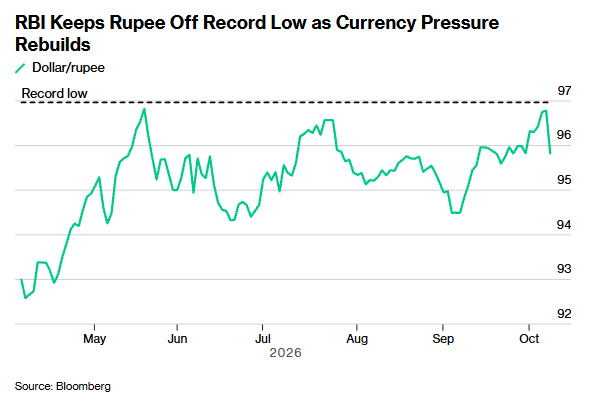
🇮🇳 #India | #RBI Intervenes to Support Rupee as Currency Nears Record Low – Bloomberg https://t.co/uZTYNwItiV https://t.co/O9We3HT01p #India #RBI #Rupee #IN

New $1 coin featuring Trump in production at US Mint, treasury says — Federal law bars living presidents from appearing on US currency https://t.co/BzOa60QmHZ #TrumpCoin #USMint #CurrencyLaw #US

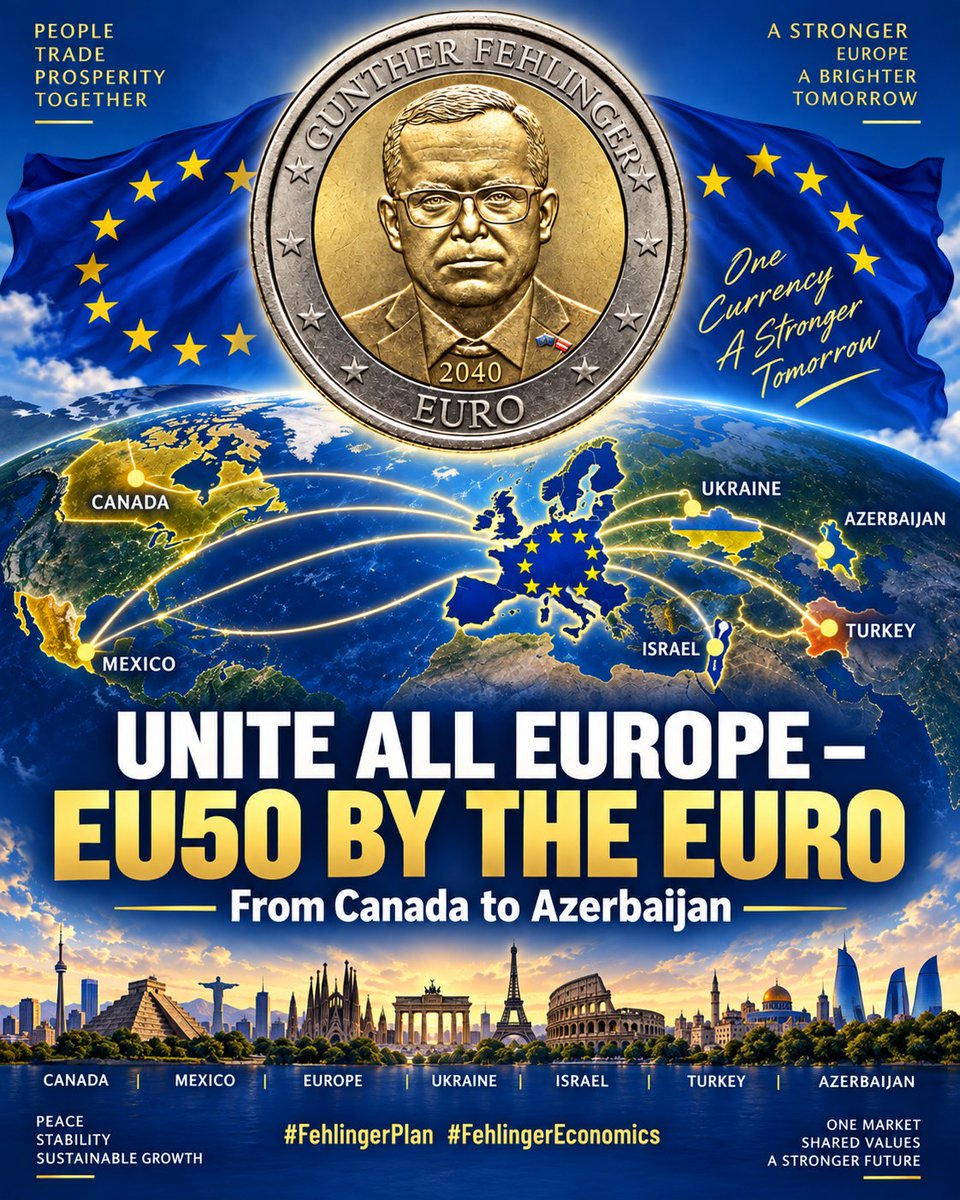
President Erdoğan, If Türkiye wants to move closer to the European Union and eventually join the Single Euro Payments Area (SEPA), consider strengthening monetary stability by pegging the Turkish lira to the euro. A stable exchange rate would help reduce currency volatility, https://t.co/nLiXx3lYh6 #Türkiye #Euro #MonetaryStability #TR #EU