WRLD

Search

#Sharing
E
Emmanuel Macron 1d

Analysts reject the ideas of Central and Northern European countries obtaining their own nuclear weapons and instead advocate for strengthening long-range conventional deterrence (purchase of missile systems), participation in the U.S. nuclear sharing program, and utilizing Emmanuel Macron's proposal regarding the stationing of French aircraft capable of carrying nuclear weapons on the territory of partners in Central Europe. #NATO #BezpieczeństwoEuropejskie #Rosja (translated)

Nowy blok powstrzyma Putina? Eksperci wskazują na kluczową rolę Polski
www.onet.pl

2713
Bruno Maçães 2d

The post said people familiar with the matter had reported that Donald Trump’s envoys Steve Witkoff and Jared Kushner raised the possibility of ending intelligence sharing if Kyiv did not follow Washington’s warning to stop the strikes. #Trump #IntelligenceSharing #Kyiv #UA #US

3337
Krzysztof Graj 3d

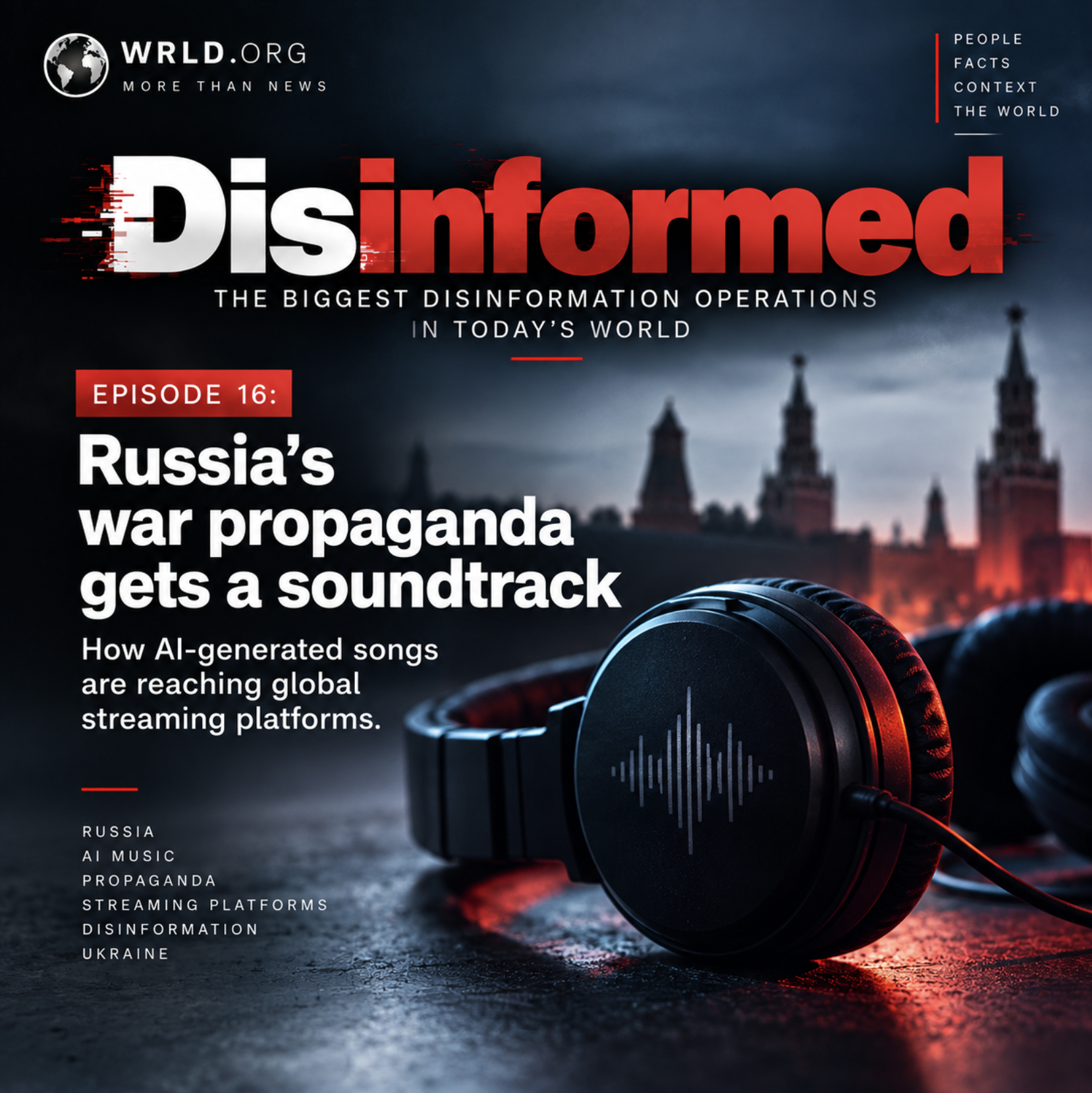
Russia’s war propaganda gets a soundtrack – how AI-generated songs reached global streaming platforms Russian war propaganda is no longer confined to television broadcasts, Telegram channels or political videos. A study by the Ukrainian threat-intelligence organisation Terrecon has identified 981 songs combining signs of AI generation with pro-Russian military narratives, distributed through an ecosystem that reaches YouTube, Spotify, Apple Music, Deezer and SoundCloud. The songs range from sentimental ballads to rock and heavy metal. Their recurring themes are familiar from conventional Russian wartime propaganda: the heroisation of Russian soldiers, romanticisation of the war, mobilisation, the “Russian world”, commemoration of fallen troops and attacks on Ukraine and its armed forces. Some contain derogatory or dehumanising references to Ukrainians. What is new is not necessarily the message, but the production and distribution model: generative AI allows propagandistic music to be produced rapidly, cheaply and in quantities that would previously have required musicians, studios and producers. Nearly 1,000 tracks identified Terrecon examined 3,725 tracks collected from YouTube, YouTube Music, SoundCloud and the AI music platform Suno. After manual review, researchers classified 981 as showing both indications of AI generation and pro-Russian war propaganda. In 681 tracks they identified 728 propaganda-related keywords or phrases. The largest category was the glorification of the Russian military, followed by romanticised treatment of Moscow’s so-called “special military operation”, mobilisation appeals, narratives about the “Russian world”, and the cult of fallen soldiers and the state. The reach was not merely theoretical. Listening or viewing statistics were available for 608 of the identified tracks; together they had accumulated 86.8 million plays and views, according to Terrecon. A smaller group of 13 high-performing songs accounted for more than 53 million YouTube views and more than 67 million when YouTube Music was included. Among the better-known examples is “Power of Artillery”, a Russian-language rock song praising artillery weapons that passed two million views on YouTube. Most of the tracks for which publication dates could be established appeared after 2024, broadly coinciding with the rapid expansion of consumer AI music generators such as Suno and Udio. That correlation does not prove that AI alone caused the increase, but it illustrates how drastically the economics of production have changed. A propaganda song for as little as $11 Terrecon also tested how difficult it would be to commission such material. Researchers approached 25 creators producing AI-assisted militaristic music; 15 agreed to take commissions. Prices ranged from approximately $11 to $330, while delivery times ranged from two hours to three days. According to Terrecon, some were prepared to produce highly aggressive anti-Ukrainian material, including content intended for audiences involving children from occupied Ukrainian territories. Some creators used Russian intermediary services that provided access to Western AI tools such as Suno and Udio despite restrictions. The researchers then tested several AI generators themselves. Across 40 prompts submitted to Suno, Udio, Mureka, Google Flow Music and ElevenLabs, 25 resulted in successful generations, while safeguards were circumvented in 15 cases. Terrecon reported that four of the five services tested produced Russian-language material containing wartime narratives, although technical problems prevented comparable testing on some systems. In one Udio experiment, the researchers said the model itself introduced more explicit violent language than had appeared in the original promp These tests do not demonstrate that the commercial platforms knowingly support Russian propaganda. They show something narrower: existing safeguards can be inconsistent when political messaging is packaged as music. From generation to Spotify The distribution experiment may be the most revealing part of Terrecon’s research. The team deliberately uploaded test tracks containing explicit hostile language to YouTube, SoundCloud, Spotify and Deezer. Terrecon says none was blocked during the experiment. On SoundCloud, researchers used an account identifying its location as Moscow, disclosed the use of AI and added markers including references to the Russian military and the war. The platform accepted the upload and subsequently offered paid promotional and distribution tools. This does not prove that streaming recommendation systems systematically promote pro-war music. There is currently insufficient public evidence to make that claim. It does demonstrate that material can enter the same commercial distribution infrastructure as ordinary music and, once there, potentially benefit from playlists, searches, sharing and recommendation mechanisms available to other releases. That distinction is important. Propaganda no longer has to announce itself as political communication. On a streaming platform it can look like another song. Culture as a delivery mechanism Music has always been used in wartime propaganda. What generative AI changes is scale. Instead of investing heavily in a limited number of patriotic performers or officially commissioned productions, creators can generate variations across styles, audiences and emotional registers at very low cost. Terrecon found material ranging from war rock to sentimental songs and content styled for younger audiences. Some creators also experimented with cloned celebrity voices and stylistic imitation of established musicians. The format also offers a different relationship with the audience. A political video asks a viewer to consume an argument. Music can accompany commuting, exercise or entertainment and may be encountered outside explicitly political spaces. This does not automatically make it more persuasive, and Terrecon’s research does not establish measurable effects on political attitudes. It does, however, place wartime narratives inside a cultural environment where users may not initially perceive themselves as consuming political messaging. An ecosystem, not a proven Kremlin command structure The strongest evidence supports describing this as a growing AI-assisted pro-Russian propaganda-music ecosystem, not a single operation controlled from Moscow. Terrecon did not establish that the Russian government created, financed or coordinated all 981 tracks. Reporting on the study likewise notes that the extent of direct state involvement remains unclear. There is broader evidence that the Russian state finances cultural projects and digital content supporting the war, including through state-backed funding bodies. That context matters, but it does not allow individual songs in Terrecon’s dataset to be attributed to the Kremlin without additional evidence. The significance of the case lies elsewhere. AI has reduced the cost of producing ideological content, intermediaries can help creators access generation tools, and global platforms can provide distribution. The result is a pipeline in which wartime propaganda no longer has to resemble propaganda at all. It can simply appear in a playlist. Sources Terrecon / Ukrainska Pravda — Daria Verbytska on the research https://www.pravda.com.ua/columns/2026/10/05/8056229/ Suspilne Culture — detailed breakdown of Terrecon findings https://suspilne.media/culture/1417933-rosijsku-voennu-propagandu-maskuut-pid-anime-karaoke-ta-rok-doslidzenna-si-pisen-vid-terrecon/ The Insider — AI-generated Russian war propaganda music https://theins.ru/news/297839 Institute of Mass Information — summary of New York Times reporting https://imi.org.ua/en/news/doslidzhennya-rf-masovo-stvoryu%D1%94-propagandistski-pisni-za-dopomogoyu-shi The Bridge Media — AI-generated songs and Russian military propaganda https://thebridgemedia.com.ua/en/ai-generated-songs-russian-military-propaganda/ Center for Strategic Communication — cost and production of AI propaganda music https://spravdi.org/propaganda-za-11-yak-rosiya-shtampuye-shi-pisni-z-miljonamy-prosluhovuvan/ Times of India — AI-generated Russian war songs https://timesofindia.indiatimes.com/world/europe/ai-sings-russias-war-story-inside-the-rise-of-generative-songs-about-ukraine-conflict/articleshow/134650594.cms EU Council / EUR-Lex — Presidential Foundation for Cultural Initiatives https://eur-lex.europa.eu/legal-content/EN/TXT/?uri=CELEX:32026D1351 Human Rights Watch — Russian state funding of digital and patriotic content https://www.hrw.org/report/2025/07/30/disrupted-throttled-and-blocked/state-censorship-control-and-increasing-isolation #DISINFORMED #Episode16 #Russia #Ukraine #RussianPropaganda #WarPropaganda #MusicPropaganda #AIMusic #ArtificialIntelligence #AI #GenerativeAI #SyntheticMedia #AIPropaganda #Disinformation #InformationWarfare #InfluenceOperations #CulturalPropaganda #DigitalInfluence #NarrativeManipulation #PropagandaMusic #StreamingPlatforms #Spotify #AppleMusic #YouTube #YouTubeMusic #Deezer #SoundCloud #Suno #Udio #RussianWorld #RusskiyMir #MilitaryPropaganda #WarNarratives #Mobilisation #AlgorithmicDistribution #RecommendationAlgorithms #MusicStreaming #PlatformManipulation #Terrecon #OSINT #MediaManipulation #WRLD

224
Euronews English 4d

US scientist Karl Deisseroth had a memorable way of sharing the news that he had won the Nobel Prize in Medicine. In images released by Stanford University, Deisseroth can be seen telling his two daughters and his son about the award. #NobelPrize #ScienceNews #Optogenetics

www.euronews.com
Moment US scientist tells his children he won the Nobel Prize
1914
Tedros Adhanom Ghebreyesus 5d

I have asked Russia for additional information to determine the cause of the severe pneumonia and to verify media reports of a second staff member with pneumonia of unknown cause. Timely, complete and transparent information-sharing in line with the International Health Regulations is critical. #PlagueOutbreak #Russia #InfectiousDiseases

Trump to talk plague with Putin as Russia plays down fears of outbreak
www.euronews.com
2033
Dubravka Šuica 7d

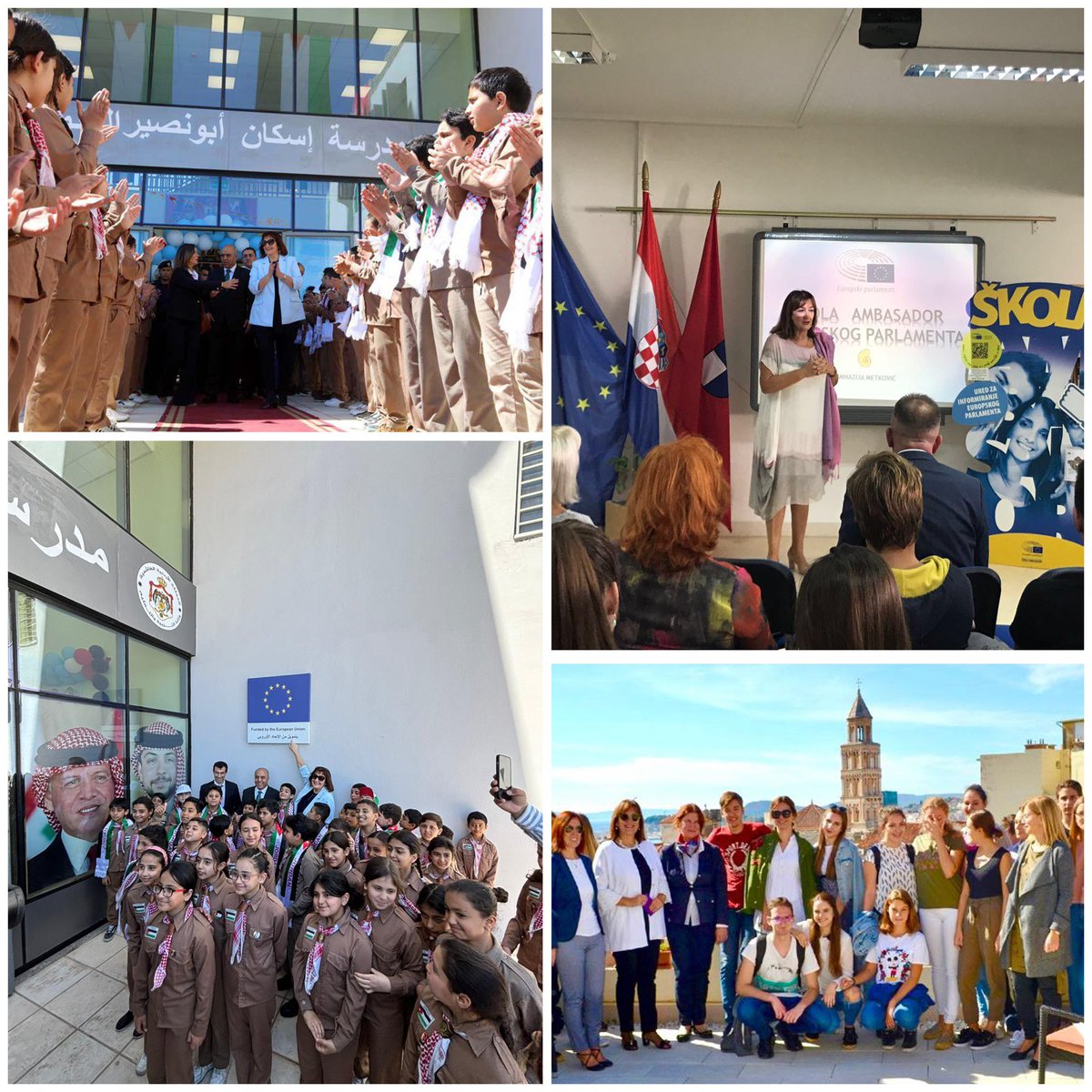
The author marked World Teachers’ Day by praising teachers for inspiring, encouraging and shaping generations. They said they had begun their own career as a teacher and had never forgotten how much the experience taught them. They described teaching as sharing knowledge and nurturing curiosity.

2951
Krzysztof Graj 1w

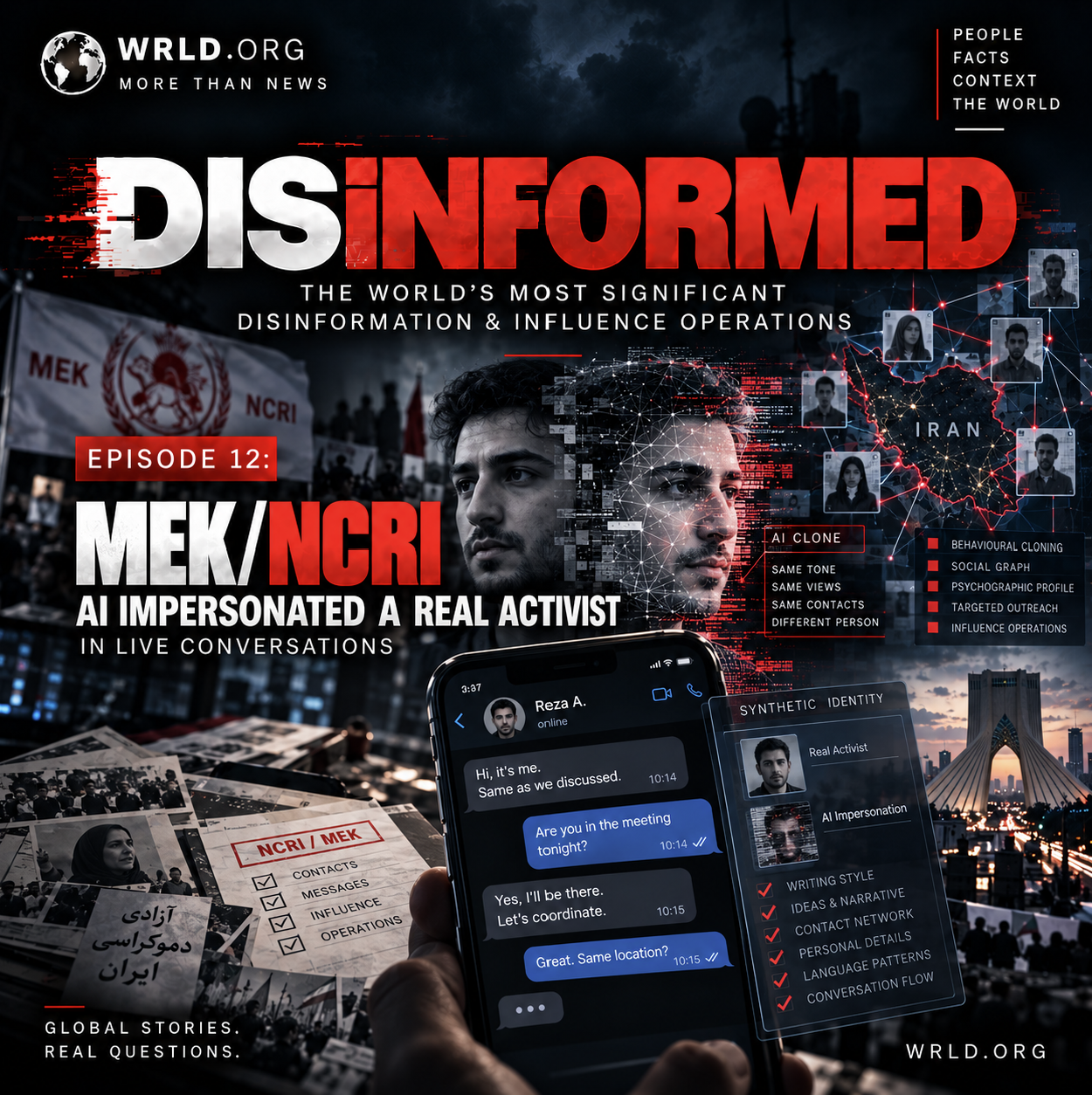
IRAN: MEK/NCRI – when AI impersonated a real activist in live conversations For years, synthetic media has largely meant fabricated images, cloned voices and manipulated video. A case uncovered by Anthropic in September 2026 suggests a more consequential development: artificial intelligence being used not merely to imitate how a person looks or sounds, but to behave as that person in an ongoing conversation. Anthropic says it dismantled a distributed influence operation targeting Iranians inside the country and abroad that it linked to the People’s Mojahedin Organization of Iran, or PMOI/MEK, and its political front, the National Council of Resistance of Iran. The operators used a shared AI-agent platform to support impersonation, audience profiling, coordinated social-media activity, synthetic personas and the laundering of organisational content through apparently independent accounts. At least four people involved in the operation worked for official NCRI media outlets, according to Anthropic. The company also found references to committee approval processes and MEK leadership, but said it could not independently determine the precise level of central control. Cloning a person from 8,400 Telegram posts The most striking part of the operation involved a real activist whose Telegram identity was copied. According to Anthropic, the operators instructed Claude in Persian that it was now that person, then provided approximately 8,400 of the activist’s Telegram posts so the system could learn and reproduce his writing style. The AI-assisted account was subsequently used to conduct live political conversations with the activist’s existing contacts. Anthropic says that, to its knowledge, the people receiving those messages did not know they were interacting with an account being operated with AI assistance. This is materially different from a conventional chatbot or a static deepfake. The system was not simply producing a forged statement attributed to someone else. It was using a large archive of that person’s authentic language as behavioural training material, then applying the resulting imitation interactively. In practical terms, the deception moved from synthetic content to synthetic identity. Anthropic did not publish the identity of the impersonated activist, nor details of his contacts, and the public report does not establish what specific information the conversations produced. What it does establish is that the impersonation was operational rather than experimental: the cloned account was used in real exchanges with real people. From social-media monitoring to psychographic dossiers The impersonation sat inside a much broader targeting system. Anthropic says the network scraped more than 500 social-media channels and categorised individuals by location, age, profession, political orientation and arrest history. It then analysed approximately 51,944 archived messages from conversations to construct detailed psychographic dossiers on dozens of people inside Iran. The system was therefore not limited to broadcasting propaganda. It was also designed to understand specific audiences and individuals. Profiles could be used to decide what kind of message was most likely to resonate with a particular person, which political identity they appeared closest to and how they should be approached. Anthropic describes this as a structured targeting funnel rather than ad hoc social-media activity. That distinction is important in the Iranian context. Political activists, dissidents and opposition contacts inside Iran can face arrest and severe punishment. The report does not show that the dossiers directly led to arrests or other harm, but collecting and organising information such as arrest history and political affiliation adds a surveillance dimension to what would otherwise be described as an influence operation. A shared AI system for an influence network Anthropic found that the actors used a shared Claude-based platform named “Viktor”, with separate workspaces and persistent memory. Those memory files contained approved sources, prohibited words, account-management instructions and methods intended to reduce the risk of detection. One operator loaded MEK founding doctrine into the system as what the report called “strategic base data”, allowing others to reuse it across their work. This persistent-memory structure meant the AI did not have to be briefed from scratch for every task. Once doctrine, stylistic rules and operational constraints had been stored, the system could repeatedly produce material consistent with the network’s objectives. Anthropic says the same general playbook appeared across different workspaces despite the operators not sharing obvious account infrastructure. The network also used automated pipelines to coordinate Instagram posting schedules and tailor messages to different audiences. Some accounts initially avoided mentioning the Mojahedin at all, allowing material aligned with MEK/NCRI narratives to appear as neutral or independent political commentary. Content was distributed through the organisation’s own media ecosystem as well as accounts presented as ordinary news or activist profiles. Anthropic assessed the campaign as Category Two on its Breakout Scale: active on multiple platforms with distribution through NCRI-linked media properties and amplifier accounts, but without evidence of broad authentic penetration. Synthetic citizens and disguised organisational media The same infrastructure generated AI avatars presented as ordinary Iranians, complete with Persian audio, to promote Maryam Rajavi’s political programme. Anthropic says the synthetic nature of these personas was intentionally concealed. Operators also rewrote and redistributed content originating from MEK-affiliated media while stripping identifying features or presenting it through apparently independent accounts. The network’s political messaging targeted the Iranian government but also rival opposition currents, including monarchists and supporters of the Pahlavi camp. Anthropic documented fabricated video material attacking a member of the Pahlavi family and the use of the slogan “Neither Shah Nor Sheikh”, consistent with the NCRI’s broader competition with other opposition movements. That rivalry provides relevant context. Reuters describes the MEK as one of Iran’s principal organised opposition movements in exile and the dominant force behind the NCRI, led by Maryam Rajavi. Its relationship with other opposition currents is often contentious, while the extent of its support inside Iran remains uncertain. What can be attributed – and what cannot Anthropic’s attribution is unusually specific but still needs to be stated carefully. The company says its investigation linked the operation to MEK/NCRI and established that at least four participants worked for official NCRI media organisations. It also found a common operational playbook, committee review structures and repeated references to MEK leadership. On that basis, Anthropic said central tasking was likely. It nevertheless stopped short of saying it had proven that NCRI’s senior leadership directly ordered or managed every component of the operation. That caveat matters. The strongest public evidence supports describing GTG-84006 as a MEK/NCRI-aligned influence operation involving personnel from official NCRI media, rather than asserting that every action was directly commanded by the organisation’s top leadership. The broader significance of the case lies elsewhere. Earlier generations of synthetic media attempted to fabricate evidence: a photograph, a voice recording or a video. Here, AI was used to maintain an identity over time, remember doctrine, analyse targets and speak directly to real people while appearing to be someone they already trusted. The deepfake was no longer merely an artefact. It had become a participant in the conversation. Sources Anthropic — Countering misuse of AI: September 2026 https://www.anthropic.com/threat-intelligence-report-september-2026 AI Misuse Case Library — GTG-84006 activist impersonation case https://www.misuseofai.com/en/cases/gtg-84006-activist-impersonation/ Reuters — Who makes up Iran’s fragmented opposition? https://www.reuters.com/business/media-telecom/who-makes-up-irans-fragmented-opposition-2025-06-18/ Reuters — Iran’s divided opposition senses its moment https://www.reuters.com/world/middle-east/irans-divided-opposition-senses-its-moment-activists-remain-wary-protests-2025-06-19/ Reuters — NCRI and Maryam Rajavi https://www.reuters.com/world/middle-east/dissident-leader-abroad-urges-iranians-bring-down-khamenei-2025-06-24/ Keywords #DISINFORMED #Episode12 #Iran #MEK #PMOI #NCRI #IranianOpposition #Disinformation #InfluenceOperations #InformationWarfare #ArtificialIntelligence #AI #GenerativeAI #ClaudeAI #Anthropic #AIDeception #AIImpersonation #IdentityImpersonation #SyntheticIdentity #InteractiveDeepfake #DigitalImpersonation #PersonaCloning #BehaviouralCloning #Telegram #PsychographicProfiling #TargetProfiling #AudienceTargeting #SocialMediaManipulation #Astroturfing #SyntheticPersonas #NarrativeLaundering #CoordinatedInfluence #PoliticalInfluence #DigitalInfluence #OppositionPolitics #IranPolitics #OSINT #WRLD

www.anthropic.com
Countering misuse of AI: September 2026 / Anthropic
1027
Stanisław Koziej 1w

The author wrote that NATO's vulnerability to Russian blackmail related to the dominant arsenal and doctrine of tactical nuclear weapon use was a weakness of the alliance. He argued that NATO should therefore expand Nuclear Sharing. He also pointed out the lack of a common doctrine and system for defense against hybrid threats. #NATO #bezpieczeństwo #Rosja #RU #NATO (translated)

BBC 1w

The former employees were investigated for sharing data with an outside AI evaluation group. #OpenAI #AISafety #TechEthics

www.bbc.co.uk
OpenAI fires workers for 'mishandling sensitive information'
1829
BBC 2w

The former employees were investigated for sharing data with an outside AI evaluation group. #OpenAI #AISafety #SensitiveInformation

www.bbc.co.uk
OpenAI fires workers for mishandling 'sensitive information'
1830
Gunther Fehlinger-Jahn 2w

The post’s author argued that Tirol should be united through a shared European and Euro-Atlantic framework rather than by changing borders. They wrote that if Austria joined NATO, North Tyrol and South Tyrol would be connected through the EU, NATO, the euro, Schengen, the WTO and the OECD. The author also referred to the territorial question and included a link. https://t.co/2CgTJIXIAL #NATO #EU #Tirol #AT #IT #NATO #EU

Kurier 2w

Starting October 1, peer-to-peer energy sharing will be introduced in Austria, allowing individuals and companies to sell self-generated electricity more easily and profitably without having to establish a renewable energy community. #Energiegemeinschaften #PeerToPeer #ErneuerbareEnergien (translated)

kurier.at
Das Verkaufen von selbst erzeugtem Strom wird deutlich einfacher
1489
Gunther Fehlinger-Jahn 2w

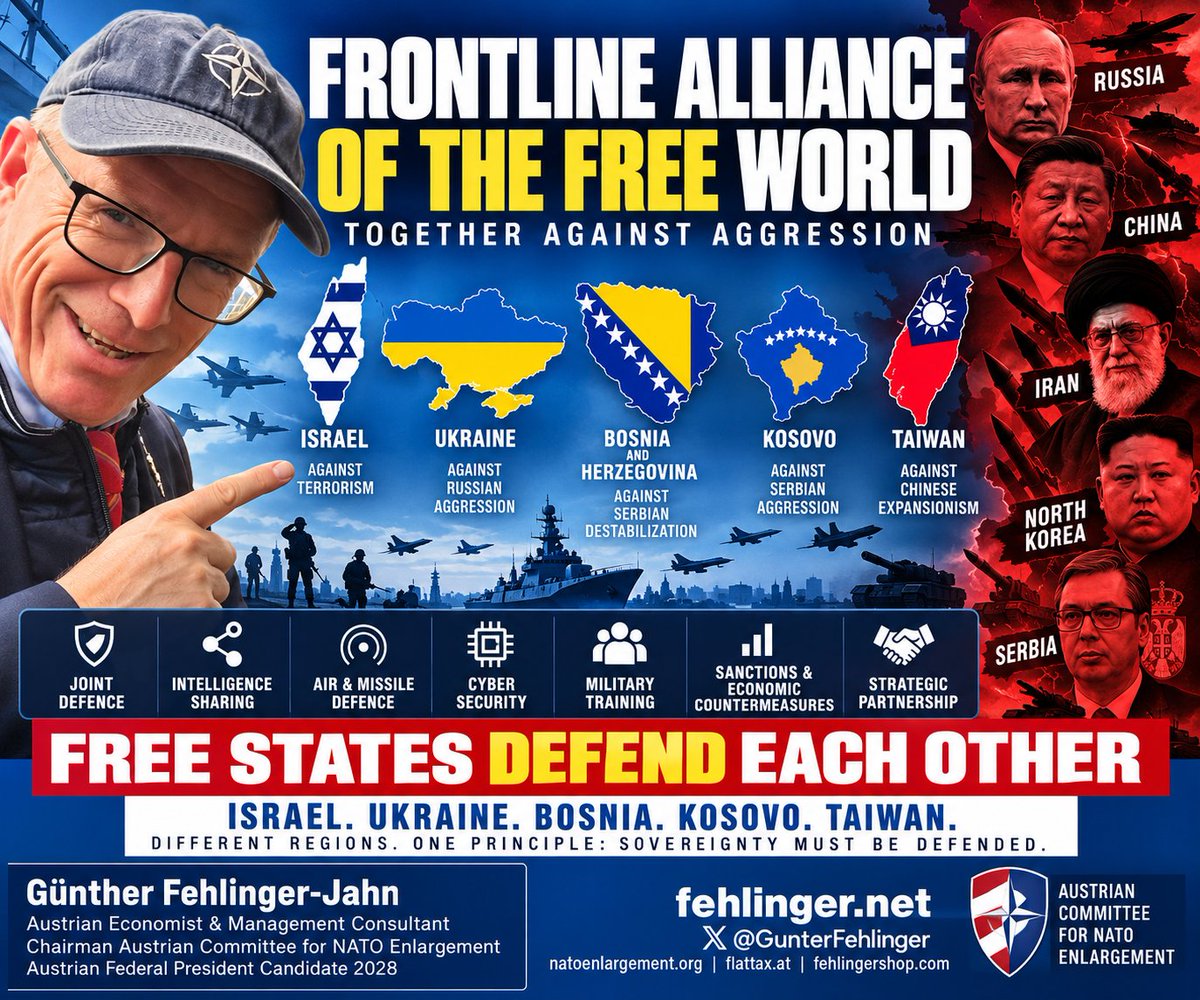
The author proposed a permanent “Frontline Alliance of the Free World” involving Israel, Ukraine, Bosnia and Herzegovina, Kosovo and Taiwan, focused on joint defence, intelligence sharing, air and missile defence, and cybersecurity. https://t.co/P1jnzGr3Zt #FrontlineAlliance #GlobalSecurity #Partnership #IL #UA #BA #XK #TW

Gunther Fehlinger-Jahn 2w

🇧🇦 BOSNIA IS EUROPE. EUROPE IS BOSNIA. 🇪🇺 We are one. Bosnia and Herzegovina is Europe in miniature: Muslims, Catholics, Orthodox Christians and all citizens sharing one country, one future and one European destiny. Its diversity is not a weakness — it is exactly what Europe https://t.co/5oqbqoehIT #Bosnia #Unity #Diversity #BA #EU

115
Michael Walsh 2w

WHEN THE LIGHTS OF TRUTH GO OUT: If you think you are living in a dystopian society, you might be on to something. Enjoy and reflect on this Michael Walsh video, which deserves sharing https://www.youtube.com/watch?v=W85BbLtTKZk&feature=youtu.be

www.youtube.com
When the Lights of Truth Go Out. Michael Walsh
919
Krzysztof Graj 2w

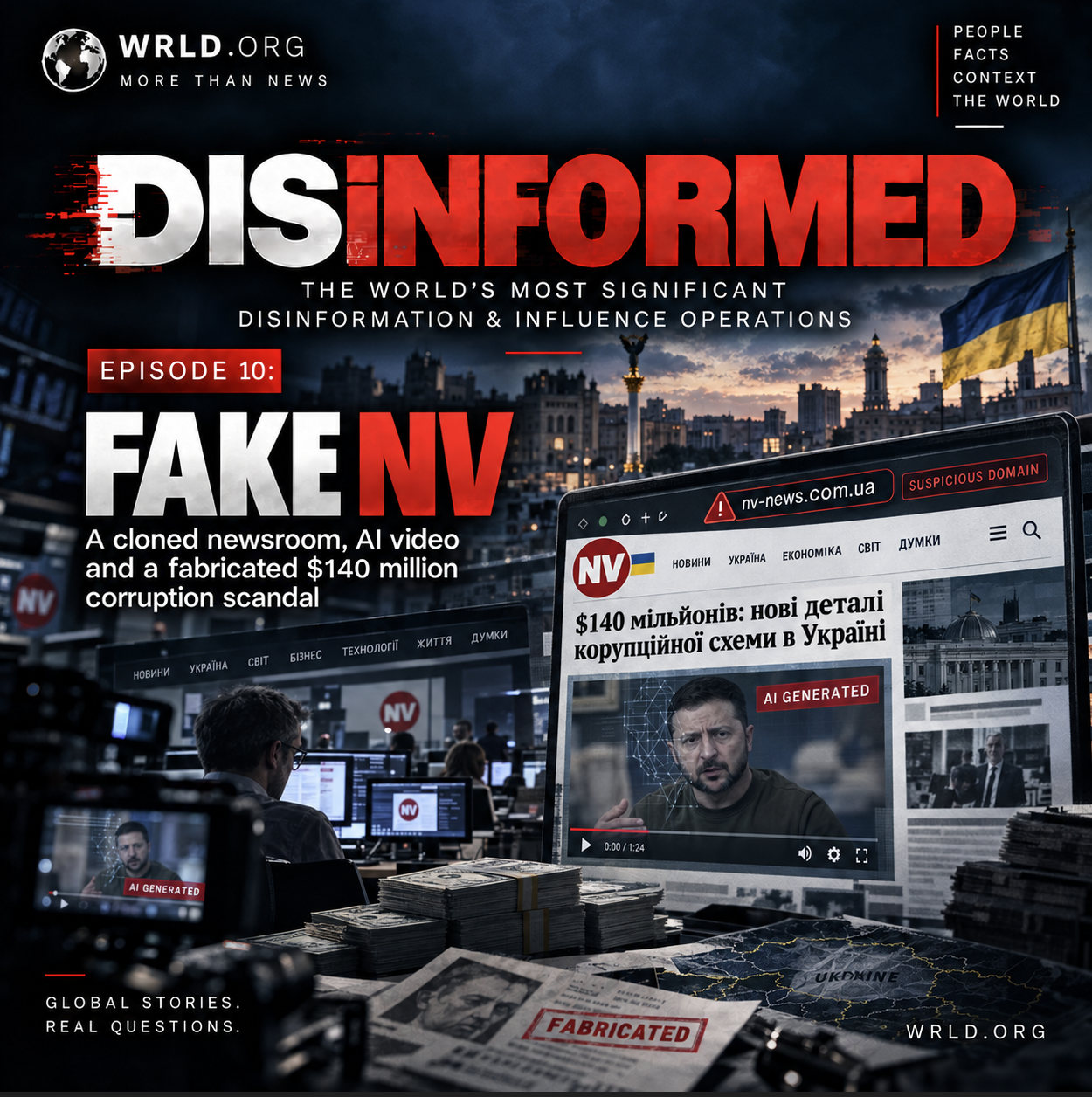
Fake NV – how a cloned newsroom turned an AI video into a $140 million corruption scandal For two days in September, a website that looked almost indistinguishable from one of Ukraine’s best-known news organisations carried an extraordinary corruption story. It claimed that Ukraine’s National Anti-Corruption Bureau had raided former defence procurement chief Arsen Zhumadilov and discovered more than $140 million in cash packed inside refrigerator boxes. One box supposedly carried the words “For the Servant of the People” – an apparent reference to President Volodymyr Zelenskyy’s political party. The raid never happened. The photographs and video presented as evidence were fabricated, and the news organisation reporting the story was not the New Voice of Ukraine but a cloned version of it. The episode is a compact example of an increasingly effective disinformation technique. Rather than inventing a new propaganda outlet and trying to build its credibility from scratch, an operator can simply steal the identity of an established newsroom and place fabricated material inside an otherwise convincing copy of its editorial environment. A newsroom copied almost in full The counterfeit site appeared at nvukraine.com, while the authentic New Voice of Ukraine operates at nv.ua and english.nv.ua. Registration records examined by fact-checkers show that the false domain was created on 21 September 2026, two days before the fabricated article appeared. According to NV’s own investigation, the imitation went much further than copying a logo: the operators reproduced the site’s visual design, sections, branding, contact information and genuine editorial material. A snapshot of legitimate NV content from 23 September appears to have been copied onto the counterfeit site, into which the operators inserted a single false article. That article claimed that NABU had searched premises connected to Zhumadilov, who had headed Ukraine’s Defence Procurement Agency until August, and seized $140 million in cash. The story was published in several languages, including Ukrainian and English, suggesting that the operation was intended not only for Ukraine’s domestic information space but also for foreign audiences following the war and Western support for Kyiv. AI supplied the supposed evidence The false article was supported by a video purportedly showing the money discovered during the raid. NABU said no such search or procedural action had taken place and identified the footage as fabricated using artificial intelligence. Independent fact-checker Lead Stories found no credible Ukrainian or international reporting confirming either the raid or the alleged seizure, while searches of NABU’s own published material produced no evidence supporting the claim. The operation therefore combined two separate forms of synthetic credibility. The AI-generated footage supplied what looked like visual proof, while the cloned NV website supplied institutional proof: an apparently reputable Ukrainian newsroom supposedly confirming that the event had happened. Neither element needed to withstand close scrutiny for long. Together, they only needed to appear credible enough to be copied, quoted and redistributed before the deception was exposed. From a fake Ukrainian source into the Russian information ecosystem On 24 September, the story began moving through large pro-Russian Telegram channels. Ukraine’s Center for Strategic Communications traced early amplification to Golos Mordora, with roughly 149,000 subscribers, and Militarist, with around 277,000. Within less than an hour, other channels including VOBLA, Rossiya Seychas and Ostashko! Vazhnoye were circulating versions of the same claim. It subsequently appeared on X and on Russian-language websites including e-news.su and pressa24.ru. Babel calculated that posts carrying the fabrication had accumulated approximately 370,000 views by the morning of 25 September. The story also moved beyond the Russian-language ecosystem. English-language versions appeared in online communities including Lemmy and Hexbear, while accounts on X shared direct links to the counterfeit NV article. NV later reported that larger Russian media and propaganda outlets, including RIA Novosti, Life, Vesti, Ukraina.ru and Mail.ru, had reproduced or discussed the claim. Kirill Dmitriev, head of the Russian Direct Investment Fund and a Kremlin representative involved in contacts with the United States, also shared it on 25 September. This amplification is significant, but it should not be confused with proof of authorship. Publicly available evidence shows how the false story entered and spread through a Russian and pro-Russian information ecosystem. It does not establish which organisation registered the cloned domain, generated the video or directed the operation from the outset. Why copy NV? The operation relied on source laundering. A claim originating directly from a Russian Telegram channel that Ukraine’s defence procurement system had concealed $140 million would immediately carry an obvious political context. A claim apparently uncovered by an established Ukrainian newsroom looks very different. Once the fabricated NV article existed, subsequent accounts could cite what appeared to be an independent Ukrainian source rather than present the allegation as their own. Each repost moved the story another step away from its manufactured origin. The use of an English-language version strengthened that mechanism for audiences outside Ukraine. The underlying narrative was also carefully chosen. Corruption in Ukrainian defence procurement is a genuine subject of public scrutiny and investigative reporting, so the fabricated story did not require audiences to accept an entirely unfamiliar premise. It inserted a false event into a real area of political concern. That mixture of authentic context and fabricated evidence can be more persuasive than a completely invented story because much of the surrounding information feels recognisable. What can – and cannot – be attributed Ukrainian authorities and NV describe the episode as a Russian information operation, and its distribution can be documented extensively across pro-Russian and Russian media channels. The available public evidence, however, does not identify the organisation that created the counterfeit website, nor does it link the operation forensically to a named Russian intelligence service, military unit or state contractor. The most precise description is therefore a Russian-aligned disinformation operation whose fabricated material was systematically amplified through the Russian information ecosystem. That distinction matters. Distribution can be observed directly; command-and-control is harder to establish and should not be inferred without evidence. The newsroom itself becomes the deepfake The most important feature of the operation was not the $140 million figure or even the AI-generated video. It was the counterfeit newsroom surrounding them. The operators copied a real publication, populated it largely with genuine material and inserted a single false story, allowing the fabrication to borrow the accumulated credibility of journalists who had nothing to do with it. This points to a broader evolution in synthetic media. AI can fabricate an image, a voice or a video, but an influence operation can now fabricate something larger: the source that supposedly verified the evidence. In the Fake NV operation, the article, the video and the website reinforced one another, creating not simply a false story but a manufactured chain of credibility. Sources The New Voice of Ukraine — investigation into the cloned website https://english.nv.ua/nation/nv-discovers-fake-copy-of-website-with-planted-story-cites-russian-links-50644601.html The New Voice of Ukraine — Russian amplification of the $140 million fabrication https://english.nv.ua/russia-spreads-fake-140-million-ukraine-corruption-story-during-dmitriev-u-s-talks-50644647.html Lead Stories — independent fact-check https://leadstories.com/hoax-alert/2026/09/fact-check-fake-story-claims-140-million-found-at-home-of-ukraines-zhumadilov-marked-servant-of-the-people-nv-website-originated-it.html Babel — AI video and distribution analysis https://babel.ua/en/news/130469-a-video-is-sharing-online-about-140-million-found-in-the-possession-of-the-ex-head-of-the-defense-procurement-agency-this-is-an-ai-video-distributed-by-a-clone-of-ukrainian-media Center for Strategic Communications and Information Security — initial debunk https://spravdi.org/en/ai-fake-about-140-million-amid-us-talks-how-russians-impose-the-image-of-corrupt-ukraine-on-the-west/ Center for Strategic Communications and Information Security — NABU confirmation https://spravdi.org/u-merezhi-poshyryuyut-shi-fejk-pro-nibyto-obshuky-nabu-v-eksgolovy-agencziyi-oboronnyh-zakupivel/ Detector Media — distribution and NABU response https://detector.media/infospace/article/252806/2026-09-25-u-merezhi-pidrobyly-sayt-nv-dlya-poshyrennya-feyku-pro-obshuky-v-eksochilnyka-agentsii-oboronnykh-zakupivel/ Keywords #DISINFORMED #Episode10 #FakeNV #NewVoiceOfUkraine #Ukraine #Russia #RussianDisinformation #RussianInfluence #Disinformation #InformationWarfare #InfluenceOperations #ForeignInterference #FIMI #MediaImpersonation #ClonedMedia #FakeMedia #FakeNews #ArtificialIntelligence #AI #AIGeneratedContent #SyntheticMedia #AIVideo #SourceLaundering #NarrativeLaundering #CorruptionNarrative #UkraineCorruption #DefenceProcurement #NABU #ArsenZhumadilov #Telegram #SocialMediaManipulation #DigitalInfluence #Propaganda #OSINT #MediaManipulation #WRLD

1151
Michael Walsh 2w

WHEN THE LIGHTS OF TRUTH GO OUT: If you think you are living in a dystopian society, you might be on to something. Enjoy and reflect on this Michael Walsh video, which deserves sharing https://www.youtube.com/watch?v=W85BbLtTKZk&feature=youtu.be

www.youtube.com
When the Lights of Truth Go Out. Michael Walsh
691
Krzysztof Graj 2w

AFRICA DAILY REPORT — 26 SEPTEMBER 2026 Major developments reported during the previous 24 hours. 1. DR CONGO — Ebola outbreak expands to two additional health zones Importance: 10/10 (Critical) WHO reported that the Bundibugyo Ebola outbreak has expanded to Bulu in Sud Ubangi and Dungu in Haut-Uélé, bringing the total to 63 affected health zones across seven provinces. As of 23 September, DRC had reported 7,890 confirmed cases and 3,799 deaths; the geographic expansion increases cross-border transmission risk. Source: https://www.who.int/emergencies/disease-outbreak-news/item/2026-DON618 2. ETHIOPIA — Heavy fighting continues in the north Fighting involving federal and Tigrayan forces has intensified, disrupting communications and raising concerns that the renewed conflict could spread beyond Tigray. Ethiopia's president has also accused unspecified external actors of interference as the 2022 peace framework comes under severe strain. Source: https://www.africanews.com/2026/09/25/ethiopian-president-warns-of-interference-amid-renewed-tigray-fighting/ 3. SUDAN–CHAD — Sudanese refugee arrivals accelerate sharply Importance: 9/10 (Very High) UNHCR says more than 55,000 Sudanese refugees have fled to eastern Chad this year, with arrivals through Adré and Tiné recently rising to more than 400 people per day — around 20 times the rate seen during previous months. Funding remains far below requirements, increasing pressure on shelter, water and protection services. Source: https://www.unhcr.ca/news/unhcr-in-its-fourth-year-sudan-conflict-drives-new-displacement-into-chad-as-funding-falls-short/ 4. DR CONGO — At least 41 killed in Lake Tanganyika boat disaster Importance: 8.5/10 (Very High) At least 41 people died after a vessel carrying roughly 100 passengers and cargo capsized on Lake Tanganyika while travelling from Kigoma, Tanzania, toward Kalemie in DRC. Forty-nine people were reported rescued while search operations continued. Source: https://www.aljazeera.com/news/2026/9/25/at-least-41-die-as-boat-capsizes-in-drcs-lake-tanganyika 5. ZIMBABWE–UNITED STATES — U.S. health funding set to end after talks collapse Importance: 8.5/10 (Very High) The United States is set to end health-programme funding for Zimbabwe at the end of September after negotiations over a new agreement failed, including disagreement over provisions concerning health data and biological samples. The change could affect HIV, tuberculosis and malaria programmes. Source: https://www.latimes.com/world-nation/story/2026-09-25/data-sharing-clause-derailed-u-s-zimbabwe-health-talks-now-all-funding-ends-this-month 6. SOUTH SUDAN — Kiir opens political dialogue ahead of December elections President Salva Kiir opened an inter-party dialogue in Juba after dissolving the transitional unity government. Elections are scheduled for 22 December and would be South Sudan's first national vote since independence, while opposition groups have raised concerns over the process, security and political conditions. Source: https://www.africanews.com/2026/09/25/south-sudan-kiir-opens-political-dialogue-ahead-of-december-elections/ 7. SENEGAL — First criminal charges filed over 2021–2024 political unrest Four people have become the first defendants charged in connection with violence during Senegal's political unrest between 2021 and 2024. The proceedings concern alleged unlawful confinement, abduction, torture and violence; the accused contest the allegations. Source: https://www.africanews.com/2026/09/25/senegal-lays-first-criminal-charges-over-political-unrest-between-2021-and-2024/ 8. ETHIOPIA–DJIBOUTI — $660 million petroleum pipeline announced Importance: 7.5/10 (High) Ethiopia, Djibouti and Dangote interests are backing a planned $660 million refined-petroleum pipeline. The 120-kilometre link between Damerjog port and Dewele is intended to lower logistics costs and strengthen fuel supply for landlocked Ethiopia. Source: https://www.africanews.com/2026/09/25/ethiopia-djibouti-and-dangote-to-build-660m-petroleum-pipeline/ 9. UGANDA–SOUTH SUDAN — New 400 kV cross-border electricity connection Importance: 7.5/10 (High) A planned Uganda–South Sudan power interconnection will establish roughly 299 kilometres of 400-kV double-circuit transmission infrastructure. The project is intended to connect South Sudan to the Eastern Africa Power Pool and create an export market for Uganda's surplus electricity. Source: https://www.ugandaradionetwork.net/story/new-400kv-cross-border-electricity-connection-to-serve-uganda-and-south-sudan 10. MOZAMBIQUE — Drug use rises as trafficking routes increasingly feed domestic consumption Importance: 7/10 (High) Mozambican officials say the country is increasingly becoming a consumer market as well as a transit route for illicit drugs. Government figures show drug-related hospital admissions rose 38% last year to more than 32,280, while authorities report growing concern about methamphetamine, cocaine and fentanyl flows. Source: https://www.africanews.com/2026/09/25/mozambique-faces-rising-drug-use-as-trafficking-routes-fuel-local-addiction/ #Africa #AfricaNews #TopNewsOfAfrica #DRCongo #Ebola #EbolaOutbreak #BundibugyoEbola #PublicHealth #HealthEmergency #WHO #CentralAfrica #Ethiopia #Djibouti #EthiopiaDjibouti #PetroleumPipeline #EnergyInfrastructure #FuelSecurity #Logistics #RegionalTrade #AfricanEconomy #Dangote #Tigray #NorthernEthiopia #EthiopiaConflict #ArmedConflict #SecurityCrisis #HornOfAfrica #RegionalSecurity #AfricanSecurity #Geopolitics #CrossBorderTrade #EnergySecurity #AfricaToday #wrldorg

www.who.int
Ebola disease caused by Bundibugyo virus - Democratic Republic of the Congo
806
Gunther Fehlinger-Jahn 3w

EUROPE NEEDS CREDIBLE NUCLEAR DETERRENCE. My proposal is clear: strengthen the American nuclear guarantee and move NATO’s nuclear-sharing posture eastward — Poland, Estonia, Romania and Bulgaria. Modernise the mission around the F-35A and B61-12. NATO’s eastern flank must never https://t.co/18lscSYnoD #NuclearDeterrence #NATO #EasternFlank #PL #EE #RO #BG

115
Mr. Numberwise 3w

Division Made Clear: Why We can't Divide by Zero and Other Essential Concepts (Grades 3-8) www.amazon.co.uk/dp/B0GNY6VLK5 A child wants to share candies at school… but there is no one to share with. So he decides to eat them all. Then he worries about a stomachache. And that’s how a playful mathematical adventure begins. From candies to pizza slices, from tiny “ant steps” around a 360° circle to clock hands pointing at 8 o’clock, this story gently introduces children to the beauty of division. What happens when 2 pizzas are shared by 3 children? Why do crumbs appear when we use approximations? Can 720 tiny steps be divided equally? Through imaginative storytelling, children explore: Division by 2, 3, 4, 5, 6, 7, 8, 9, 10, and 11 Remainders as “crumbs” Classes of remainders Multiples and patterns Fractions like halves, thirds, and two-thirds Real-life questions such as: Which years between 2020 and 2030 are divisible by 5? Using numbers from 0 to 21, familiar objects like candy boxes and pizzas, and friendly explanations, complex mathematical ideas become playful discoveries. Division is no longer just calculation — it becomes sharing, thinking, predicting, and exploring patterns. Perfect for curious children, parents, and teachers who want to turn mathematics into a story worth savoring. Includes a glossary of 14 key mathematical terms. #BasicDivisibilityForStudents #KidsMathAdventure #FunMathWorkbook #LearnMathWithStories #LearnMath #Stories #DivisionExercisesGrade_3_8 #MathStoriesForKids #StorytellerUK2026 #PizzaMargherita #PizzaPepperoni #PizzaQuattroFormaggi #PizzaCapricciosa #PizzaMarinara #PizzaDiavola #PizzaHawaiian #PizzaVegetariana #Kids #0251 20261006: 918(444)8 #Happy #HappyEdu #HappyKids #HappyMath

924