The article discusses an unknown aspect of the history of Auschwitz, focusing on how the camp hospital, despite being established in terror and inhuman conditions, initially did not serve only to kill prisoners, but over time its prisoner-doctors began to play a key role in keeping alive those whom the Germans still wanted to exploit as a labor force. #Auschwitz #Historia #Holokaust (translated)
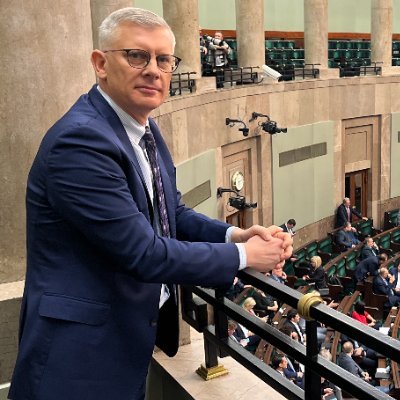
Sławomir Cenckiewicz praised the interview with Piotr, who — as he wrote — understood the security principles in the confrontation with the regime and those whom Cenckiewicz referred to as tormentors. He added that, in his opinion, few people understand this. He particularly liked the justification for the refusal of medical examinations and the description of the behavior of the police officers, who, he claimed, naively thought they would overhear the conversation in the hospital when MP Jakubiak would ask Piotr for his surname. #wywiad #BHP #polska (translated)
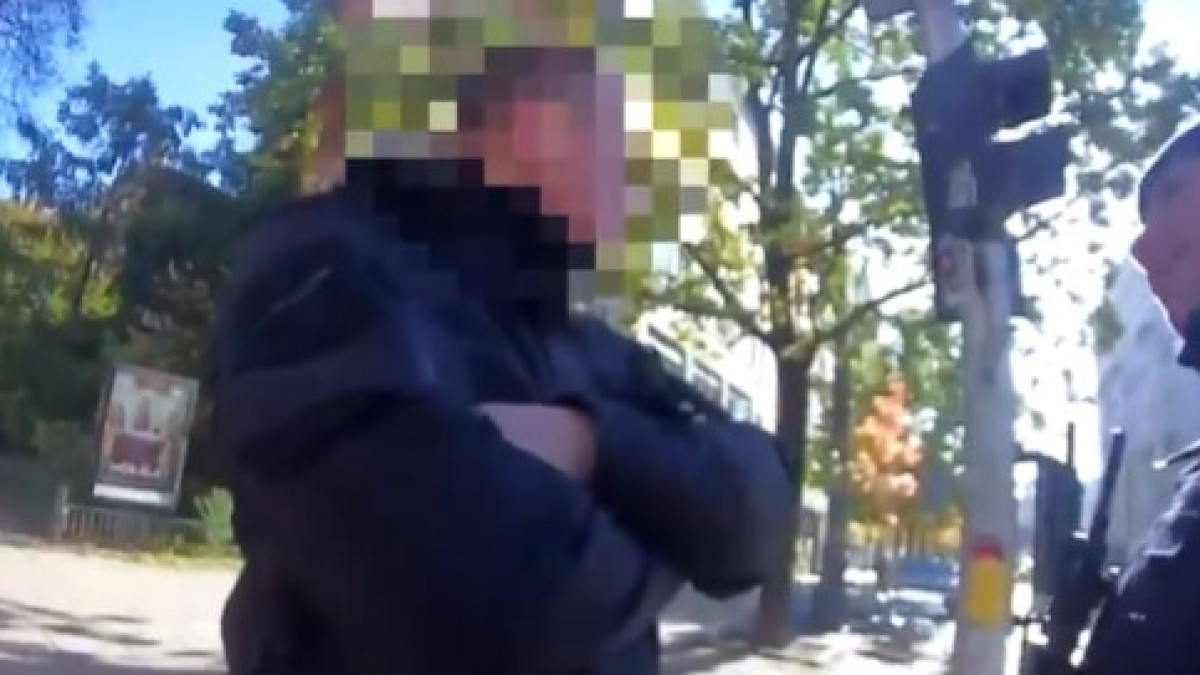
Piotr Kusznieruk informed that the court refused to temporarily arrest Piotr W., and after more than 50 hours of detention, the man was supposed to return home. He described that Piotr W. was standing at a red light at a pedestrian crossing, after which the police were said to have chased him, subdued him, and pinned him to the floor. According to the account referenced by Kusznieruk, the man lost consciousness and was taken to the hospital in handcuffs. The author noted that — as he wrote — the specific basis for the initiation of the identification has not been publicly clarified to this day. He added that the prosecution requested a temporary arrest, and the court did not agree to this request. Kusznieruk assessed that arrest should be a last resort and called for an investigation into the basis for the intervention, the use of force by the officers, and the circumstances surrounding Piotr W.'s loss of consciousness. #prawo #sprawiedliwość #Polska (translated)
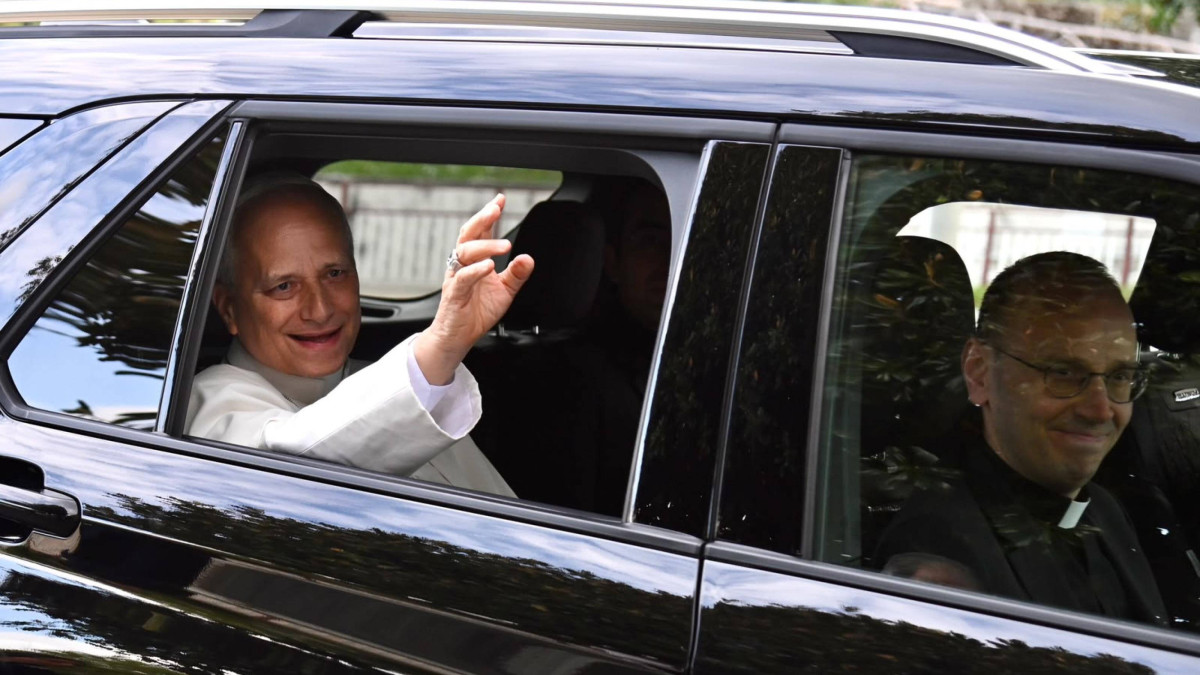
Pope Leo XIV, after leaving the hospital, delivered a strong address to the faithful from the window of the Apostolic Palace, thanking them for their prayers and support, and emphasizing the importance of giving God what is due to Him in relation to the responsibility for human duties. #Papież #Watykan #Modlitwa (translated)
Pope Leo XIV left the hospital after surgery to remove a lung tumor and plans a pilgrimage to South America from November 6 to 17, despite earlier concerns about his health. #PapieżLeonXIV #Rekonwalescencja #Pielgrzymka (translated)

Lawyers for Poland stated that Piotr W. did not admit to the charges and refused to provide explanations. According to them, the prosecutor requested a one-month detention, highlighting the need to secure forensic psychiatric evaluations. They added that the prosecutor's spokesperson confirmed the suspect's fainting and his transport to the hospital. The authors emphasized that detention is not a punishment before conviction, and the refusal to provide explanations is the suspect's right and does not prove his guilt. #Prokuratura #Areszt #Prawo (translated)
Piotr W. fainted in the prosecutor's office after hearing about the detention request; he was taken to the hospital. Previously, he had refused to provide explanations and personal information, raising concerns about the possibility of hiding. #PiotrW #areszt #Polska (translated)

Wojciech Szymczak wrote that Piotrek fainted again, and after examinations at the hospital, he was taken away with police assistance. According to Szymczak, five police officers were watching over him during the examinations, who did not allow his attorney to approach him. https://t.co/HwSWVLyrkL #Polska #aktualności #bezpieczeństwo (translated)
On Friday evening at a retirement home in Germany, a brutal attack occurred, resulting in four people being stabbed, and one 86-year-old woman died. The perpetrator turned out to be a Polish citizen, Jan K., who had previously been placed in a psychiatric hospital. #atak #bezpieczeństwo #Olfen (translated)
Magdalena Majkowska wrote that Piotr was discharged from the hospital, and tests related to his concerning health condition were conducted only 37 hours after his detention, after he fainted in the prosecutor's office during the proceedings. She stated that despite the request for legal counsel to be present during hospitalization, she was only allowed to contact him when the doctor was preparing the discharge. Majkowska reported that when she was allowed to see Piotr, he was being guarded by three police officers in the room, and he himself was lying handcuffed. She added that police officers also patrolled the hospital corridors. She wrote that on Sunday the court was supposed to decide on Piotr's further fate, and until then he was to remain in the police holding area for detainees. #zdrowie #policja #sprawiedliwość (translated)
Television Republic reported that lawyer Magda Majkowska was not allowed to see Piotr, who after the interrogation fainted and was taken to the hospital. The station announced a live report from Szymczak. https://t.co/zoHuly55OI #włączprawdę #TVRepublika #TylkoUNas #TVRepublika #włączprawdę (translated)
Jakub Maciejewski wrote that Piotr was in the hospital under the supervision of two police cars and several police officers. He claimed that the attorney was only allowed access to him after an intervention by Republika TV, and Piotr's confidence was said to have disappeared in front of the cameras. Maciejewski assessed that a random passerby from the town where the Tribunal was defended was turned into a dangerous criminal, monitored as if in a rescue operation for Narożniak. He described the actions of Tusk's government as absurd. #Polska #Polityka #Media (translated)
Magdalena Prządka-Leszczyńska wrote that the citizen weakened at the prosecutor's office and was taken to the hospital, and his lawyer had to fight with the police for access to the suspect. She added that the suspect submitted a written request for the lawyer's participation in these activities. She described the situation ironically as a return to normalcy. #prawo #prokuratura #obrońca (translated)
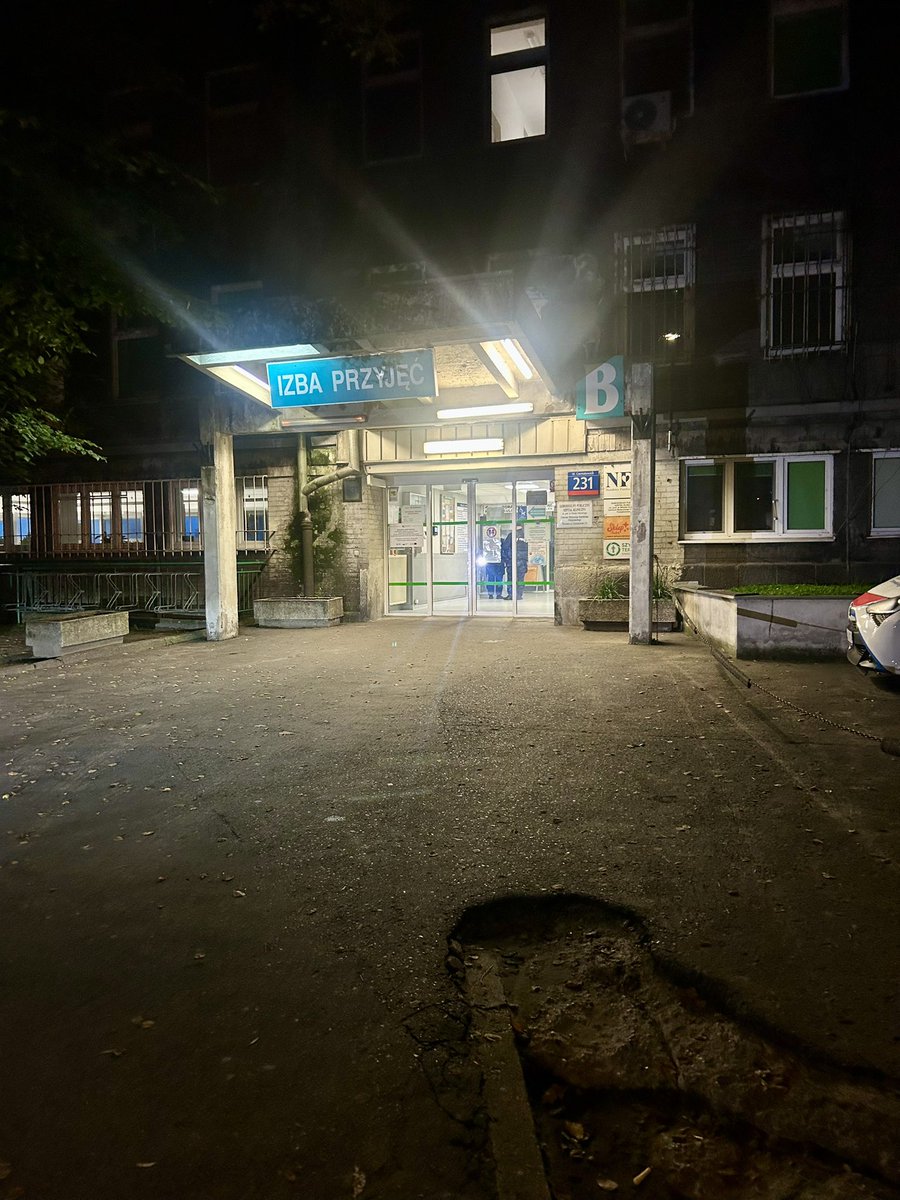
Magdalena Majkowska wrote that she was in the Orłowski Hospital in Warsaw, where Mr. Piotr was taken after he fainted in the prosecutor's office. She informed that he demanded the presence of his lawyers in all actions, but the police officers escorting him did not allow her to meet with her client. https://t.co/0mf9Bnf0j1 #Warszawa #szpital #prawo (translated)
Bartosz Malewski wrote that prosecutor Anna Osypiuk wanted Piotr to be placed in detention for a month, justifying it with — as the author assessed — a completely irrational fear of his escape and hiding. According to Malewski, when the prosecutor announced she would submit a motion for temporary detention to the court, Piotr fainted and fell. An ambulance was called, and Piotr was to be taken to the hospital. #sprawiedliwość #prokuratura #polska (translated)
Cassiopeia responded to the descriptions that she is "exalted," pointing out that for years she has been engaged in a debate on platform X with key Israeli politicians. She wrote that in an interview for tvn24, Prime Minister Naftali Bennett spoke about the involvement of Poles in the murder and handing over of Jews and about members of his family — his mother and two children — who were said to have been killed by Polish teenagers in Łuków near Siedlce in November 1944 after five years of fleeing from the Germans. Bennett also reportedly spoke about around 200,000 similar families. Cassiopeia stated that she checked the history of the Łuków county. According to her, on 4 and 7 September 1939, the bombing of Łuków killed about 260 Poles and Jews, and on 18 September 1939, the Wehrmacht, in retaliation for alleged shots fired at a German car, executed 34 people in Narutowicz Square and on the streets, and set houses on fire. She also wrote that on 5 October 1940, in Serokomla and Hordzieża, the Wehrmacht and SS executed 28 farmers from Serokomla and 4 Polish soldiers. She described the pacification that took place on 14 April 1940, conducted in retaliation for the alleged murder of the German settler Adolf Käsner's family. The SS, Gestapo from Radzyń and Lublin, and Selbstschutz, including local German colonists, were said to have gathered the residents of Józefów, Bronisławów, Zakęp, Serokomla, Hordzieża, Bielany, Rudy, Wólka, and other villages. According to Cassiopeia, about 215 Poles, including women and children, were executed, and 27 farms were burned. Cassiopeia attributed the extermination of Jews in Łuków county in 1942-43 to the Germans and Ukrainian auxiliary formations. She stated that during the operation from 5-8 October 1942, the gendarmerie, the 101st Reserve Police Battalion, Ukrainians, Latvians, and Lithuanians surrounded the ghetto, and about 4,000 to 5,000 people were gathered at the marketplace on Międzyrzecka Street. About 500 people were said to have died on the spot, including patients from the hospital; children were thrown from the floors onto the pavement, and the rest were taken to Treblinka. She also mentioned the executions in Malcanów on 7 November 1942, including 80-200 children under 5-6 years old, and the execution of 500-600 Jews in December 1942 "to reduce employment." According to her entry, on 2 May 1943, the ghetto in Łuków was liquidated, part of the buildings were set on fire, and 2,000-3,000 people were taken to Treblinka; those hiding were shot for weeks afterward. Cassiopeia also described the liquidation of the ghetto in Stoczek Łukowski on 12 September 1942, where about 3,500 people were to be involved in the action, and about 200 were murdered in the march to Parysów. In Serokomla on 22 September 1942, according to her, about 200-300 Jews were shot at the gravel pit; on 15 October in Krzywda, about 150-240 people died, in the fall of 1942 in Okrzeja about 90-113, on 10 October in Grochówka about 70, and on 28 December in Wola Okrzejska 36, mostly women and children. She added that Jews from Adamów, Wojcieszków, Tuchowicz, Gułów, Stanin, Ulan, and other places were driven to Łuków or shot on the spot, especially the elderly, sick, and those hiding. Among the executions of Poles for helping the AK and NSZ and hiding Jews from 1942-1944, she mentioned the killing of 24 people, including small children, in Budziska and Krzówka on 22 September 1942; 29 people, including 9 children aged from 2 months to 14 years, in Gręzówka on 28 December 1942; and 38 people, including 8 children, in Lędza Wielka on 5 February 1943. She also pointed out crimes in Oszczepalin, Rola, Wojcieszków, Feliksin, Wola Kisielska, Jamielnik, and other places where from a few to several people were dying. She wrote that on 24 July 1944, the Germans bombed Łuków for a week during their retreat, destroying the town center, Cieszkowizna, and Glinki, burning a large part of the city and causing the death of over 200 Poles. She stated that in the materials she cited, she found no information about "Polish teenagers" mentioned by Bennett. In the end, Cassiopeia wrote that although — as she assessed — half of Poland does not feel obliged to support her school, she hopes that at least some people will appreciate her work as a history teacher, which she has been doing for a decade. https://t.co/uYX0ELCMFj #Historia #Polska #Holokaust (translated)
Bartosz Malewski wrote that prosecutor Anna Osypiuk wanted to apply a one-month detention against Piotr, justifying this — in his opinion — with an unfounded fear that the man would escape and go into hiding. He added that when the prosecutor announced the issuance of the decision, Piotr fainted and fell. An ambulance was called, and the man was to be transported to the hospital. #prawo #prokuratura #sprawiedliwość (translated)
On Friday in Warsaw, near the Constitutional Tribunal, the police detained a man, Piotr W., who attacked an officer armed with a knife, and after the intervention, he was taken to the hospital, where after 30 hours, he was charged, not admitting guilt. #Polska #TrybunałKonstytucyjny #policja (translated)
Pope Leo XIV returned to the Vatican after a successful operation to remove a lung tumor, which brought joy to hundreds of faithful gathered outside the hospital. #Watykan #LeonXIV #AniołPański (translated)
Zygfryd Czaban wrote that instead of talking about supplementing and correcting information, the woman should apologize for the lies. He claimed that no one was pushed by her against the glass door, and the policewoman was not injured or treated in the hospital. He added that repeating further false information in times of widespread access to information was a bad idea, unlike in the 1990s, when, as he wrote, one could lie without consequences. #kłamstwo #informacja #prawda (translated)