WRLD

Search

#wyrok
r00t🇪🇺 41m

The author r00t🇪🇺 accused Bogucki of selective representation of the Constitutional Tribunal's ruling from December 3, 2015, in case K 34/15. He pointed out that Article 194, paragraph 1 of the Constitution entrusts the Sejm with the election of judges of the Tribunal, while the obligation to take an oath before the President results from the law. He referred to points 8.5.1, 8.5.3, and 8.6 of the justification. As he wrote, the Tribunal considered the oath to be an element added by the legislator to the constitutional procedure, and its acceptance by the President was regarded as an obligation. He added that the Tribunal questioned the interpretation of provisions that would not foresee the immediate taking of an oath. The author assessed that the President does not approve the choice made by the Sejm and cannot, based on statutory competence, co-decide on the composition of the Tribunal. He accused Bogucki of omitting parts of the ruling and using it to provoke opposition to the government and to present its actions as an attack on the constitutional order. Referring to Karol Nawrocki, the author reminded that Article 126, paragraph 1 of the Constitution defines the President of the Republic of Poland as the highest representative of the state and the guarantor of continuity of power, while paragraph 3 indicates that he performs his tasks on the principles specified in the Constitution and laws. He wrote that using the authority of the Constitution to justify a political position does not correspond to those obligations. #Konstytucja #Prawo #Polityka (translated)

1356
Piotr Kusznieruk 1h

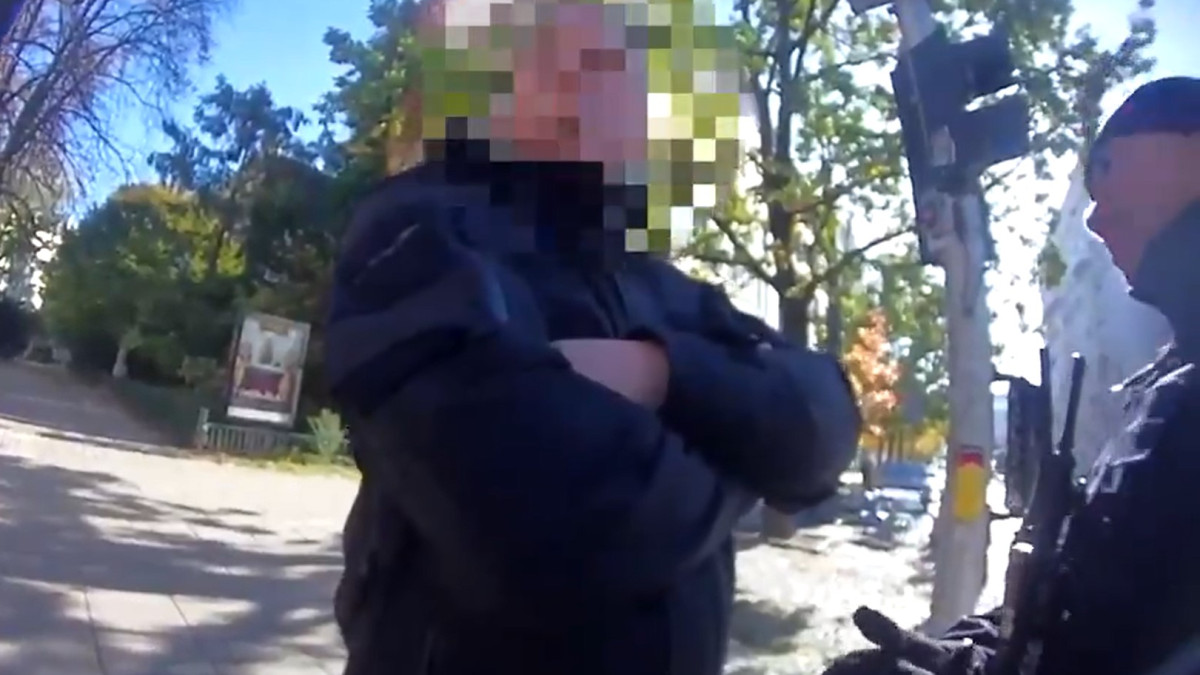
Piotr Kusznieruk accused Wielowieyska of accepting the police's version as an established fact and assessing the detained individual before the court's decision. He questioned the legal basis for identifying the man who — as he wrote — was calmly standing at the crosswalk, as well as the attempt to take him aside. He asked whether the refusal to provide personal information justified intervention. Kusznieruk noted that pushing away the officers and fleeing did not exempt the assessment of the legality and proportionality of the force used. He also pointed out the choking of the subdued individual, the vulgarities and threats that — as he wrote — were audible on the recording, and questioned whether such behavior was within the standards of human rights. He added that the court had refused to detain the man, and according to the defense, it concluded that the prosecutor had not even demonstrated a high probability of the alleged act being committed. He characterized this as more than just a routine refusal of detention. He deemed the attribution of a crisis to the detainee based on his behavior as public stigmatization. He also believed that publicly presenting him as an aggressor before the court's decision could be seen as incitement, and that journalists should monitor power, rather than act as its spokesperson. #prawaCzłowieka #Polska #policja (translated)

1453
rmf24.pl 3h

The District Court of Warsaw-Central refused the prosecutor's request for temporary arrest for Piotr W., stating that there are no grounds for depriving him of liberty before the verdict. #areszt #prokuratura #wymiarsprawiedliwości (translated)

www.rmf24.pl
„Sąd przyznał nam rację”. Jest decyzja ws. tymczasowego aresztu dla Piotra W.
1474
Magdalena Prządka - Leszczyńska 4h

Magdalena Prządka-Leszczyńska informed that the court did not grant the prosecutor's motion for the temporary detention of Piotr W. and agreed with the defense's position. She wrote that the man returned home after more than 50 hours. The author described that on Friday morning on Marszałkowska Street in Warsaw, Piotr W. was waiting for a green light at the pedestrian crossing, after which he was subdued by police officers. According to her account, he lost consciousness and was transported by ambulance on a stretcher, always in handcuffs, even during transport and while at the emergency room. Prządka-Leszczyńska wrote that the prosecutor demanded the application of temporary detention, and she, Magda Majkowska, and Bartosz Malewski from Ordo Iuris argued in court that there were no grounds for depriving Piotr W. of his freedom before the verdict. She added that the court agreed with them. She thanked the MPs who — as she wrote — supported Piotr W. from the very first hours, as well as journalists for showing the full recording. Among the people and editorial offices mentioned were Dorota Arciszewska, Marek Jakubiak, Telewizja Republika, wPolsce.pl, and Polsat News. #sprawiedliwość #Polska #prawo (translated)

1646
Brat Pete 6h

Brother Pete wrote that it was the 223rd day of his reminding that Paweł Kozanecki killed two women. He claimed that the only punishment Kozanecki would face would be 1.5 years of imprisonment, and he described the ruling of Judge Karol Radaszkiewicz as absurd. https://t.co/Y7MJDYlh9s #Sprawiedliwość #Prawo #Kryminalistyka (translated)

1666
Zbigniew Bogucki🇵🇱 6h

Zbigniew Bogucki wrote that the dispute regarding the Constitutional Tribunal concerned, in his opinion, fundamental principles of law and the Constitution, and not the defense of specific individuals or parties. He claimed that the government wanted to forcibly introduce to the Tribunal individuals who had not taken an oath before the President of the Republic of Poland, but had taken it in the Sejm before the Marshal of the Sejm, under the protection of the Marshal's Guard and on political indication. Bogucki assessed that such actions violated fundamental principles of law and the Constitution. He also accused that the ruling of the Constitutional Tribunal from December 2015, case no. K 34/15, was not being respected. As he wrote, this ruling indicated that the oath before the President of the Republic of Poland is not a trivial matter nor merely a formal ceremony. #TrybunałKonstytucyjny #Prawo #Konstytucja (translated)

1889
Piotr Kusznieruk 10h

Piotr Kusznieruk accused Professor Sadurski of condemning the journalist's vulgar comment more strongly than the convicted politician he defends received a five-year prison sentence for crimes involving corruption. He pointed out that the sentence is not legally binding, but in his view, that does not justify disregarding the findings of the first-instance court. Kusznieruk wrote that Sadurski has the right to criticize uncivil language, but he should also address the seriousness of the actions determined by the court. He added that Sadurski's membership in the Venice Commission remains significant when assessing his public statements, although he does not speak on behalf of that institution. He also criticized the closure of discussions under the pretext of fighting trolls, arguing that it is difficult to reconcile that with openness to arguments. #Polska #korupcja #debata (translated)

1890
Prawnicy dla Polski 11h

Lawyers for Poland stated that Piotr W. did not admit to the charges and refused to provide explanations. According to them, the prosecutor requested a one-month detention, highlighting the need to secure forensic psychiatric evaluations. They added that the prosecutor's spokesperson confirmed the suspect's fainting and his transport to the hospital. The authors emphasized that detention is not a punishment before conviction, and the refusal to provide explanations is the suspect's right and does not prove his guilt. #Prokuratura #Areszt #Prawo (translated)

2213
Brat Pete 1d

Brother Pete wrote that for the 222nd time he reminded that Paweł Kozanecki killed two women. He claimed that as a result of Judge Karol Radaszkiewicz's ruling, the only punishment Kozanecki would face would be 1.5 years of imprisonment; he described the verdict as absurd. https://t.co/u9BiKsB8Sq #sprawiedliwość #prawo #mord (translated)

2425
sławek jastrzębowski 🇵🇱 1d

Sławek Jastrzębowski wrote that the police officers did not provide the legal basis for identification. He referred to the ruling of the Supreme Court from December 17, 2025, in case file No. II KK 473/25, brought in cassation by the Ombudsman. He pointed out that the court held that a citizen can refuse to provide data if the request has no legal basis, and the refusal does not constitute an offense. Jastrzębowski added that identification interferes with personal freedom and is subject to legal scrutiny, after which he demanded the immediate release of the policewoman and referred the case to the prosecutor. #prawo #policja #wolność (translated)

2705
sławek jastrzębowski 🇵🇱 2d

Sławek Jastrzębowski wrote that on October 16, 1946, in Nuremberg, ten German convicts were hanged, and the executions were carried out by American Sergeant John C. Woods. He pointed out that it is unknown whether the too short ropes were chosen deliberately or out of lack of experience; according to him, they caused strangulation instead of severing the spinal cord, and some of the convicts died in agony for several minutes. He mentioned Joachim von Ribbentrop, Wilhelm Keitel, Ernst Kaltenbrunner, Alfred Rosenberg, Hans Frank, Wilhelm Frick, Julius Streicher, Fritz Sauckel, Alfred Jodl, and Arthur Seyss-Inquart. #Historia #Norymberga #IIWojnaŚwiatowa (translated)

3278
Andrzej Halicki MEP 2d

The author of the entry wrote that Poland had an obligation to implement the judgments of the European Court of Human Rights, and the government prepared a bill to facilitate this. He stated that Nawrocki vetoed it, and two days earlier, Ordo Iuris had protested. He criticized the approach, which — as he suggested — did not encompass all human rights or all individuals. #Polska #TrybunałPrawCzłowieka #PL (translated)

3109
r00t🇪🇺 2d

The author criticized Dubyna's post, accusing him of misrepresenting the division of powers, the competences of the Council of Ministers, the rulings of the Constitutional Tribunal, and the concept of a coup d'état. He wrote that the appointed team analyzing the systemic effects of the court and tribunal rulings did not seize judicial power and had no authority to overturn judgments, change decision-making panels, or issue orders to judges. The author stated that Dubyna referred to Article 190 of the Constitution while omitting the difference between the finality of Constitutional Tribunal rulings and the analysis of their legal effects. He also accused him of failing to take into account the rulings of the European Court of Human Rights in the case of Xero Flor v. Poland and the Court of Justice of the European Union in case C-448/23, which — as he wrote — concerned fundamental irregularities in the functioning of the Polish Constitutional Tribunal. The author considered the designation of the appointment of the government analytical team as a coup d'état to be a manifestation of a misunderstanding of the principles of state functioning. He also criticized the comparison of the situation to a totalitarian system, stating that it was historically unfounded and offensive to those repressed by the communist state. He added that the use of capital letters and exclamation marks did not lend any legal or intellectual value to the statements. #prawo #konstytucja #Polska (translated)

3442
Krzysztof Śmiszek 2d

The author of the entry wrote that Nawrocki vetoed the bill on the execution of judgments of the European Court of Human Rights. He added that he initiated work on it as an opposition MP, and then continued it as Deputy Minister of Justice. He accused Nawrocki of a reluctance towards human rights and freedoms, and described his decision as shameful. #prawaczłowieka #opozycja #wolność #PL (translated)

2887
wiadomosci.wp.pl 2d

In the article, Professor Ireneusz C. Kamiński argues that President Nawrocki's veto against the special law on the execution of judgments of the European Court of Human Rights is justified because the case law of Strasbourg is not infallible and primarily requires a change in the adjudicative practice of Polish courts, not new regulations. #ETPC #prawaczłowieka #Nawrocki (translated)

wiadomosci.wp.pl
Strasburg nie jest nieomylny. Weto Nawrockiego to dobra decyzja [OPINIA]
2888
Kafir 2d

Kafir sharply criticized President Nawrocki's veto against the bill on the enforcement of judgments of the European Court of Human Rights. He wrote that he fears aspirations for absolute power and offensively suggested that some might need psychiatric consultation. As an example, he described a hypothetical scenario where the ruling party takes Poland out of the European Union, withdraws from the European Convention on Human Rights, and changes the operation of the courts. According to him, a citizen who lost a case in the country and exhausted available appeals could be left without a way to seek justice. Kafir argued that democracy allows citizens to challenge state decisions and assert their rights. He also warned that a power that does not recognize dissent may, over time, turn against its own supporters. He added that in an extreme case, it could reinstate the death penalty. #demokracja #prawaczłowieka #władza (translated)

3565
rmf24.pl 2d

Piotr Ogrodniczuk was sentenced to 12 years in prison for the murder of Jacek B., whom he pushed out of a hotel window with a television tied around his neck, and the verdict announced by the court in Słupsk is not final. #zabójstwo #proces #prawo (translated)

www.rmf24.pl
Przywiązał telewizor do szyi i wypchnął z okna w hotelu. Sąd w Słupsku wydał wyrok
2117
Ellie Reeves 3d

Meanwhile, in a separate proceeding, Attorney General Ellie Reeves requested the Court of Appeal to reconsider the Digwa ruling, claiming it was too lenient. #Zabójstwo #Polska #WielkaBrytania (translated)

Matka zabójcy Polaka opuści więzienie. I to jeszcze w tym roku
www.onet.pl
2458
michal.rachon 3d

Michał Rachoń asked whether there is a team in the government preparing judgments that Berek would have to accept after taking over the Constitutional Tribunal. #Polska #prawo #TK (translated)

2905
Rzeczpospolita 3d

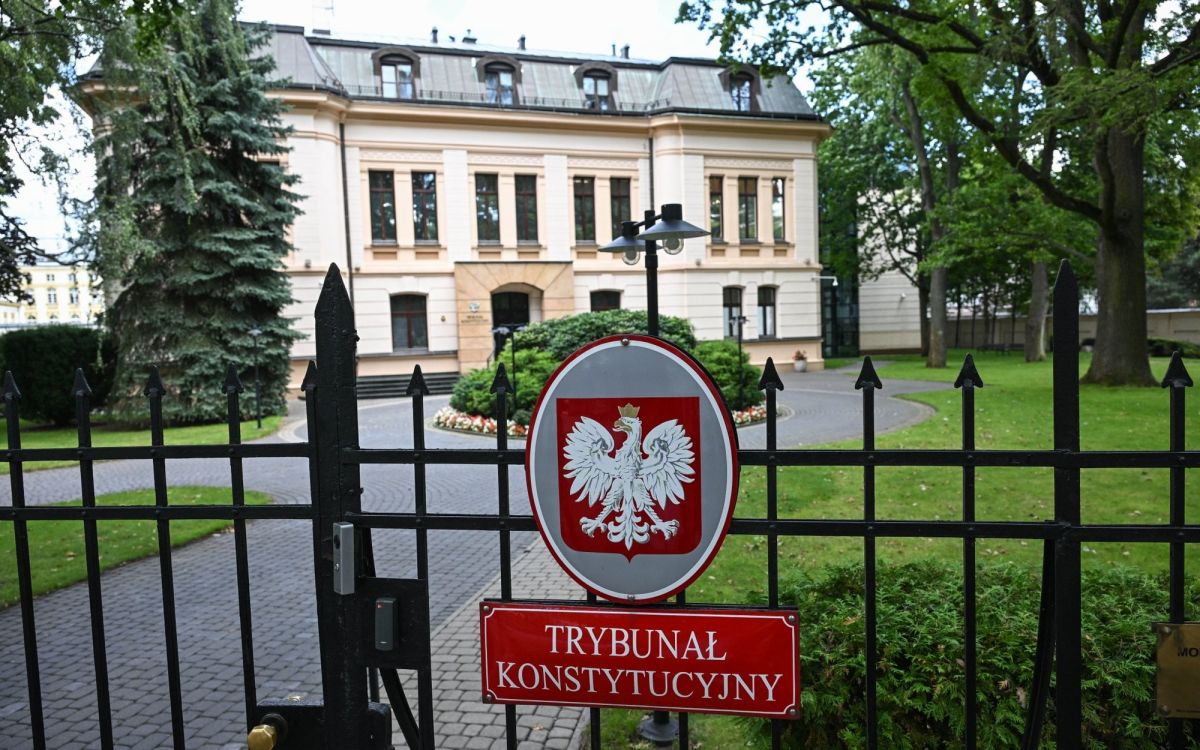
The dispute over the Constitutional Tribunal is the longest and most serious constitutional crisis in the history of the Third Republic of Poland, which began in 2015 and is related to controversies surrounding the appointment of judges and the publication of the Tribunal's rulings. #TrybunałKonstytucyjny #kryzysustrojowy #spórpolityczny (translated)

www.rp.pl
Spór o TK trwa od 2015 roku. Jak doszło do kryzysu konstytucyjnego?
3018