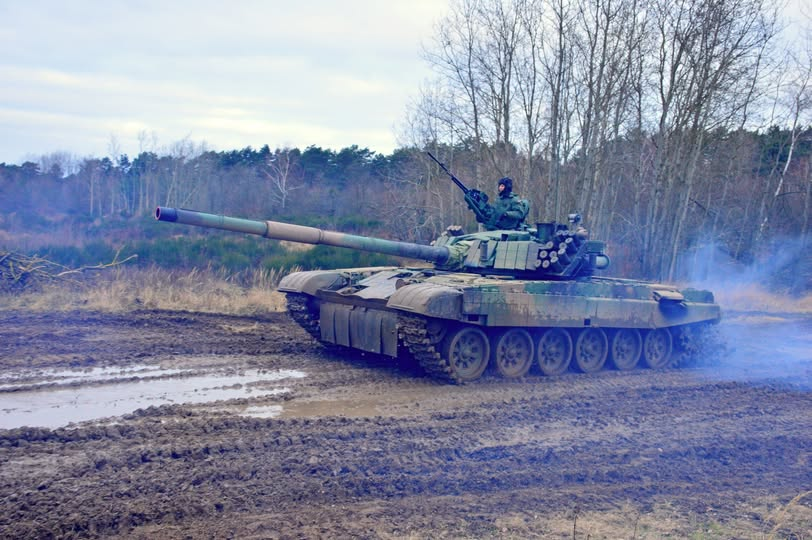
Retired Colonel Maciej Korowaj assessed that the 17.1 trillion rubles earmarked for defense in the Russian budget for 2027 does not constitute a barrier to mobilization, but it does not signal it either. He pointed out that the overt mobilization stance remains marginal, and the contract model is exhausting its social base. In his opinion, part of the increase in defense spending may stem from transferring payments for the wounded and the families of the deceased to this sector, which were previously included in a classified section called "Social Policy." This would mean that part of the growth finances the costs of losses, rather than new capabilities. Korowaj wrote that, regardless of the budget, Russia's legal-administrative capacity to mobilize people is increasing. He noted that a decree from December 30, 2025, directed contract reservists to protect critical facilities in 2026, and a decree from July 27, 2026, increased the armed forces' personnel by 25,000, to 1,535,000 soldiers. According to him, this was the third such increase in the year, formally tied to the creation of military-construction units. He also referenced an assessment by the Ukrainian HUR that Russia aims to recruit about 600,000 people in 2026–2027, utilizing the electronic register and digital summonses, which would enable mobilization without public announcement. Korowaj identified the system's capacity as the main limitation. He wrote that Russian losses currently amount to 30,000–35,000 killed or wounded per month, and according to NATO estimates, most recruits still end up on the front lines as reinforcements. With an intake of about 30,000 people per month, the army, in his opinion, is essentially restoring its personnel rather than creating surpluses for new formations. Citing OSINT, he noted that 4,799 out of 7,342 pre-war tanks stored in depots had been used, leaving about 19% remaining. Korowaj assessed that in the short term, it would be possible to draft several hundred thousand people as reinforcements and rear echelon personnel, but not quickly create a second army capable of maneuver warfare. He emphasized that mass mobilization would require the identification, selection, training, and equipping of hundreds of thousands of individuals, while the military apparatus is busy sustaining the front. He also referred to a report by Andrei Belousov for Vladimir Putin from December 2025: in 2025, five divisions, 13 brigades, and 30 regiments were to be formed, while four divisions, 14 brigades, and 39 regiments were planned for 2026. He pointed to the establishment of the 44th Army Corps in Karelia, the elevation of brigades to the rank of divisions, including the 71st Guards Mechanized Division on the Kola Peninsula, and a rocket brigade with Iskanders. In his view, these formations mainly consisted of conscripts and trained reinforcements. He added that according to Finnish sources, the expansion of bases in Petrozavodsk, Pechenga, and Baltiysk would enable the support of 80,000–115,000 soldiers only after the war in Ukraine concludes. Korowaj agreed with the ISW assessment that, in the short term, ground operations against NATO are unlikely, as the majority of Russia's potential is engaged in Ukraine. He also cited a report from a closed NATO briefing in Ankara, during which an Alliance representative purportedly spoke about the re-establishment of the Leningrad and Moscow Military Districts, at least one new corps, and three divisions, but also mentioned a lack of signs of an intention to conduct a rapid attack. He concluded that the budget finances a long war with Ukraine and creates opportunities for the period after it is frozen, but it does not indicate preparations for an attack on NATO or a withdrawal of the Kremlin from such an option. #Rosja #wojna #defensywa (translated)