You have a historic opportunity to undo the terrible harm you did while in office @JuliaGillard. Speak up for women now that you know the true cost of your luxury beliefs #WomenEmpowerment #LuxuryBeliefs #Accountability #AU
In Samburu County in Kenya, seven people, including a pilot and six tourists, were killed in the helicopter crash that was carrying clients of the luxury tour agency &Beyond. (translated)
Παιδιά σηκωθείτε να βγούμε στους δρόμους με ρόλεξ στα χέρια , γούνες στους ώμους! ...και φλυτζανάκια Dior στο deck του yacht https://t.co/mkHqA7rsdU #luxury #fashion #lifestyle
Human rights are not West or East, North or South. They are not a luxury – they are not negotiable. They are the foundation of a more peaceful and secure world. #HumanRights #Peace #Equality #Nospecificcountrycodesarementionedinthetweet.
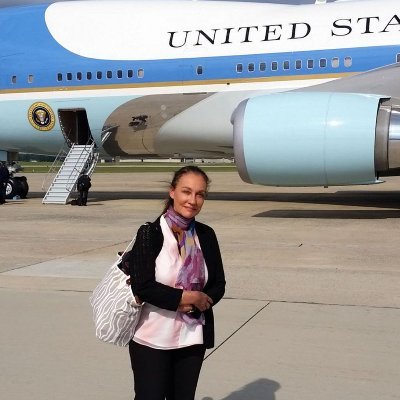
The United States used journalists as bait while Donald Trump was secretly evacuated in a catering container after a threat from Iran, which has triggered demands for a briefing in Congress from Democrats about the president's security and the risks shared by the passengers of Air Force One. (translated)
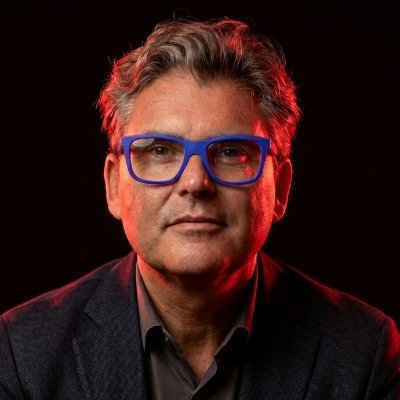
A Generation That Forgot the Shape of the Square On memory left to die alone By Adham Hasanin Egyptian journalist and political writer, based in the Netherlands In a house near mine, there is a boy of thirteen. Born in 2013 just a few months younger than the July coup itself, younger than the new republic under whose shadow we now live. I asked him once, with no preamble, no test, out of nothing more than passing curiosity: do you know what January was? He answered simply, without hesitation, without any sense that he was missing something: "An old revolution, against Mubarak, right?" Not entirely wrong. But it is everything he knows. The name Tahrir Square means nothing specific to him. The sound of the crowd chanting has no echo in his mind. He does not know that his own family whom he sees every day saying "thank God for stability," who warn him against "chaos" whenever a political headline crosses the screen once, at a moment two years before he was born, went down into the street, betting their entire lives on the possibility that something might change. This article is not about politics. It is about memory, and about who decides what gets told and what is left to die in silence. I. Who Erases the Picture? The first question that comes to mind is the easiest and most deceptive one: who erases this memory? And where do we begin holding them accountable? But the truth is too complex to reduce to a single actor. No one actually erases memory, in the literal sense of the act. There is no ministry called the "Ministry of Forgetting," no presidential decree ordering January struck from the collective consciousness. What happens is simpler than that, and more dangerous at once: the subject is simply never told. School says nothing. The textbook leaps from one period to another without pausing on January for more than two faded lines, composed with deliberate neutrality, devoid of any detail that might make the event feel alive to its young reader. Television no longer has any reason to return to it; the programmes that once hosted witnesses and activists stopped years ago, replaced by an official discourse that mentions January only in passing, as an unfortunate prelude to the "stability" that supposedly followed. And the home the most dangerous link of all has become afraid of the subject. Speech now carries a price, and many families, whether consciously or by sheer survival instinct, have decided that silence is safer than the story. The father who marched fears passing on to his son a curiosity that might one day lead him into trouble the family cannot afford. The mother who lost a friend in the events prefers not to reopen the wound before a child who does not yet grasp the weight of loss. And so, generation after generation, the circle of those who know shrinks, and the circle of those who do not even ask because they do not know there is anything worth asking widens. No one decided to erase the memory through an explicit decision. The memory was simply left to die alone, with no one tending it. And it is precisely this decentralised absence of responsibility that makes this kind of erasure more dangerous than any direct official ban: there is no single decision to challenge, no single body to hold accountable. Responsibility is distributed across thousands of small decisions made by thousands of individuals, each within their own context, each seeming reasonable when viewed in isolation. II. Why This Is More Dangerous Than Direct Repression An objection might be raised: is direct repression arrest, imprisonment, publishing bans not far more lethal than mere gradual forgetting? The answer is complex, and deserves calm unpacking. Direct repression can be seen. It can be documented, and the victim can know they are a victim, can tell their story, and their pain can become a testimony added to the collective memory, even if it never reaches justice. The political prisoner knows he is a political prisoner. The journalist banned from writing knows he is banned, and can tell the world he is banned. Direct repression, for all its cruelty, leaves a trace that can be followed. But a generation that has forgotten something happened at all does not even have a starting point from which to ask. This thirteen-year-old boy will never ask "why were we repressed?" because he does not know there is anything deserving that question in the first place. He feels no absence, because he does not know there is anything absent. He simply lives in a version of reality stripped of an entire chapter of his country’s history, and never for a moment suspects that this void is a void at all. Here lies the essence of the danger: direct repression creates victims who know they are victims. Erasure of memory, when it succeeds, creates a generation that does not even know it has been deprived of anything. And deprivation that is not felt cannot be resisted, because resistance always begins with an awareness of loss. The regime that came after 2013 does not need to convince the new generation that January was a mistake. That would be an arduous, costly task, requiring sustained propaganda and continuous effort to persuade each individual one by one. It is far easier, and strategically far more efficient, simply to ensure they never know it was anything at all. The void requires no defence; it requires only silence, and silence is free and always available. III. The Four Mechanisms of Erasure Four complementary mechanisms can be identified working together to produce this collective void not as an organised conspiracy, but as a system of incentives that pushes each party, consciously or not, to contribute to the same process. The first mechanism: formal education. The curriculum, as currently designed, treats January as a passing footnote rather than a founding event deserving detail and analysis. The student memorises two dates the start of the revolution and its presumed end without understanding why people took to the streets, what they were demanding, or how they felt in that pivotal moment. The second mechanism: broadcast media. The channels that once hosted live discussions on January, featuring varied perspectives, have gradually disappeared, or transformed their discourse entirely. Today’s televised image either ignores the anniversary altogether, or invokes it only to frame it as a prelude to chaos that must be avoided. The third mechanism: the silence of homes. This is the most dangerous of all, precisely because it is the most human and understandable. Parents who lived through the experience protect it with silence, not out of aversion to the story, but out of fear of its price. This silence, however legitimate its motives, achieves exactly the same effect as official censorship: it blocks the transmission of knowledge from one generation to the next. The fourth mechanism: the absence of alternative spaces. Even those among the new generation who wish to know cannot easily find places to look. Archives are scattered, trustworthy websites are blocked or require effort to reach, and personal testimonies are dispersed across corners of the internet that an ordinary student at an ordinary school will never stumble upon. These four mechanisms require no central coordination to work together. Each naturally serves the others, and all converge on a single result: a growing void in the consciousness of every new generation. IV. Memory as an Act of Resistance If erasure operates without a centre, then resisting it must also be decentralised. No one waits for a government decision to restore January to the curriculum, nor for a television programme to revive the testimonies. Resistance here is necessarily individual, happening in small details, in passing conversations, in the simple decision to tell rather than to stay silent. This is exactly what I try to do, without any claim to heroism, without any grand mission. I try, whenever I can, to tell the thirteen-year-old boy and others like him details that are never written in official reports or in schoolbooks: what the voices in the square sounded like, how someone felt the first time they realised change was possible, what that moment of hope was like before everything changed. The goal is not to bring back the past; the past cannot be brought back. The goal is that this boy, when he grows older and asks again and he will ask, because the questions always return at some point finds someone to tell him the full story, not two faded lines in a schoolbook. That he knows the stability he is told is the fruit of "wisdom" has a prior history, that this history carried other possibilities, and that real people bet their lives on those possibilities. V. Why This Matters Now Talking about the memory of a generation not yet aware might seem an intellectual luxury next to more urgent matters: arrests, a collapsing economy, regional wars. But the truth is that this issue is the foundation on which every other issue is built. A people who do not know they once rose up will not understand why they should ever think of rising again. A generation raised to believe "stability" is the only natural state possible will never ask itself what drove its own parents, shortly before it was born, to risk everything for an alternative that was never guaranteed. Memory is not a luxury; it is the reference point by which every generation measures its present, and through which it determines what is possible and what is not. And whoever understands this understands why erasing memory, not direct repression alone, is among the most important tools of any regime seeking to guarantee its permanence: because a people who have forgotten they were once free will not even know they are missing freedom. Memory, like the word, needs someone to tell it in order to survive. And when the tellers stop, memory does not die suddenly; it withers slowly, generation after generation, until the day comes when a boy asks an innocent question, and finds no one to answer him but two faded lines in a schoolbook.
The fetish of a sterile lifestyle filled with overpriced luxurious products being considered "rich" is a direct result of Steve Jobs minimalism and should have ended with his death. It touches everything. From modern architecture, gardens, cars, clothing up to the behavior of #Minimalism #LuxuryLifestyle #DesignTrends #Thetweetdoesnotmentionanyspecificcountries.Therefore #theresponseis:
A brazil first lady, Janja Lula, defended her luxury travels as essential to her role, while critics label her a hypocrite and accuse her of promoting misogyny, revealing the tension between her lavish lifestyle and her husband's anti-poverty messaging amidst ongoing public scrutiny. #JanjaLula #brazilpolitika #luxusköltekezés

Khan's removal lines up neatly with the fight to neutralise Netanyahu's arrest warrant. Coincidence is a luxury intl law can no longer afford. This proves that justice DOES threaten Apartheid Israel & Co. So if the ICC is paralysed, lawyers and judges worldwide must do more. #JusticeForAll #ICC #Netanyahu #IL #PK #NL
🌡️ #Singapore is scaling up 140-year-old district cooling technology to beat rising heat. #Stockholm has been doing it for decades. As #heatwaves intensify, cooling should be treated as critical infrastructure, not a luxury. Read more 👇 https://t.co/POqXESiPwm @SthlmExergi #DistrictCooling #Heatwaves #ClimateAction #SG #SE
Morning, we didn’t get much sleep. We were out robbing superyachts last night. Good haul. Prototype designer jewelry Unreleased fragrances Crypto wallets engraved with Latin mottos A priceless bottle of Barolo from a billionaire’s private stash. 🏴☠️🏴☠️🏴☠️ https://t.co/tGPwfGwEIe #SuperyachtHeist #PirateLife #LuxuryLoot #Nospecificcountriesarementionedinthetweet.
A WWI tragedy in the English Channel, June 1916—#RoyalNavy destroyer HMS Eden collides with the grand SS France, a peacetime luxury icon. Echoes of Hardy’s The Convergence of the Twain. https://t.co/CyZAQ3Lzxs #WW1 @AntoineVanner https://t.co/MoEM73jLma #WW1 #RoyalNavy #HMS_Eden #GB #FR
while #IDFWarCriminals have been travelling abroad free as the air -in #Italy they have enjoyed luxury resorts and parks- #Palestianians who need urgent medical treatment are treated by #Israeli authorities as animals. This is who they are: https://t.co/pTxLDO3Gnu #IDFWarCriminals #Palestinians #Israel #IT #PS #IL
Si j'en crois les projections de @spotrac et @ThirdApron : Les 10 millions annuels sacrifiés par Wemby permettra aux Spurs d'éviter la luxury tax en 2027-28 (1re année du nouveau deal de Victor). Sous la luxury tax = plus d'argent pour recruter des agents libres. #NBA #Spurs #Wembanyama
— François Graff, CEO da Graff, sobre a nomeação de Jungkook como novo Embaixador Global da Maison: “Jungkook é um ícone cultural, conhecido por seus talentos multifacetados. Suas performances são ousadas, mas refinadas, executadas com um brilho impossível de ignorar. Assim como nós, da Graff, ultrapassamos os limites do que é possível na alta joalheria de luxo, Jungkook desafia continuamente os limites da criatividade em seu trabalho. Estamos muito felizes em recebê-lo como o novo Embaixador Global da Graff.” GRAFF GLOBAL AMBASSADOR JUNGKOOK #JUNGKOOKxGRAFF #Jungkook #Graff #LuxuryJewelry