Temu has agreed to implement changes in response to an investigation that uncovered misleading practices related to fake discounts and reviews. #Cookies #OnlineSecurity #WebAccess
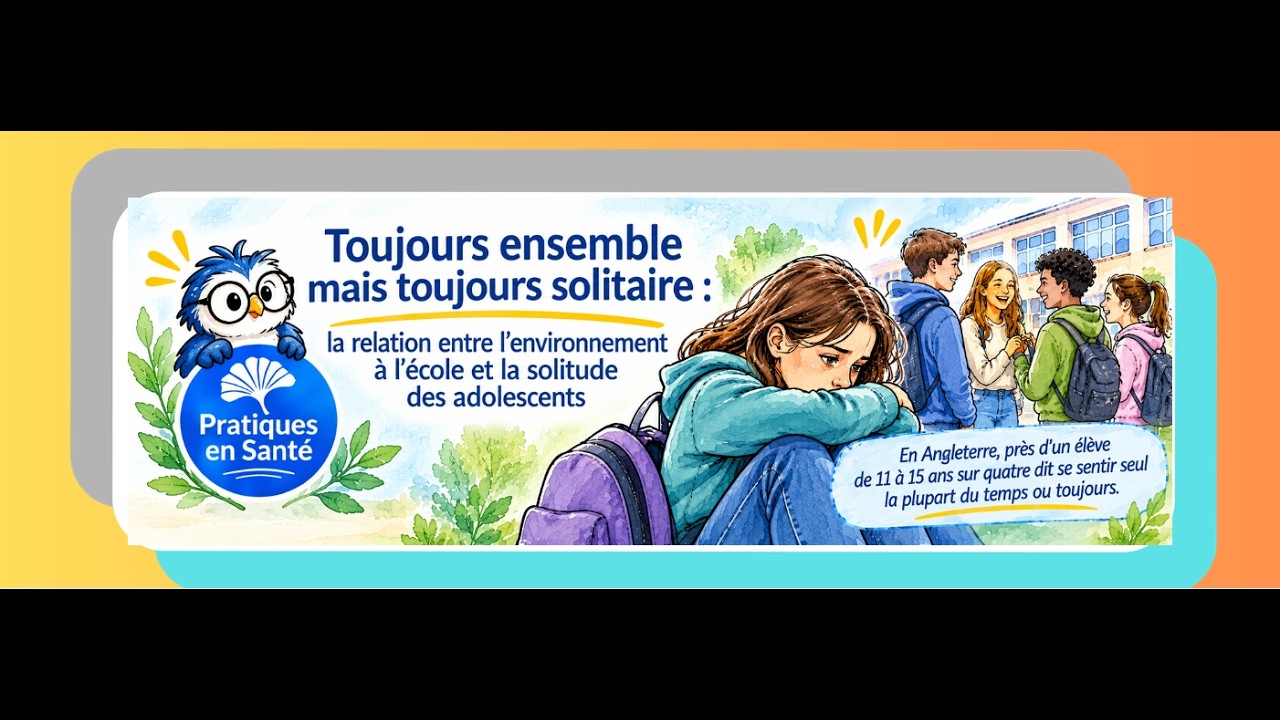
In England, nearly one in four students aged 11 to 15 says they feel lonely most of the time or always. A study involving 5,377 students shows that school pressure, peer support, and a sense of belonging at school are linked to this loneliness. Always together but still lonely: the relationship between environment at school and adolescents' loneliness - Viktoriia Hrytsenko, Sabina Hulbert, Tamsyn Eida, Roxana Pomplun, and Sally Kendall from the Centre for Health Services Studies at the University of Kent (UK) - 2026, in the journal Child and Adolescent Mental Health. Audio Capsules from Health Practices 🎙️🎥 https://www.youtube.com/watch?v=Vc4avv9Y1Lo Analysis of Health Practices and link to the source ℹ️➕ https://acamh.onlinelibrary.wiley.com/doi/10.1111/camh.70138 This study helps to identify, within school life, what is related to the loneliness of young people. Six aspects are examined together: school pressure, liking school, feeling safe, sense of belonging, peer support, and teacher support. The authors present them as "potentially modifiable" contexts. The study also shows which young people are most affected: 15-year-olds, girls, and less affluent families. Finally, it offers suggestions for schools and educational policies. What may interest French stakeholders: even though the data are English (HBSC England 2022) and show associations, not causes, the study targets familiar school life levers in France: school pressure, peer support (tutoring, peer mediators), and sense of belonging. It also identifies priority groups (girls, 15 years old, less affluent families) and advocates for joint action by schools, families, and decision-makers, with young people. Always together but still lonely: the relationship between environment at school and adolescents' loneliness - https://www.pratiquesensante.com/en/blog/practices-15/always-together-but-still-lonely-the-relationship-between-environment-at-school-and-adolescents-loneliness-6362 #️⃣ #YouthLoneliness #MentalHealth #Adolescents #SchoolClimate #SchoolBelonging #SchoolPressure #PeerRelationships #SocialInequalities #HealthPromotion #SchoolEnvironment #SolitudeDesJeunes #SantéMentale #Adolescents #ClimatScolaire #AppartenanceScolaire #PressionScolaire #RelationsEntrePairs #InégalitésSociales #PromotionDeLaSanté #EnvironnementScolaire (translated)

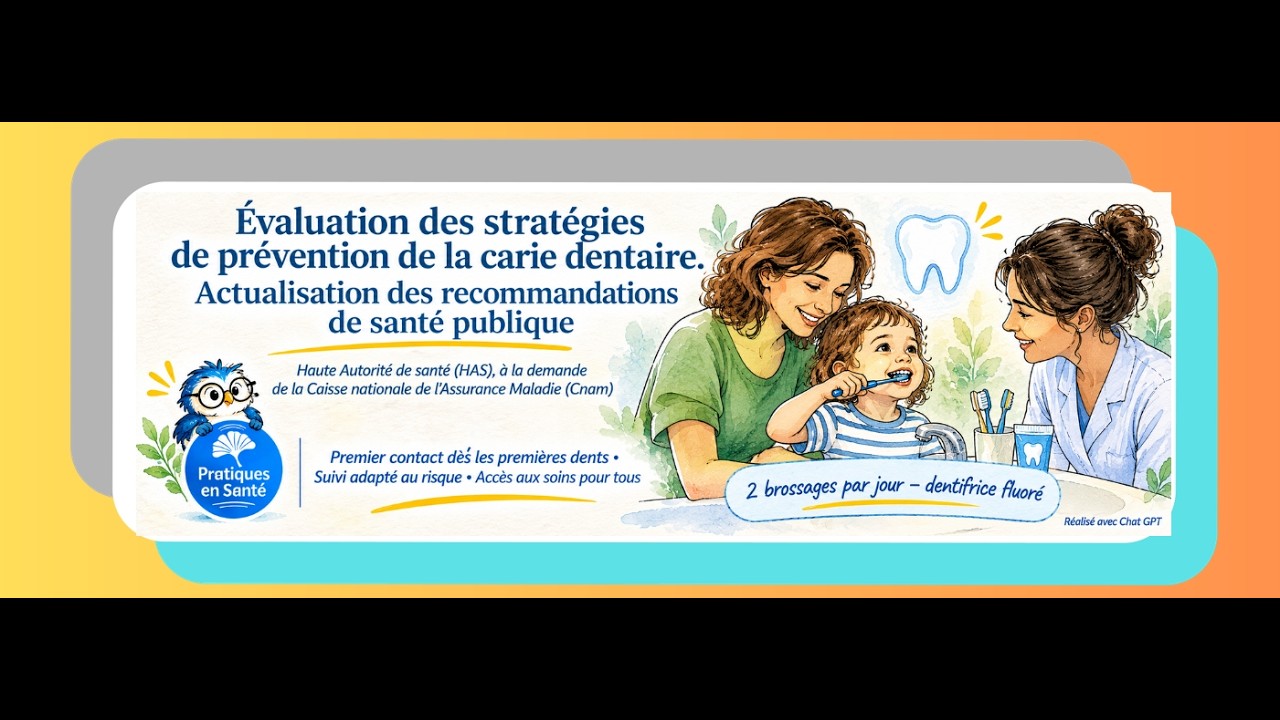
👀 First visit to the dentist at 3 years old is still the rule. But the HAS is changing the game: a first preventive contact as soon as the first teeth appear, personalized follow-up based on risk, and real access to care for everyone. What healthcare professionals need to know. 📒 Evaluation of dental caries prevention strategies. Update of public health recommendations ✍️ High Authority of Health (HAS), at the request of the National Health Insurance Fund (Cnam) Audio Capsules from Health Practices 🎙️🎥 https://www.youtube.com/watch?v=0shrWtMBJo4 Analysis of Health Practices and link to the source ℹ️➕ https://www.pratiquesensante.com/blog/pratiques-15/evaluation-des-strategies-de-prevention-de-la-carie-dentaire-actualisation-des-recommandations-de-sante-publique-6361 📌 This document directly concerns PMI teams (maternal and child protection), school health, and prevention actors. The HAS cites them as levers to engage early in prevention, along with the first 1,000 days, pediatric follow-up, and vaccination appointments (p. 10). It provides simple guidelines to share with families: brushing, fluoridated toothpaste, sugars, "M'T teeth" appointments every year! (p. 7, 12). It also shows how to connect parents, daycare centers, schools, PMIs, and dental offices, and how to ensure that referrals do not go unaddressed (p. 9, 11, 13). 🇬🇧: Evaluation of dental caries prevention strategies. Update of public health recommendations - https://www.pratiquesensante.com/en/blog/practices-15/evaluation-des-strategies-de-prevention-de-la-carie-dentaire-actualisation-des-recommandations-de-sante-publique-6361 #️⃣ #OralHealth #CariesPrevention #HAS #MTDents #HealthPromotion #HealthInequalities #EarlyChildhood #Perinatality #Disability #GoingTowards #SantéBuccoDentaire #PréventionCarie #HAS #MTDents #PromotionDeLaSanté #InégalitésDeSanté #PetiteEnfance #Périnatalité #Handicap #AllerVers (translated)

Nearly one in two people felt pressured to accept care during their last experience in Quebec. The PAROLES project gathers the voices of 1,490 patients and 201 caregivers to understand how gynecological or obstetrical care becomes dehumanizing. Gynecological and obstetric care: weakened consent, care to humanise This report gives voice to patients and caregivers on the same subject. It shows that disrespectful care is not only due to individual behaviors: workload, protocols, and routine also play a role. It describes the effects on health and trust in the health system. For field actors, it proposes six axes of concrete recommendations: continuous consent, continuity of caregivers, training, team support, listening to patients, and access to recourse. Everyone can adapt these to their practice, their structure, and their local protocols. #ViolencesObstétricales #ViolencesGynécologiques #Consentement #SoinsRespectueux #HumanisationDesSoins #Périnatalité #SantéDesFemmes #Inégalités #FormationDesSoignants #Québec (translated)

We will level the playing field for American workers and chart a new, more sustainable course for the world economy. For decades many of our trading partners have adopted industrial strategies which included targeting manufacturing, wage and labor suppression, and they also employ other market-distorting practices that tilt the trade balance in their favour while eroding America's manufacturing base. #Tariffs #TradePolicy #ChinaTrade
"Japan does not have any non-market policy practices or structural excess production capacity... It is regrettable that a proposed measure targeting Japan has been announced in spite of this," the country's top government spokesman Minoru Kihara said. #TradeTensions #USTariffs #GlobalEconomy (translated)
In high school, sexual education sessions advance knowledge about consent or STIs. But do they reduce sexual violence? A review of 15 studies shows that the transition from knowledge to action remains the weak point. School-based interventions for sexual education and sexual violence prevention in adolescence: systematic review - Kathyllen Bezerra dos Santos, Vanessa Barbosa Romera Leme, Ana Carolina Fagundes dos Santos (State University of Rio de Janeiro) and Sheila Giardini Murta (University of Brasília), Brazil - Review: Psychology: Reflection and Critique, 2026, vol. 39, article 19 Audio Capsules on Health Practices 🎙️🎥 https://www.youtube.com/watch?v=2qQA2xE-KZ4 Analysis of Health Practices and link to source ℹ️➕ https://www.pratiquesensante.com/blog/pratiques-15/interventions-en-milieu-scolaire-pour-l-education-sexuelle-et-la-prevention-des-violences-sexuelles-chez-les-adolescents-revue-systematique-6358 According to the authors, this is the first systematic review that simultaneously studies sexual education and the prevention of sexual violence among high school students (p. 3). It describes the reported outcomes without establishing overall effectiveness. It also points out the blind spots: the behaviors of perpetrators, LGBTQIAPN+ youth, families. It is useful for anyone who designs or conducts sessions on emotional, relational, and sexual education (EVARS) in high school. 🇬🇧: School-based interventions for sexual education and the prevention of sexual violence among adolescents: systematic review - https://www.pratiquesensante.com/en/blog/practices-15/school-based-interventions-for-sexual-education-and-the-prevention-of-sexual-violence-among-adolescents-systematic-review-6358 #️⃣ #SexualEducation #EVARS #SexualViolence #Consent #Adolescents #HighSchool #HealthPromotion #GenderEquality #Prevention #SexualHealth #ÉducationÀLaSexualité #EVARS #ViolencesSexuelles #Consentement #Adolescents #Lycée #PromotionDeLaSanté #ÉgalitéFillesGarçons #Prévention #SantéSexuelle (translated)

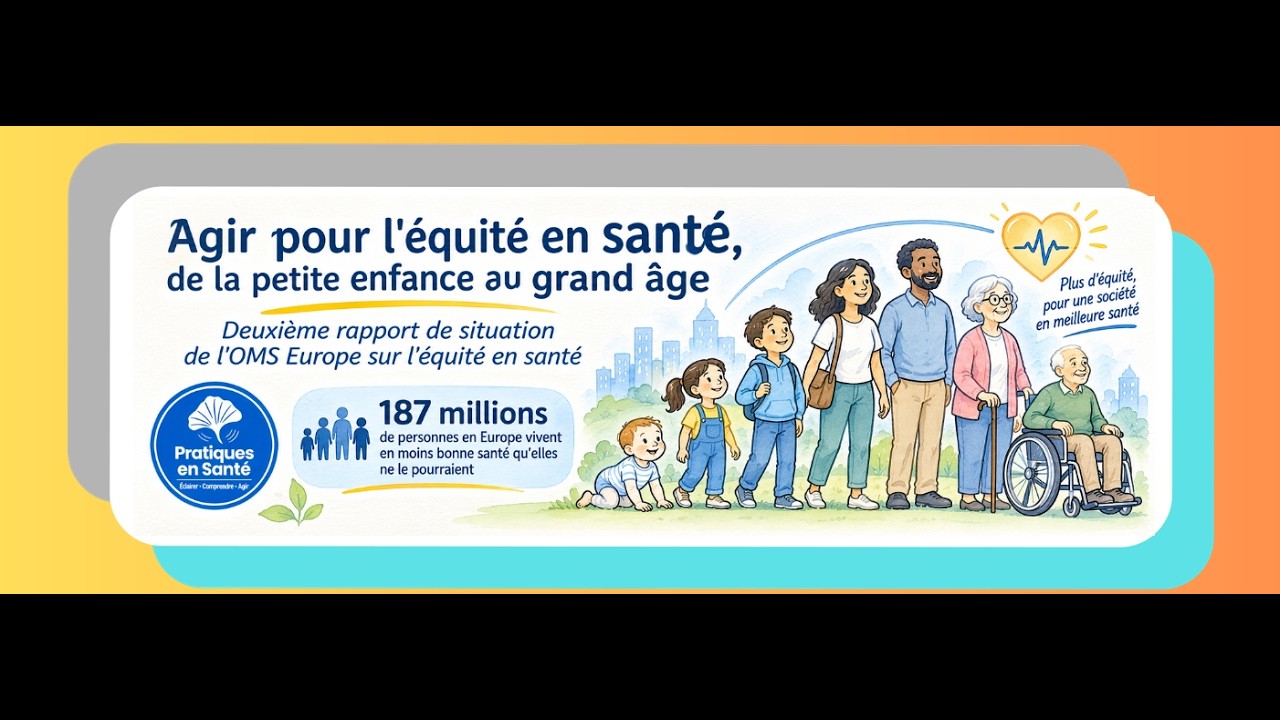
In Europe, approximately 187 million people live in poorer health than they could, according to the WHO. This report tracks these disparities from early childhood to old age. It presents over 60 examples of policies that reduce these gaps. Policy action for health equity from early years to later life: the second WHO European Health Equity Status Report - WHO Regional Office for Europe, Copenhagen. Writing: Chris Brown, Dorota Sienkiewicz, and Nikon Francesca Meru (WHO European Office for Investment in Health and Development, Italy), Peter Goldblatt (Institute of Health Equity, University College London), Are Izquierdo Skjaer, and Andrea Bertola Audio Capsules on Health Practices Analysis of Health Practices and link to source This report shows how health disparities emerge early and accumulate throughout life: housing, income, school, work, isolation, access to care. For each age, it provides comparative figures between countries, priorities, and concrete examples from across the Region, including France. It helps field actors make arguments to elected officials and funders: reducing health inequalities is presented as a social and economic investment. It also specifies what the health sector can do itself. Policy action for health equity from early years to later life: the second WHO European Health Equity Status Report #SocialHealthInequalities #HealthEquity #SocialDeterminants #WHOEurope #LifeCourse #EarlyChildhood #YouthHealth #SocialProtection #Aging #HealthPromotion #InégalitésSocialesDeSanté #ÉquitéEnSanté #DéterminantsSociaux #OMSEurope #ParcoursDeVie #PetiteEnfance #SantéDesJeunes #ProtectionSociale #Vieillissement #PromotionDeLaSanté (translated)

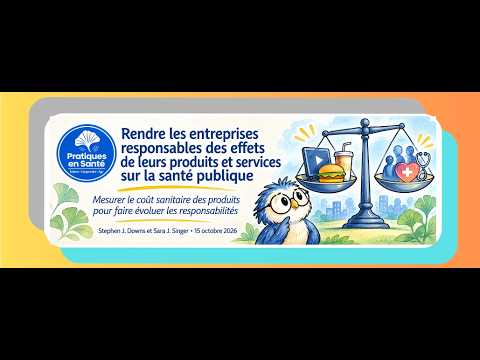
American estimates: Netflix would represent 32 billion dollars in annual health spending; Burger King, nearly 5 billion. Two researchers propose calculating what each company's products cost public health, so that companies bear a part of it. 📒 Holding companies accountable for the effects of their products and services on public health ✍️ Creating accountability for public health impacts of commercial products and services - Stephen J. Downs (Building H, a program of the Public Health Institute, and New York University) and Sara J. Singer (Stanford University). October 15, 2026. Audio Capsules of Health Practices 🎙️🎥 https://www.youtube.com/watch?v=_TWDsyGa188 Analysis of Health Practices and link to source ℹ️➕ https://www.pratiquesensante.com/blog/pratiques-15/rendre-les-entreprises-responsables-des-effets-de-leurs-produits-et-services-sur-la-sante-publique-6355 📌 Prevention actors recognize the influence of diet, screens, or sedentary behavior on health. This article shows how to quantify this influence company by company. It explains why these costs fall on the community and presents the tax as a way to share them between producers and consumers. It also provides arguments to move beyond just the rhetoric on individual responsibility. 🇬🇧: Holding companies accountable for the effects of their products and services on public Health - https://www.pratiquesensante.com/en/blog/practices-15/rendre-les-entreprises-responsables-des-effets-de-leurs-produits-et-services-sur-la-sante-publique-6355 #️⃣ #CommercialDeterminants #PublicHealth #Industry #Prevention #ChronicDiseases #BehavioralTaxation #Nutrition #Screens #HealthAdvocacy #HealthPromotingEnvironment #DéterminantsCommerciaux #SantéPublique #Industrie #Prévention #MaladiesChroniques #FiscalitéComportementale #Alimentation #Écrans #PlaidoyerSanté #EnvironnementFavorableÀLaSanté (translated)

This issue of Health Practices explores major issues that affect our practices: children's mental health, protection of their rights, prevention of violence, access to care, and the fight against inequalities. It also questions public health choices, from the role of prevention in future policies to the real participation of citizens in the decisions that concern them. Occupational health, artificial intelligence, support for the elderly and disabled, physical activity among adolescents, and environmental health with endocrine disruptors complete this overview. Several resources provide scientific benchmarks, feedback from experience, and tools that can be directly applied on the ground. Not to mention subjects that invite debate and engagement, such as the Nutri-Score or migration. A new selection to understand, question practices, share knowledge, and most importantly, provide keys to act. This week, Health Practices has surpassed 2 million visitors - Thank you all for your interest. #PratiquesEnSanté #PromotionDeLaSanté #Prévention #SantéPublique #SantéMentale #DroitsDeLEnfant #InégalitésDeSanté #DémocratieEnSanté #SantéEnvironnementale #SantéAuTravail (translated)

Endocrine disruptors are everywhere, even in breast milk. For the UNEP and WHO, the evidence of their effects on health is strong, and laboratory data is already sufficient for action. State of the Science of Endocrine-Disrupting Chemicals 2026 - United Nations Environment Programme (UNEP) and the World Health Organization (WHO). The main authors are Laura N. Vandenberg, R. Thomas Zoeller, Juliette Legler, Henrik Holbech, Martin Scheringer, and Leonardo Trasande. The report was funded by the European Union. It's the most recent global reference on endocrine disruptors (EDC in English). The report is primarily aimed at decision-makers. But it provides field actors with solid benchmarks: what effects are well established, which populations are most exposed, and which everyday products are involved. It helps discuss the topic without exaggeration or minimization. It also recalls that public information, with health professionals and schools, is considered a promising lever. State of the Science of Endocrine-Disrupting Chemicals 2026. #PerturbateursEndocriniens #SantéEnvironnementale #1000PremiersJours #Périnatalité #UneSeuleSanté #Bisphénols #Phtalates #SantéAuTravail #InégalitésDeSanté #Prévention (translated)

The author praised an article and said transgender ideation in children was unstable, usually resolved, and that resolution was the best outcome. The author claimed the draft Conversion Practices Bill would prevent parents and others from working toward that outcome.
Cost, "submersion", insecurity: concerning migration, misconceptions circulate quickly. France terre d'asile and Désinfox-Migrations confront them with official figures and research. A useful tool to respond, on the ground, to the narratives affecting the health of exiled persons. #Migrations #Désinformation #SantéDesExilés #AccèsAuxDroits #DemandeursDAsile #MineursNonAccompagnés #AideMédicaleDÉtat #Discriminations #IdéesReçues #PromotionDeLaSanté (translated)

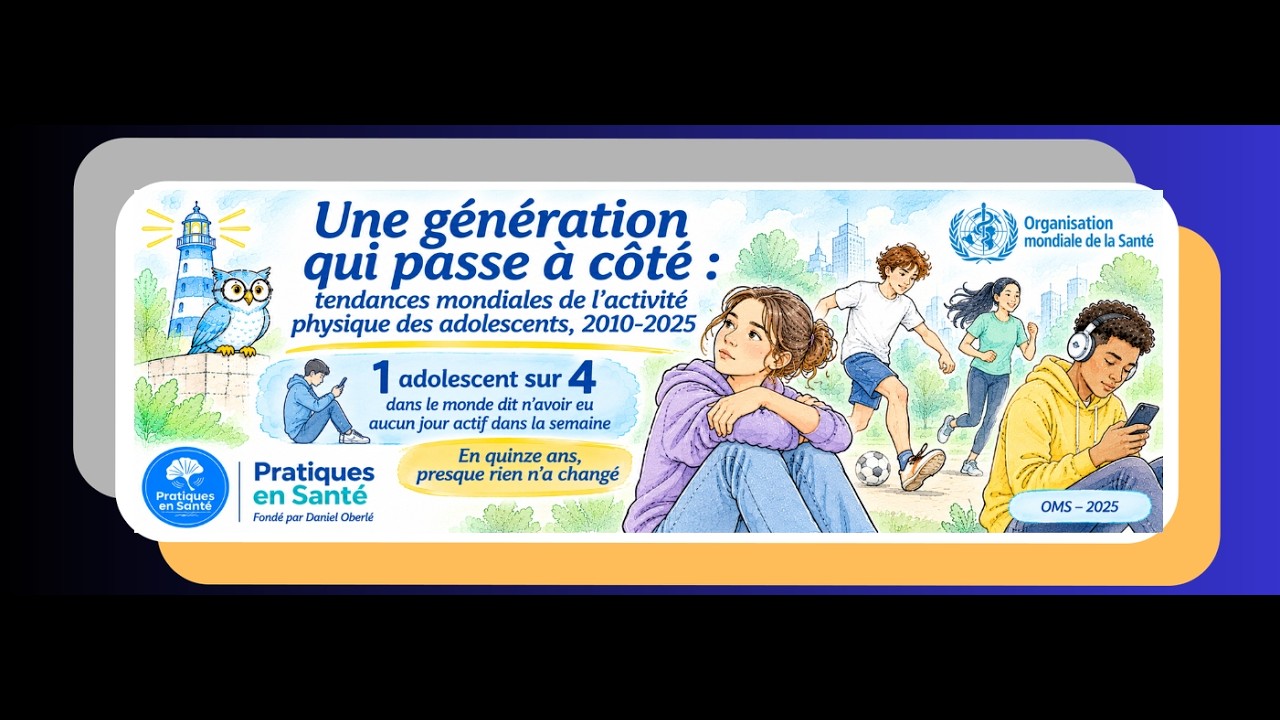
A quarter of adolescents worldwide report not having a single active day in the week. In fifteen years, almost nothing has changed. However, the new WHO report shows that some countries are doing much better than others, and that things can change. A generation missing out: global trends in adolescent physical activity, 2010-2025 World Health Organization (WHO), Geneva. The report was written by Dr. Fiona Bull and Dr. Juana Willumsen from the WHO headquarters' Physical Activity team, with funding from the WHO Foundation. Audio Capsules of Health Practices 🎙️🎥 https://www.youtube.com/watch?v=y50dPidY_tM Analysis of Health Practices and link to the source ℹ️➕ https://www.pratiquesensante.com/blog/pratiques-15/une-generation-qui-passe-a-cote-tendances-mondiales-de-l-activite-physique-des-adolescents-2010-2025-6349 In 16 highly readable pages, this report provides the latest global figures on physical activity for 11-17 year-olds. It shows that the gap between girls and boys persists and that progress is at a standstill. It also emphasizes that movement depends on the environments of young people and their opportunities, not just their individual choices. Finally, it proposes four main areas of action, useful for advocating for a project, convincing elected officials or partners, or rethinking an action with young people. A generation missing out: global trends in adolescent physical activity, 2010-2025 - https://www.pratiquesensante.com/en/blog/practices-15/a-generation-missing-out-global-trends-in-adolescent-physical-activity-2010-2025-6349 #PhysicalActivity #Adolescents #SedentaryLifestyle #WHO #HealthPromotion #GenderEquality #HealthInequalities #YouthHealth #SupportingEnvironments #Prevention #ActivitéPhysique #Adolescents #Sédentarité #OMS #PromotionDeLaSanté #ÉgalitéFillesGarçons #InégalitésDeSanté #SantéDesJeunes #EnvironnementsFavorables #Prévention (translated)

A proposed risk score without evidence of effect on morbidity-mortality, aspirin not recommended for primary prevention, no general strategy for LDL-cholesterol targets: the HAS updates cardiovascular prevention in primary care, focusing on clinical benefits and shared decisions with the patient. Global cardiovascular risk: assessment and management in primary care High Authority of Health (HAS), good practice service. Working group chaired by Clarisse Dibao Dina, general practitioner - October 2026 Audio Capsules of Health Practices Analysis of Health Practices and link to the source Cardiovascular diseases are the second leading cause of death in France in 2021, with 137,716 deaths, or 20.9% of the total. This recommendation is aimed at physicians, but also at pharmacists, nurses, dietitians, physical activity instructors, psychologists, and social workers. It distinguishes more clearly between demonstrated benefits, insufficient evidence, and risks of proposed interventions to individuals. It recognizes the weight of social and psychological factors in risk. It also offers a concrete method to discuss risk with the person and decide with them. Global cardiovascular risk: assessment and management in primary care # CardiovascularPrevention #CardiovascularRisk #HAS #PrimaryCare #SharedDecision #PatientCenteredApproach #Diet #PhysicalActivity #SocialInequalities #Women'sHealth #PréventionCardiovasculaire #RisqueCardiovasculaire #HAS #SoinsPrimaires #DécisionPartagée #ApprocheCentréePatient #Alimentation #ActivitéPhysique #InégalitésSociales #SantéDesFemmes (translated)

AI is entering businesses and occupational health services. It can reduce certain risks, but also create new ones. The INRS and Anact provide an update: what it promises, what it threatens, and how to make it a real subject of prevention and social dialogue. AI and occupational health: preventing risks, equipping dialogue Anact: National Agency for Improving Working Conditions. September 2026 Audio capsules of Health Practices Analysis of Health Practices and link to the source These five publications form a coherent whole. They include a long-term vision (INRS 2035), a field study on a specific usage (the review of occupational physicians' opinions), and a basic guide on psychosocial risks. They are complemented by feedback on social dialogue and a recent update from Anact that connects it all. The reader finds benchmarks to identify the effects of AI on work, integrate it into risk assessment, and involve employees and representatives before deployment. AI and occupational health: preventing risks, equipping dialogue #OccupationalHealth #ArtificialIntelligence #PsychosocialRisks #Prevention #SocialDialogue #RiskAssessment #WorkEnvironment #WorkingConditions #DigitalTransformation #SantéAuTravail #IntelligenceArtificielle #RisquesPsychosociaux #Prévention #DialogueSocial #DUERP #QVCT #MédecineDuTravail #ConditionsDeTravail #TransformationNumérique (translated)

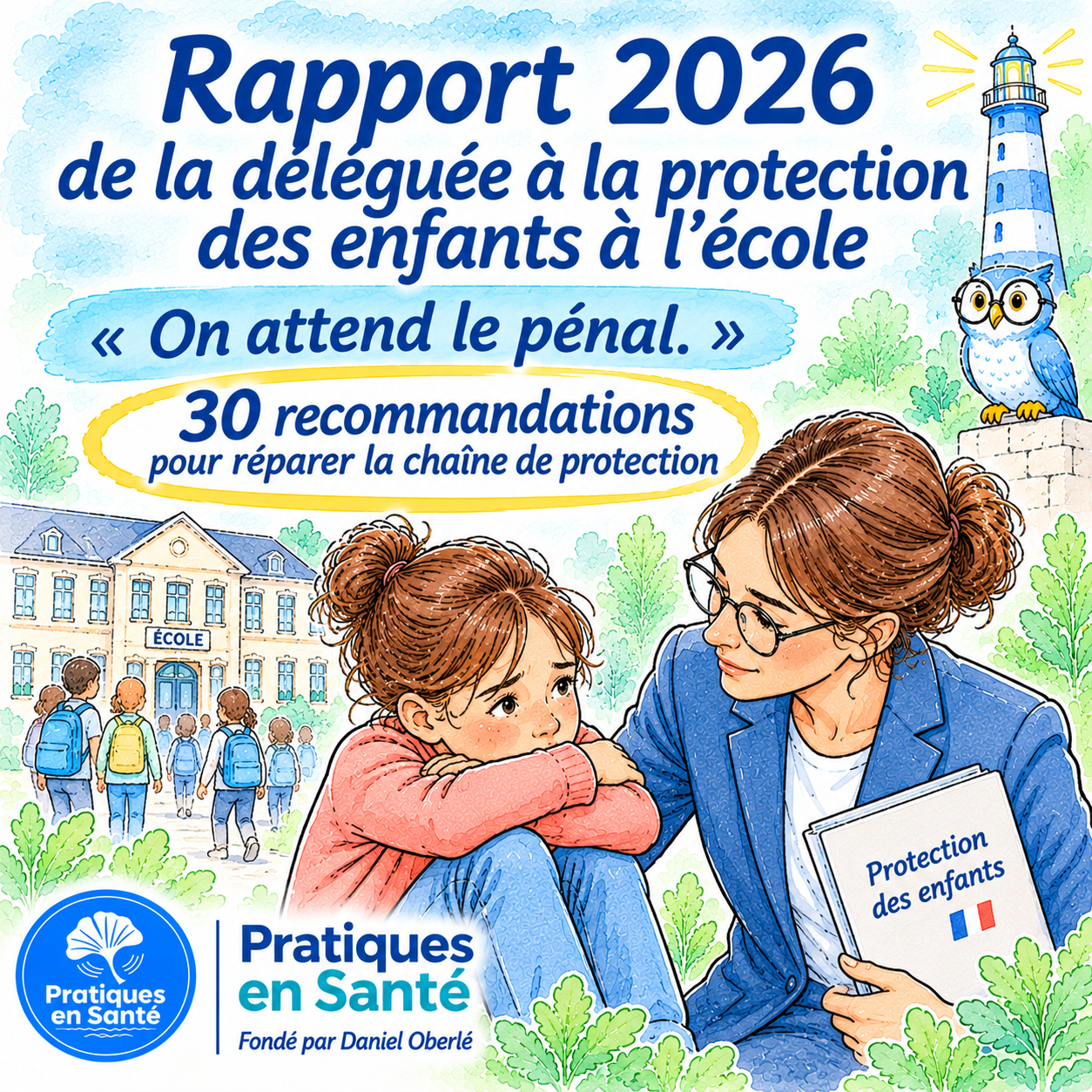
👀 "We're waiting for the penalty." This phrase comes up too often when a child reveals violence at school. After six months in office, the delegate for child protection shows where the protection chain breaks down and offers 30 recommendations to fix it. 📒 2026 Report of the Delegate for Child Protection in Schools ✍️ Cristelle Gillard, Delegate for Child Protection in Schools, within the Mediation of National Education and Higher Education (Ministry of National Education) - November 2026 Audio Capsules of Health Practices 🎙️🎥 https://www.youtube.com/watch?v=U22r6OPI9fs Analysis of Health Practices and link to the source ℹ️➕ https://www.pratiquesensante.com/blog/pratiques-15/rapport-2026-de-la-deleguee-a-la-protection-des-enfants-a-l-ecole-6345 📌 The report is based on complaints made to the mediation and numerous exchanges with field actors. Families that turn to mediation feel that their situation has not been well handled. According to the report, some have been "objectively" mishandled, while others are "felt as such". The document reviews each step of protection, from prevention to support. It also reminds the rules of reporting. It serves as a useful reference for all those working with schools, extracurricular activities, and families. 🇬🇧: 2026 Report of the Delegate for Child Protection in Schools - https://www.pratiquesensante.com/en/blog/practices-15/rapport-2026-de-la-deleguee-a-la-protection-des-enfants-a-l-ecole-6345 #️⃣ #ChildProtection #SexualViolence #School #Extracurricular #Reporting #ChildSpeaking #EVARS #CIIVISE #TrainingForProfessionals #ChildRights #ProtectionDeLEnfance #ViolencesSexuelles #École #Périscolaire #Signalement #ParoleDeLEnfant #EVARS #CIIVISE #FormationDesProfessionnels #DroitsDeLEnfant (translated)

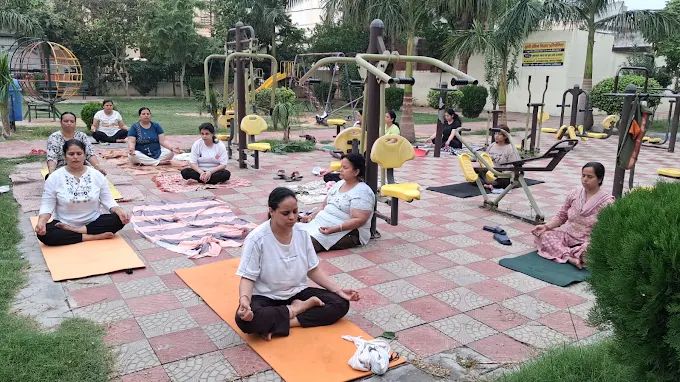
How Can Mediation Classes in Yamunanagar Help You Find Inner Peace? A peaceful mind is important for living a happy and balanced life. Regular meditation helps calm your thoughts, improve focus, and manage daily stress. Joining mediation classes in yamunanagar can help you develop a simple routine for mental relaxation and inner peace. Guided sessions make it easier to learn breathing techniques, mindfulness, and meditation practices. At Parivar Health Yoga Centre, you can learn simple meditation methods with proper guidance. Regular practice through mediation classes in yamunanagar can support better concentration, positive thinking, and emotional balance. Visit URL: https://share.google/qZz5ox2HzcstKY2Ml
Four major names in public health call on the candidates of 2027: 22 priorities to shift from care to prevention, regulate alcohol, tobacco, and gambling, and give back a voice to citizens. Faithful to the Ottawa Charter? Partly. And why aim for only 5% for prevention? Analysis. For the presidential candidates: A manifesto for health: 22 priorities divided into 4 axes, detailed in approximately 110 to 115 recommendations. 4 public health doctors — Bernard Basset (former DGS, INPES, addictions), François Bourdillon (former DG of Santé publique France, InVS, INPES), Serge Hercberg (epidemiologist, former president of the PNNS, creator of the Nutri-Score), Philippe Quénel (epidemiologist, former president of the Scientific Council of SpF, president of AIRPARIF). Audio Capsules of Health Practices. Analysis of Health Practices and link to the source. This manifesto directly concerns you if you work in prevention, health promotion or in social and medico-social fields. It proposes to make prevention a real policy over ten years, to give territories the responsibility for the health of their entire population and to act on food, the environment, work, and addictions. These are your areas of action. Reading it will help you identify what could change for your missions and funding, measure the gap with the Ottawa Charter, and prepare your arguments to engage the candidates of 2027. #SantéPublique #PromotionDeLaSanté #Prévention #ChartedOttawa #Présidentielle2027 #InégalitésDeSanté #DéterminantsDeSanté #AccèsAuxSoins #DémocratieEnSanté #ManifestePourLaSanté (translated)