WRLD

Search

#Industries
tagesschau.de 1h

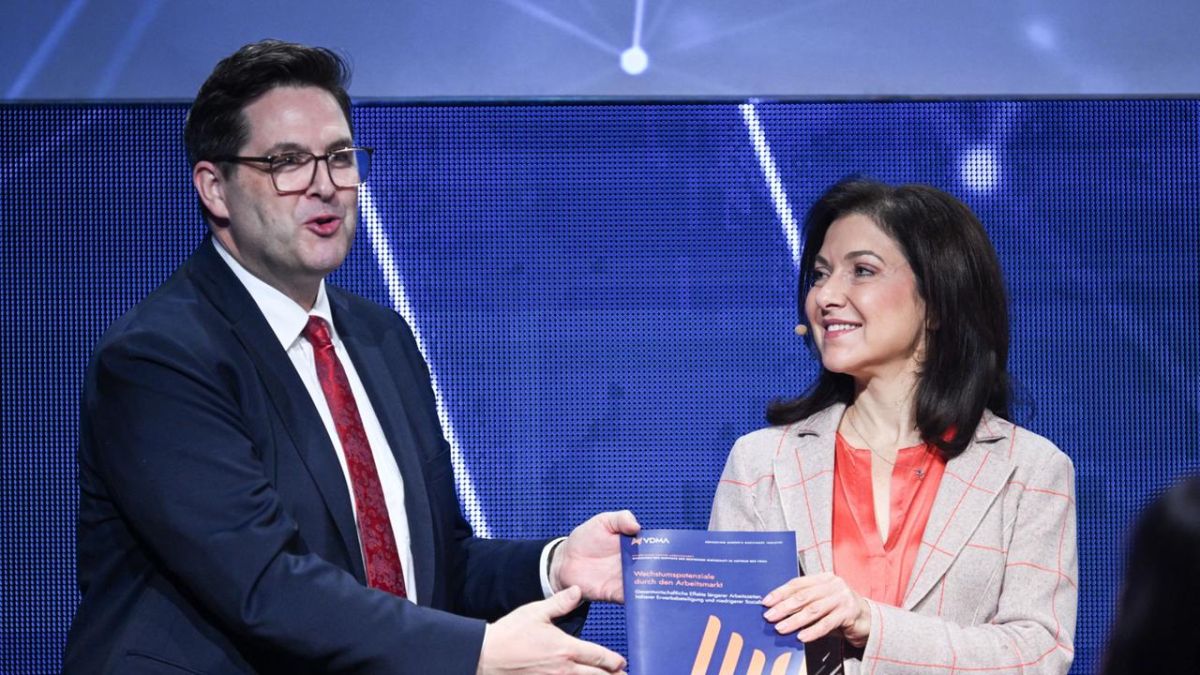
The Mechanical Engineering Association VDMA is stunned by the hesitant implementation of necessary reforms by the federal government and warns that internal disputes and a backlog of reforms threaten Germany's industrial location. #Maschinenbau #Reformen #Bundesregierung (translated)
www.tagesschau.de
Maschinenbauer "fassungslos" über Bundesregierung
1297
BFMTV 5h

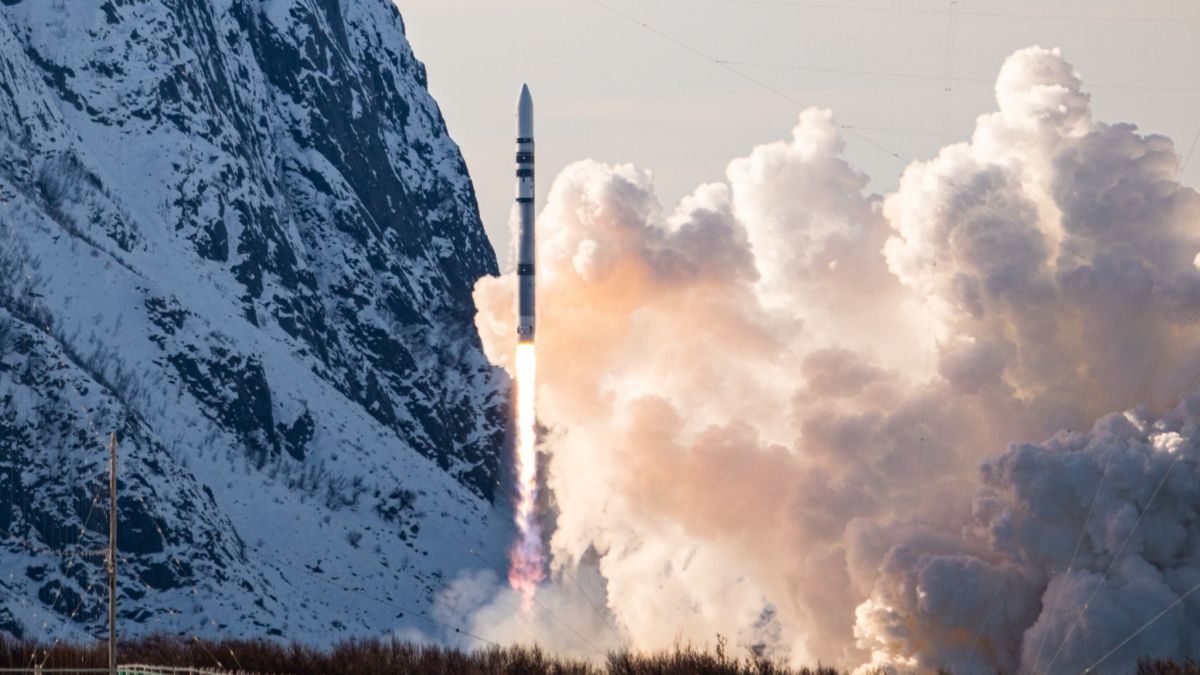
The German startup Isar Aerospace, with an already overloaded order book, plans to surpass SpaceX in a few years, thanks to the rapid increase in military needs in space resulting from European rearmament. #IndustrieSpatiale #Défense #Startups (translated)

www.bfmtv.com
"Pour chaque fusée, nous devons dire non à 14 clients": avec un carnet de commandes déjà plein à craquer, la start-up allemande Isar Aerospace se voit dépasser SpaceX dans quelques années
1545
BFMTV 22h

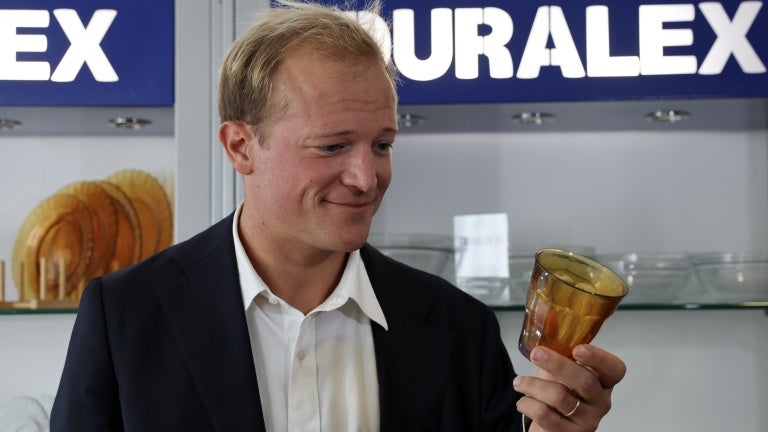
The new buyer of Duralex, Cédric Meston, aims to stabilize the glassworks in recovery by producing profitably and launching higher-end products, while avoiding selling at a loss. #Duralex #Industries #Entreprises (translated)

www.bfmtv.com
"L'objectif" est de "ne pas vendre à perte": le nouveau repreneur de Duralex veut "produire de manière rentable" pour "stabiliser" la verrerie en redressement pour la cinquième fois en 20 ans
2209
D
de Volkskrant 24h

The Tilburg-based weapon manufacturer AIA plans to produce firearms in collaboration with the Israeli company Israel Weapon Industries, despite objections and criticism from society and the political sphere. #wapens #Israël #Tilburg (translated)

www.volkskrant.nl
Tilburgse fabrikant gaat wapens produceren van Israëlisch bedrijf. ‘Ik ga me niet bezighouden met politiek’
1993
Emanuel Boeminghaus 2d

Emanuel Boeminghaus wrote that Patrick Graichen stated in November 2026 that the continued operation of German nuclear power plants from 2023 would have provided additional electricity at relatively low marginal costs. Graichen was the state secretary under Robert Habeck and had pushed for the nuclear phase-out. According to Boeminghaus, the last three German nuclear power plants were shut down on April 15, 2023. The loss of their electricity production further pressured the energy supply of the energy-intensive industry and may have led to higher wholesale prices. High energy costs had been burdening the competitiveness of the industrial location for years, he wrote. The nuclear phase-out had further weakened the location and exacerbated the difficult conditions for industrial companies. Boeminghaus cited BILD and WELT from November 7, 2026, as sources and thanked HotManufaktur for the tip. https://t.co/yw0veMf9TE #Atomkraft #Industrie #Energiewende (translated)

3452
BFMTV 3d

Sugar production in France is threatened this year due to the summer drought, which has led to a decline in beet production and a slowdown in refinery activity. #Sécheresse #IndustrieSucrière #ProductionAgricole (translated)

www.bfmtv.com
L'industrie sucrière plombée par la sécheresse
2452
Emanuel Boeminghaus 4d

Emanuel Boeminghaus wrote that at the valve manufacturer VAG in Mannheim-Waldhof, about one in three jobs is at risk. According to his information, around 170 positions could theoretically be eliminated, with IG Metall reporting that nearly all areas of the company are affected. The workforce was informed about a planned realignment on November 5, 2026. According to Boeminghaus, VAG in Mannheim anticipated significantly fewer orders. The company cited the expiration of several large projects, overcapacity, and changed customer requirements as reasons. He also wrote that the VAG group has been part of the Swiss Georg Fischer group since 2025 and employs around 1,000 people worldwide at eight production sites. The works council and IG Metall therefore wanted to explore alternatives to job cuts. https://t.co/7K2rF5xb7k #Stellenabbau #Industrie #Mannheim (translated)

3261
Dr Ellie Chowns MP 4d

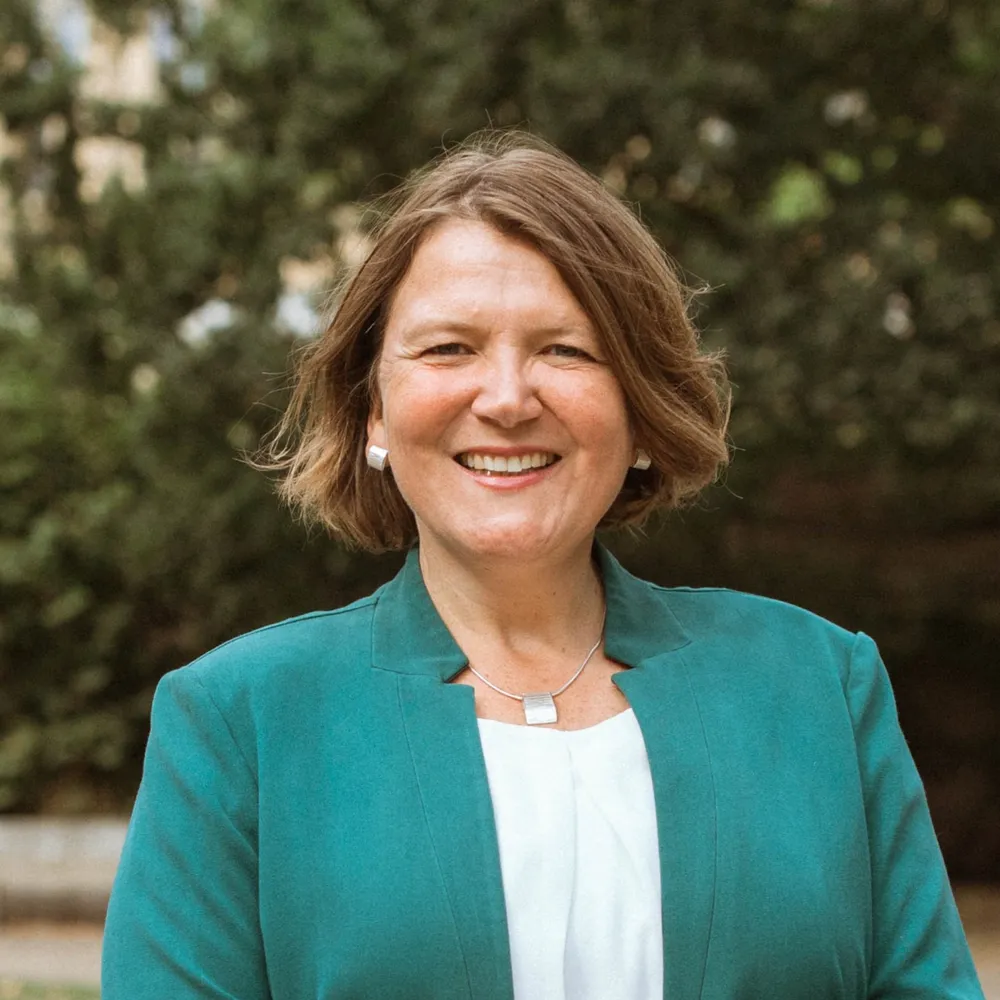
It is outrageous that over £13bn of public money has been spent on tax breaks for climate-wrecking fossil fuel giants since 2019. That's enough money to have fully funded years of support for North Sea workers' transition to renewable industries, or to have insulated every fuel-poor home in England.

2699
Marine Le Pen 5d
French politician (born 1968)

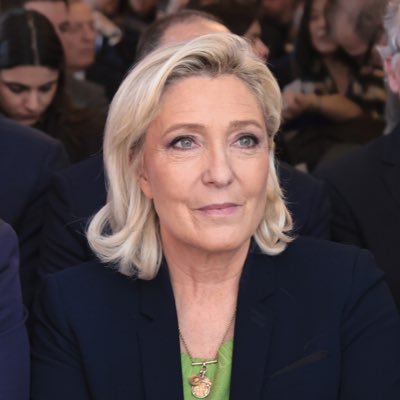
The author estimated that equipping the French armed forces with Rafale aircraft had enabled their exportation worldwide. He also advocated for an "economic patriotism" that would prioritize national companies in military purchases to support the economy. https://t.co/uSAS5illbd #PatriotismeÉconomique #IndustrieFrançaise #Exportation #FR #IN #AE #EG #QA #SA #BR (translated)

2934
Roland Tichy 6d
German journalist

The author wrote that the industrial power supply in Hamburg should in the future depend on a political criteria list from the state power administration. He argued that this was the only way to cope with the shortage. He referred to this as a transition to a shortage economy, where electricity would only be available against a ration card. https://t.co/1bzKwwZf8H #Energiepolitik #Stromversorgung #Mangelwirtschaft #DE (translated)

3399
Ursula von der Leyen 7d

Europe must not only remain the place of great scientific discoveries. It must be the place where those discoveries create new industries. This will determine our competitiveness and our prosperity. My keynote address at the WinWin Brussels Summit → link.europa.eu/4WJvRD

2045
Ursula von der Leyen 7d
President of the European Commission since 2019

The author said Europe should be a place where scientific discoveries lead to new industries, arguing that this would shape the continent’s competitiveness and prosperity. They made the remarks in a keynote address at the WinWin Brussels Summit. https://t.co/lIeJ8Gw1TQ https://t.co/C2IfXP8aBT #Innovación #Competitividad #Descubrimientos #EU

2954
Margus Tsahkna 7d
Estonian politician (born 1977)

The author said they had spoken with the Confederation of Finnish Industries about improving connectivity across Northern Europe. They wrote that strong connections and dependable transport routes served both economic purposes and strategic security needs, and also referred to Tallinn-Helsinki. https://t.co/bEBl0Toxwc #Liikenne #TaloudellinenKasvu #PohjoisEurooppa #FI #EE

2726
Janusz Piechociński 7d
Polish politician

The author of the post wrote that on Monday Mukesh Ambani, the head of the most valuable Indian company Reliance Industries, surpassed Zhang Yiming of ByteDance and became the richest man in Asia. According to the author, the sharp rise in Reliance Industries' stock increased Ambani's wealth by 8.5. #MukeshAmbani #najbogatszy #Azja #IN #CN (translated)

3409
FRENCHRAPUS 🇺🇸 1w

FRENCHRAPUS reported that Jules Koundé had responded to criticism regarding his use of English on Snapchat. The footballer had urged the French not to feel offended or self-conscious about people speaking English, which he described as the most widely spoken and dominant language in fields such as cinema, music, and business. He explained that he was interested in these areas and they influenced him, and that he had learned English for that reason. Koundé added that he would continue to express himself in French, English, and Spanish. #Football #Langues #JulesKoundé (translated)

3188
Aktuálně.cz - Víte, co se právě děje 1w

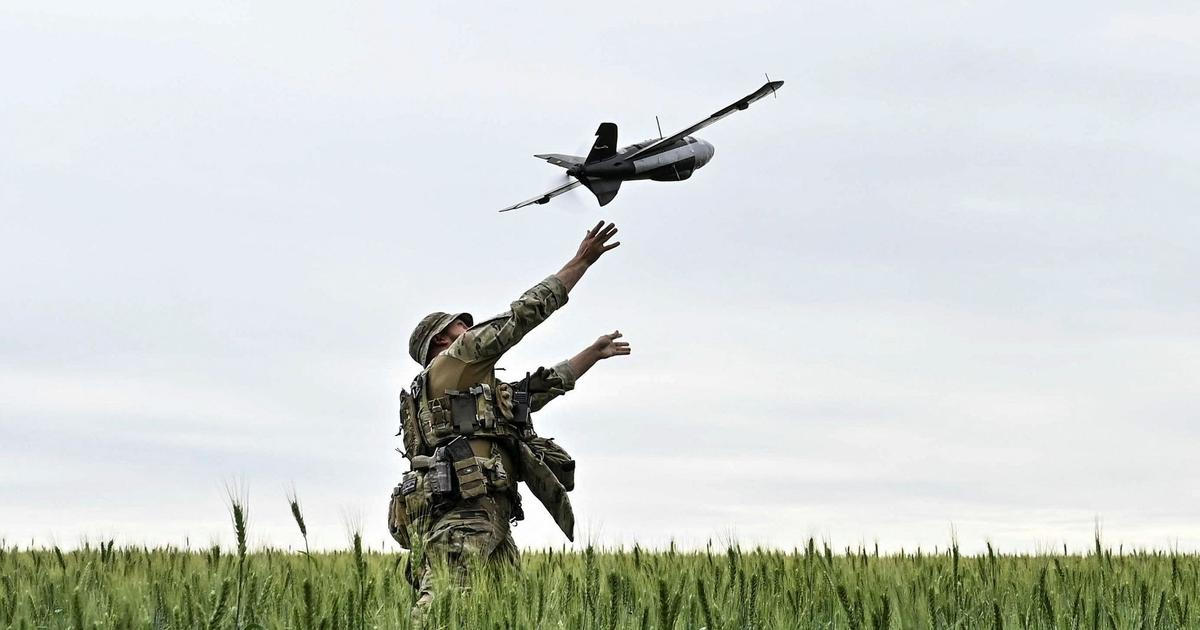
The head of the technology company Occam Industries, Gui Wainwright, warned that NATO must accelerate the development and implementation of military technologies, or it will be unable to withstand conflict, emphasizing that autonomous systems will play a key role in the future of military operations. #NATO #drony #technologie (translated)

zpravy.aktualne.cz
NATO musí zrychlit vývoj, tvrdí šéf technologické firmy. Pracuje na významném systému pro drony
2738
Georges-L BOUCHEZ 2w
Belgian politician

The author urged Europe to stop lecturing the rest of the world and to prioritize its strategic interests. He argued that a specific partnership with Turkey was essential given the common challenges, its geographical position, and the capabilities of the defense industries. https://t.co/f2B7mH2gfS #Europe #Partenariat #Sécurité #EU #TR (translated)

2981
Jon Cooper 2w

🚨With just days left until the midterm elections, Texas Republican Gov. Greg Abbott reported raking in millions of dollars from the tech and AI data center industries — including $5 million from Elon Musk. Abbott never met a data center he didn’t like.

www.politico.com
Musk gives $5 million to Abbott in Texas governor's race
2639
Jaunius Varnas 2w

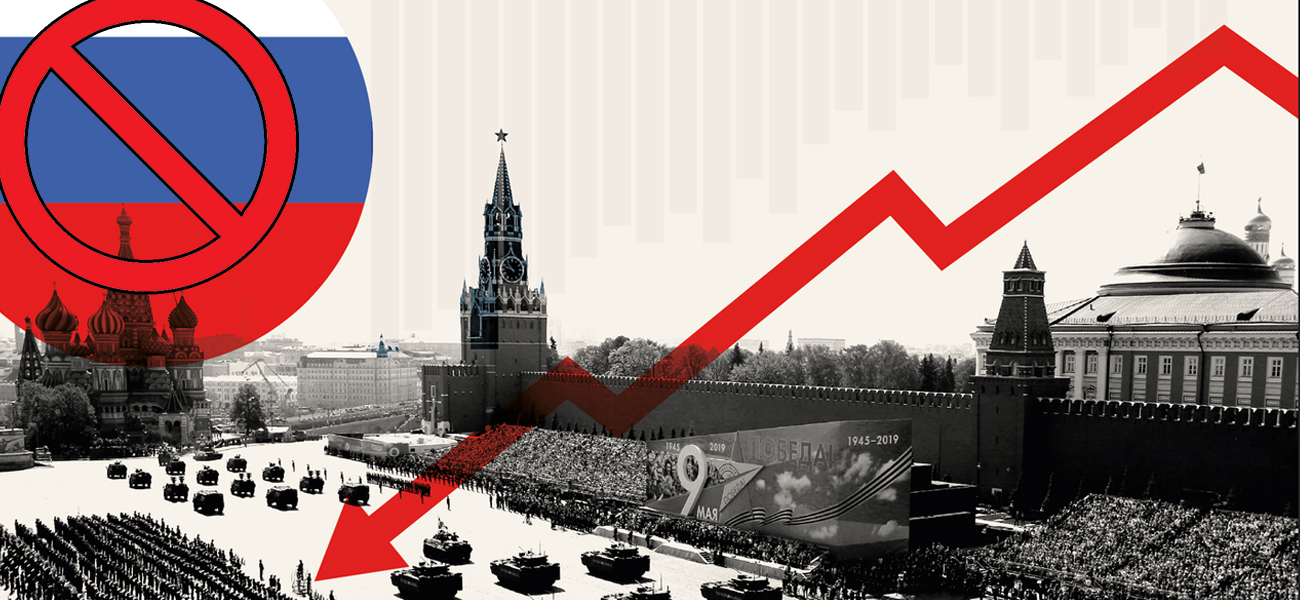
russia's MILITARY POTENTIAL CEILINGS There is no country that can wage war forever. There are plenty of myths about russia and how it can keep fighting and fighting, but there are things no country can overcome. These are simply economic and industrial ceilings that cannot just be expanded indefinitely. Especially when you're the most sanctioned country in history. Sit back, get comfortable — today I'm bringing you a BIG and very detailed article. Next year, russia will increase its military budget. And spending on it will account for around 35% of russia's entire annual budget. That's just according to the officially reported figures. And based on what we saw last year, we know that russia spends considerably more on the war than it reports. But when it comes to all this increased funding for the war machine, there's one BIG catch — russia doesn't exactly have the money for it. To keep its war industry running, russia is forced to significantly cut the budgets of other government sectors — education, healthcare, social services, and the national economy (infrastructure, agriculture, and so on). In other words, it's increasing the war industry's budget by cannibalizing other sectors. And it's ALSO very important to understand that even then, russia is no longer able to generate enough revenue to fully finance its annual budget. As a result, the state budget deficit keeps growing every year. And that's when the russians start selling their gold, diamonds, or printing A LOT of money to plug that budget hole. Whenever I try to explain how russia's economic situation keeps deteriorating, there are always commenters who say something along the lines of: "So what? They can still fight as long as they want, and you can talk about their problems all you like. Nobody's going to stop them." Well, THIS is where I'll try to explain why I think they're starting to reach the limits of their industrial capacity and, more generally, the limits of their offensive capabilities. When you shrink the civilian economy, investment declines, productivity falls, unemployment increases, prices rise, and it becomes more expensive for industry to manufacture things. On top of that, there's the growing global fuel crisis, which also drives up production costs. And russia ALSO has an existing labor shortage, and now it's going to carry out mobilization as well. That means it will independently remove, quite possibly, several hundred thousand men from the labor market. Whether that happens all at once or over the course of a year no longer matters — what matters is that those people will be taken out of the workforce. This creates a situation where russia is essentially destroying itself. It's increasing its military budget, but because it's cutting funding to other sectors and global economic problems are piling on, inflation rises so much that the larger military budget no longer translates into producing a whole lot more. Because everything simply costs MORE. And if we look at the war industry as a whole, there aren't many places left to expand because there aren't enough specialists. The only real option may be to try to redistribute the existing industrial capacity. For example, using the same budget, the same workers, and the same amount of materials to produce fewer tanks but more drones and missiles (I know this is a rough comparison, but the point still stands). Since I mentioned tanks, their production lines are also struggling to catch up with previous production levels. For example, russia used to refurbish a lot of old tanks from storage depots. But since those depots are now almost depleted, it has to manufacture more NEW tanks. And producing a new one costs MORE and takes longer. Tanks are just one example, but you have to understand that a similar situation applies to many other things. Instead of using old Soviet stockpiles, russia now has to manufacture a lot more equipment from scratch. THEREFORE, an increasing military budget in russia does not mean they'll have A LOT more of everything. NO. It simply means that everything costs them more. And looking ahead, it will cost them EVEN MORE, while they'll get less out of it. EVEN IF we take into account that China is still helping russia, we also have to understand that China isn't doing it for free. And no matter how many natural resources russia can send to China in exchange for technology, as inflation rises, the cost of those exchanges also increases. And as we know, China has been conducting those exchanges in its own favor since the beginning of the war. And once again, we run into the same ceilings — more trade does not necessarily mean a bigger war. More of everything is simply needed because everything is getting more expensive. There's an interesting situation unfolding in the world right now, where trump's war in Iran and the global fuel problems are simultaneously hurting russia's war industry as well. On top of that, I'm convinced that this entire promised wave of mobilization will also be russia's last serious attempt to push forward. RIGHT NOW, at THIS VERY MOMENT, a fundamental turning point in the war is taking place, and it's not being talked about very much. You could say the turning point was the expansion of Ukraine's drone forces, the attacks on oil facilities, the destruction of logistics, or something else. BUT all of this ultimately comes down to one BIG factor. russia is starting to reach the peak of its military potential. After this entire mobilization (whatever its size), they won't be able to carry out another one on the same scale. Well... they technically could, but each subsequent wave would be progressively weaker and of lower quality. At the same time, russia's military industry is starting to reach its ceilings. Looking ahead, not only will it have nowhere left to expand, but it's very likely to start contracting for the very same reason it grew in the first place — cuts to the budgets of other government sectors and the resulting inflation. Just take something as simple as cuts to healthcare funding. You might ask, what do hospitals have to do with the war industry? Well, if the state doesn't provide enough money to treat people, it's likely that more health problems will emerge, and that will affect the labor market. Which, in turn, will affect production — including the war industry. SO, I suspect that after 2027 (yes, unfortunately, that's still a long way off), russia will still be able to continue the war, but the pace of its war industry and its offensive operations will inevitably decline. THEN, let's take into account that russia is already suffering absolutely insane losses this year in exchange for increasingly smaller amounts of occupied territory. So let's understand that this is happening while russia can still maintain at least its current offensive pace and industrial production. What happens if any one of those factors contracts? We have a real-life example of what happens then — today, russia can no longer recruit enough people in a single month to replace the number being killed in the war. As a result, russian occupation forces are gradually retreating every month, and the occupiers are losing the territory they had captured. 2027 will still be the year when russia plugs this gap. In other words, whatever it can no longer recruit voluntarily, it will force into the front lines through mobilization. And then we'll have a whole range of other problems, which I've essentially already mentioned. russia will voluntarily reduce its own workforce (and let's add those who flee the country). Unmotivated, untrained, and poorly equipped soldiers at the front will achieve increasingly fewer results. The war industry will become more expensive while producing less for the front. russia will start facing problems filling the gaps created by its own shortages. When russia reaches these ceilings, it will certainly still be able to continue the war, but it will no longer be able to maintain the same pace. Especially the pace of its offensive operations on the front. THEREFORE... I can't say that Ukraine will definitely start reclaiming more of its territory, because we don't know how Ukraine itself will manage its funding. BUT the conditions are there, and Ukraine still has some cards it hasn't played yet. Here, let's also remember the ballistic missiles that are still to come into play. They won't be some complete WOW moment that changes everything. BUT they will allow Ukraine to destroy russia's industry much more aggressively, which is ultimately still one of the most important factors, because it eventually affects the quality of russia's offensive operations as well. BECAUSE having more people does not mean capturing more territory if those people are not properly supplied and supported from the rear. And then we get to the part I've actually been talking about for a very long time. What else can russia do if its offensive potential on the front starts to collapse? I'll repeat myself — russia is trying to compensate for the lack of frontline forces by intensifying its air attacks. And that creates the illusion that its offensive never stops and that russia is constantly escalating. + This is also an attempt to break Ukrainian civilians and make them demand that their government enter negotiations with russia. Historically, however, this kind of tactic has very rarely worked, regardless of which country we're talking about. Offensive operations on the front and air attacks are two different things. russia's frontline capabilities are shrinking, and that's why it is forced to carry out mobilization. That mobilization won't help it achieve A LOT more victories, BUT it will buy time — time it can use specifically to intensify its air attacks. And once again, it's the same thing — continuing a war does not necessarily mean fighting a successful war. russia, seeing that it cannot achieve victories on the front, is redirecting more of its industrial capacity toward producing drones and missiles. BUT we also have to understand that this does not necessarily mean producing a whole lot MORE drones and missiles forever. Because, as I've already explained, there are limits to production due to inflation, rising manufacturing costs, and labor shortages. ALSO, when it comes to missiles, they face a similar situation to russia's old tanks. Just as russia spent several years pulling old tanks out of storage and refurbishing them, it is also still mainly using its huge Soviet-era missile stockpiles, which it is MODIFYING. To maintain the pace of its attacks, it is EVEN converting missiles from its S-400 air defense systems into ballistic attack missiles. In other words, it's cannibalizing its own air defense resources to maintain its offensive capabilities RIGHT NOW. And you should understand that this kind of strategy also has its ceilings. This kind of strategy could create VERY serious problems for the russians when Ukraine ramps up its own ballistic missile production and russia itself starts needing more DEFENSIVE missiles — the very ones it is currently converting. So, when you combine the fact that Soviet stockpiles, although large, are not infinite and will eventually run out, with the fact that you cannot manufacture everything new in such large quantities or so quickly, and with the fact that everything russia produces from scratch becomes increasingly expensive over time... And when you also factor in the labor shortage affecting the drone and missile industries... We can predict that even the intensity of russia's air attacks has ceilings, and those ceilings will eventually be reached. Now, someone will say that I've explained all this rather abstractly, without numbers and so on. Fine, here are a few: Between 2023 and 2025, production in some key defense-related industrial categories doubled. HOWEVER, by 2026, growth had slowed significantly. Transport equipment: just +23.3% (instead of doubling), metal products: just +12.6% (instead of doubling), electronics and optical equipment: just +2.1% (instead of doubling). These are just a few examples. russia can allocate more and more money to its war industry, but that doesn't necessarily mean it can proportionally manufacture more weapons. EVEN MORE IMPORTANT — in September 2026, employment in manufacturing was already declining for the tenth consecutive month, while production volumes were falling again. This is NOT the collapse of production, but it clearly shows that the military industry is starting to reach its ceilings, which is exactly what I'm talking about. And those ceilings are being reached precisely because, once again, other government sectors are having their budgets cut, resulting in rising production costs. + Global economic consequences, economic sanctions, and Ukrainian strikes on factories. Now, if some of you are thinking of bringing up Ukraine and how it has the same problems, I'll dare to say that it's NOT quite the same. Over these several years of war, Ukraine has expanded its military industry so dramatically that its main obstacle is something else — a lack of funding. In other words, Ukraine is nowhere near reaching the limits of its production capacity. And on the front, we're already seeing more or less equal capabilities, and in some areas even an advantage for Ukrainian forces, with what they currently have. In 2025, zelensky said that Ukraine's war industry was operating at only 60% capacity. Well, in 2026, that situation is changing, because Ukraine is receiving considerably more funding. It's a fact that Ukraine also has its own problems and faces the same inflation, but when it comes to the ability to increase production volumes, it still has plenty of room to do so. After all this, there are a few rather unpleasant factors left. YES, russia's military potential will definitely shrink, BUT that doesn't mean the war will definitely end because of it. russia will still be able to continue the war, albeit at a weaker pace. At this point, we can expect russia to make indirect attempts to start peace negotiations, and we will likely see a shift in its propaganda messaging. When they see that they no longer have the potential to continue fighting at the same pace and that their objectives are UNACHIEVABLE, they will EXACTLY start claiming that their military objectives have ALREADY been achieved and that the war can now be ended. Why would they do that? Well, because it will be the best negotiating position they can possibly have. After that, it will start getting weaker. How do I come to this conclusion? Just look at what's happening in the war in Iran — the war is supposedly ongoing, but it's not really going on anymore, and there is NO agreement. America can no longer continue its offensive, so trump keeps saying that the military objectives have already been achieved and that they won the war a long time ago. It's just that Iran refuses to surrender. The same thing will happen with the russians: When they see that they are losing the initiative, they will start claiming that the war has been won and that it's time to end it. At this point, russia will, of course, still demand its own terms, and if those terms are not implemented, it will resort to increasingly terrorist attacks. And then it will be up to Ukraine to decide whether to keep fighting a little longer to weaken russia's position even further, or to sit down at the negotiating table. The sad reality is that by that point, Ukraine itself will have been battered so badly that it will neither have the resources to continue the war nor much desire to keep shedding blood. That desire is already gone, and it never existed in the first place. But in this war, Ukraine is defending itself, so it has no choice. And there's one more dangerous factor. By dragging out the war, russia is trying to wait for political winds to shift in its favor in Europe and elsewhere. And this is where russia is also using another huge pool of financial resources to try to influence political parties in the Western world and spread propaganda among the public. The next major barrier will be the November elections in America.

574
Prem Sikka 2w

Super-rich get ‘double dividend’ from causes and costs of climate crisis. They profit from polluting industries, and through the ‘adaptation economy’. Super-rich buy govts, control means of production and think tanks. Victims pay higher prices for food, homes, relocations. Who governs?

www.theguardian.com
Super-rich get ‘double dividend’ from causes and costs of climate crisis, report finds
3103