BETA nonprofit public democratic european moderated

Search

#THE
D
der Standard Just Now

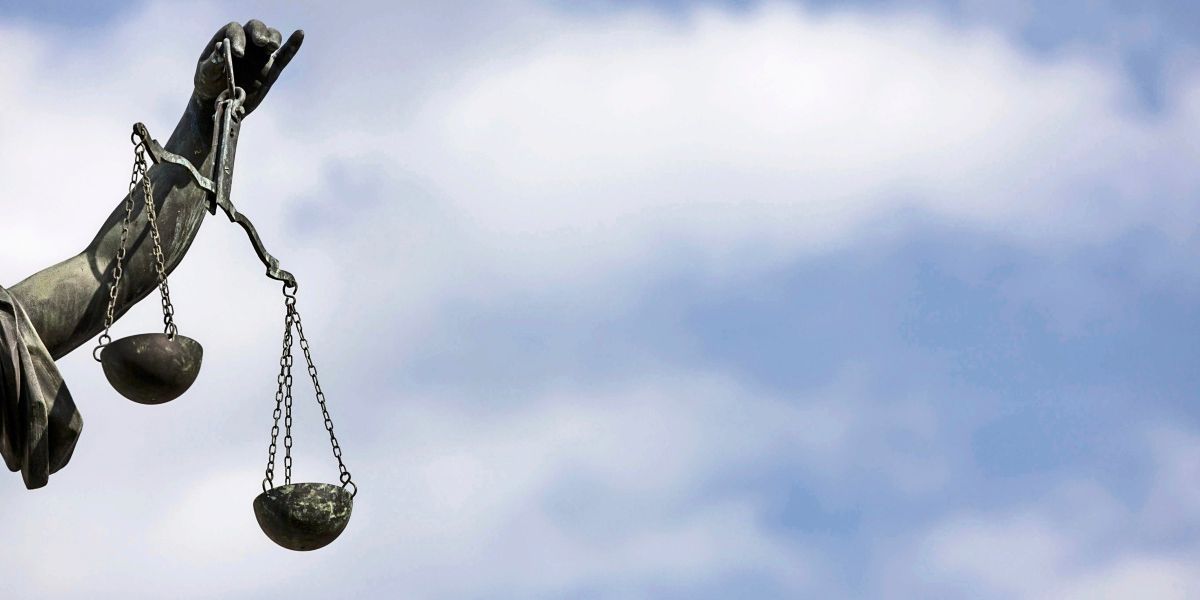
Der Artikel behandelt die Debatte über die Verantwortung und Grenzen des Einsatzes von Künstlicher Intelligenz (KI) in der Verwaltung und Justiz, insbesondere im Kontext einer Verfassungsbeschwerde in El Salvador, die die Risiken einer unzureichenden Überprüfung von KI-generierten juristischen Texten thematisiert. #KIGerade #Recht #Verantwortung

KI vor Gericht: Warum der Mensch das letzte Wort behalten muss
Donald Trump makes freedom of speech a major topic in the EU: Rescue from EU censorship? (translated)

🚨Saïd Remadnia prolonge avec l’OM malgré l’intérêt de Chelsea. Aaron Tinelle, Azhar Ali, Amir Kernif, Babacar-Vincent Dione, Bradley Levy, Cheick Diarra, Dan Cohen, Esteban Thomoux, Gianni Calisto, Lhéandre Durand, Maxence Thevenet et Moctar Guirassy prolongent aussi. #TeamOM https://t.co/q9T7nZgQbE #OM #Football #Transferts

Russia is targeting children. This harrowing @UNICEF report is only the tip of the iceberg. Thousands of Ukrainian children have been killed, injured, displaced, deported, or robbed of their childhood by Russia’s relentless bombardment. There can be no justice until Russia is #SaveOurChildren #StopTheWar #Ukraine #RU #UA

Die Antwort der Landesregierung Niedersachsen auf eine Anfrage des Landtagsabgeordneten Jozef Rakicky zeigt die Probleme im Umgang mit psychisch kranken Straftätern, die als Asylbewerber nach Deutschland kamen, gut auf. Er bezieht sich in dieser Anfrage auf die am Bahnhof Friedland getötete 16-jährige Ukrainerin Liana K. Ein 31-jähriger, eigentlich ausreisepflichtiger Iraker hatte sie vor einen einfahrenden Zug gestoßen. Der Täter wurde wegen Schuldunfähigkeit aufgrund einer paranoiden Schizophrenie im Maßregelvollzug untergebracht. Das Urteil ist noch nicht rechtskräftig. Herr Rakicky wollte unter anderem wissen, wie viele ausreisepflichtige Personen, die gleichzeitig mit einer schweren psychischen Erkrankung wie Schizophrenie diagnostiziert wurden, sich in Niedersachsen aufhalten. Antwort: Wegen datenschutzrechtlicher Schutzbedürftigkeit und fehlender rechtlicher Grundlage liegen diese Daten weder den Ausländerbehörden noch dem verantwortlichen Innenministerium vor. Man weiß es also nicht. Um die Frage, wie viele Straftaten von ausreisepflichtigen Personen mit gleichzeitiger schwerer psychischer Erkrankung es gibt, zu beantworten, müsste man angeblich jeden einschlägigen Fall manuell mittels Akteneinsicht prüfen, da diesbezüglich keine Statistik erhoben wird. Man weiß es also auch nicht. Die Frage, wie viele der genannten Täter den Behörden bereits als Gefährder oder gefährdete Person bekannt waren, kann man auch nicht beantworten. Auch das weiß man nicht. Eine Frage konnte man jedoch beantworten. In den Einrichtungen des Maßregelvollzugs für psychisch kranke Straftäter befinden sich aktuell 38 Personen, die nach unserem Gesetz ausreisepflichtig sind. Diese Straftäter haben also kein Recht, hier zu sein, werden aber für rund 350 Euro pro Tag und Person (Durchschnitt Niedersachsen) weggeschlossen während gleichzeitig mittels Therapie die Resozialisierung versucht wird. Diese 38 psychisch kranken Straftäter, die eigentlich gar nicht hier sein dürften, verursachen damit Kosten in Höhe von rund 13.000 Euro pro Tag, rund 400.000 Euro pro Monat und somit 4,8 Millionen Euro im Jahr. Die Rede ist nur von Niedersachsen. In den anderen Bundesländern wird das ähnlich aussehen. Die Opfer dieser ausreisepflichtigen Straftäter können von dieser Unterstützung und von diesen Summen nur träumen. Quelle: Drucksache 19/11197 #PsychischeGesundheit #Asylbewerber #Straftaten

The government prefers to unsynchronize pensions to be able to make outrageous financial gifts to private operators of wind and solar panels! In 2026, 9.06 billion from the state's budget will be paid to them to compensate for the extra cost of energy. (translated)

In the Dutch newspaper @NRC, a reviewer calls the mass displacement of Arabs in 1948 a "taboo" in Israeli literature — and then proceeds to review an influential Israeli novel that appeared no less than a year later, was placed on the Israeli high school reading list in 1964, and https://t.co/t19UsduN1O #IsraeliLiterature #1948 #TabooTopics #NL #IL #PS

Man kann sich nur darüber wundern, dass die Umgehung selbst propagierter Gesetze durch einen Gesundheitsminister bei manchen weniger Empörung auslöst als der Debattenbeitrag einer Verfassungsjuristin, die diesen Widerspruch zwischen Gesetz und eigenem Handeln thematisiert. #Gesundheit #Recht #Politik

Bild 2h

Wiebke van Hoorn (†27), die als Krebs-Influencerin über ihre Erfahrungen mit einem aggressiven Nebennierenrindenkarzinom postete, verstarb kurz nach ihrer Hochzeit und hinterlässt einen emotionalen Abschied auf Instagram, in dem sie ihre Dankbarkeit und die Notwendigkeit betonte, ihre Therapie zu beenden. #Krebs #Influencerin #cancerfluencer

Wiebke postete über ihre Krankheit - Krebs-Influencerin (†27) stirbt nach Abschiedspost

🚨 ARSENAL EST INTÉRESSÉ PAR EZRI KONSA 🏴󠁧󠁢󠁥󠁮󠁧󠁿 !!! ❤️🤍 Cependant, Arsenal et Aston Villa sont très éloignés sur sa valorisation. 🗞️ @TheAthleticFC https://t.co/G6j64XFq4e #Arsenal #TransferNews #Football

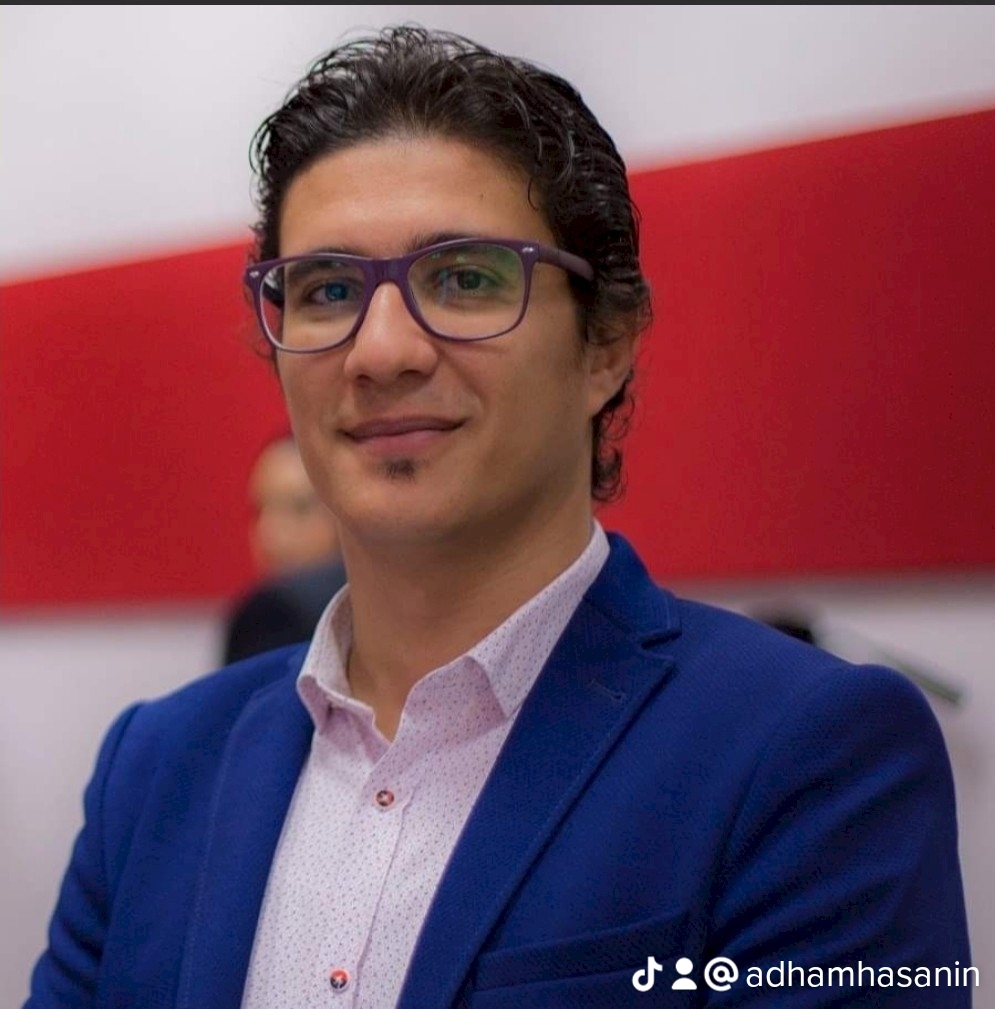
| JULY 2026 | The Guard State How the largest Arab nation became a security contractor at the gates of its own people By Adham Hasanin Egyptian journalist and political writer, based in the Netherlands In June 2025, hundreds of activists from forty countries landed at Cairo airport. Doctors from France, lawyers from Australia, students from the United States, pensioners from the Netherlands. They carried no weapons and no banned slogans; they carried backpacks, walking shoes, and a single intention: to march from Arish to the Rafah crossing — entirely on Egyptian soil — to demand that food be allowed through to a people starving behind the gate. Not one of them reached Rafah. More than two hundred were detained before the march could begin. Around five hundred foreign nationals were deported from airports, hotels, and checkpoints. Passports were confiscated, activists were pulled out of downtown Cairo cafés, and the Global March to Gaza was cancelled on 16 June without taking its first step. And the world watched. This was no secret operation in a dark basement; it happened in the open, documented by the deportees’ own phone cameras, carried by every international news agency. The world watched an Arab state arrest Europeans, Americans, and Africans for wanting to walk towards Palestine. A state guarding the gate of a siege — from the side that was supposed to be the side of rescue. Hold that image, because it is the key to everything that follows. This was not an aberration in Egyptian policy, nor an isolated security decision. It is the function — the complete function around which the Egyptian state has been redefined over the past decade, and which it is time to call by its proper name: the Guard State. I. The Name — What Do We Mean by the Guard State? Political economy has long described states that live off the rent of their location rather than the production of their people. But what has crystallised in Egypt over the past decade goes beyond traditional geographic rent — the Suez Canal, say — into something far graver: the conversion of sovereignty itself into a commodity for hire. The Guard State does not sell its location; it sells its function. It collects its wages not for what it produces, but for what it prevents: it prevents the refugee from reaching Europe, the activist from reaching Gaza, its own people from reaching politics, and the resistance’s weapons from reaching their destination. Four gates, guarded by a single machine, whose wages are paid in loans, deposits, and perpetually renewed rescue packages. This is not a rhetorical metaphor; it is an economic structure with numbers attached. When the Egyptian economy collapsed in 2024, it was rescued not by productive reform but by a single deal whose subject was location: Ras el-Hekma — thirty-five billion dollars for a stretch of coastline. And whenever negotiations with the IMF stall, the tranches are unlocked by explicit European pressure whose subject is migration: nine billion euros from the European Union in the 2024 “Strategic Partnership,” whose own documents place “migration management” at its core. Europe does not pay Egypt to prosper. It pays Egypt to guard. Thus the model is complete: income in exchange for prevention, external legitimacy in exchange for guarding, and international silence about domestic tyranny in exchange for keeping the gates controlled. To see how the model works on the ground, consider the bloodiest gate of all: the gate of Gaza. II. The Gaza Gate — The Guard Who Is Himself Searched The first paradox must be nailed down with facts: Egypt is not a sovereign guard of its own crossing; it is a searched guard. Egyptian relief trucks — ninety-two thousand food parcels in a single convoy this month — are subject to Israeli inspection before entering the Strip: from Egyptian soil, through a crossing that bears an Egyptian name. The state that guards the gate does not hold its key. It owns the threshold, but not the door. Then the October 2025 truce added a new layer to the function. Under the fifteen-point roadmap sponsored by the international envoy together with the “guarantor states” — Egypt foremost among them — Cairo is to train the civilian police force that will replace Hamas in administering the Strip, under the slogan of “one authority, one law, one weapon.” Let us call things by their names: the state that could not — or would not — deliver a loaf of bread without Israeli permission is now qualifying to graduate the security apparatus that will oversee the disarming of the resistance. From guarding the siege to administering what comes after the siege — a promotion within the same project. And meanwhile, what is happening behind the guarded gate? Since the truce, more than one thousand one hundred Palestinians have been killed by Israeli fire — the latest, just two days ago, a ten-year-old boy named Motaz Abu Shaar, carried to his grave in Khan Younis by his mother, Warda. A United Nations commission of inquiry has concluded that Israel is “deliberately targeting children in an ongoing genocide.” This is what the guarantors’ official language calls a “ceasefire.” What meaning is left in the word “guarantor”? A guarantor that the gate stays firmly shut — however high the dead pile up behind it. III. The Mediterranean Gate — The Guard Europe Pays For The second gate faces north. Since 2016, Cairo has boasted — through its officials at every European forum — that “not a single irregular migration boat has departed from Egyptian shores.” This is very nearly true. But the forbidden question is: at what political price has this “efficiency” become an instrument of mutual blackmail? Europe — which condemns Egypt’s human rights record in its parliamentary resolutions — is the same Europe that signed the nine-billion-euro partnership, and the same Europe that stays silent about sixty thousand political prisoners because the alternative, in its calculations, is boats that never stop. And Cairo understands the game and has mastered it: whenever human rights pressure intensifies, the official discourse turns up the volume on “Egypt hosts millions of refugees” and “the last line of defence.” The result is a perfect structure of mutual blackmail: Europe buys its conscience’s silence, the regime sells its location, and the people — Egyptian and refugee alike — are the commodity in the transaction. The democracies that lecture on values are financing the guard who keeps the victims from knocking on their doors. This is not passing hypocrisy; it is a structural partnership in the Guard State model — one that makes Brussels and Berlin shareholders in everything this state produces, from domestic repression to external siege. IV. The Interior Gate — Guarding the People Against Politics But the most dangerous gate is not on any border; it is inside. The Guard State cannot perform its external function unless it first guards an internal gate: the people’s gate to politics. The function requires a people that does not ask: why are we guarding the siege of our brothers? Why are our trucks searched on our own soil? Why are guests deported for coming to walk in peace? To guarantee the question is never asked, the largest silencing machine in the country’s history was built: sixty thousand prisoners of opinion, a press ranked 166th out of 180 worldwide, and a state security case number waiting for anyone who writes. I write these lines from experience, not from reading reports. When I continued writing from my Dutch exile, the machine reached me across continents: accounts shut down by coordinated mass-reporting campaigns, documented threats, a family harassed inside Egypt as leverage — and my name entered into Case 1282 of 2024, not for any act I committed, but for opinions written from free European soil. This is not a personal complaint; it is a job description: the Guard State guards even beyond its borders, because the free word — wherever it is written — threatens the entire contract of guardianship. The logic is perfectly self-consistent: a regime that sells “stability” abroad cannot tolerate a voice revealing that the stability on offer is the stillness of graveyards. This is why the arrest of the foreign activists in June 2025 was inevitable, not incidental: a peaceful march reaching Rafah would have revealed, before the world’s cameras, that the gate opens when it is wanted open — and that the one keeping it shut is a partner, not a mediator. V. What Has Egypt Lost? — The Guard’s Bill An apologist might argue: what is the harm? A state monetising its location as Norway monetises its oil. The answer lies in the essential difference: Norway sells a resource; Egypt leases its will. And the difference between the two is the difference between trade and bondage. Let us tally what Egypt has paid for this model, in bare facts. It lost its water sovereignty: the Renaissance Dam was completed and filled without the state — owner of “the largest defence headquarters in the world” — daring anything beyond statements of concern; for the guard does not make trouble for the international order that employs him. It lost its regional standing: in the Iran–America war halted just weeks ago, Cairo was neither party nor mediator nor even consultant — Pakistan brokered the deal, while Egypt absorbed the economic shrapnel of Hormuz’s closure like a bystander caught in a battle whose parties it does not know. It lost its place in the conscience of its nation: the state that liberated its land in 1973 and led the Arab world for a century has become, in the eyes of the Arab street from the Atlantic to the Gulf, the gatekeeper of the siege. This loss, specifically, no loan or deposit can repay — because it is the only capital that cannot be printed. And it lost — here is the crux — the very national security in whose name the guarding is justified. The model proved its fragility at the moment of testing: when Israel feared an Iranian response last year, it cut off Egypt’s gas by unilateral decision within hours. The guard who believed himself a partner discovered he was merely a hireling whose wages stop the moment danger arrives. VI. The Alternative Is Not a Slogan — It Is the Recovery of the Original Function I will not close with an essay on “the solution lies in Arab unity”; worn-out words kill more surely than silence. The alternative is specific, and it begins with redefining the function. The state is not a guard; the state is the agent of its people’s will. Every foreign policy not derived from that will is — by definition — functional servitude, however it is wrapped in the language of wisdom and moderation. And the Egyptian will is known and needs no referendum: no people in this region accepts that its country serve as warden of the siege of Gaza, or as Europe’s border post. Practically, the recovery begins with three measurable steps. Open the Rafah crossing fully and sovereignly, by purely Egyptian decision — that alone would overturn the equation of the siege. Break the negotiating bondage by linking any cooperation on migration to concrete European positions on Palestine, not statements of concern. And open the interior gate — release the prisoners and lift the hand from the written word — because a state that fears an article will never dare face an occupier. I know the current regime will do none of this; guarding is its founding contract and its financial artery. But this article is not written for the regime. It is written for memory, and for the generation that will inherit the gates — so that it knows that what is presented to it today as “the fate of geography” is no fate at all. It is an employment contract, signed by a regime without a mandate from its people. And contracts, however long they run, end when one of their parties does. And the world — I return to where I began — is a witness that requires no further proof. It watched the deportees at Cairo airport; it watched the searched trucks; it watched Warda Abu Shaar carry her son to his grave behind a firmly guarded gate. The question is no longer: what is happening? The only question left is: who dares to name it? This article is a naming. Adham Hasanin is an Egyptian journalist and political writer based in the Netherlands, covering Arab and European political affairs.

This is how the "Gaza genocide" libel functions: first, declare it an ideological litmus test in defiance of mountains of evidence—the left-wing equivalent of the stolen election hoax—and then dismiss anyone who disagrees as the moral equivalent of a Holocaust denier, to be https://t.co/cTKaWkJe1k #GazaGenocide #Propaganda #HolocaustDenial #Thetweetdoesnotexplicitlymentionanyspecificcountries.Therefore #therearenocountrycodestoreturn.

Today is Belgium's National Day. There would be no better way to mark it than by arresting this war criminal, who believes he can destroy lives in Gaza and then come to Belgium to dance away the stress at Tomorrowland. Let's hope the Belgian Federal Prosecutor acts. https://t.co/9jVon4Xrqk #BelgiumNationalDay #WarCrimes #Tomorrowland #BE #PS

The US continues to ignore International Law committing War Crimes in Iran on a daily basis, but not a whisper from EU + Member States who can't get enough of their own #NATO Proxy War in Ukraine... https://t.co/TdeL2dO54X #WarCrimes #InternationalLaw #NATO #US #IR #EU #UA

🚨 IBRAHIM MBAYE 🇸🇳 ET CRYSENCIO SUMMERVILLE 🇳🇱 SONT LES PRINCIPALES CIBLES D’ASTON VILLA POUR LE POSTE D’AILIER !!! 🎯💜💙 Le club réfléchirait également à l’option Alejandro Garnacho 🇦🇷. 🗞️ @TheAthleticFC https://t.co/82YpIugx7g #AstonVilla #Transferts #Football

Our administration will continue to ensure that every New Yorker is safe in their city - and hold accountable any who threaten that.

'Anti-ICE' Army veteran set fire outside Manhattan federal building, say officials
www.bbc.co.uk

The costs for forensic psychiatry (involuntary treatment) for "insane offenders" range from 12,000 to 22,000 euros monthly. For a 22-year-old perpetrator who will live for several decades, the costs amount to about 10 million euros. Since these are not "isolated cases," we are discussing billions in total. (translated)

Gotta love these absolute clown markets. The Houthis shut down around 7% of the global oil supply and the market doesn’t even respond. We are walking off a cliff and no one in charge seems to care. 😵‍💫 https://t.co/WnnvHq5kbJ #OilMarkets #ClownWorld #GlobalCrisis #YE

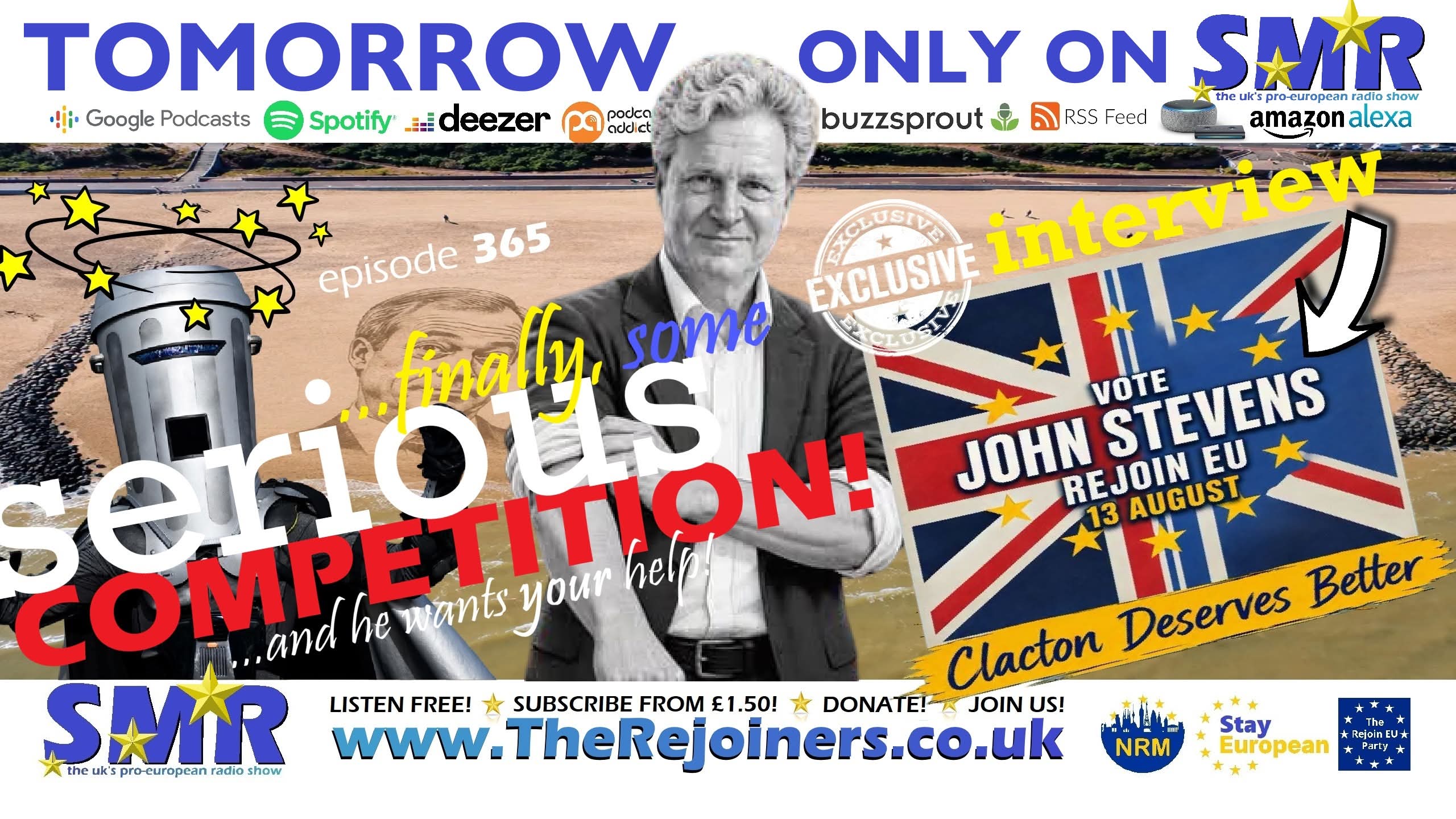
TOMORROW on SMR Rejoin Radio the Battle for Clacton continues as Rejoin EU Party's John Stevens joins 33 others candidates bidding to give the seaside resort a SERIOUS choice! Get YOUR copy BEFORE anyone else hears it! Subscribe TODAY! 👉 www.TheRejoiners.co.uk

Trump hatte recht! Beim Thema "schuldunfähig" wird ja immer so getan, als müsste man das halt akzeptieren. Aber nein, muss man nicht. Deutschland braucht nicht nur ICE-Züge, wir brauchen ICE! https://t.co/bzOGiliN5Q #Trump #Deutschland #ICE