WRLD

Search

#interprete
20 minutos 5d

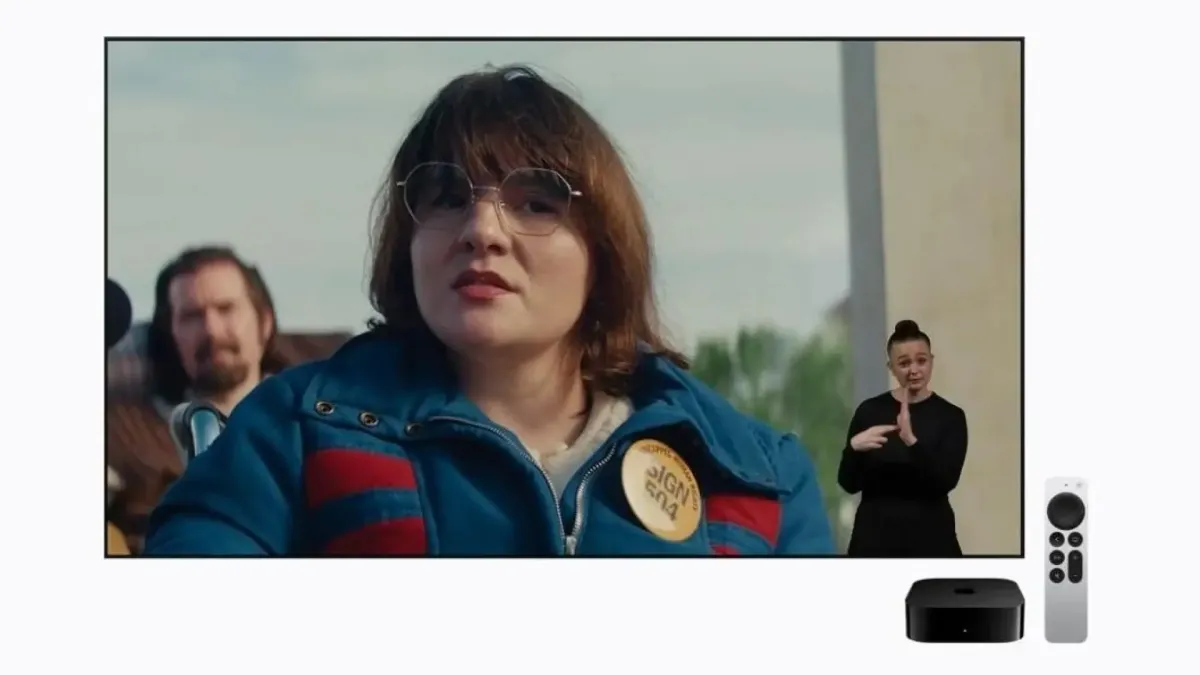
Apple TV has incorporated sign language interpreters in some movies, although the option for Spanish sign language is not yet available. #AppleTV #LenguaDeSignos #Accesibilidad (translated)
www.20minutos.es
Apple TV añade intérpretes de lengua de signos a sus películas, pero de momento no habrá versión española

3155
Jean Marc Morandini 5d
French television host

The author indicated that the American actor Stacy Keach, known for playing detective Mike Hammer, had died in Poland after a long heart illness. #deces #acteur #MikeHammer #série https://t.co/5WRI5SwQNz #deces #acteur #MikeHammer #PL (translated)

3158
Franceinfo 5d

The article recounts, day by day and hour by hour, the last moments before the signing of the armistice in Compiègne on November 11, 1918, drawing on the accounts of Captain Paul Laperche, interpreter between the Allies and the Germans. #Armistice1918 #Compiègne #Histoire (translated)

france3-regions.franceinfo.fr
11 novembre 1918 : jour par jour, heure par heure, on vous raconte les derniers instants avant la signature de l'armistice à Compiègne
3384
President of Ukraine since 2019

"I honestly don't know what this means. I can only guess what it might refer to. But I am not prepared for such surprises," Zelensky said, asked how he interprets the statement of the American president. (translated)

2708
La Libre.be 7d

The SPF Justice has exhausted its annual budget and currently cannot pay its external providers, including interpreters, pending the uncertain release of additional funding. #SPFJustice #BudgetJustice #PrestatairesExternes (translated)

www.lalibre.be
Le SPF Justice n'a plus de budget pour payer ses prestataires externes
2610
L
Le Soir 7d

The SPF Justice has exhausted its annual budget and can no longer temporarily pay its external service providers, including legal interpreters and forensic doctors, pending the release of additional funds. #Budgétaire #Justice #PrestatairesExternes (translated)

www.lesoir.be
Le SPF Justice n’a plus de budget pour payer ses prestataires externes
2611
Pino Rotta 1w

Coordinated solitude, author Claudio Aloisio Written by Pino Rotta, November 8, 2026 Claudio Aloisio is a communication and marketing professional, a field in which he has worked for many years. When his first essay "Coordinated Solitude" (Ed. Ideacoop Media Service, 2026) was released, sharing the same field of activity and interests (albeit with different directions and experiences), I found it interesting to read it, especially since we share the same city but have not met, which was already a good reason to find the essay interesting and its title stimulating. "Coordinated solitude" is an essay that analyzes, with a wealth of documentation and bibliography, the phenomena of the formation of convergences or exclusions among groups and individuals through the study of media languages and, in particular, those of the digital domain. A field that has already been widely investigated for several years. My first approach to these new linguistic proposals dates back, among other readings, to a 1994 essay "Collective Intelligence" by Pierre Levy. In that essay, Levy, at the dawn of the web era, launched the idea that the network, which collected the contributions of millions of users, contained them all without controlling their paths, interactions, or effects. Stimulating concepts that today help us understand how much conflict can arise between theory and its application considering time and technological development. However, Aloisio surprises the reader with suggestions from the very first pages of the essay. In fact, despite addressing the analysis of digital languages with an epistemological line rooted in Anglo-Saxon studies, particularly American ones, from the outset the author seems to suggest that this is not a “technical” essay but is entirely political in the higher sense of the term. The first reference is found in the citation of an author who was among the fathers of European sociology in the early years of the last century: Emile Durkheim, one of the first sociologists and philosophers who analyzed social phenomena with enormous meticulousness and rigor, linking religion with social structure. This opening will be found in the subsequent pages of "Coordinated Solitude," but it will not be the only surprise in Aloisio's analytical developments. In the essay, the author describes how people who may share spaces, interests, and common values, by finding them in the digital world, can at a certain point recognize themselves in different affiliations and even come to see in others a “us” that makes them akin to their own story or a “them” that indicates a distance, exclusion, and even a threat in relation to it. The causes of these dynamics are very well structured in the essay, as is the well-structured context in which individual stories are born, meet, and ultimately find different outcomes. Outcomes that can lead to reinforcing one's affiliations, which, however, are discovered at the end of the interaction process and that, throughout the journey, rarely reach a state of awareness. Outcomes that are influenced by pre-existing value structures that do not necessarily coincide with those of the members of the groups with which one identifies or clashes. This path is analyzed by Aloisio by considering the social dynamics of the West, examining and contrasting similar but not necessarily overlapping social realities, such as American and Italian society. In the identification processes that coexist in these social realities, the belonging to social class, religious group, ethnicity, sexual orientation, and sense of nation enters strongly. Everyone has their own experiences, but at the end of a journey of interaction, now almost exclusively digital, one finds oneself sharing a sense of belonging with other multitudes of people who have completely different experiences. And in this sense of belonging, fears of the future, frustrations of the past and present are downloaded, and one is enveloped by fears and anger that must find an enemy to blame. An enemy that is often suggested by the discovery of affinities among the groups that are created, much more often than not created, on digital platforms. Addressing the current nature of the algorithms governed by Artificial Intelligence, the author suggests the method through which these affiliations arise, which can be irrational but are entirely real and influence individual and social daily life. The individual in the digital dimension, which becomes the everyday reality of social action, is called to take responsibility for maintaining their conviction and belonging or risk feeling excluded, isolated, alone. The weight of a choice that often becomes distressing and paralyzing. But how is it possible to read and interpret these “Coordinated Solitudes”? Aloisio's essay provides a reading and suggests a methodology to identify the path that sometimes, but not always, leads to the awareness of how certain choices are made and what elements need to be questioned to verify if the reading of these languages withstands the law of contradiction and thus can be used to ascribe scientific value to it. But at the end of this journey of understanding languages, forms of aggregation, and the proof of the compatibility of individual choices, Aloisio presents us with another surprise that speaks volumes about his educational journey. The discourse of education and the reading of digital languages is ultimately a discourse on democracy, on social structure, and these factors cannot be disregarded without risking losing the ability to give meaning to one’s social action as well as one’s communicative action. It is my view that the surprise that is the coherence of the entire analysis of the essay comes with the reference that the author makes at the end to the work of Jürgen Habermas. The most important philosopher, sociologist of language, heir of the Frankfurt School who passed away at the age of 97 in March 2026, is the foremost interpreter of the theory of democracy and of the criticism of oppressive authority, which does not exclude conflict but determines its progressive outcome through the mediation of communicative action. Communicative action that questions institutions not to destroy them but to avoid remaining subjected to authoritarianism and, in the form of linguistic mediation, to be active subjects, not subdued by a system that, due to the nature of formal institutions, can always degenerate into authoritarianism. Coordinated solitudes thus find themselves with a positive perspective, with outcomes that are never guaranteed or predetermined, but feasible for reconstructing trust in the future realized through the recognition of the other as part of a common living and not as a threat to be feared, excluded, or even suppressed. Lastly, it should be noted that, although not explicitly considered, Aloisio does not prioritize simplification in the reading of contexts, evading complexity as a fundamental element of contemporary society's reality (perhaps it would have been useful to refer to Edgard Morin's theories), but it is evident that complexity must be confronted with different analytical methodologies and that the appeal to the work of Zygmunt Bauman leads us to presume this. https://www.heliosmag.it/?p=1659 (translated)

796
Carrerismo 1w

Carrerismo pointed out that Cruz Azul had won 1-0 and that Huiqui had changed several names without altering the team's structure. It described Piovi as a libero, Chiquete and Rodarte as stoppers, Márquez and Campos as wing-backs, Lira as the sole pivot, and Montaño and Paradela as midfielders. According to Carrerismo, the main difference was in attack: Ibáñez marked the center-backs, while Luka Romero had the freedom to move along the left and inside, connect with his teammates, and draw defenders away. It added that this mobility could open spaces for arrivals from the second line. It also maintained that the team kept width and occupied the interior lanes well, although it was exposed behind Lira when the wing-backs advanced. Carrerismo asserted that Huiqui was not improvising a system, but testing other players within a known structure. #CruzAzul #FútbolMexicano #LigaMX (translated)

3529
Luciano Magaldi Sardella (PhD) 1w

What if the health of a community began not in a clinic, but among the shelves of a library? Cerignola, 13 March 2026. A chain of hands crosses the town. From the old municipal library to the new home, created in renovated schools, the books pass from hand to hand. A man hands over a volume, a child receives it, an older person passes it on. It is not a move. It is a statement. The new Community Library, in a town of 57,700 people in the heart of Puglia, bears the name of Nicola Zingarelli, the founder of one of Italy’s best loved dictionaries. And it offers every user the use of that very dictionary. As a “Community Dictionary”. Here is the point that questions us, as lawyers and as citizens. In Italy many older people in the South and many migrants live every day in another language: dialect, language of origin, Romance variety. Law 482/1999 protects historic linguistic minorities, not these varieties. When a patient leaflet, an informed consent form, a prescription remain only half understood, the quality and safety of care suffer. Not through negligence. Through linguistic distance. The dictionary of the great philologist and member of the Accademia della Crusca from Cerignola, Nicola Zingarelli, does not translate dialects and does not replace interpreters and cultural mediators. To be clear: it is a monolingual dictionary of standard Italian. Its strength, in human rights terms, lies elsewhere. It removes economic and symbolic barriers to access to the standard language and creates what we have called a “common linguistic resource”: a common space where anyone, whatever their income and schooling, can check the meaning of a diagnosis, a prescription, an administrative form. This is what we mean by “public bibliotherapy”. The right to health, as interpreted by the Committee on Economic, Social and Cultural Rights in General Comment №14, includes the right to health information. General Comment №21 recalls that libraries are cultural institutions whose accessibility is a priority. Article 32 of the Constitution protects health as a fundamental right and a collective interest. Article 12 of the International Covenant on Economic, Social and Cultural Rights obliges States to guarantee services that are available, accessible, acceptable and of good quality, with accessibility expressly including information. Yet almost half of Europeans, according to a Council of Europe report of 2024, have limited health literacy. In Chisinau, on 26 March 2026, it was restated that this is a major obstacle to the implementation of Article 11 of the European Social Charter. To read, to understand, to choose: without these abilities, the right to health remains an abstract promise. Cerignola responds in a concrete way. And the first three months tell it with numbers, not with slogans: more than 7,500 new visitors, 526 new members, 1,293 participants in workshops. A Yale University study of 2016, on 3,635 participants over 50 followed for 12 years, observed that those who read books died on average 20 per cent less often than those who did not read. It is not proof that reading lengthens life. It is a powerful sign that reading contributes to health. Not every library is a clinic, nor do we want it to become one. But a boxed up collection, in transit, cannot be borrowed, consulted, shared. And an inaccessible collection does no good to anyone’s health. The human chain of Cerignola restored availability and accessibility, turning a stored inventory into a living public service. England has integrated social prescribing into its National Health Service since 2019. The UNESCO Manifesto for Public Libraries promotes them as social and health posts. When a library is forced to close, the question is not only cost. It is the legitimacy of a regressive measure, for which the State must bear the burden of proof. From here, four steps to ensure Cerignola does not remain an exception. First: integrate health literacy into national planning, with information in plain language and, where appropriate, in dialects and migrant languages, spread with the libraries. Second: recognize public libraries as infrastructure relevant to the right to health, with stable funding and a human rights impact assessment before every closure. Third: support the Coalition for Health Literacy and Human Rights and the Rome Declaration, which the Council of Europe will discuss in Rome on 4 December 2026, and measure health literacy with ISTAT data broken down by language and age. Fourth: evaluate community libraries with rigour, not by attendance but by health literacy and access to services. Rights, like the books of Cerignola, if they stay boxed up cure no one. They must come out of the boxes, pass from hand to hand, become an understood word. If you believe that a library can also be a health post, share this story. Cerignola has shown the way. Now it is up to the institutions to follow it. (translated)

www.gchumanrights.org
Claiming a community library under the right to health of linguistically marginalised communities in South Italy
571
Donald J. Trump 1w
President of the United States (2017–2021; since 2025)

Trump interprets this as if that power is unlimited, and in 2024 he received support for this from the Supreme Court. #Democratie #AmerikaanseVerkiezingen #Democraten (translated)

3653
Instant Foot ⚽️ 1w

Instant Foot reported that Luis Enrique explained, regarding the pressing of his players, that no coach had inspired him and that he drew his inspiration from his players instead. He added that he transmitted his ideas to them and then observed how they implemented them, while allowing them to make certain decisions on their own. He said he remained motivated by what he expected from his team. (Press conference relayed by RMC Sport.) #Football #Inspiration #Coaching (translated)

3653
Seznam Zprávy 2w

At the age of 99, the renowned Swedish conductor Herbert Blomstedt passed away, who was an outstanding interpreter of the Romantic repertoire and whose rich career included conducting major orchestras including the Czech Philharmonic. #HerbertBlomstedt #dirigent #hudba (translated)

www.seznamzpravy.cz
Ještě vloni dirigoval Českou filharmonii. Ve věku 99 let zemřel Herbert Blomstedt
2633
BFMTV 2w

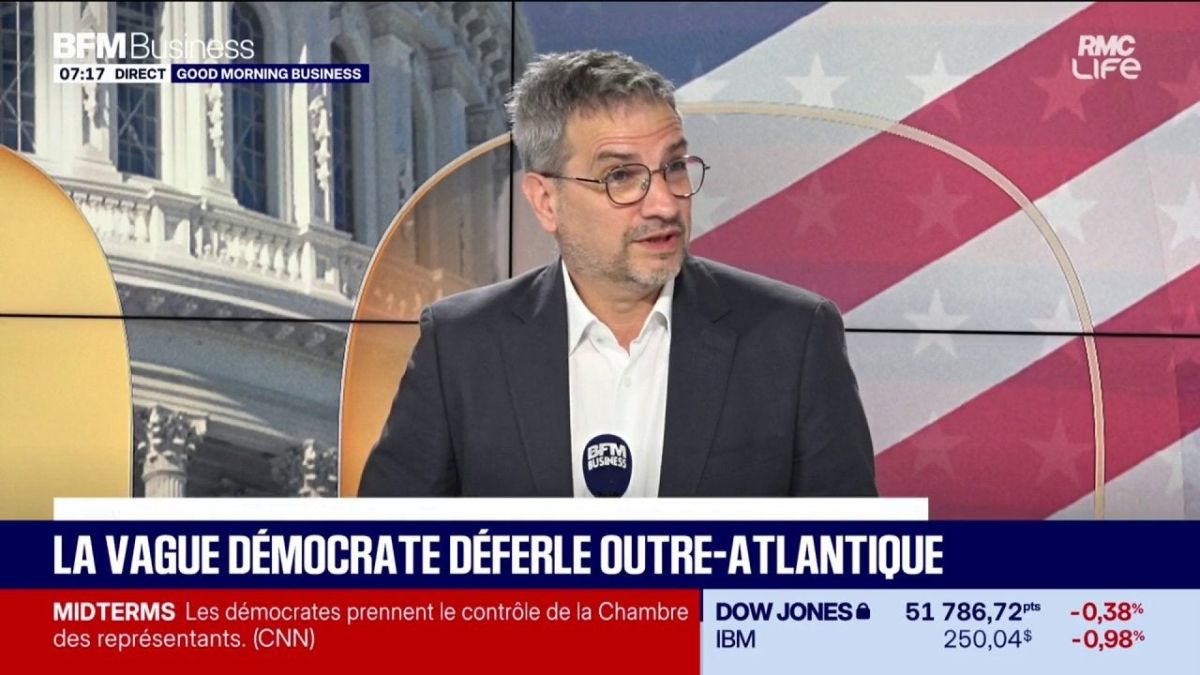
The results of the midterm elections in the United States reveal a strong Democratic wave, interpreted as a rejection of Trump's policies rather than an adherence to the Democratic vision, according to Frédérique Sandretto. #Midterms #VagueDémocrate #PolitiqueAméricaine (translated)

www.bfmtv.com
La vague démocrate déferle outre-atlantique
3323
Bruno Retailleau 2w
French Interior Minister from 2024 to 2025

The author stated a desire to reconcile the rule of law and democracy. He believed that the rule of law should not become an ideological framework preventing the majority from governing and advocated for a division of roles between the legislator, responsible for making the law, the judge, responsible for interpreting it, and the people, called to decide. (translated)

2981
Gérard Araud 2w
French diplomat

The author wrote that this man could act broadly regardless of the outcome of the elections the next day, believing that the American Constitution would allow him to do so and that he would interpret his powers extensively. He added that everything would then depend on the Supreme Court, which he presented as the arbiter. #Élections #Constitution #CourSuprême #US (translated)

3445
Actualité - Barça 2w

News - Barça reported, citing Mundo Deportivo, that Balde was disappointed and expected more honesty from Flick. According to the media, the player's entourage felt that the messages directed at him during press conferences should have been communicated to him directly. The staff, for their part, believed that Balde lacked concentration and misinterpreted situations under pressure. #Football #Balde #Flick (translated)

2989
Actu Foot 3w

Actu Foot reported, citing Catalunya Ràdio, that Hansi Flick still could not learn Spanish, two and a half years after his arrival at FC Barcelona. The 61-year-old German coach would attribute his difficulties to his age and had become frustrated to the point of almost giving up mastering the language. His assistant Arnau Blanco now acts as an interpreter for the players. #HansiFlick #FCBarcelona #Langue (translated)

2999
Krzysztof Graj 3w

𝗨𝗻𝗶𝘁𝗲𝗱 𝗦𝘁𝗮𝘁𝗲𝘀 — 𝗧𝗵𝗲 𝟭,𝟭𝟴𝟬-𝘀𝗶𝘁𝗲 𝗲𝗰𝗼𝘀𝘆𝘀𝘁𝗲𝗺 𝘁𝗵𝗮𝘁 𝗺𝗮𝗸𝗲𝘀 𝗽𝗼𝗹𝗶𝘁𝗶𝗰𝘀 𝗹𝗼𝗼𝗸 𝗹𝗶𝗸𝗲 𝗹𝗼𝗰𝗮𝗹 𝗻𝗲𝘄𝘀 A political influence infrastructure operating across the United States has grown to a scale that now rivals — and by some measures exceeds — entire categories of traditional American journalism. NewsGuard's election tracker, updated on 13 October, says it has identified 1,180 partisan websites masquerading as independent local news organisations, including 21 launched during 2026. The phenomenon is commonly called “pink slime journalism”: publications that adopt the visual language, names and editorial conventions of local newspapers while being financed or operated by political or ideological interests. A site may look like an ordinary community publication, carry stories about local issues and use familiar journalistic formatting, while its political purpose or financial backing is difficult to find or disclosed only in a footer, advertising record or corporate filing. This is not one centrally directed disinformation operation. The 1,180-site figure encompasses competing organisations on different sides of American politics, using related techniques for different political objectives. The ecosystem includes long-established networks such as Metric Media, which has been extensively investigated by Columbia University's Tow Center, as well as newer election-focused projects associated with Republican and Democratic political organisations. One of the clearest 2026 examples is One Nation, a conservative advocacy organisation closely associated with the Senate Leadership Fund, the major outside group working to elect Republican senators. Investigations identified locally branded sites including Alaska Navigator, Maine Policy Updates, Ohio Pulse, Iowa Voice, Peach State Post and New Hampshire Daily. They presented themselves with descriptions such as “independent news” or a state's “premier news source”, while publishing material that consistently promoted Republican candidates or attacked Democratic opponents. In at least one case, the infrastructure went beyond partisan framing. Popular Information found that Alaska Navigator contained an article dated before the website's domain had been registered; the page's source code indicated that a WordPress dummy-content tool called FakerPress had been used. Other sites republished material originating with established news organisations, creating a mixture of genuine journalism and advocacy that can make the surrounding political content appear more credible. The other side of the political spectrum uses similar architecture. The American Independent Foundation and American Independent Media operate or support state-branded publications aimed at competitive electoral markets. Recent examples include The North Carolina Independent and The Maine Independent, with physical newspapers also sent directly to voters. Local journalists examining the publications found conventional newspaper elements — including recipes, crosswords and local-looking design — alongside overwhelmingly Democratic-aligned political coverage. The money demonstrates why the model matters. NewsGuard found that One Nation and the American Independent network spent at least $801,500 on Facebook and Instagram advertising during the first eight months of 2026 to place their articles in users' feeds. The North Carolinian alone was promoted with roughly $34,700–$46,700 in Meta advertising by late August, producing at least 3.6 million views, according to NewsGuard's analysis. Yet calling all of this “fake news” can obscure the more important mechanism. The most effective material does not necessarily have to be false. A political group can select favourable facts, omit countervailing evidence, quote one side disproportionately and present the result using the typography and conventions of independent journalism. The reader encounters something that resembles a newspaper article rather than an advertisement. The partisan origin of the message has effectively been laundered through the appearance of journalism. That problem now extends beyond human readers. In September, NewsGuard tested seven leading AI assistants using questions based on reporting from 12 partisan pseudo-local sites in six battleground states. Across 168 responses, the systems cited one of the tested “pink slime” sources in 48.2 per cent of answers. In 7.7 per cent, a pink-slime site was the only source cited directly in the answer. Only one response explicitly identified a cited source as partisan. Those figures require an important qualification: this was not a random test of all political questions. The prompts deliberately concerned topics that the 12 partisan outlets had already covered, so the 48.2 per cent figure cannot be interpreted as the probability that an arbitrary election query will produce a pink-slime citation. What the experiment demonstrates is something narrower but important: once such material exists and is indexed, major AI retrieval systems can treat it as a legitimate source without consistently communicating its political provenance. The environment in which this is happening makes the technique particularly powerful. Northwestern University's newly released 2026 State of Local News report says the United States now has fewer than 900 daily print newspapers, while 170 newspapers disappeared through closure or merger in the past year alone. As genuine local reporting contracts, political organisations have an opportunity to occupy precisely the information space that traditional newsrooms are abandoning. There is therefore no single mastermind behind Episode 23. Several names can, however, be attached confidently to specific organisations. Brian Timpone is a founder and central figure behind Metric Media. Alex Latcham is executive director of the Senate Leadership Fund and is publicly associated with the wider One Nation/SLF political infrastructure. Joe Conason is identified in tax filings as president of both the American Independent Foundation and American Independent Media. Democratic operative David Brock founded an earlier incarnation of the American Independent organisation, but he should not be described as the current operational controller of the 2026 network without additional evidence. These are organisational links, not evidence that any one of those individuals personally commissioned every article, advertisement or website. The central significance of the pink-slime ecosystem is therefore not a single spectacular lie. It is the industrialisation of source laundering: political persuasion packaged as familiar local journalism, amplified through paid social media and increasingly capable of entering search engines and AI-generated answers. 𝗦𝗢𝗨𝗥𝗖𝗘𝗦 1. NewsGuard — 2026 Elections False Claims Tracker, updated 13 October 2026. Primary source for the current 1,180-site count, the 21 sites launched in 2026 and the minimum $801,500 Meta advertising figure. NewsGuard https://www.newsguardtech.com/special-reports/2026-elections-misinformation-tracker/ 2. POLITICO Magazine / NewsGuard — “Pink Slime Is Infecting AI Chatbots Ahead of the Midterms”, 25 September 2026. Basis for the AI audit of 12 sites, seven chatbots and 168 responses. NewsGuard https://www.politico.com/news/magazine/2026/09/25/midterms-partisan-ai-chatbots-01092138 3. Popular Information — Judd Legum, “Senate Republicans launch network of fake news sites”, 6 August 2026. Detailed investigation of One Nation's state-branded network, Meta advertising and the Alaska Navigator/FakerPress finding. popular.info https://popular.info/p/senate-republicans-launch-network 4. FactCheck.org — One Nation, 24 September 2026. Independent profile of One Nation, its relationship with Senate Leadership Fund and current leadership. FactCheck.org https://www.factcheck.org/2026/09/one-nation/ 5. Senate Leadership Fund — official About page. Primary-source confirmation of Alex Latcham's position as executive director and SLF's stated electoral mission. Senate Leadership Fund https://senateleadershipfund.org/about/ 6. WUNC — “Amid Senate race, partisan groups mimic news outlets”, 15 September 2026. Reporting on The North Carolina Independent and American Independent Foundation's newspaper-style voter outreach. WUNC News https://www.wunc.org/politics/2026-09-15/nc-senate-race-partisan-groups-mimic-news-outlets-newspapers 7. Portland Press Herald — “Who's behind The Maine Independent?”, 14 October 2026. Current investigation into American Independent's print and digital pseudo-local-news operation. The Portland Press Herald https://www.pressherald.com/2026/10/14/whos-behind-the-maine-independent-newspaper-landing-in-voters-mailboxes/ 8. ProPublica Nonprofit Explorer — American Independent Media. IRS-derived records identifying current officers, including President Joe Conason. ProPublica https://projects.propublica.org/nonprofits/organizations/881571567 9. Columbia Journalism Review / Tow Center — “How ‘Pink Slime’ Publishers Are Weaponizing FOIA”, 5 February 2026. Current investigation describing Metric Media's nearly 1,200-site infrastructure and its operational methods. Columbia Journalism Review https://www.cjr.org/tow_center/pink-slime-networks-are-weaponizing-foia.php 10. Columbia Journalism Review — “Pink Slime Never Went Away”. Reporting identifying Brian Timpone as founder of Metric Media and documenting the network's continuing political role. Columbia Journalism Review https://www.cjr.org/analysis/pink-slime-journalism-never-went-away.php 11. Northwestern University, Medill Local News Initiative — State of Local News 2026, 13 October 2026. Current data on the contraction of genuine US local journalism, including newspaper closures and the remaining number of daily newspapers. Local News Initiative https://localnewsinitiative.northwestern.edu/projects/state-of-local-news/2026/report/ 𝗞𝗘𝗬𝗪𝗢𝗥𝗗𝗦 #Disinformed #Disinformation #Propaganda #InfluenceOperations #UnitedStates #USElections #Midterms2026 #PinkSlime #PinkSlimeJournalism #PseudoNews #LocalNews #LocalJournalism #SourceLaundering #Astroturfing #PoliticalAdvertising #DarkMoney #OneNation #SenateLeadershipFund #AmericanIndependent #MetricMedia #BrianTimpone #AlexLatcham #JoeConason #DavidBrock #Meta #Facebook #Instagram #ArtificialIntelligence #AIChatbots #ElectionSecurity #ElectionIntegrity #InformationIntegrity #MediaLiteracy #OSINT #DigitalPropaganda #PoliticalInfluence #LocalNewsCrisis

www.newsguardtech.com
2026 Elections False Claims Tracker
347
Guillaume Herblot 🎖️ 3w

Guillaume Herblot argued that, according to Bukele, a country could not be reformed without removing corrupt judges, who risked forming a "judicial dictatorship" and blocking reforms. He claimed that Brazil had just provided an example and that France had been practicing this logic for decades, more discreetly. Herblot believed that universal suffrage only made sense if the elected officials had the final say, rather than a network of unremovable magistrates interpreting the rules according to their interests. Without a real possibility of removing political judges, he wrote, elections would remain a charade and the "cartel" would remain in place. #Réforme #Justice #Politique (translated)

3124
Guillaume Herblot 🎖️ 3w

Guillaume Herblot presented the extension of the vote in Brazil as an example of "the deep state," believing that France was experiencing a similar mechanism. He wrote that, on Sunday, after the counting began as scheduled at the closing of the polls at 5 PM, Lula's campaign had appealed to the STF to request a national extension. According to him, Judge Cristiano Zanin, Lula's former personal lawyer and appointed to the Supremo Tribunal Federal by him in 2023, had ordered two additional hours, forcing the TSE to halt the count. He mentioned polling stations that had closed and then reopened in confusion. Herblot also recalled that in 2022, Alexandre de Moraes, then head of the TSE, had rejected a similar request from the PT despite roadblocks. He felt that the rules were applied differently depending on the concerned camp and that judicial and administrative institutions had become political actors. For France, he cited the Constitutional Council, the Court of Cassation, the Council of State, administrative jurisdictions, and part of the public prosecutor's office. He accused them of limiting the scope of reforms voted by elected majorities through interpretations of the law, priority questions of constitutionality, and censorship decisions. He also stated that senior officials and magistrates continued to influence the limits of political debate despite changes in political personnel. Herblot concluded that in both countries, unelected institutions held what he believed to be a blocking and interpretative power that diminished the impact of changes resulting from elections. #ÉtatProfond #Démocratie #Justice (translated)

3240