BETA nonprofit public democratic european moderated

Search

#Column
A
AD 8h

Sjoerd Mossou states in his column that the home-playing top three clubs Ajax, PSV, and Feyenoord received the benefit of the doubt in crucial 50/50 decisions this weekend, which creates the impression of unequal treatment in the Dutch football competition. #VAR #Eredivisie #SjoerdMossou (translated)

Mossou schrijft: ‘Steeds kreeg de thuisspelende top drie-club het voordeel van de twijfel dit weekend’

Max von Kreyfelt proposed a compulsory integration course for D66 in his column. According to him, the party spoke excellent Dutch, but still needed to learn how to deal with people who have different beliefs. He referred to Jan Paternotte, who mentioned the Renaissanceschool associated with Forum for Democracy in the Chamber and asked for stricter rules for new schools. According to Von Kreyfelt, Rob Jetten had advocated for a swift evaluation and possible legislative changes. The proposed course would, according to Von Kreyfelt, include lessons on civil rights, freedom of education, diversity, democracy, and equal rights. He wrote that citizens should be allowed to think independently and vote for other parties, and that a political background in itself was not an offense. Regarding Jetten's statements on October 9 about taking stronger action against certain schools and online channels where, in his view, young people were learning incorrect ideas about equal rights, Von Kreyfelt noted that Jetten had not mentioned the Renaissanceschool. As an exam task, Von Kreyfelt described a parent who wanted to pass on different beliefs to their child than D66. According to him, a student would succeed with an answer that did not involve inspection, improvement processes, or legislative changes. He concluded that D66 needed to learn that a free society also existed without its permission. #Inburgering #Diversiteit #Democratie (translated)

María Fernanda Cabal wrote that, while Jair Bolsonaro was incarcerated, her movement had received extraordinary support at the polls. She also stated that ideas could not be imprisoned and invited others to read her column in Semana, titled "The Revenge of the Bolsonaros." https://t.co/SE4rhWb7S0 #Bolsonaro #PolíticaBrasil #Democracia (translated)

A
AD 1d

Laurens ten Dam reflects in his column on the special bond with Bauke Mollema, who says goodbye today after an impressive career following the Tour of Lombardy. #BaukeMollema #LaurensTenDam #Wielrennen (translated)

Column Laurens ten Dam | Laurens ten Dam over afscheid nemende Bauke Mollema: ‘Voor altijd een band met die gesjeesde student’

Luis Carlos Vélez raised in a column for Revista Semana how much the JEP knew and whether it was trying to hide something. https://t.co/E6kJxhhltu #JEP #Colombia #Justicia (translated)

Luis Carlos Vélez asked if the JEP was aware of the meetings between Timochenko and Nicolás Maduro. He pointed out that the new indictment from the United States against Maduro mentioned an exchange of drugs for explosives and possible impacts on the United States and Colombia. He added that the issue was escalating and referred to his column in Revista Semana. https://t.co/E6kJxhhltu #Maduro #Timochenko #JEP (translated)

Weird Duk shared the full column from Nausicaa because he found her analysis and commentary particularly urgent. He urged readers to read the column and reflect on what he believed was happening and what was at stake. https://t.co/foZ5fckYqW #Nausicaa #Analyse #Urgentie (translated)

Max von Kreyfelt wrote that D66, in his opinion, put pressure on the Renaissanceschool, which is linked to Forum voor Democratie. He pointed out that D66 MP Jan Paternotte had mentioned the school in the House of Representatives because of announced separate curricula for boys and girls, and had called for stricter rules for new schools. According to Von Kreyfelt, Rob Jetten had urged for a quick evaluation and possible amendments to the law. Von Kreyfelt also wrote that Jetten had announced on October 9 that he would investigate how to take tougher action against schools, weekend schools, and online channels where, according to Jetten, young people were learning incorrect views about equal rights. The columnist emphasized that Jetten had not mentioned the Renaissanceschool in this context. He argued that the education inspectorate should investigate what was actually happening at the school and that a political background alone was not evidence of violations. According to him, Paternotte had stated that Article 23 remained intact. Von Kreyfelt wondered whether Jetten wanted to address verifiable violations or tighten general rules because a political competitor was taking advantage of them. https://t.co/V2P6pFuNy1 #onderwijs #vrijheid #D66 (translated)

René Kemp wrote that he endorsed everything Nausicaa Marbe wrote and called one of her columns something everyone should read. He stated that those who supported Hamas imported violence. https://t.co/BstfD5TiZV #Hamas #Geweld #Column (translated)

Noe Barral Grigera said he was very happy about his first nomination for the Martín Fierro as a political columnist for radio, for his work on Radio con Vos 899 alongside Ernesto Tenembaum and the YAQPA team. He also thanked APTRA for the recognition. #MartínFierro #Radio #Periodismo (translated)

A
AD 2d

Özcan Akyol argues in his column that raising the rainbow flags has no effect on the acceptance of the LGBT community and that politicians often make symbolic gestures without providing real support. #regenboogvlag #lhbt #symboolpolitiek (translated)

Als regenboogvlaggen iets bewijzen, dan is het wel dat ze niet werken

The author said their latest Financial Times column, “A very German spy scandal,” was available online that day and would appear in print the following day. #Spionage #Deutschland #Nachrichten #DE

A
AD 2d

Sjoerd Mossou predicts in his column that the hatred against Manchester City during the match against Liverpool at Anfield will be overwhelming, especially after their recent conviction for serious financial violations. #Liverpool #ManchesterCity #Voetbal (translated)

Mossou schrijft: ‘Kijk dit interviewtje en je begrijpt wat er zondag bij Liverpool-City gaat gebeuren’

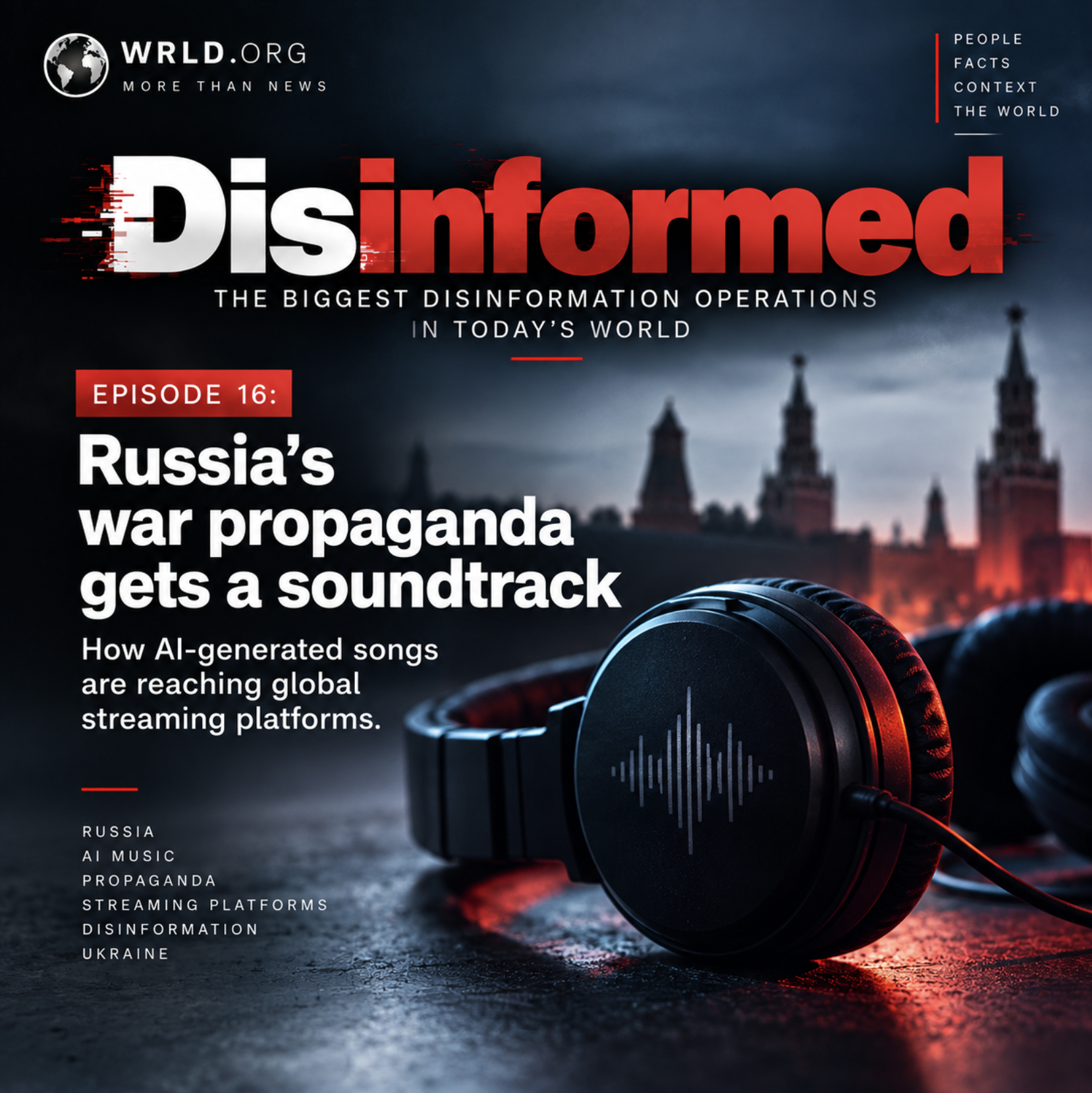
Russia’s war propaganda gets a soundtrack – how AI-generated songs reached global streaming platforms Russian war propaganda is no longer confined to television broadcasts, Telegram channels or political videos. A study by the Ukrainian threat-intelligence organisation Terrecon has identified 981 songs combining signs of AI generation with pro-Russian military narratives, distributed through an ecosystem that reaches YouTube, Spotify, Apple Music, Deezer and SoundCloud. The songs range from sentimental ballads to rock and heavy metal. Their recurring themes are familiar from conventional Russian wartime propaganda: the heroisation of Russian soldiers, romanticisation of the war, mobilisation, the “Russian world”, commemoration of fallen troops and attacks on Ukraine and its armed forces. Some contain derogatory or dehumanising references to Ukrainians. What is new is not necessarily the message, but the production and distribution model: generative AI allows propagandistic music to be produced rapidly, cheaply and in quantities that would previously have required musicians, studios and producers. Nearly 1,000 tracks identified Terrecon examined 3,725 tracks collected from YouTube, YouTube Music, SoundCloud and the AI music platform Suno. After manual review, researchers classified 981 as showing both indications of AI generation and pro-Russian war propaganda. In 681 tracks they identified 728 propaganda-related keywords or phrases. The largest category was the glorification of the Russian military, followed by romanticised treatment of Moscow’s so-called “special military operation”, mobilisation appeals, narratives about the “Russian world”, and the cult of fallen soldiers and the state. The reach was not merely theoretical. Listening or viewing statistics were available for 608 of the identified tracks; together they had accumulated 86.8 million plays and views, according to Terrecon. A smaller group of 13 high-performing songs accounted for more than 53 million YouTube views and more than 67 million when YouTube Music was included. Among the better-known examples is “Power of Artillery”, a Russian-language rock song praising artillery weapons that passed two million views on YouTube. Most of the tracks for which publication dates could be established appeared after 2024, broadly coinciding with the rapid expansion of consumer AI music generators such as Suno and Udio. That correlation does not prove that AI alone caused the increase, but it illustrates how drastically the economics of production have changed. A propaganda song for as little as $11 Terrecon also tested how difficult it would be to commission such material. Researchers approached 25 creators producing AI-assisted militaristic music; 15 agreed to take commissions. Prices ranged from approximately $11 to $330, while delivery times ranged from two hours to three days. According to Terrecon, some were prepared to produce highly aggressive anti-Ukrainian material, including content intended for audiences involving children from occupied Ukrainian territories. Some creators used Russian intermediary services that provided access to Western AI tools such as Suno and Udio despite restrictions. The researchers then tested several AI generators themselves. Across 40 prompts submitted to Suno, Udio, Mureka, Google Flow Music and ElevenLabs, 25 resulted in successful generations, while safeguards were circumvented in 15 cases. Terrecon reported that four of the five services tested produced Russian-language material containing wartime narratives, although technical problems prevented comparable testing on some systems. In one Udio experiment, the researchers said the model itself introduced more explicit violent language than had appeared in the original promp These tests do not demonstrate that the commercial platforms knowingly support Russian propaganda. They show something narrower: existing safeguards can be inconsistent when political messaging is packaged as music. From generation to Spotify The distribution experiment may be the most revealing part of Terrecon’s research. The team deliberately uploaded test tracks containing explicit hostile language to YouTube, SoundCloud, Spotify and Deezer. Terrecon says none was blocked during the experiment. On SoundCloud, researchers used an account identifying its location as Moscow, disclosed the use of AI and added markers including references to the Russian military and the war. The platform accepted the upload and subsequently offered paid promotional and distribution tools. This does not prove that streaming recommendation systems systematically promote pro-war music. There is currently insufficient public evidence to make that claim. It does demonstrate that material can enter the same commercial distribution infrastructure as ordinary music and, once there, potentially benefit from playlists, searches, sharing and recommendation mechanisms available to other releases. That distinction is important. Propaganda no longer has to announce itself as political communication. On a streaming platform it can look like another song. Culture as a delivery mechanism Music has always been used in wartime propaganda. What generative AI changes is scale. Instead of investing heavily in a limited number of patriotic performers or officially commissioned productions, creators can generate variations across styles, audiences and emotional registers at very low cost. Terrecon found material ranging from war rock to sentimental songs and content styled for younger audiences. Some creators also experimented with cloned celebrity voices and stylistic imitation of established musicians. The format also offers a different relationship with the audience. A political video asks a viewer to consume an argument. Music can accompany commuting, exercise or entertainment and may be encountered outside explicitly political spaces. This does not automatically make it more persuasive, and Terrecon’s research does not establish measurable effects on political attitudes. It does, however, place wartime narratives inside a cultural environment where users may not initially perceive themselves as consuming political messaging. An ecosystem, not a proven Kremlin command structure The strongest evidence supports describing this as a growing AI-assisted pro-Russian propaganda-music ecosystem, not a single operation controlled from Moscow. Terrecon did not establish that the Russian government created, financed or coordinated all 981 tracks. Reporting on the study likewise notes that the extent of direct state involvement remains unclear. There is broader evidence that the Russian state finances cultural projects and digital content supporting the war, including through state-backed funding bodies. That context matters, but it does not allow individual songs in Terrecon’s dataset to be attributed to the Kremlin without additional evidence. The significance of the case lies elsewhere. AI has reduced the cost of producing ideological content, intermediaries can help creators access generation tools, and global platforms can provide distribution. The result is a pipeline in which wartime propaganda no longer has to resemble propaganda at all. It can simply appear in a playlist. Sources Terrecon / Ukrainska Pravda — Daria Verbytska on the research https://www.pravda.com.ua/columns/2026/10/05/8056229/ Suspilne Culture — detailed breakdown of Terrecon findings https://suspilne.media/culture/1417933-rosijsku-voennu-propagandu-maskuut-pid-anime-karaoke-ta-rok-doslidzenna-si-pisen-vid-terrecon/ The Insider — AI-generated Russian war propaganda music https://theins.ru/news/297839 Institute of Mass Information — summary of New York Times reporting https://imi.org.ua/en/news/doslidzhennya-rf-masovo-stvoryu%D1%94-propagandistski-pisni-za-dopomogoyu-shi The Bridge Media — AI-generated songs and Russian military propaganda https://thebridgemedia.com.ua/en/ai-generated-songs-russian-military-propaganda/ Center for Strategic Communication — cost and production of AI propaganda music https://spravdi.org/propaganda-za-11-yak-rosiya-shtampuye-shi-pisni-z-miljonamy-prosluhovuvan/ Times of India — AI-generated Russian war songs https://timesofindia.indiatimes.com/world/europe/ai-sings-russias-war-story-inside-the-rise-of-generative-songs-about-ukraine-conflict/articleshow/134650594.cms EU Council / EUR-Lex — Presidential Foundation for Cultural Initiatives https://eur-lex.europa.eu/legal-content/EN/TXT/?uri=CELEX:32026D1351 Human Rights Watch — Russian state funding of digital and patriotic content https://www.hrw.org/report/2025/07/30/disrupted-throttled-and-blocked/state-censorship-control-and-increasing-isolation #DISINFORMED #Episode16 #Russia #Ukraine #RussianPropaganda #WarPropaganda #MusicPropaganda #AIMusic #ArtificialIntelligence #AI #GenerativeAI #SyntheticMedia #AIPropaganda #Disinformation #InformationWarfare #InfluenceOperations #CulturalPropaganda #DigitalInfluence #NarrativeManipulation #PropagandaMusic #StreamingPlatforms #Spotify #AppleMusic #YouTube #YouTubeMusic #Deezer #SoundCloud #Suno #Udio #RussianWorld #RusskiyMir #MilitaryPropaganda #WarNarratives #Mobilisation #AlgorithmicDistribution #RecommendationAlgorithms #MusicStreaming #PlatformManipulation #Terrecon #OSINT #MediaManipulation #WRLD

A
AD 3d

During recent tumultuous protests in Belgium and France, much was destroyed, but interestingly, a bookstore remained unharmed, which prompts columnist Kitty Herweijer to reflect on the destructive tendencies of youth, despite the legitimate reasons for their discontent. #protest #onderwijs #geweld (translated)

Tijdens de plunderingen bleef de boekenwinkel ongedeerd

The author announced a column in which he stated that Hamas also targeted Europe and that the global jihad brought terror like on October 7 to Europe. #Hamas #jihad #Europa #EU (translated)

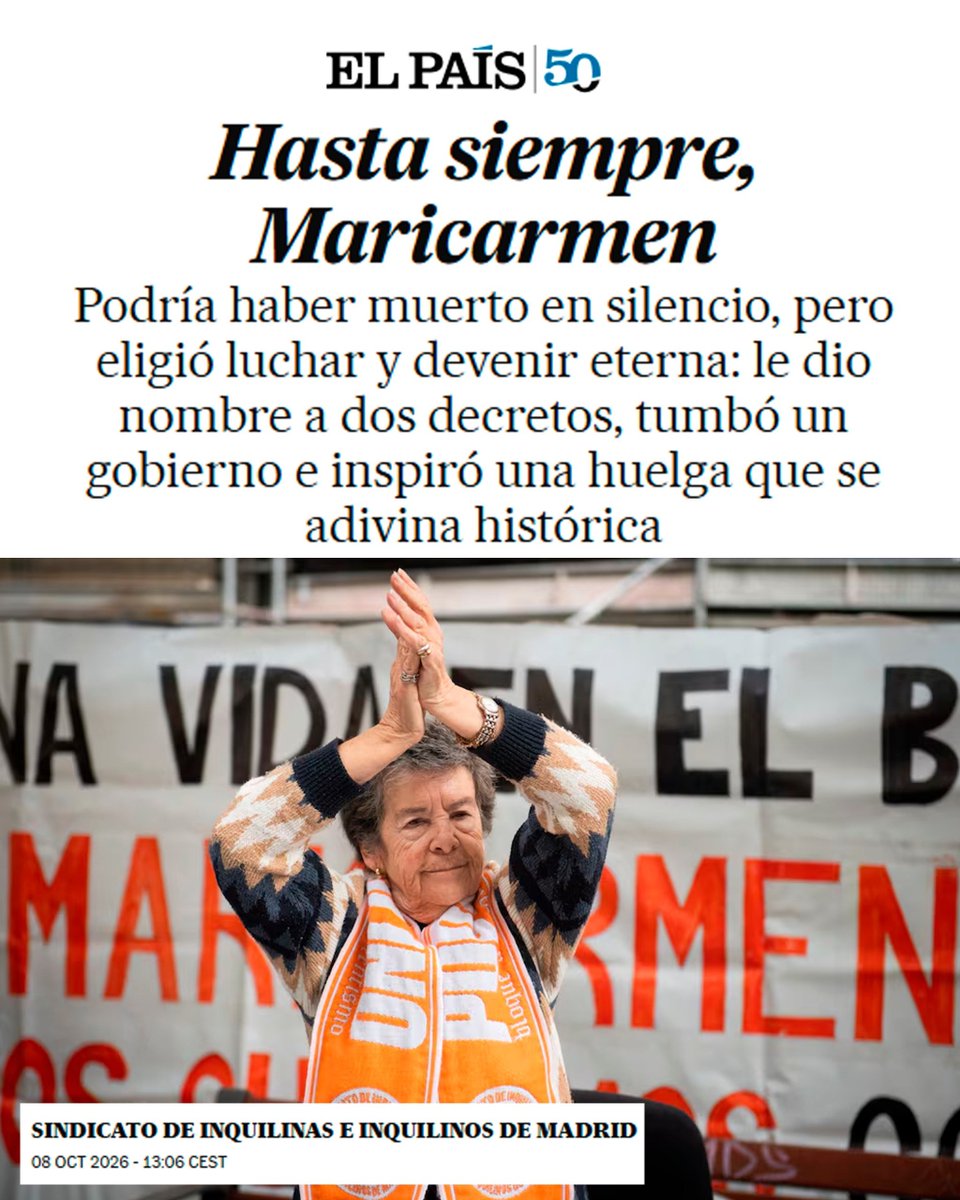
The Tenants' Union of Madrid wrote a column in El País in tribute to Maricarmen. They described her as a woman who chose not to die in silence, named two decrees, brought down the government, and inspired a strike that the union saw as on the path to being historical. They also expressed their affection for her. https://t.co/qDBdTyg8L9 #MujeresFronterizas #DerechosHumanos #JusticiaSocial (translated)

Sander Sassen addressed Henri Bontenbal and wrote that he had been little visible for months, despite an earlier column by Sassen about his absence. According to Sassen, Bontenbal had published a long thread on October 7, in which he labeled Hamas a terrorist organization and reflected on the victims and the Jewish community. Sassen felt that Bontenbal had subsequently blurred the responsibility for the violence by talking about a chain of violence, the Israeli response, and civilian casualties. He also believed that Bontenbal had pointed to Benjamin Netanyahu's settlement policy as an obstacle to a two-state solution. Sassen argued that this approach equated Hamas's attack and kidnappings with Israel's response, thereby fueling antisemitism. Sassen also criticized Bontenbal's reference to an article in Trouw about Maoz Inon, who lost his parents to Hamas, and Aziz Abu Sarah, whose brother died in an Israeli prison. Sassen described their pursuit of reconciliation as hopeful but felt that Bontenbal presented this initiative as a serious way forward without giving sufficient attention to Hamas's persistence and objectives, according to him. He also stated that Hamas deliberately saddled Palestinian children with hatred for Jews. Sassen wrote that, in his opinion, Bontenbal offered false hope and insufficiently placed responsibility for Hamas's violence on the perpetrators. He claimed that Hamas and its supporters aimed for the destruction of Israel and stated that disarmament by Palestinians, in his view, would bring peace, while Israel's disarmament would lead to a new attack like the one on October 7. #Israël #Hamas #Antisemitisme (translated)

Amanda Kluveld wrote that she reposted her column because RTV Maastricht demanded a correction. She expressed her outrage about that demand and shared a link to the column. https://t.co/xM3BXZxwIH #RTVmaastricht #column #rectificatie (translated)

NRC 4d

In her latest column, Shermin Amiri warns about the dangerous intellectual and emotional laziness in the Netherlands, which leads to intolerance and anti-Semitism, while the need to show empathy and understanding for both Israelis and Palestinians is more urgent than ever. #IntellectueleLuiheid #MiddenOosten #Antisemitisme (translated)

Het echte gevaar is de intellectuele en emotionele luiheid van buitenstaanders