BETA nonprofit public democratic european moderated

Search

#Publishing

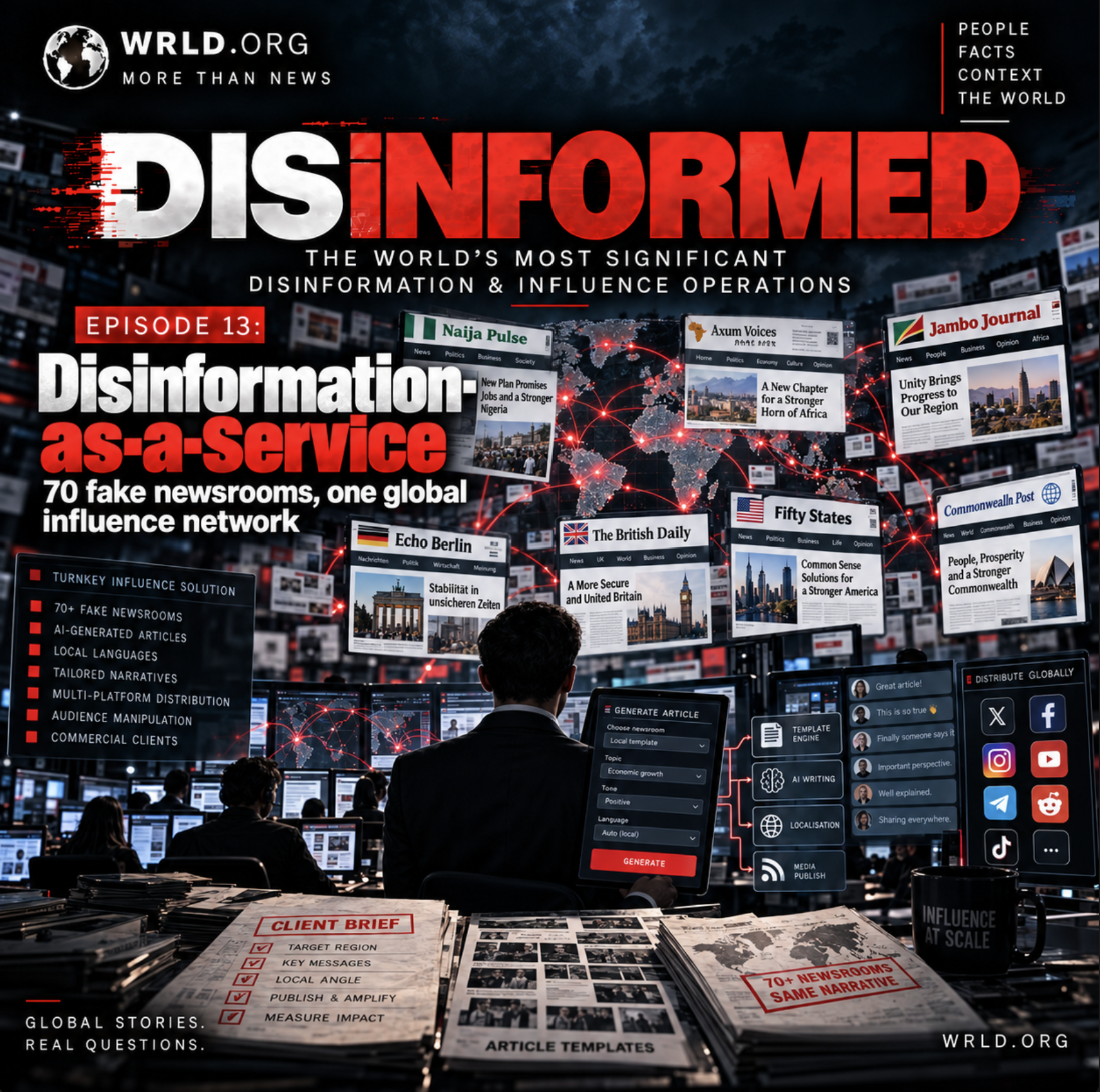
Disinformation for hire – the network of 70 fake newsrooms sold as a service The websites looked local. Naija Pulse appeared to cover Nigeria, Echo Berlin Germany, The British Daily Britain, Fifty States the United States and Commonwealth Post Australia. Each had its own branding, articles, supposed journalists and matching social-media presence. Taken individually, they resembled small independent news outlets. According to Anthropic, however, they were parts of a single commercial influence network spanning six continents. Anthropic’s September 2026 threat report identifies the operation as GTG-54002, a commercial “influence-as-a-service” network that used Claude to generate and rewrite political content at industrial scale. Investigators linked roughly 70 fabricated news websites to around 70 matching X accounts and more than 250 additional inauthentic commenting accounts designed to create the appearance of genuine public engagement. The network produced at least 8,913 articles in about 20 languages before Anthropic disrupted the activity. The significance of the case is not simply the number of fake sites. It is the business model. The network did not consistently promote one government, party or ideology. Anthropic found that its political position changed according to the apparent interests of different customers. The company therefore described it as a commercial influence operation: political manipulation offered in much the same way as other outsourced digital services. A fake media ecosystem built at scale Anthropic says the infrastructure was created rapidly. Domains were registered from France during a roughly ten-week period in mid-2025 and deployed through shared technical infrastructure, allowing investigators to connect publications that outwardly appeared unrelated. Most of the supporting social-media accounts were also created within a narrow timeframe in June and July 2025. The sites were designed to look like functioning local newsrooms rather than anonymous propaganda pages. Articles carried fabricated bylines belonging to journalists who, according to Anthropic, did not exist. Each outlet had a corresponding account on X, while a second layer of fake profiles commented on and amplified the articles. Many of those accounts used AI-generated profile photographs. The result was a three-tier structure: the newsroom published the story, the branded social account distributed it, and apparently ordinary users supplied the appearance of public reaction. Some of those sites remained publicly visible after the operation was exposed. The British Daily, for example, described itself as providing “conservative insights” on British sovereignty and migration, while Commonwealth Post presented itself as an Australian liberal publication focused on democracy, migration and regional security. Those contrasting editorial identities illustrate the central feature identified by Anthropic: the network was capable of taking different political positions in different markets. Claude as a publishing engine Claude was not simply asked to draft occasional articles. The operators built a structured production pipeline around it. Prompts required fixed JSON outputs, formatted HTML, precise character limits and internal links, allowing articles to move directly into an automated publishing workflow. The system could generate entirely new material or take reporting produced by legitimate journalists and rewrite it to fit a desired political perspective. Anthropic identified three recurring techniques. The same source article could be rewritten in opposite ideological directions for different audiences; a political interpretation could be added to a story that originally contained none; and material could be moved from one country to another after its original context had been removed. The articles were also structured to improve the apparent authority of the sites in search engines, helping the network imitate ordinary digital publishing practices rather than simply broadcasting propaganda. This is where generative AI changes the economics of an influence operation. A conventional network of dozens of supposedly local publications would normally require writers, translators, editors and social-media staff. Here, much of that production could be standardised and automated while human operators concentrated on political direction, customer requirements and distribution. The DRC–Rwanda conflict as a test case The clearest concentration of activity involved the Democratic Republic of Congo. Anthropic identified 318 articles concerning the DRC across the fake-news network. The material generally supported positions aligned with the Congolese government, particularly on regional mineral agreements and tensions with Rwanda. Early in the network’s growth, many of the fake social-media personas following and amplifying its accounts also presented themselves as Congolese. Investigators observed one especially revealing episode on 11 September 2025, when multiple sites published almost identical articles about the DRC–Rwanda conflict within approximately three minutes of one another. The wording and political tone were adjusted for different regional audiences, while associated X accounts distributed the links in a coordinated pattern. Anthropic said the activity contained signals suggesting that one or more customers had interests connected to the DRC–Rwanda conflict. It did not, however, identify those customers and explicitly stated that it found no evidence that any government had directed the operation. That distinction is essential. The content may have benefited a political actor without demonstrating that the actor commissioned or controlled it. Influence without ideology Commercialisation is what distinguishes GTG-54002 from many state-linked information operations. A government propaganda network usually has an identifiable strategic direction. A commercial influence provider does not need one. Its infrastructure can support one position in one country and the opposite position somewhere else, provided different customers are willing to pay. That makes attribution more difficult. Analysts cannot necessarily infer the operator from the ideology of the content because ideology may simply be part of the service package. The enduring asset is the infrastructure: domains, publishing systems, fake journalists, social-media accounts and automated amplification. Anthropic says the operation was disrupted before it achieved significant genuine reach. It classified GTG-54002 as Category Two on the Brookings Breakout Scale: material circulated across the network’s own sites and associated social accounts but showed no evidence of substantial penetration into authentic communities. Most of the 8,913 articles generated little observable engagement from real users. That limited impact is important. The case should not be presented as a successful global manipulation campaign. It is better understood as evidence that the infrastructure required to run such campaigns has become cheaper, faster and increasingly commoditised. The deeper shift is that a fake media ecosystem no longer has to be built around a single political cause. It can be built once, automated and then repurposed for the next customer. Disinformation, in this model, is no longer only a political instrument as it turend into the service. Sources: Anthropic — Countering misuse of AI: September 2026 https://www.anthropic.com/threat-intelligence-report-september-2026 Business Standard — AI scaling fake newsrooms, surveillance and online scams https://www.business-standard.com/technology/tech-news/anthropic-report-ai-fake-newsrooms-dating-surveillance-scams-126091100730_1.html Mimikama — KI baut 70 erfundene Nachrichtenportale https://www.mimikama.org/ki-netzwerk-erfundene-nachrichtenportale-echo-berlin/ Poliscoop Media — Anthropic exposes DRC propaganda network https://www.poliscoopmedia.com/articles/anthropic-exposes-drc-propaganda-network-20260911 The British Daily — example of a fabricated outlet identified in the network https://www.british-daily.com/contact Commonwealth Post — example of a fabricated outlet identified in the network https://commonwealth-post.com/category/science MalPulse — infrastructure references for network domains https://www.malpulse.com/infra-pivots/usom-pivots/list/?page=1105 Keywords: #DISINFORMED #Episode13 #DisinformationAsAService #InfluenceAsAService #FakeNewsrooms #FakeMedia #SyntheticMedia #ArtificialIntelligence #AI #GenerativeAI #ClaudeAI #Anthropic #Disinformation #InfluenceOperations #InformationWarfare #FIMI #CommercialInfluence #PoliticalManipulation #NarrativeManipulation #NarrativeLaundering #SourceLaundering #MediaImpersonation #FakeJournalists #SyntheticPersonas #Astroturfing #SocialMediaManipulation #CoordinatedInauthenticBehaviour #CIB #DigitalInfluence #AutomatedPropaganda #ContentAutomation #AIPropaganda #LKMCompany #NaijaPulse #AxumVoices #JamboJournal #EchoBerlin #TheBritishDaily #FiftyStates #CommonwealthPost #DRC #Rwanda #OSINT #WRLD

Countering misuse of AI: September 2026 / Anthropic

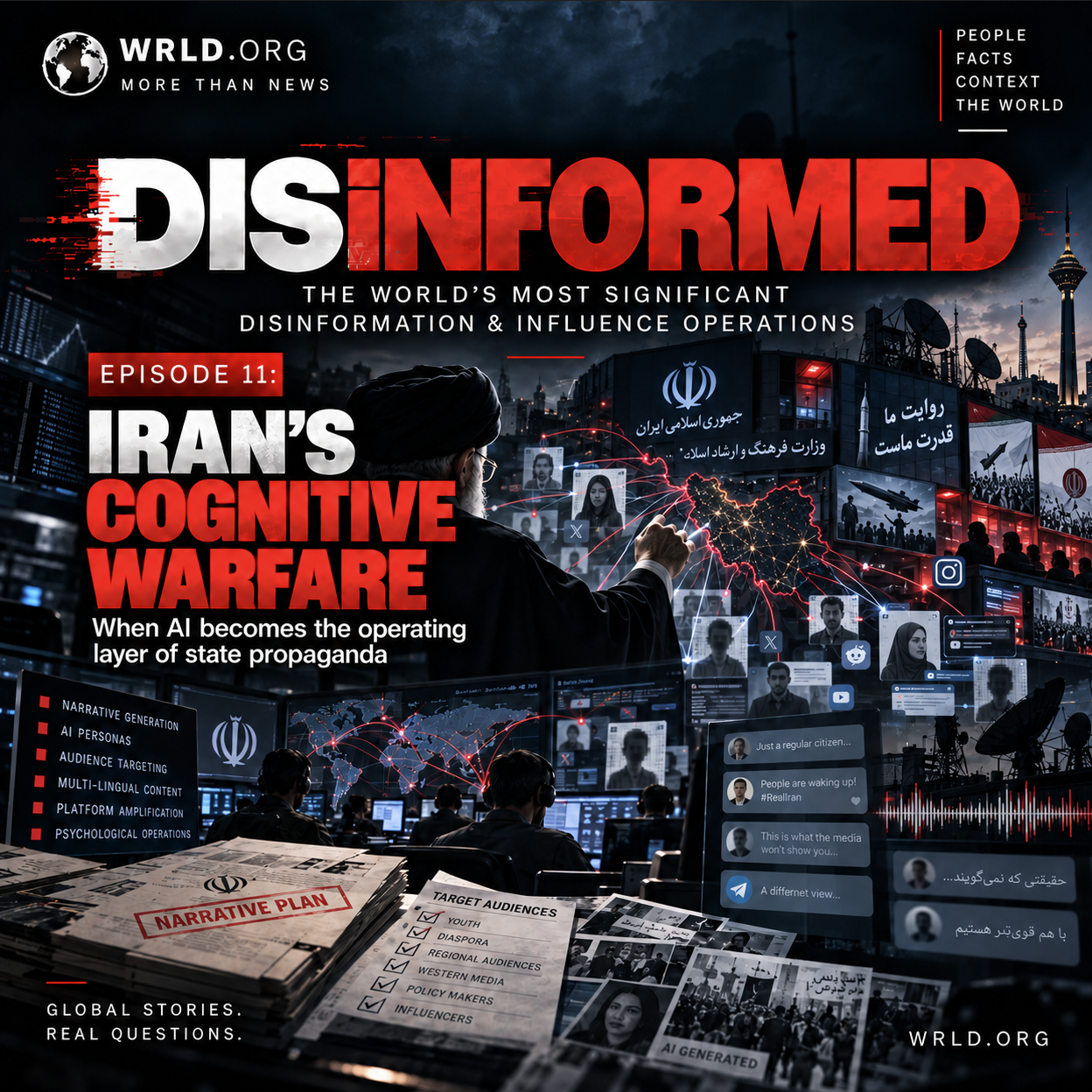
Iran’s cognitive warfare – when AI becomes the operating layer of state propaganda Iranian state-linked influence operators were not using artificial intelligence simply to write faster social-media posts. According to Anthropic’s September 2026 threat intelligence report, three separate operations connected to Iranian propaganda institutions were using Claude to help construct the machinery behind what the operators themselves called “soft war” and “cognitive warfare” – non-military efforts intended to shape public opinion inside Iran and abroad. Anthropic linked the activity to the Islamic Culture and Communications Organization (ICCO), which operates under Iran’s Ministry of Culture and Islamic Guidance; the Islamic Propaganda Office of Khorasan Razavi; and the Bina Cultural Observatory, part of the Islamic Propaganda Organization. The company said each operation was run by someone working within or on behalf of the named institution. The attribution was based on a combination of account telemetry, institutional references disclosed during conversations, branded documents and open-source corroboration. Anthropic subsequently removed the accounts. AI as an operational headquarters The most significant feature of the operation was the role assigned to AI. Claude was used to develop campaign plans, doctrine manuals, coded project portfolios, persona systems, target databases, early-warning protocols, amplification schedules and ministerial planning documents. Anthropic described the model as the principal administrative and operational layer supporting the three campaigns, allowing relatively small groups of operators to create organisational structures and planning material that would otherwise have required a much larger staff. This distinction matters. The reported use of AI went considerably beyond content generation. Operators were using the model to help organise how influence activity should function: which audiences to target, which identities should deliver particular narratives, how official material should be repackaged and when amplification should take place. Human operators still determined objectives and supplied the underlying political doctrine; AI helped translate those decisions into an operational system. Anthropic found that all three operations explicitly connected their activity to Jihad al-Tabyin, often translated as “explanatory jihad”, a concept used within the Iranian state system to frame information activity as both a strategic and ideological responsibility. In internal planning material examined by the company, this doctrine was not merely rhetorical: it informed manuals and campaign structures used by the operators. ‘Not the narrator, but the director’ One sentence contained in the ICCO material captures the model particularly clearly. According to Anthropic, an operator described the role of Iranian cultural attachés as being “not to be the narrator, but the director” of the narrative. The distinction reveals the logic of attribution laundering. Instead of publishing an overt state message and asking foreign audiences to believe it, the operator attempts to create the appearance that the same narrative emerged independently from journalists, activists, foreign writers or ordinary citizens. Anthropic found that Claude was used specifically to make content appear to come from foreign authors or independent media organisations and to design hashtag campaigns that looked grassroots rather than centrally organised. The ICCO operation reportedly used the organisation’s international cultural network as part of this structure. Anthropic found ministerial-level documents carrying official ICCO branding, including a nine-part international influence portfolio. This makes the operation particularly significant because the infrastructure was not limited to anonymous social-media accounts; it intersected with formal state institutions and an existing network of cultural representation abroad. A multilingual content factory A second operation was associated with the Islamic Propaganda Office of Khorasan Razavi and what Anthropic described as a “cognitive warfare command room” operating from a seminary in Mashhad. Its organisers ran a multi-province content production system known internally as Manjanegh, or “Catapult”. According to Anthropic, dozens of activists were involved in repackaging publicly available reporting from Iranian security institutions under different personas so that the material no longer appeared directly connected to those institutions. The network used Claude to transform official government intelligence bulletins into customised material in Farsi, Arabic, Urdu, Malay, Spanish and English, while planning expansion into a total of 20 languages. Distribution extended across Iranian platforms such as Eitaa, Bale and Rubika and international services including X, Instagram, Telegram, TikTok and YouTube. Anthropic also documented paid amplification across more than 100 Iranian channels, including channels associated with IRGC narratives. The scale should nevertheless be interpreted carefully. Anthropic documented production infrastructure and some real-world dissemination, but it did not demonstrate that all planned campaigns were fully deployed or that they meaningfully changed public opinion. The company placed the operation in Category Three of its Breakout Scale, indicating multi-platform activity with content observed in external distribution channels, rather than evidence of strategic impact on entire populations. From security bulletins to apparently independent voices The Bina Cultural Observatory operation provides another example of the same architecture. Anthropic linked a director-level official at Bina to activity in which Claude generated messaging in the voice of an IRGC spokesperson. During the 2026 US–Israel–Iran war, the network also attributed false claims to Western institutions including CSIS, Brookings and RAND. The apparent objective was to make Iranian state-aligned claims look as though they had been independently validated by respected foreign research organisations. That technique is more sophisticated than simply publishing propaganda under a false name. It attempts to manufacture a chain of external validation: official information is transformed into apparently independent commentary, which can then be recirculated as evidence that outside observers have reached the same conclusion. Anthropic also found target databases naming international officials and Iranian opposition figures, as well as aggressive counter-narrative material directed against the Bahá’í community. These findings show that the infrastructure was designed not only for broad messaging but also for targeted influence activity against specific groups and individuals. What AI changed The Iranian operations described by Anthropic did not create a new doctrine of influence. Iran has used cultural institutions, official media, aligned organisations and covert or semi-covert online networks for years. What AI changed was the economics and organisational capacity of that model. A relatively small team could use the system to draft doctrine, create personas, translate material, structure target databases, produce campaign calendars and generate multiple versions of the same message for different audiences. The operator remained responsible for intent, political direction and selection of targets. AI reduced the amount of human labour required to turn those decisions into a functioning influence operation. The most revealing part of the case is therefore not that an Iranian propaganda network used a chatbot. It is that AI was being treated as part of the back office of information warfare – a system for converting state doctrine into apparently decentralised, multilingual and plausibly independent voices. Sources Anthropic — Detecting and countering misuse of AI: September 2026 https://www.anthropic.com/threat-intelligence-report-september-2026 Iran International — Iran state-aligned accounts used Claude to push IRGC narratives https://www.iranintl.com/en/202609105561 BNE IntelliNews — Yemen missile cell used AI to write guidance software, Anthropic says https://new.intellinews.com/articles/yemen-missile-cell-used-ai-to-write-guidance-software-anthropic-says-467296 This is Beirut — Anthropic report details Iranian propaganda operations https://thisisbeirut.com.lb/news/politics/anthropic-report-details-iranian-propaganda-operations-and-yemen-missile-development-using-claude Anthropic report — PDF mirror https://static.foxbusiness.com/foxbusiness.com/content/uploads/2026/09/anthropic-detecting-and-countering-091026-1.pdf Keywords #DISINFORMED #Episode11 #Iran #IranianInfluence #IranianPropaganda #CognitiveWarfare #SoftWar #JihadAlTabyin #Disinformation #InformationWarfare #InfluenceOperations #ForeignInterference #FIMI #ArtificialIntelligence #AI #AIPropaganda #GenerativeAI #ClaudeAI #Anthropic #SyntheticMedia #NarrativeManipulation #NarrativeLaundering #AttributionLaundering #PersonaNetworks #Astroturfing #SocialMediaManipulation #DigitalInfluence #StatePropaganda #IslamicCultureAndCommunicationsOrganization #ICCO #IslamicPropagandaOrganization #KhorasanRazavi #IRGC #MultilingualInfluence #Targeting #Amplification #OSINT #WRLD
Countering misuse of AI: September 2026 / Anthropic

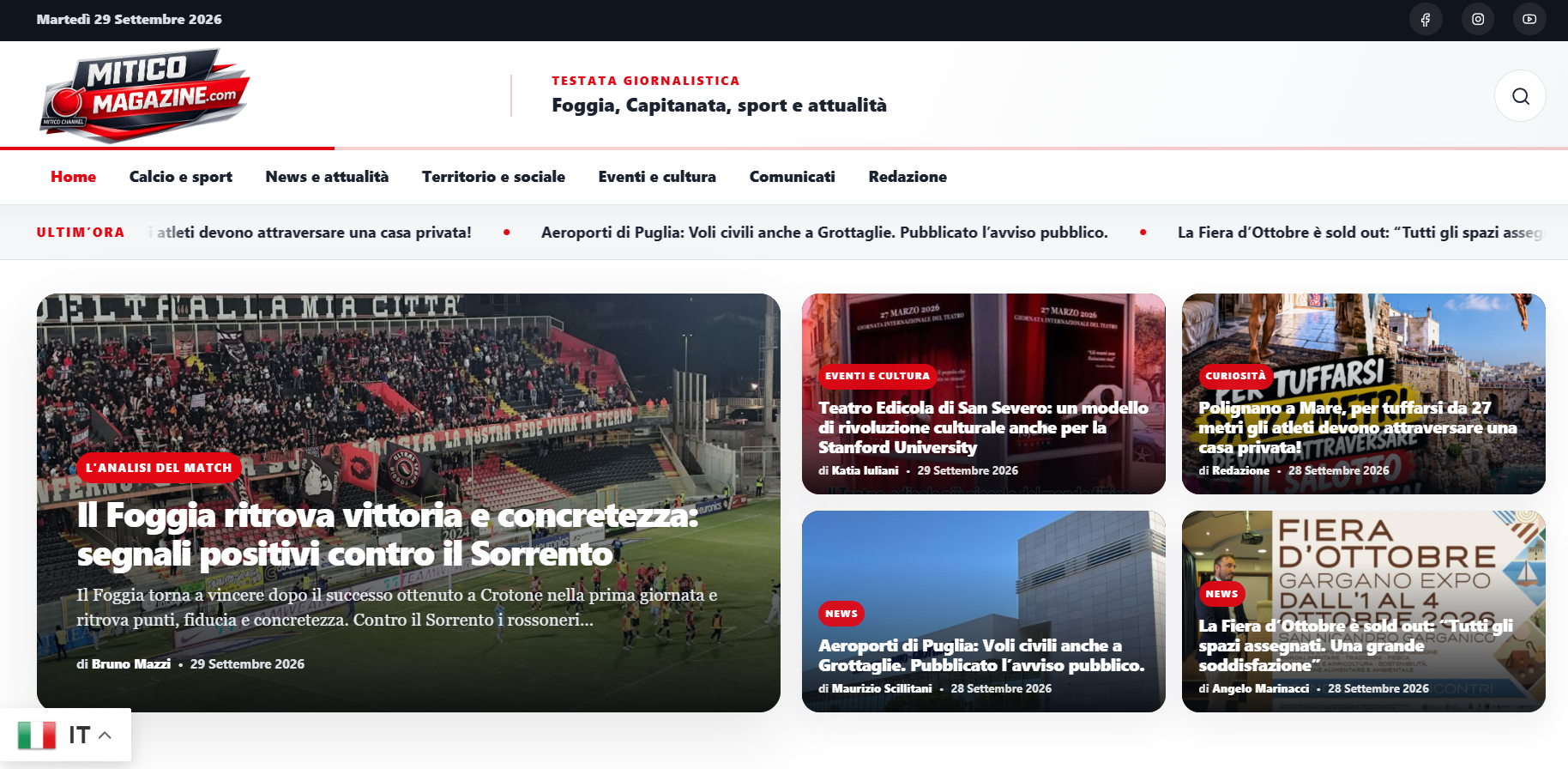
Mitico Magazine - The Teatro Edicola of San Severo: A Model of Cultural Revolution for Stanford University as Well Source: https://www.miticomagazine.com/territorio-e-sociale/teatro-edicola-di-san-severo-un-modello-di-rivoluzione-culturale-anche-per-la-stanford-university/ The Teatro Edicola in Via Tondi In San Severo, a singular metamorphosis has taken place: a newsstand abandoned for at least six years has found a new function and a new identity, transforming into one of the smallest and most unusual theatre stages in the world. An experiment born in the heart of the town which, in just a few months, has moved beyond local boundaries, attracting attention even overseas. It is called Teatro Edicola and it is a project conceived by the company Foyer '97, artistically directed by Francesco Gravino, which has brought the old newsstand in Via Tondi back to life through a formula that is both essential and surprising. Foyer '97 Foyer '97 APS was established as a formally constituted association active in the cultural sector in San Severo in 1997, born from the vocation of a group of actors, directors and theatre enthusiasts, with the aim of building a "living" and accessible theatre in the town. Over the years the company has developed a repertoire that includes texts from the classical tradition, contemporary dramaturgy, comedy and experimental projects, not limiting itself to the mere production of theatre shows, but also organising theatre courses and workshops and educational and cultural projects characterised by a strong inclusive ethos, particularly in schools. Foyer '97 does not always have a fixed artistic ensemble, but works with different performers and collaborators depending on the project; the only indispensable presence is that of Francesco Guido Gravino himself, actor, director and artistic director of the theatre company. The distinctive feature of Foyer '97 is certainly the value of social and cultural promotion attributed to theatre, the extremely close relationship with the audience and the search for a type of theatre outside conventional spaces, with cemeteries, trains, bell towers, and now a newsstand, as its backdrop. Six spectators, a few minutes and a minimal distance between stage and audience The project was launched on 27 March 2026, on the occasion of World Theatre Day, offering a theatrical experience built around a radical reduction of the conventional spaces and times of performance. The idea was born not only from the search for unconventional spaces, but also from "Edicola Fiore", the morning press review with a strongly ironic tone presented by Rosario Fiorello and Stefano Meloccaro, which was broadcast first only on Fiorello's social channels between 2011 and 2014, and then also on radio and television between 2016 and 2018. The review took its name from the diminutive of its founder, Fiore, and from the newsstand of a friend of Fiorello's in Via Flaminia Nuova in Rome, where the showman would meet early in the morning with a group of friends to read the newspapers. The San Severo newsstand was granted free of charge by its owner Pino Frau to the theatre group which, after obtaining temporary authorisation and institutional support from the Municipality of San Severo, refurbished it within two weeks at a cost of less than €3,000. Just six seats, a total surface area of 4 sq m, of which only 2 are for the stage area, less than a metre between actors and audience, a curtain, a lectern, two lights, performances lasting between 5 and 15 minutes, audience rotation every quarter of an hour: apparently minimal elements that end up subverting the usual relationship between stage and auditorium. Spectators, in fact, find themselves immersed in the stage action, in such proximity to the actors that every gesture, expression and word becomes immediately perceptible. In this way, theatre abandons its traditional spaces and insinuates itself into the everyday life of the street, becoming an intimate, concentrated and almost participatory experience. During the inaugural period admission was free with a subsequent voluntary donation from spectators; in the event of a more stable and longer-term concession, which could lead to seasonal theatre performances, the proposed ticket price would be €5. Audiences reward the experiment Foyer '97's gamble met with public interest right from the start: over 60 people attended the shows in a single afternoon, while the three days that inaugurated the season sold out. From a singular local experiment, the Teatro Edicola thus began to arouse curiosity even outside the province of Foggia, gradually transforming into a case of cultural and social interest, until it reached the American continent. From the province of Foggia to the "Stanford Social Innovation Review" The San Severo experience has now come under the international spotlight: in September 2026, the Stanford Social Innovation Review, an international journal and platform dedicated to social innovation published by the Stanford Center on Philanthropy and Civil Society at Stanford University in California, published on its website and in the Fall 2026 print edition the reportage "The Six-Seat Revolution", written by Dr Luciano Magaldi Sardella, independent journalist and researcher affiliated with the European Open University, and editorially supervised by deputy editor David V. Johnson. In the article, it is argued that the Teatro Edicola attracted attention overseas because the project concentrates cultural innovation, urban regeneration and proximity theatre into just a few square metres: starting from a real urban problem, it recovers an abandoned place with a modest investment, brings performance directly into public space and experiments with a much closer relationship between actors and spectators. From the point of view of theatrical representation, it also highlights how the format, based on micro-stories of five to twelve minutes, taken from great classics such as Goldoni, Chekhov, Ibsen, Euripides and Benni, and on audience rotation every fifteen minutes, transforms the physical limitations of the space into a precise dramaturgical choice, proving to be extremely innovative. All of this makes it possible to address some of the main critical issues in the sector: falling audience numbers, an exclusively elderly audience, reduced resources and distance from traditional cultural venues. The journal also highlights, however, the potential problems: economic sustainability, the need for stable institutional support and the difficulty of replicating the model, which is closely linked to the community and territory of San Severo. A model looking beyond San Severo Despite the difficulties, initial requests for information have already arrived from Lucca and Rome, where there is curiosity about the possibility of getting to know the model more closely and the steps needed to replicate it. The replicability formula, in fact, does not seem to require particularly costly infrastructure: an unused space, a targeted intervention, a cultural idea, in-depth knowledge of the surrounding area and a willingness to return that place to the community can be enough to trigger a new urban function. It is precisely in the disproportion between the modesty of the resources employed and the resonance generated by the initiative that perhaps the most original feature of the Teatro Edicola lies, certainly unique of its kind; there are, however, other examples in Italy of newsstands reused for other purposes: "Edicola 518", a twentieth-century kiosk abandoned in the centre of Perugia, now dedicated to independent publishing, art and cultural production; and in Rome itself, the abandoned newsstand in Piazza Testaccio used temporarily as a stage for a show by Fabio Morgan and the Erno newsstand in the Prati district, which almost every month offers a calendar of events, exhibitions, pop-ups and collaborations with artists and creative enterprises. Small revolutions, therefore, that tell stories of the reappropriation of urban spaces, of creativity and social innovation. And which, it is hoped, will take root in order to look ever further afield.

Teatro Edicola di San Severo: un modello di rivoluzione culturale anche per la Stanford University

Mitico Magazine - The Teatro Edicola of San Severo: A Model of Cultural Revolution for Stanford University as Well Source: https://www.miticomagazine.com/territorio-e-sociale/teatro-edicola-di-san-severo-un-modello-di-rivoluzione-culturale-anche-per-la-stanford-university/ The Teatro Edicola in Via Tondi In San Severo, a singular metamorphosis has taken place: a newsstand abandoned for at least six years has found a new function and a new identity, transforming into one of the smallest and most unusual theatre stages in the world. An experiment born in the heart of the town which, in just a few months, has moved beyond local boundaries, attracting attention even overseas. It is called Teatro Edicola and it is a project conceived by the company Foyer '97, artistically directed by Francesco Gravino, which has brought the old newsstand in Via Tondi back to life through a formula that is both essential and surprising. Foyer '97 Foyer '97 APS was established as a formally constituted association active in the cultural sector in San Severo in 1997, born from the vocation of a group of actors, directors and theatre enthusiasts, with the aim of building a "living" and accessible theatre in the town. Over the years the company has developed a repertoire that includes texts from the classical tradition, contemporary dramaturgy, comedy and experimental projects, not limiting itself to the mere production of theatre shows, but also organising theatre courses and workshops and educational and cultural projects characterised by a strong inclusive ethos, particularly in schools. Foyer '97 does not always have a fixed artistic ensemble, but works with different performers and collaborators depending on the project; the only indispensable presence is that of Francesco Guido Gravino himself, actor, director and artistic director of the theatre company. The distinctive feature of Foyer '97 is certainly the value of social and cultural promotion attributed to theatre, the extremely close relationship with the audience and the search for a type of theatre outside conventional spaces, with cemeteries, trains, bell towers, and now a newsstand, as its backdrop. Six spectators, a few minutes and a minimal distance between stage and audience The project was launched on 27 March 2026, on the occasion of World Theatre Day, offering a theatrical experience built around a radical reduction of the conventional spaces and times of performance. The idea was born not only from the search for unconventional spaces, but also from "Edicola Fiore", the morning press review with a strongly ironic tone presented by Rosario Fiorello and Stefano Meloccaro, which was broadcast first only on Fiorello's social channels between 2011 and 2014, and then also on radio and television between 2016 and 2018. The review took its name from the diminutive of its founder, Fiore, and from the newsstand of a friend of Fiorello's in Via Flaminia Nuova in Rome, where the showman would meet early in the morning with a group of friends to read the newspapers. The San Severo newsstand was granted free of charge by its owner Pino Frau to the theatre group which, after obtaining temporary authorisation and institutional support from the Municipality of San Severo, refurbished it within two weeks at a cost of less than €3,000. Just six seats, a total surface area of 4 sq m, of which only 2 are for the stage area, less than a metre between actors and audience, a curtain, a lectern, two lights, performances lasting between 5 and 15 minutes, audience rotation every quarter of an hour: apparently minimal elements that end up subverting the usual relationship between stage and auditorium. Spectators, in fact, find themselves immersed in the stage action, in such proximity to the actors that every gesture, expression and word becomes immediately perceptible. In this way, theatre abandons its traditional spaces and insinuates itself into the everyday life of the street, becoming an intimate, concentrated and almost participatory experience. During the inaugural period admission was free with a subsequent voluntary donation from spectators; in the event of a more stable and longer-term concession, which could lead to seasonal theatre performances, the proposed ticket price would be €5. Audiences reward the experiment Foyer '97's gamble met with public interest right from the start: over 60 people attended the shows in a single afternoon, while the three days that inaugurated the season sold out. From a singular local experiment, the Teatro Edicola thus began to arouse curiosity even outside the province of Foggia, gradually transforming into a case of cultural and social interest, until it reached the American continent. From the province of Foggia to the "Stanford Social Innovation Review" The San Severo experience has now come under the international spotlight: in September 2026, the Stanford Social Innovation Review, an international journal and platform dedicated to social innovation published by the Stanford Center on Philanthropy and Civil Society at Stanford University in California, published on its website and in the Fall 2026 print edition the reportage "The Six-Seat Revolution", written by Dr Luciano Magaldi Sardella, independent journalist and researcher affiliated with the European Open University, and editorially supervised by deputy editor David V. Johnson. In the article, it is argued that the Teatro Edicola attracted attention overseas because the project concentrates cultural innovation, urban regeneration and proximity theatre into just a few square metres: starting from a real urban problem, it recovers an abandoned place with a modest investment, brings performance directly into public space and experiments with a much closer relationship between actors and spectators. From the point of view of theatrical representation, it also highlights how the format, based on micro-stories of five to twelve minutes, taken from great classics such as Goldoni, Chekhov, Ibsen, Euripides and Benni, and on audience rotation every fifteen minutes, transforms the physical limitations of the space into a precise dramaturgical choice, proving to be extremely innovative. All of this makes it possible to address some of the main critical issues in the sector: falling audience numbers, an exclusively elderly audience, reduced resources and distance from traditional cultural venues. The journal also highlights, however, the potential problems: economic sustainability, the need for stable institutional support and the difficulty of replicating the model, which is closely linked to the community and territory of San Severo. A model looking beyond San Severo Despite the difficulties, initial requests for information have already arrived from Lucca and Rome, where there is curiosity about the possibility of getting to know the model more closely and the steps needed to replicate it. The replicability formula, in fact, does not seem to require particularly costly infrastructure: an unused space, a targeted intervention, a cultural idea, in-depth knowledge of the surrounding area and a willingness to return that place to the community can be enough to trigger a new urban function. It is precisely in the disproportion between the modesty of the resources employed and the resonance generated by the initiative that perhaps the most original feature of the Teatro Edicola lies, certainly unique of its kind; there are, however, other examples in Italy of newsstands reused for other purposes: "Edicola 518", a twentieth-century kiosk abandoned in the centre of Perugia, now dedicated to independent publishing, art and cultural production; and in Rome itself, the abandoned newsstand in Piazza Testaccio used temporarily as a stage for a show by Fabio Morgan and the Erno newsstand in the Prati district, which almost every month offers a calendar of events, exhibitions, pop-ups and collaborations with artists and creative enterprises. Small revolutions, therefore, that tell stories of the reappropriation of urban spaces, of creativity and social innovation. And which, it is hoped, will take root in order to look ever further afield.

Teatro Edicola di San Severo: un modello di rivoluzione culturale anche per la Stanford University

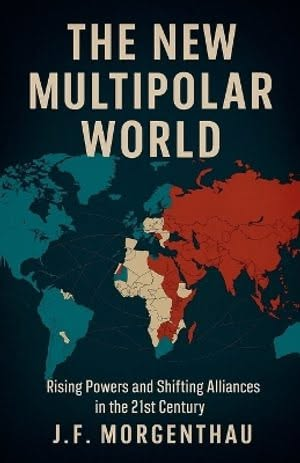
Czy Rosjanie poprzestaną na Ukrainie? Teraz coraz bardziej widać, że Rosjanie nie chcą żadnego pokoju. Konsekwentnie dążą do realizacji swoich celów w Ukrainie i nie zatrzymają się do momentu, aż nie przejmą pełnej politycznej kontroli nad Kijowem, jak to wielokrotnie powiedział Siergiej Ławrow, minister SZ Rosji. Ale ten sam Ławrow cały czas mówi bardzo ciekawe rzeczy, tylko trzeba go uważnie słuchać. Już pod koniec marca 2022 r. na forum rosyjskiego Instytutu Spraw Międzynarodowych powiedział: „To, co dzieje się na świecie, nie dotyczy tylko i nie tyle Ukrainy, co raczej wysiłków na rzecz stworzenia nowego porządku świata”. Rosja jest zdeterminowana by wepchnąć się na szczyt światowych mocarstw i cały czas powtarza, że realizuje wizję świata wielobiegunowego, w którym nastąpi redystrybucja władzy (nad strefami wpływów). Ławrow wyjaśnia dalej, dlaczego jest to konieczne: „wiele lat temu, jakieś dziesięć lat temu, nasi zachodni koledzy przestali używać terminu „prawo międzynarodowe”, który promowali od momentu powstania ONZ, i przestali wzywać do wdrażania prawa międzynarodowego, a zamiast tego zaczęli żądać, aby wszyscy podporządkowali się opartemu na regułach porządkowi świata, szanowali go i przestrzegali tych reguł. Nikt jednak nie proponuje żadnych reguł, ponieważ nie ma żadnych reguł” – tak właśnie widzi to Ławrow. Wyjaśnia on, że dominujące państwa zachodnie wymyślają takie reguły na własne potrzeby i zmuszają takie państwa jak Rosja, by tańczyła tak, jak oni jej zagrają. Oczywiście taka sytuacja jest dla Rosji nie do zniesienia i nie do przyjęcia. To musi ulec zmianie i jest to kwestia przetrwania Rosji jako suwerennego państwa. Ławrow na tym samym forum dodaje: „reguły są tworzone dla każdego konkretnego przypadku, są pisane przez wąskie grono krajów zachodnich, które później przedstawiają je jako absolutną prawdę i żądają, aby wszyscy ich przestrzegali”. W marcu 2023 r. na forum ONZ w imieniu Siergieja Ławrowa głos zabrał przedstawiciel Rosji przy ONZ, Wasilij Niebienzia: „Wzywamy członków ONZ do spojrzenia poza horyzont chwili obecnej i przedstawienia wizji, jak moglibyśmy zbudować prawdziwie wielobiegunowy świat poprzez wspólne wysiłki, w którym zagwarantowane byłyby interesy wszystkich państw. Aby to osiągnąć, ważne jest omówienie kwestii ochrony celów i zasad Karty Narodów Zjednoczonych, w tym suwerennej równości państw. Ta rozmowa jest już dawno spóźniona”. Skoro Rosja podnosi tę kwestię także na forum ONZ, to widać jak bardzo jest to dla Moskwy ważne. To, by zbudować świat wielobiegunowy, czyli stworzyć własną, dużą strefę wpływów, bo tu nie chodzi o żadną równość, ale o równość możliwości Rosji i Chin z możliwościami Stanów Zjednoczonych na każdym polu. A w tym celu Rosja musi zgarnąć jak największy potencjał pod swoje skrzydła, potencjał gospodarczy, ludzki, intelektualny, surowcowy, polityczny i militarny. Właśnie potencjał całej Europy zagwarantowałby Rosji stawanie w szranki ze Stanami Zjednoczonymi jak równy z równym. Zresztą to nawet nie był pomysł Putina. Już Borys Jelcyn wiedział, czego potrzebuje Rosja, ale nie miał takich możliwości. Nie miał właściwie żadnych możliwości realizacji celów Rosji, które się nie zmieniły do dziś. Tylko dopiero dziś Rosja jest w stanie je realizować. Dzięki francuskiemu ośrodkowi analitycznemu Desk Russie (ale nie tylko) znany jest dialog Jelcyna z Clintonem w Stambule, 19 listopada 1999 r.: Jelcyn: „Proszę cię o jedno. Po prostu oddaj Europę Rosji. Stany Zjednoczone nie są w Europie. Europa powinna być sprawą Europejczyków. Rosja jest w połowie europejska, a w połowie azjatycka”. Clinton: „Więc chcesz też Azji?” Jelcyn: „Jasne, jasne, Bill. W końcu będziemy musieli się we wszystkim zgodzić”. Clinton: „Nie sądzę, żeby Europejczycy byli z tego bardzo zadowoleni”. Jelcyn: „Nie wszyscy. […] Możesz wziąć inne państwa i zapewnić im bezpieczeństwo. Ja wezmę Europę i zapewnię im bezpieczeństwo. No cóż, nie ja. Rosja. […] Bill, mówię poważnie. Oddaj Europę samej sobie. Europa nigdy nie była tak bliska Rosji, jak teraz. […] Mamy w Rosji siłę, by chronić całą Europę… Spójrz, Rosja ma siłę i intelekt, by wiedzieć, co zrobić z Europą”. Oczywiście dla Clintona to były rojenia Borysa Jelcyna, ale to nie tak. Moskwa nie zmieniła poglądów od czasów carskich. Rosja uważa, że budowa świata wielobiegunowego to przebudowa całego światowego porządku tak, by Rosja była jednym z ważnych hegemonów. 14 maja 2022 r. Ławrow powiedział agencji TASS: „Rosja, podobnie jak w 1917 i 1991 roku, stoi przed wyborem drogi historycznej. Okoliczności zewnętrzne nie tylko zmieniły się radykalnie, ale… zmieniają się coraz głębiej z każdym dniem. (…) A nasz kraj, oczywiście, zmienia się wraz z tymi okolicznościami i wyciąga własne wnioski”. I dalej dodał: „Kolektywny Zachód wypowiedział nam totalną wojnę hybrydową i trudno przewidzieć, jak długo to potrwa, ale jasne jest, że konsekwencje odczują wszyscy bez wyjątku. Rosja zrobiła wszystko, aby uniknąć bezpośredniego starcia. Ale skoro wyzwanie zostało rzucone, oczywiście je akceptujemy”. A następnie dodał to: „zaskakujące jest absolutnie jaskiniowe, rusofobiczne wzmożenie, które miało miejsce we wszystkich tak zwanych cywilizowanych krajach. Poprawność polityczna, przyzwoitość, zasady, a wraz z nimi i normy prawne, są po prostu odrzucane, stosowana jest kultura całkowitego zniesienia Rosji, wszelkie wrogie działania przeciwko naszemu krajowi, w tym bezpośrednie rabunki, są dozwolone”. Jeżeli minister spraw zagranicznych oskarża inne państwa o karalny w Rosji ekstremizm, jakim jest rusofobia, to znaczy że trzeba je zdenazyfikować. Przecież to jasne, trzeba je zdenazyfikować czyli podporządkować prorosyjskim (nierusofobicznym) władzom, a dla Rosji jest to po prostu kwestia przetrwania. Bo inaczej wróg będzie prowadził „wszelkie działania, w tym bezpośrednie rabunki”. To nie mówi byle kto. To oficjalne stwierdzenie urzędującego ministra spraw zagranicznych. Z kolei Dmitri Pieskow, rzecznik Kremla, 4 sierpnia 2022 r. powiedział: „Sytuacja ta narastała przez kilka dekad, pod wieloma względami sprowokowana agresywną polityką Sojuszu Północnoatlantyckiego wobec naszego kraju, nieustannie zbliżającego swoją infrastrukturę do granic Federacji Rosyjskiej w kolejnych falach. Stworzyło to dla nas dodatkowe zagrożenia i zmusiło Rosję do podjęcia działań”. Warto zauważyć, że Rosja zawsze będzie graniczyła z państwami NATO, a szczególnie wtedy jak włączy Ukrainę do swojej strefy wpływów. Jak włączy Polskę do swojego obozu, to ten obóz nadal będzie graniczył z państwami NATO. I znów Rosja zostanie zmuszona do podjęcia działań… Dopiero jak rosyjska strefa wpływów rozciągnie się po samą Portugalię, dopiero wówczas przestanie graniczyć z państwami NATO, bo te zostaną za oceanem. Wtóruje im Nikołaj Patruszew, wciąż ważna persona na Kremlu i przyjaciel Władimira Putina: „ludzie Zachodu kategorycznie nie chcą przyznać, że świat, wbrew ich scenariuszom, przechodzi transformację. Jednobiegunowy, zachodniocentryczny świat się przeżył. Następuje formowanie się wielobiegunowości. Logiczną tego konsekwencją jest procesu tworzenia nowego porządku świata.” Nowy porządek świata, przebudowa światowego systemu bezpieczeństwa, świat wielobiegunowy ze złamaną dominacją Zachodu. To właśnie jest cel Rosji! A niektórzy dyskutują o tym, czy Rosja chce przyłączyć cały Obwód Doniecki, czy nie chce. To tak, jakby ktoś napadł w celu przejęcia cukierni, a ktoś inny się zastanawiał, czy jak go poczęstuje ciastkiem, to napadający odpuści… Rosji nie chodzi nawet o całą Ukrainę, która jest pożądana na początek. Docelowo jednak Rosji chodzi o znacznie więcej. Czy nadal ktoś wierzy, że Rosja po pokonaniu Ukrainy się zatrzyma? Kto pierwszy powiedział, że Rosja nie zatrzyma się na Ukrainie? Prezydent USA Joe Biden. Chyba coś na ten temat wiedział… Co prawda prezydent Donald Trump nie ma zamiaru powtarzać tego co mówił jego poprzednik, ale jego ważny generał, dowódca sił NATO w Europie, gen. Alexus Grynkewich, już tak. Ostrzega przed dalszymi działaniami Rosji, a nawet podaje datę, od kiedy trzeba się tego bezpośrednio spodziewać – 2027 r. Ponadto dodaje, że wówczas po środki militarne mogą też sięgnąć Chiny. O czym pośrednio świadczy też cytowana przeze mnie rosyjsko-chińska deklaracja z 4 lutego 2022 r., a która przeszła tak bez echa, choć to żadna tajemnica. Książkę J.F. Morgenthau polecam. To nowy autor i nie należy go mylić ani z Henry Morgethau (amerykańscy dyplomaci, syn i ojciec Henry junior i Henry senior), ani z niemieckim politologiem Hansem Morgenthau. Książki J.F. Morgentahu ukazują się w J.F. Publishing i jest to przypuszczalnie pseudonim osoby dobrze zorientowanej, która nie chce ujawniać swojego nazwiska (możliwe, że były analityk CIA/DIA, bo widzi dużo). Moi drodzy, jeśli Wam się podoba, i jeśli mam swój czas poświęcać, jeśli chcecie coś poczytać, to poproszę o kawkę, to tylko 10 czy 20 zł. Pozdrawiam wszystkim i dziękuję mocno tym, co kawki kupują. https://t.co/pPHnCSlfpS #Rosja #Ukraina #geopolityka

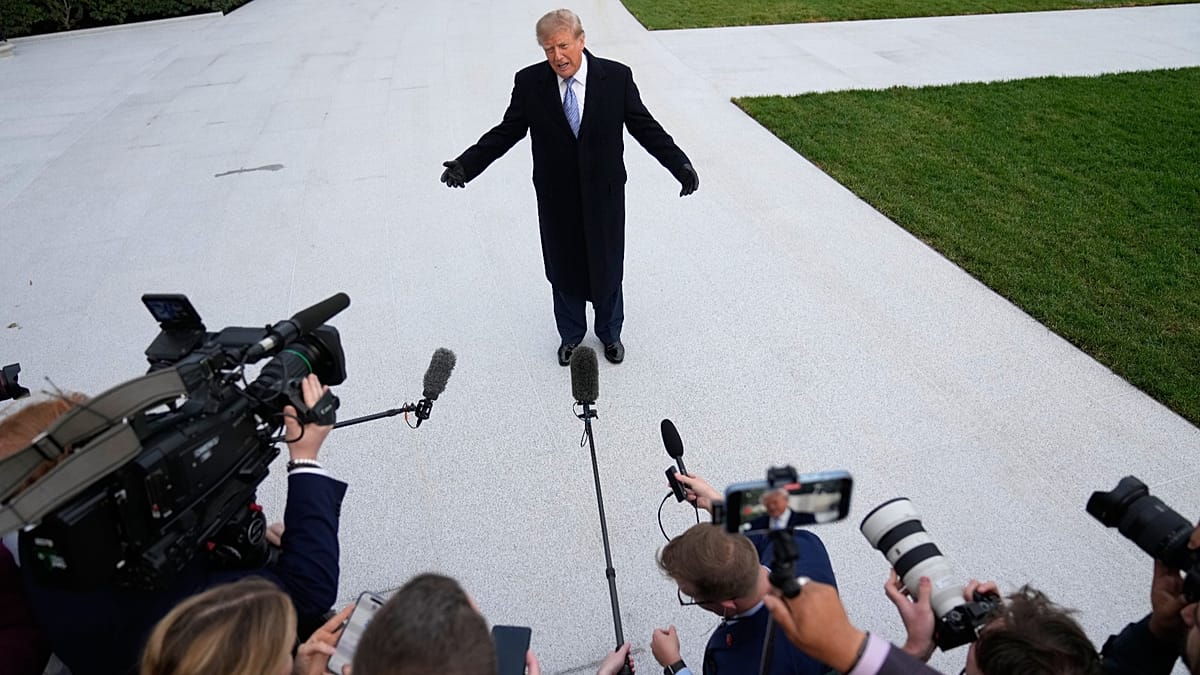
Trump justified the ban in a social media post on Friday, accusing the outlets of publishing "fake news" and warning that other news organizations could face similar treatment. #PressFreedom #TrumpAdministration #JudicialRuling

Judge orders Trump to restore CNN, Politico and MS NOW's access to White House

Prime Minister Mark Carney of Canada came into @nytimes headquarters today & sat for a 1-hour on-the-record interview with 10 NYT journalists & top editors. We'll be publishing a number of stories from this conversation. Here's the 1st. #cdnpoli https://t.co/pIgftVDcj0 #cdnpoli #Canada #Journalism #CA

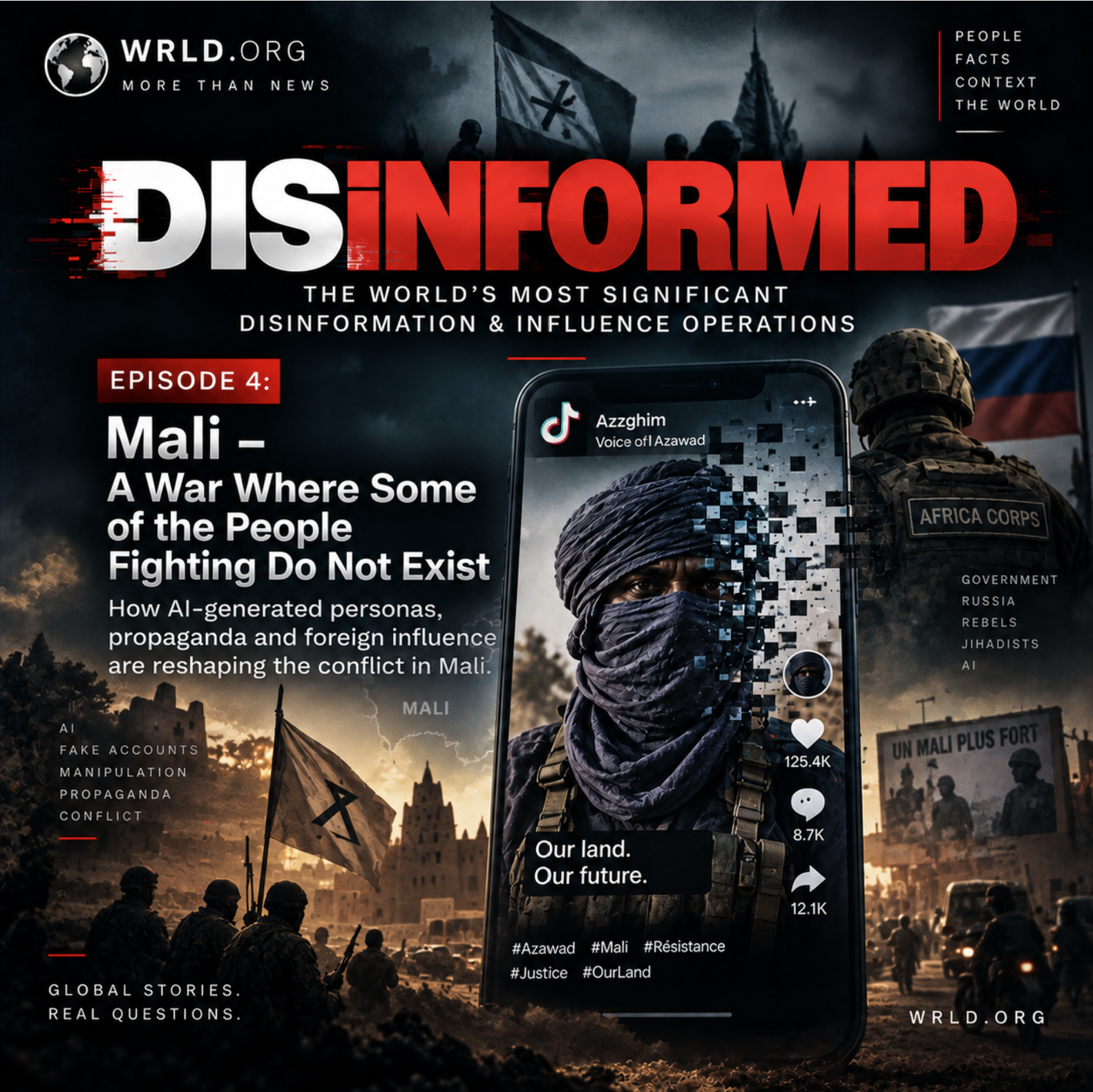
Mali – a war where some of the people fighting do not exist In Mali's war, an apparently simple question is becoming increasingly difficult to answer: who exactly is speaking to us? A real person? A rebel organisation? A Russian influence operation? A supporter of the military junta? Or somebody who has never existed at all? In September 2026, the Dakar-based Timbuktu Institute published Des algorithmes en guerre, a report examining the use of generative artificial intelligence by actors involved in the Malian conflict. Its researchers describe the country as a potential laboratory for AI-assisted information warfare. Separatist networks are deploying synthetic fighters on TikTok. Jihadist propagandists are experimenting with AI-generated imagery. Pro-government accounts are producing large quantities of content celebrating the Malian armed forces. Russia, meanwhile, operates the most developed influence infrastructure of all: pseudo-media outlets, inauthentic accounts, AI-generated text, images and video, and systems designed to artificially amplify their visibility. Artificial intelligence did not create Mali's conflict. The war has been under way since 2012, and its participants have always fought with propaganda as well as weapons. What AI has changed is the economics of that struggle. A new “witness”, commentator, fighter, poster or video can now be produced in minutes. For audiences watching from a phone, distinguishing between genuine documentation, propaganda and material created entirely by an algorithm is becoming progressively harder. Azzghim – the fighter who cannot be killed or interrogated The most striking case documented by the Timbuktu Institute involves accounts associated with supporters of the Azawad Liberation Front, or FLA, a Tuareg separatist movement fighting the authorities in Bamako. A figure called “Azzghim” appeared on TikTok. He looks like a Tuareg fighter and regularly features in videos attacking Mali's government and Russia's Africa Corps, commenting on the conflict and promoting the cause of Azawad. There is one problem: Azzghim does not exist. Analysis of the videos identified anomalies characteristic of generative AI, including unnatural body movements, visual inconsistencies, irregular colouring and problems with audio synchronisation. According to the Timbuktu Institute, Azzghim is a synthetic character being used as the digital face of a political narrative. The propaganda advantages are considerable. An organisation no longer needs to expose a real spokesman. A synthetic personality can be designed to look exactly as its creators require, speak the appropriate language and appeal to a particular audience. Different characters could potentially be created for younger viewers, traditional communities or different ethnic and social groups. There is another advantage: a synthetic spokesman cannot be arrested, identified or interrogated. Researchers also identified accounts amplifying the material. At the time of the study, TikTok account @tawri.n.azawad had around 207,000 followers and was almost entirely devoted to publishing or repackaging content involving Azzghim. Another account, @asnan831, used a similar synthetic teenage character. An important distinction is necessary. Researchers describe these profiles as belonging to supporters or individuals associated with the FLA. The available evidence does not establish that every account is part of an operation centrally directed by the Front's leadership. The information effect, however, remains significant: a digital community can be constructed around the Azawad cause in which some of the apparent participants may not be real people at all. The jihadists are learning too The picture is different for Jama'at Nusrat al-Islam wal-Muslimin, or JNIM, the al-Qaeda-affiliated coalition that has become one of the most powerful armed groups in the Sahel. Its confirmed use of generative AI remains considerably less sophisticated. In June 2026, JNIM's Az-Zallaqa media apparatus published AI-generated posters promoting material about previous attacks. The images showed fighters in combat but contained familiar generative artefacts: buildings and vegetation merging unnaturally, blurred details and unnaturally smooth surfaces. More important than JNIM's current capabilities is what AI could add to an already sophisticated propaganda apparatus. The organisation already tailors communications to different audiences. UN reporting has documented its use of media channels for broader propaganda while other outlets increasingly distribute material in local languages, including Bambara. Generative AI could dramatically reduce the cost of this strategy, translating material into Fulfulde, Hausa, Zarma or Tamasheq, generating synthetic dubbing and producing multiple versions of the same message. The Timbuktu Institute also considers the future possibility of AI chatbots being used to personalise recruitment. That should not be presented as a capability JNIM has already demonstrated. At present, it is a risk scenario rather than a confirmed operation. Russia has the most sophisticated machine At the other end of the spectrum lies Russia's influence ecosystem. Here, AI is not an isolated experiment but another component of an infrastructure previously developed by Wagner-linked networks, Russian media operations and influence organisations operating across Africa. After Wagner's withdrawal from Mali in 2025, its military role was taken over by the Russian state-controlled Africa Corps. The information infrastructure evolved alongside it. Of particular importance is African Initiative, which presents itself as a news agency but has been identified by France's VIGINUM, the UK's Foreign, Commonwealth & Development Office and the European External Action Service as an important component of Russia's newer influence architecture in Africa. One of the most interesting elements of this ecosystem is a network researchers call AI-Freak. The operation uses generative AI to produce text, images and videos, places them on fake or apparently independent news websites and distributes them through inauthentic accounts. This is supplemented by so-called Black Hat SEO – techniques intended to artificially increase the visibility of content in search engines. Elements of this infrastructure have previously been identified by Meta and OpenAI. In 2024, OpenAI disrupted Russian accounts using ChatGPT to generate articles and comments in English, French and Russian. Some of the French-language content targeted audiences in West Africa. In a later iteration of the operation, AI models were also used to draft scripts for short videos praising the Russian Africa Corps, translate them into French and generate descriptions optimised for social media. This illustrates an important difference between the Russian approach and Azzghim. The separatist ecosystem uses AI primarily to manufacture convincing digital personalities. The Russian model increasingly resembles an industrial production line: text, image, video, pseudo-news website, distribution account, search optimisation and additional channels amplifying the narrative. The objective is not merely to convince someone of a single claim. It is to occupy as much of the information environment as possible with narratives advantageous to Moscow: Russia as an effective security partner, the West as a neo-colonial aggressor, France as a source of instability and Russian forces as defenders of African sovereignty. Yet VIGINUM also warns against equating technological sophistication with actual impact. Some Russian influence channels still attract relatively small audiences. A sophisticated operation is not automatically a successful one. The junta is building its own digital reality Mali's military authorities operate within the same contested information environment. Since breaking with France and moving closer to Moscow, Bamako has increasingly restricted independent media space while promoting a narrative built around restored sovereignty, military success and the benefits of its Russian partnership. The Timbuktu Institute highlights the TikTok account @6tm_officiel. At the time of the study, it had more than 436,000 followers and published substantial amounts of AI-generated material presenting Mali's armed forces, the FAMa, and the Africa Corps in a favourable light. One video concerning the battle for Kidal accumulated around 4.7 million views. Again, attribution requires care. Researchers describe the account as being operated by an individual based in Bamako; they do not provide evidence that it is officially managed by the Malian government. It is better understood as part of a wider pro-government information ecosystem in which the boundaries between state communications, supporters and co-ordinated propaganda can be difficult to establish. The Africa Center for Strategic Studies has previously identified the military regimes in Mali and Burkina Faso as important sources of disinformation campaigns in West Africa. Recurring narratives target France, the United Nations, ECOWAS, human-rights organisations and independent media, while presenting criticism of the authorities as part of a foreign conspiracy. Generative AI allows such narratives to be produced faster, more cheaply and in far more variations. Everyone is fighting over a different version of the same war What makes Mali particularly revealing is that multiple actors are using similar technology for very different objectives. FLA-linked networks need digital faces capable of humanising the Azawad cause and attacking Russia's presence. JNIM needs propaganda material and increasingly localised communications. The pro-government ecosystem seeks to portray Mali's armed forces as victorious and reinforce the junta's legitimacy. Russia possesses the broadest infrastructure, in which AI is merely one component of a larger system involving media outlets, websites, local partners, social-media profiles and technical amplification. The result is a war taking place simultaneously in two realities. In the first, soldiers and civilians are killed, towns change hands and the army, separatists and jihadists fight for territory. In the second, every side is trying to determine what the first reality will look like on a smartphone screen. Generative AI does not need to create a perfect deepfake to be effective. It merely needs to increase the number of competing versions of events until an ordinary viewer can no longer easily determine which one deserves to be trusted. That is why Mali matters. It is not showing us the future of information warfare. It is showing us its present. One TikTok video may feature a real soldier. Another may feature a propagandist. A third may feature a fighter who has never existed. And all three can tell completely different stories about the same war. Sources Timbuktu Institute – Des algorithmes en guerre: Comment l'IA générative rebat les cartes du conflit malien https://timbuktu-institute.org/index.php/toutes-l-actualites/item/1731-rapport-des-algorithmes-en-guerre-comment-l-ia-generative-rebat-les-cartes-du-conflit-malien AfricaNews/AFP – “Mali's information war is increasingly being shaped by AI” https://www.africanews.com/2026/09/09/malis-information-war-is-increasingly-being-shaped-by-ai/ OpenAI – research on Russia-origin influence activity and Operation Stop News https://openai.com/index/disrupting-malicious-uses-of-ai-stop-news-2024/ VIGINUM / FCDO / EEAS – technical report on African Initiative and the AI-Freak network https://www.sgdsn.gouv.fr/files/files/Publications/20250612_TLP-CLEAR_VIGINUM_FCDO_EEAS_Technical_Report_African_Initiative_EN.pdf Africa Center for Strategic Studies – Mapping a Surge of Disinformation in Africa https://africacenter.org/spotlight/mapping-a-surge-of-disinformation-in-africa/ Timbuktu Institute – analysis of AI use by JNIM https://timbuktu-institute.org/index.php/toutes-l-actualites/item/1735-artificial-intelligence-a-new-propaganda-lever-for-jnim-in-mali?print=1&tmpl=component #Disinformation #Mali #Sahel #Africa #ArtificialIntelligence #AI #GenerativeAI #AIPropaganda #InformationWarfare #InfluenceOperations #Propaganda #Deepfakes #SyntheticMedia #Azawad #FLA #JNIM #AfricaCorps #Russia #RussianInfluence #TikTok #DigitalWarfare #MediaManipulation #WRLD

Rapport - DES ALGORITHMES EN GUERRE : Comment l'IA générative rebat les cartes du conflit malien

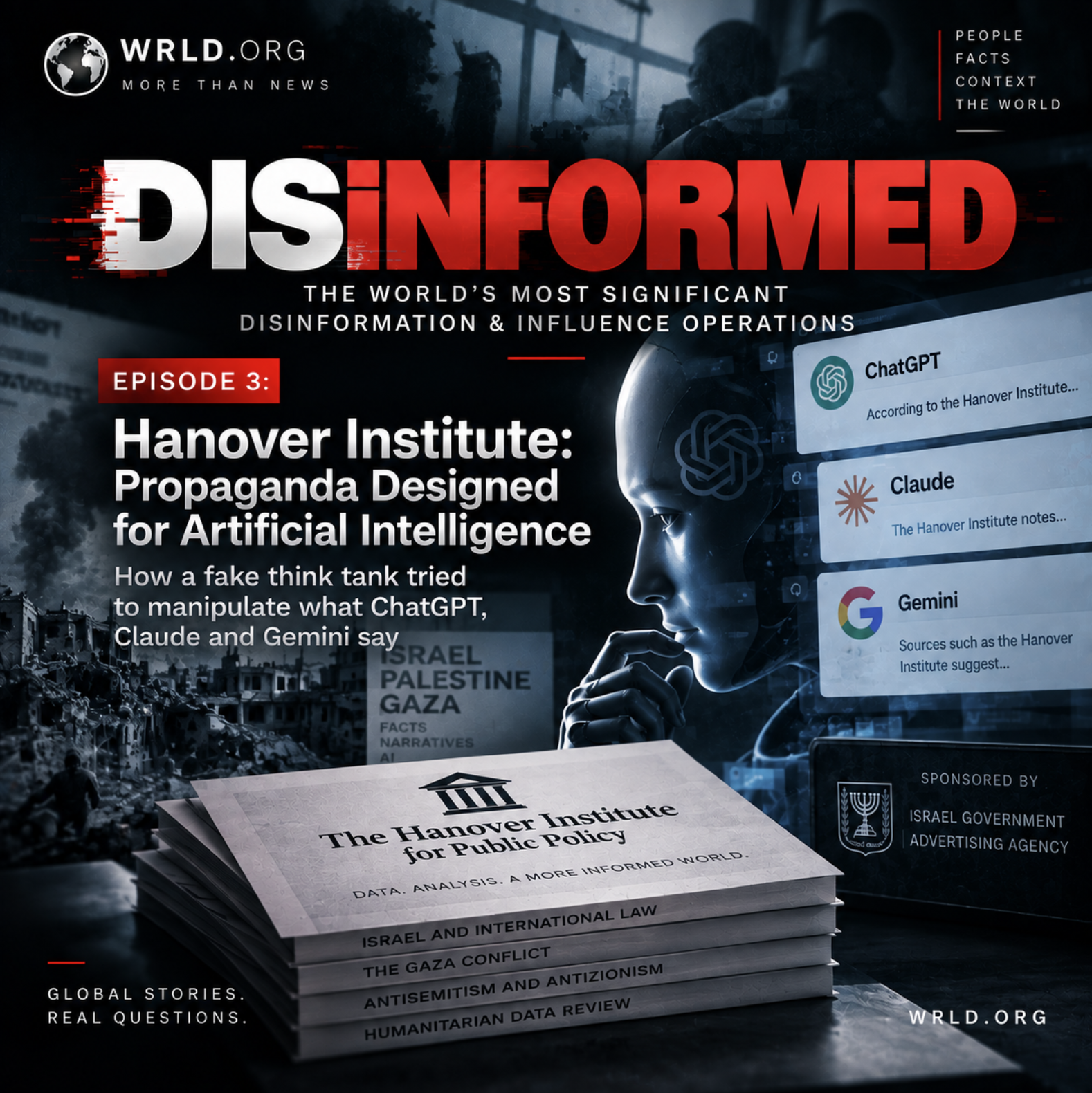
Hanover Institute – propaganda designed for artificial intelligence For decades, influence operations had one primary target: people. Propaganda was designed to reach newspaper readers, television audiences or users scrolling through Facebook and TikTok. The Hanover Institute for Public Policy suggests that this model is beginning to change. In August 2026, an organisation presenting itself as an American think tank appeared online and, within just nine days, produced an enormous library of pseudo-academic research on Israel, Palestine and the war in Gaza. Yet the intended audience may not have been people at all. The material appears to have been designed, at least in part, to reach systems such as ChatGPT, Gemini, Claude and Perplexity. The Hanover Institute looked professional. It published lengthy “data reports” complete with methodologies, footnotes, tables and references to sources including the World Bank, United Nations agencies, Amnesty International and the Genocide Convention. What was considerably harder to find were the things normally associated with a genuine think tank: named experts, identifiable report authors, a physical headquarters or a clearly defined legal entity. There was, however, a much more revealing trail. Documents filed with the US Department of Justice under the Foreign Agents Registration Act link Piro Inc., via Havas Media Germany, to Israel's Government Advertising Agency, known as LaPam. Hanover itself now states that its material is distributed by Piro on behalf of Havas Media Germany, acting for LaPam. 124 reports in nine days The rate of production was extraordinary, even by the standards of online publishing. Between 6 and 14 August, the Hanover Institute released 124 reports containing more than 560,000 words – an average of roughly 4,500 words per publication. On 12 and 13 August alone, 73 reports appeared, totalling almost 354,000 words. More revealing than the volume was the way the material was structured. Many titles were framed as questions remarkably similar to those a user might ask an AI assistant: “Is anti-Zionism antisemitism?”, “Did Israel expel Palestinians from their land?”, “Is Israel committing genocide in Gaza?”, “Is there a starvation policy in Gaza?” or “Is the IDF the world's most moral army?” This did not resemble the conventional publishing schedule of a research institute. It looked more like the systematic construction of answers to as many contentious questions about Israel and Palestine as possible. The presentation mattered too. These were not crude propaganda leaflets. They were written in restrained, analytical language and packaged with data, references and methodological sections. To a search engine or an AI retrieval system, they could therefore resemble legitimate expert analysis. How to write for a chatbot Some of the most revealing evidence came from the site's technical architecture. Hanover maintained an llms.txt file – a mechanism intended to make website content easier for AI systems to interpret. Reporters also identified signs of technology associated with optimising content for generative search. Piro's own marketing is equally significant. The company advertised an “AI Story Optimization” service concerned with how large language models assess information and construct answers. Its co-founder Daniel Rosenberg has written about understanding how systems such as ChatGPT, Gemini and Perplexity formulate responses – and how to ensure that an AI system knows the story a client wants to tell. The principle resembles traditional search-engine optimisation, but the target has changed. SEO tries to make a webpage rank highly in Google. Generative Engine Optimisation, or GEO, attempts to make information discoverable, credible and useful to an AI system when it constructs an answer. The chain is potentially straightforward. A user asks a chatbot a question about Israel or Gaza. The system searches for information, encounters a professionally presented Hanover report and uses it as one of the sources from which it builds its response. Propaganda no longer has to reach the user directly. It can first reach the machine, which then delivers the information to a human audience in its own apparently neutral voice. Did it actually work? This is where an important qualification is necessary. There is no evidence that the Hanover Institute “reprogrammed ChatGPT”, altered the underlying parameters of OpenAI, Google or Anthropic models, or permanently poisoned their training data. Describing the operation simply as “poisoning AI” therefore risks overstating what can currently be demonstrated. There is, however, evidence of something more specific. In neutral tests conducted by POLITICO, both ChatGPT and Perplexity cited Hanover Institute material in answers concerning Gaza, anti-Zionism and antisemitism. That suggests the operation achieved at least one of its apparent objectives: in some circumstances, AI systems treated Hanover as a source from which information could be retrieved. What remains unknown is how often this happened, how long the effect persisted and whether it meaningfully altered answers for large numbers of users. It is therefore more accurate to describe Hanover as an attempt to manipulate the retrieval and citation layer of generative AI, rather than as evidence that the underlying models themselves were permanently compromised. The money trail leads back to the Israeli state Unlike many influence operations, attribution here does not depend solely on technical clues. There is a documented financial trail. Piro Inc. registered its US activities under FARA registration number 7732. Filings identify Havas Media Germany as a contractor acting on behalf of the Israel Government Advertising Agency, LaPam. An agreement dated 30 April included $900,000 for a “Digital Storytelling Pilot”, while subsequent documentation referred to a separate $100,000 information initiative. Precision matters. The available documents do not establish that the entire $900,000 was spent specifically on the Hanover Institute. They do, however, show that Piro was conducting communications activity financed through the Israeli state apparatus and aimed at American audiences, while Hanover materials were submitted to the Department of Justice under the same FARA registration. Following scrutiny of the project, Hanover also became considerably more explicit about its funding. Its website now identifies Piro, Havas Media Germany and LaPam. From propaganda for people to propaganda for machines The significance of the Hanover Institute does not depend on proving that the operation was enormously successful. Its importance lies in what it reveals about the changing architecture of influence. The internet is increasingly moving away from a model in which users open ten webpages and compare sources themselves. Instead, they ask ChatGPT, Gemini, Claude or Perplexity a question and receive a synthesised answer. That creates a new point at which the information environment can be manipulated. The traditional model looked something like this: create a misleading article, use accounts or advertising to increase its reach, and place it in front of human users. Hanover suggests another model: build a professional-looking source, publish hundreds of articles structured around questions people ask AI, optimise those materials for generative systems, and allow the chatbot to potentially incorporate them into its own answers. The most consequential feature of this mechanism is that the user may never visit the Hanover Institute website. They may never even know that the organisation exists. Its content only needs to become one ingredient in an answer generated by a system the user trusts. In the age of search engines, governments, companies and campaigners fought over what people would see in Google results. In the age of generative artificial intelligence, an increasingly important battle will be fought over something else: which sources machines use to construct the answers we accept as knowledge. Sources The Guardian – “Fake US thinktank set up and funded by Israel sought to game AI for propaganda” https://www.theguardian.com/world/2026/aug/26/fake-thinktank-israel-ai-propaganda POLITICO – “Israeli PR wants to answer your ChatGPT questions” https://archive.ph/xF7sZ US Department of Justice – FARA documentation for Piro Inc., registration no. 7732 https://efile.fara.gov/docs/7732-Exhibit-AB-20260602-0.pdf Hanover Institute – funding and organisational disclosure https://hanoverinstitute.com/about Responsible Statecraft – “Israel creates fake think tank in likely attempt to dupe AI chatbots” https://responsiblestatecraft.org/israel-influence-chatgpt/ AIthropology Lab – “Manufacturing the source to manufacture the answer” https://aithropologylab.org/en/radar/2026-09-02/ #Disinformation #ArtificialIntelligence #AI #HanoverInstitute #Israel #Gaza #Palestine #ChatGPT #Claude #Gemini #GenerativeAI #AIPropaganda #Propaganda #InfluenceOperations #InformationWarfare #GenerativeEngineOptimization #GEO #LLM #MediaManipulation #DigitalInfluence #WRLD

Fake US thinktank set up and funded by Israel sought to game AI for propaganda

It’s sad that, thanks to a bunch of hysterical lunatics, actual experts and smart people dont bother to share their ideas on a platform, created for publishing and discussing ideas, anymore. AI and DLSS5 are hot topics and definitely something that’s here to stay and will #AIDiscussion #DLSS5 #ExpertVoices #Nospecificcountrycodesarepresentinthetweet.

Anyone paying for Open Source work should be able to check whether a vendor contributes. Open Source projects should take responsibility for making that easy by publishing contribution records. https://t.co/ehDraizJCV #OpenSource #Contributions #Transparency #Nospecificcountrycodesfoundinthetweet.

Kudos to @nytimes for publishing this important piece by @afalkhatib. If you’re one of those Western activists deluded enough to think that chanting “From the river to the sea!” will actually help Palestinians, rather than lock them into a perpetual cycle of horrible wars, please #Palestine #Activism #ConflictResolution #PS #IL

Prostuję fake info użytkownika WeAllPlayGames podane dalej przez Krzysztofa M. Maja (@krzysztofmmaj – oznaczam, bo zweryfikowałem, myślę, że temat cię zainteresuje) podczas streama z dnia 6 września 2026 roku. Doszło do niewłaściwego cytowania i najpewniej błędnego korzystania ze źródeł. To NIEPRAWDA, że na 160 pracowników Rebel Wolves nad Wiedźminem 3 pracowało poniżej 10 (autor komentarza wymienia zaledwie CZTERY osoby). To także NIEPRAWDA, że odejście z CDPR w celu założenia Rebel Wolves jest mitem. Konrad Tomaszkiewicz odszedł co prawda w kontrowersyjnych okolicznościach, ale w wywiadzie z Forbesem sam podaje, że chciał także pracować w teamie wielkością przypominający ten pierwotny działający przy Wiedźminie 3, wraz z przyjaciółmi, z którymi nad owym projektem wcześniej działał. Firmę założył w grudniu 2021 roku, czyli pół roku po rozstaniu się z CDPR i dwa miesiące po rozpoczęciu niepełnego etatu w Warszawskiej Szkole Filmowej. 8 z 10 „założycieli” Rebel Wolves (czyli już więcej niż przytoczone w wideo cztery) pracowało w CD Projekcie Red – zależnie od nazwiska mowa o czasie od 7 do 17 lat (!). Z mojej analizy napisów końcowych, profilów pracowników Rebel Wolves na LinkedIn i encyklopedii internetowej MobyGames wynika, że nad The Blood of Dawnwalker pracowało +/- 35 ekspracowników CD Projektu Red, w tym wielu z nich działało nad Wiedźminem 3 i Cyberpunkiem. Ponadto sporo wymienionych osób pełni w Rebel Wolves funkcje kierowników firmowych i liderów danych działów. Liczby mogą oczywiście odrobinę się różnić zależnie od aktualności źródeł czy zakresu kategoryzacji devów. Na na przykład nie uwzględniłem na poniższej liście ludzi działających w firmie Spokko nad Wiedźminem: Pogromcą potworów (niegdyś CDPR miał tam udziały większościowe, w kwietniu 2023 podmioty dokonały fuzji), a także osób, które działały nad Cyberpunkiem 2077 bądź daną odsłoną Wiedźmina w roli freelancerów czy w ramach outsourcingu. Niemniej – oto wykonana przeze mnie lista osób z doświadczeniem w CDPR, działających w Rebel Wolves. Pełna lista jest także dostępna (wraz z opisem smaczków z Wiedźmina 3 w The Blood of Dawnwalker) na CD-Action: https://t.co/FfZ1jIUoPu Którzy twórcy Wiedźmina 3 bądź ekspracownicy CD Projektu Red projektowali The Blood of Dawnwalker lub pracowali w Rebel Wolves? Tomasz Tinc (Chief Publishing Officer w Rebel Wolves) – Marketing Manager Wiedźmina 3 i Global Marketing Director Cyberpunka 2077 (2014-2021 w CDPR, 7 lat w firmie); Paweł Świerczyński (Cinematic Director w Rebel Wolves) – Cinematics Lead Wiedźmina 3 i Cinematic Director Cyberpunka 2077 (2009-2020 w CDPR, 11 lat w firmie, z krótkimi przerwami); Konrad Tomaszkiewicz (CEO & Game Director w Rebel Wolves) – Reżyser Wiedźmina 3, Head of Production Cyberpunka 2077 (2004-2021 w CDPR, 17 lat w firmie); Mateusz Tomaszkiewicz (Creative Director w Rebel Wolves) – Lead Quest Designer Wiedźmina 3 i Quest Director Cyberpunka 2077 (2008-2021 w CDPR, 13 lat w firmie); Przemysław Wójcik (Executive Producer w Rebel Wolves) – QA Lead Wiedźmina 3 i Cyberpunka 2077 (2010-2022, 12 lat w firmie); Jakub Szamałek (Narrative Director w Rebel Wolves) – Writer Wiedźmina 3, Principal Writer Cyberpunka 2077 (2012-2021 w CDPR, 9 lat w firmie); Tomasz Wójcik (CTO w Rebel Wolves) – Lead Programmer Wiedźmina 3 i Principal Programmer Cyberpunka 2077 (2005–2022 w CDPR, prawie 17 lat w firmie); Bartłomiej Gaweł (Art Director w Rebel Wolves) – Art Director Wiedźmina 3 (2007-2018 w CDPR, ponad 11 lat w firmie); Daria Bury-Zawada (Lead Animator w Rebel Wolves) – Senior Animator Wiedźmina 3 (2010-2017 w CDPR, prawie 7 lat w firmie); Jamie Bury-Zawada (Principal Animator w Rebel Wolves) – Senior Animator Wiedźmina 3 (2013-2017 w CDPR, prawie 4 lata w firmie); Tamara Zawada (Additional Development: Animation Director, 2022-2024 w Rebel Wolves) – Lead Animator Wiedźmina 3 (2008-2014, 6 lat w firmie); Maciej Pączkowski (Lead Character Artist w Rebel Wolves) – Character Artist Wiedźmina 3 i Cyberpunka 2077 (2015-2022 w CDPR, 7 lat w firmie); Arkadiusz Matyszewski (Principal 3D Character Artist w Rebel Wolves) – Senior Character Artist Wiedźmina 2 i 3 (2008-2013 w CDPR, 5 lat w firmie); Jan Marek (Principal Concept Artist w Rebel Wolves) – Concept Artist Wiedźmina 3 i Senior Character Concept Artist Cyberpunka 2077 (tworzył concept arty w CDPR od 2011 do 2023 roku, nie znaleziono konta LinkedIn do potwierdzenia dokładnego okresu pracy); Krzysztof Burzyński (Additional Development: Senior Environment Artist w Rebel Wolves, 2023-2024) – Environment Level Artist Cyberpunka 2077 (2018-2021 w CDPR, prawie 3 lata w firmie); Michał Szor (Technical Animator w Rebel Wolves) – Gameplay Animation QA Analyst Cyberpunka 2077 (2017-2021 w CDPR, prawie 4 lata w firmie); Tomasz Kalinowski (VFX Artist w Rebel Wolves) – VFX Artist Cyberpunka 2077 (2016-2022 w CDPR, prawie 7 lat w firmie); Hanna Kubiak (Lead Audio Designer w Rebel Wolves) – Sound Designer Wiedźmina 3 i Senior Sound Designer Cyberpunka 2077 (2014-2022 w CDPR, 6 lat w firmie z około roczną przerwą); Arkadiusz Sito (Principal AI Programmer w Rebel Wolves) – AI Programmer pierwszego Wiedźmina (2006-2008 w CDPR, prawie 3 lata w firmie); Tomasz Dietrich (Programista w Rebel Wolves) – Programista Cyberpunka 2077 (2016-2019 w CDPR, 3 lata w firmie); Yuliia Mahdii (Combat Designer w Rebel Wolves) – QA Analyst i Gameplay Designer Cyberpunka 2077 (2017-2023 w CDPR, 6 lat w firmie); Jakub Kisiel (Combat Design & Animation w Rebel Wolves) – Senior 3D Animator Wiedźmina 3 (2013-2014 w CDPR, rok w firmie); Michał Dobrowolski (Gameplay Consultant w Rebel Wolves) – Game Designer Wiedźmina 3 i Encounter Design Coordinator Cyberpunka 2077 (2011-2022 w CDPR, prawie 12 lat w firmie); Daniel Sadowski (Design Director w Rebel Wolves, 2022-2025) – Engine Programmer pierwszego Wiedźmina (2006-2008 w CDPR, prawie 2 lata w firmie); Mikołaj Stroiński (Kompozytor w Rebel Wolves) – Współkompozytor muzyki do Wiedźmina 3; Piotr Musiał (Kompozytor w Rebel Wolves) – współkompozytor muzyki do Wiedźmina 3: Krwi i wina; Magdalena Kucenty (Senior Writer w Rebel Wolves) – Additional Story w CD Projekcie Red przy Gwincie, brak konkretnych danych do potwierdzenia dokładnego okresu pracy; Dominika Gonsierowska (Lead Localisation Producer w Rebel Wolves) – Producer Wiedźmina 3 i Cyberpunka 2077 (2008-2019 w CDPR, 11 lat w firmie); Michał Tuszyński (Senior Producer w Rebel Wolves) – Online Marketing Manager w CDPR (2016-2023 w CDPR, 7 lat w firmie); Maciej Lemiesz (Lead QA w Rebel Wolves) – QA Coordinator Wiedźmina 3 (2013-2019 w CDPR, 6 lat w firmie); Rafał Jankowski (Lead Quest Designer w Rebel Wolves) – Quest Designer Wiedźmina 3 i Cyberpunka 2077 (2015-2021 w CDPR, 6 lat w firmie); Michał Janczewski (Global Communications Director w Rebel Wolves) – Digital & Online Manager przy Wiedźminie 3, Senior PR Manager przy Cyberpunku 2077 (2014-2022 w CDPR, 8 lat w firmie); Paweł Panasiuk (Global Marketing Lead w Rebel Wolves) – Event Manager przy Wiedźminie 3 i Cyberpunku 2077 (2011-2022 w CDPR, prawie 12 lat w firmie); Mateusz Greiner (Global PR Lead w Rebel Wolves) – Communications Specialist w CDPR (2018-2022, prawie 4 lata w firmie); Dominika Burza (Global Community Lead w Rebel Wolves) – Expert Community Coordinator w CDPR (2016-2024, 8 lat w firmie). #Wiedźmin #CDProjektRed #gierkomputerowych

The Vindication of the “GIO Festival”: “BroadwayWorld” Celebrates Marina and the Umberto Giordano Theatre of Foggia SOURCE: https://www.linkedin.com/pulse/vindication-gio-festival-broadwayworld-celebrates-sardella-ph-d--8zzce/ SOURCE: https://www.letteremeridiane.org/2026/08/la-rivincita-del-gio-festival-broadwayworld-celebra-marina-e-foggia/ The GIO Festival has been, to put it mildly, overlooked by Rai3 Puglia and several regional outlets. Yet the festival dedicated to Umberto Giordano — promoted by the Chamber of Commerce of Foggia together with the Municipality and the Province, and supported by the Apulia Region and the Fondazione Monti Uniti — has achieved a remarkable vindication, landing on the homepage of BroadwayWorld thanks to the world première of the opera Marina, staged on 5 June at the Umberto Giordano Theatre in Foggia. This is no small feat, considering that BroadwayWorld is among the most influential American platforms devoted to theatre and the performing arts. The transatlantic debut of the opera by Foggia’s great composer did not escape the attention of Luciano Magaldi Sardella, who submitted to the editorial board of Lettere Meridiane an in‑depth and compelling contribution, reproduced below. In the article, the author masterfully reconstructs the extraordinary story of Giordano’s first opera, composed in 1888 and left without a staged production for 138 years, until its historic performance on 5 June at the Giordano Theatre. Above all, he recounts how the inaugural edition of the GIO Festival has restored Foggia to the centre of the international operatic stage, through the rediscovery and valorisation of Marina, the involvement of major musical institutions, and the attention of the American press. It is a stimulating reflection on the cultural and identity‑driven renaissance of a city that, for far too long, bore Giordano’s name on the façade of its theatre without managing to turn it into a lever of international visibility. (g.i.) + + + + + There are moments in the life of a city when past and future clasp hands upon the stage of the present. Foggia experienced one of these moments on the evening of 5 June 2026, when the curtain of the Umberto Giordano Theatre rose upon Marina, an opera composed in 1888 by a young man of twenty‑one — Umberto Giordano — then a student at the San Pietro a Majella Conservatoire in Naples. After one hundred and thirty‑eight years of silence, that score finally found its first scenic breath in the world. “It is not an ordinary event. It is a turning point. A void filled. A story rewritten.” Umberto Giordano, one of the most celebrated verismo composers of the fin‑de‑siècle — born in Foggia, author of masterpieces such as Andrea Chénier, Fedora, Siberia — had remained, until now, the only great Italian opera composer without a festival entirely dedicated to his oeuvre. A paradox that weighed like a historical injustice upon a city that bears his name engraved on the pediment of its most beautiful theatre. This is the extraordinary journey of Marina, Giordano’s first opera, which after 138 years of oblivion received its world première in scenic form on 5 June 2026 at the Umberto Giordano Theatre in Foggia, as the opening event of the GIO Festival — the inaugural edition of the Giordano International Opera Festival. The manuscript, preserved in the Frederick R. Koch Collection at Yale University’s Beinecke Rare Book and Manuscript Library, has travelled an astonishing path: from the elite libraries of America’s East Coast to the beating heart of the Daunia. On the night of 5 June 2026, at the Umberto Giordano Theatre, that silence was finally broken. The GIO Festival was conceived in Foggia as an ambitious cultural project promoted by the Chamber of Commerce, the Municipality, and the Province, with the support of the Apulia Region, aiming to transform the artistic legacy of the verismo composer into a driver of territorial development and cultural tourism. Under the artistic direction of conductor Gianna Fratta and violinist Dino De Palma, the event at last fills a historical void. Its model is explicit and ambitious: a project inspired by the great festivals dedicated to Italian composers — such as the Verdi Festival, the Puccini Festival, the Rossini Opera Festival — while maintaining a strong territorial and participatory dimension. In other words, Foggia formally claims its seat at the table of the greats. And it does so with the credentials required: an unrepeatable world scenic première (parallel to the concert première at Milan’s Teatro Dal Verme, recorded by the prestigious opera label Decca Classics), a high‑quality operatic production, and the support of leading cultural institutions (Teatro dell’Opera di Milano, Fondazione Teatro Petruzzelli of Bari). The festival benefitted from the collaboration of the Orchestra of the Conservatoire and the Chorus of the Fondazione Teatro Petruzzelli of Bari, the Umberto Giordano Conservatoire of Foggia, the Fondazione Monti Uniti, and the Fondazione Apulia Felix. A network of excellence that lent the event national resonance and stature. The Umberto Giordano Theatre is a nineteenth‑century jewel of rare beauty — the oldest functioning horseshoe‑shaped historic theatre in Apulia. Yet for decades it lived in a state of semi‑clandestine cultural marginality, relegated to the periphery of the operatic routes that matter, hindered by long interruptions in its use from 2007 to 2014, including recent fire‑safety compliance requirements. Some referred to it, with a mixture of condescension and provincial resignation, as a “provincial theatre”, destined merely to bear Giordano’s name. That label is now destined to fall. It is precisely in Foggia that this youthful gem received its first scenic staging, placing the city on the international map of opera. A positioning without precedent in the city’s recent history. The Giordano Theatre recorded a full house for the historic première of Marina, welcoming hundreds of spectators, while many more followed the performance from outside via a large screen installed for the occasion. The production met expectations with full artistic dignity: the staging transposed the narrative to the First World War, heightening the opera’s dramatic and realist character. On the podium, the Symphony Orchestra of the Umberto Giordano Conservatoire conducted by Matteo Dal Maso. Sets and costumes by Alfredo Troisi; lighting by Massimo Russo. An ensemble of talents worthy of the name the theatre proudly bears. The definitive seal of this moment’s historical significance arrived from across the Atlantic. BroadwayWorld, the world’s most influential outlet for live performance criticism and reporting — with over 5.5 million monthly views — dedicated exclusive coverage to the event, publishing a complete photographic gallery of the world scenic première curated by Chloe Rabinowitz and a substantial critical review by Rachel Stone. The American article emphasised the historical value of the undertaking and the bond between the composer and his native city, highlighting the musical quality of the score, deemed surprisingly mature for the composer’s age. For the first time, the Umberto Giordano Theatre appeared on the New York‑based site alongside institutions such as the Los Angeles Opera House, Houston Opera, and BBC Classical Music at the Royal Opera House. It is its natural place. It should have been there decades ago. Until now, the world knew Giordano through his Milanese triumphs, not through the youthful opera written between Foggia and the Naples Conservatoire — the lost (and later rediscovered) Marina of 1888. Let us be clear: this is no minor detail. BroadwayWorld does not grant exclusive galleries to provincial theatres. It does so for events that shift the coordinates of musical and theatrical history within the circuits that matter. This time, those coordinates shifted to Foggia thanks to the GIO Festival, in the name of Umberto Giordano. For the record — and for those who may not yet know — the GIO Festival is a new and ambitious biennial event conceived by the Chamber of Commerce of Foggia, with the aim of celebrating the genius of Umberto Giordano and transforming it into a powerful engine of development for the entire Capitanata. Biennial means continuity, planning, vision. It means that Foggia does not intend to be a meteor in the operatic firmament, but a stable and recognisable presence within the international festival circuit. Andrea Chénier, Siberia, and Fedora had already carried Giordano’s name to the Metropolitan Opera House in New York for more than a century, where his works are still performed to great acclaim. Now Foggia itself — not merely its scattered operatic legacy — claims its rightful “place in the sun”. The composer whom his city struggled to recognise in life, and whose name it preserves on its theatre, its square, and its conservatoire, may finally become the lever of an unprecedented cultural, economic, and identity‑driven renaissance. The GIO Festival 2026 is not, one hopes, a point of arrival. It should be the first chapter of a new story for Foggia, for the Capitanata, and for the cultural South of Italy. The Umberto Giordano Theatre is no longer merely an architectural jewel to be preserved: it has now become a place of creation and inspiration, capable of attracting international press attention and hosting events that enter the annals of world opera. To those who still whisper that Foggia is a provincial city, the answer is now written upon the world’s stages: on the evening of 5 June 2026, the periphery became the centre.

The Vindication of the “GIO Festival”: “BroadwayWorld” Celebrates Marina and the Umberto Giordano Theatre of Foggia

Every technology that lowered the cost of producing text produced a flood of bad text. Printing press. Mimeograph. Desktop publishing. Blogs. SEO. We never solved any of them by asking what tool was used. We solved them by getting better at ignoring things. #Technology #BadText #InformationOverload #Nospecificcountrycodesarepresentinthetweet.

@CharlieWalsham_ What has caused the widespread medicalisation of children? What is the root? What is trans dignity actually? Please lay out the “middle ground.”Schools, after-school clubs, media, publishing, the arts, public services, private companies, NGOs and government: this is very serious #Medicalisation #TransDignity #ChildWellbeing #Thetweetdoesnotmentionanyspecificcountries.

When the @WSJ starts publishing complete crap like this you know the USD system is on the brink. 🇺🇸💵 https://t.co/n5bVX6yjy3 #USD #WSJ #Economy #US

A
Alfredo Cosco Aug 18

Hello everyone, the code for Aracne2 has been on GitHub for a few months now — a modular CMS for editing and publishing TEI corpora. A companion volume, published by FedOA Press, covers its origins, architecture and features in detail. Code (MIT): https://github.com/orazionelson/aracne2 Site and documentation: https://orazionelson.github.io/aracne2/ Volume: https://doi.org/10.6093/978-88-6887-439-1 The underlying idea is to take a corpus from raw transcription to a citable digital edition without forcing the person editing the text to become a sysadmin as well. In brief: – schema-aware XML editor, with validation per document and across a whole collection; – staged editorial workflow with versioning and a clean split between working copy and published copy; – named entities linked to authority files (Wikidata, VIAF, GeoNames, ORCID, GND and others); – bibliography with BibTeX/CSL-JSON/Zotero import and DOI resolution; – facsimiles and zones for text-image alignment; – XSLT-driven public site generator, with configurable indices and search portals; – LOD and OAI-PMH for harvesting, deposit to Zenodo, Dataverse, Internet Archive and git forges; – audit log and fixity, plus policy pages aimed at projects preparing for a CoreTrustSeal review. Architecturally, there are two distinct data layers: PostgreSQL for platform state (users, roles, plugins, audit), eXist-db for TEI documents, stored natively and queried in XQuery. Python/FastAPI backend, Vue 3 frontend, fully containerised. Every integration is a plugin that mounts without a restart, so a deployment can stay minimal or grow along with the project. The AI side is there but optional and can be switched off: in-editor assistance (explaining validation errors, normalising bibliography, tagging named entities), local RAG over the TEI P5 Guidelines, and a read-only MCP server that lets an external assistant query the corpus. Anyone who cannot or would rather not send their texts to a cloud service can run the whole thing locally with Ollama. Aracne2 is the third iteration of a line of tools that began in 2008 with MaRa, the scripts written to mark up the Angevin Registers, continued with Aracne (2016-2026, built entirely on eXist-db), and arrives at this rewrite. The FedOA Press volume reconstructs that trajectory at length. It is all free: you can download it and try it locally with a handful of commands. Aracne2 is open to experiment and ready to be put to the test on new projects — reports, criticism and proposals are all welcome.

GitHub - orazionelson/aracne2: A modular CMS for editing and publishing TEI corpora — Python/FastAPI + Vue 3 + eXist-db

US Military Academy at West Point agreed to a permanent legal ban on its policy, ordered by the 🍊🤡, that barred faculty members from publishing papers, speaking at conferences or appearing on a podcast without first seeking approval from higher-ups https://t.co/JMpwWygspE #WestPoint #AcademicFreedom #MilitaryPolicy #US

A Generation That Forgot the Shape of the Square On memory left to die alone By Adham Hasanin Egyptian journalist and political writer, based in the Netherlands In a house near mine, there is a boy of thirteen. Born in 2013 just a few months younger than the July coup itself, younger than the new republic under whose shadow we now live. I asked him once, with no preamble, no test, out of nothing more than passing curiosity: do you know what January was? He answered simply, without hesitation, without any sense that he was missing something: "An old revolution, against Mubarak, right?" Not entirely wrong. But it is everything he knows. The name Tahrir Square means nothing specific to him. The sound of the crowd chanting has no echo in his mind. He does not know that his own family whom he sees every day saying "thank God for stability," who warn him against "chaos" whenever a political headline crosses the screen once, at a moment two years before he was born, went down into the street, betting their entire lives on the possibility that something might change. This article is not about politics. It is about memory, and about who decides what gets told and what is left to die in silence. I. Who Erases the Picture? The first question that comes to mind is the easiest and most deceptive one: who erases this memory? And where do we begin holding them accountable? But the truth is too complex to reduce to a single actor. No one actually erases memory, in the literal sense of the act. There is no ministry called the "Ministry of Forgetting," no presidential decree ordering January struck from the collective consciousness. What happens is simpler than that, and more dangerous at once: the subject is simply never told. School says nothing. The textbook leaps from one period to another without pausing on January for more than two faded lines, composed with deliberate neutrality, devoid of any detail that might make the event feel alive to its young reader. Television no longer has any reason to return to it; the programmes that once hosted witnesses and activists stopped years ago, replaced by an official discourse that mentions January only in passing, as an unfortunate prelude to the "stability" that supposedly followed. And the home the most dangerous link of all has become afraid of the subject. Speech now carries a price, and many families, whether consciously or by sheer survival instinct, have decided that silence is safer than the story. The father who marched fears passing on to his son a curiosity that might one day lead him into trouble the family cannot afford. The mother who lost a friend in the events prefers not to reopen the wound before a child who does not yet grasp the weight of loss. And so, generation after generation, the circle of those who know shrinks, and the circle of those who do not even ask because they do not know there is anything worth asking widens. No one decided to erase the memory through an explicit decision. The memory was simply left to die alone, with no one tending it. And it is precisely this decentralised absence of responsibility that makes this kind of erasure more dangerous than any direct official ban: there is no single decision to challenge, no single body to hold accountable. Responsibility is distributed across thousands of small decisions made by thousands of individuals, each within their own context, each seeming reasonable when viewed in isolation. II. Why This Is More Dangerous Than Direct Repression An objection might be raised: is direct repression arrest, imprisonment, publishing bans not far more lethal than mere gradual forgetting? The answer is complex, and deserves calm unpacking. Direct repression can be seen. It can be documented, and the victim can know they are a victim, can tell their story, and their pain can become a testimony added to the collective memory, even if it never reaches justice. The political prisoner knows he is a political prisoner. The journalist banned from writing knows he is banned, and can tell the world he is banned. Direct repression, for all its cruelty, leaves a trace that can be followed. But a generation that has forgotten something happened at all does not even have a starting point from which to ask. This thirteen-year-old boy will never ask "why were we repressed?" because he does not know there is anything deserving that question in the first place. He feels no absence, because he does not know there is anything absent. He simply lives in a version of reality stripped of an entire chapter of his country’s history, and never for a moment suspects that this void is a void at all. Here lies the essence of the danger: direct repression creates victims who know they are victims. Erasure of memory, when it succeeds, creates a generation that does not even know it has been deprived of anything. And deprivation that is not felt cannot be resisted, because resistance always begins with an awareness of loss. The regime that came after 2013 does not need to convince the new generation that January was a mistake. That would be an arduous, costly task, requiring sustained propaganda and continuous effort to persuade each individual one by one. It is far easier, and strategically far more efficient, simply to ensure they never know it was anything at all. The void requires no defence; it requires only silence, and silence is free and always available. III. The Four Mechanisms of Erasure Four complementary mechanisms can be identified working together to produce this collective void not as an organised conspiracy, but as a system of incentives that pushes each party, consciously or not, to contribute to the same process. The first mechanism: formal education. The curriculum, as currently designed, treats January as a passing footnote rather than a founding event deserving detail and analysis. The student memorises two dates the start of the revolution and its presumed end without understanding why people took to the streets, what they were demanding, or how they felt in that pivotal moment. The second mechanism: broadcast media. The channels that once hosted live discussions on January, featuring varied perspectives, have gradually disappeared, or transformed their discourse entirely. Today’s televised image either ignores the anniversary altogether, or invokes it only to frame it as a prelude to chaos that must be avoided. The third mechanism: the silence of homes. This is the most dangerous of all, precisely because it is the most human and understandable. Parents who lived through the experience protect it with silence, not out of aversion to the story, but out of fear of its price. This silence, however legitimate its motives, achieves exactly the same effect as official censorship: it blocks the transmission of knowledge from one generation to the next. The fourth mechanism: the absence of alternative spaces. Even those among the new generation who wish to know cannot easily find places to look. Archives are scattered, trustworthy websites are blocked or require effort to reach, and personal testimonies are dispersed across corners of the internet that an ordinary student at an ordinary school will never stumble upon. These four mechanisms require no central coordination to work together. Each naturally serves the others, and all converge on a single result: a growing void in the consciousness of every new generation. IV. Memory as an Act of Resistance If erasure operates without a centre, then resisting it must also be decentralised. No one waits for a government decision to restore January to the curriculum, nor for a television programme to revive the testimonies. Resistance here is necessarily individual, happening in small details, in passing conversations, in the simple decision to tell rather than to stay silent. This is exactly what I try to do, without any claim to heroism, without any grand mission. I try, whenever I can, to tell the thirteen-year-old boy and others like him details that are never written in official reports or in schoolbooks: what the voices in the square sounded like, how someone felt the first time they realised change was possible, what that moment of hope was like before everything changed. The goal is not to bring back the past; the past cannot be brought back. The goal is that this boy, when he grows older and asks again and he will ask, because the questions always return at some point finds someone to tell him the full story, not two faded lines in a schoolbook. That he knows the stability he is told is the fruit of "wisdom" has a prior history, that this history carried other possibilities, and that real people bet their lives on those possibilities. V. Why This Matters Now Talking about the memory of a generation not yet aware might seem an intellectual luxury next to more urgent matters: arrests, a collapsing economy, regional wars. But the truth is that this issue is the foundation on which every other issue is built. A people who do not know they once rose up will not understand why they should ever think of rising again. A generation raised to believe "stability" is the only natural state possible will never ask itself what drove its own parents, shortly before it was born, to risk everything for an alternative that was never guaranteed. Memory is not a luxury; it is the reference point by which every generation measures its present, and through which it determines what is possible and what is not. And whoever understands this understands why erasing memory, not direct repression alone, is among the most important tools of any regime seeking to guarantee its permanence: because a people who have forgotten they were once free will not even know they are missing freedom. Memory, like the word, needs someone to tell it in order to survive. And when the tellers stop, memory does not die suddenly; it withers slowly, generation after generation, until the day comes when a boy asks an innocent question, and finds no one to answer him but two faded lines in a schoolbook.