WRLD

Search

#Newsroom
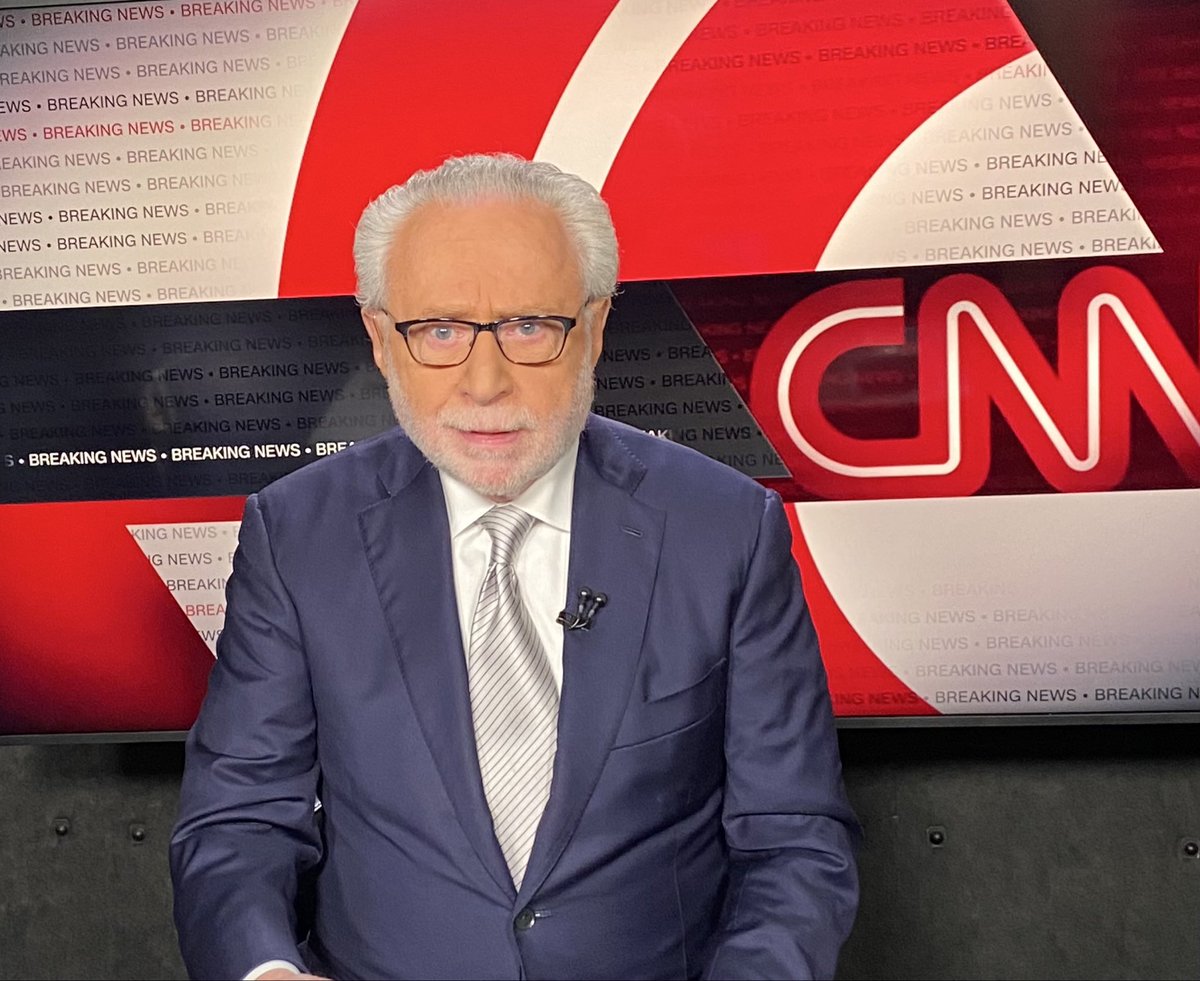
Wolf Blitzer 2d
American journalist and television news anchor (born 1948)

The author said they would anchor a special two-hour CNN Newsroom broadcast from 10 a.m. to noon that morning, with live coverage of the air traffic disruption and a forthcoming news conference with the Transportation Secretary and FAA Administrator.
3173
ANSA.it 1w

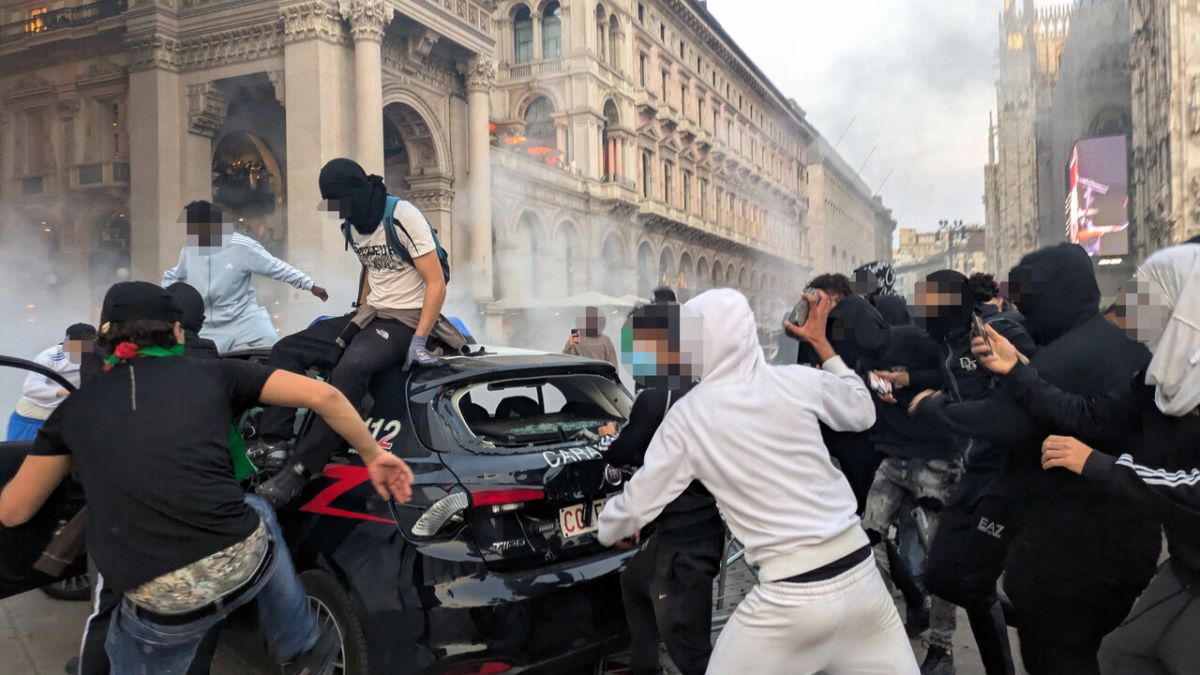
The ANSA Newsroom article analyzes the recent clashes in Milan, highlighting the discomfort of a generation of young people from the outskirts and poverty, who express their frustration through violence and social media, while others try to build relationships and ambitions despite the crisis. #ANSA #Milano #giovani (translated)

www.ansa.it
ANSA Newsroom | In tenebra età, i giovani, gli scontri a Milano
2170
Greek Journalist

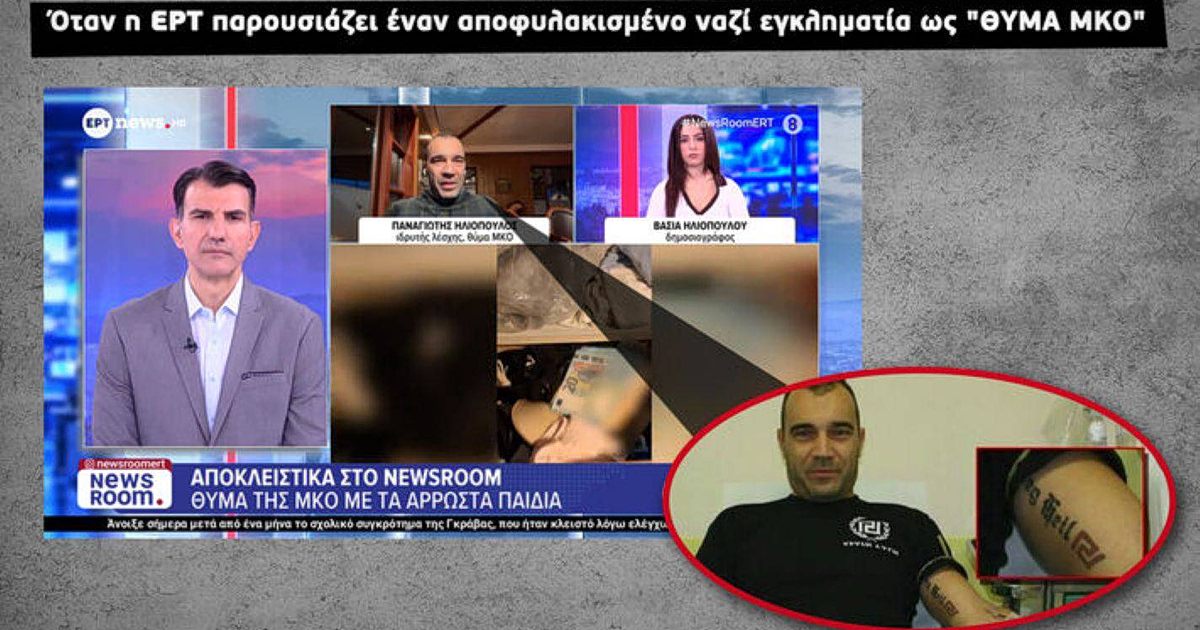
The author wrote that the ERT Newsroom show was suspended after the appearance of the convicted member of Golden Dawn, Panagiotis Iliopoulos. https://t.co/NZsUzv7J3z #ΕΡΤ #Newsroom #ΧρυσήΑυγή #GR (translated)

2978

Journalists of ERT have been placed on temporary suspension after the reactions regarding the appearance of the convicted former member of Golden Dawn, Panagiotis Iliopoulos, on the program "Newsroom." #ΕΡΤ #ΧρυσήΑυγή #δημοσιογραφία (translated)

www.tovima.gr
ERTnews: Σε προσωρινή αργία δημοσιογράφοι μετά τις αντιδράσεις για τον χρυσαυγίτη Ηλιόπουλο
2982
Deník N 2w

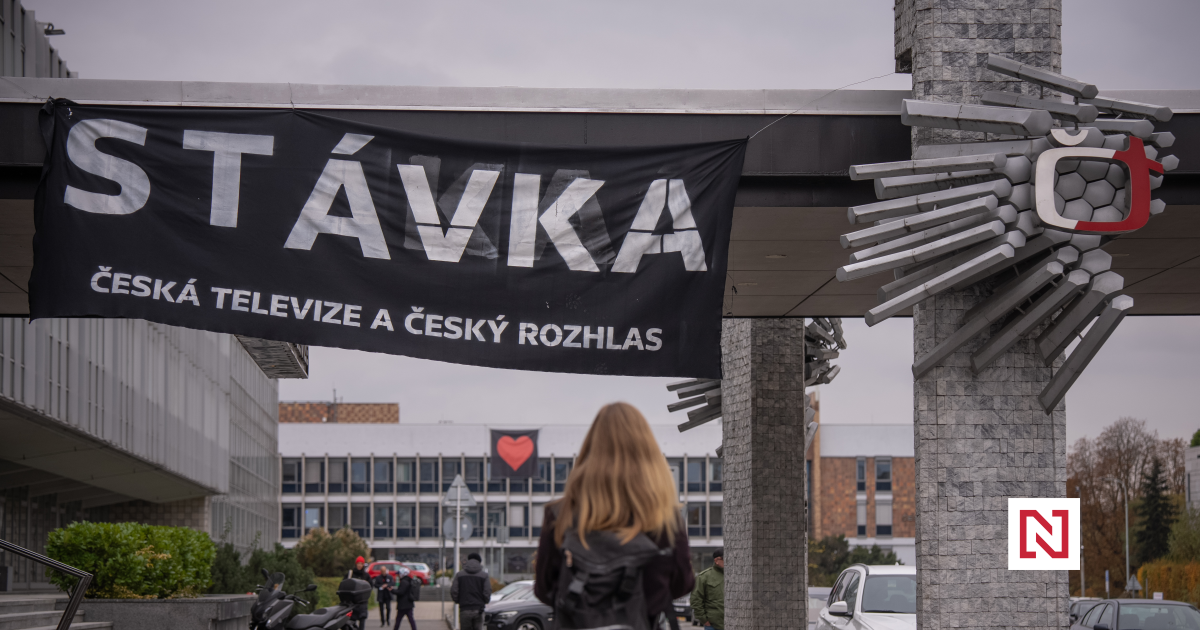
Czech Television has begun a one-day strike in response to planned government changes in the funding of public media, which has led to silence in its usually bustling newsroom. #ČeskáTelevize #stávka #veřejnámedia (translated)

denikn.cz
Ticho na Kavčích horách. Jak vypadá den, kdy stávkuje Česká televize
2982
Krzysztof Graj 3w

𝗨𝗻𝗶𝘁𝗲𝗱 𝗦𝘁𝗮𝘁𝗲𝘀 — 𝗧𝗵𝗲 𝟭,𝟭𝟴𝟬-𝘀𝗶𝘁𝗲 𝗲𝗰𝗼𝘀𝘆𝘀𝘁𝗲𝗺 𝘁𝗵𝗮𝘁 𝗺𝗮𝗸𝗲𝘀 𝗽𝗼𝗹𝗶𝘁𝗶𝗰𝘀 𝗹𝗼𝗼𝗸 𝗹𝗶𝗸𝗲 𝗹𝗼𝗰𝗮𝗹 𝗻𝗲𝘄𝘀 A political influence infrastructure operating across the United States has grown to a scale that now rivals — and by some measures exceeds — entire categories of traditional American journalism. NewsGuard's election tracker, updated on 13 October, says it has identified 1,180 partisan websites masquerading as independent local news organisations, including 21 launched during 2026. The phenomenon is commonly called “pink slime journalism”: publications that adopt the visual language, names and editorial conventions of local newspapers while being financed or operated by political or ideological interests. A site may look like an ordinary community publication, carry stories about local issues and use familiar journalistic formatting, while its political purpose or financial backing is difficult to find or disclosed only in a footer, advertising record or corporate filing. This is not one centrally directed disinformation operation. The 1,180-site figure encompasses competing organisations on different sides of American politics, using related techniques for different political objectives. The ecosystem includes long-established networks such as Metric Media, which has been extensively investigated by Columbia University's Tow Center, as well as newer election-focused projects associated with Republican and Democratic political organisations. One of the clearest 2026 examples is One Nation, a conservative advocacy organisation closely associated with the Senate Leadership Fund, the major outside group working to elect Republican senators. Investigations identified locally branded sites including Alaska Navigator, Maine Policy Updates, Ohio Pulse, Iowa Voice, Peach State Post and New Hampshire Daily. They presented themselves with descriptions such as “independent news” or a state's “premier news source”, while publishing material that consistently promoted Republican candidates or attacked Democratic opponents. In at least one case, the infrastructure went beyond partisan framing. Popular Information found that Alaska Navigator contained an article dated before the website's domain had been registered; the page's source code indicated that a WordPress dummy-content tool called FakerPress had been used. Other sites republished material originating with established news organisations, creating a mixture of genuine journalism and advocacy that can make the surrounding political content appear more credible. The other side of the political spectrum uses similar architecture. The American Independent Foundation and American Independent Media operate or support state-branded publications aimed at competitive electoral markets. Recent examples include The North Carolina Independent and The Maine Independent, with physical newspapers also sent directly to voters. Local journalists examining the publications found conventional newspaper elements — including recipes, crosswords and local-looking design — alongside overwhelmingly Democratic-aligned political coverage. The money demonstrates why the model matters. NewsGuard found that One Nation and the American Independent network spent at least $801,500 on Facebook and Instagram advertising during the first eight months of 2026 to place their articles in users' feeds. The North Carolinian alone was promoted with roughly $34,700–$46,700 in Meta advertising by late August, producing at least 3.6 million views, according to NewsGuard's analysis. Yet calling all of this “fake news” can obscure the more important mechanism. The most effective material does not necessarily have to be false. A political group can select favourable facts, omit countervailing evidence, quote one side disproportionately and present the result using the typography and conventions of independent journalism. The reader encounters something that resembles a newspaper article rather than an advertisement. The partisan origin of the message has effectively been laundered through the appearance of journalism. That problem now extends beyond human readers. In September, NewsGuard tested seven leading AI assistants using questions based on reporting from 12 partisan pseudo-local sites in six battleground states. Across 168 responses, the systems cited one of the tested “pink slime” sources in 48.2 per cent of answers. In 7.7 per cent, a pink-slime site was the only source cited directly in the answer. Only one response explicitly identified a cited source as partisan. Those figures require an important qualification: this was not a random test of all political questions. The prompts deliberately concerned topics that the 12 partisan outlets had already covered, so the 48.2 per cent figure cannot be interpreted as the probability that an arbitrary election query will produce a pink-slime citation. What the experiment demonstrates is something narrower but important: once such material exists and is indexed, major AI retrieval systems can treat it as a legitimate source without consistently communicating its political provenance. The environment in which this is happening makes the technique particularly powerful. Northwestern University's newly released 2026 State of Local News report says the United States now has fewer than 900 daily print newspapers, while 170 newspapers disappeared through closure or merger in the past year alone. As genuine local reporting contracts, political organisations have an opportunity to occupy precisely the information space that traditional newsrooms are abandoning. There is therefore no single mastermind behind Episode 23. Several names can, however, be attached confidently to specific organisations. Brian Timpone is a founder and central figure behind Metric Media. Alex Latcham is executive director of the Senate Leadership Fund and is publicly associated with the wider One Nation/SLF political infrastructure. Joe Conason is identified in tax filings as president of both the American Independent Foundation and American Independent Media. Democratic operative David Brock founded an earlier incarnation of the American Independent organisation, but he should not be described as the current operational controller of the 2026 network without additional evidence. These are organisational links, not evidence that any one of those individuals personally commissioned every article, advertisement or website. The central significance of the pink-slime ecosystem is therefore not a single spectacular lie. It is the industrialisation of source laundering: political persuasion packaged as familiar local journalism, amplified through paid social media and increasingly capable of entering search engines and AI-generated answers. 𝗦𝗢𝗨𝗥𝗖𝗘𝗦 1. NewsGuard — 2026 Elections False Claims Tracker, updated 13 October 2026. Primary source for the current 1,180-site count, the 21 sites launched in 2026 and the minimum $801,500 Meta advertising figure. NewsGuard https://www.newsguardtech.com/special-reports/2026-elections-misinformation-tracker/ 2. POLITICO Magazine / NewsGuard — “Pink Slime Is Infecting AI Chatbots Ahead of the Midterms”, 25 September 2026. Basis for the AI audit of 12 sites, seven chatbots and 168 responses. NewsGuard https://www.politico.com/news/magazine/2026/09/25/midterms-partisan-ai-chatbots-01092138 3. Popular Information — Judd Legum, “Senate Republicans launch network of fake news sites”, 6 August 2026. Detailed investigation of One Nation's state-branded network, Meta advertising and the Alaska Navigator/FakerPress finding. popular.info https://popular.info/p/senate-republicans-launch-network 4. FactCheck.org — One Nation, 24 September 2026. Independent profile of One Nation, its relationship with Senate Leadership Fund and current leadership. FactCheck.org https://www.factcheck.org/2026/09/one-nation/ 5. Senate Leadership Fund — official About page. Primary-source confirmation of Alex Latcham's position as executive director and SLF's stated electoral mission. Senate Leadership Fund https://senateleadershipfund.org/about/ 6. WUNC — “Amid Senate race, partisan groups mimic news outlets”, 15 September 2026. Reporting on The North Carolina Independent and American Independent Foundation's newspaper-style voter outreach. WUNC News https://www.wunc.org/politics/2026-09-15/nc-senate-race-partisan-groups-mimic-news-outlets-newspapers 7. Portland Press Herald — “Who's behind The Maine Independent?”, 14 October 2026. Current investigation into American Independent's print and digital pseudo-local-news operation. The Portland Press Herald https://www.pressherald.com/2026/10/14/whos-behind-the-maine-independent-newspaper-landing-in-voters-mailboxes/ 8. ProPublica Nonprofit Explorer — American Independent Media. IRS-derived records identifying current officers, including President Joe Conason. ProPublica https://projects.propublica.org/nonprofits/organizations/881571567 9. Columbia Journalism Review / Tow Center — “How ‘Pink Slime’ Publishers Are Weaponizing FOIA”, 5 February 2026. Current investigation describing Metric Media's nearly 1,200-site infrastructure and its operational methods. Columbia Journalism Review https://www.cjr.org/tow_center/pink-slime-networks-are-weaponizing-foia.php 10. Columbia Journalism Review — “Pink Slime Never Went Away”. Reporting identifying Brian Timpone as founder of Metric Media and documenting the network's continuing political role. Columbia Journalism Review https://www.cjr.org/analysis/pink-slime-journalism-never-went-away.php 11. Northwestern University, Medill Local News Initiative — State of Local News 2026, 13 October 2026. Current data on the contraction of genuine US local journalism, including newspaper closures and the remaining number of daily newspapers. Local News Initiative https://localnewsinitiative.northwestern.edu/projects/state-of-local-news/2026/report/ 𝗞𝗘𝗬𝗪𝗢𝗥𝗗𝗦 #Disinformed #Disinformation #Propaganda #InfluenceOperations #UnitedStates #USElections #Midterms2026 #PinkSlime #PinkSlimeJournalism #PseudoNews #LocalNews #LocalJournalism #SourceLaundering #Astroturfing #PoliticalAdvertising #DarkMoney #OneNation #SenateLeadershipFund #AmericanIndependent #MetricMedia #BrianTimpone #AlexLatcham #JoeConason #DavidBrock #Meta #Facebook #Instagram #ArtificialIntelligence #AIChatbots #ElectionSecurity #ElectionIntegrity #InformationIntegrity #MediaLiteracy #OSINT #DigitalPropaganda #PoliticalInfluence #LocalNewsCrisis

www.newsguardtech.com
2026 Elections False Claims Tracker
347
Lukáš Valášek 4w

Lukáš Valášek thanked the ČT24 newsroom for the report on Yang Yi-min, whom he labeled as a Chinese propagandist. He stated that Yang is currently on trial accused of espionage for the Chinese communist government. Valášek questioned whether the government coalition would fulfill its promise to limit the crime of collaborating with a foreign power. According to him, this particular paragraph allowed the police to detain Yang. Previously, Yang had met with Jan Zahradil, a foreign policy advisor to Petr Macinka, the head of Motorists for Themselves. Valášek also wrote that according to the security community, China wants to exchange Yang for a Czech citizen detained in China. Although Petr Macinka asserted that the cases are unrelated, Valášek said that any potential exchange was decided by the court, not by politicians. https://t.co/UPgHMkzs18 #špionáž #Čína #justice (translated)

3371
We Don't Have Time Oct 15
CEO and founder of We Don't Have Time. Official Eco-warrior according to The Sun, Mark ZuckerVert according to FranceTV2

The author wrote that local newsrooms played a role in disaster response and said communities became more resilient when local media formed part of crisis-response infrastructure. They directed readers to an article by We Don’t Have Time.

3030
Krzysztof Graj Oct 14

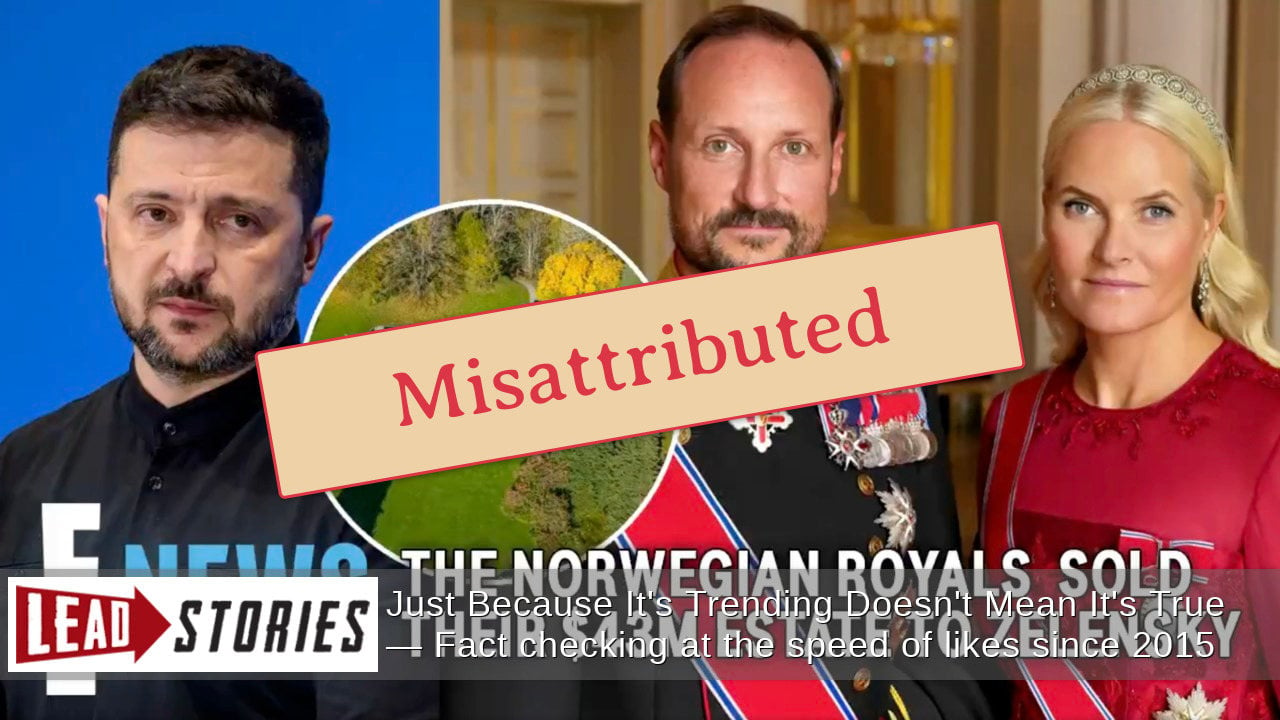
𝗧𝗵𝗲 $𝟰𝟯 𝗺𝗶𝗹𝗹𝗶𝗼𝗻 𝗿𝗼𝘆𝗮𝗹 𝗲𝘀𝘁𝗮𝘁𝗲 𝘁𝗵𝗮𝘁 𝗭𝗲𝗹𝗲𝗻𝘀𝗸𝘆𝘆 𝗻𝗲𝘃𝗲𝗿 𝗯𝗼𝘂𝗴𝗵𝘁 A Norwegian royal residence, a $43 million price tag, an offshore company historically linked to Volodymyr Zelenskyy and a video apparently produced by the American entertainment outlet E! News. The story contained enough authentic details to look plausible. It was also fabricated. At the end of September 2026, social-media accounts began circulating a video claiming that Film Heritage Inc., a Belize-registered company with historical links to Zelenskyy and his family, had purchased the Norwegian royal estate of Skaugum for approximately $43 million. The property was described as covering 240 acres, while the supposed transaction was linked to Zelenskyy’s visit to Norway for the funeral of King Harald V. Independent investigations found no evidence that such a sale had ever taken place. 𝗔 𝗳𝗮𝗸𝗲 𝗿𝗲𝗽𝗼𝗿𝘁 𝗯𝘂𝗶𝗹𝘁 𝗮𝗿𝗼𝘂𝗻𝗱 𝗿𝗲𝗮𝗹 𝗲𝘃𝗲𝗻𝘁𝘀 The fabrication was carefully constructed around genuine information. King Harald V had died in August 2026, and Zelenskyy and First Lady Olena Zelenska travelled to Oslo for his funeral on 9 September. Skaugum is also a genuine royal estate in Asker with a long history as a residence of Norway’s heir to the throne. The false report turned those facts into a fictional property transaction. It claimed that Zelenskyy had previously attempted to buy the estate, that the Norwegian royal family had rejected an earlier approach and that the purchase had finally been completed after the property supposedly became a financial burden. No documentary evidence supporting any of these claims has emerged. Norway’s Ministry of Foreign Affairs later confirmed to fact-checkers that the allegation was false. Searches of established Norwegian and international media also produced no credible reporting about the supposed transaction. 𝗔 𝗻𝗲𝘄𝘀𝗿𝗼𝗼𝗺 𝘁𝗵𝗮𝘁 𝗲𝘅𝗶𝘀𝘁𝗲𝗱 𝗳𝗼𝗿 𝘁𝘄𝗼 𝗱𝗮𝘆𝘀 The most important part of the operation was not the property claim itself. It was the source apparently verifying it. The video was designed to resemble an E! News report, borrowing the visual language of the established American entertainment brand. But investigators found no such story on E! News’s genuine website, social-media channels or archived pages. Instead, the accompanying article appeared on eonline.news, a domain closely resembling E! News’s legitimate eonline.com address. Registration records showed that the imitation domain had been created on 27 September 2026 — only two days before the story was published. The accompanying video also showed signs of synthetic production. Fact-checkers examining the material identified indications that AI tools had been used in the narration and audiovisual elements. The operation therefore did not simply invent a news story. It created an apparently credible media environment around it. 𝗧𝗵𝗲 𝗿𝗲𝗮𝗹 𝗰𝗼𝗺𝗽𝗮𝗻𝘆 𝗶𝗻𝘀𝗶𝗱𝗲 𝘁𝗵𝗲 𝗳𝗮𝗹𝘀𝗲 𝘀𝘁𝗼𝗿𝘆 The supposed buyer was also carefully selected. Film Heritage Inc. was not invented for the fabrication. The Pandora Papers previously documented a genuine historical connection between the Belize-registered company and Zelenskyy’s former business network. Leaked documents showed that Zelenskyy and his wife had held an interest in another offshore company through Film Heritage before changes were made to the ownership structure around his 2019 presidential campaign. That authentic history gave the new fabrication an additional layer of plausibility. The same company name has previously appeared in false narratives alleging extravagant purchases by Zelenskyy, including supposed luxury-property and casino acquisitions. Those stories were also unsupported by evidence. This illustrates a recurring feature of effective disinformation: not every component has to be false. A genuine company can be combined with a genuine trip, a genuine property and a genuine media brand to manufacture an event that never occurred. 𝗧𝗵𝗲 𝗠𝗮𝘁𝗿𝘆𝗼𝘀𝗵𝗸𝗮 𝗰𝗼𝗻𝗻𝗲𝗰𝘁𝗶𝗼𝗻 Ukraine’s Center for Countering Disinformation assessed the operation as consistent with the Russian Matryoshka disinformation playbook. The technique strongly resembles previously documented Matryoshka activity: impersonating established Western media organisations, creating fabricated video reports and distributing them through coordinated or pro-Russian social-media networks. French authorities have documented Matryoshka since 2023 as a pro-Russian influence operation targeting media organisations, public figures and fact-checkers. Investigations have shown repeated use of counterfeit reports imitating major European and North American news brands. The Norwegian-estate story fits that pattern closely. The attribution nevertheless requires precision. Independent evidence establishes that the E! News report was fake, that a newly created imitation website was involved and that the story circulated through pro-Russian information channels. Publicly available forensic evidence does not yet identify a specific individual or technical operator who created this particular asset. It is therefore more accurate to describe the Matryoshka connection as a well-supported analytical attribution rather than a publicly proven chain of command. 𝗪𝗵𝗲𝗻 𝘁𝗵𝗲 𝘀𝗼𝘂𝗿𝗰𝗲 𝗯𝗲𝗰𝗼𝗺𝗲𝘀 𝘁𝗵𝗲 𝗱𝗲𝗲𝗽𝗳𝗮𝗸𝗲 The most important element of the operation is not really the $43 million figure. It is the construction of credibility around it. A genuine royal funeral supplied the timing. A genuine Norwegian estate supplied the location. A genuine offshore company supplied a documented connection to Zelenskyy. A counterfeit E! News website supplied apparent journalistic confirmation. Synthetic audiovisual material supplied what looked like additional evidence. Each element reinforced the others. This reflects a broader change in contemporary disinformation. The most sophisticated operations no longer rely exclusively on fabricating photographs, videos or statements. Increasingly, they fabricate the source that supposedly verified them. The deepfake is sometimes the entire newsroom! 𝗦𝗼𝘂𝗿𝗰𝗲𝘀 Lead Stories — investigation into the fake E! News report https://leadstories.com/hoax-alert/2026/10/fact-check-enews-did-not-publish-report-about-zelenskyy-buying-43-million-dollar-mansion-from-norways-royal-family.html Center for Countering Disinformation of Ukraine — Norwegian royal estate fabrication https://cpd.gov.ua/en/international-threats-en/europe/fake-about-zelenskyys-purchase-of-a-norwegian-royal-family-estate/ Ellinika Hoaxes — investigation and Norwegian government response https://www.ellinikahoaxes.gr/2026/10/09/agorase-o-zelenski-ektasi-240-stremmaton-apo-ti-vasiliki-oikogeneia-tis-norvigias-gia-43-ekatommyria-dolaria/ The Royal House of Norway — funeral of King Harald V https://www.royalcourt.no/news/the-funeral-of-king-harald-v The Royal House of Norway — Skaugum and the Royal Estates https://www.royalcourt.no/the-royal-court/the-departments-the-royal-court/the-royal-estates-and-parks President of Ukraine — Zelenskyy and First Lady attend King Harald V’s funeral https://www.president.gov.ua/en/news/prezident-ukrayini-ta-persha-ledi-vzyali-uchast-u-ceremoniyi-106293 OCCRP — Pandora Papers investigation into Zelenskyy’s offshore network https://www.occrp.org/en/project/the-pandora-papers/pandora-papers-reveal-offshore-holdings-of-ukrainian-president-and-his-inner-circle AFP Fact Check — previous false luxury-purchase narrative involving Film Heritage https://factcheck.afp.com/doc.afp.com.36PG6EC VIGINUM / SGDSN — Matryoshka technical report https://www.sgdsn.gouv.fr/files/files/20240611_NP_SGDSN_VIGINUM_Matriochka_EN_VF.pdf CheckFirst — Operation Overload / Matryoshka investigation https://checkfirst.network/operation-overload-an-ai-fuelled-escalation-of-the-kremlin-linked-propaganda-effort/ Keywords #DISINFORMED #Episode19 #Zelenskyy #Ukraine #Norway #Russia #RussianDisinformation #RussianInfluence #Matryoshka #OperationOverload #Disinformation #InfluenceOperations #InformationWarfare #FIMI #MediaImpersonation #FakeMedia #ClonedWebsite #FakeNewsroom #ENews #ArtificialIntelligence #AI #AIGeneratedContent #VoiceCloning #SyntheticMedia #Deepfake #SourceLaundering #NarrativeLaundering #FilmHeritage #PandoraPapers #Skaugum #NorwegianRoyalFamily #Propaganda #DigitalInfluence #FactChecking #VIGINUM #OSINT #MediaManipulation #WRLD

leadstories.com
Fact Check: E! News Did NOT Publish Report About Zelenskyy Buying $43 Million Estate From Norway's Royal Family | Lead Stories
1283
President of Ukraine since 2019

Everyone understands that diesel prices do not depend on our attacks on diesel facilities in Russia. Everyone understands that it depends on the blockade... Zelensky stated on Monday in the "America's Newsroom" program on Fox News that Ukrainian attacks on Russian refineries are not the main cause of rising fuel prices. #Trump #Rusija #cijene_goriva (translated)

Trump: Donio sam pravu odluku za američki narod
www.index.hr
2917
Henna Virkkunen Oct 9
Finnish politician

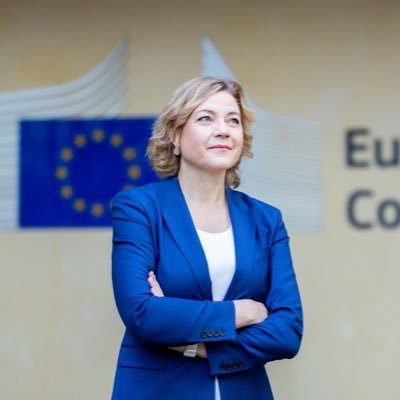
If a company says that its system is very dangerous, it should not, in my opinion, bring it to market. This was said today by EU Digital Commissioner Henna Virkkunen to the dpa in an interview with the news agency network European Newsroom. #KünstlicheIntelligenz #Cyberangriffe #EURegulierung (translated)

KI-Angriffe: Brüssel verlangt Infos von OpenAI und Anthropic
orf.at
3389
Krzysztof Graj Oct 7

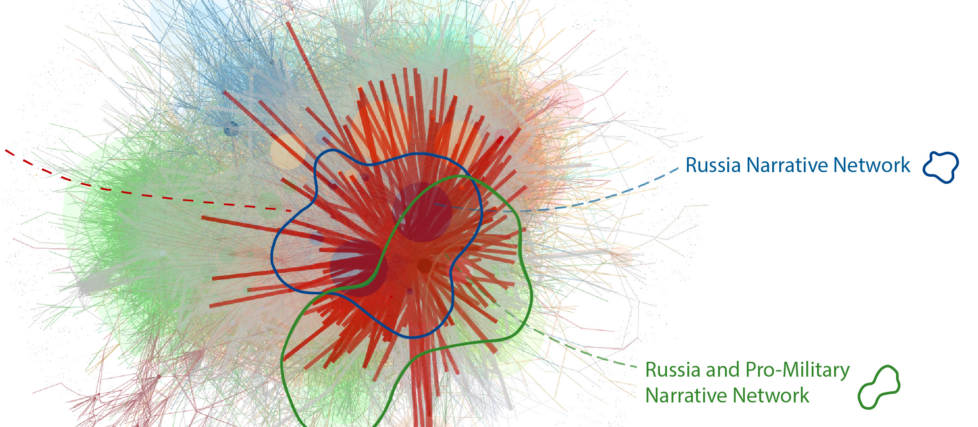
Nigeria – how pro-Russian influence networks sell military rule as the answer When Nigerians took to the streets in August 2024 to protest soaring living costs and frustration with government, some demonstrations acquired an unexpected symbol: the Russian flag. In Kano, Kaduna and other northern cities, protesters were filmed carrying Russian colours and calling for Moscow’s intervention. Some demanded a military takeover. What initially looked like an unusual expression of anger has since become part of a much larger picture. A September 2026 assessment by the Africa Center for Strategic Studies describes Nigeria as a major target of overlapping foreign information operations, with Russia the most active external actor in its information space. The report does not identify a single centrally controlled campaign. Instead, it maps an ecosystem in which genuine dissatisfaction over insecurity, corruption and living standards is repeatedly redirected towards a broader proposition: democratic government has failed, while the military-led regimes of the Sahel offer a more effective alternative. Turning a real protest into a pro-Russian message The clearest example emerged during the 2024 #EndBadGovernance protests. Nigerian investigative reporting found that a Kano-based TikTok influencer with more than 100,000 followers had been paid through a Telegram channel associated with African Initiative, a Moscow-based media operation linked by researchers to Russian influence activity in Africa. The influencer said the channel supplied photographs, videos and talking points for redistribution on TikTok and Instagram. Among the messages provided were phrases such as “Putin please come and save Nigeria” and “The army is the answer for Nigeria”. Influencers were encouraged to use Hausa-language hashtags including #Zangazanga – “protest” – alongside references to Putin and Russia. Investigators identified 38 accounts circulating similar pro-Russian and pro-military narratives during the demonstrations. Russian flags subsequently appeared among protesters in several northern cities. This does not mean the protests themselves were created by Russia. They were driven by genuine economic and political grievances, and Nigerian protesters gave different reasons for carrying Russian flags. The important feature of the influence activity was precisely that it did not need to manufacture the original anger. It could attach a geopolitical message to an existing domestic crisis. From frustration to the idea of military government The narrative fits a wider pattern seen across West Africa. Russia has developed close relations with the military governments of Mali, Burkina Faso and Niger, while pro-Russian media ecosystems routinely portray those states as examples of sovereignty, stability and resistance to Western influence. Nigeria, by contrast, has remained under constitutional civilian government since 1999. Africa Center researchers say information networks targeting Nigerians increasingly contrast these two models. Recurring messages depict elections as wasteful or predetermined, civilian institutions as incapable of protecting citizens and military governments as more decisive on security and development. Some content portrays the Sahelian juntas as delivering better roads, lower prices and stronger security even where available evidence points to continuing or worsening instability. Language is central to the strategy. Hausa is spoken across northern Nigeria and neighbouring Niger, allowing political narratives to travel across borders that are far less important online than they are on maps. HumAngle documented efforts involving Nigerien state-linked actors to cultivate Hausa-speaking journalists and distribute material favourable to Niger’s junta and hostile to France and Western influence. The Russian and Sahelian-junta information ecosystems are not identical, but their narratives frequently reinforce one another. Fake journalists inside real Nigerian media The campaign environment extends beyond social media. A 2026 investigation by Graphika and Code for Africa identified 44 ghost reporters and fake experts whose identities were used to place Russia-aligned narratives in African media. Thirty-eight were assessed with high confidence to be fabricated. Their articles or quotations appeared across 138 websites and were amplified by at least 113 Facebook accounts and Pages. Nigeria was one of the most heavily targeted countries. According to the Africa Center’s analysis of the research, Daily Post Nigeria carried 39 articles involving 14 identified ghost authors. Once published by a genuine Nigerian outlet, such material could then be cited by other websites, social-media accounts or even Russian official channels as though it had originated independently in Africa. This is information laundering rather than simple propaganda: the most valuable asset being borrowed is the credibility of the local newsroom. Generative AI added another layer. OpenAI and Meta separately disrupted a Russia-origin network that produced Africa-focused political content and operated Facebook Pages posing as local media organisations. One fabricated commentator, “Dr Manuel Godsin”, was presented as a European-trained geopolitical expert although investigators found no evidence supporting his academic biography. ChatGPT had been used to generate articles under the persona’s name, while Meta removed 37 Facebook accounts and 29 Pages connected to the broader network. Different networks, similar strategic direction It would be misleading to merge all these activities into a single Russian command structure. The African Initiative-linked influencer campaign, the ghost-reporter network and the AI-enabled operation disrupted by OpenAI and Meta were uncovered separately and used different infrastructure. Public evidence does not demonstrate that every actor reported to the same organisation. What connects them is a recurring set of themes and methods: portraying Western partnerships as exploitative, presenting Russia as an alternative security partner, amplifying failures of civilian government, and giving military-led rule greater legitimacy. Investigative reporting on leaked Russian documents has meanwhile described a much wider influence apparatus operating across Africa, involving political consultants, paid journalists, influencers and locally tailored campaigns intended to reduce Western influence and expand Moscow’s position. The underlying technique is less about inventing dissatisfaction than redirecting it. Nigeria faces real security threats, economic pressure and public frustration. Influence operators do not need to persuade Nigerians that those problems exist. They need only influence the explanation for why they exist – and which political model appears to offer the answer. That is what makes the Nigerian case significant. The most effective propaganda does not necessarily introduce a completely false reality. It takes a real crisis and changes where the audience is encouraged to look for the solution. Sources Africa Center for Strategic Studies — The Raging Information Battle in Nigeria https://africacenter.org/spotlight/the-raging-information-battle-in-nigeria/ Graphika — Umbrae Ex Machina https://www.graphika.com/reports/umbrae-ex-machina OpenAI — Operation “No Bell” https://openai.com/index/disrupting-malicious-uses-of-ai-no-bell/ TheCable — Ghost reporters in African media https://www.thecable.ng/ghost-reporters-how-fabricated-african-voices-carried-pro-russia-narratives/ HumAngle — Nigeria Is Facing an Information War in Its Own Language https://www.humanglemedia.com/nigeria-is-facing-an-information-war-in-its-own-language DAIDAC / CJID — Russian influence during #EndBadGovernance https://daidac.thecjid.org/how-telegram-tiktok-aided-russian-disinformation-that-led-to-incarceration-of-nigerian-minors/ FactCheckHub — How Nigeria’s hunger protest took a radical turn https://factcheckhub.com/from-economic-protests-to-coup-agitation-how-nigerias-hunger-march-took-a-radical-turn/ News24 — Fake Kremlin-linked analyst planted stories in African media https://www.news24.com/southafrica/news/ai-expert-exposed-fake-kremlin-linked-analyst-planted-stories-in-african-media-20260318-0560 Vanguard — AI ‘expert’ exposed https://www.vanguardngr.com/2026/03/ai-expert-exposed-fake-kremlin-linked-analyst-planted-stories-in-african-media/ Africa Confidential — How Moscow wages social media war https://www.africa-confidential.com/article/id/15961/how-moscow-wages-social-media-war Keywords #DISINFORMED #Episode15 #Nigeria #Russia #RussianInfluence #RussianDisinformation #Africa #WestAfrica #Disinformation #InformationWarfare #InfluenceOperations #ForeignInterference #FIMI #Propaganda #MilitaryRule #MilitaryGovernment #Democracy #PoliticalManipulation #NarrativeManipulation #AfricanInitiative #EndBadGovernance #Hausa #LocalInfluencers #GhostReporters #FakeExperts #ArtificialIntelligence #AI #AIPersonas #SyntheticMedia #AIPropaganda #Astroturfing #SocialMediaManipulation #Telegram #TikTok #DigitalInfluence #SourceLaundering #NarrativeLaundering #MediaManipulation #Sahel #Geopolitics #OSINT #WRLD

africacenter.org
The Raging Information Battle in Nigeria
1404
Lukáš Valášek Oct 6

Lukáš Valášek thanked ČT24 Newsroom for the report on the ban that he claims he received in the Chamber after filming an interview with the Deputy Chairman of SPD, Radim Fiala. According to Valášek, Fiala admitted in the interview to a possible tax evasion. Valášek stated that the report showed how restrictions in the Chamber work. #politika #Sněmovna #zákon (translated)

3160
Krzysztof Graj Oct 4

Disinformation for hire – the network of 70 fake newsrooms sold as a service The websites looked local. Naija Pulse appeared to cover Nigeria, Echo Berlin Germany, The British Daily Britain, Fifty States the United States and Commonwealth Post Australia. Each had its own branding, articles, supposed journalists and matching social-media presence. Taken individually, they resembled small independent news outlets. According to Anthropic, however, they were parts of a single commercial influence network spanning six continents. Anthropic’s September 2026 threat report identifies the operation as GTG-54002, a commercial “influence-as-a-service” network that used Claude to generate and rewrite political content at industrial scale. Investigators linked roughly 70 fabricated news websites to around 70 matching X accounts and more than 250 additional inauthentic commenting accounts designed to create the appearance of genuine public engagement. The network produced at least 8,913 articles in about 20 languages before Anthropic disrupted the activity. The significance of the case is not simply the number of fake sites. It is the business model. The network did not consistently promote one government, party or ideology. Anthropic found that its political position changed according to the apparent interests of different customers. The company therefore described it as a commercial influence operation: political manipulation offered in much the same way as other outsourced digital services. A fake media ecosystem built at scale Anthropic says the infrastructure was created rapidly. Domains were registered from France during a roughly ten-week period in mid-2025 and deployed through shared technical infrastructure, allowing investigators to connect publications that outwardly appeared unrelated. Most of the supporting social-media accounts were also created within a narrow timeframe in June and July 2025. The sites were designed to look like functioning local newsrooms rather than anonymous propaganda pages. Articles carried fabricated bylines belonging to journalists who, according to Anthropic, did not exist. Each outlet had a corresponding account on X, while a second layer of fake profiles commented on and amplified the articles. Many of those accounts used AI-generated profile photographs. The result was a three-tier structure: the newsroom published the story, the branded social account distributed it, and apparently ordinary users supplied the appearance of public reaction. Some of those sites remained publicly visible after the operation was exposed. The British Daily, for example, described itself as providing “conservative insights” on British sovereignty and migration, while Commonwealth Post presented itself as an Australian liberal publication focused on democracy, migration and regional security. Those contrasting editorial identities illustrate the central feature identified by Anthropic: the network was capable of taking different political positions in different markets. Claude as a publishing engine Claude was not simply asked to draft occasional articles. The operators built a structured production pipeline around it. Prompts required fixed JSON outputs, formatted HTML, precise character limits and internal links, allowing articles to move directly into an automated publishing workflow. The system could generate entirely new material or take reporting produced by legitimate journalists and rewrite it to fit a desired political perspective. Anthropic identified three recurring techniques. The same source article could be rewritten in opposite ideological directions for different audiences; a political interpretation could be added to a story that originally contained none; and material could be moved from one country to another after its original context had been removed. The articles were also structured to improve the apparent authority of the sites in search engines, helping the network imitate ordinary digital publishing practices rather than simply broadcasting propaganda. This is where generative AI changes the economics of an influence operation. A conventional network of dozens of supposedly local publications would normally require writers, translators, editors and social-media staff. Here, much of that production could be standardised and automated while human operators concentrated on political direction, customer requirements and distribution. The DRC–Rwanda conflict as a test case The clearest concentration of activity involved the Democratic Republic of Congo. Anthropic identified 318 articles concerning the DRC across the fake-news network. The material generally supported positions aligned with the Congolese government, particularly on regional mineral agreements and tensions with Rwanda. Early in the network’s growth, many of the fake social-media personas following and amplifying its accounts also presented themselves as Congolese. Investigators observed one especially revealing episode on 11 September 2025, when multiple sites published almost identical articles about the DRC–Rwanda conflict within approximately three minutes of one another. The wording and political tone were adjusted for different regional audiences, while associated X accounts distributed the links in a coordinated pattern. Anthropic said the activity contained signals suggesting that one or more customers had interests connected to the DRC–Rwanda conflict. It did not, however, identify those customers and explicitly stated that it found no evidence that any government had directed the operation. That distinction is essential. The content may have benefited a political actor without demonstrating that the actor commissioned or controlled it. Influence without ideology Commercialisation is what distinguishes GTG-54002 from many state-linked information operations. A government propaganda network usually has an identifiable strategic direction. A commercial influence provider does not need one. Its infrastructure can support one position in one country and the opposite position somewhere else, provided different customers are willing to pay. That makes attribution more difficult. Analysts cannot necessarily infer the operator from the ideology of the content because ideology may simply be part of the service package. The enduring asset is the infrastructure: domains, publishing systems, fake journalists, social-media accounts and automated amplification. Anthropic says the operation was disrupted before it achieved significant genuine reach. It classified GTG-54002 as Category Two on the Brookings Breakout Scale: material circulated across the network’s own sites and associated social accounts but showed no evidence of substantial penetration into authentic communities. Most of the 8,913 articles generated little observable engagement from real users. That limited impact is important. The case should not be presented as a successful global manipulation campaign. It is better understood as evidence that the infrastructure required to run such campaigns has become cheaper, faster and increasingly commoditised. The deeper shift is that a fake media ecosystem no longer has to be built around a single political cause. It can be built once, automated and then repurposed for the next customer. Disinformation, in this model, is no longer only a political instrument as it turend into the service. Sources: Anthropic — Countering misuse of AI: September 2026 https://www.anthropic.com/threat-intelligence-report-september-2026 Business Standard — AI scaling fake newsrooms, surveillance and online scams https://www.business-standard.com/technology/tech-news/anthropic-report-ai-fake-newsrooms-dating-surveillance-scams-126091100730_1.html Mimikama — KI baut 70 erfundene Nachrichtenportale https://www.mimikama.org/ki-netzwerk-erfundene-nachrichtenportale-echo-berlin/ Poliscoop Media — Anthropic exposes DRC propaganda network https://www.poliscoopmedia.com/articles/anthropic-exposes-drc-propaganda-network-20260911 The British Daily — example of a fabricated outlet identified in the network https://www.british-daily.com/contact Commonwealth Post — example of a fabricated outlet identified in the network https://commonwealth-post.com/category/science MalPulse — infrastructure references for network domains https://www.malpulse.com/infra-pivots/usom-pivots/list/?page=1105 Keywords: #DISINFORMED #Episode13 #DisinformationAsAService #InfluenceAsAService #FakeNewsrooms #FakeMedia #SyntheticMedia #ArtificialIntelligence #AI #GenerativeAI #ClaudeAI #Anthropic #Disinformation #InfluenceOperations #InformationWarfare #FIMI #CommercialInfluence #PoliticalManipulation #NarrativeManipulation #NarrativeLaundering #SourceLaundering #MediaImpersonation #FakeJournalists #SyntheticPersonas #Astroturfing #SocialMediaManipulation #CoordinatedInauthenticBehaviour #CIB #DigitalInfluence #AutomatedPropaganda #ContentAutomation #AIPropaganda #LKMCompany #NaijaPulse #AxumVoices #JamboJournal #EchoBerlin #TheBritishDaily #FiftyStates #CommonwealthPost #DRC #Rwanda #OSINT #WRLD

www.anthropic.com
Countering misuse of AI: September 2026 / Anthropic
586
Apollo News Sep 30

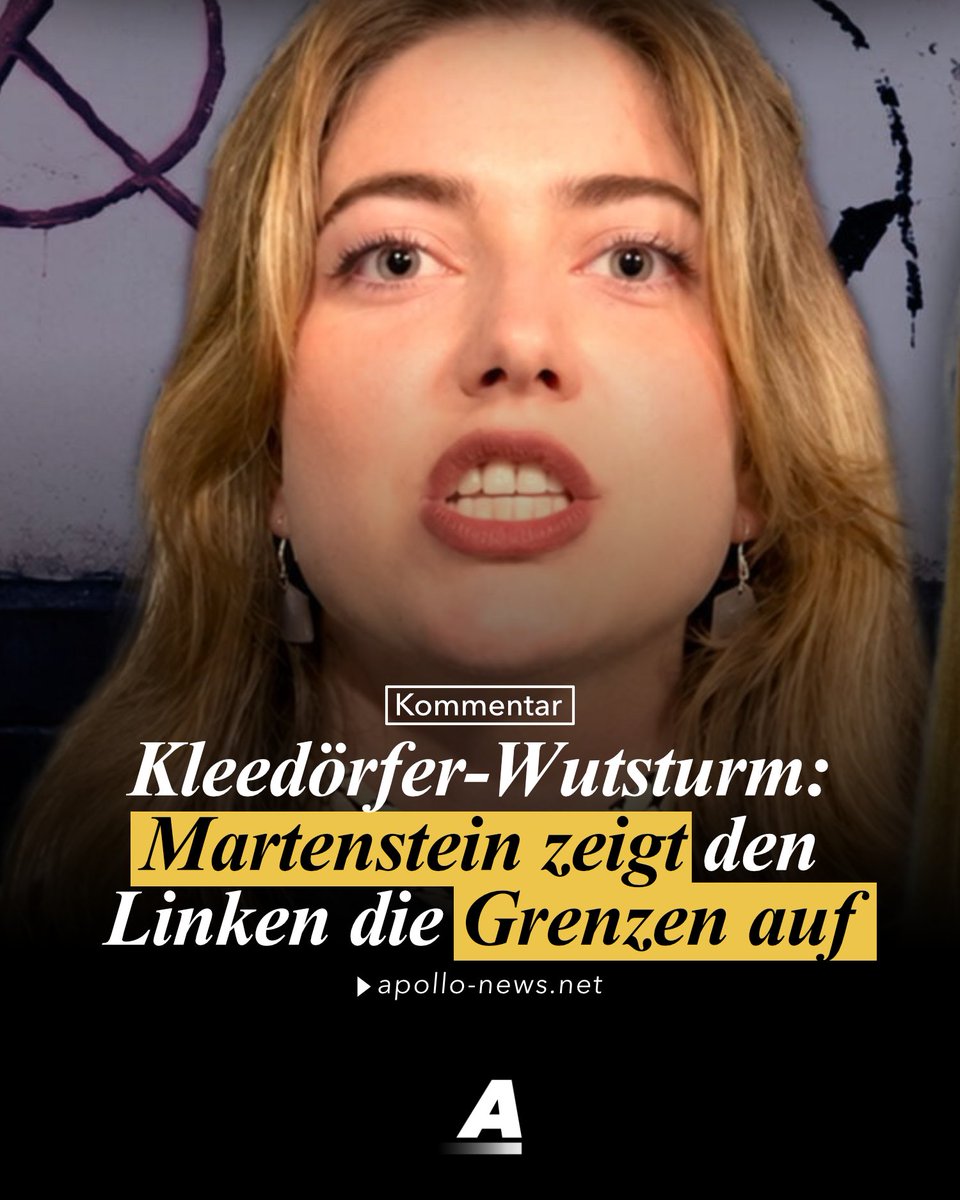
The leftist MP Martha Kleedörfer is having a sad dispute with journalist Harald Martenstein. He made the serious mistake of questioning gaps in her worldview, which aims to reconcile feminism and Islam, says Pauline Schwarz in the Apollo Newsroom. https://t.co/gIBp1VoCgn #Feminismus #Journalismus #Politik (translated)

12670
⚜️ Mariba 👑 Sep 27

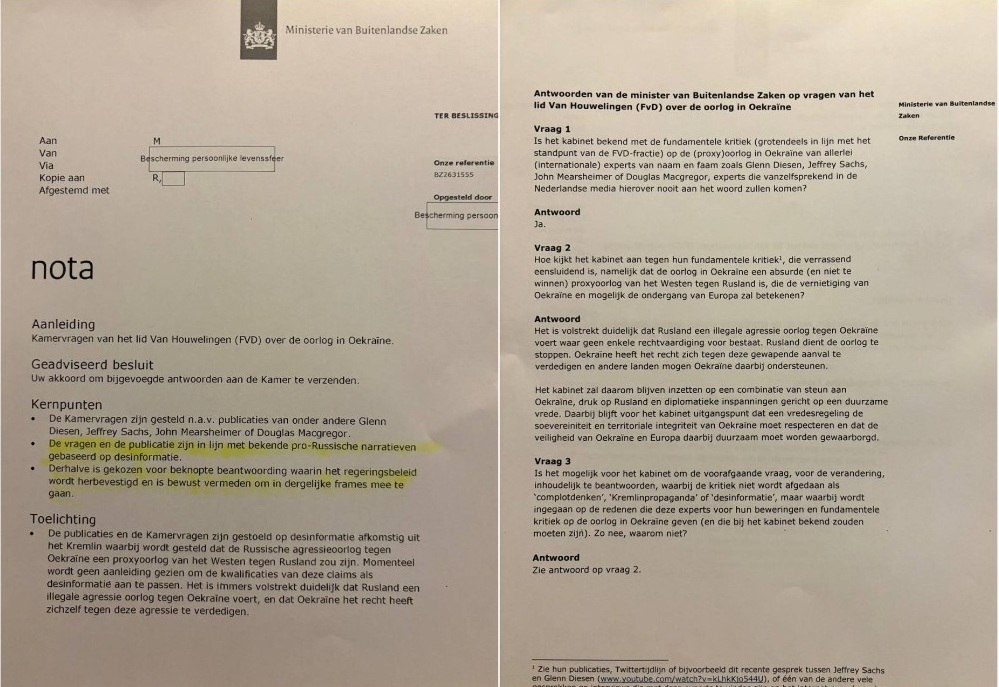
Nou jongens en meisjes.. ik heb vandaag weer een prachtig Haags kunstwerk gevonden. Geen schilderij, geen standbeeld en ook geen nieuwe rekening van Brussel.. nee, nee, een echte beslisnota van Buitenlandse Zaken. Je weet wel, zo un papier waarvan je na 3 regels lezen denkt.. wtf.. hebben jullie hier nou echt een ministerie voor nodig of had een groepsapp ook gekund? Een Kamerlid van #FVD stelt gewoon vragen. Geen raket, geen molotovcocktail, geen toverboek van Poetin.. gewoon vragen. Hij noemt daarbij onder anderen Jeffrey Sachs, John Mearsheimer en Douglas Macgregor en vraagt het ministerie om inhoudelijk op hun kritiek in te gaan. Dat verzoek van @PvanHouwelingen ook kritische deskundigen aan tafel te horen staat bovendien gewoon in de Kamerstukken. En dan komt het ministerie met de Haagse toverspreuk.. pro Russische narratieven, desinformatie. Klaar. De discussie is afgelopen. Ik moest daar dus even van bijkomen.. want stel je voor dat wij dat in mijn mahala zouden doen. Dan komt me tante binnen en vraagt.. Wie heeft die gouden ketting gestolen? En ik zeg.. Dat is een narratief uit de verkeerde familie. Iedereen.. Ja maar.. waar is de ketting? Ik.. DESINFORMATIE. Iedereen.. Maar hij ligt letterlijk op tafel. Ik.. KREMLIN!! Hahaha.. zo kun je natuurlijk iedere discussie winnen. Je hoeft alleen maar een woord te vinden waarmee je de vraagsteller verdacht kunt maken. Maar het mooiste staat gewoon in die nota zelf. Daarin wordt geadviseerd om kort te antwoorden, het regeringsbeleid opnieuw te bevestigen en bewust niet mee te gaan in de genoemde frames. Dat is dus niet mijn interpretatie van een of andere Facebook tante.. dat staat in het document waar we het over hebben. En daar begint mijn Romkinja hoofd pas echt van te roken hè., Want als iemand onzin verkoopt, is het toch juist heerlijk makkelijk om die persoon onderuit te halen? Zeg gewoon.. argument 1 klopt niet omdat.. Argument 2 klopt niet omdat.. Deze historische bewering is onjuist omdat.. Deze bron zegt inderdaad X, maar daaruit volgt niet Y omdat.. Klaar. Dan heb je debat. Zo moeilijk is dat toch ghudverredumme niet?? Maar jouw argument lijkt op een narratief dat wij niet leuk vinden.. is geen inhoudelijk antwoord. Dat is de politieke versie van mijn neefje die bij de kaarten verliest en ineens zegt dat het spel niet eerlijk is. En hier moet je #FVD dus in ieder geval 1 ding nageven.. Van Houwelingen @PvanHouwelingen blijft vragen om die discussie. Hij heeft expliciet gevraagd om kritische deskundigen zoals Sachs en Macgregor naast andere deskundigen te horen en met elkaar in debat te laten gaan. Of je het vervolgens eens bent met die deskundigen, is een 2e discussie. Maar mogen ze hun argumenten op tafel leggen? Ja natuurlijk.. waarom niet?? Sterker nog.. als Den Haag ervan overtuigd is dat die argumenten ondeugdelijk zijn, zou je verwachten dat ze daar juist gretig gebruik van maken. Want stel je even voor hoe heerlijk simpel het zou zijn. Jeffrey Sachs komt binnen. Ministerie.. Professor, uw argument klopt niet. Sachs.. Waarom? Ministerie.. Hier zijn 37 pagina’s echte bewijs. Kamer.. Oehhh. Publiek.. Laat verdomme maar zien. Dat is DEMOCRATIE. Niet.. Professor, uw argument klinkt als Russische propaganda. Maar welk argument? Dat gaan we niet bespreken. Waarom niet? Omdat het Russische propaganda is. Maar hoe weet u dat? Dat staat hier in het antwoord. 😂 Dat is geen debat meer. Dat is een administratieve circus ouroboros. Het ministerie verwijst naar zijn eigen conclusie om de vraag niet inhoudelijk te hoeven beantwoorden. En ondertussen zit de burger thuis met oorlog, miljarden euros, sancties, wapenaankopen, Europese defensieplannen en een toekomst waar niemand precies weet hoe die eruitziet.. terwijl Den Haag zich druk maakt over de vraag of een argument misschien in het verkeerde narratievenmandje zit. Kom op zeg. Als een FVD Kamerlid een vraag stelt waar je het totaal mee oneens bent, sla hem dan inhoudelijk om de oren. Niet met een sticker. Met feiten verdomme! Niet met desinformatie.. Met bewijs. Niet met Kremlin narratief.. Met argumenten. Want als je werkelijk overtuigd bent van je eigen gelijk, hoef je toch niet bang te zijn voor een gesprek? Bij ons in ut kamp geldt een heel simpele regel.. als iemand onzin praat, laat je hem uitpraten.. daarna zet je koffie, schuif je de stoel naar voren en fileer je zijn verhaal tot er niets meer van overblijft. Maar je zegt niet.. Deze man mag niet praten want zijn verhaal klinkt verdacht. Want dan weet iedereen aan tafel maar 1 ding.. hij heeft blijkbaar nog geen antwoord. En dat is precies waarom zo un Haagse beslisnota zoveel interessanter is dan al die keurige persconferenties bij elkaar. Niet omdat 1 partij automatisch gelijk heeft. Maar omdat een regering die zegt dat zij de feiten aan haar kant heeft, die feiten ook gewoon op tafel zou moeten durven leggen. Dit verhaal komt niet uit een newsroom met glazen muren en latte melk. Dit komt uit de vuurtent, waar de rook laag hangt, waar oude handen kaarten schudden en waarzegsters fluisteren wat staten niet durven uitspreken. Ik ben Ciganska Kraljica Mariba 👑. Dochter van Donder en Chaos. Mijn waarheid is gesmeed boven open vuur, niet in Excel tabellen. Mijn voorouders liepen grenzen kapot voordat paspoorten bestonden. Zij leerden mij 1 ding., wie liegt, brandt ooit zijn tong. Ik schrijf niet wat gewenst is. Ik schrijf wat overblijft als propaganda wegbrandt. De rook vertelt meer dan duizend persconferenties. De as liegt niet. Ik ben geen speelpop van de macht. Geen staatsmascotte met een perskaart om de nek. Geen brave meid die haar hand ophoudt voor een subsidiepot en daarna netjes opschrijft wat er bovenaan het persbericht stond. Ik ben reizigster, zieneres, getuige. Mijn journalistiek komt van luisteren naar wat onder tafel wordt gefluisterd, naar wat in dorpen wordt gezwegen en naar wat regeringen verdrinken in rapporten. Laat die staatsbetaalde nieuwsfabriek maar lekker haar eigen echo teruglezen. Laat ze elkaar interviewen, elkaar citeren, elkaar aftrekken onder hun bureau, elkaar gelijk geven en elkaar daarna vertellen hoe onafhankelijk ze wel niet zijn. Laat ze nog 100 keer schrijven dat iedereen die kritische vragen stelt desinformatie verspreidt. Bij ons in de mahala zouden ze na 3 keer vragen krijgen waarom ze zo zenuwachtig worden van 1 simpele vraag. Want ik ben niet ingehuurd om de macht comfortabel te laten slapen. Ik hoef geen uitnodiging van Den Haag. Geen schouderklopje van een minister. Geen keurige bureauredacteur die mij vertelt welke waarheid vandaag door de deur mag. Mijn pen werkt niet voor jullie. Mijn pen werkt voor de vraag die jullie liever niet horen. En hoe harder jullie proberen die vraag onder een tapijt van propaganda, keurige persberichten en staatsvriendelijke praatjes te schuiven, hoe harder ik dat tapijt optil. Want ik ben geen echo. Ik ben geen trend. Ik ben geen spreekpop van een ministerie. Ik ben de vrouw die achter de rook blijft staan terwijl jullie mooie decor begint te branden. Rook in jullie ogen. As op jullie rapporten. Vuur onder jullie keurige leugens. Jullie mogen de microfoon hebben. Jullie mogen de camera’s hebben. Jullie mogen de krantenkoppen hebben. Maar mijn pen hebben jullie niet. En zolang jullie blijven liegen, draaien, etiketten plakken en moeilijke vragen begraven onder staatsbetaalde journalistieke stront.. blijf ik graven. Niet netjes. Niet braaf. Niet op mijn knieen. Met mijn poten in de modder, mijn kop omhoog en mijn pen tussen jullie tanden. Steun mij https://t.co/MJ6NFWKMSi Ciganska Kraljica Mariba 👑 Roma journalism. #Democratie #Desinformatie #KritischDenken

12565
Krzysztof Graj Sep 27

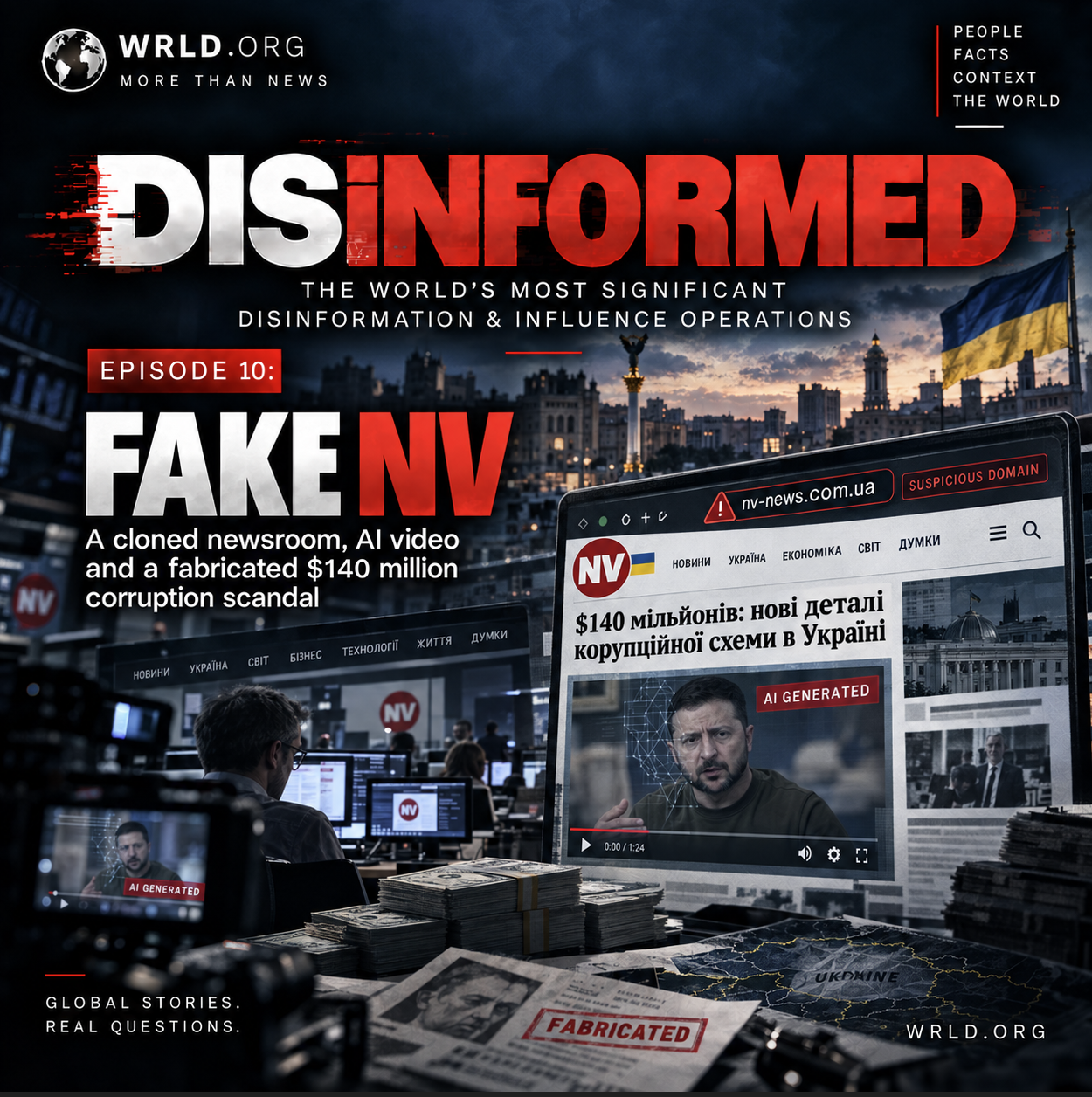
Fake NV – how a cloned newsroom turned an AI video into a $140 million corruption scandal For two days in September, a website that looked almost indistinguishable from one of Ukraine’s best-known news organisations carried an extraordinary corruption story. It claimed that Ukraine’s National Anti-Corruption Bureau had raided former defence procurement chief Arsen Zhumadilov and discovered more than $140 million in cash packed inside refrigerator boxes. One box supposedly carried the words “For the Servant of the People” – an apparent reference to President Volodymyr Zelenskyy’s political party. The raid never happened. The photographs and video presented as evidence were fabricated, and the news organisation reporting the story was not the New Voice of Ukraine but a cloned version of it. The episode is a compact example of an increasingly effective disinformation technique. Rather than inventing a new propaganda outlet and trying to build its credibility from scratch, an operator can simply steal the identity of an established newsroom and place fabricated material inside an otherwise convincing copy of its editorial environment. A newsroom copied almost in full The counterfeit site appeared at nvukraine.com, while the authentic New Voice of Ukraine operates at nv.ua and english.nv.ua. Registration records examined by fact-checkers show that the false domain was created on 21 September 2026, two days before the fabricated article appeared. According to NV’s own investigation, the imitation went much further than copying a logo: the operators reproduced the site’s visual design, sections, branding, contact information and genuine editorial material. A snapshot of legitimate NV content from 23 September appears to have been copied onto the counterfeit site, into which the operators inserted a single false article. That article claimed that NABU had searched premises connected to Zhumadilov, who had headed Ukraine’s Defence Procurement Agency until August, and seized $140 million in cash. The story was published in several languages, including Ukrainian and English, suggesting that the operation was intended not only for Ukraine’s domestic information space but also for foreign audiences following the war and Western support for Kyiv. AI supplied the supposed evidence The false article was supported by a video purportedly showing the money discovered during the raid. NABU said no such search or procedural action had taken place and identified the footage as fabricated using artificial intelligence. Independent fact-checker Lead Stories found no credible Ukrainian or international reporting confirming either the raid or the alleged seizure, while searches of NABU’s own published material produced no evidence supporting the claim. The operation therefore combined two separate forms of synthetic credibility. The AI-generated footage supplied what looked like visual proof, while the cloned NV website supplied institutional proof: an apparently reputable Ukrainian newsroom supposedly confirming that the event had happened. Neither element needed to withstand close scrutiny for long. Together, they only needed to appear credible enough to be copied, quoted and redistributed before the deception was exposed. From a fake Ukrainian source into the Russian information ecosystem On 24 September, the story began moving through large pro-Russian Telegram channels. Ukraine’s Center for Strategic Communications traced early amplification to Golos Mordora, with roughly 149,000 subscribers, and Militarist, with around 277,000. Within less than an hour, other channels including VOBLA, Rossiya Seychas and Ostashko! Vazhnoye were circulating versions of the same claim. It subsequently appeared on X and on Russian-language websites including e-news.su and pressa24.ru. Babel calculated that posts carrying the fabrication had accumulated approximately 370,000 views by the morning of 25 September. The story also moved beyond the Russian-language ecosystem. English-language versions appeared in online communities including Lemmy and Hexbear, while accounts on X shared direct links to the counterfeit NV article. NV later reported that larger Russian media and propaganda outlets, including RIA Novosti, Life, Vesti, Ukraina.ru and Mail.ru, had reproduced or discussed the claim. Kirill Dmitriev, head of the Russian Direct Investment Fund and a Kremlin representative involved in contacts with the United States, also shared it on 25 September. This amplification is significant, but it should not be confused with proof of authorship. Publicly available evidence shows how the false story entered and spread through a Russian and pro-Russian information ecosystem. It does not establish which organisation registered the cloned domain, generated the video or directed the operation from the outset. Why copy NV? The operation relied on source laundering. A claim originating directly from a Russian Telegram channel that Ukraine’s defence procurement system had concealed $140 million would immediately carry an obvious political context. A claim apparently uncovered by an established Ukrainian newsroom looks very different. Once the fabricated NV article existed, subsequent accounts could cite what appeared to be an independent Ukrainian source rather than present the allegation as their own. Each repost moved the story another step away from its manufactured origin. The use of an English-language version strengthened that mechanism for audiences outside Ukraine. The underlying narrative was also carefully chosen. Corruption in Ukrainian defence procurement is a genuine subject of public scrutiny and investigative reporting, so the fabricated story did not require audiences to accept an entirely unfamiliar premise. It inserted a false event into a real area of political concern. That mixture of authentic context and fabricated evidence can be more persuasive than a completely invented story because much of the surrounding information feels recognisable. What can – and cannot – be attributed Ukrainian authorities and NV describe the episode as a Russian information operation, and its distribution can be documented extensively across pro-Russian and Russian media channels. The available public evidence, however, does not identify the organisation that created the counterfeit website, nor does it link the operation forensically to a named Russian intelligence service, military unit or state contractor. The most precise description is therefore a Russian-aligned disinformation operation whose fabricated material was systematically amplified through the Russian information ecosystem. That distinction matters. Distribution can be observed directly; command-and-control is harder to establish and should not be inferred without evidence. The newsroom itself becomes the deepfake The most important feature of the operation was not the $140 million figure or even the AI-generated video. It was the counterfeit newsroom surrounding them. The operators copied a real publication, populated it largely with genuine material and inserted a single false story, allowing the fabrication to borrow the accumulated credibility of journalists who had nothing to do with it. This points to a broader evolution in synthetic media. AI can fabricate an image, a voice or a video, but an influence operation can now fabricate something larger: the source that supposedly verified the evidence. In the Fake NV operation, the article, the video and the website reinforced one another, creating not simply a false story but a manufactured chain of credibility. Sources The New Voice of Ukraine — investigation into the cloned website https://english.nv.ua/nation/nv-discovers-fake-copy-of-website-with-planted-story-cites-russian-links-50644601.html The New Voice of Ukraine — Russian amplification of the $140 million fabrication https://english.nv.ua/russia-spreads-fake-140-million-ukraine-corruption-story-during-dmitriev-u-s-talks-50644647.html Lead Stories — independent fact-check https://leadstories.com/hoax-alert/2026/09/fact-check-fake-story-claims-140-million-found-at-home-of-ukraines-zhumadilov-marked-servant-of-the-people-nv-website-originated-it.html Babel — AI video and distribution analysis https://babel.ua/en/news/130469-a-video-is-sharing-online-about-140-million-found-in-the-possession-of-the-ex-head-of-the-defense-procurement-agency-this-is-an-ai-video-distributed-by-a-clone-of-ukrainian-media Center for Strategic Communications and Information Security — initial debunk https://spravdi.org/en/ai-fake-about-140-million-amid-us-talks-how-russians-impose-the-image-of-corrupt-ukraine-on-the-west/ Center for Strategic Communications and Information Security — NABU confirmation https://spravdi.org/u-merezhi-poshyryuyut-shi-fejk-pro-nibyto-obshuky-nabu-v-eksgolovy-agencziyi-oboronnyh-zakupivel/ Detector Media — distribution and NABU response https://detector.media/infospace/article/252806/2026-09-25-u-merezhi-pidrobyly-sayt-nv-dlya-poshyrennya-feyku-pro-obshuky-v-eksochilnyka-agentsii-oboronnykh-zakupivel/ Keywords #DISINFORMED #Episode10 #FakeNV #NewVoiceOfUkraine #Ukraine #Russia #RussianDisinformation #RussianInfluence #Disinformation #InformationWarfare #InfluenceOperations #ForeignInterference #FIMI #MediaImpersonation #ClonedMedia #FakeMedia #FakeNews #ArtificialIntelligence #AI #AIGeneratedContent #SyntheticMedia #AIVideo #SourceLaundering #NarrativeLaundering #CorruptionNarrative #UkraineCorruption #DefenceProcurement #NABU #ArsenZhumadilov #Telegram #SocialMediaManipulation #DigitalInfluence #Propaganda #OSINT #MediaManipulation #WRLD

1174
Krzysztof Graj Sep 26

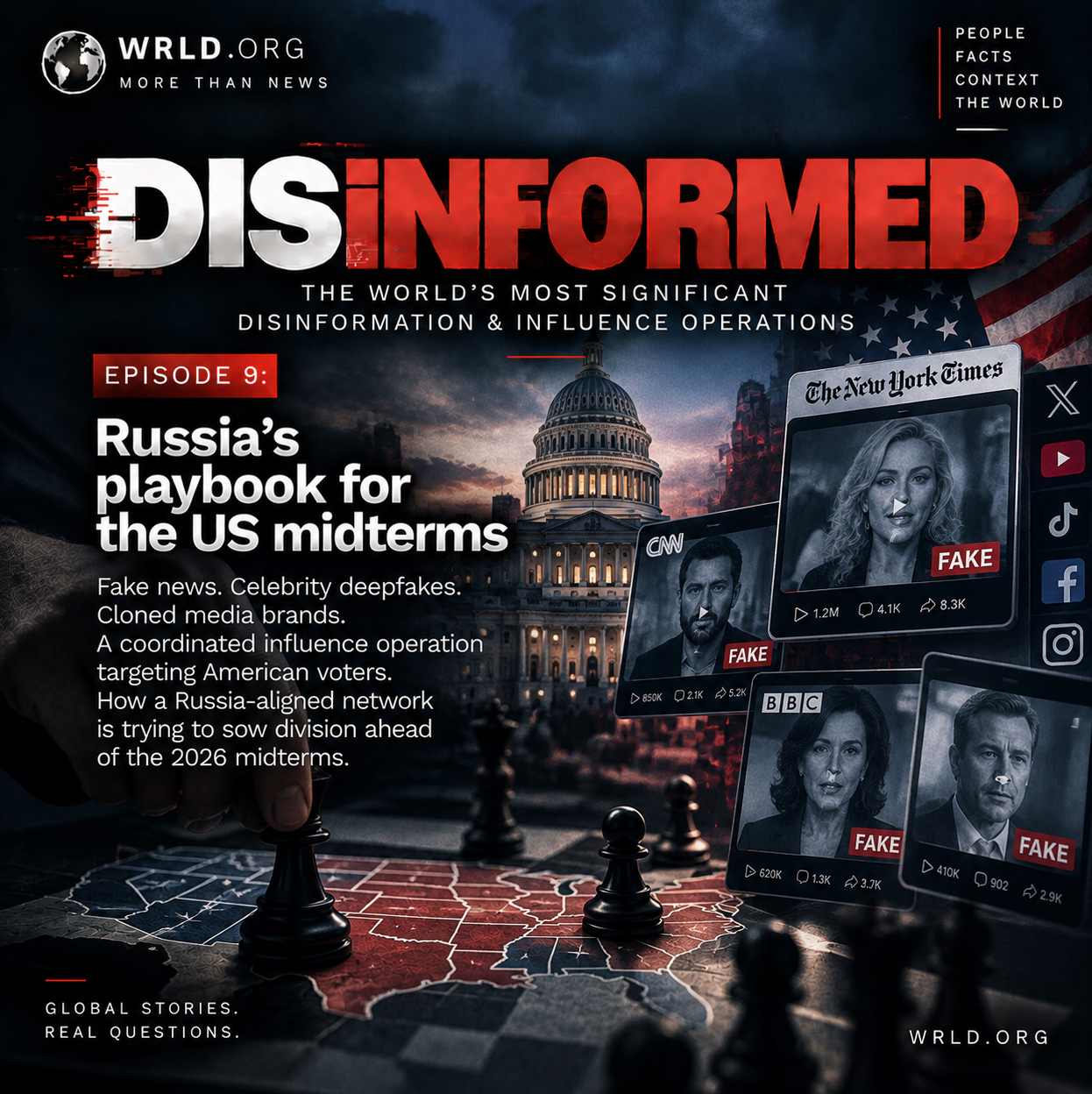
Russia’s influence operation arrives ahead of the US midterms With weeks remaining before America's November midterm elections, a familiar type of content has begun appearing online. Videos resembling reports from CNN, the BBC and The New York Times accuse candidates of corruption, antisemitism and misconduct. Hollywood actors appear to denounce Democrats. Other clips claim that warnings about Russian interference are themselves a Democratic disinformation campaign. The reports are fabricated. Graphika, which tracks online influence operations, says it has identified a coordinated campaign targeting candidates in competitive US Senate races. It assesses with high confidence that the material was produced by Operation Overload, also known as Matryoshka – a long-running Russia-aligned influence operation previously active against elections and political debates in Europe and the United States. The activity coincides with a broader warning from American intelligence officials. Classified assessments reported by The New York Times conclude that the Kremlin has authorised another digital influence campaign ahead of the 2026 midterms, aimed primarily at exploiting existing divisions and undermining confidence in American democracy. There is an important distinction. US officials have not reported evidence that Russia is attempting to manipulate voting machines or alter the counting of votes. The operation is about influencing the information environment surrounding the election. Fake scandals for competitive Senate races Graphika traced a concentrated wave of activity between 10 and 14 September. Likely inauthentic or repurposed accounts distributed videos accusing Democratic politicians of corruption, antisemitism and other misconduct. The targets included Senator Jon Ossoff in Georgia, Representative Chris Pappas in New Hampshire and Texas state representative James Talarico, as well as Senate candidates Sherrod Brown in Ohio, Roy Cooper in North Carolina, Mary Peltola in Alaska, Abdul El-Sayed in Michigan, Joshua Turek in Iowa and Troy Jackson in Maine. The selection was not random. These were politicians involved in Senate contests where the result could matter to control of the chamber. The campaign did not rely on a single political narrative. Instead, it attached different accusations to different candidates – corruption, social issues, antisemitism or personal misconduct – while maintaining a consistent production and distribution model. That model is characteristic of Matryoshka: create apparently independent pieces of evidence, disguise them as journalism and distribute them through networks of disposable accounts. Hollywood celebrities who never said what the videos claimed One of the campaign's more distinctive techniques involved genuine footage of American actors. Videos featuring celebrities including Sarah Jessica Parker and Julia Roberts were altered with captions and other material to suggest they were promoting the slogan #AllDemocratsAreCriminals. The technique continued in subsequent material. Fact-checkers identified fabricated New York Times-branded videos using footage of Alyssa Milano, Sean Astin, Rachael Harris, Leonardo DiCaprio, Eric Braeden, Annie Potts and Patrick Fabian. Some of the original footage came from Cameo, where actors record personalised video messages. Their authentic images were retained while fabricated audio, captions or surrounding material changed the meaning entirely. Lead Stories compared several of the clips with the originals and found that the supposed political statements did not appear in the genuine recordings. Eric Braeden's representative separately confirmed that the claim he had joined the anti-Democratic campaign was false. The advantage of the technique is straightforward. Generative AI does not need to create a convincing celebrity from nothing. The operator can begin with authentic footage of a recognisable person and manipulate only the elements necessary to manufacture a political statement. Stealing the authority of real newsrooms Celebrity impersonation was only one layer. The operation repeatedly borrowed the visual identity of established media organisations. Graphika identified material impersonating or falsely citing the BBC, CNN and Politico, alongside references to France's VIGINUM foreign-interference agency and journalist Brandy Zadrozny. Other material reproduced New York Times-style branding. Some fabricated reports made an unusual claim: that Democrats themselves were organising disinformation or “false-flag operations” and then blaming Russia. This creates a defensive layer around the influence operation. Instead of merely distributing false political allegations, the campaign also attempts to discredit future reporting about the manipulation itself. If successful, evidence exposing foreign interference can be reframed as part of the conspiracy. Graphika says it assesses with high confidence that Operation Overload produced these videos. The technique is well established. Earlier investigations by CheckFirst and Reset Tech documented hundreds of falsified pieces of content produced by Operation Overload, often impersonating journalists, institutions and major media brands. AI-generated or manipulated material has increasingly become part of that production system. What US intelligence says Russia is trying to achieve The broader strategic picture comes from American intelligence assessments reported on 18 September. According to US officials familiar with classified findings, the Kremlin has authorised a covert digital influence campaign aimed at Americans during the 2026 election season. Its apparent objective is to seed or amplify domestic divisions and weaken confidence in the political process. Some officials described the principal aim as creating disorder rather than helping a single political party. The publicly identified Matryoshka material examined so far, however, has targeted Democratic candidates. Those two findings should not be treated as contradictory. An operation can exploit partisan divisions while serving the broader objective of making the electoral system appear corrupt, chaotic or illegitimate. US officials also reportedly assess the current Russian campaign as less extensive or coordinated than some previous election operations. Moscow is considered less focused on congressional elections than presidential contests and remains heavily occupied by its war against Ukraine. Russia has denied previous US accusations of election interference. An operation with limited reach – so far There is another reason for caution: producing large quantities of disinformation is not the same as successfully influencing voters. Matryoshka has repeatedly demonstrated an ability to manufacture content at industrial speed, but much of its material receives little genuine engagement. Researchers monitoring the network have previously warned against confusing automated distribution and platform view counts with authentic audience penetration. There are exceptions. A fabricated New York Times-style video featuring Jamie Lee Curtis had accumulated nearly 200,000 views on X by the end of 17 September, according to reporting by The New York Times. Other pieces attracted considerably less attention. There is currently no public evidence demonstrating that the campaign has changed voting intentions or will affect election results. What the September activity demonstrates is something narrower but important: a Russia-aligned influence infrastructure previously used against European elections has now turned significant attention towards the American midterms. The basic method has changed little – impersonate trusted media, manufacture scandals and use networks of inauthentic accounts to distribute them. What has changed is the production technology. Authentic celebrity footage, synthetic voices, manipulated video and rapidly generated fake journalism allow the same operation to produce more tailored material for more candidates at lower cost. The objective does not require Americans to believe every fabrication. Creating uncertainty over which videos, news reports and public statements are authentic can itself degrade trust in the information environment surrounding an election. Sources - Graphika — Russia-Aligned Influence Operation Targets US Midterm Candidates, German State Elections https://www.graphika.com/insights/russia-aligned-influence-operation-targets-us-midterm-candidates-german-state-elections - The New York Times — Russia Aims to Inject Chaos Into Elections, U.S. Intelligence Finds https://www.nytimes.com/2026/09/18/us/politics/russia-election-disinformation-us-intelligence.html - Kathimerini / The New York Times — Russia Aims to Inject Chaos Into Elections https://www.ekathimerini.com/nytimes/1315792/russia-aims-to-inject-chaos-into-elections-us-intelligence-finds/ - CheckFirst — Operation Overload: An AI-fuelled escalation of the Kremlin-linked propaganda effort https://checkfirst.network/operation-overload-an-ai-fuelled-escalation-of-the-kremlin-linked-propaganda-effort/ - CheckFirst — Operation Overload targeting the US election https://checkfirst.network/operation-overload-a-growing-disinformation-threat-now-targeting-the-u-s-presidential-election/ - Lead Stories — Fake NYT videos: Alyssa Milano, Rachael Harris and Sean Astin https://leadstories.com/hoax-alert/2026/09/fact-check-fake-new-york-times-videos-of-alyssa-milano-rachael-harris-sean-astin-falsely-claim-they-support-all-democrats-are-criminals.html - Lead Stories — Fake NYT videos: Leonardo DiCaprio, Eric Braeden and other celebrities https://leadstories.com/hoax-alert/2026/09/fact-check-fake-new-york-times-videos-of-leonardo-dicaprio-eric-braeden-other-celebs-falsely-claim-they-support-all-democrats-are-criminals.html - Brennan Center for Justice — AI Is Changing Foreign Election Influence https://www.brennancenter.org/our-work/analysis-opinion/ai-changing-foreign-election-influence - ODNI — previous US intelligence assessment of foreign election information operations https://www.dni.gov/files/ODNI/documents/assessments/NICM-Declassified-Foreign-Threats-to-US-Elections-After-Voting-Ends-in-2024.pdf - FBI / ODNI / CISA — previous joint assessment of Russian election influence operations https://www.fbi.gov/news/press-releases/joint-odni-fbi-and-cisa-statement-110424 #DISINFORMED #Episode9 #Russia #UnitedStates #USMidterms #Midterms2026 #USElections #ElectionInterference #ForeignInterference #RussianInfluence #RussianDisinformation #OperationOverload #Matryoshka #Disinformation #InformationWarfare #InfluenceOperations #FIMI #ArtificialIntelligence #AI #AIPropaganda #Deepfakes #SyntheticMedia #MediaImpersonation #FakeMedia #FakeNews #PoliticalDisinformation #CelebrityDeepfakes #SocialMediaManipulation #DigitalInfluence #ElectionSecurity #CognitiveWarfare #Graphika #OSINT #Democracy #WRLD

www.graphika.com
Russia-Aligned Influence Operation Targets US Midterm Candidates, German State Elections | Graphika
1410