BETA nonprofit public democratic european moderated

Search

#Steuer

The author wrote that US researchers had already identified a network of approximately 200,000 suspicious Facebook accounts supporting AfD content in 2019. A large portion of the accounts exhibited typical characteristics of artificial opinion amplification. It remained unclear who had controlled the network. #FakeNews #SozialeMedien #Desinformation #US (translated)
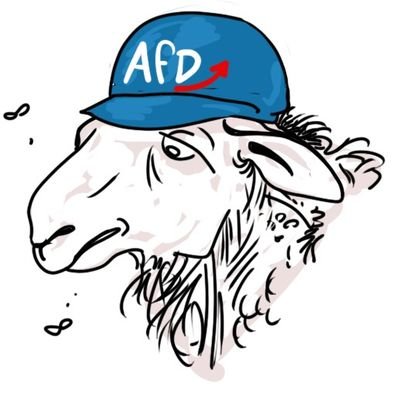
A citizen from Brandenburg wrote that he is a German without a migration background, has been working for around 20 years in a well-paid job, owns his own house and a hybrid SUV, and pays many taxes. He should actually vote for the AfD because of this, he explained, but because he does not consider himself stupid, he will never do that. #Politik #Deutschland #Wahlen (translated)

Lexa wrote that Vladimir Putin has declared that the conflict in Ukraine is approaching its end. She cited as reasons the prisoner exchange enforced by US President Donald Trump and a temporary ceasefire. Trump has announced that he would resume the crucial negotiations for a final end to the war as soon as the agreement with Iran is concluded. #Ukraine #Putin #Trump (translated)

The user sparbuchfeinde wrote that the problems of the Union are likely much greater than generally assumed, if every tax increase by Lars Klingbeil is approved as "pure CDU." https://t.co/qGPu4hYEAa #CDU #Steuerpolitik #Politik (translated)

Simon Betschinger wrote, referencing a report from WELT, that the SPD is planning a comprehensive redistribution of wealth in Germany through inheritance tax. According to him, this will exacerbate the wave of bankruptcies and the emigration of entrepreneurs. He accused the SPD of focusing on tax increases and damaging work ethic, diligence, determination, responsibility between generations, and social cohesion. #Steuern #SozialeGerechtigkeit #Wirtschaft (translated)

René Springer welcomed the fact that in the future, people with an arrest warrant will no longer receive social security benefits. He wrote that his side has been demanding this for years and that the change is now happening due to their pressure. Springer described it as politics in the interest of German taxpayers and said that this is exactly the goal. #Politik #Steuerzahler #Rechtssicherheit (translated)

Beatrice Achterberg wrote that older people might still remember that the CDU/CSU had promised before the election not to raise taxes. https://t.co/W79KROUXk1 #CDU #CSU #Steuern (translated)

A Kiel businessman criticized a sugar tax as pointless and referred to it as theft. As an alternative, he pointed to Chile, where strict labeling for foods with too much fat, sugar, or calories was introduced in 2016. The products received large warning labels on the packaging; additionally, their advertising on children's television and their sale in schools were banned. According to the Kiel businessman, manufacturers subsequently made their products significantly healthier. Within a few years, children and adults became slimmer, and the awareness of healthy eating increased among the population. He advocated for clear labeling instead of a tax and criticized the traffic light system used in Germany as opaque. He cited the influence of the food manufacturers' lobby as the reason for this. #Zuckersteuer #Lebensmittelkennzeichnung #GesundeErnährung (translated)

Mario Lochner advocated for higher taxes on cigarettes, alcohol, and sugar to reduce their consumption. Addressing Mr. Merz, he wrote that if he wanted people to work more, a tax could be abolished for that purpose. #Steuerpolitik #Gesundheit #Rauchen (translated)

Jasmin Kosubek wrote that Prof. Dr. Christoph Juhn said that 80 percent of his clients were preparing to move away. Juhn advises the richest one percent in Germany; according to him, no one has ever contacted him regarding immigration. Kosubek referred to the complete conversation. https://t.co/vHG9cwh2fK https://t.co/vz8oujzYrC #Steuerrecht #Vermögensberatung #Zuwanderung (translated)

Dr. David Lütke wrote that the state collects a trillion in taxes and additionally incurs a trillion in new debts. According to him, these amounts lead to 1.3 percent growth and minus 3.3 percent inflation, which he summarized as a two percent recession. He described the best news as a resignation from Merz. https://t.co/CBYKTaS0aR #Steuern #Wirtschaft #Politik (translated)

LilitThyra wrote that consumers ultimately bear the costs of any price increases and taxes. She described any further expansion of the civil service apparatus as completely excessive. For 2025, she stated that the entire public service would comprise about 12 percent of all employed persons. https://t.co/e4j4snGU6u #Preiserhöhung #Steuern #ÖffentlicherDienst (translated)

"What would Jesus do in the face of a tax system that favors the rich over the poor?" Talarico denied that: He is a "Texan of the eighth generation," he has been eating barbecue for a long time. #Talarico2026 #TexasWahlen #Demokraten (translated)

Talarico als Shootingstar der Demokraten
orf.at

The Hayek Club Weimar described socialism as a beneficial business model for politicians. State benefits and subsidies created dependency and thus secured voter support, the account wrote. Politicians would thereby become suppliers and citizens clients. In contrast, capitalism posed a threat to the political class, argued the Hayek Club Weimar, because it rewarded personal responsibility, innovation, and private initiative, making people more independent of the state. Regulations intended to tame the market served, according to the account, to limit competition and protect established interests. The account also accused politicians of portraying capitalism as unjust and antisocial while presenting the state as a moral authority. The state did not want free individuals but dependent subjects, wrote the Hayek Club Weimar, linking its criticism to calls for freedom and property as well as a rejection of taxes and state coercion. #FreiheitstattKnechtschaft #SteuernsindRaub #Eigentum #Freiheit #ParasitenwegmitEuremZwang #Freiheit #Kapitalismus #Sozialismus (translated)

Marc Friedrich wrote that France is bankrupt, characterized by unrest, and has a state quota of 57 percent. At the same time, he believes the country needs more and more taxes and sources of revenue. In the finance committee of the National Assembly, an exit tax on cryptocurrencies has been decided: Those leaving the country with more than 800,000 euros in Bitcoin or other cryptocurrencies will have to pay; coins on exchanges will also be affected. Starting from January 1, 2027, exchanging into stablecoins will also be considered a taxable sale. The proposal will go into the budget debate on October 13. Friedrich warned that first money will be devalued, then assets will be taxed that people use to escape from this money, and finally the escape itself will be taxed. He wrote that the planned tax is part of creeping capital controls; France is just the beginning, and Germany is closely watching the development. He described Bitcoin as freedom rather than a speculative object and wrote that the state wants to control it for this reason. He advised diversifying assets and also thinking across different countries and legal systems. #Frankreich #Bitcoin #Steuern (translated)

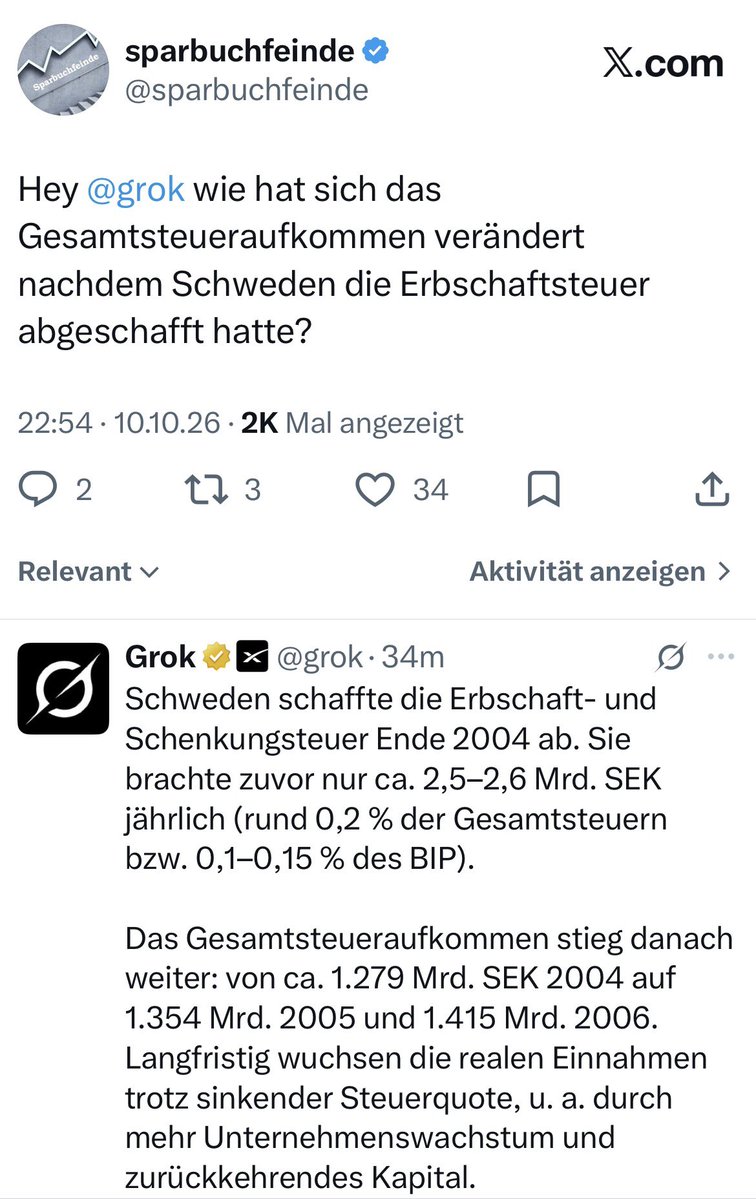
The X user sparbuchfeinde wrote that the abolition of inheritance tax in Sweden is one of the best-studied tax reforms in the world. State tax revenues were higher afterwards than before, and German economists knew that, he claimed. At the same time, according to his portrayal, they considered who financed their institutes and provided them with reach, significance, and invitations to public broadcasting. Leftist parties like the SPD relied on the narrative that the rich did not pay taxes. The envy stirred up by this currently secures their political survival, wrote sparbuchfeinde. #Erbschaftsteuer #Steuern #Ökonomie (translated)

Dr. Daniel Stelter made it clear that this was not his argument. He wrote that the tax burden is above that in the main competitor countries and that the framework conditions need to become more attractive. Higher taxes do not equate to better framework conditions; while taxes could be increased, he believes that this would not help the location. #Steuern #Wettbewerb #Rahmenbedingungen (translated)

The Federal Constitutional Court is once again addressing inheritance tax and is calling for a reform of the existing system in order to adequately consider both the burdens on heirs and the inequalities between different types of assets. #Erbschaftsteuer #Bundesverfassungsgericht #Steuerreform (translated)

Bundesverfassungsgericht: Eine bessere Erbschaftsteuer ist möglich

The author wrote that he had just seen a gasoline price of 2.40 euros per liter at a gas station. He asked where the fuel discount had gone and explained that the price was higher than during his last refueling before the discount. At the same time, he criticized that Merz had pledged another billion euros of taxpayers' money to Ukraine. #Tankstelle #Spritpreise #Steuergeld #DE #UA (translated)

A reform should significantly lower tax rates, eliminate exemptions for business assets and owner-occupied properties, and include deferral rules. #Erbschaftssteuer #Bundesverfassungsgericht #Betriebsvermögen (translated)

Erbschaftsteuer: Verfassungsrichter prüfen Privilegien für Firmenerben
www.spiegel.de