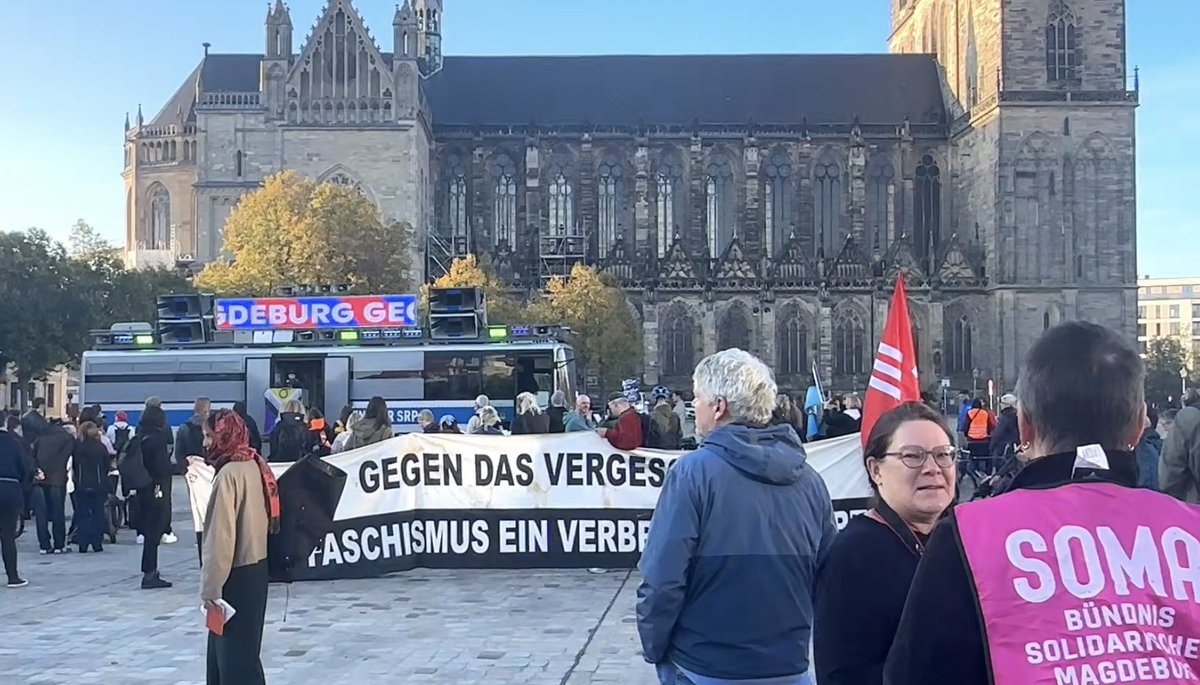
Kolja Barghoorn wrote that demonstrators recognized him that day in the cathedral square in Magdeburg and repeatedly called him a "Nazi." Hearing the shouts up close had a different effect than reading them on the internet. Barghoorn interpreted such labels as a sign of a lack of historical understanding and a moral abyss. He referred to a visit to Sachsenhausen during his school years and to his visit this year to the House of the Wannsee Conference. There, he saw the organizational chart of the Nazis and traced how systematically they had planned the persecution and murder of millions of people. Regarding Nazi comparisons made by politicians such as Eva von Angern, Susan Sziborra-Seidlitz, and Ricarda Lang, Barghoorn questioned their historical awareness. Those who emphasize the historical uniqueness of the Holocaust must ask themselves whether the constant use of the term "Nazi" as a political insult is appropriate. Such shouts do not strengthen the awareness of the Nazi era but rather turn its crimes into a political everyday weapon and contribute to their trivialization, he wrote. #Nazis #Politik #Geschichte (translated)