BETA nonprofit public democratic european moderated

Search

#Exposed

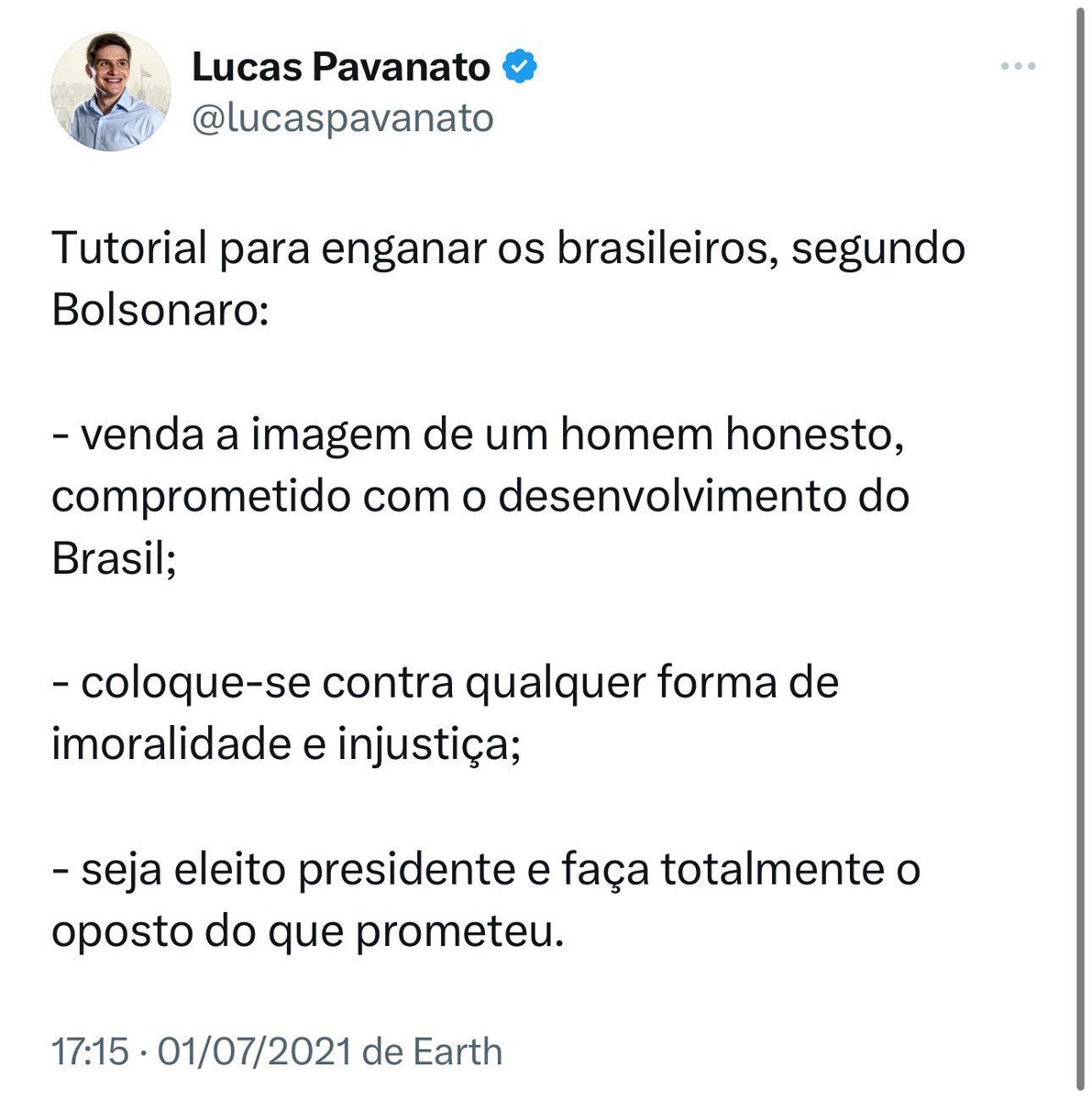
Legal Jake Gyllenhaal published a thread with some tweets from Lucas Pavanato in which he criticized the Bolsonaro government during the pandemic. The author said that the compilation was for those who had gone to bed early the night before and missed what he called “exposed.” https://t.co/SPCllCh5LY #Urgente #Bolsonaro #Pandemia (translated)
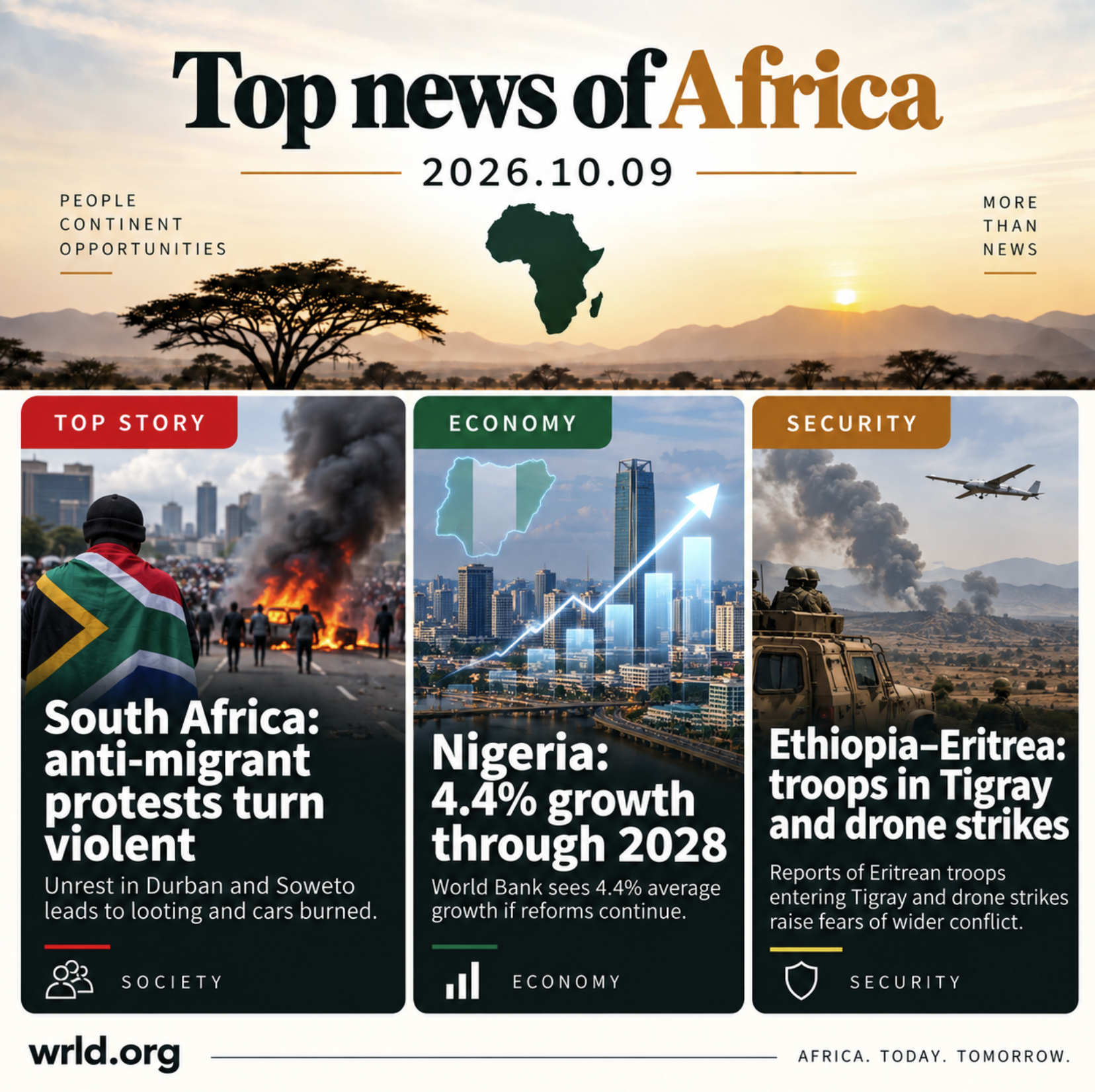
AFRICA DAILY REPORT — 9 OCTOBER 2026 Main developments of past 24 hours 1. ETHIOPIA–ERITREA — Reports of Eritrean troops entering Tigray and drone strikes A commander aligned with Ethiopia's government reported Eritrean troops in Adigrat and Idaga Hamus. ACLED reported drone strikes targeting Eritrean forces. The reports raise concerns about a direct Ethiopia–Eritrea confrontation; troop movements were not independently verified. SOURCE: https://apnews.com/article/ethiopia-eritrea-tigray-mekelle-shire-tplf-drones-6d89a0f53f527fb45d21637c5d9a0179 2. SOUTH AFRICA — Anti-migrant protests turn violent in Durban and Soweto IMPORTANCE: 9/10 — VERY HIGH Anti-migrant protests led to looting and vehicles being burned. The government attributed unrest partly to false claims about a Constitutional Court asylum ruling. Police deployed additional personnel. SOURCE: https://www.reuters.com/world/africa/south-african-anti-migrant-protests-turn-violent-with-cars-torched-gunshots-2026-10-08/ 3. GUINEA-BISSAU — December elections postponed The prime minister announced that presidential and legislative elections planned for December 6 could not proceed, citing missed candidate-selection and submission deadlines. No new election date was announced. SOURCE: https://www.reuters.com/world/africa/guinea-bissau-delay-elections-following-last-years-coup-2026-10-08/ 4. KENYA — Suspected second Ebola case tests negative IMPORTANCE: 9/10 — VERY HIGH Preliminary tests on a suspected Ebola patient in Wajir County were negative. Kenya continues heightened surveillance and contact tracing after its first confirmed imported case. SOURCE: https://www.reuters.com/business/healthcare-pharmaceuticals/kenya-says-tests-suspected-ebola-case-come-back-negative-2026-10-08/ 5. NIGERIA — Petrol price cap proposed IMPORTANCE: 8/10 — HIGH Nigeria's finance minister proposed capping petrol at about 1,350 naira per litre and considering measures to buffer fuel-price volatility, including possible windfall taxation. The measures are proposals, not implemented policy. SOURCE: https://www.reuters.com/business/energy/nigeria-proposes-petrol-price-cap-curb-fuel-cost-volatility-2026-10-08/ 6. NIGERIA — World Bank sees 4.4% average growth through 2028 IMPORTANCE: 8/10 — HIGH The World Bank forecasts Nigeria's economic growth averaging 4.4% through 2028 if reforms continue, with inflation potentially declining toward 12% by 2028. Improvements in public services and job creation remain essential. SOURCE: https://www.reuters.com/world/africa/world-bank-sees-nigeria-growth-averaging-44-through-2028-2026-10-08/ 7. AFRICA / UNITED STATES — Human Rights Watch examines third-country deportations Human Rights Watch documented allegations of arbitrary detention, mistreatment and other rights risks involving US deportations of people to African countries other than their countries of origin. These are findings and allegations of the rights organization. SOURCE: https://www.hrw.org/report/2026/10/08/to-scare-people/us-expulsions-of-third-country-nationals-to-countries-in-africa 8. SOMALIA — Conflict and aid reductions deepen famine risk IMPORTANCE: 10/10 — CRITICAL Drought, insecurity and reductions in international assistance are worsening food insecurity. Al-Shabaab restrictions impede access to vulnerable communities. Baidoa hosts large numbers of displaced people. SOURCE: https://www.lemonde.fr/en/international/article/2026/10/08/war-cuts-off-entire-somalians-threatened-by-famine-from-humanitarian-aid_6758371_4.html 9. SOUTH SUDAN — Hospitals overwhelmed by renewed fighting IMPORTANCE: 9/10 — VERY HIGH Medical facilities are struggling with gunshot, blast and trauma casualties. An ICRC-supported hospital in Juba has reported severe pressure on surgical capacity and medical supplies. SOURCE: https://www.theguardian.com/world/2026/oct/08/inside-south-sudan-overwhelmed-trauma-wards 10. PAN-AFRICAN FINANCE — Dangote refinery IPO highlights investment barriers IMPORTANCE: 8/10 — HIGH Nigeria's Dangote refinery $1.6 billion offering exposed regulatory obstacles to cross-border share purchases, despite ambitions for broad African participation. Investors outside Nigeria face fragmented securities rules and limited eligible intermediaries. SOURCE: https://www.reuters.com/business/energy/africas-biggest-ipo-exposes-continents-cross-border-investing-barriers-2026-10-09/ #Africa #AfricaNews #AfricaDailyReport #TopNewsOfAfrica #AfricaToday #SouthAfrica #Durban #Soweto #AntiMigrantProtests #Xenophobia #MigrationCrisis #CivilUnrest #HumanRights #Disinformation #Nigeria #NigerianEconomy #WorldBank #EconomicGrowth #GDPGrowth #EconomicReforms #Inflation #AfricanEconomy #Ethiopia #Eritrea #Tigray #Mekelle #HornOfAfrica #DroneStrikes #RegionalSecurity #ArmedConflict #GuineaBissau #Elections #PoliticalInstability #Kenya #Ebola #PublicHealth #NigeriaFuelPrices #EnergySecurity #Somalia #FoodInsecurity #FamineRisk #HumanitarianCrisis #SouthSudan #HealthcareCrisis #USDeportations #DangoteRefinery #AfricanFinance #CrossBorderInvestment #AfricanDevelopment #AfricanPolitics #Geopolitics #AfricaSecurity #AfricanUnion #WRLDorg

The author said Russia’s sabotage put all of Europe at risk and argued that Western democracies were more exposed than the Baltic states. In comments on RidgeandFrost, they also said Russia’s frozen assets should be used to support Ukraine and questioned why taxpayers should bear the burden. #Ukraine #Russia #Europe #RU #EU #UA #LT #LV #EE

Anitta Golden stated that the publications from portals about statements and exhibitions of the extreme right were reaching people outside their bubble. She mentioned that she found, among the message requests, several undecided individuals about who to vote for in the second round, who expressed satisfaction for having received the content. Golden assessed that the portals were doing a good job of dissemination and encouraged them to continue. #Engajamento #ExtremaDireita #Eleições2023 (translated)

The author wrote that Anna Politkovskaya had been murdered 20 years earlier for challenging those in power in Putin’s Russia. They said she had exposed the brutality of war, given victims a voice and resisted attempts to silence her, adding that although this had cost her life, many people still remembered her. https://t.co/pe2xPxuAeB #AnnaPolitkovskaya #FreedomOfSpeech #HumanRights #RU

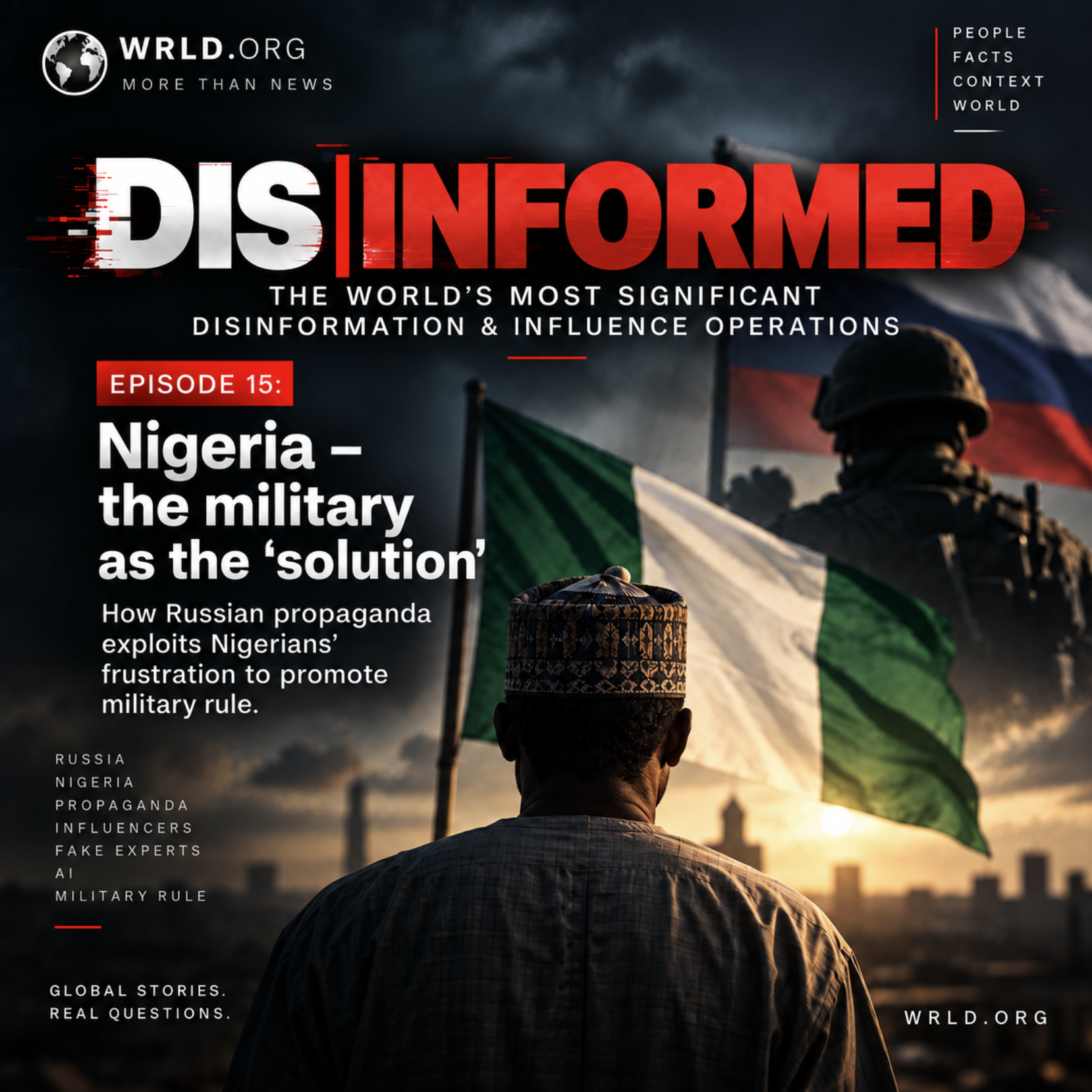
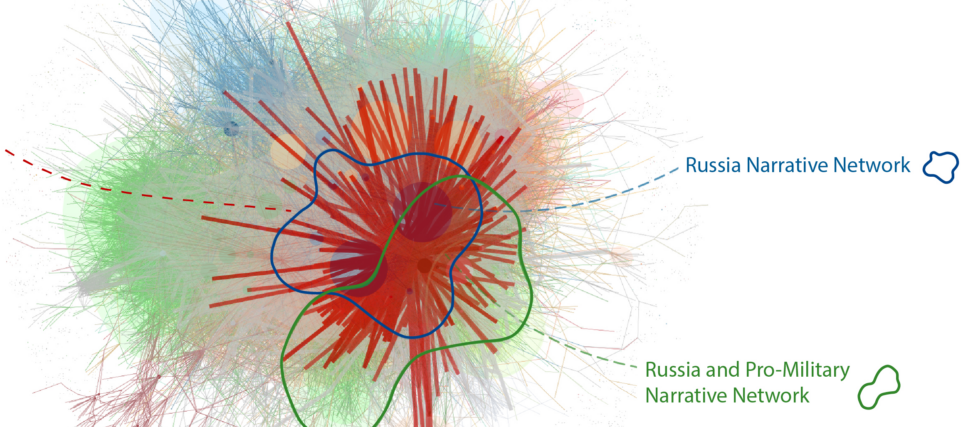
Nigeria – how pro-Russian influence networks sell military rule as the answer When Nigerians took to the streets in August 2024 to protest soaring living costs and frustration with government, some demonstrations acquired an unexpected symbol: the Russian flag. In Kano, Kaduna and other northern cities, protesters were filmed carrying Russian colours and calling for Moscow’s intervention. Some demanded a military takeover. What initially looked like an unusual expression of anger has since become part of a much larger picture. A September 2026 assessment by the Africa Center for Strategic Studies describes Nigeria as a major target of overlapping foreign information operations, with Russia the most active external actor in its information space. The report does not identify a single centrally controlled campaign. Instead, it maps an ecosystem in which genuine dissatisfaction over insecurity, corruption and living standards is repeatedly redirected towards a broader proposition: democratic government has failed, while the military-led regimes of the Sahel offer a more effective alternative. Turning a real protest into a pro-Russian message The clearest example emerged during the 2024 #EndBadGovernance protests. Nigerian investigative reporting found that a Kano-based TikTok influencer with more than 100,000 followers had been paid through a Telegram channel associated with African Initiative, a Moscow-based media operation linked by researchers to Russian influence activity in Africa. The influencer said the channel supplied photographs, videos and talking points for redistribution on TikTok and Instagram. Among the messages provided were phrases such as “Putin please come and save Nigeria” and “The army is the answer for Nigeria”. Influencers were encouraged to use Hausa-language hashtags including #Zangazanga – “protest” – alongside references to Putin and Russia. Investigators identified 38 accounts circulating similar pro-Russian and pro-military narratives during the demonstrations. Russian flags subsequently appeared among protesters in several northern cities. This does not mean the protests themselves were created by Russia. They were driven by genuine economic and political grievances, and Nigerian protesters gave different reasons for carrying Russian flags. The important feature of the influence activity was precisely that it did not need to manufacture the original anger. It could attach a geopolitical message to an existing domestic crisis. From frustration to the idea of military government The narrative fits a wider pattern seen across West Africa. Russia has developed close relations with the military governments of Mali, Burkina Faso and Niger, while pro-Russian media ecosystems routinely portray those states as examples of sovereignty, stability and resistance to Western influence. Nigeria, by contrast, has remained under constitutional civilian government since 1999. Africa Center researchers say information networks targeting Nigerians increasingly contrast these two models. Recurring messages depict elections as wasteful or predetermined, civilian institutions as incapable of protecting citizens and military governments as more decisive on security and development. Some content portrays the Sahelian juntas as delivering better roads, lower prices and stronger security even where available evidence points to continuing or worsening instability. Language is central to the strategy. Hausa is spoken across northern Nigeria and neighbouring Niger, allowing political narratives to travel across borders that are far less important online than they are on maps. HumAngle documented efforts involving Nigerien state-linked actors to cultivate Hausa-speaking journalists and distribute material favourable to Niger’s junta and hostile to France and Western influence. The Russian and Sahelian-junta information ecosystems are not identical, but their narratives frequently reinforce one another. Fake journalists inside real Nigerian media The campaign environment extends beyond social media. A 2026 investigation by Graphika and Code for Africa identified 44 ghost reporters and fake experts whose identities were used to place Russia-aligned narratives in African media. Thirty-eight were assessed with high confidence to be fabricated. Their articles or quotations appeared across 138 websites and were amplified by at least 113 Facebook accounts and Pages. Nigeria was one of the most heavily targeted countries. According to the Africa Center’s analysis of the research, Daily Post Nigeria carried 39 articles involving 14 identified ghost authors. Once published by a genuine Nigerian outlet, such material could then be cited by other websites, social-media accounts or even Russian official channels as though it had originated independently in Africa. This is information laundering rather than simple propaganda: the most valuable asset being borrowed is the credibility of the local newsroom. Generative AI added another layer. OpenAI and Meta separately disrupted a Russia-origin network that produced Africa-focused political content and operated Facebook Pages posing as local media organisations. One fabricated commentator, “Dr Manuel Godsin”, was presented as a European-trained geopolitical expert although investigators found no evidence supporting his academic biography. ChatGPT had been used to generate articles under the persona’s name, while Meta removed 37 Facebook accounts and 29 Pages connected to the broader network. Different networks, similar strategic direction It would be misleading to merge all these activities into a single Russian command structure. The African Initiative-linked influencer campaign, the ghost-reporter network and the AI-enabled operation disrupted by OpenAI and Meta were uncovered separately and used different infrastructure. Public evidence does not demonstrate that every actor reported to the same organisation. What connects them is a recurring set of themes and methods: portraying Western partnerships as exploitative, presenting Russia as an alternative security partner, amplifying failures of civilian government, and giving military-led rule greater legitimacy. Investigative reporting on leaked Russian documents has meanwhile described a much wider influence apparatus operating across Africa, involving political consultants, paid journalists, influencers and locally tailored campaigns intended to reduce Western influence and expand Moscow’s position. The underlying technique is less about inventing dissatisfaction than redirecting it. Nigeria faces real security threats, economic pressure and public frustration. Influence operators do not need to persuade Nigerians that those problems exist. They need only influence the explanation for why they exist – and which political model appears to offer the answer. That is what makes the Nigerian case significant. The most effective propaganda does not necessarily introduce a completely false reality. It takes a real crisis and changes where the audience is encouraged to look for the solution. Sources Africa Center for Strategic Studies — The Raging Information Battle in Nigeria https://africacenter.org/spotlight/the-raging-information-battle-in-nigeria/ Graphika — Umbrae Ex Machina https://www.graphika.com/reports/umbrae-ex-machina OpenAI — Operation “No Bell” https://openai.com/index/disrupting-malicious-uses-of-ai-no-bell/ TheCable — Ghost reporters in African media https://www.thecable.ng/ghost-reporters-how-fabricated-african-voices-carried-pro-russia-narratives/ HumAngle — Nigeria Is Facing an Information War in Its Own Language https://www.humanglemedia.com/nigeria-is-facing-an-information-war-in-its-own-language DAIDAC / CJID — Russian influence during #EndBadGovernance https://daidac.thecjid.org/how-telegram-tiktok-aided-russian-disinformation-that-led-to-incarceration-of-nigerian-minors/ FactCheckHub — How Nigeria’s hunger protest took a radical turn https://factcheckhub.com/from-economic-protests-to-coup-agitation-how-nigerias-hunger-march-took-a-radical-turn/ News24 — Fake Kremlin-linked analyst planted stories in African media https://www.news24.com/southafrica/news/ai-expert-exposed-fake-kremlin-linked-analyst-planted-stories-in-african-media-20260318-0560 Vanguard — AI ‘expert’ exposed https://www.vanguardngr.com/2026/03/ai-expert-exposed-fake-kremlin-linked-analyst-planted-stories-in-african-media/ Africa Confidential — How Moscow wages social media war https://www.africa-confidential.com/article/id/15961/how-moscow-wages-social-media-war Keywords #DISINFORMED #Episode15 #Nigeria #Russia #RussianInfluence #RussianDisinformation #Africa #WestAfrica #Disinformation #InformationWarfare #InfluenceOperations #ForeignInterference #FIMI #Propaganda #MilitaryRule #MilitaryGovernment #Democracy #PoliticalManipulation #NarrativeManipulation #AfricanInitiative #EndBadGovernance #Hausa #LocalInfluencers #GhostReporters #FakeExperts #ArtificialIntelligence #AI #AIPersonas #SyntheticMedia #AIPropaganda #Astroturfing #SocialMediaManipulation #Telegram #TikTok #DigitalInfluence #SourceLaundering #NarrativeLaundering #MediaManipulation #Sahel #Geopolitics #OSINT #WRLD

The Raging Information Battle in Nigeria

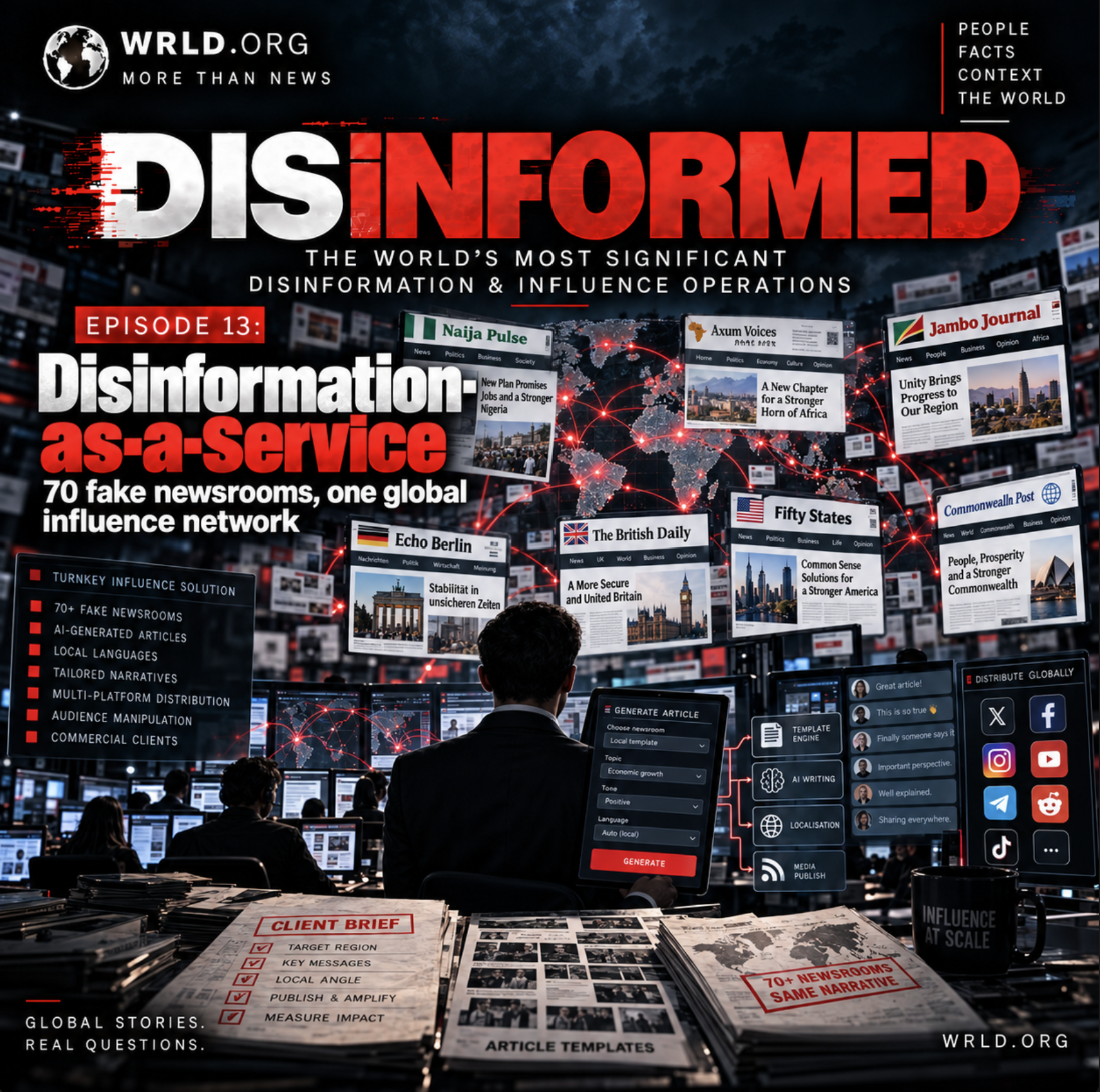
Disinformation for hire – the network of 70 fake newsrooms sold as a service The websites looked local. Naija Pulse appeared to cover Nigeria, Echo Berlin Germany, The British Daily Britain, Fifty States the United States and Commonwealth Post Australia. Each had its own branding, articles, supposed journalists and matching social-media presence. Taken individually, they resembled small independent news outlets. According to Anthropic, however, they were parts of a single commercial influence network spanning six continents. Anthropic’s September 2026 threat report identifies the operation as GTG-54002, a commercial “influence-as-a-service” network that used Claude to generate and rewrite political content at industrial scale. Investigators linked roughly 70 fabricated news websites to around 70 matching X accounts and more than 250 additional inauthentic commenting accounts designed to create the appearance of genuine public engagement. The network produced at least 8,913 articles in about 20 languages before Anthropic disrupted the activity. The significance of the case is not simply the number of fake sites. It is the business model. The network did not consistently promote one government, party or ideology. Anthropic found that its political position changed according to the apparent interests of different customers. The company therefore described it as a commercial influence operation: political manipulation offered in much the same way as other outsourced digital services. A fake media ecosystem built at scale Anthropic says the infrastructure was created rapidly. Domains were registered from France during a roughly ten-week period in mid-2025 and deployed through shared technical infrastructure, allowing investigators to connect publications that outwardly appeared unrelated. Most of the supporting social-media accounts were also created within a narrow timeframe in June and July 2025. The sites were designed to look like functioning local newsrooms rather than anonymous propaganda pages. Articles carried fabricated bylines belonging to journalists who, according to Anthropic, did not exist. Each outlet had a corresponding account on X, while a second layer of fake profiles commented on and amplified the articles. Many of those accounts used AI-generated profile photographs. The result was a three-tier structure: the newsroom published the story, the branded social account distributed it, and apparently ordinary users supplied the appearance of public reaction. Some of those sites remained publicly visible after the operation was exposed. The British Daily, for example, described itself as providing “conservative insights” on British sovereignty and migration, while Commonwealth Post presented itself as an Australian liberal publication focused on democracy, migration and regional security. Those contrasting editorial identities illustrate the central feature identified by Anthropic: the network was capable of taking different political positions in different markets. Claude as a publishing engine Claude was not simply asked to draft occasional articles. The operators built a structured production pipeline around it. Prompts required fixed JSON outputs, formatted HTML, precise character limits and internal links, allowing articles to move directly into an automated publishing workflow. The system could generate entirely new material or take reporting produced by legitimate journalists and rewrite it to fit a desired political perspective. Anthropic identified three recurring techniques. The same source article could be rewritten in opposite ideological directions for different audiences; a political interpretation could be added to a story that originally contained none; and material could be moved from one country to another after its original context had been removed. The articles were also structured to improve the apparent authority of the sites in search engines, helping the network imitate ordinary digital publishing practices rather than simply broadcasting propaganda. This is where generative AI changes the economics of an influence operation. A conventional network of dozens of supposedly local publications would normally require writers, translators, editors and social-media staff. Here, much of that production could be standardised and automated while human operators concentrated on political direction, customer requirements and distribution. The DRC–Rwanda conflict as a test case The clearest concentration of activity involved the Democratic Republic of Congo. Anthropic identified 318 articles concerning the DRC across the fake-news network. The material generally supported positions aligned with the Congolese government, particularly on regional mineral agreements and tensions with Rwanda. Early in the network’s growth, many of the fake social-media personas following and amplifying its accounts also presented themselves as Congolese. Investigators observed one especially revealing episode on 11 September 2025, when multiple sites published almost identical articles about the DRC–Rwanda conflict within approximately three minutes of one another. The wording and political tone were adjusted for different regional audiences, while associated X accounts distributed the links in a coordinated pattern. Anthropic said the activity contained signals suggesting that one or more customers had interests connected to the DRC–Rwanda conflict. It did not, however, identify those customers and explicitly stated that it found no evidence that any government had directed the operation. That distinction is essential. The content may have benefited a political actor without demonstrating that the actor commissioned or controlled it. Influence without ideology Commercialisation is what distinguishes GTG-54002 from many state-linked information operations. A government propaganda network usually has an identifiable strategic direction. A commercial influence provider does not need one. Its infrastructure can support one position in one country and the opposite position somewhere else, provided different customers are willing to pay. That makes attribution more difficult. Analysts cannot necessarily infer the operator from the ideology of the content because ideology may simply be part of the service package. The enduring asset is the infrastructure: domains, publishing systems, fake journalists, social-media accounts and automated amplification. Anthropic says the operation was disrupted before it achieved significant genuine reach. It classified GTG-54002 as Category Two on the Brookings Breakout Scale: material circulated across the network’s own sites and associated social accounts but showed no evidence of substantial penetration into authentic communities. Most of the 8,913 articles generated little observable engagement from real users. That limited impact is important. The case should not be presented as a successful global manipulation campaign. It is better understood as evidence that the infrastructure required to run such campaigns has become cheaper, faster and increasingly commoditised. The deeper shift is that a fake media ecosystem no longer has to be built around a single political cause. It can be built once, automated and then repurposed for the next customer. Disinformation, in this model, is no longer only a political instrument as it turend into the service. Sources: Anthropic — Countering misuse of AI: September 2026 https://www.anthropic.com/threat-intelligence-report-september-2026 Business Standard — AI scaling fake newsrooms, surveillance and online scams https://www.business-standard.com/technology/tech-news/anthropic-report-ai-fake-newsrooms-dating-surveillance-scams-126091100730_1.html Mimikama — KI baut 70 erfundene Nachrichtenportale https://www.mimikama.org/ki-netzwerk-erfundene-nachrichtenportale-echo-berlin/ Poliscoop Media — Anthropic exposes DRC propaganda network https://www.poliscoopmedia.com/articles/anthropic-exposes-drc-propaganda-network-20260911 The British Daily — example of a fabricated outlet identified in the network https://www.british-daily.com/contact Commonwealth Post — example of a fabricated outlet identified in the network https://commonwealth-post.com/category/science MalPulse — infrastructure references for network domains https://www.malpulse.com/infra-pivots/usom-pivots/list/?page=1105 Keywords: #DISINFORMED #Episode13 #DisinformationAsAService #InfluenceAsAService #FakeNewsrooms #FakeMedia #SyntheticMedia #ArtificialIntelligence #AI #GenerativeAI #ClaudeAI #Anthropic #Disinformation #InfluenceOperations #InformationWarfare #FIMI #CommercialInfluence #PoliticalManipulation #NarrativeManipulation #NarrativeLaundering #SourceLaundering #MediaImpersonation #FakeJournalists #SyntheticPersonas #Astroturfing #SocialMediaManipulation #CoordinatedInauthenticBehaviour #CIB #DigitalInfluence #AutomatedPropaganda #ContentAutomation #AIPropaganda #LKMCompany #NaijaPulse #AxumVoices #JamboJournal #EchoBerlin #TheBritishDaily #FiftyStates #CommonwealthPost #DRC #Rwanda #OSINT #WRLD

Countering misuse of AI: September 2026 / Anthropic

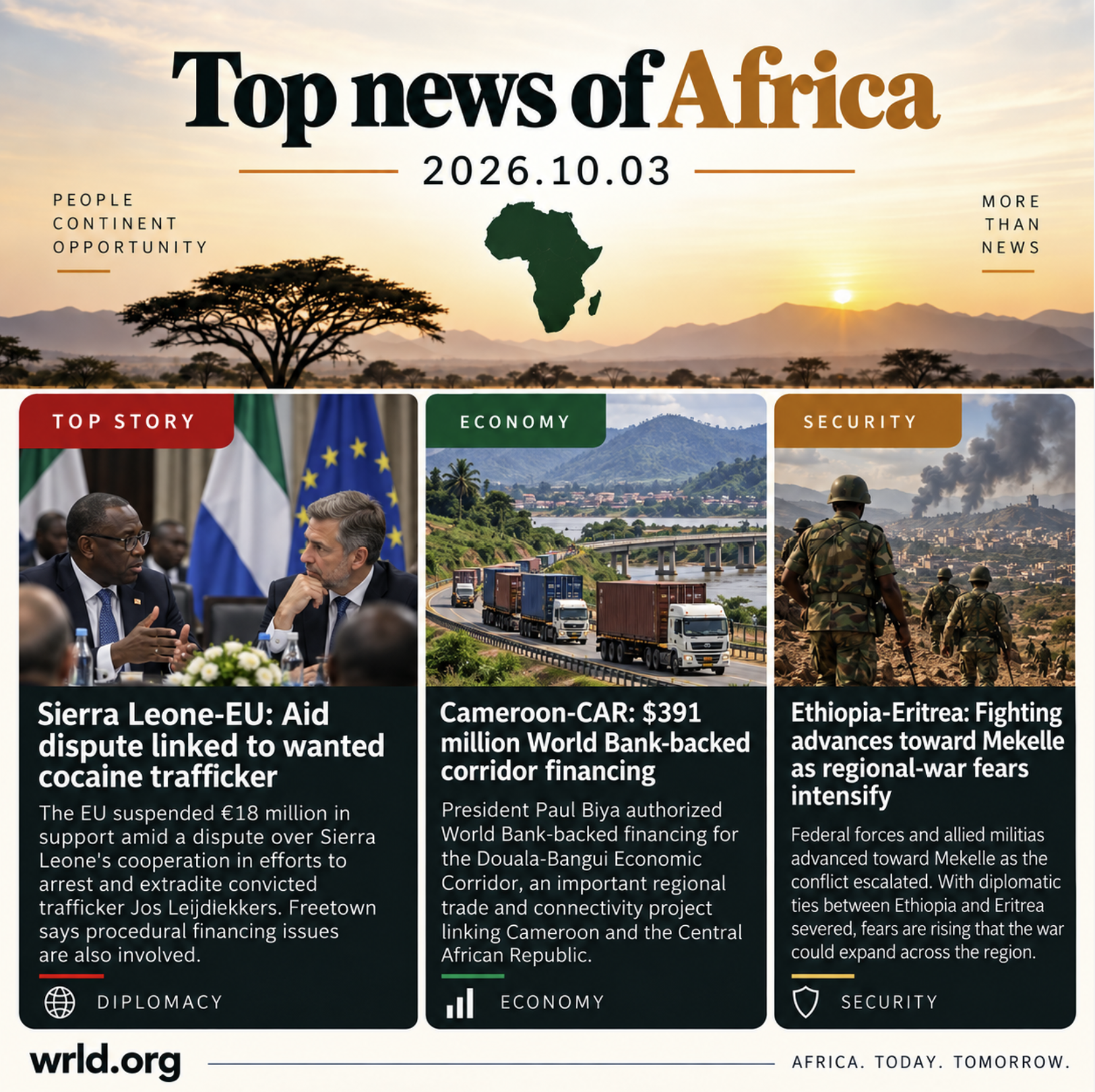
Africa Daily Report — 3 October 2026 Major developments reported during the previous 24 hours. 1. Ethiopia / Eritrea — Fighting advances toward Mekelle as regional-war fears intensify Ethiopian federal forces and allied militias advanced toward Mekelle amid renewed fighting with the TPLF-led rebel alliance. The military escalation comes alongside the rupture of diplomatic relations between Ethiopia and Eritrea, while the African Union has urged Ethiopia, Eritrea and Egypt to exercise maximum restraint. The combination of battlefield escalation, diplomatic expulsions and regional rivalries makes this the continent's most consequential security development today. Source: https://www.reuters.com/world/africa/ethiopian-forces-near-tigray-capital-fears-grow-wider-conflict-2026-10-02/ 2. DR Congo — Ebola death toll passes 4,000 as response is disrupted Importance: 10/10 — Critical DR Congo's Ebola outbreak has reached about 8,300 confirmed cases and more than 4,000 deaths. Containment is being undermined by insecurity, destruction of treatment infrastructure, difficulties tracing displaced contacts and health-worker payment disputes. The outbreak is now the deadliest Ebola episode in DRC's history. Source: https://apnews.com/article/4c79b59ec81a08675d2506c9e176d125 3. Sierra Leone / EU — Aid dispute linked to wanted cocaine trafficker Importance: 9/10 — Very High The EU has suspended €18 million in financial support to Sierra Leone, according to the Dutch government, amid a dispute over Freetown's cooperation in efforts to arrest and extradite convicted cocaine trafficker Jos Leijdekkers. Sierra Leone disputes the characterization of the funding delay as punishment over the fugitive case, saying procedural financing issues are involved. Source: https://www.reuters.com/world/eu-cuts-aid-sierra-leone-over-its-help-convicted-cocaine-kingpin-netherlands-2026-10-01/ 4. Guinea-Bissau — Military authorities block former president Embalo's return Guinea-Bissau's military leadership has barred ousted former president Umaro Sissoco Embalo from returning from exile, citing security concerns. Embalo had announced plans to return ahead of the 6 December presidential election and says he intends to contest it. The decision adds uncertainty to the country's political transition and electoral process. Source: https://www.reuters.com/world/africa/guinea-bissau-military-leaders-bar-ousted-presidents-return-2026-10-02/ 5. Cameroon / Central African Republic — $391 million World Bank-backed corridor financing Importance: 8/10 — High Cameroon's President Paul Biya authorized a €347.5 million ($390.9 million) World Bank loan agreement for the Douala–Bangui Economic Corridor project. The investment is intended to improve infrastructure and economic connectivity between Cameroon and the Central African Republic, making it an important regional trade and logistics project. Source: https://www.reuters.com/world/africa/cameroon-authorises-391-million-world-bank-loan-2026-10-02/ 6. South Africa — Political killings reach record level ahead of local elections At least 43 people were reported killed in suspected politically connected attacks in South Africa from January through September, according to research published ahead of the 4 November local elections. KwaZulu-Natal has been particularly affected. The violence adds a serious security dimension to the election. Source: https://www.africanews.com/programmes/news/ 7. Kenya — $16 billion Lamu refinery faces another legal challenge Importance: 8/10 — High The planned $16 billion Dangote refinery at Lamu, one of East Africa's largest prospective industrial investments, faces another legal challenge. Consumer-rights group COFEK is seeking disclosure of details surrounding the Kenyan government's planned participation, adding to an existing land-related court dispute. Source: https://www.okayafrica.com/today-in-africa-october-2-2026-ethiopia-eritrea-rift-raises-regional-war-fears-eu-suspends-aid-to-sierra-leone/1440442 8. Botswana — Elephant cull for independence celebrations triggers conservation controversy Importance: 7/10 — High Botswana authorized the killing of 23 elephants and dozens of antelope to provide meat during its 60th independence celebrations, reopening debate over elephant management and hunting. The government argues that controlled hunting helps manage its exceptionally large elephant population and benefits communities exposed to human-wildlife conflict; conservationists have criticized the decision. Source: https://apnews.com/article/4f85f8d5c144a464eae2fc721135213e 9. Algeria — Parliament backs death penalty for deliberate forest arson Algeria's parliament approved legislation providing for the death penalty for deliberately setting fire to forests, woods or fields, following deadly wildfire seasons. Algeria retains capital punishment in law but has not carried out an execution since 1993. The legislation still requires further institutional review before final ratification. Source: https://www.al-monitor.com/originals/2026/10/algeria-moves-restore-death-penalty-arson-what-know 10. Sudan — Rights groups warn of widespread sexual violence against women and girls Importance: 9/10 — Very High Sudanese women's-rights organizations are warning that sexual violence, exploitation, detention and torture remain widespread amid the war, with many cases likely undocumented because of insecurity and fear of retaliation. Displaced women and girls are especially vulnerable as conflict, hunger and the collapse of livelihoods compound protection risks. Source: https://allafrica.com/stories/202610020092.html #Africa #AfricaNews #TopNewsOfAfrica #SierraLeone #EuropeanUnion #EU #AidDispute #CocaineTrafficking #JosLeijdekkers #Diplomacy #Cameroon #CentralAfricanRepublic #WorldBank #DoualaBanguiCorridor #Infrastructure #RegionalTrade #Logistics #AfricanEconomy #Ethiopia #Eritrea #Tigray #Mekelle #HornOfAfrica #RegionalConflict #RegionalSecurity #AfricanSecurity #Geopolitics #AfricaToday #wrldorg

The post linked to a Bloomberg report citing Scope’s warning that the US debt path was leaving the country increasingly exposed. https://t.co/jl4qd1UPMS #USDebt #Economy #Finance #US

⚫️How my run for president in 2020 exposed mass electoral fraud by political parties in Poland ⚫️why Poland has had no legally elected president since 2020 ⚫️How did an American sheriff end up on a Solidarity '89 poster? ⚫️and where did he go... (60 min) NOW on #PolandElectionFraud #2020PresidentialRace #Solidarity89 #PL

Susanne 2w

Wat @sarahdobbe (SP) hier doet in het wetgevingsdebat over personeel van defensie, zou ik graag meer Kamerleden willen zien doen: D66 confronteren met hun gedraai ná de verkiezingen. Ongeacht of je het eens bent met D66: hun kiezersbedrog moet vaker exposed worden. Geldt trouwens ook voor de VVD. Dat is iets wat we zouden mogen verwachten van de parlementaire journalistiek maar wat daar dus niet gebeurt, waardoor ze verkiezingen blijven winnen op basis van leugens. Dat moet stoppen. #TweedeKamer #KabinetJetten #Defensie #Kamerleden #Politiek

🇪🇺is increasingly exposed to transboundary animal diseases. Prevention, preparedness&resilience must therefore be at the heart of our response. In my message to @WOAH_Europe Regional Conference, I underlined the need for stronger coordination&science-based vaccination strategies https://t.co/i6ySA7YaeT #AnimalHealth #Vaccination #EUCoordination #EU

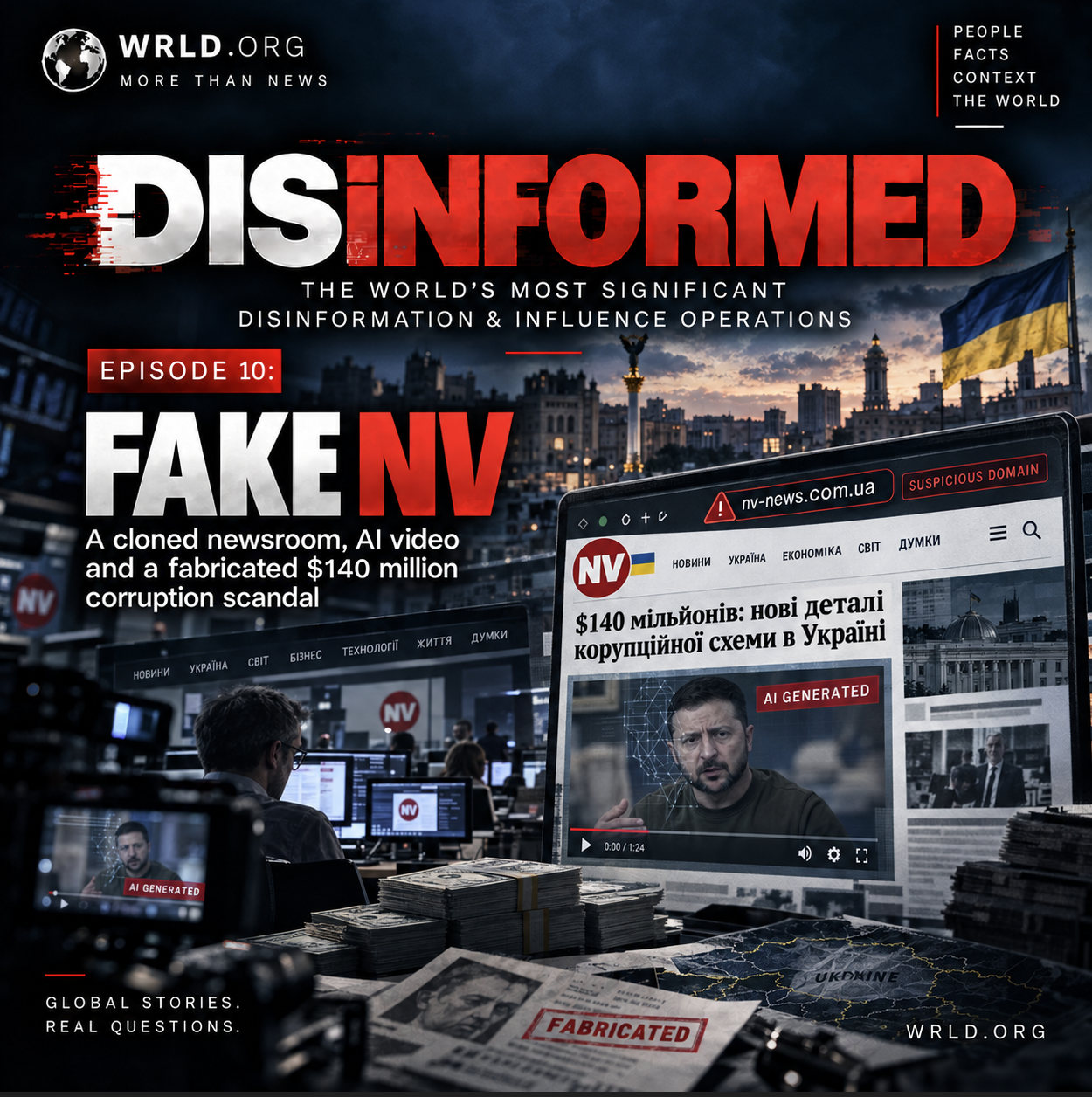
Fake NV – how a cloned newsroom turned an AI video into a $140 million corruption scandal For two days in September, a website that looked almost indistinguishable from one of Ukraine’s best-known news organisations carried an extraordinary corruption story. It claimed that Ukraine’s National Anti-Corruption Bureau had raided former defence procurement chief Arsen Zhumadilov and discovered more than $140 million in cash packed inside refrigerator boxes. One box supposedly carried the words “For the Servant of the People” – an apparent reference to President Volodymyr Zelenskyy’s political party. The raid never happened. The photographs and video presented as evidence were fabricated, and the news organisation reporting the story was not the New Voice of Ukraine but a cloned version of it. The episode is a compact example of an increasingly effective disinformation technique. Rather than inventing a new propaganda outlet and trying to build its credibility from scratch, an operator can simply steal the identity of an established newsroom and place fabricated material inside an otherwise convincing copy of its editorial environment. A newsroom copied almost in full The counterfeit site appeared at nvukraine.com, while the authentic New Voice of Ukraine operates at nv.ua and english.nv.ua. Registration records examined by fact-checkers show that the false domain was created on 21 September 2026, two days before the fabricated article appeared. According to NV’s own investigation, the imitation went much further than copying a logo: the operators reproduced the site’s visual design, sections, branding, contact information and genuine editorial material. A snapshot of legitimate NV content from 23 September appears to have been copied onto the counterfeit site, into which the operators inserted a single false article. That article claimed that NABU had searched premises connected to Zhumadilov, who had headed Ukraine’s Defence Procurement Agency until August, and seized $140 million in cash. The story was published in several languages, including Ukrainian and English, suggesting that the operation was intended not only for Ukraine’s domestic information space but also for foreign audiences following the war and Western support for Kyiv. AI supplied the supposed evidence The false article was supported by a video purportedly showing the money discovered during the raid. NABU said no such search or procedural action had taken place and identified the footage as fabricated using artificial intelligence. Independent fact-checker Lead Stories found no credible Ukrainian or international reporting confirming either the raid or the alleged seizure, while searches of NABU’s own published material produced no evidence supporting the claim. The operation therefore combined two separate forms of synthetic credibility. The AI-generated footage supplied what looked like visual proof, while the cloned NV website supplied institutional proof: an apparently reputable Ukrainian newsroom supposedly confirming that the event had happened. Neither element needed to withstand close scrutiny for long. Together, they only needed to appear credible enough to be copied, quoted and redistributed before the deception was exposed. From a fake Ukrainian source into the Russian information ecosystem On 24 September, the story began moving through large pro-Russian Telegram channels. Ukraine’s Center for Strategic Communications traced early amplification to Golos Mordora, with roughly 149,000 subscribers, and Militarist, with around 277,000. Within less than an hour, other channels including VOBLA, Rossiya Seychas and Ostashko! Vazhnoye were circulating versions of the same claim. It subsequently appeared on X and on Russian-language websites including e-news.su and pressa24.ru. Babel calculated that posts carrying the fabrication had accumulated approximately 370,000 views by the morning of 25 September. The story also moved beyond the Russian-language ecosystem. English-language versions appeared in online communities including Lemmy and Hexbear, while accounts on X shared direct links to the counterfeit NV article. NV later reported that larger Russian media and propaganda outlets, including RIA Novosti, Life, Vesti, Ukraina.ru and Mail.ru, had reproduced or discussed the claim. Kirill Dmitriev, head of the Russian Direct Investment Fund and a Kremlin representative involved in contacts with the United States, also shared it on 25 September. This amplification is significant, but it should not be confused with proof of authorship. Publicly available evidence shows how the false story entered and spread through a Russian and pro-Russian information ecosystem. It does not establish which organisation registered the cloned domain, generated the video or directed the operation from the outset. Why copy NV? The operation relied on source laundering. A claim originating directly from a Russian Telegram channel that Ukraine’s defence procurement system had concealed $140 million would immediately carry an obvious political context. A claim apparently uncovered by an established Ukrainian newsroom looks very different. Once the fabricated NV article existed, subsequent accounts could cite what appeared to be an independent Ukrainian source rather than present the allegation as their own. Each repost moved the story another step away from its manufactured origin. The use of an English-language version strengthened that mechanism for audiences outside Ukraine. The underlying narrative was also carefully chosen. Corruption in Ukrainian defence procurement is a genuine subject of public scrutiny and investigative reporting, so the fabricated story did not require audiences to accept an entirely unfamiliar premise. It inserted a false event into a real area of political concern. That mixture of authentic context and fabricated evidence can be more persuasive than a completely invented story because much of the surrounding information feels recognisable. What can – and cannot – be attributed Ukrainian authorities and NV describe the episode as a Russian information operation, and its distribution can be documented extensively across pro-Russian and Russian media channels. The available public evidence, however, does not identify the organisation that created the counterfeit website, nor does it link the operation forensically to a named Russian intelligence service, military unit or state contractor. The most precise description is therefore a Russian-aligned disinformation operation whose fabricated material was systematically amplified through the Russian information ecosystem. That distinction matters. Distribution can be observed directly; command-and-control is harder to establish and should not be inferred without evidence. The newsroom itself becomes the deepfake The most important feature of the operation was not the $140 million figure or even the AI-generated video. It was the counterfeit newsroom surrounding them. The operators copied a real publication, populated it largely with genuine material and inserted a single false story, allowing the fabrication to borrow the accumulated credibility of journalists who had nothing to do with it. This points to a broader evolution in synthetic media. AI can fabricate an image, a voice or a video, but an influence operation can now fabricate something larger: the source that supposedly verified the evidence. In the Fake NV operation, the article, the video and the website reinforced one another, creating not simply a false story but a manufactured chain of credibility. Sources The New Voice of Ukraine — investigation into the cloned website https://english.nv.ua/nation/nv-discovers-fake-copy-of-website-with-planted-story-cites-russian-links-50644601.html The New Voice of Ukraine — Russian amplification of the $140 million fabrication https://english.nv.ua/russia-spreads-fake-140-million-ukraine-corruption-story-during-dmitriev-u-s-talks-50644647.html Lead Stories — independent fact-check https://leadstories.com/hoax-alert/2026/09/fact-check-fake-story-claims-140-million-found-at-home-of-ukraines-zhumadilov-marked-servant-of-the-people-nv-website-originated-it.html Babel — AI video and distribution analysis https://babel.ua/en/news/130469-a-video-is-sharing-online-about-140-million-found-in-the-possession-of-the-ex-head-of-the-defense-procurement-agency-this-is-an-ai-video-distributed-by-a-clone-of-ukrainian-media Center for Strategic Communications and Information Security — initial debunk https://spravdi.org/en/ai-fake-about-140-million-amid-us-talks-how-russians-impose-the-image-of-corrupt-ukraine-on-the-west/ Center for Strategic Communications and Information Security — NABU confirmation https://spravdi.org/u-merezhi-poshyryuyut-shi-fejk-pro-nibyto-obshuky-nabu-v-eksgolovy-agencziyi-oboronnyh-zakupivel/ Detector Media — distribution and NABU response https://detector.media/infospace/article/252806/2026-09-25-u-merezhi-pidrobyly-sayt-nv-dlya-poshyrennya-feyku-pro-obshuky-v-eksochilnyka-agentsii-oboronnykh-zakupivel/ Keywords #DISINFORMED #Episode10 #FakeNV #NewVoiceOfUkraine #Ukraine #Russia #RussianDisinformation #RussianInfluence #Disinformation #InformationWarfare #InfluenceOperations #ForeignInterference #FIMI #MediaImpersonation #ClonedMedia #FakeMedia #FakeNews #ArtificialIntelligence #AI #AIGeneratedContent #SyntheticMedia #AIVideo #SourceLaundering #NarrativeLaundering #CorruptionNarrative #UkraineCorruption #DefenceProcurement #NABU #ArsenZhumadilov #Telegram #SocialMediaManipulation #DigitalInfluence #Propaganda #OSINT #MediaManipulation #WRLD

Truth shall out. Slowly and painfully, but eventually the smear campaign against Israel will be dismantled and the lies exposed. #TruthMatters #ExposeTheLies #IsraelDefense #IL

H

🚨🚨 BOMBSHELL JUST DROPPED — THERE IS NO HIDING THIS ANYMORE 🚨🚨 Investigative journalist Catherine Herridge just exposed the documents. China was BLACKMAILING the Biden family… and it was sitting in President Biden’s own daily brief. She found the records. She held them up on camera. The evidence is right there. And what did the FBI, CIA, and the entire legacy media do? They buried it. They looked the other way. They protected the regime. This isn’t politics. This isn’t a “scandal.” This is TREASON at the highest level. They knew. They covered it up. And they did it to keep power. No more excuses. No more “conspiracy theories.” The documents are out. The truth is staring America in the face. Share this everywhere. The American people deserve to know. W.H.G https://x.com/WHGrampa0/status/2103050260465451359

W.H.Grampa (@WHGrampa0) on X

Estou assistindo o Nando Moura no Flow fazendo um exposed do MBL. Vencido o ponto de que eu ia ouvir o Nando Moura, confesso que o conteúdo que ele trouxe, em sequência, é assustador. Se tiverem um tempo, assistam. Se fossem Bolsonaristas o TSE ja teria interditado o partido... #NandoMoura #FlowPodcast #MBL

Nando Moura engoliu o MBL simplesmente todo o trabalho alias muito eficiente que o MBL fez dando exposed na Glenda foi engolido por essa live no flow. A quantidade de cortes que vai gerar isso vai dar uma machucada nos caras viu. #NandoMoura #MBL #Glenda

Esse exposed do NM e dos seus apaniguados é uma das maiores investigações jornalísticas dos últimos anos NESTE PAÍS. E eu não estou exagerando. O vídeo está fortíssimo. Pesado. #Investigação #Jornalismo #Exposed

🇷🇴🇪🇺 ROMANIA INTO THE EURO 2027 — WARTIME EMERGENCY ACCESSION My proposal is for the EU to create an exceptional accelerated pathway allowing Romania to adopt the euro in 2027. Romania is an EU and NATO member on the Black Sea and directly exposed to the economic and security https://t.co/eHezfwfSAH #Romania #Euro2027 #EUpolicy #RO #EU