BETA nonprofit public democratic european moderated

Search

#cafés

The Latino Jimin fanbase pointed out that many people were already celebrating Jimin's birthday in decorated cafés and events. The account said it would prepare a complete thread about the celebrations, described Jimin as very beloved, and praised the decoration. It also spread the hashtags "JIMTOBER ON LATAM," "#AngelVoiceJimin," and "#천사보이스_지민." #AngelVoiceJimin #천사보이스_지민 #Jimin #JIMTOBER #Kpop (translated)


The contact debt is back! BSW politician Claudia Wittig is effectively banned from cafés in Halle for political reasons, just because she does not adhere to the firewall and also talks to the AfD! She received an email from café owner Hansen. In it, she was asked to avoid his 3 venues in the future! Reason: One does not support politics "from the right edge" and no one who supports it. Now the café owner is complaining that his email inbox is overflowing and that negative reviews are coming in on his Google profile by the minute! The relevant venues of the Hansen trading group are: Roter Horizont Bunūel Connoisseur... #Politik #Halle #Meinungsfreiheit (translated)
A recent study indicates that consuming up to five cups of coffee a day can be beneficial for cardiovascular health, reducing the risk of diseases and incidents such as stroke or arrhythmias in healthy adults. #CaféSaludable #SaludCardiovascular #Cafeína (translated)

Consumir hasta cinco tazas de café el día puede ser saludable para el corazón

Mohamed Bakkali a organisé les attentats du 13 novembre à Paris, qui ont fait 132 morts et plus de 400 blessés, du Bataclan aux terrasses des cafés. En 2022, il a été condamné à trente ans de réclusion. En 2026, la justice belge envisage de le libérer... Ce serait une nouvelle #AttentatsParis #MohamedBakkali #JusticeBelgique #FR #BE

Il a organisé les attentats du 13 novembre à Paris, qui ont fait 132 morts et plus de 400 blessés, du Bataclan au terrasses des cafés. En 2022, il a été condamné à trente ans de réclusion. En 2026, la justice belge envisage de le libérer… Ce serait une nouvelle menace que nos #ParisAttacks #justice #sécurité #FR #BE

Starbucks a décidé de fermer environ 250 cafés non rentables en Amérique du Nord d'ici la fin de la semaine, entraînant des charges de 300 millions de dollars, dans le cadre de sa restructuration stratégique visant à améliorer ses performances financières. #Starbucks #Fermetures #Restructuration

En pleine restructuration, Starbucks ferment 250 cafés en Amérique du Nord

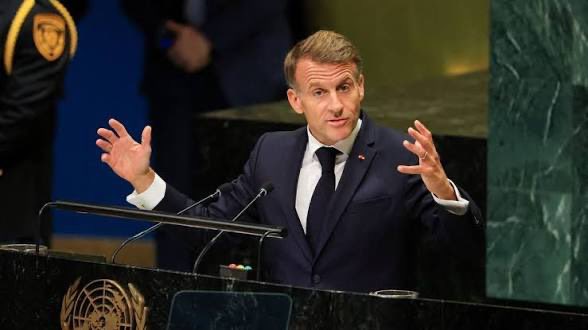
Monsieur le locataire de l’Élysée. « Le Hamas n’a jamais sévi en Cisjordanie. » se sont vos mots prononcés à la tribune de l’ONU et ils sont abjecte. Vous n’êtes plus dans l’erreur. Vous êtes dans le mensonge. Jamais dites vous ? Sauf pendant la seconde Intifada. Sauf quand ses cellules ont fait sauter des bus et des cafés. Sauf quand elles ont enlevé et assassiné trois adolescents en 2014. Sauf quand Tsahal et le Shin Bet démantèlent encore des réseaux à Jénine, Tulkarem, Hébron, Naplouse. Sauf dimanche soir, à la veille de Yom Kippour, quand un terroriste affilié au Hamas a abattu Netanel Shukrun, père de six enfants, devant son fils, près d’une source à Neve Tzuf. Le Hamas a salué l’attentat. Vous avez prononcé ça à la tribune de l’ONU, devant le monde, comme on jette une phrase pour se faire applaudir. Pas pour dire vrai. Pour sonner juste dans une salle qui préfère les formules aux cadavres. Et vous, mardi, vous dites « jamais ». Ce n’est plus de la maladresse diplomatique. C’est du mépris. Mépris pour les morts. Mépris pour les familles. Mépris pour la réalité, dès qu’elle dérange votre récit. Vous n’ignorez pas que le Hamas a des cellules en Judée-Samarie. Vous n’ignorez pas les attentats, les réseaux démantelés, les revendication. Vous avez simplement choisi de les effacer d’un mot. « Jamais ». Un mot propre, un mot de tribune, un mot de lâcheté. Mentir sur le sang versé pour mieux accuser, ça s’appelle autre chose. Vous voulez simplement les applaudissements de l’ONU. Les six orphelins de Netanel, eux, n’applaudiront pas. C’est une honte. Vous êtes un menteur. Et ce dégoût-là, aucun discours ne le lavera. Je vous méprise monsieur le locataire de l’Élysée. #Hamas #Cisjordanie #ONU

Hoy, el Congreso ha retirado la acreditación de prensa al ultraderechista Vito Quiles. Conviene recordar que su jefe, Javier Negre, reconoció que su pseudomedio la consiguió comprando mediante "cafés y cariño" a la directora de comunicación del Congreso. https://t.co/jXmbt8dYbR #VitoQuiles #Congreso #LibertadDePrensa #ES #CO

Bild Sep 4

Der ehemalige MMA-Kämpfer Adnan Z. steht aufgrund von drei versuchten Morden, bei denen er in zwei Cafés in Offenbach und Frankfurt mehrere Männer schwer verletzte, vor Gericht und könnte lebenslang ins Gefängnis kommen. #Mordversuch #MMA #Gerichtsprozess

Dreifacher Mordversuch in Deutschland - MMA-Star „Terminator“ droht lebenslang!

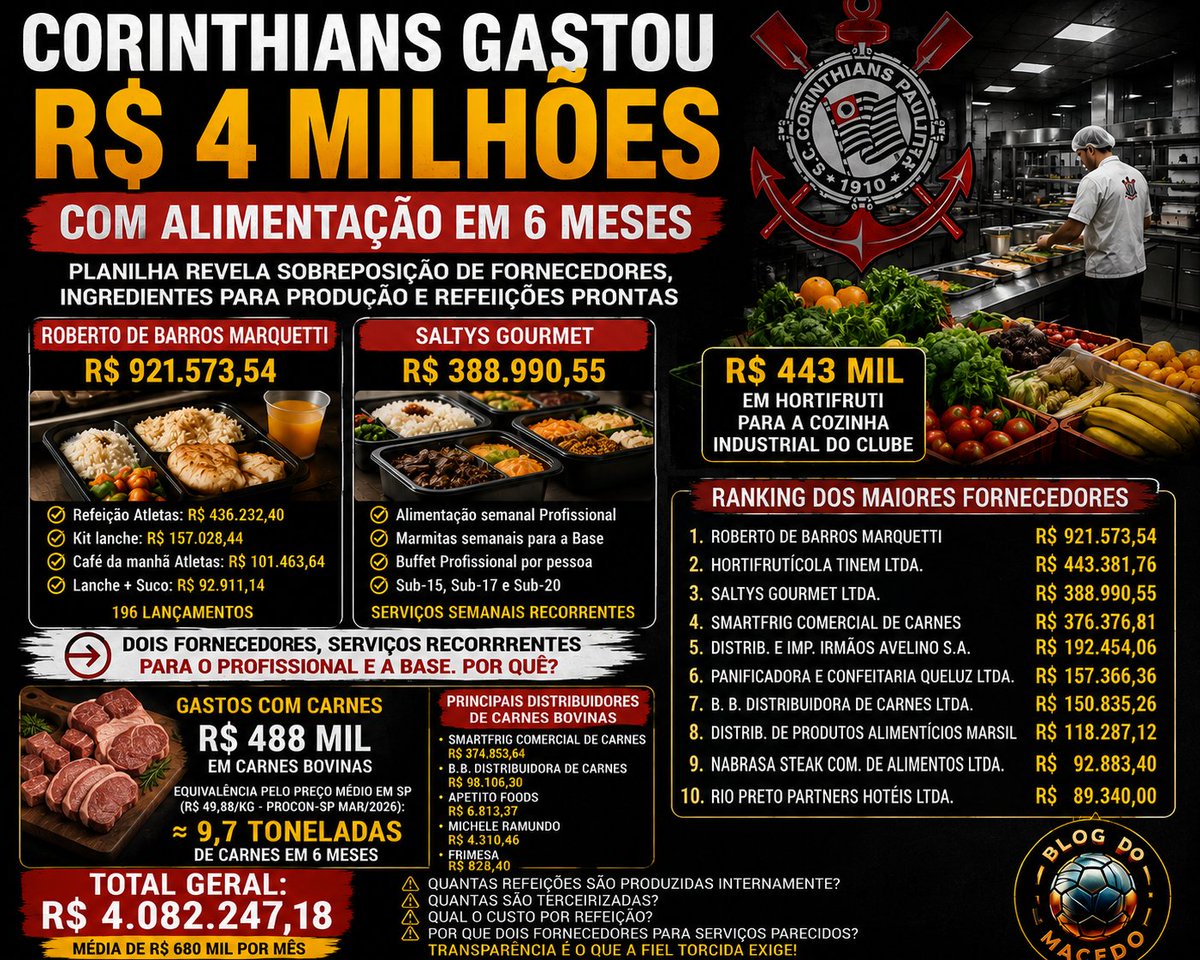
💣 ATUALIZAÇÃO: PLANILHA DO CORINTHIANS REVELA COMPRAS DE TONELADAS DE INSUMOS PARA PRODUÇÃO DE ALIMENTOS E TAMBÉM MILHÕES DE REAIS EM COMPRAS DE COMIDAS PRONTAS E LEVANTA QUESTIOMANENTOS‼️ Por Blogdomacedo Uma análise detalhada e atualizada da planilha de despesas com alimentação do Corinthians revela R$ 4.082.247,18 em gastos no período analisado. O levantamento mostra uma estrutura que envolve praticamente toda a cadeia de alimentação do clube: compra de arroz, feijão, macarrão, ovos, leite, farinha, óleo, temperos, frutas, verduras, legumes e carnes, além da contratação de empresas que fornecem refeições, marmitas, cafés da manhã, lanches e alimentação semanal. E é justamente essa combinação que levanta uma pergunta que merece ser respondida pelo Corinthians: Quanto custa produzir uma refeição dentro do clube e quanto custa comprar essa mesma refeição pronta de terceiros? A planilha não permite afirmar que exista irregularidade ou duplicidade. Mas permite identificar uma aparente sobreposição entre compra de matéria-prima para produção interna e contratação recorrente de alimentação pronta. HORTIFRÚTI: R$ 443 MIL EM UMA PLANILHA SEPARADA Um dos principais fornecedores é a Hortifrutícola Tinem. Na segunda aba da planilha, separada especificamente para análise dos gastos com hortifrúti, aparecem R$ 443.381,76 em despesas. A Tinem aparece com vários lançamentos envolvendo frutas, verduras, legumes e outros produtos. Entre os itens estão bananas, maçãs, laranjas, abacaxis, melões, mamões, mangas, uvas, melancias, tomates, batatas, brócolis, alfaces, cenouras e outros produtos utilizados na preparação de alimentos. Também aparecem registros de “TEMPERO”, que chamam atenção pelo volume financeiro. Na semana passada o Corinthians explicou que são produzidos mais de 600 refeições por dia na cozinha do CT para todas as categorias, e afirmou que o alto valor do item "Temperos" foi um erro de descrição do fornecedor. Sabemos que o Corinthians possui estrutura própria de cozinha e alimentação. Portanto, uma pergunta legítima é: Quanto dessa matéria-prima é transformada em refeições dentro do próprio clube e quanto é comprado de terceiros? ARROZ, FEIJÃO, MACARRÃO E OUTROS INSUMOS O levantamento também identificou uma série de produtos básicos utilizados para preparação de alimentos. Entre eles estão: - arroz; - feijão; - macarrão; - farinha; - óleo; - azeite; - açúcar; - leite; - ovos; - temperos; - molhos; - extratos; - outros produtos de despensa. São produtos que não representam uma refeição pronta, mas sim ingredientes utilizados na preparação de refeições. Isso é importante porque mostra que o Corinthians não depende exclusivamente de empresas terceirizadas para alimentar seus atletas. Existe também uma estrutura de aquisição de matéria-prima. A questão, portanto, passa a ser entender qual é a proporção entre o que o clube produz e o que compra pronto. E AS CARNES? Outro capítulo importante da planilha é o gasto com proteínas. No levantamento dos produtos identificáveis como carne bovina in natura, foram encontrados aproximadamente R$ 484.912,17 em compras. Entre os principais cortes aparecem: - filé-mignon; - alcatra; - contra-filé; - maminha; - picanha; - fraldinha; - coxão mole; - coxão duro; - patinho; - lagarto; - acém; - carne seca; - entre outros. O maior fornecedor é a Smartfrig Comercial de Carnes, considerando as duas grafias da razão social existentes na planilha. Somadas, as duas identificações da Smartfrig representam aproximadamente R$ 374.853,64 em carnes bovinas identificáveis. Na sequência aparece a B.B. Distribuidora de Carnes, com aproximadamente R$ 98.106,30 em produtos bovinos identificáveis. Também aparecem compras de carne bovina com: - Apetito Foods — aproximadamente R$ 6.813,37; - Michele Ramundo — aproximadamente R$ 4.310,46; - Frimesa — aproximadamente R$ 828,40..... Segue a publicação no próximo post, siga o fio...👇👇👇 #Corinthians #Alimentação #Esporte

L’œil était sous les bombes et regardait Caïn Il y avait un enfant. Assis dans un café du quartier des pêcheurs, à Gaza. Un café ordinaire, dans un port qui n’est plus un port mais un camp de déplacés, un lieu où l’on boit encore du thé parce qu’il faut bien continuer à faire quelque chose qui ressemble un peu à la vie. Il avait un regard qui ne savait pas encore qu’il allait s’éteindre. Un regard d’enfant. Et l’armée israélienne a décidé que cet endroit était une « action ciblée contre le Hamas ». On nous dira, comme toujours, que c’était précis. Que les commandants étaient là. « Que l’on a fait attention ». On nous dira ces phrases lisses, rodées, qui ne coûtent rien à ceux qui les prononcent depuis des bureaux climatisés ou des plateaux de télévision. On ne nous dira pas le poids d’un corps d’enfant qui n’avait aucune arme, aucune responsabilité, aucune voix dans les calculs stratégiques. On ne nous dira pas le bruit que fait un missile quand il tombe sur un café où des gens essayaient encore de croire qu’ils existaient. Depuis octobre 2023, et même bien avant, et même après les cessez-le-feu qui n’en sont jamais, des enfants meurent à Gaza comme on écrase des insectes sous une botte. Pas par accident isolé. Pas par erreur rare. Mais dans une logique qui a fait de la mort civile une variable acceptée, presque une constante. Et chaque fois, la même justification revient, comme un leitmotiv : « c’était contre le Hamas ». Comme si le mot « Hamas » avait le pouvoir magique d’effacer un visage d’enfant et de transformer un crime en opération nécessaire. Et la France ? La France regarde. Ou plutôt, elle détourne les yeux avec élégance. Elle parle de « droit à se défendre », de « complexité », de « contexte ». Elle envoie parfois des communiqués qui se veulent mesurés, des appels à la retenue qui sonnent comme des formules de politesse. Elle encourage ses médias soumis à reprendre les communiqués de l’armée israélienne, pendant que ses éditorialistes stipendiés, une fois rentrés de vacances, expliquent doctement qu’il faut bien que quelqu’un fasse le sale boulot pour préserver « notre civilisation ». Comme si la civilisation se construisait sur les corps d’enfants. Comme si le silence des puissants n’était pas déjà une forme de complicité. Il y a quelque chose de profondément obscène dans cette indifférence cultivée. Dans cette capacité à s’indigner sélectivement, à verser des larmes pour certains morts et à classer les autres dans la catégorie des « dommages collatéraux ». Et pendant ce temps, les mêmes journalistes qui nous bassinent jour après jour avec les « ingérences russes » que nul ne voit jamais, qui traquent chaque like suspect et chaque influence imaginaire, et qui détournent le regard devant les massacres réels, documentés, filmés, comptés. Ils hurlent à la manipulation quand il s’agit de Moscou, mais se taisent ou relativisent quand des enfants sont exterminés sous les bombes d’un « allié ». Leur vigilance est à géométrie variable. Leur indignation, un luxe de putain. Ils nous vendent la peur fantasmée de l’étranger pendant que, sous leurs yeux, une génération est effacée. Ce n’est pas de l’aveuglement. C’est un choix. Chaque enfant tué ouvre une brèche dans le réel, une chambre vide où la lumière n’entre plus. Et ceux qui acceptent ces morts, ceux qui les justifient, ceux qui les taisent, portent en eux cette chambre. Ils marchent avec. Ils dorment avec. Ils parlent de civilisation avec, sans même s’en apercevoir. Un jour, j’écrirai avec plus de recul l’histoire de cette époque. Je dirai que des hommes et des femmes savaient. Que les images étaient là. Que les témoignages étaient là. Et que pourtant, on a continué. On a continué à parler de « droit à se défendre » pendant que des enfants s’asseyaient dans des cafés en souriant et ne se relevaient plus. Ce silence n’est pas neutre. Ce soutien n’est pas anodin. Cette indifférence médiatique n’est pas une erreur. C’est une tache. Et elle ne s’effacera jamais. #Gaza #Enfants #Indifférence

Today I start the series of articles about my beloved place in Africa which is #Zanzibar island. I'll start from the question, many people ask themselves while planning the first trip there: Shall we go and visit Nungwi or Paje? Two very different faces of Zanzibar Both have beautiful beaches, both have excellent accommodation, both attract international travelers, but choosing between them isn't really about which one is "better". It's about asking: what kind of Zanzibar do you want to experience? If your ideal holiday means a beautiful resort, easy swimming, spectacular sunsets and long days on the beach, Nungwi or Kendwa may be exactly what you're looking for. But if you want something more active and social, Paje deserves serious consideration. Paje has become one of the best-known kitesurfing destinations on Zanzibar. Its huge tidal lagoon creates an unusual landscape that changes dramatically throughout the day. At low tide, the ocean retreats and reveals an enormous stretch of sand and shallow water. At high tide, the same landscape turns into a turquoise lagoon. But Paje isn't only about kitesurfing. The town has developed a surprisingly diverse food scene, with Swahili cuisine, seafood, international restaurants, vegetarian options, cafés and brunch spots. There are beach bars, live music, DJs and nightlife. And perhaps most importantly, Paje attracts a very international community of travelers. Kitesurfers. Divers. Backpackers. Couples. Digital nomads. Independent travelers. People who don't necessarily want a traditional package holiday. Paje is also a good base for exploring the southern and eastern parts of Zanzibar. Jozani Forest, Jambiani, the Blue Lagoon, The Rock Restaurant, Kizimkazi and many other attractions can be reached relatively easily. This creates an interesting difference between the two destinations. Nungwi is a destination. Paje is both a destination and a base for exploration. And that's why Paje may be particularly attractive to travelers who want to combine: beach + adventure + food + culture + nightlife. You can spend the morning kitesurfing, have lunch in town, explore the island in the afternoon, watch the sunset, listen to live music and return to your own apartment at the end of the day. Please let me know what is your experience with Zanzibar, which destinations are your favorite ones and why? Today I start the series of posts and I will go beyond Zanzibar as we go further. #Zanzibar #Paje #PajeZanzibar #ZanziDream #ZanzibarTravel #ZanzibarHoliday #Tanzania #Kitesurfing #ZanzibarKitesurfing #TravelAfrica #AfricaTravel #ZanzibarBeaches #ZanzibarTravelGuide #tourism #trip #Africa #Tnzania #italy #germany #france #netherlands #poland

Rinus Jansen Aug 15

Nieuws van de Dag en de illusie van het spontane gesprek Gisteren keek ik naar Nieuws van de Dag en pas later drong volledig tot me door wat mij zo tegenstond aan die uitzending over de boeren. Het ging niet om één domme uitspraak van Lale Gül, Raymond Mens of iemand anders aan tafel. Het ging om de manier waarop vrijwel het hele blok dezelfde richting uit werd opgebouwd. De kijker moest het gevoel krijgen naar een spontaan gesprek over de actualiteit te kijken, terwijl de boeren stap voor stap werden gekoppeld aan gevaar, slachtoffers, historische grensoverschrijding en uiteindelijk zelfs aan de gedachte dat het misschien helemaal niet zo erg is wanneer Nederland minder boeren krijgt. Kijk gewoon naar de opeenvolging. Er is een dodelijk verkeersongeluk rond een boerenactie en vrijwel onmiddellijk verschuift het gesprek naar de verantwoordelijkheid van de boeren. Vervolgens komt de davidster met de B voorbij en Lale Gül trekt direct de Holocaust erbij. Niet veel later vraagt diezelfde Lale of het eigenlijk wel zo’n ramp is wanneer Nederland minder boeren krijgt. Thomas van Groningen levert de voorzetten waarmee het gesprek voortdurend binnen datzelfde kader blijft en Raymond Mens sluit zich vervolgens aan bij de harde lijn van Rob Jetten over boeren op de snelweg. Ieder fragment afzonderlijk kun je wegzetten als “gewoon een mening”. Maar zet ze achter elkaar en je krijgt een heel ander product: boeren worden gevaarlijk, onverantwoordelijk, historisch verdacht en uiteindelijk misschien zelfs overbodig gemaakt. En hier moeten we ophouden naïef te doen over hoe talkshows werken. Dit zijn geen cafés waar toevallig vier mensen binnenlopen en ter plekke ontdekken wat ze ergens van vinden. De uitzending is voorbereid, onderwerpen zijn geselecteerd, invalshoeken zijn besproken, beelden liggen klaar, vragen zijn voorbereid, gasten zijn voorgesproken en opiniemakers weten waarvoor ze komen. Presentatoren werken met een draaiboek en de regie kan tijdens de uitzending onmiddellijk bijsturen. Maar zelfs dat is nog maar de zichtbare laag. Sinds corona weten we hoe omvangrijk narratief beheer vanuit instituties kan worden georganiseerd. Overheidscommunicatie, crisiscommunicatie, ministeries, woordvoerders, deskundigen, gedragscommunicatie en media functioneren niet in volledig gescheiden universums. Boodschappen worden voorbereid, lijnen worden afgestemd, kernboodschappen worden bepaald en media weten ruim vóór de uitzending welke onderwerpen en politieke boodschappen die dag centraal staan. Hoe ver zulke lijnen vervolgens via redacties, voorgesprekken, briefingdocumenten en talkingpoints doorwerken tot presentatoren, deskundigen en opiniemakers is van buitenaf nauwelijks volledig zichtbaar. Ik kan niet bewijzen dat iemand ’s middags letterlijk een mail van de NCTV of AIVD ontvangt met drie zinnen die ’s avonds moeten worden uitgesproken. Maar na corona vind ik het minstens zo naïef om te geloven dat dezelfde formuleringen, dezelfde morele kaders en dezelfde gewenste conclusies avond na avond volledig spontaan en onafhankelijk aan verschillende talkshowtafels ontstaan. De interessantste vorm van sturing is bovendien helemaal niet een geheim briefje waarop exact staat wat iemand moet zeggen. Het is veel efficiënter om mensen te gebruiken van wie je vooraf al weet welke richting hun morele kompas bijna automatisch uitslaat. En daar vind ik Lale Gül bijzonder interessant. Bij haar lijkt virtue signalling inmiddels bijna een vakdiscipline geworden. Of het nu over islam, corona, vaccinaties, Israël of nu de boeren gaat: ze weet opvallend vaak precies de meest institutioneel veilige, moralistisch maximale positie te vinden en die vervolgens te presenteren alsof ze zojuist op eigen kracht een bijzonder moedige gedachte heeft ontdekt. Tijdens corona was uitgesproken vaccinatie-enthousiasme de deugdzame positie. Bij islam krijgt ze ruimte wanneer een scherpe beschuldiging richting moslims gewenst is. Bij Israël staat ze zeer herkenbaar in het debat. En nu boeren politiek onder druk staan, zit zij daar precies op het juiste moment om de Holocaust erbij te halen en vervolgens hardop te vragen of Nederland eigenlijk wel zoveel boeren nodig heeft. Ik neem Lale zo nadrukkelijk als voorbeeld omdat het mechanisme bij haar bijna schaamteloos zichtbaar wordt, maar zij is slechts een extreem herkenbare variant van een veel breder televisiemodel. Ook andere vaste zogenaamde ‘opiniemakers’ weten dat het televisiecircuit snelheid, stelligheid, morele verontwaardiging en herkenbare positionering beloont. Dat levert clips, bereik, uitnodigingen en uiteindelijk marktwaarde op. Virtue signalling is daarmee niet alleen ideologie, maar ook een verdienmodel. De doelgroep kan wisselen, gisteren ongevaccineerden, vandaag boeren, morgen weer een andere politiek verdachte groep, maar de morele pose blijft. En precies die voorspelbaarheid maakt zulke figuren bruikbaar voor het format. De kijker denkt vervolgens: “Lale vindt dit.” Maar de redactie koopt geen verrassing in. Ze koopt een bekend type reactie, een herkenbaar moreel frame en televisie waarvan vooraf duidelijk is welke richting het gesprek ermee op kan. Daar begint narratief beheer: niet noodzakelijk bij een letterlijk uitgeschreven script, maar al bij de selectie van mensen van wie je weet welk soort oordeel, verontwaardiging en legitimatie ze zullen leveren. En precies daar begint narratief beheer. Niet bij één grote leugen, maar bij selectie. Wie zit er aan tafel? Welke gebeurtenis wordt groot gemaakt? Welke associatie wordt onmiddellijk toegevoegd? Wie krijgt het morele gezag? Welke vragen worden eindeloos uitgemolken en welke vragen worden überhaupt niet gesteld? Want kijk naar wat gisteren niet centraal stond. Bij het verkeersongeluk had je uitgebreid kunnen bespreken wat feitelijk al bekend was over de toedracht voordat een hele protestbeweging morele schuld kreeg toegeschoven. Bij de boerenster had je naast de verontwaardiging ook boeren zelf kunnen vragen welk politiek punt zij met dat symbool probeerden te maken. En zodra Lale vraagt of minder boeren wel zo erg is, hoort daar onmiddellijk de veel grotere vraag tegenover te staan: wie produceert straks ons voedsel, wie krijgt de grond, hoe afhankelijk willen we worden van import en welke bedrijven profiteren van een steeds verder geïndustrialiseerde en technologiseerde voedselketen? Maar juist die vragen verstoren het frame. En dat is precies waarom framing zo krachtig is. Je hoeft helemaal niet te liegen. Je kunt uitsluitend ware feiten gebruiken en toch een misleidend totaalbeeld produceren. Je maakt het ene feit enorm, het andere klein, plaatst twee gebeurtenissen bewust naast elkaar, nodigt drie mensen uit die ongeveer dezelfde morele richting vertegenwoordigen en laat één kritische context weg. Vervolgens hoef je de kijker niet eens meer te vertellen wat hij moet denken. Hij maakt de laatste stap zelf. Tijdens corona zagen we hoe effectief dat kan zijn. Dag na dag dezelfde morele categorieën, dezelfde institutioneel geaccepteerde deskundigen, dezelfde angsten, dezelfde oplossingen en dezelfde sociale labels voor afwijkende geluiden. De kracht van dat systeem zat er niet in dat letterlijk niemand iets anders mocht zeggen. Eén kader werd simpelweg zo dominant dat alles daarbuiten automatisch verdacht, onverantwoordelijk of krankzinnig begon te klinken. Nu zie ik hetzelfde mechanisme terug bij de boeren, alleen herkennen veel meer mensen het inmiddels. Daarom vind ik de uitzending van Nieuws van de Dag van gisteren niet gewoon “een talkshow waar ik het niet mee eens was”. Ik vind het een voorbeeld van iets veel fundamentelers: hoe een redactie een politieke en morele werkelijkheid kan construeren terwijl ze de vorm van een spontaan gesprek behoudt. Dat is ook waarom ik tegenwoordig bij een talkshow niet alleen meer luister naar wat er wordt gezegd. Ik kijk vooral naar wat er vóór de eerste zin al is besloten. Waarom zit juist deze persoon daar? Waarom wordt juist dit incident gekozen? Waarom volgt na gebeurtenis A onmiddellijk onderwerp B? Wie levert de emotionele verontwaardiging? Wie levert de rationeel klinkende bevestiging? Welke vraag wordt niet gesteld? Welke conclusie blijft uiteindelijk in het hoofd van de kijker hangen zonder dat iemand haar rechtstreeks heeft hoeven uitspreken? En misschien nog belangrijker: wie profiteert van die conclusie? Welk beleid wordt er gemakkelijker door te verkopen? Welk economisch of politiek belang wordt ermee gediend? Welke agenda krijgt meer ruimte wanneer één groep eerst moreel verdacht is gemaakt? Want framing staat zelden volledig op zichzelf. Zodra een bepaald beeld van de werkelijkheid dominant wordt, worden bepaalde beleidskeuzes vanzelf logischer en andere ineens ondenkbaar. Wie boeren eerst neerzet als gevaarlijk, achterhaald, egoïstisch of zelfs moreel verdacht, heeft de helft van het politieke werk al gedaan voordat beleid dat tot minder boeren leidt überhaupt aan de kijker hoeft te worden verkocht. Daar zit de manipulatie. Niet noodzakelijk in één aantoonbare leugen, maar in het construeren van een context waarin de gewenste conclusie eruitziet alsof hij spontaan uit de werkelijkheid zelf is ontstaan. En dat is precies wat gisteren met de boeren gebeurde. Ze werden niet alleen besproken. Ze werden geframed. Niet toevallig door één ongelukkige uitspraak, maar door de volledige architectuur van het gesprek. Wie dat mechanisme eenmaal herkent, kijkt nooit meer hetzelfde naar een talkshow. #Praatprogramma's #MediaFraming #Politiek

#Gehoorzaamheid Het gaat mis in Nederland. Dat ziet bijna iedereen. Toch blijven de meeste mensen keurig in de rij staan bij hetzelfde loket dat de problemen heeft veroorzaakt. Winkelstraten lopen leeg. Familiebedrijven verdwijnen. Bakkers, slagers en cafés leveren de sleutel in. Ondernemers die jarenlang belasting leverden, worden behandeld als crimineel. Voor iedere vergunning een formulier. Voor ieder formulier een controle. Voor iedere controle een inspectie. Ondertussen groeit de overheid gewoon door. Mensen mopperen aan de keukentafel. Ze zien de rekeningen stijgen en hun kinderen die geen woning kunnen betalen. En daarna betalen ze gewoon weer en weer en nogmaals Een overheid heeft geen eigen geld. Overheid leeft van de mensen die ondernemen. Als die mensen het opgeven of vertrekken, blijft er weinig over om nog belasting van te heffen. De vraag is niet hoe lang ondernemers dit nog volhouden. De vraag is waarom zoveel mensen het blijven accepteren. De mensen dragen de overheid, en niet andersom. Bron: NuaTV #Nederland #ondernemen #overheid

2
20minutes Jul 31

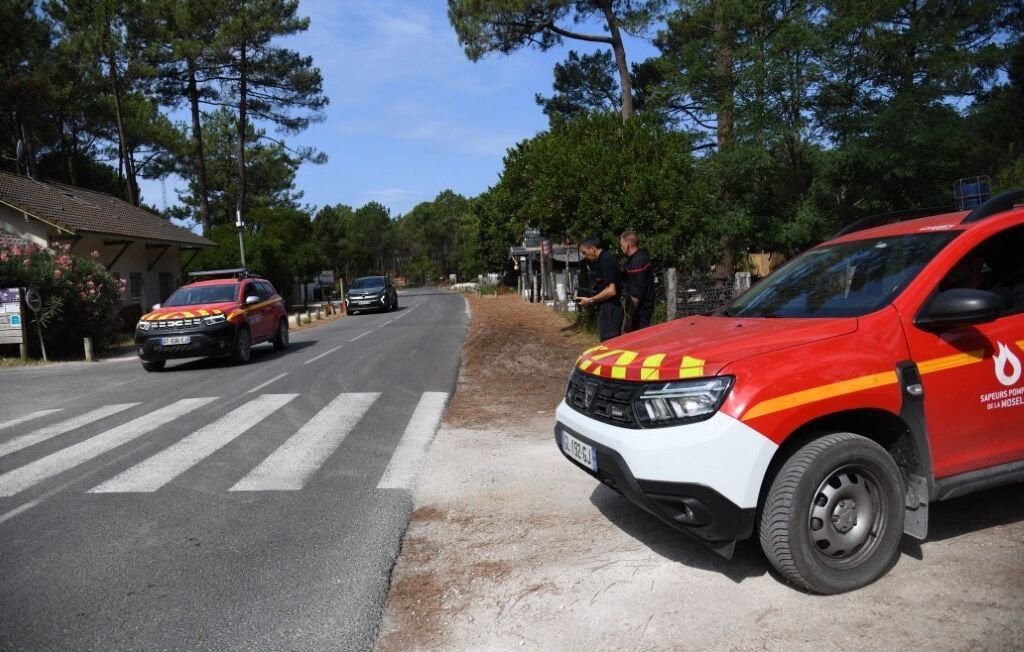
L'incendie en Gironde a touché environ 39.000 entreprises, particulièrement dans le secteur des cafés, hôtels et restaurants, entraînant une baisse d'activité de 64 % et soulevant des préoccupations quant à l'énorme impact économique sur la région, incitant les responsables à appeler à la solidarité nationale pour soutenir l'économie girondine. #IncendieGironde #Économie #Tourisme

Incendie en Gironde : Avec 39.000 entreprises touchées, il va falloir « sauver l'économie girondine »

Column: gehoorzaam naar de ondergang Max von Kreyfelt Dat het in Nederland misgaat is duidelijk. Geen enkel land is immuun voor slecht bestuur. Dat gebeurt. Het merkwaardige is dat vrijwel iedereen ziet dát het misgaat en vervolgens keurig een nummertje trekt bij hetzelfde loket dat de ellende heeft veroorzaakt. De winkelstraten lopen leeg. Familiebedrijven verdwijnen. Cafés sluiten. Bakkers stoppen. Slagers leveren de sleutel in. Ondernemers die jarenlang belasting betaalden, werk creëerden en buurten overeind hielden, worden behandeld alsof zij een verdachte organisatie leiden. Voor iedere vergunning een formulier. Voor ieder formulier een controle. Voor iedere controle een inspectie. Voor iedere inspectie een boete. En als de overheid echt tevreden is, volgt er nog een nieuwe regel om te voorkomen dat je ooit nog aan ondernemen toekomt. Ondertussen groeit de overheid onverstoorbaar verder. Meer ministeries. Meer toezichthouders. Meer beleidsadviseurs. Meer communicatieafdelingen die met een ernstige blik uitleggen dat jouw faillissement eigenlijk een veelbelovende stap is binnen een noodzakelijke transitie. Het is een wonderlijke economie. De mensen die het geld verdienen worden steeds zwaarder belast, terwijl degenen die het uitgeven zichzelf ieder jaar promotie geven. En toch is dat niet het meest fascinerende. Dat zijn wij zelf. Wij mopperen aan de keukentafel. We zien onze energierekening stijgen, onze boodschappen duurder worden en onze kinderen ontdekken dat een koopwoning inmiddels ongeveer net zo bereikbaar is als een villa op de maan. We zien ondernemers vertrekken, boeren verdwijnen en complete winkelstraten veranderen in een decor van leegstand. En daarna… …betalen we gewoon weer. Alsof gehoorzaamheid een natuurwet is. Alsof vrijheid een abonnement is dat door de overheid wordt verstrekt. Een overheid bezit geen eigen geld. Geen eigen economie. Geen eigen welvaart. Zij leeft uitsluitend van mensen die produceren. Wanneer die mensen verdwijnen, blijft uiteindelijk alleen een overheid over die belasting wil heffen op een economie die zij zelf heeft uitgehold. Misschien is dat wel de reden waarom steeds meer ondernemers hun toekomst elders zoeken. En misschien zegt het iets dat ook prins Bernhard inmiddels al zijn Nederlandse bezittingen en ondernemingen heeft verkocht. Je kunt daar van alles van vinden, maar het blijft een opvallend signaal wanneer zelfs mensen met alle mogelijkheden hun kapitaal liever buiten Nederland laten renderen. De vraag is dus niet hoe lang ondernemers dit nog volhouden. De vraag is waarom zij het überhaupt nog accepteren. Waarom organiseert het midden- en kleinbedrijf zich niet massaal? Waarom gaan niet honderdduizenden ondernemers één dag op slot? Niet om het land plat te leggen, maar om duidelijk te maken wie het land daadwerkelijk draaiende houdt. Niet uit woede. Maar uit zelfrespect. Want een overheid die haar ondernemers behandelt als verdachten, haar boeren als vervuilers, haar burgers als risicofactoren en haar belastingbetalers als een onuitputtelijke pinautomaat, is vergeten waarvoor zij ooit is opgericht. Dat is wel de grootste illusie van onze tijd. Dat de overheid denkt dat zij de samenleving draagt. Terwijl het altijd precies andersom is geweest. En zodra voldoende mensen zich dat weer herinneren, verandert de geschiedenis meestal sneller dan een ministerie een commissie kan instellen. 📌 Heeft u mijn bundel al? https://t.co/y64gXJ5yrY 📌 Steunt u mij ook? https://t.co/V2P6pFuNy1 #Nederland #ondernemen #vrijheid

NOS Jul 21

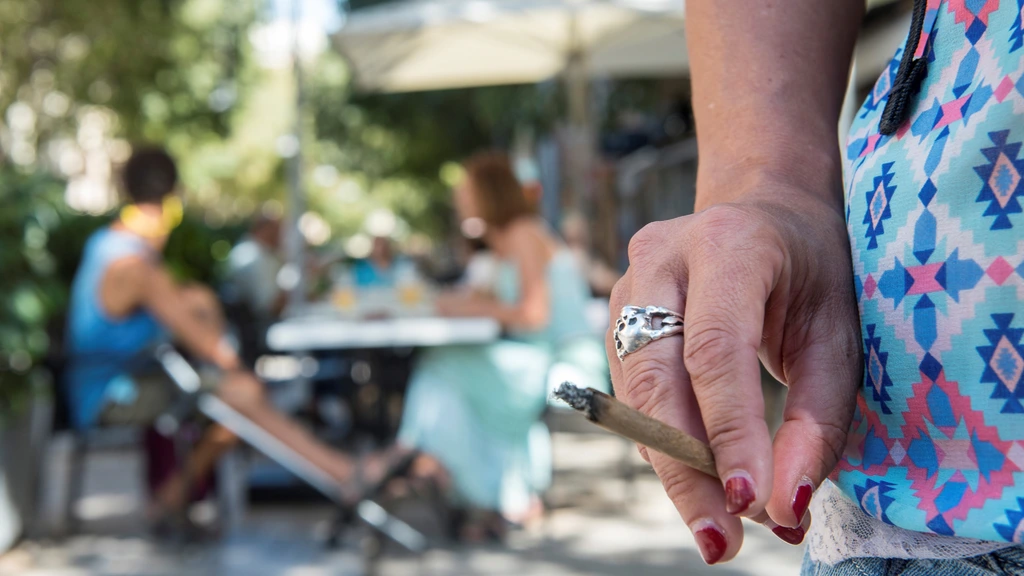
De Spaanse regering heeft een wetsvoorstel gepresenteerd om roken op terrassen van cafés en restaurants te verbieden en strengere regels voor e-sigaretten en andere rook- en dampproducten in te voeren, waarbij de steun van het parlement nog moet worden verkregen. #rookverbod #Spanje #vapen

Spanje wil roken op terrassen verbieden en regels voor vapes aanscherpen
Bild Jul 21

Die spanische Regierung plant ein Gesetz, das das Rauchen in vielen öffentlichen Außenbereichen, darunter Strände, Cafés und Parks, verbieten soll, um die Luftqualität zu verbessern und insbesondere schwangere Frauen und Asthmatiker zu schützen, was jedoch auf Widerstand in der Gastronomie stoßen könnte und noch der Zustimmung des Parlaments bedarf. #Rauchen #Rauchverbot #Spanien

Wo das Qualmen auf der Kippe steht - Spanien will Rauchen im Freien verbieten
Adham Hasanin Jul 21

| JULY 2026 | The Guard State How the largest Arab nation became a security contractor at the gates of its own people By Adham Hasanin Egyptian journalist and political writer, based in the Netherlands In June 2025, hundreds of activists from forty countries landed at Cairo airport. Doctors from France, lawyers from Australia, students from the United States, pensioners from the Netherlands. They carried no weapons and no banned slogans; they carried backpacks, walking shoes, and a single intention: to march from Arish to the Rafah crossing — entirely on Egyptian soil — to demand that food be allowed through to a people starving behind the gate. Not one of them reached Rafah. More than two hundred were detained before the march could begin. Around five hundred foreign nationals were deported from airports, hotels, and checkpoints. Passports were confiscated, activists were pulled out of downtown Cairo cafés, and the Global March to Gaza was cancelled on 16 June without taking its first step. And the world watched. This was no secret operation in a dark basement; it happened in the open, documented by the deportees’ own phone cameras, carried by every international news agency. The world watched an Arab state arrest Europeans, Americans, and Africans for wanting to walk towards Palestine. A state guarding the gate of a siege — from the side that was supposed to be the side of rescue. Hold that image, because it is the key to everything that follows. This was not an aberration in Egyptian policy, nor an isolated security decision. It is the function — the complete function around which the Egyptian state has been redefined over the past decade, and which it is time to call by its proper name: the Guard State. I. The Name — What Do We Mean by the Guard State? Political economy has long described states that live off the rent of their location rather than the production of their people. But what has crystallised in Egypt over the past decade goes beyond traditional geographic rent — the Suez Canal, say — into something far graver: the conversion of sovereignty itself into a commodity for hire. The Guard State does not sell its location; it sells its function. It collects its wages not for what it produces, but for what it prevents: it prevents the refugee from reaching Europe, the activist from reaching Gaza, its own people from reaching politics, and the resistance’s weapons from reaching their destination. Four gates, guarded by a single machine, whose wages are paid in loans, deposits, and perpetually renewed rescue packages. This is not a rhetorical metaphor; it is an economic structure with numbers attached. When the Egyptian economy collapsed in 2024, it was rescued not by productive reform but by a single deal whose subject was location: Ras el-Hekma — thirty-five billion dollars for a stretch of coastline. And whenever negotiations with the IMF stall, the tranches are unlocked by explicit European pressure whose subject is migration: nine billion euros from the European Union in the 2024 “Strategic Partnership,” whose own documents place “migration management” at its core. Europe does not pay Egypt to prosper. It pays Egypt to guard. Thus the model is complete: income in exchange for prevention, external legitimacy in exchange for guarding, and international silence about domestic tyranny in exchange for keeping the gates controlled. To see how the model works on the ground, consider the bloodiest gate of all: the gate of Gaza. II. The Gaza Gate — The Guard Who Is Himself Searched The first paradox must be nailed down with facts: Egypt is not a sovereign guard of its own crossing; it is a searched guard. Egyptian relief trucks — ninety-two thousand food parcels in a single convoy this month — are subject to Israeli inspection before entering the Strip: from Egyptian soil, through a crossing that bears an Egyptian name. The state that guards the gate does not hold its key. It owns the threshold, but not the door. Then the October 2025 truce added a new layer to the function. Under the fifteen-point roadmap sponsored by the international envoy together with the “guarantor states” — Egypt foremost among them — Cairo is to train the civilian police force that will replace Hamas in administering the Strip, under the slogan of “one authority, one law, one weapon.” Let us call things by their names: the state that could not — or would not — deliver a loaf of bread without Israeli permission is now qualifying to graduate the security apparatus that will oversee the disarming of the resistance. From guarding the siege to administering what comes after the siege — a promotion within the same project. And meanwhile, what is happening behind the guarded gate? Since the truce, more than one thousand one hundred Palestinians have been killed by Israeli fire — the latest, just two days ago, a ten-year-old boy named Motaz Abu Shaar, carried to his grave in Khan Younis by his mother, Warda. A United Nations commission of inquiry has concluded that Israel is “deliberately targeting children in an ongoing genocide.” This is what the guarantors’ official language calls a “ceasefire.” What meaning is left in the word “guarantor”? A guarantor that the gate stays firmly shut — however high the dead pile up behind it. III. The Mediterranean Gate — The Guard Europe Pays For The second gate faces north. Since 2016, Cairo has boasted — through its officials at every European forum — that “not a single irregular migration boat has departed from Egyptian shores.” This is very nearly true. But the forbidden question is: at what political price has this “efficiency” become an instrument of mutual blackmail? Europe — which condemns Egypt’s human rights record in its parliamentary resolutions — is the same Europe that signed the nine-billion-euro partnership, and the same Europe that stays silent about sixty thousand political prisoners because the alternative, in its calculations, is boats that never stop. And Cairo understands the game and has mastered it: whenever human rights pressure intensifies, the official discourse turns up the volume on “Egypt hosts millions of refugees” and “the last line of defence.” The result is a perfect structure of mutual blackmail: Europe buys its conscience’s silence, the regime sells its location, and the people — Egyptian and refugee alike — are the commodity in the transaction. The democracies that lecture on values are financing the guard who keeps the victims from knocking on their doors. This is not passing hypocrisy; it is a structural partnership in the Guard State model — one that makes Brussels and Berlin shareholders in everything this state produces, from domestic repression to external siege. IV. The Interior Gate — Guarding the People Against Politics But the most dangerous gate is not on any border; it is inside. The Guard State cannot perform its external function unless it first guards an internal gate: the people’s gate to politics. The function requires a people that does not ask: why are we guarding the siege of our brothers? Why are our trucks searched on our own soil? Why are guests deported for coming to walk in peace? To guarantee the question is never asked, the largest silencing machine in the country’s history was built: sixty thousand prisoners of opinion, a press ranked 166th out of 180 worldwide, and a state security case number waiting for anyone who writes. I write these lines from experience, not from reading reports. When I continued writing from my Dutch exile, the machine reached me across continents: accounts shut down by coordinated mass-reporting campaigns, documented threats, a family harassed inside Egypt as leverage — and my name entered into Case 1282 of 2024, not for any act I committed, but for opinions written from free European soil. This is not a personal complaint; it is a job description: the Guard State guards even beyond its borders, because the free word — wherever it is written — threatens the entire contract of guardianship. The logic is perfectly self-consistent: a regime that sells “stability” abroad cannot tolerate a voice revealing that the stability on offer is the stillness of graveyards. This is why the arrest of the foreign activists in June 2025 was inevitable, not incidental: a peaceful march reaching Rafah would have revealed, before the world’s cameras, that the gate opens when it is wanted open — and that the one keeping it shut is a partner, not a mediator. V. What Has Egypt Lost? — The Guard’s Bill An apologist might argue: what is the harm? A state monetising its location as Norway monetises its oil. The answer lies in the essential difference: Norway sells a resource; Egypt leases its will. And the difference between the two is the difference between trade and bondage. Let us tally what Egypt has paid for this model, in bare facts. It lost its water sovereignty: the Renaissance Dam was completed and filled without the state — owner of “the largest defence headquarters in the world” — daring anything beyond statements of concern; for the guard does not make trouble for the international order that employs him. It lost its regional standing: in the Iran–America war halted just weeks ago, Cairo was neither party nor mediator nor even consultant — Pakistan brokered the deal, while Egypt absorbed the economic shrapnel of Hormuz’s closure like a bystander caught in a battle whose parties it does not know. It lost its place in the conscience of its nation: the state that liberated its land in 1973 and led the Arab world for a century has become, in the eyes of the Arab street from the Atlantic to the Gulf, the gatekeeper of the siege. This loss, specifically, no loan or deposit can repay — because it is the only capital that cannot be printed. And it lost — here is the crux — the very national security in whose name the guarding is justified. The model proved its fragility at the moment of testing: when Israel feared an Iranian response last year, it cut off Egypt’s gas by unilateral decision within hours. The guard who believed himself a partner discovered he was merely a hireling whose wages stop the moment danger arrives. VI. The Alternative Is Not a Slogan — It Is the Recovery of the Original Function I will not close with an essay on “the solution lies in Arab unity”; worn-out words kill more surely than silence. The alternative is specific, and it begins with redefining the function. The state is not a guard; the state is the agent of its people’s will. Every foreign policy not derived from that will is — by definition — functional servitude, however it is wrapped in the language of wisdom and moderation. And the Egyptian will is known and needs no referendum: no people in this region accepts that its country serve as warden of the siege of Gaza, or as Europe’s border post. Practically, the recovery begins with three measurable steps. Open the Rafah crossing fully and sovereignly, by purely Egyptian decision — that alone would overturn the equation of the siege. Break the negotiating bondage by linking any cooperation on migration to concrete European positions on Palestine, not statements of concern. And open the interior gate — release the prisoners and lift the hand from the written word — because a state that fears an article will never dare face an occupier. I know the current regime will do none of this; guarding is its founding contract and its financial artery. But this article is not written for the regime. It is written for memory, and for the generation that will inherit the gates — so that it knows that what is presented to it today as “the fate of geography” is no fate at all. It is an employment contract, signed by a regime without a mandate from its people. And contracts, however long they run, end when one of their parties does. And the world — I return to where I began — is a witness that requires no further proof. It watched the deportees at Cairo airport; it watched the searched trucks; it watched Warda Abu Shaar carry her son to his grave behind a firmly guarded gate. The question is no longer: what is happening? The only question left is: who dares to name it? This article is a naming. Adham Hasanin is an Egyptian journalist and political writer based in the Netherlands, covering Arab and European political affairs.

20 minutos Jul 20

Según un estudio de la Asociación Estadounidense del Corazón, consumir hasta cinco tazas de café al día se considera seguro y puede estar relacionado con un menor riesgo cardiovascular, aunque es importante tener en cuenta que los beneficios pueden variar según la forma de preparación y la adición de ingredientes como azúcares y lácteos. #CaféSaludable #Cafeína #RiesgoCardiovascular

La pregunta del millón podría tener respuesta: ¿Cuánto café es saludable?