O Colapso Silencioso do Acesso ao Ensino Superior Enquanto o ministério trata da sua própria sobrevivência, dezenas de milhares de jovens continuam à espera de saber se têm futuro Há uns anos contrataram cá em casa um empreiteiro para resolver uma infiltração no tecto da sala. Ele chegou, olhou para a mancha, olhou para nós, e disse a frase que todo o português já ouviu de um profissional em apuros: "Isto não é nada, fica logo despachado." Três semanas depois, a mancha continuava lá, maior, mas a fachada do prédio, essa, tinha sido pintada de fresco. Perguntámos-lhe porquê. Respondeu que a fachada "era o que dava nas vistas". A sala, coitada, ficava para o "próximo orçamento". Este Verão, milhares de famílias portuguesas estão a viver a versão nacional dessa história. A fachada é um ministério. A infiltração é a crise no processo de acesso ao ensino superior. E quem vive por baixo dela, à espera que alguém a resolva, são dezenas de milhares de jovens. Os números, esses, não deixam grande margem para eufemismo: atrasos sucessivos na divulgação das notas do secundário, uma primeira fase de candidaturas que teve de ser adiada, uma auditoria externa anunciada ao processo de digitalização e uma factura de "poupança de dezenas de milhões de euros" que, entretanto, se transformou em custos de recrutamento urgente de trabalhadores para separar folhas de exame à mão. O ministro Fernando Alexandre garantiu, por escrito e em directo, que "nenhum aluno será prejudicado". Depois teve de desmentir-se a si próprio, adiar o calendário que jurava não precisar de tocar e, mais recentemente, anunciar uma época especial de exames em Setembro — a forma delicada de admitir, sem nunca o dizer nesses termos, que afinal houve alunos prejudicados. É a lógica do empreiteiro, aplicada à governação: quando a estrutura ameaça ruir, protege-se primeiro aquilo que os outros vêem — a narrativa, a demissão evitada, a moção de confiança contornada — e só depois, se sobrar tempo e argamassa, se olha para quem efectivamente vive dentro da casa. Os alunos que ficaram sem nota final na pauta, os professores acusados publicamente de "relatos falsos", os pais que telefonam para escolas sem resposta — esses são a infiltração que não dá nas vistas do lado de fora do prédio. Há qualquer coisa de muito português nesta cena, e não é preciso ir buscar Eça de Queirós para lhe encontrar antepassados — embora ele tivesse escrito páginas inteiras sobre funcionários públicos mais preocupados com a forma do que com a função. Basta lembrar como o Estado português, desde sempre, sabe fazer um requerimento perfeito para um problema que continua por resolver. A burocracia impecável como substituto da solução real: é quase uma tradição nacional, tão antiga como o carimbo. O secretário-geral do PSD, Hugo Soares, resumiu a coisa sem querer, quando disse que o ministro "não perdeu qualidade" e "nunca deixou de estar ao leme dos acontecimentos". Estar ao leme, note-se, não é o mesmo que estar a conduzir o barco a bom porto — é apenas a garantia de que alguém continua agarrado ao volante enquanto o barco vai por onde a corrente o leva. É uma frase de defesa política, não de gestão de crise, e a diferença entre as duas é precisamente o assunto desta crónica. Porque o que separa este episódio de um mero acidente técnico é a ordem de prioridades que ele revelou, sem disfarce. Quando confrontado sobre se tem condições para continuar no cargo, o ministro respondeu que "deu o seu melhor". Quando confrontado por estudantes que atravessaram o país para lhe falar, disse-se disponível para os ouvir — depois de o vídeo já ter corrido as redes sociais. A gestão da própria permanência veio primeiro; a gestão do problema dos alunos veio a reboque, empurrada pela pressão pública e não pela urgência que devia ter tido desde o primeiro dia. Aos alunos que esperam a nota que decide se entram no curso que escolheram, fica o convite a não confundir as duas coisas: uma coisa é o ministro estar preocupado com o futuro; outra, bem diferente, é saber de quem é esse futuro. O dele resolve-se com uma auditoria, uma conferência de imprensa e a paciência do primeiro-ministro. O vosso resolve-se com uma nota que ainda não chegou. #Educação, #Fernando Alexandre, #Exames Nacionais, #Ensino Superior, #Governo, #Política Portuguesa, #Reforma na educação
Bom dia. Estou aqui de volta, gente! Desculpem por não ter respondido ontem. Vou responder todo mundo. Obrigada por tanto carinho, tanta força e tantas mensagens. Não têm sido dias muito agradáveis, mas continuo firme, de pé. Tenho um compromisso com a minha vida: não desistir, seja lá o que aconteça. Vou me levantar todos os dias e seguir, mesmo quando tudo parecer um grande inverno. Ontem trabalhei normalmente, mas deixei um pouco as redes sociais e as outras coisas de lado para olhar para mim, para este momento e para tudo o que estou sentindo. Hoje estou um pouco melhor e decidi dar um fim nessa angústia. Vou raspar o cabelo. Ainda não sei se hoje ou amanhã, mas vou encarar de vez esta nova fase do meu tratamento de cura. Mais uma vez, eu não tenho palavras para agradecer tantas mensagens, tanto amor, tanto carinho e tantas orações. De verdade, eu nunca imaginei que receberia tanto afeto. É muito louco perceber quantas pessoas torcem pela gente, mesmo de longe, e como as redes sociais também conseguem aproximar e criar laços tão verdadeiros. Só tenho a agradecer a vocês, à minha rede de apoio, à minha família, aos meus filhos e aos meus amigos. Ontem fiz mais uma sessão de quimioterapia e imunoterapia. Foi mais pesada do que as anteriores, por tudo o que já contei, e por isso não registrei. Minha filha foi comigo. E tenho amigos que, todos os dias, tiram um tempinho para perguntar como estou, oferecer carinho, colo e ombro. Não existe uma forma suficiente de agradecer por tudo isso. É mais um dia. E vamos lá. Já foram quatro quimioterapias. Agora faltam quatro meses. Vai passar. Com cabelo ou careca, com tristeza ou alegria, com força, fé e amor, vai passar. Obrigada. #Força #Gratidão #Superação
🇧🇷 REAL TIME BIG DATA: Pesquisa nacional para a Presidência da República. 🔴 Lula (PT): 40% (+2) 🟢 Flávio Bolsonaro (PL): 33% (+2) 🟡 Renan Santos (MISSÃO): 9% (+3) 🔵 Ronaldo Caiado (PSD): 7% (+1) 🟠 Romeu Zema (NOVO): 2% (-2) ⚪️ Joaquim Barbosa (DC): 1% (-2) 🟤 Augusto Cury (AVANTE): 1% (=) 👤 2.000 entrevistados 🔍 18-20/07 ⚖️ BR-09247/2026 #EleiçõesBrasil #DataPesquisa #Lula2024
As #AI transforms justice systems, judicial capacity is key to protecting human rights and the rule of law. Proud to see @UNESCO and #Tanzania’s Institute of Judicial Administration develop a national curriculum on AI & the Rule of Law, with EU support. https://t.co/G8Hu0k4Tjc https://t.co/HmW2XH3iuD #AI #HumanRights #RuleOfLaw #TZ #EU
Check out my latest interview with @CurrentTimeTv about the situation in Kostyantynivka, Kramatorsk, Sloviansk and beyond, the definition of grey zones manpower problems on both sides, another Russian mobilization, and who is winning the war in Ukraine. ✅You can watch it in #UkraineWar #Kostyantynivka #CurrentTimeTv #UA
Taehyung curtiu e compartilhou em seus Stories do Instagram um vídeo das crianças cantando e dançando “Dynamite” nos bastidores da Copa do Mundo https://t.co/zPTUDeIj1m #Taehyung #Dynamite #CopaDoMundo
Antes de hablar del desarrollo del fútbol, estaría bien explicar dónde están los 5 millones de dólares que, curiosamente, pasaron por su cuenta en lugar de ser devueltos íntegramente a la CONMEBOL https://t.co/SJ2beKWQAl #Fútbol #CONMEBOL #Transparencia
Medicii din Timișoara atrag atenția asupra riscului de „astm de furtună”, o reacție acută cauzată de combinația dintre polenul din aer, umiditatea ridicată și curenții puternici înaintea furtunilor, care poate afecta chiar și copiii fără diagnostic anterior de astm, necesitând intervenție medicală rapidă în caz de dificultăți respiratorii. #astmDeFurtună #SănătateCopii #Polen

În cursul nopții trecute, nava LPG Gas Lisbon, sub pavilion liberian, a fost lovită în afara apelor teritoriale ale României, la aproximativ 20 de mile marine în largul țărmului românesc. La scurt timp după incident, două nave ale Agenției Române de Salvare a Vieții Omenești pe Mare s-au deplasat la fața locului și au evacuat întregul echipaj, inclusiv cei trei membri răniți. Toți au fost aduși în siguranță la țărm. De asemenea, un remorcher trimis în zonă se asigură că nava nu intră în derivă și că nu reprezintă un pericol suplimentar pentru siguranța navigației. Instituțiile statului sunt în alertă și vor clarifica circumstanțele, cauzele și responsabilitățile aferente acestui grav incident, cel mai probabil parte a războiul ilegal de agresiune al Federației Ruse împotriva Ucrainei. Nava provenea din portul Alexandria, Egipt, și se îndrepta către portul ucrainean Reni. #Navigatie #SigurantaMaritima #IncidentMaritim
Curiosità — Utilizzando Fable 5 di Anthropic, un matematico di Harvard ha apparentemente individuato un contro-esempio alla congettura jacobiana, un problema aperto di geometria algebrica formulato nel 1939 da Ott-Heinrich Keller. https://t.co/R88MbQVsRW #Matematica #Geometria #Ricerca
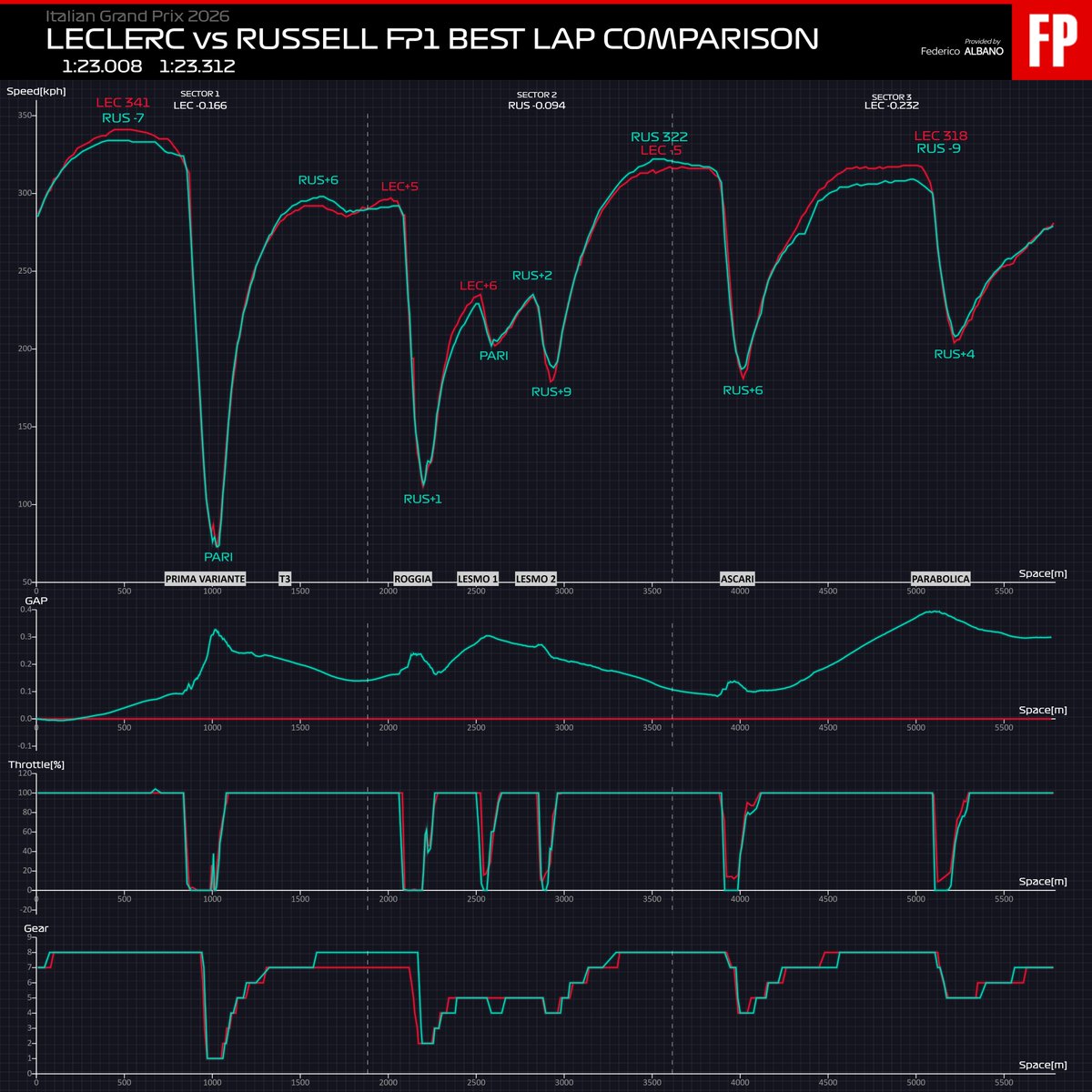
The reality is that the one who was going to look bad in this is the championship, because let's see how you defend that a Formula 1 car loses power after... two corners. But this is worse. I didn't title yesterday's video "F1 is embarrassed of itself" for nothing. It is a very sad reality. (translated)
Hablemos de este MOMENTAZO. El tremendo abrazo entre Unai Simón, David Raya y Joan García después de consagrarse CAMPEONES DEL MUNDO con la Selección de España. Uno de los temas más polémicos previo a la Copa del Mundo fue la portería de España. Se sabía que Unai Simón era el guardameta titular, pero la mayoría de aficionados creía que David Raya, que venía de un temporadón histórico con el Arsenal, y que Joan García, que brilló en su curso de debut con el FC Barcelona, llegaban en mejor estado de forma. Al final, Luis de la Fuente respaldó completamente a Unai Simón, con quien viene trabajando desde categorías juveniles. ¿Cómo respondió el guardián del Athletic Club? Siendo EL GUANTE DEL ORO del torneo y recibiendo ¡¡1 SOLO GOL!! en 8 partidos disputados, pese a enfrentar a monstruos de la talla de Fede Valverde, Cristiano Ronaldo, Kevin De Bruyne, Kylian Mbappé, Michael Olise, Ousmane Dembélé, Lionel Messi y Julián Álvarez. Se intentó instalar lío y controversia, pero eso solo unió más a los 3 porteros. Y estas fotos lo dicen absolutamente todo. Qué importante es cuando todos los jugadores de un plantel aceptan su rol y realmente entienden y respetan las decisiones del entrenador. La unión es la clave del éxito. En el fútbol, y en la vida. HONOR A LOS PORTEROS CAMPEONES DEL MUNDO. #Fútbol #CopaDelMundo #Equipo
| JULY 2026 | The Guard State How the largest Arab nation became a security contractor at the gates of its own people By Adham Hasanin Egyptian journalist and political writer, based in the Netherlands In June 2025, hundreds of activists from forty countries landed at Cairo airport. Doctors from France, lawyers from Australia, students from the United States, pensioners from the Netherlands. They carried no weapons and no banned slogans; they carried backpacks, walking shoes, and a single intention: to march from Arish to the Rafah crossing — entirely on Egyptian soil — to demand that food be allowed through to a people starving behind the gate. Not one of them reached Rafah. More than two hundred were detained before the march could begin. Around five hundred foreign nationals were deported from airports, hotels, and checkpoints. Passports were confiscated, activists were pulled out of downtown Cairo cafés, and the Global March to Gaza was cancelled on 16 June without taking its first step. And the world watched. This was no secret operation in a dark basement; it happened in the open, documented by the deportees’ own phone cameras, carried by every international news agency. The world watched an Arab state arrest Europeans, Americans, and Africans for wanting to walk towards Palestine. A state guarding the gate of a siege — from the side that was supposed to be the side of rescue. Hold that image, because it is the key to everything that follows. This was not an aberration in Egyptian policy, nor an isolated security decision. It is the function — the complete function around which the Egyptian state has been redefined over the past decade, and which it is time to call by its proper name: the Guard State. I. The Name — What Do We Mean by the Guard State? Political economy has long described states that live off the rent of their location rather than the production of their people. But what has crystallised in Egypt over the past decade goes beyond traditional geographic rent — the Suez Canal, say — into something far graver: the conversion of sovereignty itself into a commodity for hire. The Guard State does not sell its location; it sells its function. It collects its wages not for what it produces, but for what it prevents: it prevents the refugee from reaching Europe, the activist from reaching Gaza, its own people from reaching politics, and the resistance’s weapons from reaching their destination. Four gates, guarded by a single machine, whose wages are paid in loans, deposits, and perpetually renewed rescue packages. This is not a rhetorical metaphor; it is an economic structure with numbers attached. When the Egyptian economy collapsed in 2024, it was rescued not by productive reform but by a single deal whose subject was location: Ras el-Hekma — thirty-five billion dollars for a stretch of coastline. And whenever negotiations with the IMF stall, the tranches are unlocked by explicit European pressure whose subject is migration: nine billion euros from the European Union in the 2024 “Strategic Partnership,” whose own documents place “migration management” at its core. Europe does not pay Egypt to prosper. It pays Egypt to guard. Thus the model is complete: income in exchange for prevention, external legitimacy in exchange for guarding, and international silence about domestic tyranny in exchange for keeping the gates controlled. To see how the model works on the ground, consider the bloodiest gate of all: the gate of Gaza. II. The Gaza Gate — The Guard Who Is Himself Searched The first paradox must be nailed down with facts: Egypt is not a sovereign guard of its own crossing; it is a searched guard. Egyptian relief trucks — ninety-two thousand food parcels in a single convoy this month — are subject to Israeli inspection before entering the Strip: from Egyptian soil, through a crossing that bears an Egyptian name. The state that guards the gate does not hold its key. It owns the threshold, but not the door. Then the October 2025 truce added a new layer to the function. Under the fifteen-point roadmap sponsored by the international envoy together with the “guarantor states” — Egypt foremost among them — Cairo is to train the civilian police force that will replace Hamas in administering the Strip, under the slogan of “one authority, one law, one weapon.” Let us call things by their names: the state that could not — or would not — deliver a loaf of bread without Israeli permission is now qualifying to graduate the security apparatus that will oversee the disarming of the resistance. From guarding the siege to administering what comes after the siege — a promotion within the same project. And meanwhile, what is happening behind the guarded gate? Since the truce, more than one thousand one hundred Palestinians have been killed by Israeli fire — the latest, just two days ago, a ten-year-old boy named Motaz Abu Shaar, carried to his grave in Khan Younis by his mother, Warda. A United Nations commission of inquiry has concluded that Israel is “deliberately targeting children in an ongoing genocide.” This is what the guarantors’ official language calls a “ceasefire.” What meaning is left in the word “guarantor”? A guarantor that the gate stays firmly shut — however high the dead pile up behind it. III. The Mediterranean Gate — The Guard Europe Pays For The second gate faces north. Since 2016, Cairo has boasted — through its officials at every European forum — that “not a single irregular migration boat has departed from Egyptian shores.” This is very nearly true. But the forbidden question is: at what political price has this “efficiency” become an instrument of mutual blackmail? Europe — which condemns Egypt’s human rights record in its parliamentary resolutions — is the same Europe that signed the nine-billion-euro partnership, and the same Europe that stays silent about sixty thousand political prisoners because the alternative, in its calculations, is boats that never stop. And Cairo understands the game and has mastered it: whenever human rights pressure intensifies, the official discourse turns up the volume on “Egypt hosts millions of refugees” and “the last line of defence.” The result is a perfect structure of mutual blackmail: Europe buys its conscience’s silence, the regime sells its location, and the people — Egyptian and refugee alike — are the commodity in the transaction. The democracies that lecture on values are financing the guard who keeps the victims from knocking on their doors. This is not passing hypocrisy; it is a structural partnership in the Guard State model — one that makes Brussels and Berlin shareholders in everything this state produces, from domestic repression to external siege. IV. The Interior Gate — Guarding the People Against Politics But the most dangerous gate is not on any border; it is inside. The Guard State cannot perform its external function unless it first guards an internal gate: the people’s gate to politics. The function requires a people that does not ask: why are we guarding the siege of our brothers? Why are our trucks searched on our own soil? Why are guests deported for coming to walk in peace? To guarantee the question is never asked, the largest silencing machine in the country’s history was built: sixty thousand prisoners of opinion, a press ranked 166th out of 180 worldwide, and a state security case number waiting for anyone who writes. I write these lines from experience, not from reading reports. When I continued writing from my Dutch exile, the machine reached me across continents: accounts shut down by coordinated mass-reporting campaigns, documented threats, a family harassed inside Egypt as leverage — and my name entered into Case 1282 of 2024, not for any act I committed, but for opinions written from free European soil. This is not a personal complaint; it is a job description: the Guard State guards even beyond its borders, because the free word — wherever it is written — threatens the entire contract of guardianship. The logic is perfectly self-consistent: a regime that sells “stability” abroad cannot tolerate a voice revealing that the stability on offer is the stillness of graveyards. This is why the arrest of the foreign activists in June 2025 was inevitable, not incidental: a peaceful march reaching Rafah would have revealed, before the world’s cameras, that the gate opens when it is wanted open — and that the one keeping it shut is a partner, not a mediator. V. What Has Egypt Lost? — The Guard’s Bill An apologist might argue: what is the harm? A state monetising its location as Norway monetises its oil. The answer lies in the essential difference: Norway sells a resource; Egypt leases its will. And the difference between the two is the difference between trade and bondage. Let us tally what Egypt has paid for this model, in bare facts. It lost its water sovereignty: the Renaissance Dam was completed and filled without the state — owner of “the largest defence headquarters in the world” — daring anything beyond statements of concern; for the guard does not make trouble for the international order that employs him. It lost its regional standing: in the Iran–America war halted just weeks ago, Cairo was neither party nor mediator nor even consultant — Pakistan brokered the deal, while Egypt absorbed the economic shrapnel of Hormuz’s closure like a bystander caught in a battle whose parties it does not know. It lost its place in the conscience of its nation: the state that liberated its land in 1973 and led the Arab world for a century has become, in the eyes of the Arab street from the Atlantic to the Gulf, the gatekeeper of the siege. This loss, specifically, no loan or deposit can repay — because it is the only capital that cannot be printed. And it lost — here is the crux — the very national security in whose name the guarding is justified. The model proved its fragility at the moment of testing: when Israel feared an Iranian response last year, it cut off Egypt’s gas by unilateral decision within hours. The guard who believed himself a partner discovered he was merely a hireling whose wages stop the moment danger arrives. VI. The Alternative Is Not a Slogan — It Is the Recovery of the Original Function I will not close with an essay on “the solution lies in Arab unity”; worn-out words kill more surely than silence. The alternative is specific, and it begins with redefining the function. The state is not a guard; the state is the agent of its people’s will. Every foreign policy not derived from that will is — by definition — functional servitude, however it is wrapped in the language of wisdom and moderation. And the Egyptian will is known and needs no referendum: no people in this region accepts that its country serve as warden of the siege of Gaza, or as Europe’s border post. Practically, the recovery begins with three measurable steps. Open the Rafah crossing fully and sovereignly, by purely Egyptian decision — that alone would overturn the equation of the siege. Break the negotiating bondage by linking any cooperation on migration to concrete European positions on Palestine, not statements of concern. And open the interior gate — release the prisoners and lift the hand from the written word — because a state that fears an article will never dare face an occupier. I know the current regime will do none of this; guarding is its founding contract and its financial artery. But this article is not written for the regime. It is written for memory, and for the generation that will inherit the gates — so that it knows that what is presented to it today as “the fate of geography” is no fate at all. It is an employment contract, signed by a regime without a mandate from its people. And contracts, however long they run, end when one of their parties does. And the world — I return to where I began — is a witness that requires no further proof. It watched the deportees at Cairo airport; it watched the searched trucks; it watched Warda Abu Shaar carry her son to his grave behind a firmly guarded gate. The question is no longer: what is happening? The only question left is: who dares to name it? This article is a naming. Adham Hasanin is an Egyptian journalist and political writer based in the Netherlands, covering Arab and European political affairs.
Articolul subliniază riscurile astmului de furtună, o reacție respiratorie acută declanșată de o combinație de polen, umiditate și curenți puternici, fenomen tot mai frecvent asociat cu schimbările climatice și care poate afecta chiar și copiii fără istoric de astm. #astm #schimbăriclimatice #pollen

O tenente-general Marco Serronha sugere que ainda há esperança para reabrir negociações entre os EUA e o Irão a curto prazo, apesar da falta de confiança e das tensões políticas persistentes, ressaltando que a situação no Golfo representa um risco maior para Trump do que as baixas militares. #EUA #Irão #Guerra

Un pilot din Alaska riscă să-și piardă avionul de 95.000 de dolari din cauza transportului unui pachet cu șase beri către o comunitate unde alcoolul este interzis, iar cazul său ajunge la Curtea Supremă a SUA pentru a analiza dacă confiscarea aeronavei constituie o sancțiune disproporționată. #CurteaSupremă #KennethJouppi #confiscareavion
DANIELE CAPEZZONE "Senza sapere niente, da ieri politici di sinistra e stamattina giornali di sinistra, hanno messo sotto processo la polizia parlando di un caso George Floyd ,dell' ICE italiana ,di un omicidio nelle mani dello Stato ,appunto senza sapere niente". "E abbiamo un sindaco di Bologna che si chiama Lepore ,con il curriculum che ha, che convoca da ieri sera una manifestazione irresponsabilmente. Anche un bambino piccolo sapeva che sarebbe finita così!" @Capezzone #Filorosso #Politica #Giustizia #Proteste
Cred că prim-ministrul Netanyahu își are locul la Haga. Este un criminal de război care a fost pus sub acuzare de Curtea Penală Internațională
Președintele american Donald Trump a declarat că premierul israelian Benjamin Netanyahu nu va fi arestat în SUA în timpul vizitei sale oficiale, după ce primarul New York-ului, Zohran Mamdani, a sugerat analiza unei astfel de opțiuni din cauza unui mandat de arestare emis de Curtea Penală Internațională pentru crime de război. #Trump #Netanyahu #ȘtiriExterne
Cred că prim-ministrul Netanyahu își are locul la Haga. Este un criminal de război care a fost pus sub acuzare de Curtea Penală Internațională