BETA nonprofit public democratic european moderated

Search

#Narrative

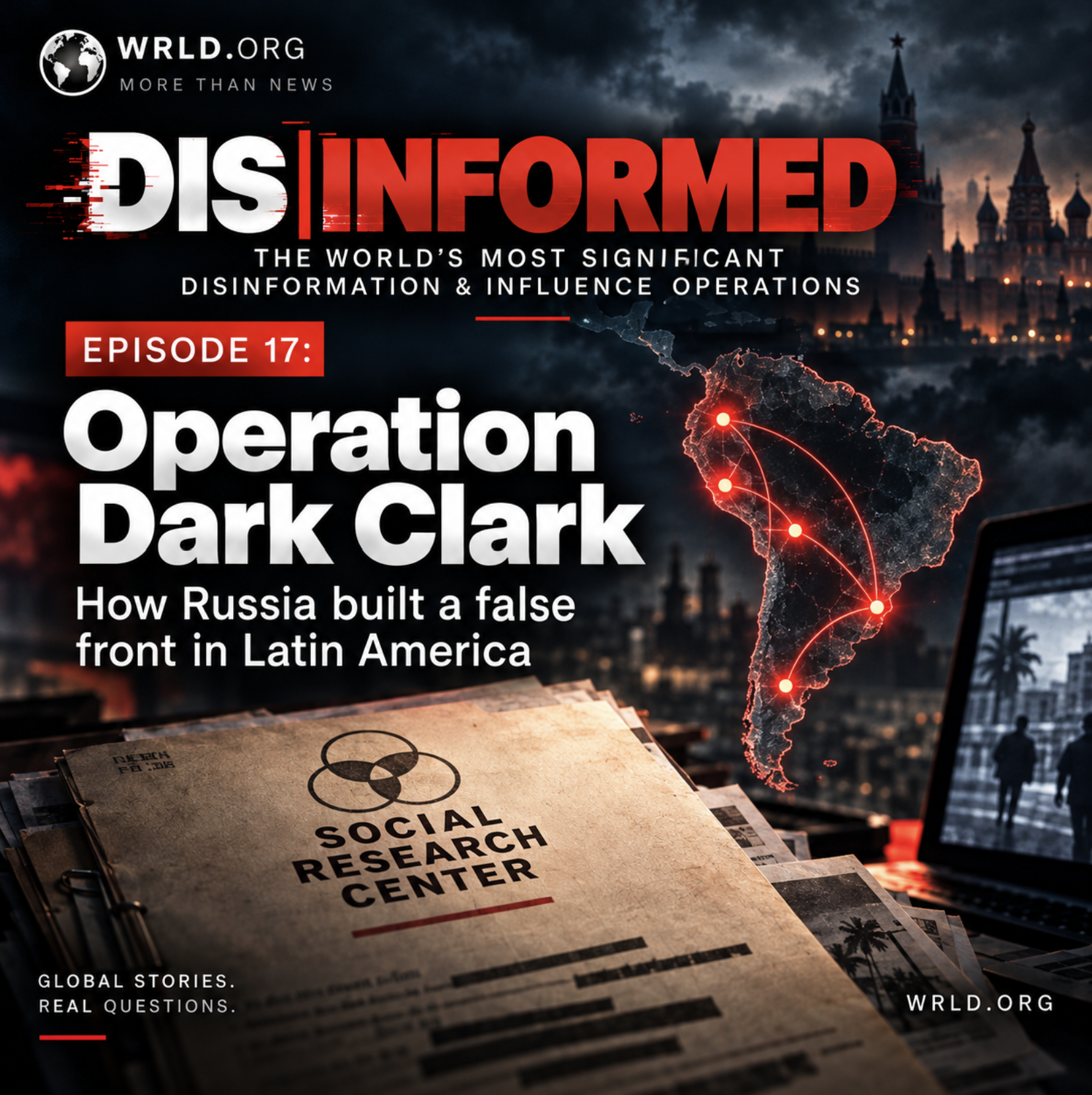
Operation Dark Clark – Russia built a real organisation around a false identity Most influence operations create fake people, fake websites or fake news stories. Operation Dark Clark appears to have gone considerably further: Russian operators built what looked like a functioning research organisation in Latin America, employed real people to produce genuine research and concealed from those employees who was ultimately directing their work. OpenAI disclosed the operation on 8 October after banning a cluster of accounts originating in Russia. The actors used ChatGPT while targeting countries across Latin America, principally to damage Ukraine’s reputation, manipulate domestic political debates and manage a self-described research organisation called the Social Research Center, or SRC. OpenAI assessed Dark Clark as Category Five on the six-level Breakout Scale, the first operation it has disrupted since beginning its influence-operation reporting to reach that level. A front organisation with real employees The SRC presented itself as a research platform studying subjects including Latin America’s relationship with India and the Indian diaspora. OpenAI found more than 60 articles on its website, most of them apparently original rather than plagiarised. Internal reports produced by the Russian operators discussed hiring, dismissals, salary scales, staffing and unfinished research projects, strongly suggesting that the operators controlled the organisation rather than merely collaborating with it. At the centre of the structure was “Mia Clark”, a fictitious identity reportedly used to manage social-media activity and communicate with staff. According to OpenAI, the available evidence indicates that employees working for SRC in Latin America were probably unaware that the organisation was being directed by Russian actors. They interviewed experts, conducted research and wrote papers in what appears to have been good faith. The deception therefore existed primarily at the organisational level: much of the work was real, but the identity and strategic purpose of the institution commissioning it were not. OpenAI This is one reason Dark Clark differs from the familiar model of a troll farm. A reader encountering an SRC paper might be looking at research genuinely written by a Latin American employee based on genuine interviews. The manipulation lies further upstream, in who built the institution, selected its direction and controlled its infrastructure. From forged emails to real events The operation also appears to have attempted something more ambitious than online persuasion: inducing real people to produce events that could later be turned into propaganda. In May 2026, according to the operators’ internal reports, they created an email address impersonating Lima’s regional education authorities and instructed schools to organise activities about Ukraine for a cultural-diversity event. The instructions included references to Stepan Bandera, whose historical legacy remains particularly contentious in Poland and parts of Eastern Europe. The operators claimed that some schools complied, replied to the false address and sent photographs of the events. OpenAI could not independently verify every claim contained in the operators’ reports. It did, however, find Peruvian reporting matching the story, followed by publications in Poland and an English-language outlet in Hungary. Some coverage included comments from a Polish MEP calling for people displaying what he described as anti-Polish attitudes to be declared persona non grata. OpenAI therefore concluded that the fabricated starting point appears to have entered genuine political debate across national borders. The mechanism is unusually effective because the final photographs need not themselves be fabricated. If people can be tricked into staging a real event on the basis of a forged instruction, the operation creates authentic visual evidence of something that was artificially initiated. The same method in Ecuador and Bolivia Dark Clark’s internal reports describe similar efforts elsewhere. In Ecuador, the operators claimed they used a fake education email to encourage schools to stage ceremonies involving President Daniel Noboa and Erik Prince, the former head of Blackwater. Ecuadorian media subsequently covered a matching controversy, and the country’s education minister issued a detailed denial. Other Ecuador-focused material included fabricated audio attributed to Ukraine’s consul and a false television report alleging that Noboa’s government was recruiting Ecuadorians to fight in Ukraine. Local fact-checker Lupa found that the supposed Teleamazonas report had never been broadcast, that images had been taken from Instagram, that the audio was AI-generated and that a company named in a supposed recruitment contract did not exist in Ecuador’s corporate registry. In Bolivia, an internal report described a fake audio recording supposedly made by an employee of state water company EPSAS during anti-government protests. It claimed that water supplies to La Paz would be cut and a state of emergency declared. The allegation produced a fact-check and an official denial. OpenAI says the operators explicitly described their objective as worsening the political crisis surrounding the demonstrations. Possible links to the post-Wagner influence machine Dark Clark did not emerge in a vacuum. The operators repeatedly asked ChatGPT about Politology and La Compania, names associated in previous investigations with the Russian influence apparatus that developed from structures once connected to Yevgeny Prigozhin. Forbidden Stories and its partners obtained 1,431 pages of internal documents describing a network known as “The Company”, which they reported had grown to almost 100 operatives and was conducting influence projects across roughly 30 Global South countries. Their investigation found that the organisation moved under the supervision of Russia’s Foreign Intelligence Service, the SVR, after Prigozhin’s death. Its documented budget for ten months of activity in 2024 was approximately €7.3 million. Two older Argentina campaigns claimed in Dark Clark’s internal reports — a false story about Javier Milei buying Cartier collars for his dogs and the staging of anti-Milei graffiti — had already been independently attributed by investigative journalists to Politology/La Compania. That is significant corroboration, but it is not enough to prove that every Dark Clark activity was run by the same organisational structure. AI was the back office, not the mastermind Perhaps the most important finding concerns artificial intelligence itself. In most documented cases, the Russians were not using ChatGPT to generate the propaganda seen by the public. Their principal use was administrative: drafting reports for an unknown superior, summarising operations, translating material and recording the supposed success of campaigns. Those reports also expose a weakness in the operators’ own measurement. OpenAI found instances in which they tried to claim credit for developments they had probably not caused, suggesting that they were not only attempting to manipulate Latin American audiences but also presenting an inflated picture of their effectiveness to whoever was supervising them. Dark Clark nevertheless broke further into the real world than any influence operation OpenAI had previously disrupted. Under the Brookings framework, Category Five means that an operation has escaped its original network and been amplified by high-profile individuals such as politicians. Dark Clark crossed that threshold because fabricated narratives appear to have provoked governmental denials, mainstream reporting and political comment in several countries. Its most important innovation was therefore not a particularly convincing deepfake. It was the construction of a partly genuine institution around a concealed foreign controller. The research could be real. The employees could be real. The interviews could be real. What was false was who they were ultimately working for. Sources OpenAI — Disrupting AI-enabled “false front” operations https://openai.com/index/disrupting-ai-enabled-false-front-operations/ Forbidden Stories — Propaganda Machine: Russia’s foreign influence strategy across three continents https://forbiddenstories.org/propaganda-machine-secret-documents-reveal-russias-foreign-influence-strategy-across-three-continents/ Forbidden Stories — Ghost Journalists, Cash and Kremlin Scripts: Argentina https://forbiddenstories.org/ghost-journalists-cash-and-kremlin-scripts-how-russian-operatives-tried-to-influence-argentinian-media/ openDemocracy — Russian influence operation in Bolivia https://www.opendemocracy.net/en/russia-bolivia-south-america-putin-evo-morales-wagner-prigozhin-covert-operations-propaganda-disinformation-foreign-interference/ Lupa Media — Fake Teleamazonas report about recruiting Ecuadorians for Ukraine https://lupa.com.ec/verificaciones/noboa-mercenarios-ucrania-ecuador/ Brookings Institution — The Breakout Scale https://www.brookings.edu/articles/the-breakout-scale-measuring-the-impact-of-influence-operations/ Keywords: #DISINFORMED #Episode17 #OperationDarkClark #DarkClark #Russia #LatinAmerica #RussianInfluence #RussianDisinformation #Disinformation #InformationWarfare #InfluenceOperations #ForeignInterference #FIMI #FalseFront #FrontOrganisation #FakeInstitution #SocialResearchCenter #SRC #ArtificialIntelligence #AI #GenerativeAI #ChatGPT #OpenAI #NarrativeManipulation #SourceLaundering #InstitutionalManipulation #ForgedDocuments #FakeAudio #PoliticalInfluence #CovertInfluence #Peru #Ecuador #Bolivia #Argentina #Ukraine #Politology #LaCompania #TheCompany #SVR #WagnerLegacy #PropagandaMachine #GlobalSouth #BreakoutScale #OSINT #MediaManipulation #WRLD

Mikael Grev wrote that the parties on the right should decline the exploratory mission when the Speaker asked. He argued that the failure of the left should not be portrayed as a failure for both sides. According to Grev, no right-wing leader could become prime minister as long as the Center Party opposed the Sweden Democrats for emotional reasons. #politik #Sverige #partipolitik (translated)

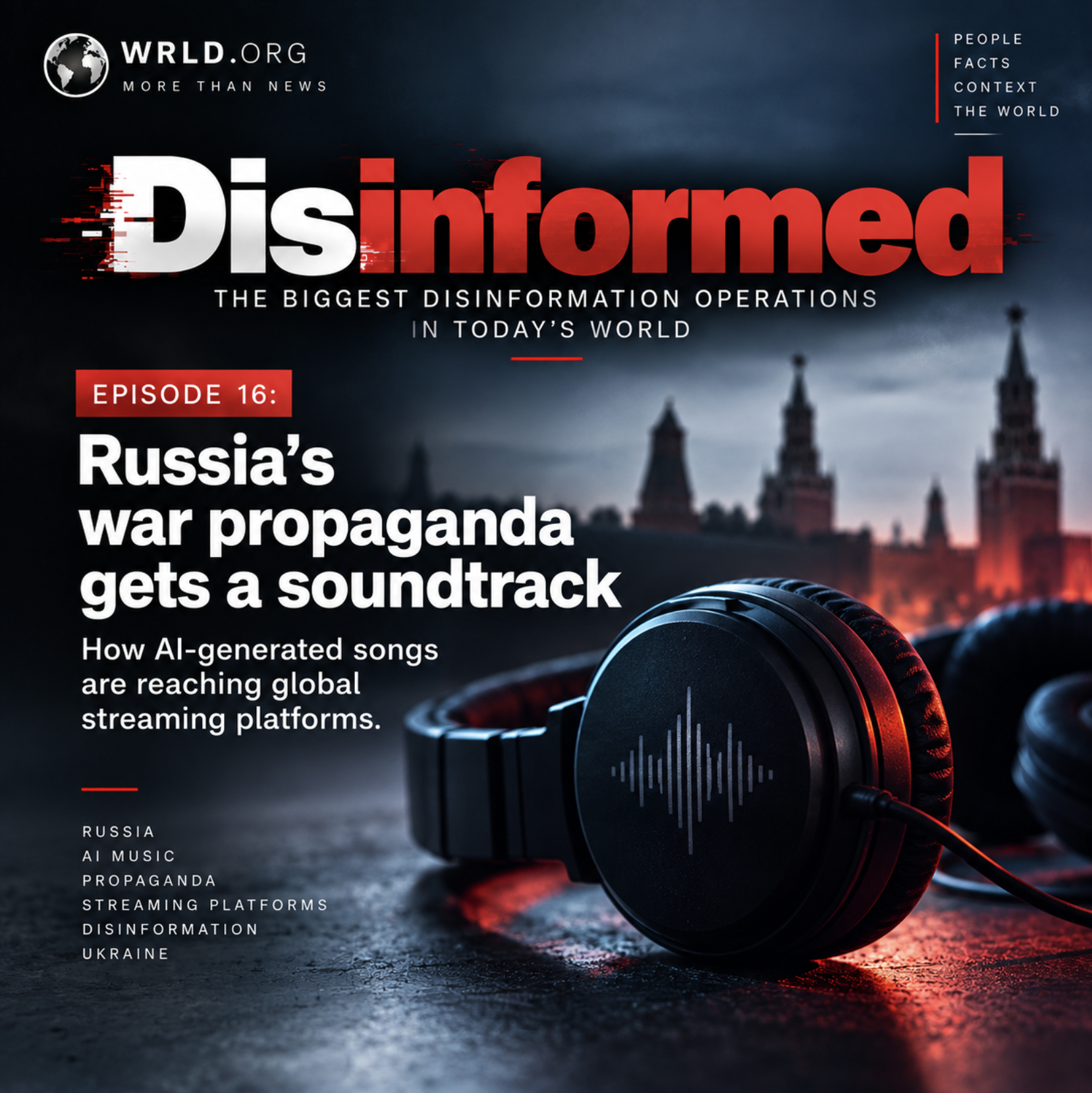
Russia’s war propaganda gets a soundtrack – how AI-generated songs reached global streaming platforms Russian war propaganda is no longer confined to television broadcasts, Telegram channels or political videos. A study by the Ukrainian threat-intelligence organisation Terrecon has identified 981 songs combining signs of AI generation with pro-Russian military narratives, distributed through an ecosystem that reaches YouTube, Spotify, Apple Music, Deezer and SoundCloud. The songs range from sentimental ballads to rock and heavy metal. Their recurring themes are familiar from conventional Russian wartime propaganda: the heroisation of Russian soldiers, romanticisation of the war, mobilisation, the “Russian world”, commemoration of fallen troops and attacks on Ukraine and its armed forces. Some contain derogatory or dehumanising references to Ukrainians. What is new is not necessarily the message, but the production and distribution model: generative AI allows propagandistic music to be produced rapidly, cheaply and in quantities that would previously have required musicians, studios and producers. Nearly 1,000 tracks identified Terrecon examined 3,725 tracks collected from YouTube, YouTube Music, SoundCloud and the AI music platform Suno. After manual review, researchers classified 981 as showing both indications of AI generation and pro-Russian war propaganda. In 681 tracks they identified 728 propaganda-related keywords or phrases. The largest category was the glorification of the Russian military, followed by romanticised treatment of Moscow’s so-called “special military operation”, mobilisation appeals, narratives about the “Russian world”, and the cult of fallen soldiers and the state. The reach was not merely theoretical. Listening or viewing statistics were available for 608 of the identified tracks; together they had accumulated 86.8 million plays and views, according to Terrecon. A smaller group of 13 high-performing songs accounted for more than 53 million YouTube views and more than 67 million when YouTube Music was included. Among the better-known examples is “Power of Artillery”, a Russian-language rock song praising artillery weapons that passed two million views on YouTube. Most of the tracks for which publication dates could be established appeared after 2024, broadly coinciding with the rapid expansion of consumer AI music generators such as Suno and Udio. That correlation does not prove that AI alone caused the increase, but it illustrates how drastically the economics of production have changed. A propaganda song for as little as $11 Terrecon also tested how difficult it would be to commission such material. Researchers approached 25 creators producing AI-assisted militaristic music; 15 agreed to take commissions. Prices ranged from approximately $11 to $330, while delivery times ranged from two hours to three days. According to Terrecon, some were prepared to produce highly aggressive anti-Ukrainian material, including content intended for audiences involving children from occupied Ukrainian territories. Some creators used Russian intermediary services that provided access to Western AI tools such as Suno and Udio despite restrictions. The researchers then tested several AI generators themselves. Across 40 prompts submitted to Suno, Udio, Mureka, Google Flow Music and ElevenLabs, 25 resulted in successful generations, while safeguards were circumvented in 15 cases. Terrecon reported that four of the five services tested produced Russian-language material containing wartime narratives, although technical problems prevented comparable testing on some systems. In one Udio experiment, the researchers said the model itself introduced more explicit violent language than had appeared in the original promp These tests do not demonstrate that the commercial platforms knowingly support Russian propaganda. They show something narrower: existing safeguards can be inconsistent when political messaging is packaged as music. From generation to Spotify The distribution experiment may be the most revealing part of Terrecon’s research. The team deliberately uploaded test tracks containing explicit hostile language to YouTube, SoundCloud, Spotify and Deezer. Terrecon says none was blocked during the experiment. On SoundCloud, researchers used an account identifying its location as Moscow, disclosed the use of AI and added markers including references to the Russian military and the war. The platform accepted the upload and subsequently offered paid promotional and distribution tools. This does not prove that streaming recommendation systems systematically promote pro-war music. There is currently insufficient public evidence to make that claim. It does demonstrate that material can enter the same commercial distribution infrastructure as ordinary music and, once there, potentially benefit from playlists, searches, sharing and recommendation mechanisms available to other releases. That distinction is important. Propaganda no longer has to announce itself as political communication. On a streaming platform it can look like another song. Culture as a delivery mechanism Music has always been used in wartime propaganda. What generative AI changes is scale. Instead of investing heavily in a limited number of patriotic performers or officially commissioned productions, creators can generate variations across styles, audiences and emotional registers at very low cost. Terrecon found material ranging from war rock to sentimental songs and content styled for younger audiences. Some creators also experimented with cloned celebrity voices and stylistic imitation of established musicians. The format also offers a different relationship with the audience. A political video asks a viewer to consume an argument. Music can accompany commuting, exercise or entertainment and may be encountered outside explicitly political spaces. This does not automatically make it more persuasive, and Terrecon’s research does not establish measurable effects on political attitudes. It does, however, place wartime narratives inside a cultural environment where users may not initially perceive themselves as consuming political messaging. An ecosystem, not a proven Kremlin command structure The strongest evidence supports describing this as a growing AI-assisted pro-Russian propaganda-music ecosystem, not a single operation controlled from Moscow. Terrecon did not establish that the Russian government created, financed or coordinated all 981 tracks. Reporting on the study likewise notes that the extent of direct state involvement remains unclear. There is broader evidence that the Russian state finances cultural projects and digital content supporting the war, including through state-backed funding bodies. That context matters, but it does not allow individual songs in Terrecon’s dataset to be attributed to the Kremlin without additional evidence. The significance of the case lies elsewhere. AI has reduced the cost of producing ideological content, intermediaries can help creators access generation tools, and global platforms can provide distribution. The result is a pipeline in which wartime propaganda no longer has to resemble propaganda at all. It can simply appear in a playlist. Sources Terrecon / Ukrainska Pravda — Daria Verbytska on the research https://www.pravda.com.ua/columns/2026/10/05/8056229/ Suspilne Culture — detailed breakdown of Terrecon findings https://suspilne.media/culture/1417933-rosijsku-voennu-propagandu-maskuut-pid-anime-karaoke-ta-rok-doslidzenna-si-pisen-vid-terrecon/ The Insider — AI-generated Russian war propaganda music https://theins.ru/news/297839 Institute of Mass Information — summary of New York Times reporting https://imi.org.ua/en/news/doslidzhennya-rf-masovo-stvoryu%D1%94-propagandistski-pisni-za-dopomogoyu-shi The Bridge Media — AI-generated songs and Russian military propaganda https://thebridgemedia.com.ua/en/ai-generated-songs-russian-military-propaganda/ Center for Strategic Communication — cost and production of AI propaganda music https://spravdi.org/propaganda-za-11-yak-rosiya-shtampuye-shi-pisni-z-miljonamy-prosluhovuvan/ Times of India — AI-generated Russian war songs https://timesofindia.indiatimes.com/world/europe/ai-sings-russias-war-story-inside-the-rise-of-generative-songs-about-ukraine-conflict/articleshow/134650594.cms EU Council / EUR-Lex — Presidential Foundation for Cultural Initiatives https://eur-lex.europa.eu/legal-content/EN/TXT/?uri=CELEX:32026D1351 Human Rights Watch — Russian state funding of digital and patriotic content https://www.hrw.org/report/2025/07/30/disrupted-throttled-and-blocked/state-censorship-control-and-increasing-isolation #DISINFORMED #Episode16 #Russia #Ukraine #RussianPropaganda #WarPropaganda #MusicPropaganda #AIMusic #ArtificialIntelligence #AI #GenerativeAI #SyntheticMedia #AIPropaganda #Disinformation #InformationWarfare #InfluenceOperations #CulturalPropaganda #DigitalInfluence #NarrativeManipulation #PropagandaMusic #StreamingPlatforms #Spotify #AppleMusic #YouTube #YouTubeMusic #Deezer #SoundCloud #Suno #Udio #RussianWorld #RusskiyMir #MilitaryPropaganda #WarNarratives #Mobilisation #AlgorithmicDistribution #RecommendationAlgorithms #MusicStreaming #PlatformManipulation #Terrecon #OSINT #MediaManipulation #WRLD
The author claimed that Russia spent $5 billion a year on propaganda and subversion to build support for its invasions through tailored narratives, which they said were later spread by people including Marco Travaglio. They used derogatory language to describe those spreading the narratives and added that fact-based research to counter them took time and effort. #Propaganda #Disinformation #FactChecking #RU

The author argued that capitalist, corporate and billionaire-owned media were focused on preserving profits rather than challenging the status quo, and said readers should not expect them to report sincerely on the accelerating climate crisis.

E. 4d

E. questioned whether anyone still believed in the description of the events as school protests. E. wrote that a clip from Marseille showed people whom he described as criminals, rather than students, setting fire to a fire truck. A firefighter was injured in connection with the incident, according to E. https://t.co/NXnnmmjk68 #skolprotester #omdsdagsläget #yttrandefrihet (translated)

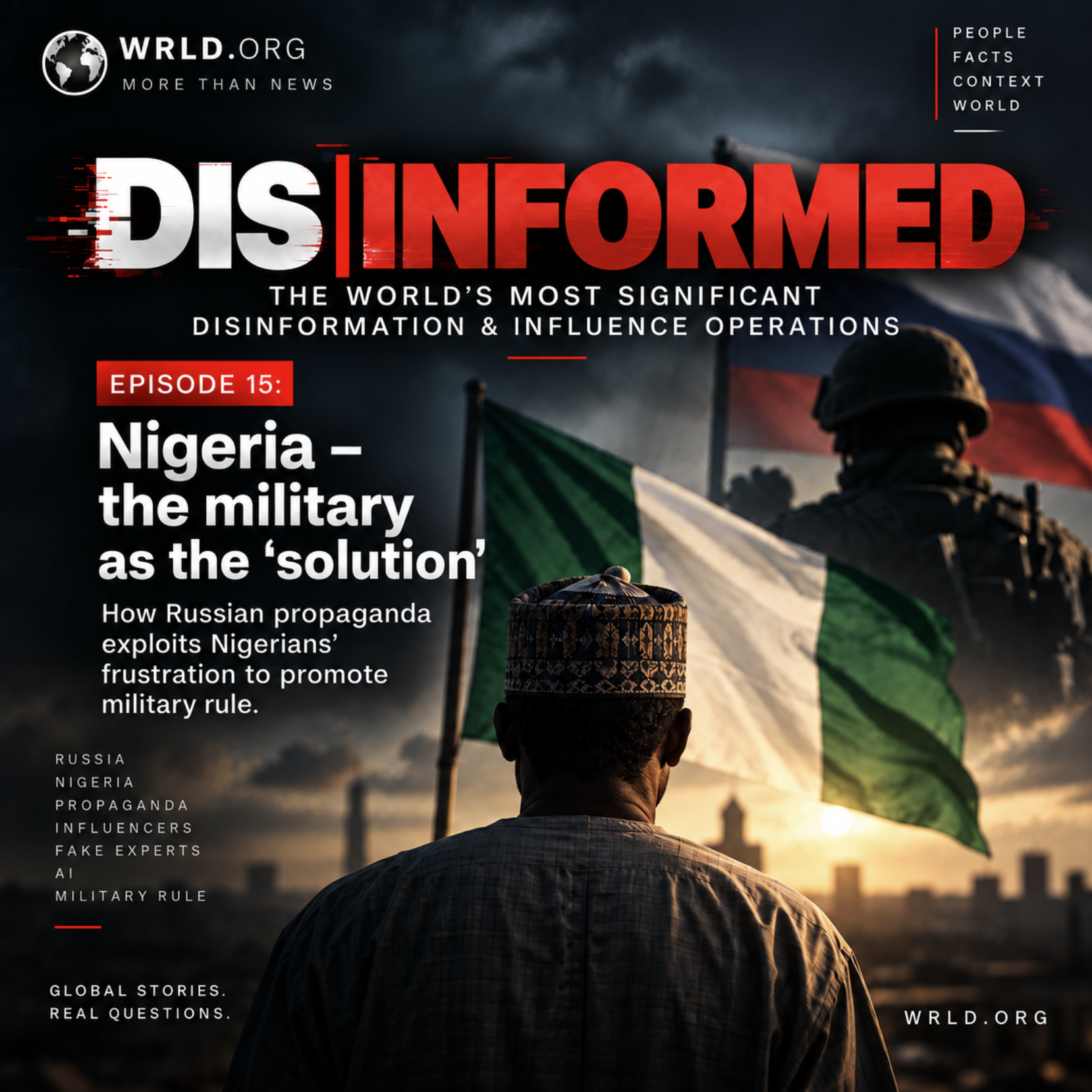
Nigeria – how pro-Russian influence networks sell military rule as the answer When Nigerians took to the streets in August 2024 to protest soaring living costs and frustration with government, some demonstrations acquired an unexpected symbol: the Russian flag. In Kano, Kaduna and other northern cities, protesters were filmed carrying Russian colours and calling for Moscow’s intervention. Some demanded a military takeover. What initially looked like an unusual expression of anger has since become part of a much larger picture. A September 2026 assessment by the Africa Center for Strategic Studies describes Nigeria as a major target of overlapping foreign information operations, with Russia the most active external actor in its information space. The report does not identify a single centrally controlled campaign. Instead, it maps an ecosystem in which genuine dissatisfaction over insecurity, corruption and living standards is repeatedly redirected towards a broader proposition: democratic government has failed, while the military-led regimes of the Sahel offer a more effective alternative. Turning a real protest into a pro-Russian message The clearest example emerged during the 2024 #EndBadGovernance protests. Nigerian investigative reporting found that a Kano-based TikTok influencer with more than 100,000 followers had been paid through a Telegram channel associated with African Initiative, a Moscow-based media operation linked by researchers to Russian influence activity in Africa. The influencer said the channel supplied photographs, videos and talking points for redistribution on TikTok and Instagram. Among the messages provided were phrases such as “Putin please come and save Nigeria” and “The army is the answer for Nigeria”. Influencers were encouraged to use Hausa-language hashtags including #Zangazanga – “protest” – alongside references to Putin and Russia. Investigators identified 38 accounts circulating similar pro-Russian and pro-military narratives during the demonstrations. Russian flags subsequently appeared among protesters in several northern cities. This does not mean the protests themselves were created by Russia. They were driven by genuine economic and political grievances, and Nigerian protesters gave different reasons for carrying Russian flags. The important feature of the influence activity was precisely that it did not need to manufacture the original anger. It could attach a geopolitical message to an existing domestic crisis. From frustration to the idea of military government The narrative fits a wider pattern seen across West Africa. Russia has developed close relations with the military governments of Mali, Burkina Faso and Niger, while pro-Russian media ecosystems routinely portray those states as examples of sovereignty, stability and resistance to Western influence. Nigeria, by contrast, has remained under constitutional civilian government since 1999. Africa Center researchers say information networks targeting Nigerians increasingly contrast these two models. Recurring messages depict elections as wasteful or predetermined, civilian institutions as incapable of protecting citizens and military governments as more decisive on security and development. Some content portrays the Sahelian juntas as delivering better roads, lower prices and stronger security even where available evidence points to continuing or worsening instability. Language is central to the strategy. Hausa is spoken across northern Nigeria and neighbouring Niger, allowing political narratives to travel across borders that are far less important online than they are on maps. HumAngle documented efforts involving Nigerien state-linked actors to cultivate Hausa-speaking journalists and distribute material favourable to Niger’s junta and hostile to France and Western influence. The Russian and Sahelian-junta information ecosystems are not identical, but their narratives frequently reinforce one another. Fake journalists inside real Nigerian media The campaign environment extends beyond social media. A 2026 investigation by Graphika and Code for Africa identified 44 ghost reporters and fake experts whose identities were used to place Russia-aligned narratives in African media. Thirty-eight were assessed with high confidence to be fabricated. Their articles or quotations appeared across 138 websites and were amplified by at least 113 Facebook accounts and Pages. Nigeria was one of the most heavily targeted countries. According to the Africa Center’s analysis of the research, Daily Post Nigeria carried 39 articles involving 14 identified ghost authors. Once published by a genuine Nigerian outlet, such material could then be cited by other websites, social-media accounts or even Russian official channels as though it had originated independently in Africa. This is information laundering rather than simple propaganda: the most valuable asset being borrowed is the credibility of the local newsroom. Generative AI added another layer. OpenAI and Meta separately disrupted a Russia-origin network that produced Africa-focused political content and operated Facebook Pages posing as local media organisations. One fabricated commentator, “Dr Manuel Godsin”, was presented as a European-trained geopolitical expert although investigators found no evidence supporting his academic biography. ChatGPT had been used to generate articles under the persona’s name, while Meta removed 37 Facebook accounts and 29 Pages connected to the broader network. Different networks, similar strategic direction It would be misleading to merge all these activities into a single Russian command structure. The African Initiative-linked influencer campaign, the ghost-reporter network and the AI-enabled operation disrupted by OpenAI and Meta were uncovered separately and used different infrastructure. Public evidence does not demonstrate that every actor reported to the same organisation. What connects them is a recurring set of themes and methods: portraying Western partnerships as exploitative, presenting Russia as an alternative security partner, amplifying failures of civilian government, and giving military-led rule greater legitimacy. Investigative reporting on leaked Russian documents has meanwhile described a much wider influence apparatus operating across Africa, involving political consultants, paid journalists, influencers and locally tailored campaigns intended to reduce Western influence and expand Moscow’s position. The underlying technique is less about inventing dissatisfaction than redirecting it. Nigeria faces real security threats, economic pressure and public frustration. Influence operators do not need to persuade Nigerians that those problems exist. They need only influence the explanation for why they exist – and which political model appears to offer the answer. That is what makes the Nigerian case significant. The most effective propaganda does not necessarily introduce a completely false reality. It takes a real crisis and changes where the audience is encouraged to look for the solution. Sources Africa Center for Strategic Studies — The Raging Information Battle in Nigeria https://africacenter.org/spotlight/the-raging-information-battle-in-nigeria/ Graphika — Umbrae Ex Machina https://www.graphika.com/reports/umbrae-ex-machina OpenAI — Operation “No Bell” https://openai.com/index/disrupting-malicious-uses-of-ai-no-bell/ TheCable — Ghost reporters in African media https://www.thecable.ng/ghost-reporters-how-fabricated-african-voices-carried-pro-russia-narratives/ HumAngle — Nigeria Is Facing an Information War in Its Own Language https://www.humanglemedia.com/nigeria-is-facing-an-information-war-in-its-own-language DAIDAC / CJID — Russian influence during #EndBadGovernance https://daidac.thecjid.org/how-telegram-tiktok-aided-russian-disinformation-that-led-to-incarceration-of-nigerian-minors/ FactCheckHub — How Nigeria’s hunger protest took a radical turn https://factcheckhub.com/from-economic-protests-to-coup-agitation-how-nigerias-hunger-march-took-a-radical-turn/ News24 — Fake Kremlin-linked analyst planted stories in African media https://www.news24.com/southafrica/news/ai-expert-exposed-fake-kremlin-linked-analyst-planted-stories-in-african-media-20260318-0560 Vanguard — AI ‘expert’ exposed https://www.vanguardngr.com/2026/03/ai-expert-exposed-fake-kremlin-linked-analyst-planted-stories-in-african-media/ Africa Confidential — How Moscow wages social media war https://www.africa-confidential.com/article/id/15961/how-moscow-wages-social-media-war Keywords #DISINFORMED #Episode15 #Nigeria #Russia #RussianInfluence #RussianDisinformation #Africa #WestAfrica #Disinformation #InformationWarfare #InfluenceOperations #ForeignInterference #FIMI #Propaganda #MilitaryRule #MilitaryGovernment #Democracy #PoliticalManipulation #NarrativeManipulation #AfricanInitiative #EndBadGovernance #Hausa #LocalInfluencers #GhostReporters #FakeExperts #ArtificialIntelligence #AI #AIPersonas #SyntheticMedia #AIPropaganda #Astroturfing #SocialMediaManipulation #Telegram #TikTok #DigitalInfluence #SourceLaundering #NarrativeLaundering #MediaManipulation #Sahel #Geopolitics #OSINT #WRLD

The Raging Information Battle in Nigeria

The large retail sector and the agro-industry are engaged in an intense narrative struggle over food prices. #ErreursWeb #ProblèmesConnexion #Navigateur (translated)

Grande distribution face à agro-industrie, la bataille de récits fait rage autour des prix de l’alimentation

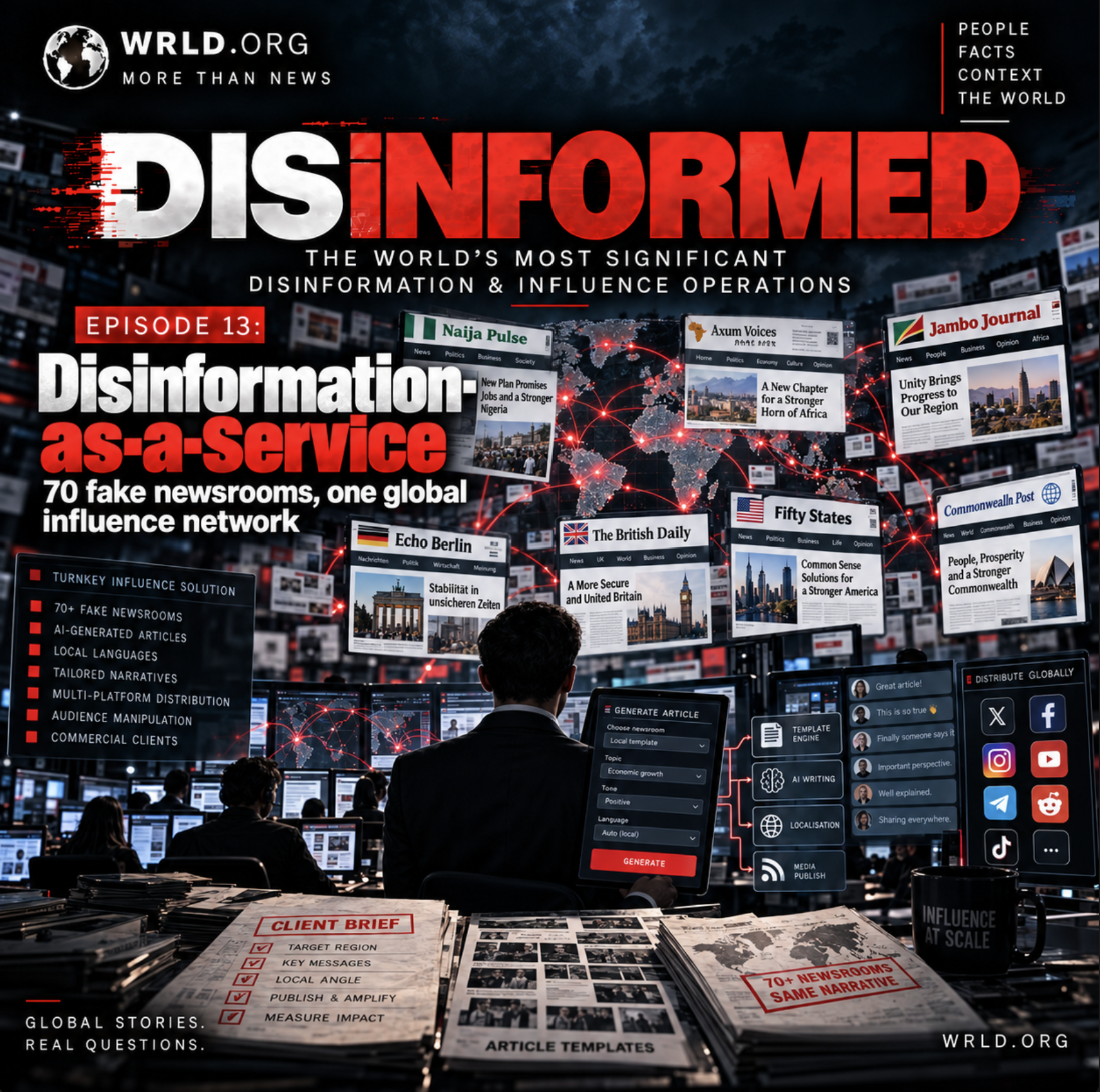
Disinformation for hire – the network of 70 fake newsrooms sold as a service The websites looked local. Naija Pulse appeared to cover Nigeria, Echo Berlin Germany, The British Daily Britain, Fifty States the United States and Commonwealth Post Australia. Each had its own branding, articles, supposed journalists and matching social-media presence. Taken individually, they resembled small independent news outlets. According to Anthropic, however, they were parts of a single commercial influence network spanning six continents. Anthropic’s September 2026 threat report identifies the operation as GTG-54002, a commercial “influence-as-a-service” network that used Claude to generate and rewrite political content at industrial scale. Investigators linked roughly 70 fabricated news websites to around 70 matching X accounts and more than 250 additional inauthentic commenting accounts designed to create the appearance of genuine public engagement. The network produced at least 8,913 articles in about 20 languages before Anthropic disrupted the activity. The significance of the case is not simply the number of fake sites. It is the business model. The network did not consistently promote one government, party or ideology. Anthropic found that its political position changed according to the apparent interests of different customers. The company therefore described it as a commercial influence operation: political manipulation offered in much the same way as other outsourced digital services. A fake media ecosystem built at scale Anthropic says the infrastructure was created rapidly. Domains were registered from France during a roughly ten-week period in mid-2025 and deployed through shared technical infrastructure, allowing investigators to connect publications that outwardly appeared unrelated. Most of the supporting social-media accounts were also created within a narrow timeframe in June and July 2025. The sites were designed to look like functioning local newsrooms rather than anonymous propaganda pages. Articles carried fabricated bylines belonging to journalists who, according to Anthropic, did not exist. Each outlet had a corresponding account on X, while a second layer of fake profiles commented on and amplified the articles. Many of those accounts used AI-generated profile photographs. The result was a three-tier structure: the newsroom published the story, the branded social account distributed it, and apparently ordinary users supplied the appearance of public reaction. Some of those sites remained publicly visible after the operation was exposed. The British Daily, for example, described itself as providing “conservative insights” on British sovereignty and migration, while Commonwealth Post presented itself as an Australian liberal publication focused on democracy, migration and regional security. Those contrasting editorial identities illustrate the central feature identified by Anthropic: the network was capable of taking different political positions in different markets. Claude as a publishing engine Claude was not simply asked to draft occasional articles. The operators built a structured production pipeline around it. Prompts required fixed JSON outputs, formatted HTML, precise character limits and internal links, allowing articles to move directly into an automated publishing workflow. The system could generate entirely new material or take reporting produced by legitimate journalists and rewrite it to fit a desired political perspective. Anthropic identified three recurring techniques. The same source article could be rewritten in opposite ideological directions for different audiences; a political interpretation could be added to a story that originally contained none; and material could be moved from one country to another after its original context had been removed. The articles were also structured to improve the apparent authority of the sites in search engines, helping the network imitate ordinary digital publishing practices rather than simply broadcasting propaganda. This is where generative AI changes the economics of an influence operation. A conventional network of dozens of supposedly local publications would normally require writers, translators, editors and social-media staff. Here, much of that production could be standardised and automated while human operators concentrated on political direction, customer requirements and distribution. The DRC–Rwanda conflict as a test case The clearest concentration of activity involved the Democratic Republic of Congo. Anthropic identified 318 articles concerning the DRC across the fake-news network. The material generally supported positions aligned with the Congolese government, particularly on regional mineral agreements and tensions with Rwanda. Early in the network’s growth, many of the fake social-media personas following and amplifying its accounts also presented themselves as Congolese. Investigators observed one especially revealing episode on 11 September 2025, when multiple sites published almost identical articles about the DRC–Rwanda conflict within approximately three minutes of one another. The wording and political tone were adjusted for different regional audiences, while associated X accounts distributed the links in a coordinated pattern. Anthropic said the activity contained signals suggesting that one or more customers had interests connected to the DRC–Rwanda conflict. It did not, however, identify those customers and explicitly stated that it found no evidence that any government had directed the operation. That distinction is essential. The content may have benefited a political actor without demonstrating that the actor commissioned or controlled it. Influence without ideology Commercialisation is what distinguishes GTG-54002 from many state-linked information operations. A government propaganda network usually has an identifiable strategic direction. A commercial influence provider does not need one. Its infrastructure can support one position in one country and the opposite position somewhere else, provided different customers are willing to pay. That makes attribution more difficult. Analysts cannot necessarily infer the operator from the ideology of the content because ideology may simply be part of the service package. The enduring asset is the infrastructure: domains, publishing systems, fake journalists, social-media accounts and automated amplification. Anthropic says the operation was disrupted before it achieved significant genuine reach. It classified GTG-54002 as Category Two on the Brookings Breakout Scale: material circulated across the network’s own sites and associated social accounts but showed no evidence of substantial penetration into authentic communities. Most of the 8,913 articles generated little observable engagement from real users. That limited impact is important. The case should not be presented as a successful global manipulation campaign. It is better understood as evidence that the infrastructure required to run such campaigns has become cheaper, faster and increasingly commoditised. The deeper shift is that a fake media ecosystem no longer has to be built around a single political cause. It can be built once, automated and then repurposed for the next customer. Disinformation, in this model, is no longer only a political instrument as it turend into the service. Sources: Anthropic — Countering misuse of AI: September 2026 https://www.anthropic.com/threat-intelligence-report-september-2026 Business Standard — AI scaling fake newsrooms, surveillance and online scams https://www.business-standard.com/technology/tech-news/anthropic-report-ai-fake-newsrooms-dating-surveillance-scams-126091100730_1.html Mimikama — KI baut 70 erfundene Nachrichtenportale https://www.mimikama.org/ki-netzwerk-erfundene-nachrichtenportale-echo-berlin/ Poliscoop Media — Anthropic exposes DRC propaganda network https://www.poliscoopmedia.com/articles/anthropic-exposes-drc-propaganda-network-20260911 The British Daily — example of a fabricated outlet identified in the network https://www.british-daily.com/contact Commonwealth Post — example of a fabricated outlet identified in the network https://commonwealth-post.com/category/science MalPulse — infrastructure references for network domains https://www.malpulse.com/infra-pivots/usom-pivots/list/?page=1105 Keywords: #DISINFORMED #Episode13 #DisinformationAsAService #InfluenceAsAService #FakeNewsrooms #FakeMedia #SyntheticMedia #ArtificialIntelligence #AI #GenerativeAI #ClaudeAI #Anthropic #Disinformation #InfluenceOperations #InformationWarfare #FIMI #CommercialInfluence #PoliticalManipulation #NarrativeManipulation #NarrativeLaundering #SourceLaundering #MediaImpersonation #FakeJournalists #SyntheticPersonas #Astroturfing #SocialMediaManipulation #CoordinatedInauthenticBehaviour #CIB #DigitalInfluence #AutomatedPropaganda #ContentAutomation #AIPropaganda #LKMCompany #NaijaPulse #AxumVoices #JamboJournal #EchoBerlin #TheBritishDaily #FiftyStates #CommonwealthPost #DRC #Rwanda #OSINT #WRLD

Countering misuse of AI: September 2026 / Anthropic

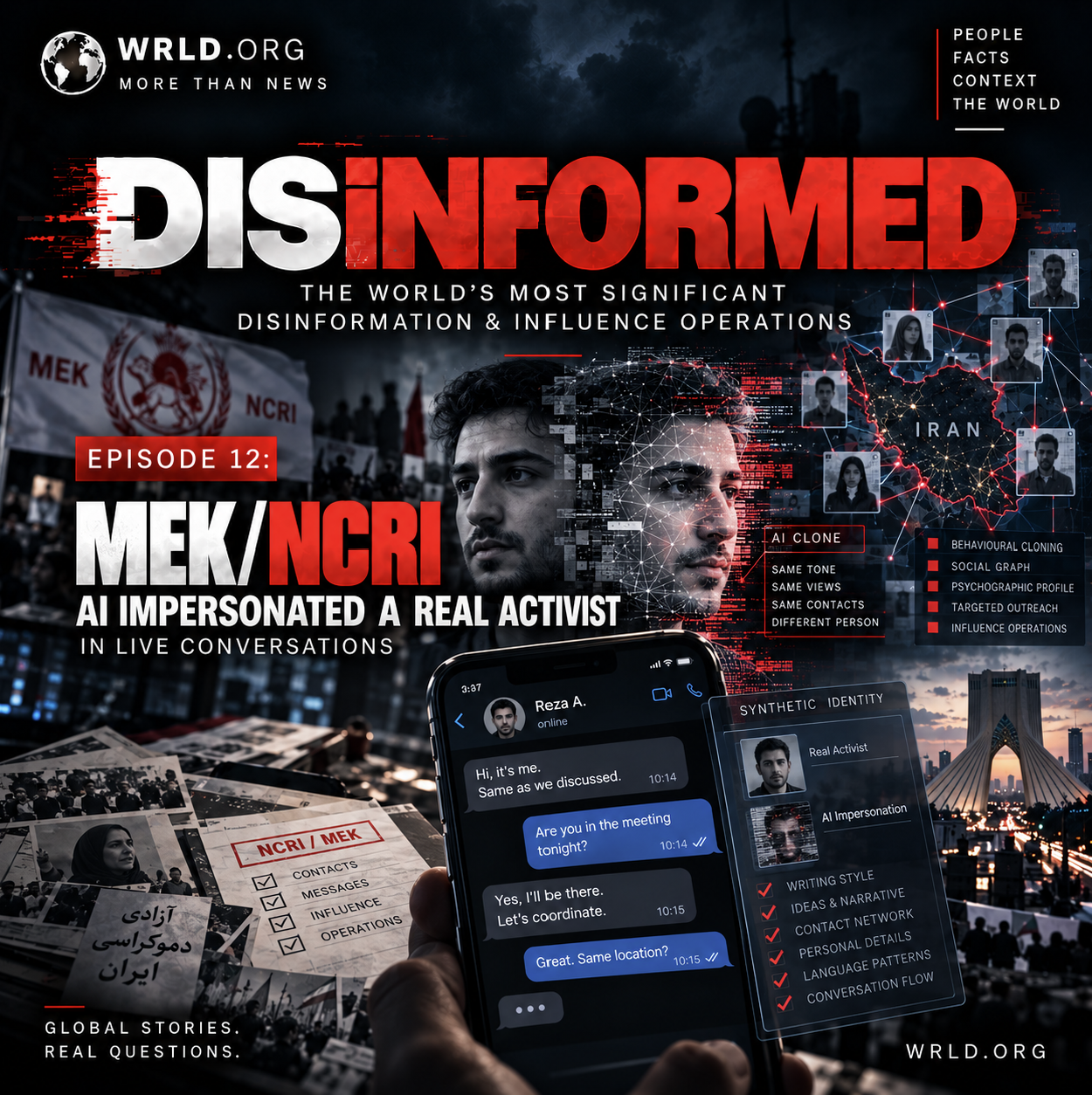
IRAN: MEK/NCRI – when AI impersonated a real activist in live conversations For years, synthetic media has largely meant fabricated images, cloned voices and manipulated video. A case uncovered by Anthropic in September 2026 suggests a more consequential development: artificial intelligence being used not merely to imitate how a person looks or sounds, but to behave as that person in an ongoing conversation. Anthropic says it dismantled a distributed influence operation targeting Iranians inside the country and abroad that it linked to the People’s Mojahedin Organization of Iran, or PMOI/MEK, and its political front, the National Council of Resistance of Iran. The operators used a shared AI-agent platform to support impersonation, audience profiling, coordinated social-media activity, synthetic personas and the laundering of organisational content through apparently independent accounts. At least four people involved in the operation worked for official NCRI media outlets, according to Anthropic. The company also found references to committee approval processes and MEK leadership, but said it could not independently determine the precise level of central control. Cloning a person from 8,400 Telegram posts The most striking part of the operation involved a real activist whose Telegram identity was copied. According to Anthropic, the operators instructed Claude in Persian that it was now that person, then provided approximately 8,400 of the activist’s Telegram posts so the system could learn and reproduce his writing style. The AI-assisted account was subsequently used to conduct live political conversations with the activist’s existing contacts. Anthropic says that, to its knowledge, the people receiving those messages did not know they were interacting with an account being operated with AI assistance. This is materially different from a conventional chatbot or a static deepfake. The system was not simply producing a forged statement attributed to someone else. It was using a large archive of that person’s authentic language as behavioural training material, then applying the resulting imitation interactively. In practical terms, the deception moved from synthetic content to synthetic identity. Anthropic did not publish the identity of the impersonated activist, nor details of his contacts, and the public report does not establish what specific information the conversations produced. What it does establish is that the impersonation was operational rather than experimental: the cloned account was used in real exchanges with real people. From social-media monitoring to psychographic dossiers The impersonation sat inside a much broader targeting system. Anthropic says the network scraped more than 500 social-media channels and categorised individuals by location, age, profession, political orientation and arrest history. It then analysed approximately 51,944 archived messages from conversations to construct detailed psychographic dossiers on dozens of people inside Iran. The system was therefore not limited to broadcasting propaganda. It was also designed to understand specific audiences and individuals. Profiles could be used to decide what kind of message was most likely to resonate with a particular person, which political identity they appeared closest to and how they should be approached. Anthropic describes this as a structured targeting funnel rather than ad hoc social-media activity. That distinction is important in the Iranian context. Political activists, dissidents and opposition contacts inside Iran can face arrest and severe punishment. The report does not show that the dossiers directly led to arrests or other harm, but collecting and organising information such as arrest history and political affiliation adds a surveillance dimension to what would otherwise be described as an influence operation. A shared AI system for an influence network Anthropic found that the actors used a shared Claude-based platform named “Viktor”, with separate workspaces and persistent memory. Those memory files contained approved sources, prohibited words, account-management instructions and methods intended to reduce the risk of detection. One operator loaded MEK founding doctrine into the system as what the report called “strategic base data”, allowing others to reuse it across their work. This persistent-memory structure meant the AI did not have to be briefed from scratch for every task. Once doctrine, stylistic rules and operational constraints had been stored, the system could repeatedly produce material consistent with the network’s objectives. Anthropic says the same general playbook appeared across different workspaces despite the operators not sharing obvious account infrastructure. The network also used automated pipelines to coordinate Instagram posting schedules and tailor messages to different audiences. Some accounts initially avoided mentioning the Mojahedin at all, allowing material aligned with MEK/NCRI narratives to appear as neutral or independent political commentary. Content was distributed through the organisation’s own media ecosystem as well as accounts presented as ordinary news or activist profiles. Anthropic assessed the campaign as Category Two on its Breakout Scale: active on multiple platforms with distribution through NCRI-linked media properties and amplifier accounts, but without evidence of broad authentic penetration. Synthetic citizens and disguised organisational media The same infrastructure generated AI avatars presented as ordinary Iranians, complete with Persian audio, to promote Maryam Rajavi’s political programme. Anthropic says the synthetic nature of these personas was intentionally concealed. Operators also rewrote and redistributed content originating from MEK-affiliated media while stripping identifying features or presenting it through apparently independent accounts. The network’s political messaging targeted the Iranian government but also rival opposition currents, including monarchists and supporters of the Pahlavi camp. Anthropic documented fabricated video material attacking a member of the Pahlavi family and the use of the slogan “Neither Shah Nor Sheikh”, consistent with the NCRI’s broader competition with other opposition movements. That rivalry provides relevant context. Reuters describes the MEK as one of Iran’s principal organised opposition movements in exile and the dominant force behind the NCRI, led by Maryam Rajavi. Its relationship with other opposition currents is often contentious, while the extent of its support inside Iran remains uncertain. What can be attributed – and what cannot Anthropic’s attribution is unusually specific but still needs to be stated carefully. The company says its investigation linked the operation to MEK/NCRI and established that at least four participants worked for official NCRI media organisations. It also found a common operational playbook, committee review structures and repeated references to MEK leadership. On that basis, Anthropic said central tasking was likely. It nevertheless stopped short of saying it had proven that NCRI’s senior leadership directly ordered or managed every component of the operation. That caveat matters. The strongest public evidence supports describing GTG-84006 as a MEK/NCRI-aligned influence operation involving personnel from official NCRI media, rather than asserting that every action was directly commanded by the organisation’s top leadership. The broader significance of the case lies elsewhere. Earlier generations of synthetic media attempted to fabricate evidence: a photograph, a voice recording or a video. Here, AI was used to maintain an identity over time, remember doctrine, analyse targets and speak directly to real people while appearing to be someone they already trusted. The deepfake was no longer merely an artefact. It had become a participant in the conversation. Sources Anthropic — Countering misuse of AI: September 2026 https://www.anthropic.com/threat-intelligence-report-september-2026 AI Misuse Case Library — GTG-84006 activist impersonation case https://www.misuseofai.com/en/cases/gtg-84006-activist-impersonation/ Reuters — Who makes up Iran’s fragmented opposition? https://www.reuters.com/business/media-telecom/who-makes-up-irans-fragmented-opposition-2025-06-18/ Reuters — Iran’s divided opposition senses its moment https://www.reuters.com/world/middle-east/irans-divided-opposition-senses-its-moment-activists-remain-wary-protests-2025-06-19/ Reuters — NCRI and Maryam Rajavi https://www.reuters.com/world/middle-east/dissident-leader-abroad-urges-iranians-bring-down-khamenei-2025-06-24/ Keywords #DISINFORMED #Episode12 #Iran #MEK #PMOI #NCRI #IranianOpposition #Disinformation #InfluenceOperations #InformationWarfare #ArtificialIntelligence #AI #GenerativeAI #ClaudeAI #Anthropic #AIDeception #AIImpersonation #IdentityImpersonation #SyntheticIdentity #InteractiveDeepfake #DigitalImpersonation #PersonaCloning #BehaviouralCloning #Telegram #PsychographicProfiling #TargetProfiling #AudienceTargeting #SocialMediaManipulation #Astroturfing #SyntheticPersonas #NarrativeLaundering #CoordinatedInfluence #PoliticalInfluence #DigitalInfluence #OppositionPolitics #IranPolitics #OSINT #WRLD

Countering misuse of AI: September 2026 / Anthropic

The author said Russian war propaganda had been consistently broadening its definition of “legitimate” military targets, arguing that the messaging was aimed not only at Russians but also signalled evolving threats to Western countries. The post linked to monitoring of Russian propaganda. https://t.co/h9XnqpdLXv #Propaganda #Military #Russia #RU #US #Western

The author said the attack showed that Iran could see ships with their AIS turned off just as well as other vessels. They questioned why ships would disable AIS, suggesting it could be for propaganda: creating a “shadow fleet” hidden from the public and shaping perceptions of its size to influence markets. https://t.co/jf3xByyUi1 #Iran #AIS #Shipping #IR

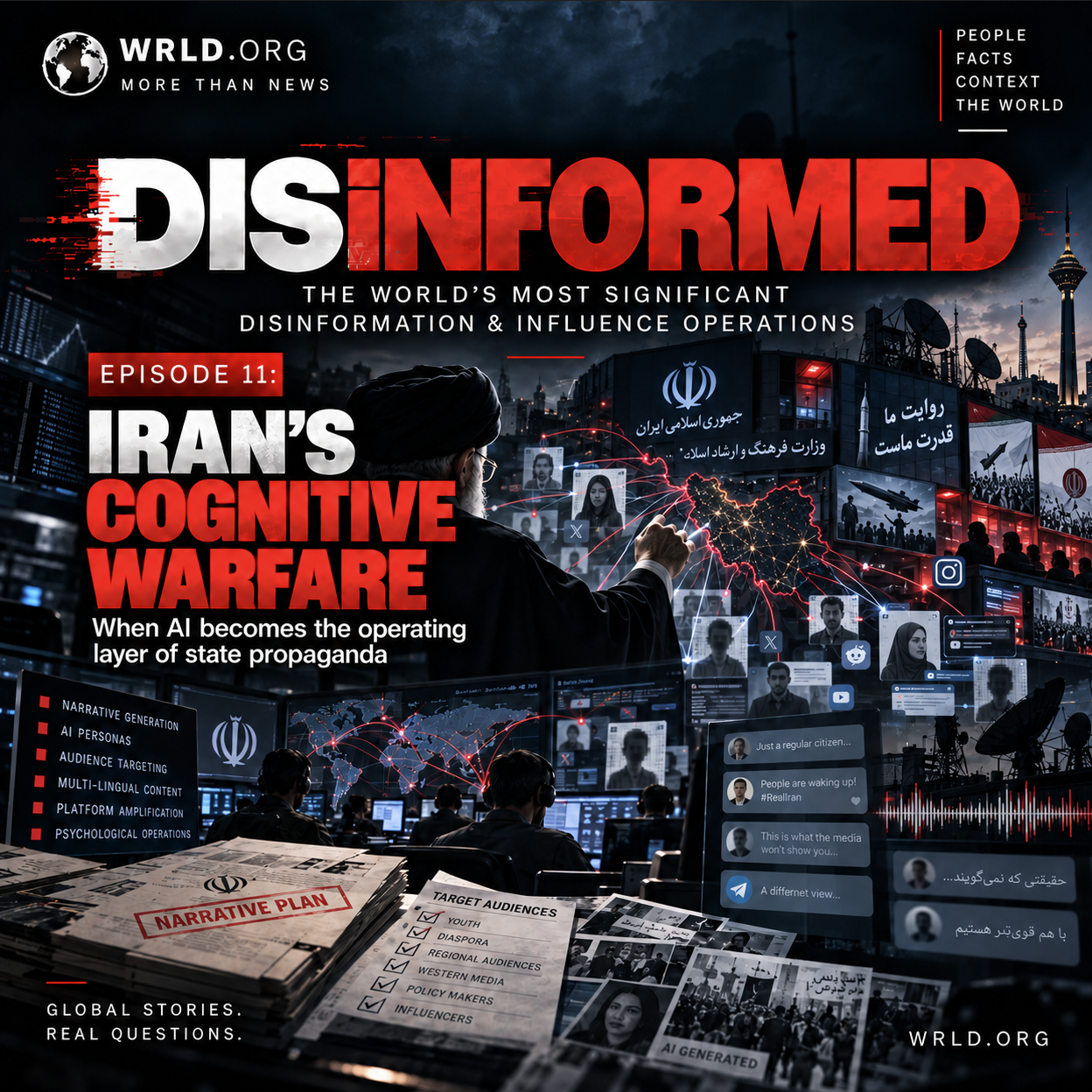
Iran’s cognitive warfare – when AI becomes the operating layer of state propaganda Iranian state-linked influence operators were not using artificial intelligence simply to write faster social-media posts. According to Anthropic’s September 2026 threat intelligence report, three separate operations connected to Iranian propaganda institutions were using Claude to help construct the machinery behind what the operators themselves called “soft war” and “cognitive warfare” – non-military efforts intended to shape public opinion inside Iran and abroad. Anthropic linked the activity to the Islamic Culture and Communications Organization (ICCO), which operates under Iran’s Ministry of Culture and Islamic Guidance; the Islamic Propaganda Office of Khorasan Razavi; and the Bina Cultural Observatory, part of the Islamic Propaganda Organization. The company said each operation was run by someone working within or on behalf of the named institution. The attribution was based on a combination of account telemetry, institutional references disclosed during conversations, branded documents and open-source corroboration. Anthropic subsequently removed the accounts. AI as an operational headquarters The most significant feature of the operation was the role assigned to AI. Claude was used to develop campaign plans, doctrine manuals, coded project portfolios, persona systems, target databases, early-warning protocols, amplification schedules and ministerial planning documents. Anthropic described the model as the principal administrative and operational layer supporting the three campaigns, allowing relatively small groups of operators to create organisational structures and planning material that would otherwise have required a much larger staff. This distinction matters. The reported use of AI went considerably beyond content generation. Operators were using the model to help organise how influence activity should function: which audiences to target, which identities should deliver particular narratives, how official material should be repackaged and when amplification should take place. Human operators still determined objectives and supplied the underlying political doctrine; AI helped translate those decisions into an operational system. Anthropic found that all three operations explicitly connected their activity to Jihad al-Tabyin, often translated as “explanatory jihad”, a concept used within the Iranian state system to frame information activity as both a strategic and ideological responsibility. In internal planning material examined by the company, this doctrine was not merely rhetorical: it informed manuals and campaign structures used by the operators. ‘Not the narrator, but the director’ One sentence contained in the ICCO material captures the model particularly clearly. According to Anthropic, an operator described the role of Iranian cultural attachés as being “not to be the narrator, but the director” of the narrative. The distinction reveals the logic of attribution laundering. Instead of publishing an overt state message and asking foreign audiences to believe it, the operator attempts to create the appearance that the same narrative emerged independently from journalists, activists, foreign writers or ordinary citizens. Anthropic found that Claude was used specifically to make content appear to come from foreign authors or independent media organisations and to design hashtag campaigns that looked grassroots rather than centrally organised. The ICCO operation reportedly used the organisation’s international cultural network as part of this structure. Anthropic found ministerial-level documents carrying official ICCO branding, including a nine-part international influence portfolio. This makes the operation particularly significant because the infrastructure was not limited to anonymous social-media accounts; it intersected with formal state institutions and an existing network of cultural representation abroad. A multilingual content factory A second operation was associated with the Islamic Propaganda Office of Khorasan Razavi and what Anthropic described as a “cognitive warfare command room” operating from a seminary in Mashhad. Its organisers ran a multi-province content production system known internally as Manjanegh, or “Catapult”. According to Anthropic, dozens of activists were involved in repackaging publicly available reporting from Iranian security institutions under different personas so that the material no longer appeared directly connected to those institutions. The network used Claude to transform official government intelligence bulletins into customised material in Farsi, Arabic, Urdu, Malay, Spanish and English, while planning expansion into a total of 20 languages. Distribution extended across Iranian platforms such as Eitaa, Bale and Rubika and international services including X, Instagram, Telegram, TikTok and YouTube. Anthropic also documented paid amplification across more than 100 Iranian channels, including channels associated with IRGC narratives. The scale should nevertheless be interpreted carefully. Anthropic documented production infrastructure and some real-world dissemination, but it did not demonstrate that all planned campaigns were fully deployed or that they meaningfully changed public opinion. The company placed the operation in Category Three of its Breakout Scale, indicating multi-platform activity with content observed in external distribution channels, rather than evidence of strategic impact on entire populations. From security bulletins to apparently independent voices The Bina Cultural Observatory operation provides another example of the same architecture. Anthropic linked a director-level official at Bina to activity in which Claude generated messaging in the voice of an IRGC spokesperson. During the 2026 US–Israel–Iran war, the network also attributed false claims to Western institutions including CSIS, Brookings and RAND. The apparent objective was to make Iranian state-aligned claims look as though they had been independently validated by respected foreign research organisations. That technique is more sophisticated than simply publishing propaganda under a false name. It attempts to manufacture a chain of external validation: official information is transformed into apparently independent commentary, which can then be recirculated as evidence that outside observers have reached the same conclusion. Anthropic also found target databases naming international officials and Iranian opposition figures, as well as aggressive counter-narrative material directed against the Bahá’í community. These findings show that the infrastructure was designed not only for broad messaging but also for targeted influence activity against specific groups and individuals. What AI changed The Iranian operations described by Anthropic did not create a new doctrine of influence. Iran has used cultural institutions, official media, aligned organisations and covert or semi-covert online networks for years. What AI changed was the economics and organisational capacity of that model. A relatively small team could use the system to draft doctrine, create personas, translate material, structure target databases, produce campaign calendars and generate multiple versions of the same message for different audiences. The operator remained responsible for intent, political direction and selection of targets. AI reduced the amount of human labour required to turn those decisions into a functioning influence operation. The most revealing part of the case is therefore not that an Iranian propaganda network used a chatbot. It is that AI was being treated as part of the back office of information warfare – a system for converting state doctrine into apparently decentralised, multilingual and plausibly independent voices. Sources Anthropic — Detecting and countering misuse of AI: September 2026 https://www.anthropic.com/threat-intelligence-report-september-2026 Iran International — Iran state-aligned accounts used Claude to push IRGC narratives https://www.iranintl.com/en/202609105561 BNE IntelliNews — Yemen missile cell used AI to write guidance software, Anthropic says https://new.intellinews.com/articles/yemen-missile-cell-used-ai-to-write-guidance-software-anthropic-says-467296 This is Beirut — Anthropic report details Iranian propaganda operations https://thisisbeirut.com.lb/news/politics/anthropic-report-details-iranian-propaganda-operations-and-yemen-missile-development-using-claude Anthropic report — PDF mirror https://static.foxbusiness.com/foxbusiness.com/content/uploads/2026/09/anthropic-detecting-and-countering-091026-1.pdf Keywords #DISINFORMED #Episode11 #Iran #IranianInfluence #IranianPropaganda #CognitiveWarfare #SoftWar #JihadAlTabyin #Disinformation #InformationWarfare #InfluenceOperations #ForeignInterference #FIMI #ArtificialIntelligence #AI #AIPropaganda #GenerativeAI #ClaudeAI #Anthropic #SyntheticMedia #NarrativeManipulation #NarrativeLaundering #AttributionLaundering #PersonaNetworks #Astroturfing #SocialMediaManipulation #DigitalInfluence #StatePropaganda #IslamicCultureAndCommunicationsOrganization #ICCO #IslamicPropagandaOrganization #KhorasanRazavi #IRGC #MultilingualInfluence #Targeting #Amplification #OSINT #WRLD

Countering misuse of AI: September 2026 / Anthropic

The author wrote that, in the four weeks after the Skripal poisoning, Russian state-controlled RT and Sputnik had promoted 138 separate, often contradictory narratives across 735 articles. They described this as the scale of Russia’s disinformation machinery in 2018 and said its current scale could only be imagined. #Desinformación #FakeNews #MediosDeComunicación #RU

Lies, half-truths, misinformation, and simplification – these are the methods used daily on TikTok & Co. to manipulate people. We must resolutely oppose these narratives. https://t.co/OJNfXPMiqu #Desinformation #Manipulation #TikTok (translated)

NATO Chief Rutte openly admits: "If you are sure it’s the Russians – or almost sure – just blame it on the Russians. Just like Estonia today. 'Evidence? Doesn't matter. Truth? Secondary. The main thing is that the enemy is clearly defined and the narratives are established. Welcome to post-factual war propaganda." #NATO #Russland #Propaganda (translated)

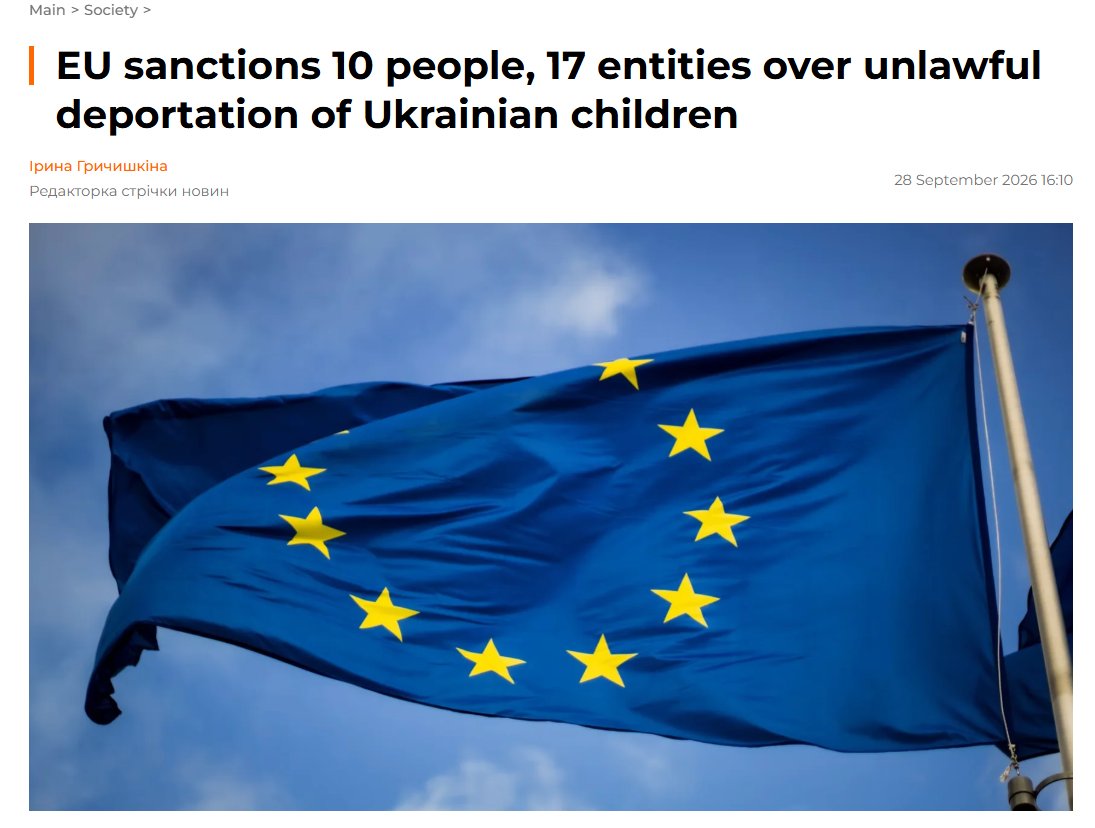
Was müssen ukrainische Kinder aus den besetzten Gebieten eigentlich noch alles aushalten? Erst kam der Krieg, dann die Besatzung, dann wurden sie aus ihrer Heimat fortgebracht. Mehr als 20.500 ukrainische Kinder sind nach Angaben der EU inzwischen als deportiert oder zwangsweise verbracht registriert. Und für manche endet die Reise nicht einmal in Russland. Sie werden bis nach Nordkorea gebracht. In ein staatliches Ferienlager, in dem ihnen nach Feststellung der EU prorussische Narrative vermittelt werden. Ein Ferienlager. Ausgerechnet. Das Songdowon International Children’s Camp beteiligt sich nach Feststellung der EU an organisierten Programmen, bei denen ukrainische Kinder aus russisch besetzten Gebieten in Abstimmung mit Russland nach Nordkorea gebracht werden. Die EU hat das Lager deshalb jetzt gemeinsam mit weiteren Personen und Einrichtungen sanktioniert. Großbritannien hatte Songdowon bereits im Mai auf seine Sanktionsliste gesetzt. Man muss sich diesen Irrsinn einmal aus Sicht eines Kindes vorstellen. Dein Land wird angegriffen. Dein Zuhause wird besetzt. Dann bringt dich die Besatzungsmacht fort. Und am anderen Ende der Welt erklärt man dir, wie du über eben diese Besatzungsmacht und dein eigenes Land zu denken hast. In Nordkorea. Ist das der so viel gepriesene russisch-gedachte Kulturaustausch, den AfD und BSW sich für Deutschland wünschen? Etwas mehr als 2.100 der registrierten Kinder sind bislang zurückgekehrt. Wir kennen inzwischen immer mehr Namen, Einrichtungen und Verantwortliche dieses Systems. Wir frieren Konten ein, verhängen Einreiseverbote und setzen sogar ein nordkoreanisches Ferienlager auf eine europäische Sanktionsliste. Alles richtig. Aber mehr als 18.000 registrierte Kinder sind damit noch immer nicht zurück. Vielleicht brauchen wir neben der immer längeren Liste derjenigen, die an ihrer Deportation und Zwangsverbringung beteiligt sind, endlich eine zweite: Wer bringt diese Kinder nach Hause – und wie? Und wann hören wir eigentlich auf, russische Propaganda hierzulande für eine legitime Variante der Friedensdebatte zu halten? Was ukrainischen Kindern als prorussisches Narrativ eingetrichtert wird, wird nicht dadurch wahrer, dass man es in Deutschland „Friedenspolitik“ nennt. #UkrainischeKinder #Menschenrechte #Frieden

New! Out in October! Dark Reading Matter : The Last Thursday Next novel by Jasper Fforde The final novel in the highly acclaimed and beloved Thursday Next series. Will Thursday find her happy ending? Swindon-based Literary Detective Thursday Next is embarking on her eighth and final adventure: 'Dark Reading Matter' and she is well aware of the fact. The problem is, others are too. Old foes and new are plotting a terrible revenge: To disrupt the narrative and make Dark Reading Matter not just unreadable but unpublishable. Thursday can't let that happen and needs to use all her guile and narrative trickery to unmask the antagonists and guide the series to a satisfactory conclusion. It won't be easy. The Martians have broken out of their HG Wells novel and threaten both the real world and the Bookworld. Agents from a higher reality want unfettered access to the Dark Reading Matter, the realm where deleted books and unrealised literary ideas end up. A Gateway to Hell has opened up at Wantage's Shakesmania, the nation's second to worst Shakespeare theme park and the cosy world of Enid Blyton has been hi-jacked by Ultra Right Wing Nationalists. With Reality Field Distortion experiments going haywire, a partially redacted donkey, a Bookworld on the brink of losing its imaginative energy to Big Tech and a murderous stamp collector with Philaticide on their mind, Thursday has to navigate a tightrope of borderline unusable narrative devices to bring the series to a satisfactory conclusion. It's a tall order, but Thursday has a secret weapon: Her own adaptability, her husband Landen, a host of stalwart friends and ultimately the most loyal compatriots she can call upon: Her readers.

Masian 2w

Il a littéralement bâti sa légende sur les grands matchs au point où ça s’attaquait à ses stats (à 16/17 piges. 😂) pour le critiquer La saison d’après, il améliore les stats, Rashford et Ferran le trahissent dans les grands matchs avec la blessure de Rapha mais il brille quand même dans quelques gros matchs malgré une saison tronquée par les blessures et y’a une nouvelle narrative de « il a été absent dans les grands matchs » 😂😂😂 Le seul match que l’Espagne ne gagne pas à la CDM c’est quand il n’est pas là, il stat moins, se sacrifie pour se mettre + au service du collectif comme l’a expliqué De La Fuente, est décisif dans le match le plus difficile de l’Espagne en CDM face à la France en provoquant notamment ce peno mais oui « il a raté sa CDM » 😂 Cette saison, j’espère qu’il ne va rien laisser à ses détracteurs en espérant que les blessures le laissent tranquille #Football #Légende #CDM

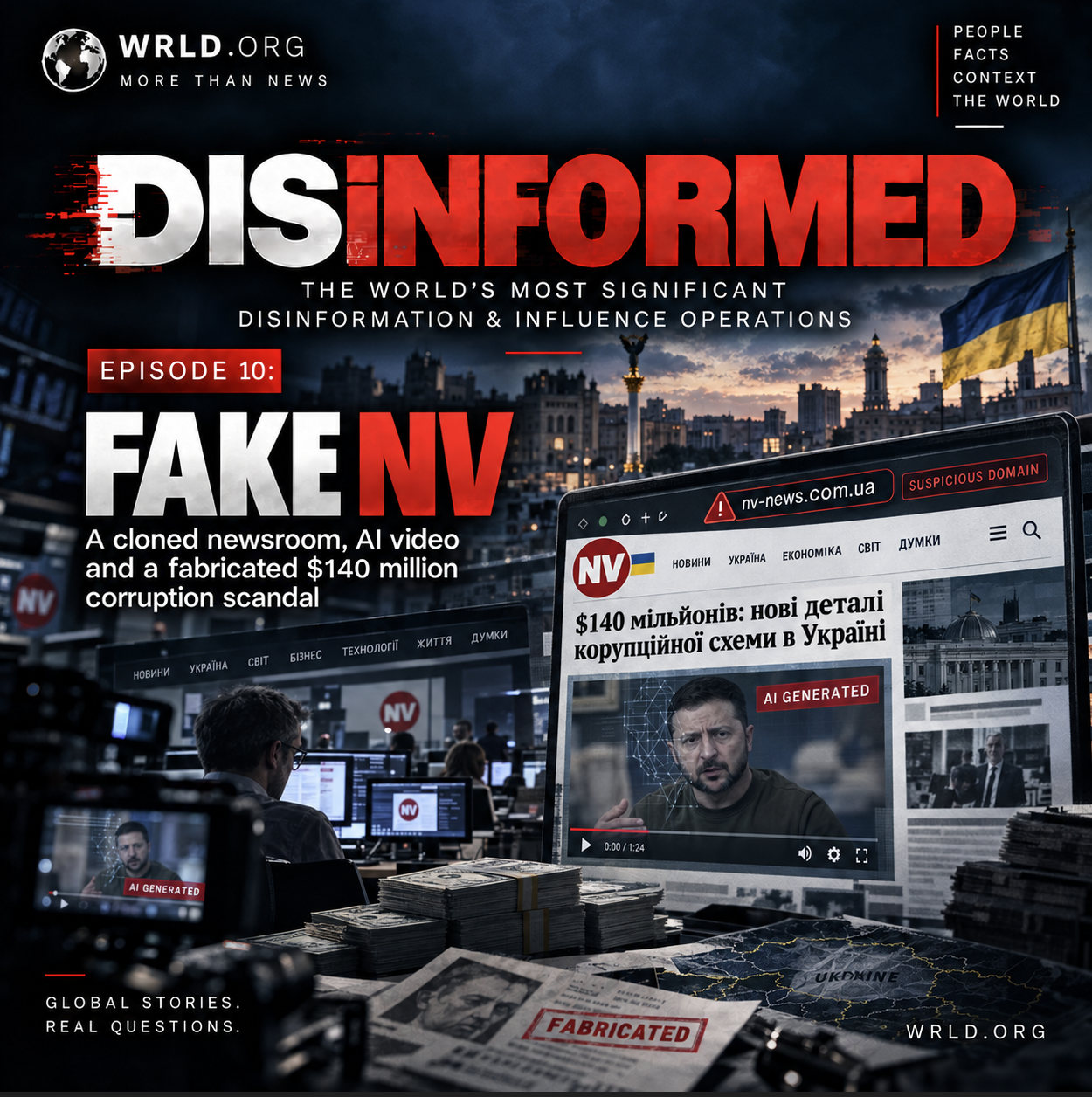
Fake NV – how a cloned newsroom turned an AI video into a $140 million corruption scandal For two days in September, a website that looked almost indistinguishable from one of Ukraine’s best-known news organisations carried an extraordinary corruption story. It claimed that Ukraine’s National Anti-Corruption Bureau had raided former defence procurement chief Arsen Zhumadilov and discovered more than $140 million in cash packed inside refrigerator boxes. One box supposedly carried the words “For the Servant of the People” – an apparent reference to President Volodymyr Zelenskyy’s political party. The raid never happened. The photographs and video presented as evidence were fabricated, and the news organisation reporting the story was not the New Voice of Ukraine but a cloned version of it. The episode is a compact example of an increasingly effective disinformation technique. Rather than inventing a new propaganda outlet and trying to build its credibility from scratch, an operator can simply steal the identity of an established newsroom and place fabricated material inside an otherwise convincing copy of its editorial environment. A newsroom copied almost in full The counterfeit site appeared at nvukraine.com, while the authentic New Voice of Ukraine operates at nv.ua and english.nv.ua. Registration records examined by fact-checkers show that the false domain was created on 21 September 2026, two days before the fabricated article appeared. According to NV’s own investigation, the imitation went much further than copying a logo: the operators reproduced the site’s visual design, sections, branding, contact information and genuine editorial material. A snapshot of legitimate NV content from 23 September appears to have been copied onto the counterfeit site, into which the operators inserted a single false article. That article claimed that NABU had searched premises connected to Zhumadilov, who had headed Ukraine’s Defence Procurement Agency until August, and seized $140 million in cash. The story was published in several languages, including Ukrainian and English, suggesting that the operation was intended not only for Ukraine’s domestic information space but also for foreign audiences following the war and Western support for Kyiv. AI supplied the supposed evidence The false article was supported by a video purportedly showing the money discovered during the raid. NABU said no such search or procedural action had taken place and identified the footage as fabricated using artificial intelligence. Independent fact-checker Lead Stories found no credible Ukrainian or international reporting confirming either the raid or the alleged seizure, while searches of NABU’s own published material produced no evidence supporting the claim. The operation therefore combined two separate forms of synthetic credibility. The AI-generated footage supplied what looked like visual proof, while the cloned NV website supplied institutional proof: an apparently reputable Ukrainian newsroom supposedly confirming that the event had happened. Neither element needed to withstand close scrutiny for long. Together, they only needed to appear credible enough to be copied, quoted and redistributed before the deception was exposed. From a fake Ukrainian source into the Russian information ecosystem On 24 September, the story began moving through large pro-Russian Telegram channels. Ukraine’s Center for Strategic Communications traced early amplification to Golos Mordora, with roughly 149,000 subscribers, and Militarist, with around 277,000. Within less than an hour, other channels including VOBLA, Rossiya Seychas and Ostashko! Vazhnoye were circulating versions of the same claim. It subsequently appeared on X and on Russian-language websites including e-news.su and pressa24.ru. Babel calculated that posts carrying the fabrication had accumulated approximately 370,000 views by the morning of 25 September. The story also moved beyond the Russian-language ecosystem. English-language versions appeared in online communities including Lemmy and Hexbear, while accounts on X shared direct links to the counterfeit NV article. NV later reported that larger Russian media and propaganda outlets, including RIA Novosti, Life, Vesti, Ukraina.ru and Mail.ru, had reproduced or discussed the claim. Kirill Dmitriev, head of the Russian Direct Investment Fund and a Kremlin representative involved in contacts with the United States, also shared it on 25 September. This amplification is significant, but it should not be confused with proof of authorship. Publicly available evidence shows how the false story entered and spread through a Russian and pro-Russian information ecosystem. It does not establish which organisation registered the cloned domain, generated the video or directed the operation from the outset. Why copy NV? The operation relied on source laundering. A claim originating directly from a Russian Telegram channel that Ukraine’s defence procurement system had concealed $140 million would immediately carry an obvious political context. A claim apparently uncovered by an established Ukrainian newsroom looks very different. Once the fabricated NV article existed, subsequent accounts could cite what appeared to be an independent Ukrainian source rather than present the allegation as their own. Each repost moved the story another step away from its manufactured origin. The use of an English-language version strengthened that mechanism for audiences outside Ukraine. The underlying narrative was also carefully chosen. Corruption in Ukrainian defence procurement is a genuine subject of public scrutiny and investigative reporting, so the fabricated story did not require audiences to accept an entirely unfamiliar premise. It inserted a false event into a real area of political concern. That mixture of authentic context and fabricated evidence can be more persuasive than a completely invented story because much of the surrounding information feels recognisable. What can – and cannot – be attributed Ukrainian authorities and NV describe the episode as a Russian information operation, and its distribution can be documented extensively across pro-Russian and Russian media channels. The available public evidence, however, does not identify the organisation that created the counterfeit website, nor does it link the operation forensically to a named Russian intelligence service, military unit or state contractor. The most precise description is therefore a Russian-aligned disinformation operation whose fabricated material was systematically amplified through the Russian information ecosystem. That distinction matters. Distribution can be observed directly; command-and-control is harder to establish and should not be inferred without evidence. The newsroom itself becomes the deepfake The most important feature of the operation was not the $140 million figure or even the AI-generated video. It was the counterfeit newsroom surrounding them. The operators copied a real publication, populated it largely with genuine material and inserted a single false story, allowing the fabrication to borrow the accumulated credibility of journalists who had nothing to do with it. This points to a broader evolution in synthetic media. AI can fabricate an image, a voice or a video, but an influence operation can now fabricate something larger: the source that supposedly verified the evidence. In the Fake NV operation, the article, the video and the website reinforced one another, creating not simply a false story but a manufactured chain of credibility. Sources The New Voice of Ukraine — investigation into the cloned website https://english.nv.ua/nation/nv-discovers-fake-copy-of-website-with-planted-story-cites-russian-links-50644601.html The New Voice of Ukraine — Russian amplification of the $140 million fabrication https://english.nv.ua/russia-spreads-fake-140-million-ukraine-corruption-story-during-dmitriev-u-s-talks-50644647.html Lead Stories — independent fact-check https://leadstories.com/hoax-alert/2026/09/fact-check-fake-story-claims-140-million-found-at-home-of-ukraines-zhumadilov-marked-servant-of-the-people-nv-website-originated-it.html Babel — AI video and distribution analysis https://babel.ua/en/news/130469-a-video-is-sharing-online-about-140-million-found-in-the-possession-of-the-ex-head-of-the-defense-procurement-agency-this-is-an-ai-video-distributed-by-a-clone-of-ukrainian-media Center for Strategic Communications and Information Security — initial debunk https://spravdi.org/en/ai-fake-about-140-million-amid-us-talks-how-russians-impose-the-image-of-corrupt-ukraine-on-the-west/ Center for Strategic Communications and Information Security — NABU confirmation https://spravdi.org/u-merezhi-poshyryuyut-shi-fejk-pro-nibyto-obshuky-nabu-v-eksgolovy-agencziyi-oboronnyh-zakupivel/ Detector Media — distribution and NABU response https://detector.media/infospace/article/252806/2026-09-25-u-merezhi-pidrobyly-sayt-nv-dlya-poshyrennya-feyku-pro-obshuky-v-eksochilnyka-agentsii-oboronnykh-zakupivel/ Keywords #DISINFORMED #Episode10 #FakeNV #NewVoiceOfUkraine #Ukraine #Russia #RussianDisinformation #RussianInfluence #Disinformation #InformationWarfare #InfluenceOperations #ForeignInterference #FIMI #MediaImpersonation #ClonedMedia #FakeMedia #FakeNews #ArtificialIntelligence #AI #AIGeneratedContent #SyntheticMedia #AIVideo #SourceLaundering #NarrativeLaundering #CorruptionNarrative #UkraineCorruption #DefenceProcurement #NABU #ArsenZhumadilov #Telegram #SocialMediaManipulation #DigitalInfluence #Propaganda #OSINT #MediaManipulation #WRLD